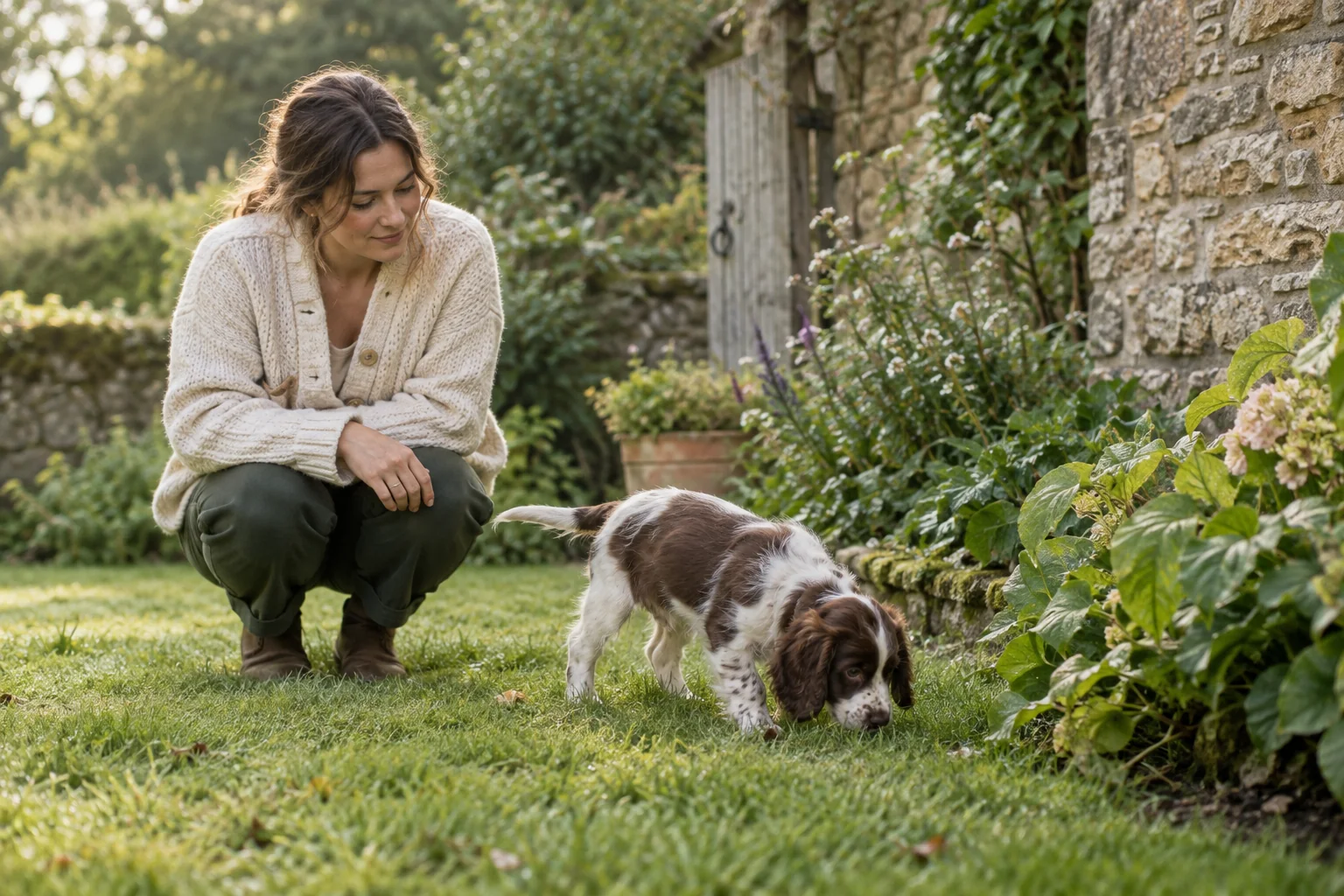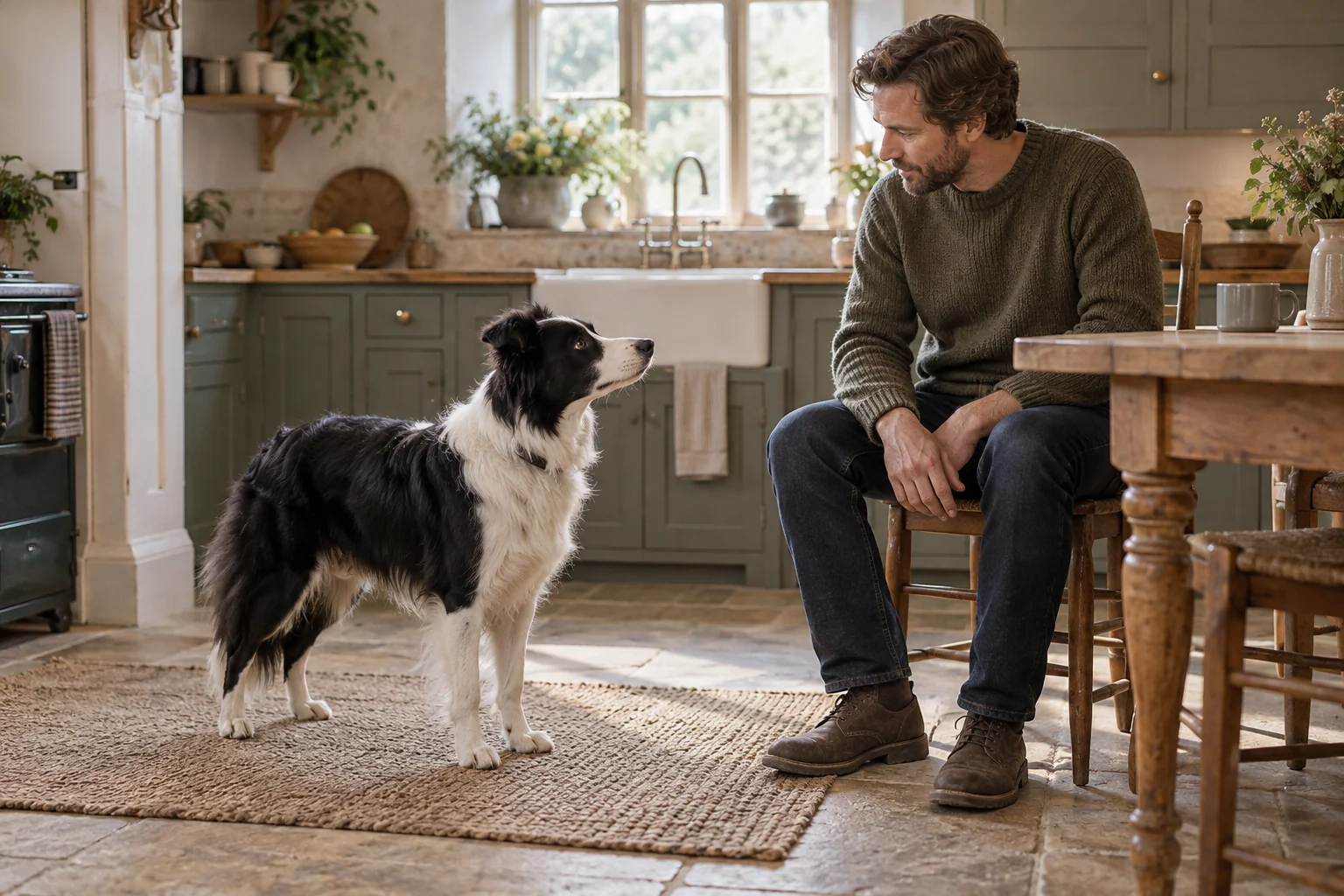
A good first week is built from ordinary moments: preparing a quiet corner, noticing a small response and knowing where to begin tomorrow. This field guide gives you the exercises, the decisions and a place to keep your notes.
Put it into practice
Choose your first exercise
Start with a quiet room, suitable rewards within reach and a dog who is awake, comfortable and free to move away.
- Choose attention if your first goal is getting a brief turn towards you. Use the name-response lesson in chapter 4.
- Choose a hand target if your dog is comfortable approaching your hand and you want a simple movement to practise together. Follow chapter 5.
- Choose the mat if your dog is already ready for a quiet pause. Begin with the voluntary approach in chapter 6; lying still is not the first requirement.
What happens next?
- Keep the first goal small
- Pick one of these exercises for this session. “Turns their head when I say their name” gives you a clearer reward moment than “pays attention.”
- Make it easier
- If your dog walks away or the room becomes busy, pause. At the next suitable opportunity, start closer in the quiet room.
- Finish with a decision
- Write the exact version to repeat: “Name response, nearby, kitchen, rewards ready.” Keep that version until it is familiar before changing the setting.
Chapter 01
Choose one small goal for today
Before choosing a command, think about a moment in your day. Would it help if your dog turned toward you when you said their name? Could a comfortable place to pause make your evening easier? Give the first session a job you can describe in one sentence.
Use this format: “In this place, I will reward this action.” For example, “In the quiet kitchen, I will reward a brief turn toward me.” You now know where to practice and what success looks like. You have not asked your dog to understand a vague ambition such as “listen better.”
Make the next repetition easy enough to explain.
The three exercises below give you different entry points. Choose one today; there is no requirement to finish all three. If you are new to training, attention is a useful place to begin because the response is easy to notice. If your dog already knows it, spend the session finding a comfortable setup for one of the other exercises.
We use rewards and practical management. That approach follows AVSAB’s guidance on reward-based methods. Avoid corrections intended to frighten or hurt. A difficult repetition is a reason to review the setup, and persistent difficulties are a reason to get qualified help.
Chapter 02
Prepare the space before the session
Choose somewhere familiar with room to move and a surface your dog can stand on comfortably. A quiet room is usually a clearer starting point than the front doorway during school pickup. Put the rewards within your reach before inviting your dog; preparation is part of the lesson.
A small, useful training kit
- A suitable reward: small food rewards your dog can safely eat, or another reward they enjoy. Account for food rewards within their feeding plan; ask your veterinarian about dietary restrictions.
- A place for the reward: a pocket, pouch or container that lets you deliver it without a long search.
- A comfortable mat: only if you choose the resting-place exercise. It should stay put underfoot.
- A place for one note: use the worksheet below, a notebook or your existing training app.
You do not need a large equipment order to begin. A clicker is optional; a reward marker can also be a short word. For outdoor practice later, choose safe, well-fitting equipment appropriate to your dog and the setting. This first indoor session does not require testing off-leash freedom outside.
The checklist is a preparation aid, not a test that proves every exercise is suitable for your dog. If today is noisy, tiring or uncomfortable, arrange a better opportunity instead of trying to complete a session because you planned one.
Chapter 03
Make the reward explain what worked
A reward needs to connect clearly with the action you want to repeat. Decide what you are watching for before you begin. In the name exercise, that might be the first turn toward you. Waiting for a long stare would introduce a different requirement.
A click or marker word identifies the moment; the reward follows. Teach that connection before relying on the marker during an exercise, and follow each marker with its reward. The AKC explanation of mark-and-reward training covers this distinction. You can begin a simple exercise by rewarding promptly without adding a clicker.
Rehearse your part without the dog
Put an object on the counter as an imaginary “response.” Look at it, say your chosen marker if you use one, then reach for the reward. Notice whether opening a pouch or peeling packaging interrupts the sequence. Change that practical detail before the real session.
Now imagine another person delivering the reward. Could they tell which movement you meant to acknowledge? If not, make the target action more precise. “A glance toward me” gives both people a clearer job than “good attention.” For a fuller explanation of marker introduction, use our clicker and marker-word guide.
Chapter 04
Exercise 1: a response to their name
What you are buildingA brief, comfortable turn toward you.
Begin nearby in a quiet room, with rewards ready and no other dog competing for them. Choose a moment when your dog is comfortable and available, rather than interrupting something they are deeply absorbed in.
- Say their name once. Use an ordinary, friendly voice.
- Notice the first turn. A brief glance is enough for this starting version.
- Reward promptly. Let the response happen before reaching to deliver the reward.
- Pause and reset. After a few comfortable attempts, finish and return to an ordinary activity.
If there is no response, avoid turning the name into a repeated chant. Pause and try later with less distance or fewer distractions. If the dog keeps disengaging, end the exercise and review whether this is a useful time.
This short exercise follows Dogs Trust’s attention-training guidance. It teaches attention; it is not a substitute for a separately taught recall.
“Turned toward me beside the kitchen table. Tomorrow: same spot, door closed.” Record the setup instead of expecting constant eye contact throughout the day.
Chapter 05
Exercise 2: a gentle nose-to-hand touch
What you are buildingA voluntary touch to a still, open palm.
Try this only when your dog is comfortable with your hand nearby. Keep the target hand empty and rewards in the other hand or an accessible pouch. You are inviting a small approach, not moving your hand into your dog’s face.
- Offer a still palm nearby. Hold it at a comfortable nose height, close enough for a small voluntary movement.
- Reward a gentle nose touch. If you have taught a marker, mark contact before delivering the reward.
- Remove the hand between attempts. Pause, then present it again.
- Add the word later. When the touch is familiar, say “touch” just before presenting your hand.
If your dog moves away, let them. End the exercise if they are uncomfortable or mouth your hand. If they are relaxed but unsure, reward an easier approach toward the hand first. The AKC hand-target guide explains that progression.
“Chose to approach my left palm. Next time, keep the same hand and position.” Decide what you will keep familiar before planning a bigger movement.
Chapter 06
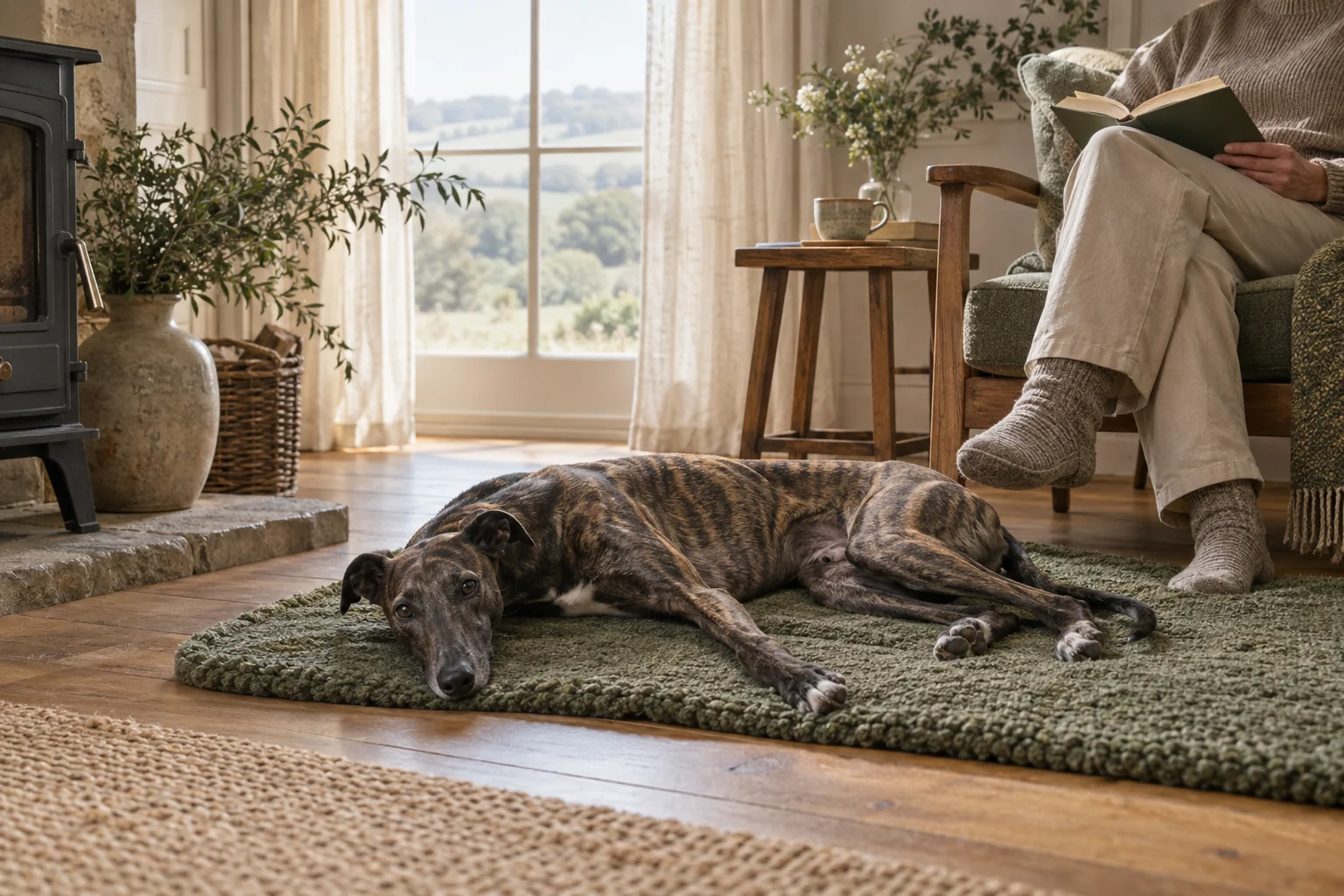
Exercise 3: a comfortable place to pause
What you are buildingA positive beginning with a resting place.
Put a comfortable, non-slip mat in a quiet spot and sit nearby. Begin at an undemanding time, with everyday needs attended to. Leave room for your dog to approach and move away.
- Notice voluntary interest. Reward an easy interaction, such as approaching or stepping onto the mat.
- Keep delivery quiet. Place a suitable reward on the mat when practical.
- Watch for comfort. Over time, look for easier posture or choosing to lie down, instead of demanding a long position immediately.
- Allow an exit. If your dog leaves or becomes unsettled, pause and review the setup.
Dogs Trust’s settling guidance starts with quiet surroundings and gradually rewards more relaxed behavior. For later practice, our complete mat guide explains how to build time and introduce ordinary activity.
“Approached the mat beside my chair. Keep this corner tomorrow.” Moving the mat to a café would change much more than its address. This exercise does not treat separation distress.
Chapter 07
A flexible plan for your first week
Use this seven-day outline to organize your own decisions. It is an example schedule, not a promise that your dog will learn three skills in a week. Repeat a day, take a rest day or stay with one exercise for the whole week when that fits better.
- Day 01
Find your starting point
Prepare the room and try a few name responses. If your dog needs more time to settle in, make preparation the whole task.
Notice: Where was it easiest to get a comfortable glance?
- Day 02
Repeat the easy version
Return to the same room and exercise. Rehearse your reward delivery before inviting your dog.
Notice: Was my timing clearer than yesterday?
- Day 03
Make one choice
Repeat attention, or introduce the hand target if your dog is comfortable with that setup. You do not need to do both.
Notice: Which action am I rewarding today?
- Day 04
Notice a quiet moment
Try the first mat exercise at an undemanding time. Reward a small voluntary interaction rather than asking for a long stay.
Notice: Did the place and timing make rest easier?
- Day 05
Change one detail, if ready
For a familiar exercise, try a small change in your position. Keep the room, distance and reward familiar. Otherwise, repeat.
Notice: What stayed the same when I changed that detail?
- Day 06
Practice the household handover
Show another adult the exact setup and cue. They can observe or rehearse without the dog before trying an easy repetition.
Notice: Would the next person understand my note?
- Day 07
Review and choose next week
Read your notes. Keep the exercise that serves your routine, and select one manageable next step. A repeat week is a valid plan.
Notice: What can we comfortably return to?
If you miss a day, return to the last comfortable version. Do not double the next session to make up for it. The useful record is what helped your dog and what you can repeat, not an uninterrupted streak. If you are caring for a new puppy, fit lessons around the care routine rather than fitting care around this outline.
Chapter 08
Know when to repeat, simplify or progress
A successful attempt gives you one observation. Before making an exercise harder, look for a familiar response in a comfortable setup that you can reproduce. You should also feel organized enough to notice and reward it. There is no universal pass mark that makes every dog ready.
- Repeat the setup
- The response is becoming familiar, but you are still finding the rhythm. Keep the same place, cue and starting distance.
- Simplify one thing
- A household distraction interrupted the lesson. Close the door or choose a quieter time, then return to the easy version.
- Add a small change
- The familiar version feels comfortable and repeatable. Change your position slightly while keeping the other demands easy.
Distance, duration and distraction are separate training challenges, as the AKC’s three-Ds guidance explains. For a new setting, reduce the task again. Moving a familiar exercise outdoors can change noise, smells and activity all at once.
Write the proposed change before starting: “same kitchen, I stand beside the other chair.” If the note says “same exercise, in the park, farther away, with dogs passing,” you have identified several changes to separate. Use safe physical management outdoors; a good practice response never guarantees safety near roads or wildlife.
Chapter 09
When a session does not go to plan
Start with what you can observe: the place, the cue, the response and what changed. These examples help you choose a next action; they do not diagnose why an individual dog behaves a certain way. If a situation feels unsafe or your dog seems distressed, stop and arrange appropriate support.
My dog does not respond to their name.
First check: Check whether you started too far away or while they were absorbed in something else. Pause instead of repeating the word.
Next attempt: Try later in the familiar room, closer together, with no competing activity. Reward the first small turn.
My dog follows the treat hand everywhere.
First check: Notice whether your hand is moving before the response. Your dog may be following that movement rather than responding to the cue.
Next attempt: Prepare a reward out of sight but within reach. Practice the order yourself: cue, response, then reward delivery.
My dog becomes jumpy or grabs at my hands.
First check: End the repetition and make room. Check your delivery position and whether the setup has become too exciting.
Next attempt: Rehearse your hand movement without the dog. Next time, start calmly and choose an easier version; seek help if safe delivery remains difficult.
My dog leaves, freezes or stops engaging.
First check: Stop asking for the exercise. Look at the whole situation instead of assigning a meaning to one isolated signal.
Next attempt: Offer a break and review noise, footing, proximity and physical comfort. Persistent or sudden changes need individual advice.
It works at home but falls apart outside.
First check: Compare the settings: distance, movement, smells and other activity may all have changed together.
Next attempt: Return to a secure, quiet version. Keep the response nearby while introducing only one manageable change.
I keep forgetting what to practice next.
First check: Your goal may be too broad or the previous note too vague. “Improve behavior” does not tell tomorrow’s person what to do.
Next attempt: Write the place, action and easiest starting point. Keep that sentence beside the rewards so the next session begins with a decision.
It is fine to finish without one more attempt. Avoid making “ending on success” a reason to continue when your dog needs to stop. Make the next opportunity easier and describe that decision in your note. Short, manageable practice is consistent with the RSPCA’s training guidance.
Chapter 10
Keep a note that makes tomorrow easier
You do not need to score your dog or document every second. Keep three things: where and what you practiced, what you actually saw, and the next version you will try. This is a planning tool for you, not a performance chart for your dog.
“Attention was better.”
“Turned toward me in the kitchen with the door closed. Begin nearby again.”
The second entry can guide someone who missed the session. It also helps you notice whether tomorrow’s exercise is truly the same task. If another person takes over, show them the place and the movement before adding your dog.
Your practice notebook
Leave tomorrow a starting point.
Fill in a short note, then copy it somewhere you keep your training plans. This website does not save or send your entries. Copy your note before leaving.
Use observations to organize ordinary practice. Notes about a sudden change, discomfort or a difficult encounter can also help you explain the situation to a professional, but a record cannot establish its cause.
Chapter 11
Adapt the plan to the dog in front of you
For a puppy settling into a new home
Make space for rest, toilet opportunities and a predictable routine. A small attention game is only one part of the day. If you cannot prepare calmly between care tasks, postpone the lesson. The first-week puppy guide helps coordinate those everyday priorities.
For an adult or newly adopted dog
Begin with what you actually observe in this home. A familiar word may have a different history, and the new environment may be the main challenge. Use the same clear setup and leave room to pause; you do not need to find out everything the dog knows on the first day.
For a dog with physical or sensory needs
Choose a comfortable surface and avoid asking for movements that seem difficult. A spoken name exercise may need a different communication method for a dog who cannot hear it. Ask your veterinarian and a suitably qualified trainer how to adapt the task, rather than repeating an unsuitable version more insistently.
Keep children appropriately supervised around dogs. An adult can prepare and lead these sessions; a child does not need to deliver food by hand or manage the dog to take part in noticing a quiet moment from a safe distance.
Chapter 12
Choose the next step, and the right support
At the end of the week, keep the lesson that makes daily life easier. For some households that will be a name response in the kitchen. For others it will be a comfortable resting place. Moving on is a choice based on what you need and what your dog is ready to practice.
- For everyday walks: start the loose-leash lesson in a quiet setting.
- For coming back: use the foundation recall guide with safe management.
- For a workable routine: plan your next exercise with the short-session guide.
When individual help is the useful next step
Pain, a sudden change, panic, aggression, guarding or bite concerns need professional assessment. Do not use these starter exercises to test whether a risky situation is safe. A veterinarian can assess health concerns; a qualified reward-based trainer or behavior professional can help plan training appropriate to the dog and household.
Before booking instruction, ask what the first session involves, which methods are used, how difficulty is adjusted and what happens when a dog is uncomfortable. Explain your experience and the situation you want help with. You should understand the plan you are being asked to follow.
If you want a place to organize ordinary lessons and progress, DogPath’s guided training plan can support the routine. The exercises and worksheet on this page are complete starting points you can use on their own.
Chapter 13
Choose the second week from what actually happened
Start your review with one exercise, not the whole week. Write its most recent easy version and the first change that made it difficult. Then choose the next starting point from the pattern below.
- The same small response is becoming familiar
- Keep the exercise and change one detail. For a nearby name response, try a slightly different position in the same quiet room. Keep the reward and cue familiar.
- The response works with visible food but disappears when it is hidden
- Check the lesson’s prompt-reduction step. Practise the same easy movement with the smaller prompt described there, then reward. Do not jump to a busier setting or remove reinforcement at the same time.
- The response changes with the person
- Compare the cue, starting distance and reward position. Have the second handler begin with the easiest familiar version instead of assuming they can start at the latest difficulty.
- The household could not arrange practice
- Choose a better opportunity: a quieter room, prepared rewards or a named caregiver. Repeating the same weekly calendar will not resolve an unsuitable setup.
Worked example · Keep, change, leave for later
Keep: the nearby kitchen name-response exercise.
Change: prepare rewards before inviting the dog; close the door so another pet cannot join.
Leave for later: asking for attention while visitors enter.
Now write the first session for week two in one sentence. If it requires a new room, new handler and stronger distraction, simplify it before starting. If the week revealed pain, panic or a sudden change, arrange appropriate professional help instead of treating the next chapter as the answer.
Chapter 14
Make a household training agreement people can use
Keep the agreement short enough to read before a session. Name the current exercise, the cue if there is one, the visible behaviour you are rewarding and the place where you deliver the reward. Add the conditions that make the lesson manageable.
For example: “Attention in the quiet kitchen. Say the name once. Reward a brief turn. Pause after each repetition. Stop if the room becomes busy.” Another person can now practise the same small skill without guessing what “work on focus” means.
Agree on the stopping point too
Consistency includes giving the dog a break and making the task easier when needed. It should not mean repeating the same request through growing difficulty. Decide who protects space during visitors, where the dog can rest undisturbed and how people communicate the next care responsibility.
When a second handler joins the plan, begin in the familiar easy setting. A different person, voice and movement can change the scene. Observe before increasing expectations. For children, an adult should manage the interaction and the dog’s access to space.
Review the agreement when it stops matching real life. Change one exercise or practical arrangement, then tell the people involved. A short, current plan is more useful than a long set of rules nobody follows. Keep the record in an accessible place of your choosing; do not assume an app feature automatically shares it with the whole household.
Common questions
What should I teach my dog first?
Choose a small response that fits your daily life. A turn toward their name is a useful beginning; a hand target or comfortable mat can be another starting point. You do not need to teach every command in a fixed order. Begin with the simplest version you can notice and reward clearly.
How long should a beginner training session last?
Start with a few comfortable repetitions and pause. Preparing the space can take longer than the exercise itself. Stop sooner if your dog needs a break; do not stretch a session to fill a timer. Your note about the next attempt is more useful than reaching a particular number of minutes.
Should we finish every day of the first-week plan?
No. The outline organizes possible practice, not milestones your dog must meet. Repeat an earlier day or make the whole week about one comfortable exercise. If you miss a session, start again with the last easy version instead of adding extra work.
Do I need a clicker or a training app?
Neither is required for the exercises here. You can reward promptly without a clicker, or learn a marker word. The worksheet or a notebook can hold your plan. An app is useful if you prefer guided lessons and progress in one place.
Is a food reward the same as a bribe?
What matters in this lesson is the sequence: the response happens, then the reward arrives. Avoid waving food first every time you want a familiar response. If the dog only follows your food hand, return to a clear, easy setup and practice your delivery. The marker guide explains the difference between marking, rewarding and luring.
What if my dog is not interested in the reward?
Review the whole setting before choosing something richer. Your dog may need rest, space or a different opportunity. Do not withhold meals to force participation. If appetite changes or you have health concerns, contact your veterinarian.
Can I use this guide with an older dog?
Use it as a starting framework and adapt to their comfort, learning history and sensory needs. There is no need to force a position or repeat a spoken cue they cannot hear. Ask for individual guidance if you are unsure whether an exercise suits your dog.
How can the whole family stay consistent?
Agree on the same cue, visible goal, starting place and reward sequence. Leave a short note after practice. One person can demonstrate while another observes, then rehearse the handover without adding more difficulty for the dog.
What should I do when my dog gets it wrong?
Pause and look at what made that attempt harder. Choose less distance, fewer distractions or a smaller response next time. Avoid punishment and repeated testing. If the situation is unsafe, distressing or suddenly different, stop and get qualified support.
What should I do after finishing this beginner guide?
Choose the foundation guide that matches one specific everyday goal: walking, recall, mat training or a puppy routine. Reuse the preparation and observation process here. Reading more topics is optional; repeating one appropriate exercise is a useful next step.
How do I tell whether a training plan is too ambitious?
Underline every new demand in the next exercise: place, handler, distance, duration and distraction. If several change together, keep all but one familiar. For example, moving a short recall into a quiet garden is already a change; do not also start much farther away.
General training education for comfortable, everyday practice. Pain, sudden behaviour changes, panic, aggression or bite concerns need veterinary or qualified in-person behaviour support.