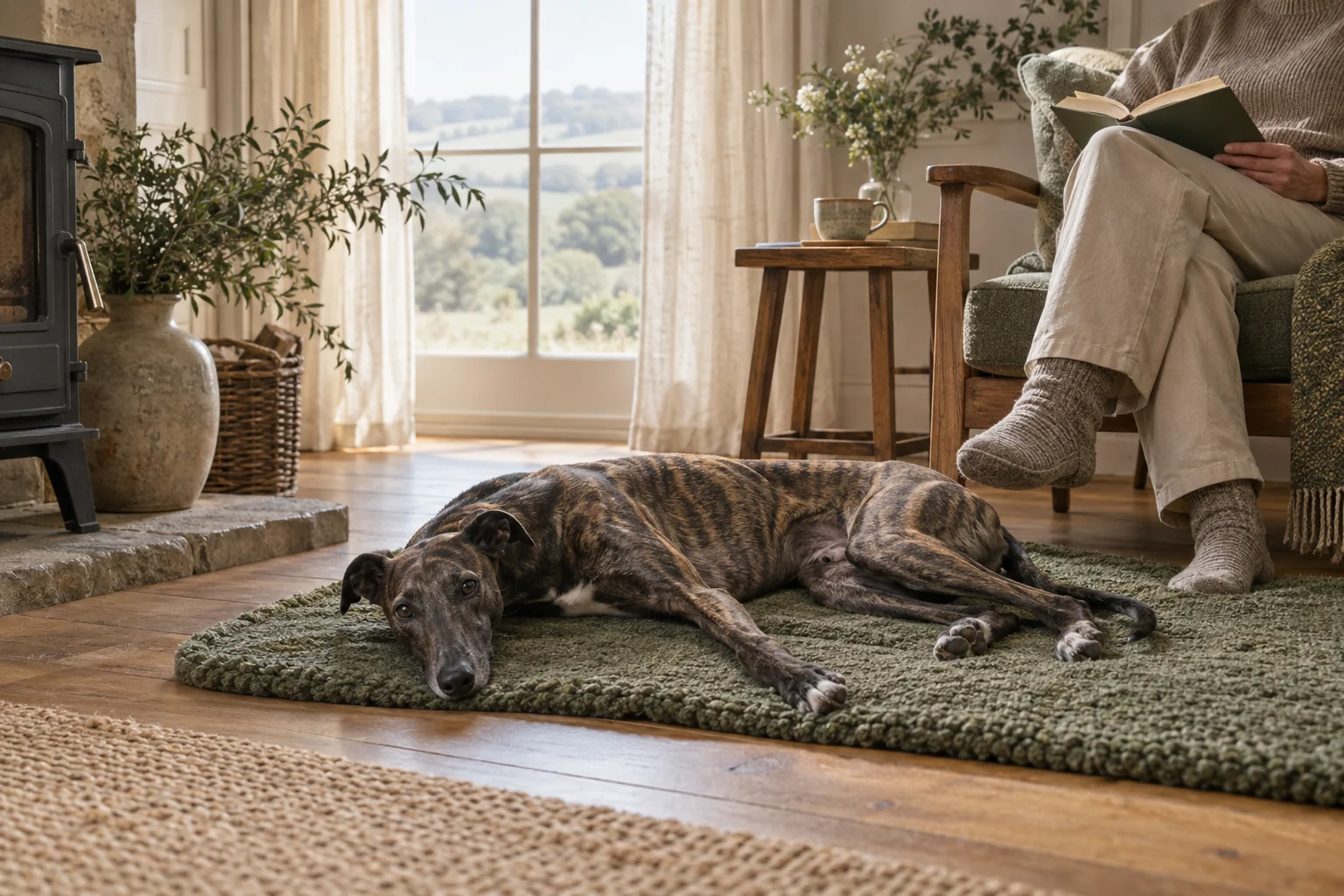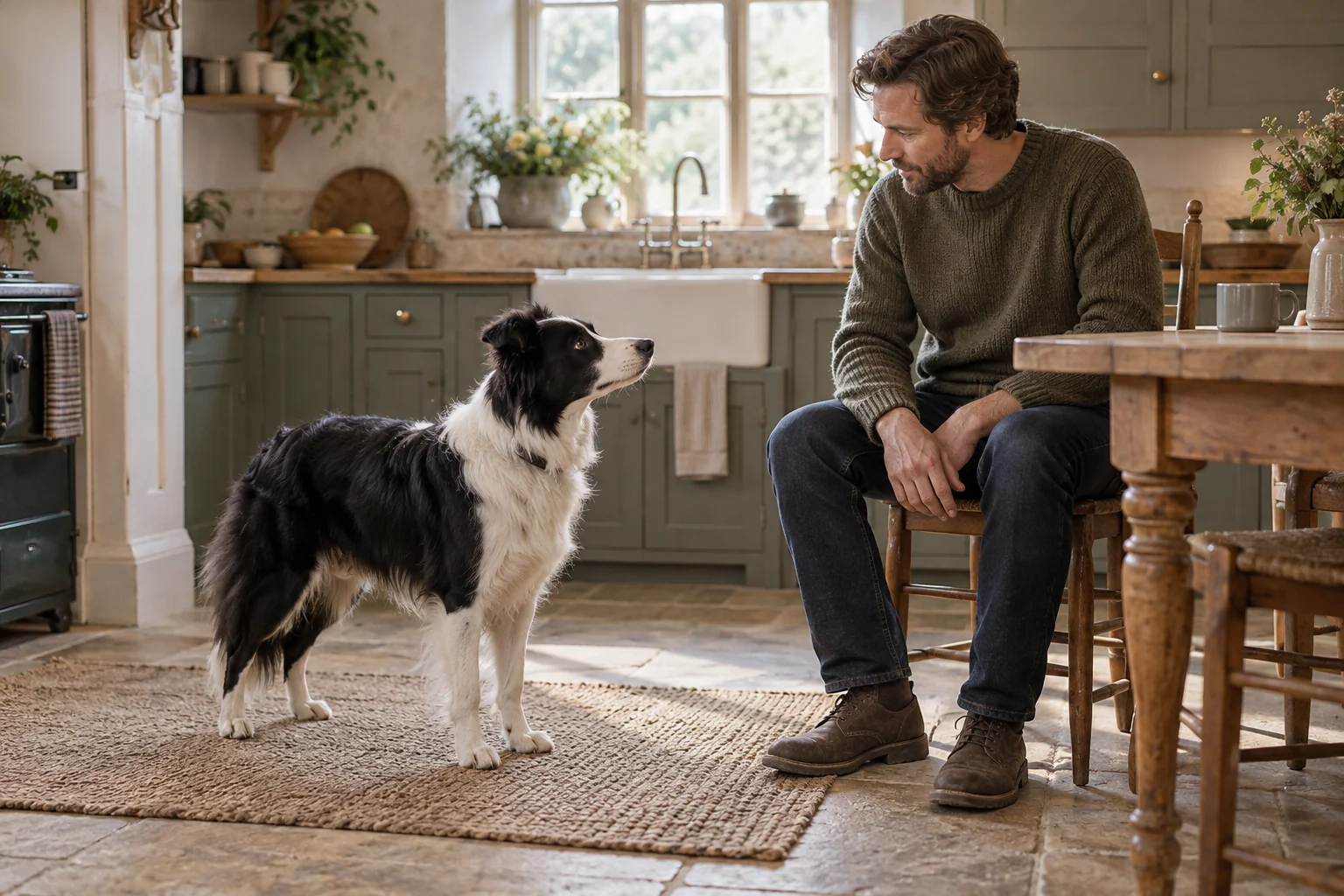
Consistency becomes easier when a session has a beginning, a manageable task and a finish. You do not need to use every spare minute or keep going until a stopwatch tells you to stop.
Put it into practice
Plan a session you can finish early
Choose one familiar skill and prepare its easiest version. The example below uses a brief name response in a quiet room.
- Write the goal. “Reward a head turn when I say the name once.” Put the reward within reach before inviting your dog.
- Try one repetition. Cue once, reward the turn and pause. Notice whether the dog stays comfortable and whether your delivery was ready.
- Choose the next action. Repeat that easy version, fix a handling problem or finish. You can end after one useful repetition.
What happens next?
- Your dog stays engaged
- Another familiar repetition may be useful. You do not need to increase distance or duration because the first one worked.
- Your dog walks away
- Let the session end. Check the setting, the task and ordinary care needs before choosing the next opportunity.
- You still have time left
- Use it to prepare rewards or write the next starting point. A timer is a reminder to review, not a minimum time your dog must complete.
Write one sentence before you start
Describe the behaviour, the setting and the first level of difficulty. For example: “In the hallway, reward one loose-leash step.” That sentence is specific enough to act on and small enough to repeat.
Compare it with “work on obedience.” The broader goal hides several decisions you would need to make while your dog is already waiting. Save that planning for another moment. If you need a first exercise, choose from our training guides according to the part of daily life you want to improve.
Choosing your first exercise? Follow the dog training guide for beginners for a complete name-response lesson and a simple way to choose what comes next.
Prepare the easy version
Put rewards where you can reach them, clear the floor and choose a time when your dog is comfortable. Keep the first repetition easier than the version you eventually want. A busy room, an empty treat pouch and a difficult task are three separate obstacles.
Decide how the session will end, too. You might use a familiar release phrase, put the training equipment away and offer an ordinary break. A predictable ending makes it easier to stop after a few useful repetitions rather than continually asking for one more.
Watch the dog, not only the clock
A minute of comfortable practice can be enough to begin. Some sessions can last longer; others should end earlier. Notice the whole picture: willingness to participate, movement, attention and whether the environment has become distracting.
If your dog repeatedly disengages, pause and review the setup. Food refusal or a sudden change in behaviour can have several causes, so do not label every difficult moment stubbornness. Physical discomfort or health concerns deserve veterinary attention.
Prepare rewards. Practise two easy repetitions. Pause. If your dog still wants to participate, try another easy repetition. Finish and note the next starting point.
Change just one demand
Distance, duration and distraction are useful planning categories. Holding a position longer, asking from farther away and practising beside visitors are different changes. Keep two familiar while adjusting the third gently.
Write down the change before trying it. “One extra step in the same hallway” is easier to evaluate than moving outside, doubling the distance and adding a new cue together. When a step proves too hard, make the next repetition easier. Repeating the same struggle does not create better information.
Leave a note your future self can use
Record the setup, what happened and what you will repeat. You do not need a score for every movement. A short note such as “three easy steps, struggled near the door, begin farther away tomorrow” contains a practical decision.
DogPath’s training path and weekly plan can help organise this rhythm. A paper notebook also works. The useful part is the connection between today’s observation and tomorrow’s first repetition.
The recommendation to practise in short, regular sessions is consistent with the RSPCA’s basic training guidance. There is no universal number of minutes that guarantees learning for every dog.
Use a session recipe instead of filling a timer
A timer can remind you to check how the session is going, but it cannot tell you whether the exercise is comfortable. Start with a recipe that includes preparation, one simple response and a clear end. That makes a short session complete even when it contains very few repetitions.
- Prepare: choose the space, clear distractions and put the reward within reach.
- Define: say the visible goal in one sentence.
- Try: begin with the easiest useful version.
- Observe: notice the response and your own timing.
- Finish: pause or return to an ordinary activity, then leave a short note.
For example, the recipe for an attention session could be: “Kitchen, one name response, reward the turn, pause.” A walking recipe could be: “Quiet hallway, one slack-leash step, reward beside me, finish.” The recipes make different lessons manageable without pretending that every skill needs the same duration.
If you spend most of the available time preparing, that is still useful work. The next opportunity begins with a better arrangement. Avoid asking the dog for extra repetitions to compensate for the time you spent finding equipment.
Decide whether to repeat, simplify or stop
After a repetition, you have more choices than simply doing another one. Use what happened to decide the next action. This decision is easier when you kept the opening goal small and the environment familiar.
- The response was comfortable and the setup is unchanged
- Repeat the same version if another repetition would be useful. You do not have to increase difficulty.
- Your timing was late or the reward was hard to reach
- Pause and fix the handling arrangement before continuing.
- A distraction changed the scene
- Reduce the demand, create space or finish the lesson.
- Your dog disengages or seems uncomfortable
- Stop and review needs, surroundings and the task. Seek appropriate help if discomfort or a sudden change is involved.
Imagine the first two name responses were easy, then a delivery arrived. Continuing the exact plan would now involve a different situation. Ending the lesson before attending to the delivery is a reasonable decision; you have not failed to complete a quota.
Repeated difficulty across sessions needs a wider review. Making the timer shorter can help with one problem, but it does not explain pain, fear, an unclear cue or an unsuitable environment.
Fit practice into a week without making every moment a lesson
Choose opportunities that already make practical sense. A quiet period after routine care may suit a brief attention exercise. A calm moment while reading may suit the beginning of mat practice. The opening of a busy family meal may be a poor time to introduce either.
Make a weekly plan with room for repetition. One day can be preparation, another a familiar exercise, and another a review of what to change. The plan should remind you what is available to practise, not create a debt whenever a day is missed.
A flexible planning example
At the start of the week, choose one everyday goal and one setting. Return to that arrangement on suitable days. At a later quiet opportunity, try one modest change only if the original version feels familiar. At the end of the week, compare notes and decide whether to repeat the same plan.
Leave walks, exploration, play, companionship and rest their own place. They do not all need to carry an obedience objective. If you are also working with a qualified professional, use their individual plan to decide which between-session practice is appropriate rather than layering on extra exercises from several sources.
Turn an unhelpful training note into the next session
A useful note answers three questions: where did you start, what changed and what will you do next? You can often fit all three into two sentences. Leave out labels that do not tell the next handler what to do.
- Instead of “would not focus”
- “Two name responses in the kitchen. Stopped responding when another person entered. Next time, close the kitchen door before starting.”
- Instead of “mat training failed”
- “Stayed on the mat while I sat. Got up when I stood. Repeat seated; practise a small shift in the chair before standing again.”
- Instead of “needs a longer session”
- “The first turn was easy. I delayed the next reward while opening the packet. Prepare rewards before inviting the dog.”
These are worked examples, not explanations of every dog’s behaviour. Their value is that each note identifies something the handler can arrange or observe again.
Choose which note deserves a change
If the setup changed in an obvious way, simplify that change. If the same easy setup repeatedly becomes difficult, review the wider pattern instead of writing “try harder” each time. Include changes in movement, appetite, sleep or everyday behaviour when discussing concerns with your veterinarian.
For a shared household, add who takes the next session and the cue being used. Keep the note somewhere that person can actually access. DogPath can organise your lesson sequence; a short note in your chosen notebook can capture the details of the room, interruption or reward delivery.
Common questions
How often should I train my dog?
Choose brief opportunities that fit your dog’s routine and readiness. You can return to one familiar exercise on another day or at another quiet moment. Recovery, ordinary activity and willingness to participate matter more than completing a fixed quota.
What should I do if my dog loses interest?
End the repetition and let your dog take a break. Check what changed: a new distraction, a delayed reward, a longer wait or a harder movement. Undo that change next time. If reluctance appears suddenly or also affects ordinary activities, discuss it with your veterinarian.
Is a one-minute training session worthwhile?
It can be, when it contains a comfortable, clear repetition and a useful endpoint. Preparation and observation matter more than filling a minimum time. A brief exercise should still be appropriate to your dog and the skill.
Can I practise several skills in one day?
You may find separate suitable opportunities, but begin with a manageable plan. Keep each small session clear and allow ordinary activity and rest between them. More completed exercises are not automatically better learning.
How do I restart after a week off?
Begin with the last familiar, easy version in a quiet place. Observe what is comfortable now before restoring previous difficulty. A break is a reason to review the starting point, not to compress several missed sessions into one.
What if I have time but my dog does not want to join?
Use the time for preparation, reading the lesson or rehearsing reward delivery without the dog. Do not turn your available time into an obligation for them. Repeated reluctance or a new change in behaviour warrants a closer review of comfort and circumstances.
General training education for comfortable, everyday practice. Pain, sudden behaviour changes, panic, aggression or bite concerns need veterinary or qualified in-person behaviour support.