Start with the life you share
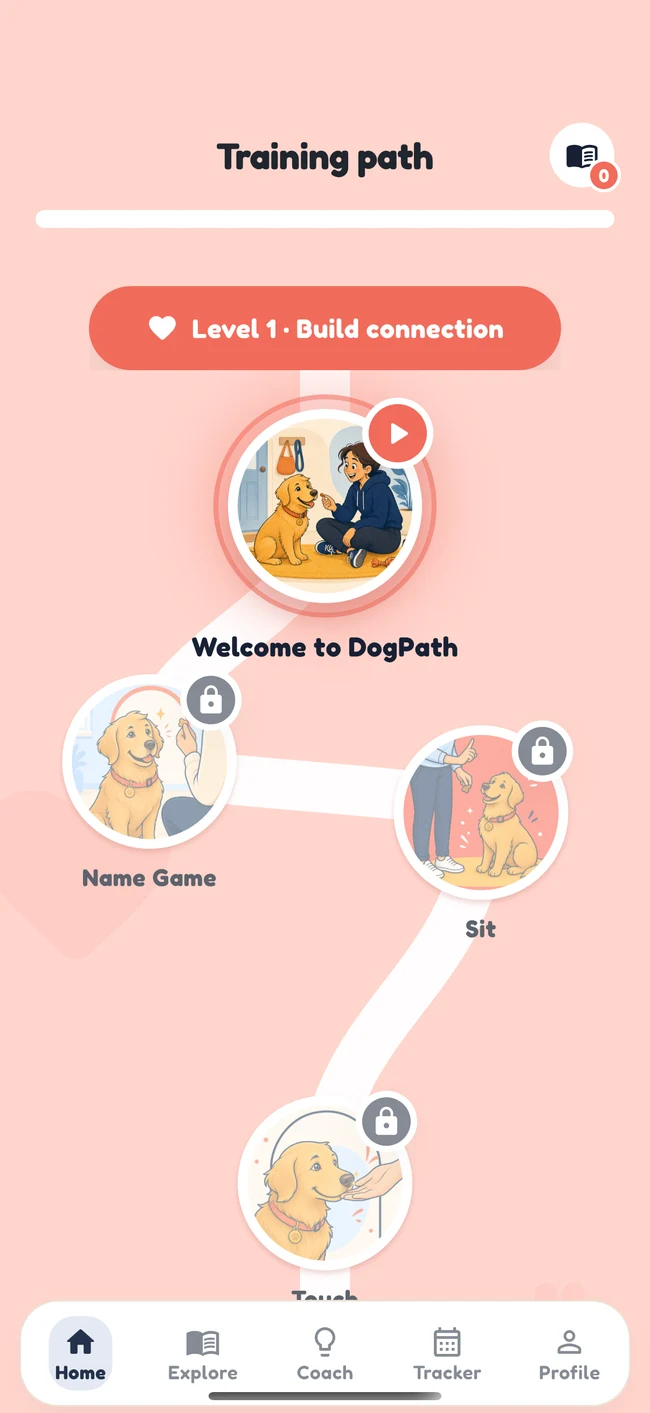
Choose a goal that matters in your routine: returning when called, calmer arrivals or a comfortable walk. DogPath uses your dog’s profile and selected goals to organise a training path. Begin with the prerequisites rather than skipping to the hardest version.
Read the setup before the first repetition
Open the lesson while your dog is resting. Prepare the equipment and rewards, check the steps and decide where to practise. Each lesson gives you something concrete to work on, rather than leaving you to assemble a session from scattered tips.
Let the result decide the next step
Mark what you completed honestly. A familiar skill in a quiet room may still need practice somewhere else. Use progress as a record of experience, not permission to remove safety management before your dog is ready.
Keep room for an ordinary week
The weekly plan gives your practice a structure. If a day goes differently, return to an easy starting point. Training should fit alongside exercise, rest, enrichment and veterinary care, rather than competing with those needs.
Turn a broad goal into a lesson you can use today
“Better behaviour” can mean several unrelated things. Before opening a lesson, choose the moment you want to improve: a comfortable start to a walk, returning across a quiet room or resting while you read. Describe the smallest visible action within that moment.
Now compare the lesson with the conditions you can arrange. If the exercise asks for a quiet place, check that the room really is quiet at the time you intend to practise. If you need a reward ready, prepare it first. Reading the lesson is part of the session preparation, rather than something to do while the dog is already waiting.
An example starting choice
A household wants calmer departures. Instead of beginning with the busiest front-door scene, it chooses a nearby attention exercise in a familiar room. The practical goal is one turn towards the handler, with a reward ready. That foundation does not solve every departure difficulty, but it provides a clear first lesson.
Use the path to keep direction while retaining judgment about the actual setup. A lesson that appears next in a sequence can still need repetition, simplification or individual guidance. Progress through the app should reflect your experience, not create pressure to move faster than the dog.
Prepare, practise and review: a complete session
Use three separate moments with the app. Before practice, read the instructions and decide on the first repetition. During practice, give your attention to the dog and the surroundings. Afterwards, return to the plan and record completion honestly.
- Prepare the lesson: identify the behaviour, the reward and the place where the exercise will happen.
- Prepare yourself: rehearse any awkward handling, put equipment within reach and decide how to finish.
- Try the easy version: begin with the smallest appropriate response and observe comfort as well as the outcome.
- Review: decide whether the next opportunity should repeat, simplify or make one modest change.
A phone is useful for holding the lesson, but it should not demand your eyes during a moment that needs safe handling. Read ahead and put it somewhere secure. The dog does not need to wait while you scroll through the next paragraph.
If the session is interrupted, record what you actually did. “Prepared, then postponed because the room became busy” is an accurate outcome for your own notes. The next useful action is arranging a better opportunity, not rushing several repetitions to mark a lesson complete.
Use one lesson across a week of real interruptions
Choose one lesson from the training path and decide which version fits your space. Read it before the dog joins you. The example below shows how the same lesson can remain useful when the week changes; it is a household plan you can adapt.
Example · A nearby attention lesson
First opportunity: read the lesson, prepare rewards and practise the nearby response in the kitchen.
Next opportunity: repeat the same setup. Keep the cue, starting distance and reward position familiar.
An interrupted day: visitors arrive before practice. Postpone the lesson and return to the easy kitchen version later.
A different handler: share the cue and reward arrangement. Have that person begin nearby rather than adding distance at the same time.
Weekly review: use what happened to choose repetition, a smaller step or one modest change.
Use DogPath’s weekly plan for the lesson sequence. Keep details such as “visitor arrived” or “reward packet was not open” in your chosen notes so you can recreate the useful setup. Completing the lesson records practice; the circumstances explain what to repeat.
There is no catch-up requirement in this example. A missed opportunity does not mean the next session needs extra repetitions. Reopen the relevant lesson, prepare its easy version and begin from what your dog can comfortably do now.
Understand what a progress record can and cannot tell you
Completing an exercise records an experience. It does not prove the same response is ready in every location. A quiet-room recall and a recall near wildlife are different situations, even when the cue is identical. Keep those distinctions in your own review of progress.
Ask what changed when a familiar response became difficult. Was the distance greater? Was another person present? Did you wait longer before rewarding? Choose one of those changes to simplify, rather than treating the whole lesson as lost.
Use the plan alongside other support
If a qualified professional has given you an individual programme, their assessment should guide appropriate practice. The app can help you organise ordinary foundations, but you should not combine several plans without understanding how their exercises fit together.
For pain, sudden changes, severe distress or safety concerns, the next step may be veterinary or in-person behaviour support. A longer streak or another completed lesson cannot answer those questions.
The practical value of a training plan is continuity: you know what you tried, can return to a familiar lesson and can choose the next manageable step. The quality of those decisions matters more than the appearance of rapid progress on a screen.
Questions & answers
What if my dog needs longer than the plan suggests?
Repeat or simplify the appropriate lesson. The sequence helps organise practice; it is not a deadline for your dog. Use comfort, the actual setting and any individual professional advice to decide the pace.
Can I use the plan for an adult dog?
Everyday foundations can be useful beyond puppyhood. Choose an appropriate starting point based on the dog’s experience and physical comfort. A familiar cue may still need easier practice in a new setting.
Should I mark a lesson complete after one good response?
Record your experience honestly and follow the lesson’s instructions. A single response does not establish reliability everywhere. Keep context in your review and return to the lesson when a new situation needs practice.
How does this differ from a focused program?
The training path provides broader direction across skills. A focused program organises practice around one recurring challenge. Choose the format that matches your current need and avoid stacking more work than you can carry out comfortably.