A puppy potty training schedule is a household plan for offering the right opportunity at the right time. It is not a test of how long your puppy can wait. Start with the ordinary transitions in your day and keep enough detail that another person can take over.
Put it into practice
Make the next toilet trip count
Choose an appropriate toilet place, prepare your route and keep a suitable reward ready. Ask your veterinarian which outdoor areas are appropriate for your puppy.
- Go at a useful transition. Offer an opportunity after waking, meals or active play, and respond sooner if you see signs of needing to go.
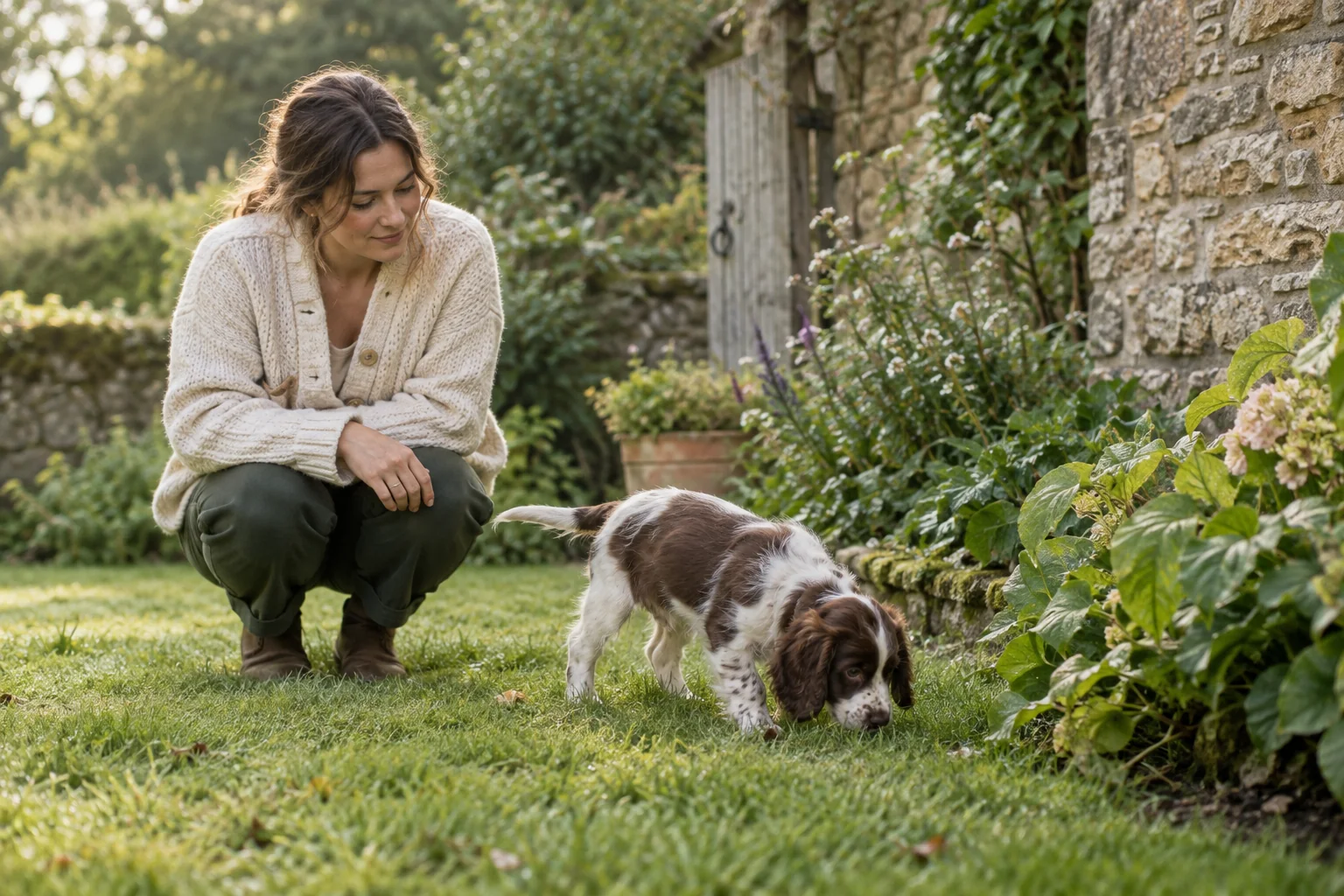
- Stay and observe. Give your puppy a quiet opportunity. If they toilet, wait until they have finished, then reward while still at the spot.
- Record the outcome. Write “pee seen,” “poop seen” or “nothing observed,” along with the time. Name the person supervising on the return indoors.
What happens next?
- Nothing happened
- Return to close, calm supervision and offer another opportunity when needed. Avoid giving unsupervised access to the whole home after an unconfirmed trip.
- An accident happened
- Clean it calmly. Check which transition, sign or handover the plan missed and change that specific step.
- Something looks wrong
- Pain, blood, repeated straining or a sudden change needs veterinary advice. Straining without producing urine is urgent; do not wait for a better training record.
Choose the place and prepare the handover
Agree where you will take your puppy, keep the route clear and make suitable rewards easy to reach. Use a safe outdoor area appropriate for your puppy; ask your veterinarian about access while vaccinations are in progress.
Choose who is responsible for the next outing. “Alex takes over after breakfast” gives the household a clear handover. “Someone will keep an eye on them” leaves a gap, especially when everyone is getting ready to leave.
A flexible puppy potty training schedule
Use these events as prompts, with extra opportunities whenever your puppy needs them. The table is an example planning aid, not a complete list of breaks or an age-based guarantee.
| Daily moment | Plan the opportunity | Record one detail |
|---|---|---|
| Waking up | Make the potty outing the next activity. | Wake time and what happened. |
| After a meal | Plan an outing and watch for signs sooner. | Meal time and the next successful break. |
| After play | Offer a calm trip to the chosen spot. | Whether activity changed the usual pattern. |
| After a nap | Repeat the waking routine. | Who handles this outing. |
| Bedtime and overnight | Offer a bedtime opportunity and respond to needs overnight. | What support was needed for the next night. |
The AKC potty-training overview describes these routine transitions. Your observations decide how the pattern fits your own day; do not wait for the next row if your puppy needs to go.
Make the reward explain the place
Go with your puppy so you can notice when they finish. Reward promptly while still at the appropriate spot. Keep the trip calm enough to see what happens; an outing that becomes a busy greeting may be harder to interpret.
The RSPCA toilet-training guidance describes signs such as sniffing, circling and fidgeting, and recommends rewarding after toileting. Learn your puppy’s pattern rather than waiting for a perfect signal at the door.
Use a log that leads to a decision
Record the event, the outcome and the next responsible person. You do not need a complicated score. These fictional entries show how a short note can make the next decision clearer:
- 7:05: woke, went to the garden, peed. Alex is supervising next.
- 7:20: breakfast. Sam will handle the next outing and watch for signs.
- Later: accident after play while both people were occupied. Next time, assign the post-play outing before starting the game.
The times describe one imagined household, not recommended intervals. The useful finding is the missed handover. Write down the change you will make, then see whether it helps. A notebook or DogPath’s potty log can hold the record.
Respond to accidents and interrupted routines
Clean up calmly and do not punish an accident. Review the previous activity and whether an outing was missed. A disrupted day may need closer supervision and more frequent opportunities while you find the pattern again.
If training is not progressing or a change raises health concerns, contact your veterinarian. A log describes what happened; it cannot establish why. Avoid treating every accident as a training mistake.
Keep the rest of puppy life manageable too. Our first-week puppy training guide covers rest, name recognition and settling into the household alongside the potty routine.
For accidents soon after an outing, follow what to do when your puppy pees inside after going outside. It separates what happened outdoors, supervision after returning and signs that need veterinary advice.
Fill the supervision gaps in a real morning
Use the event-based schedule in chapter 2, then check the minutes between its rows. A puppy may have an outdoor opportunity and still return to a room where nobody is watching. Giving each transition an owner closes that gap.
Worked example · Two people leaving for work
After waking: Alex accompanies the puppy outdoors. No pee is seen. Alex tells Sam the outcome before starting breakfast.
Back indoors: Sam supervises in the prepared room and is responsible for the next opportunity. Alex does not assume Sam heard a comment made from another room.
After the next trip: Sam records what happened and confirms who takes over before leaving.
Write the handover in one sentence
“After waking, no pee observed outside; Sam is supervising now and will offer the next opportunity.” This communicates the trigger, the outcome and the current responsibility. A clock time can be added to help reconstruct the sequence.
If neither person can supervise, arrange suitable care before leaving the puppy. A schedule written on the fridge cannot cover an actual gap in care, and a previous successful outing does not establish how long this puppy can wait.
Use the same structure when the day changes
At weekends, keep the handover even if waking and meals occur later. When a visitor interrupts a trip, record the interruption and what you actually saw. When a nap ends early, respond to the waking puppy rather than waiting for the planned row in the schedule.
The routine becomes more useful as people communicate what happened. Do not turn those notes into a rule that the puppy must wait until the last expected interval has passed.
Make apartment and shared-household routines workable
In an apartment, the route to the toilet area may include keys, doors, a lift and shared space. Prepare the human part of that route in advance. Keep the items you need accessible and decide how to move safely without having to assemble everything after you notice a sign.
Ask your veterinarian about suitable toilet locations and outdoor access for your puppy’s health and vaccination situation. A general article cannot determine whether a particular shared area is appropriate. If your household uses an indoor toilet arrangement, agree on its purpose and location so people do not give conflicting access or expectations.
Share outcomes, not assumptions
“We went downstairs” and “I saw a completed pee outside” communicate different information. After an outing without a clear outcome, the next person needs to know that supervision and another opportunity may still be needed. Avoid relying on a tick box that cannot distinguish those situations.
For example, one person could record: “After waking; quiet outdoor visit; no pee seen; Jamie supervises in the prepared room.” The next decision follows from the observation, without requiring the puppy to fit an interval copied from a chart.
If the route is consistently too slow or difficult to manage, discuss a workable arrangement with an appropriate professional rather than trying to make the puppy wait longer.
Plan the evening and overnight handover
A busy evening can create a chain of small missed observations. Visitors arrive, dinner is cleared and someone assumes the puppy has already been outside. Put the last care handover into words before everyone settles down. Include the most recent observed toilet outcome and who responds when the puppy next wakes or needs help.
Prepare a safe route and the equipment you need before bedtime. Keep necessary outings calm and practical, then return to the resting arrangement. Individual puppies have different needs; do not use a general chart as evidence that your puppy should manage a particular length of night without an opportunity.
An evening example
The puppy wakes after a nap while the household is watching television. One adult accompanies them to the appropriate spot and records a completed pee. Later, the puppy becomes active during a game. The household recognises this as new context to consider, rather than assuming the earlier outing covers the whole evening.
If nights are persistently difficult, share the pattern with your veterinarian and a suitable trainer. Include what you observe, when the puppy wakes and what happens on the outings. Do not restrict ordinary access to water as a shortcut to a schedule; individual health or fluid instructions belong with the veterinarian.
Use a weekly review to find the missing step
At the end of a few ordinary days, look for a practical gap you can change. You are not calculating a score for the puppy. You are checking whether opportunities, observation and supervision line up with the household routine.
- Outings are recorded but outcomes are often blank
- Agree who stays with the puppy and records what happened.
- Accidents follow a care handover
- Make the handover explicit before the first person leaves.
- The puppy disappears into another room
- Review the supervised space and how access to the home is managed.
- The pattern changes suddenly
- Discuss the change with your veterinarian rather than treating it as a timetable problem.
A fictional review might reveal that weekday mornings are well organised but weekend breakfast is not. The next adjustment can be as specific as assigning the waking-period outing before cooking begins. You do not have to replace the whole routine.
Keep successes in the record too, including the setup that made them possible. “Accompanied after waking; rewarded outside after finishing” provides a repeatable sequence. If difficulties continue despite a workable routine, share the record with your veterinarian instead of continually shortening intervals without considering other causes.
Common questions
How often should I take my puppy out to potty?
Plan around waking, meals and play, then add opportunities according to your puppy’s signs and recent pattern. Age alone does not give you a dependable interval. Offer an outing sooner when needed rather than making your puppy wait for a scheduled time.
How long does potty training take?
The timeline varies with the puppy, their health, learning history and the opportunities available. Use the record to improve the routine instead of working toward a guaranteed number of days. Ask your veterinarian if you are concerned about progress or a change.
What if my puppy pees indoors after going outside?
Record whether anything happened outside and what followed the trip. Review distractions and supervision, then offer another opportunity when needed. Do not punish the accident. Persistent difficulty or health concerns call for veterinary advice.
Is there a reliable age-to-hours formula?
A simple formula cannot account for your puppy’s health, activity, individual needs and the difference between sleeping and being awake. Use observation, relevant care events and veterinary advice to plan opportunities. Do not test how long the puppy can wait to satisfy a chart.
What should a second caregiver know?
Share the last observed toilet outcome and time, what happened since, and who is supervising now. Say explicitly if nothing was observed on the outing. Example: “Woke, went out, no pee seen; Jamie is watching in the kitchen and will offer the next opportunity.”
Should the weekend schedule match the weekday clock?
Keep the care principles consistent while adapting to events. If waking and breakfast move, the relevant opportunities move too. Arrange responsibility before the change in household rhythm creates a supervision gap.
When can I stop using the log?
Use it for as long as it helps decisions and communication. You may need fewer entries as the routine becomes familiar, then return to closer observation after a change. Persistent or new difficulties deserve appropriate advice regardless of how long you have kept records.
General training education for comfortable, everyday practice. Pain, sudden behaviour changes, panic, aggression or bite concerns need veterinary or qualified in-person behaviour support.