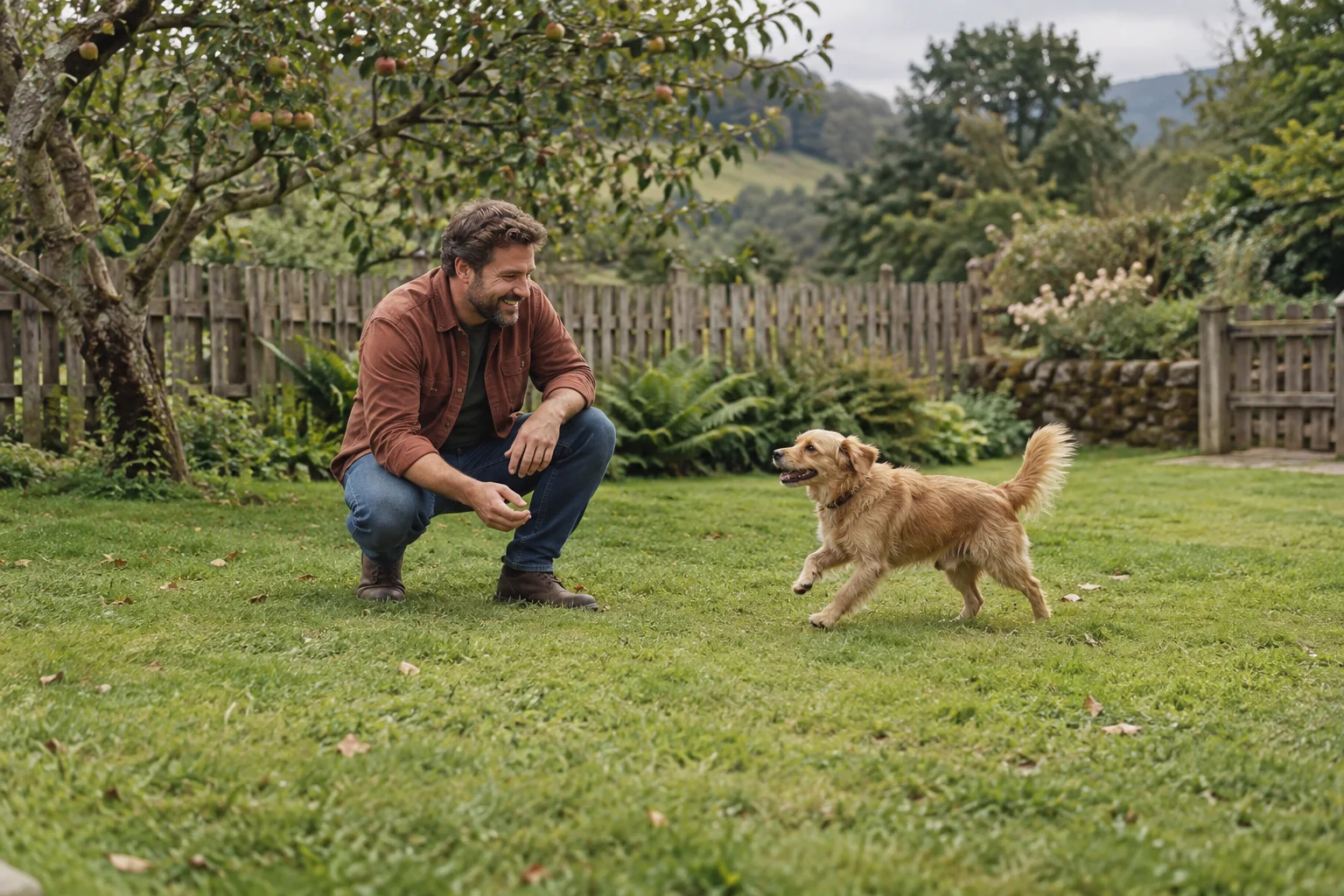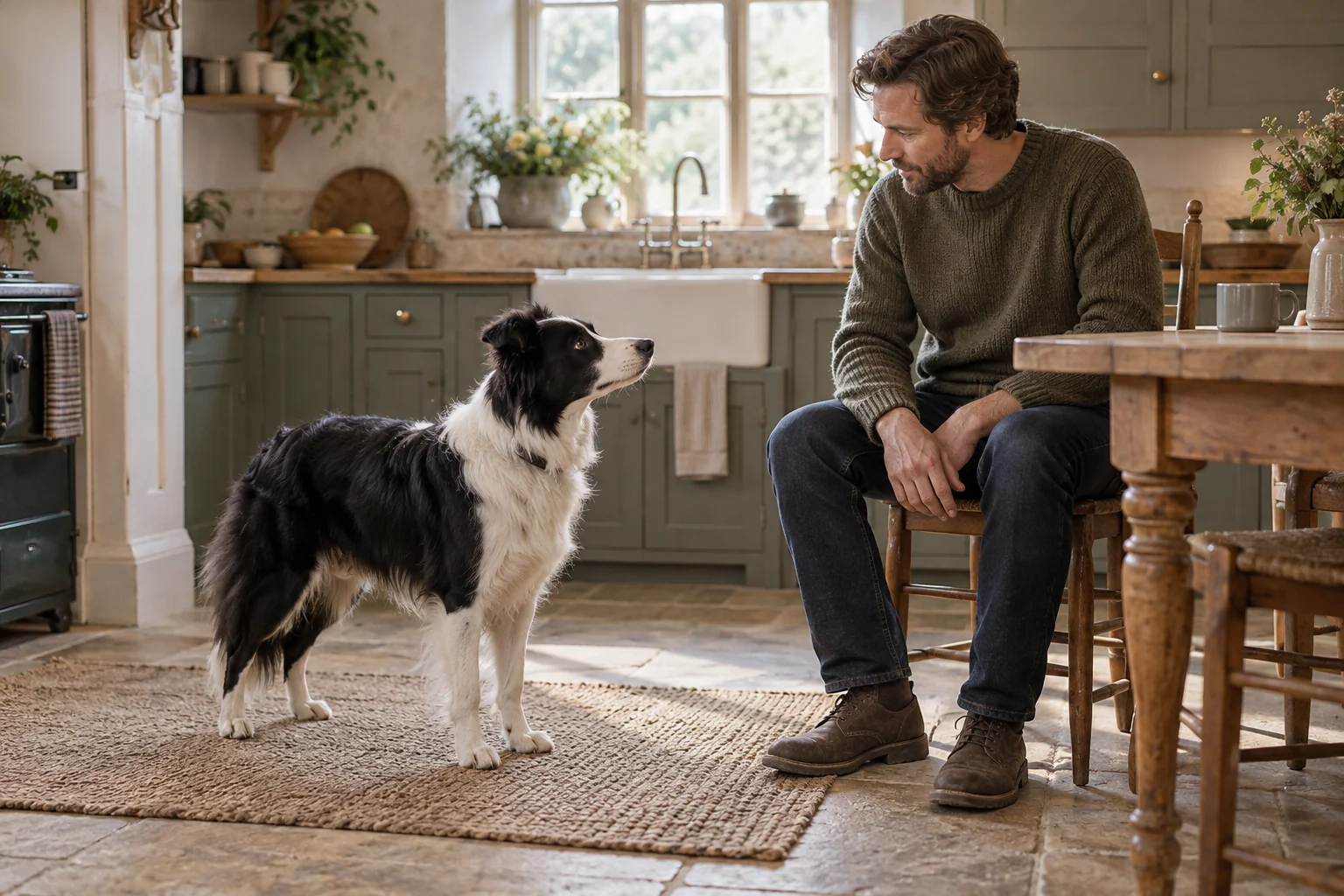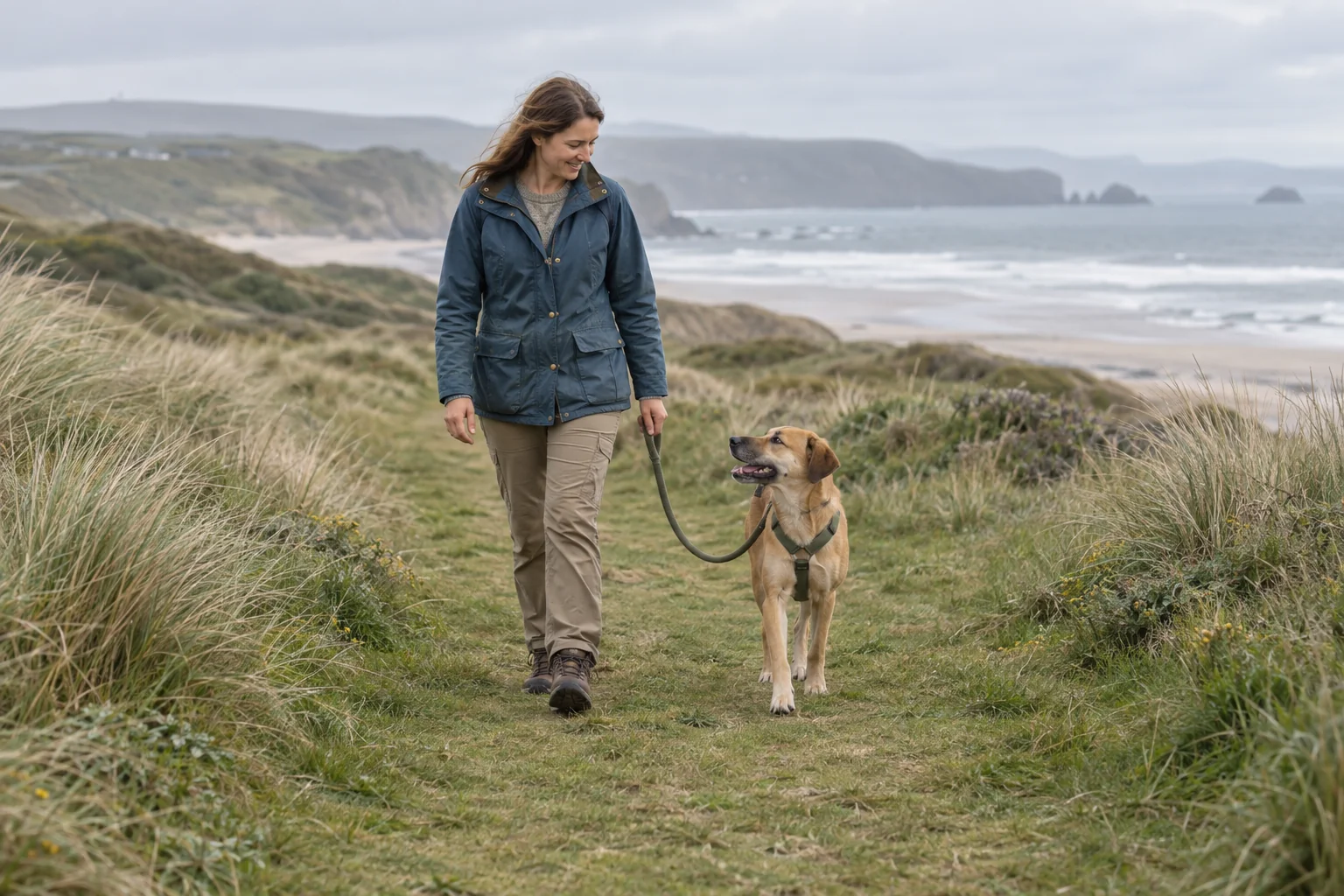
A loose leash is a shared walking skill. Your dog is learning how to move with you in a world full of interesting smells; you are learning when the surroundings make that lesson too difficult.
Put it into practice
Practise one loose-leash step
Use a quiet, safe stretch, comfortable equipment and rewards you can reach without searching a pocket. Start with enough slack for natural movement.
- Begin beside each other. Reward near your chosen side while the leash is loose. You do not need a formal sit or heel position.
- Take one step. If the leash remains slack, mark the moment if you use a marker, then deliver the reward beside you.
- Pause and reset. Let your dog finish the reward. Choose another single step or finish the practice block with safe exploration.
What happens next?
- The leash tightens
- Pause if it is safe. Resume with slack; do not jerk your dog back. If you cannot regain an easy starting point, leave that stretch and simplify the next attempt.
- One step becomes easy
- Keep the location and reward position the same and try two steps. If tension returns, go back to one.
- A dog or vehicle approaches
- Make room and move safely. Save the walking lesson for a setting where you have space to practise.
Separate practice from the whole walk
Pick a quiet, safe stretch rather than making every metre a test. Use comfortable, well-fitting equipment and a lead that gives your dog enough room to move naturally while you maintain control. Avoid neck pressure, lead jerks and tools designed to hurt or frighten.
Start at home or in a secure, low-distraction space if the pavement is already too exciting. A useful first goal is simply standing beside you with a slack lead. There is no need to demand a formal heel position or constant eye contact for an everyday walk.
Reward the position you want to see again
With your dog near you, mark a comfortable moment and deliver a reward close to your leg. Take one step. If the lead remains loose, mark and reward again. Build a handful of steps only when the easier version is becoming familiar.
Your timing should describe what worked. If you reach into your pocket only after your dog has surged ahead, the feedback becomes less clear. Practise the hand movement without your dog first: mark, reach, deliver. Our reward-marker guide covers that sequence.
Walk three comfortable steps across your hallway, reward beside you, then pause. Repeat a few times and finish. Tomorrow, use the same space before adding distance.
Respond to tension without a tug-of-war
If the lead tightens, calmly pause where it is safe. Give your dog a chance to turn back or shift closer. Reward the return of slack and resume with an easier stretch. If they cannot disengage from something ahead, create distance instead of waiting in a standoff.
A busy crossing is a management moment, not the place to perfect technique. Move to safety with the space and support your dog needs. If lunging, fear or bite concerns are involved, arrange qualified individual help rather than trying to work through them from a general walking guide.
If the leash becomes tight specifically during dog encounters, use our guide to pulling around other dogs for route planning, passing with space and deciding when to seek individual help.
Make sniffing part of the plan
Decide where training begins and ends. After a short practice block, give a consistent release phrase and allow a safe sniffing break. A walk can include both moving together and exploring; your dog does not have to spend the entire outing watching your face.
Notice whether a route gives you enough room to practise. A narrow path beside constant traffic may be a poor classroom. Choosing a quieter time or a wider route is a practical training change, not a failure to be consistent.
Add difficulty one detail at a time
Once a short stretch feels easy, change just one part: a few more steps, a slightly different place or a manageable distraction farther away. Keep rewards available. If the lead becomes tight repeatedly, return to a version where your dog can succeed.
Record the actual setup: “four steps outside our door with no passers-by.” That is a more useful reference than “walked well.” You can use DogPath’s walk tracking and training tools to keep outings and practice organised, while your notes capture the context.
Our approach follows the reward-based foundation described by AVSAB’s humane training statement. Comfortable equipment and a manageable environment support the lesson; they do not replace it.
Rehearse the human end of the leash
Before inviting your dog into the exercise, check whether you can carry the equipment and deliver a reward without tangling your hands. Put the phone away, make the reward accessible and choose how you will hold the leash comfortably. The point is to remove a handling problem from the first repetition.
Choose a side that works for the particular exercise and route. You do not need to teach a competition position. What matters initially is a clear place to deliver the reward and enough room for natural movement. If you bend awkwardly to reach a small dog, practise a comfortable delivery before adding walking.
A rehearsal without the dog
- Stand where the first repetition will begin and check the available space.
- Imagine one slack-leash step. Say your marker if you use one, then reach for the reward.
- Bring your hand to the chosen delivery position and return it to neutral.
- Check that the movement does not tighten or swing the leash.
When the dog joins you, start with less movement than you rehearsed. If the arrangement feels clumsy, stop and fix it. Repeating a handling mistake several times makes the session harder to interpret for both ends of the leash.
Build a route with a beginning, a practice stretch and an exit
An everyday outing has several jobs. Your dog may need to toilet, explore and move, while you also want to practise walking together. Decide which part of the route is suitable for the lesson before you leave. The busiest doorway or narrowest pavement may need straightforward, safe management.
Here is a fictional route plan. The first part leads past the building entrance, so the handler concentrates on space and getting out safely. A wider, quieter stretch provides room for a few rewarded steps. After that, a safe sniffing area marks the end of the practice block. On the return, the handler checks whether the same stretch is still quiet rather than assuming it must be used again.
- The route is quieter than expected
- Repeat the familiar easy version. An empty path does not require a harder lesson.
- The planned practice area is busy
- Use another suitable area or skip the training block.
- You are short of time
- Meet the outing’s practical needs and save the lesson for a calmer opportunity.
The Dogs Trust walking guide supports comfortable equipment, easy beginnings and gradual practice. This route plan is our own example of organising those choices.
Troubleshoot the moment the leash becomes tight
Your dog moves ahead as you search for the reward
Make preparation the next change. Put the reward where you can reach it, begin with a single step and deliver promptly near your side. Do not add several more steps while you are still sorting out the hand movement.
Your dog crosses in front of you
Pause before the line becomes tangled. Review where you are delivering the reward and whether the available space makes your intended route clear. Begin stationary again, then add one comfortable step. Avoid using a sharp leash movement to put the dog back into place.
Your dog repeatedly reaches a smell and pulls
Decide which safe exploration opportunities belong in the outing. Practise your walking pattern away from the most absorbing spot first. When moving to an allowed sniffing area, keep handling comfortable and the route manageable instead of staging a prolonged contest over access.
Stopping makes the situation more difficult
Safety takes precedence over holding your position. If traffic, a nearby dog or a confined path makes standing still unsuitable, move to a safer place. Repeated pulling in the same stretch tells you to reconsider the classroom, not to remain there until the dog gives the response you wanted.
Know when to add a step, a place or a distraction
Before making loose-leash walking harder, describe the version that currently works. For example: “Two steps beside the driveway, leash slack, reward delivered by my left leg.” Watch whether that version is becoming familiar over separate opportunities, with comfortable movement and without needing to hold food against your dog’s nose.
Choose the next change from the question you actually need to answer:
- Can we walk a little farther?
- Keep the same starting point and quiet surroundings. Try one additional step before the reward. If that extra step brings tension, reward sooner on the next attempt.
- Can we do it somewhere else?
- Choose another quiet, safe spot and return to a single step. The new location is already the change.
- Can we keep moving with activity nearby?
- Keep the stretch short and leave enough distance to remain comfortable. If attention locks onto the activity, make space instead of trying to walk closer with food at your dog’s nose.
Worked example · The reward came too late
Before: one step worked. On the next attempt, the handler tried four steps while searching for a treat; the leash tightened.
Change: prepare the reward and return to one step. Once that is familiar, try two in the same place.
Lesson: adding distance and delaying the reward together made it unclear which change caused the difficulty.
Describe progress by the situation you can repeat, not by a whole-walk label. A dog can be learning well on a quiet stretch and still need help at the building entrance. Keep the entrance as a separate planning problem.
Common questions
Is loose-leash walking the same as heel?
No. Everyday loose-leash walking allows comfortable movement and sniffing within the length of the leash. A formal heel asks for a more specific position. Start with slack in the leash rather than expecting your dog to watch you for a whole outing.
Why does my dog still pull around other dogs?
Another dog changes the difficulty of the exercise. Create enough distance for your dog to engage comfortably and practice the smallest familiar version. A successful hallway session does not mean the same skill is ready for a close greeting.
Will a harness stop pulling by itself?
Comfortable, well-fitting equipment helps you manage the walk, but it does not teach the walking pattern. Pair the equipment with an easy setting, useful reward timing and gradual practice.
Which side should my dog walk on?
Choose a side that makes handling and reward delivery clear for your exercise and surroundings. Everyday loose-leash walking does not require a formal heel position. When a different arrangement is needed for safety or access, make that change deliberately rather than tangling the leash across your body.
Should I train on every walk?
You can include a small practice block when the route and your dog’s comfort allow it. Some outings are better used for ordinary care and safe exploration. Do not force a lesson into a crowded setting just because the previous walk included one.
Why does my dog walk differently with another person?
Compare the route, pace, leash handling, reward location and expectations. The difference does not identify a single cause. Agree on one easy exercise and observe it with each person in a similar setting before deciding what to change.
When should I make the walking exercise harder?
Look for slack throughout the short stretch, comfortable movement and a reward you can deliver without holding food at your dog’s nose. Check that the same setup remains easy on later opportunities. Then add one step in the same place, or try the original short version somewhere quiet. Reduce the demand if tension returns.
General training education for comfortable, everyday practice. Pain, sudden behaviour changes, panic, aggression or bite concerns need veterinary or qualified in-person behaviour support.