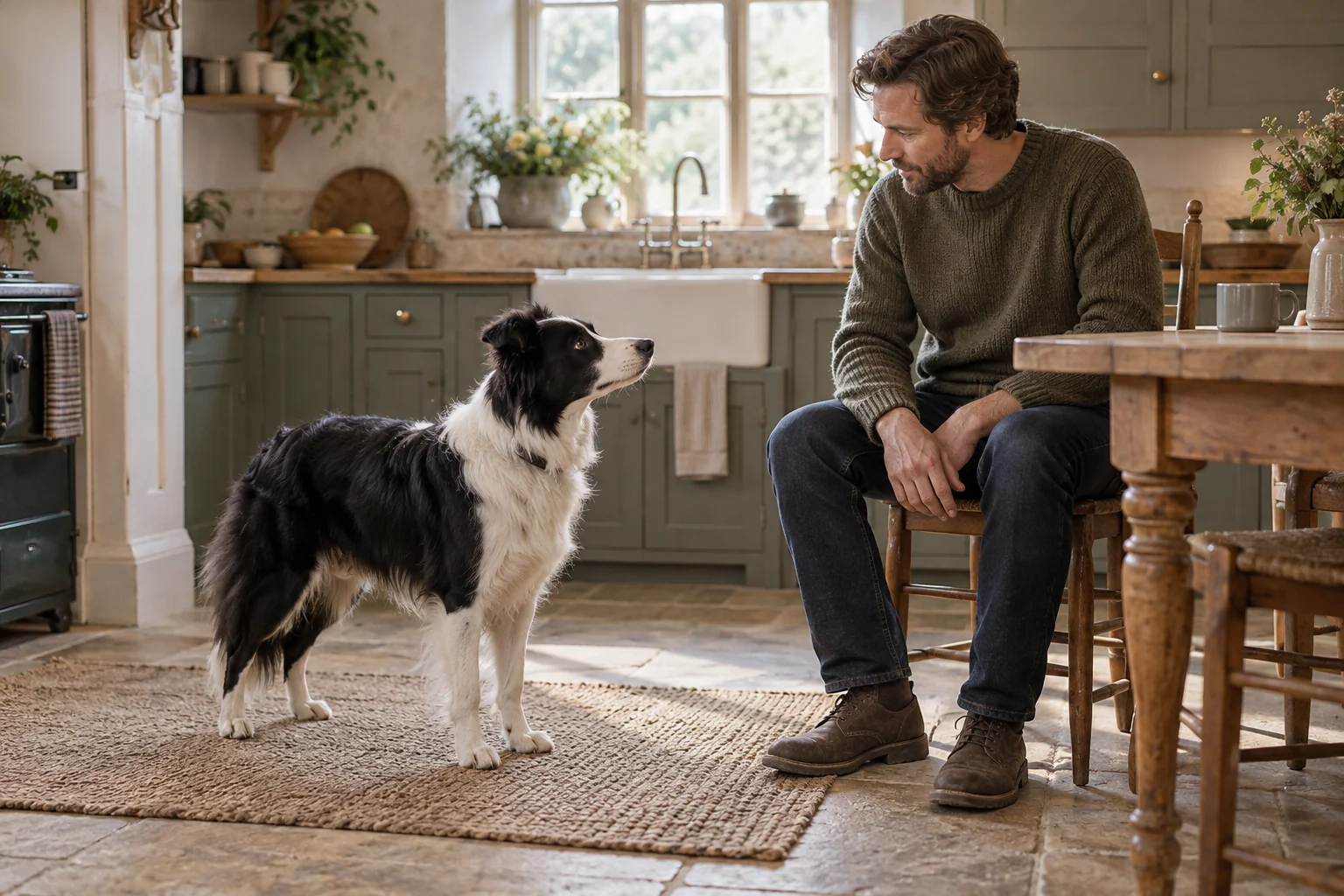
Begin with something you can actually observe
Broad labels are difficult to teach. “Polite” could mean not jumping, waiting at a doorway or walking comfortably near a person. Choose one visible action within the situation you care about. That gives you a starting point and a way to recognise the moment you want to reward.
For example, a front-door goal might begin with four paws on the floor while the handler stands nearby. It does not need to begin with a visitor entering, bags moving and several people speaking at once. The smaller action is easier to observe and prepare for.
Write down the action, the location and the easiest appropriate version. If another person reads your note, they should be able to describe the same exercise. This is useful whether you use an app, a notebook or lessons with a qualified professional.
Observation also keeps progress honest. A dog who stood quietly in a prepared room has done that particular thing. The result does not establish that every doorway or visitor interaction is ready.
Separate teaching from managing a difficult moment
Teaching involves a planned opportunity to learn. Management helps you handle daily life and prevent unsuitable or unsafe situations while that learning develops. Both can be useful, but they answer different questions.
A quieter route may make a walk manageable today. A short exercise in a suitable place may help build a walking skill over time. Choosing the route does not prove the skill is finished, and missing a formal exercise does not make safe route planning less valuable.
A fictional household example
Today’s management: prepare space before a visitor enters and give the dog an appropriate quiet area.
Today’s teaching: practise a small voluntary interaction with the mat during a separate quiet period.
Later review: decide whether a modest household movement is a suitable next step.
Do not use a real high-pressure event as the first test of an unfinished skill. If a situation involves serious fear, aggression or bite risk, an individual professional plan should guide both management and practice.
Make feedback timely and the reward worthwhile
Prepare the reward before the useful moment occurs. Decide where you will deliver it and whether you are using a trained marker. A clear sequence gives your dog information about the particular action you noticed.
A reward is something the individual dog values in that context. Food, suitable play or access to an appropriate activity can have different practical roles. Account for food rewards in daily intake and use veterinary guidance where diet or health requires it.
For an early attention exercise, the sequence can be simple: a brief turn towards you, a marker if one is already understood, then the reward. Avoid waiting until several other actions have happened before searching for the treat pouch.
Rehearse your own movement separately if it is difficult. Better preparation may improve a lesson more than asking the dog for another repetition while you are still sorting out equipment. The marker guide explains cues, lures, markers and rewards in detail.
Change one part of the challenge at a time
A longer wait, a greater distance and a new distraction are separate changes. Introducing them together makes it difficult to know which part caused confusion. Keep most of the scene familiar when exploring one modest next step.
For example, if your dog comfortably rests on a mat while you read, moving the mat to a noisy café is not merely “the same exercise outside.” The space, sounds, people, smells and available exits have all changed. Another quiet room may be a more useful intermediate question.
Use the previous comfortable version as a reference. If the next attempt is difficult, return to an easier arrangement and review what changed. This is a practical decision, not a failure to be consistent.
The AKC’s training-variable explanation discusses duration, distance and distraction. Our guides apply that distinction through everyday examples rather than prescribing one timetable for every dog.
Review comfort and know when a guide is not enough
Look at the whole dog in context. Position alone does not establish comfort: lying down can be different from resting, and standing still can be different from feeling at ease. Notice changes in movement, engagement and the surrounding situation rather than relying on a single sign.
If an exercise becomes uncomfortable, stop and make the next setup easier. If you suspect pain or notice a sudden behaviour change, contact your veterinarian. Severe distress, aggression and safety concerns need suitable individual behaviour support.
When choosing a professional, ask about their methods, qualifications, how they adjust an exercise and when they refer to a veterinarian. You should understand both the practice plan and what to do when it becomes too difficult. AVSAB’s position statements provide guidance on humane methods and choosing a trainer.
Keep your own review brief and useful: what happened, what you changed and what should happen next. The purpose is a clearer decision for the next day, not a score that conceals the conditions of the session.