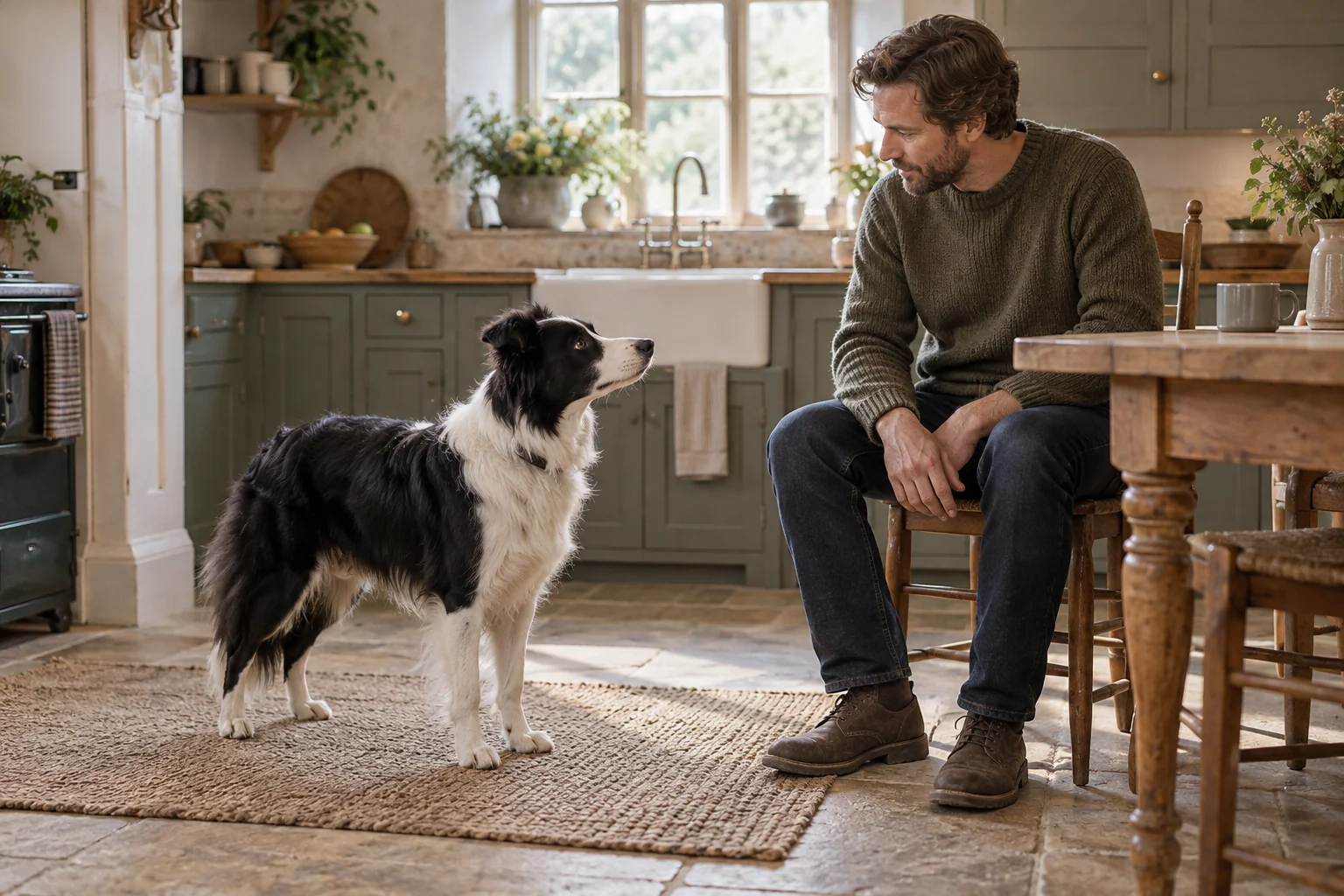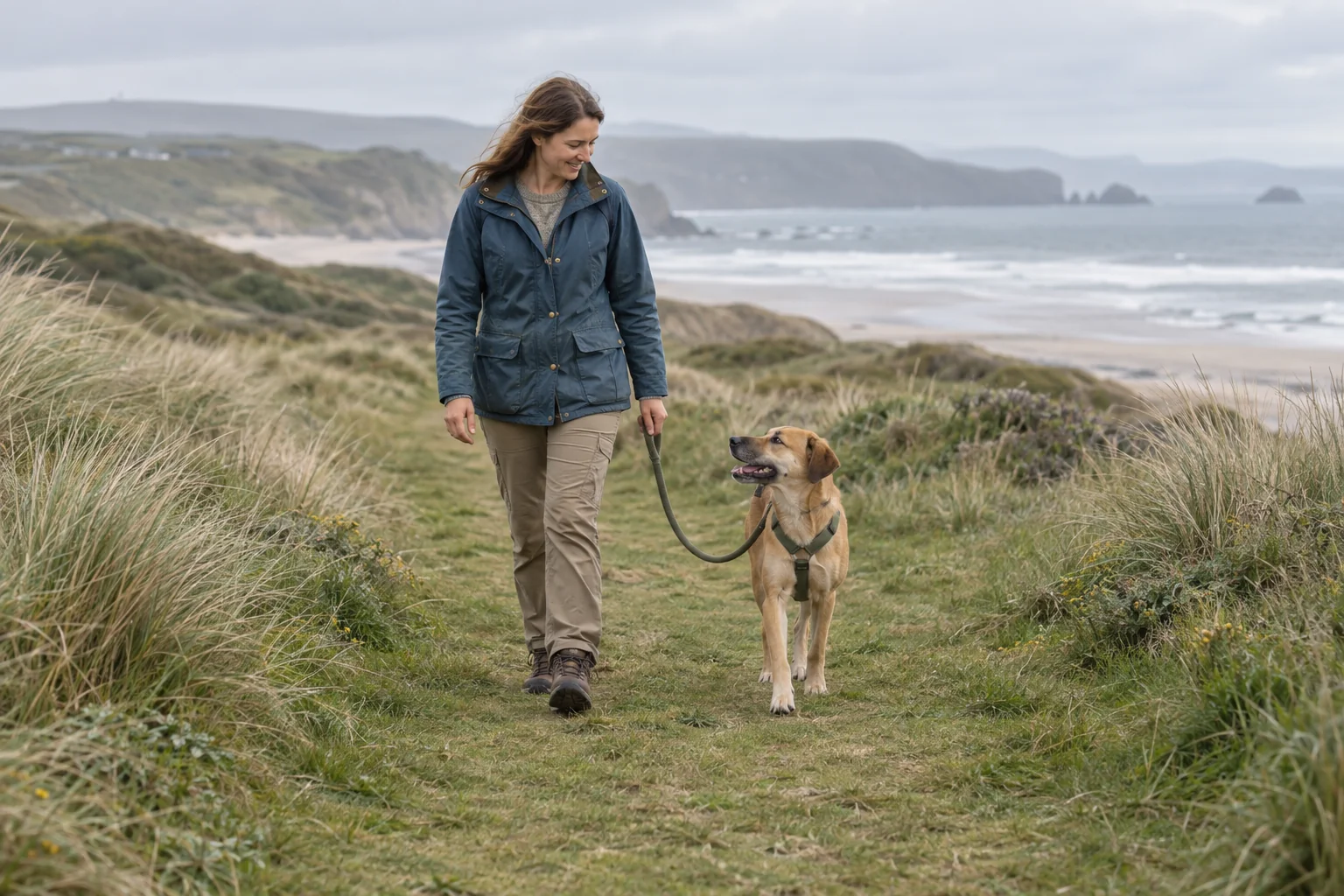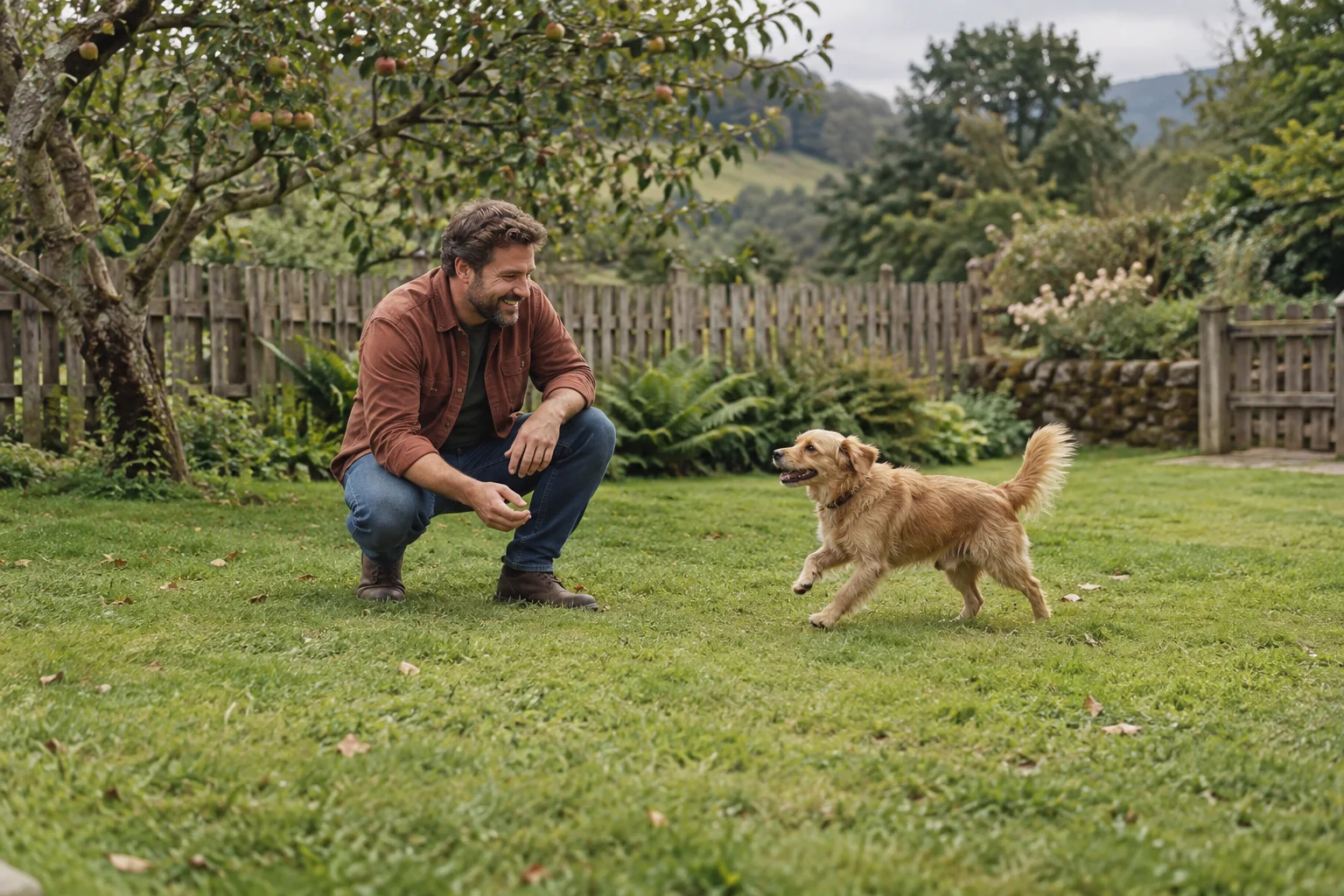
A recall that works across the living room can struggle beside a busy path. Outside brings more than extra distance: movement, smells and unfamiliar activity can all change the task. Use this guide to compare the two situations and choose a practical place to restart.
Put it into practice
Rebuild the shortest outdoor return
Choose an enclosed outdoor space or an appropriate, safely handled long line attached to a harness. Avoid roads, wildlife and tangling hazards.
- Begin nearby. Keep the distance shorter than the indoor version. Allow your dog to notice the setting before asking for a recall.
- Choose a moment of available attention. If your dog can comfortably notice you, cue once and reward arriving close. Skip the attempt if they remain absorbed in a distraction.
- Record the response. Separate “did not turn,” “turned but stayed” and “approached but stopped.” Each describes a different part of the exercise.
What happens next?
- No response
- Keep freedom safely managed and leave the difficult setup. Do not use the line to reel your dog in as a training correction.
- A short return works
- Repeat that arrangement. Change distance only after the nearby version is familiar; keep distractions and location the same.
- The field gets busy
- Finish or move to a quieter suitable space. Yesterday’s location can be a different training situation today.
Compare a successful recall with the missed one
Write down one recent response that felt easy and one that did not. Include the place, how far apart you were, what your dog was doing and what happened when they arrived. This avoids changing everything at once in the hope that something will work.
At home: a few steps apart, quiet room, dog already looking around casually. Outside: much farther away, a moving dog nearby, called just before leaving the park. Those are several changes, not one.
The next attempt should remove most of those changes. If the cue is still unclear in a quiet room, start with the foundation recall lesson before adding an outdoor challenge.
Manage freedom while you rebuild the response
Use a safely enclosed area or an appropriate leash or long-line setup during practice. A long line requires a well-fitting harness, clear space and careful handling so dogs and people do not become tangled or hit the end at speed. Ask a qualified trainer to show you handling if you are unfamiliar with it.
Respect local leash rules and keep away from traffic, livestock and wildlife. A successful practice recall is not proof that an unfenced place is safe. Dogs Trust’s recall guidance covers gradual outdoor practice with a long line attached to a harness.
Build a bridge between the house and the busy route
Use a progression based on the setting rather than a calendar. These stages are an original planning example; repeat or simplify them as needed.
- Familiar room: a short, easy recall with the usual reward.
- Another quiet indoor space: keep the distance short while the place changes.
- A secure, quiet outdoor area: begin nearby and allow time to notice the surroundings.
- A manageable outdoor distraction: keep distance and the exercise easy while you assess whether the setting still works.
Do not advance because you completed a certain day. Note whether the response is comfortable and repeatable. If the outdoor area is too busy when you arrive, ordinary safely managed activity can replace the lesson.
Make arriving near you worthwhile
Have an appropriate reward ready before calling. Use the cue once when the response is likely, then reward reaching you. Include practice that ends with a release back to a safe activity so returning does not always mean the outing is over.
If your dog comes slowly, avoid scolding them on arrival. The AKC recall guide describes rewarding returns, keeping practice manageable and avoiding repeated unsuccessful cues. Changing the word alone will not replace the practice that gives it meaning.
Prepare your own sequence before the dog joins you: notice the moment, cue, receive the dog, reward, then release or pause. If you are fumbling with the leash and reward together, rehearse those movements separately.
After a missed recall, change the next attempt
Stay calm and use your existing safe management to collect your dog or leave the difficult setup. Avoid yanking them in or turning repeated calling into the entire interaction. Once everyone is secure, decide what you will simplify next time.
- Distance increased
- Return to a nearby response in the same easy setting.
- A distraction appeared
- Choose more space from that activity while keeping the recall short.
- Everything changed
- Return to the last familiar setup, then introduce one change.
This planning method is consistent with the three training variables described by the AKC. A new location can affect several of them, so make the opening repetition deliberately easy.
Keep a useful outdoor recall record
Record enough detail to recreate the setting: “quiet enclosed garden, nearby, no dogs passing.” Add the response and what you will repeat. “Worked outside” is less useful because tomorrow’s outside may be completely different.
For example: “Returned comfortably before the path became busy. Next time, use the same quiet period and short distance.” Keep observations with your lessons in DogPath or in a notebook. If recall difficulties accompany panic, chasing that you cannot safely manage, or a sudden behavior change, arrange individual professional help.
Find which part of the outdoor recall breaks down
Replace “ignores me outside” with the last part of the return you actually saw. This helps you choose a smaller exercise without adding a new cue, reward and location at the same time.
- No turn towards you
- Write what your dog was doing before the cue. Next time choose a quieter, nearby moment when attention is available. Do not repeat the cue into the same absorbing activity.
- A turn, but no movement
- Reduce the distance and make the path to you clear. Reward a complete, very short return before expecting travel across the whole space.
- An approach that diverts halfway
- Note what was on the route: another animal, a smell or moving people. Try a shorter, clearer route in a suitable enclosed setting.
- An arrival followed by immediate retreat
- Review your hands and what follows the reward. Avoid sudden grabbing. Practise comfortable equipment handling separately if that part causes concern.
Worked example · A turn beside the hedge
Observation: the dog turns at the cue, then goes back to sniffing. The handler is much farther away than during indoor practice.
Next setup: a nearby return in the secure garden, away from that absorbing spot and at a moment when the dog can notice the handler.
Kept the same: the cue, prepared reward and comfortable arrival.
This breakdown identifies what to practise; it does not diagnose the cause of a missed response. An abrupt change in a familiar skill, especially alongside changes in hearing, movement or everyday comfort, belongs in a conversation with your veterinarian.
Build a repeatable outdoor starting routine
Prepare the location and management before giving the first cue. Check the enclosure or suitable equipment, leave room to move and put the reward where you can reach it. Do not rely on recalling the dog to repair an unsafe setup after it has already gone wrong.
Give your dog a chance to notice the area while safely managed. Begin only if the situation is appropriate. A short, nearby invitation can be enough for the first outdoor lesson; the purpose is to create a clear response in this setting, not to measure the maximum distance.
- Check the space and decide how you will leave or collect the dog safely if needed.
- Start near the dog, with a comfortable route to you.
- Use the familiar cue when a response is likely.
- Reward arrival, then pause or release to an appropriate activity.
- Record what made this version manageable before changing anything.
If the location becomes busy, end or adapt the session. A venue being quiet at the start does not make it a suitable classroom for the whole outing. Use your plan to respond to the current conditions rather than to complete a predetermined number of recalls.
Choose a progression without jumping several steps
Use the last comfortable setup as a reference. Make a small change and keep the other parts familiar. The AKC’s explanation of duration, distance and distraction is useful for separating training variables; a new location can change more than one at once.
- Change the location
- Keep the recall nearby and begin at a quiet moment.
- Change the distance
- Use the familiar suitable location and avoid adding another distraction.
- A mild distraction is present
- Reduce the other demands and decide whether the scene is still appropriate.
- The response becomes difficult
- Return to the last workable arrangement instead of repeating the harder test.
For example, after a comfortable nearby garden recall, a slightly different starting position in the same garden might be enough of a change. There is no requirement to move directly to a busy public area.
Keep your record attached to context: “near the patio before anyone entered the garden.” A broad label such as “outdoor recall complete” hides the conditions you still need to preserve. Decisions about off-leash access also depend on rules and safety, not just training performance.
Handle a missed response without rehearsing the same failure
If the response does not happen, prioritise the existing safe management. Avoid a sequence of louder cues from the same position. Once the situation is secure, identify one thing that made the attempt harder and decide what to simplify at the next suitable opportunity.
The dog noticed you, then returned to sniffing
Review when you asked and how much movement you expected. Begin with an easier nearby opportunity instead of repeatedly interrupting the same absorbing activity.
The dog started towards you, then diverted
Describe what appeared along the route and whether the distance was greater than usual. A shorter, clearer path may be the next practical change.
The dog arrived but the reward was delayed
Rehearse your delivery and equipment handling. Improving the end of the recall can be more useful than changing the cue.
A familiar response changed abruptly
Consider whether professional assessment is needed, particularly when there are other changes in comfort, hearing or behaviour. Do not assume that more exciting food is the answer to every new difficulty.
Finish your review with a concrete plan: “Repeat nearby in the secure garden before the path becomes busy.” The plan should describe a setting you can arrange, rather than a demand for the dog to listen better.
Common questions
Why does my dog listen indoors but not outside?
The outdoor setting adds smells, movement, distance and other competing activities. A skill practiced in one room needs gradual work in other settings. Compare the actual setup before interpreting the missed response as stubbornness.
Should I keep calling until my dog comes?
Avoid repeatedly testing the same difficult setup. Manage the situation safely, then restart later with an easier version. You want the cue to have a clear connection to returning, not to become background noise.
Do better treats fix outdoor recall?
A reward your dog values can help, but it does not remove the need for a manageable environment, clear learning and safe handling. Review the distance and distractions alongside the reward rather than relying on food alone.
Should I practise when my dog is already chasing something?
Do not use a high-risk event as a training test. Prevent access to hazards with suitable management and seek individual help for chasing you cannot safely manage. Build the recall in appropriate controlled settings.
Why does the same field work on one day and not another?
The field may contain different animals, people, smells or activity, and your dog’s readiness may differ too. Record what was happening, not just the place name. Reassess the setup each visit.
Should I restart from the beginning after a missed outdoor recall?
Return to the last easy version and identify what changed. If the short garden recall worked before another dog appeared, practise that short version again when the garden is quiet. You do not need to change the cue, reward and location together. An abrupt or persistent change deserves a wider review.
What is a useful question to take to a trainer?
Describe a comfortable response and a difficult one, including distance, location, distractions, equipment and what happens on arrival. Ask for an appropriate starting setup and a safe response when conditions change. Avoid staging a risky example to demonstrate the problem.
General training education for comfortable, everyday practice. Pain, sudden behaviour changes, panic, aggression or bite concerns need veterinary or qualified in-person behaviour support.