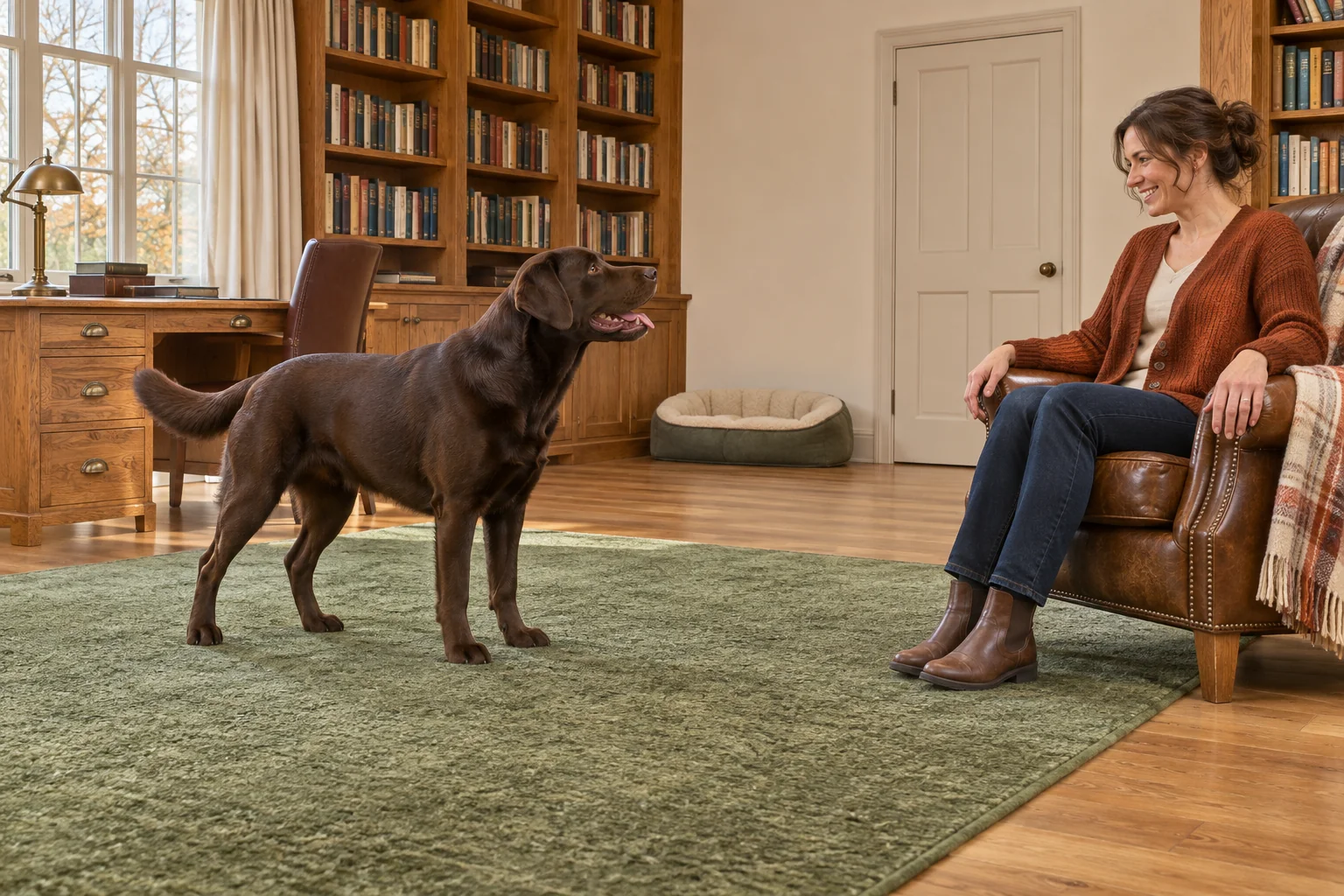
Training two dogs can become confusing before the first repetition: you address one, both approach, and the reward lands between them. The useful starting point is not a more impressive group exercise. Give each dog a suitable individual learning opportunity, with the other dog already comfortable and cared for elsewhere. Then you can see which response you actually asked for and rewarded.
This guide uses DogPath for preparation, an appropriate existing foundation and an honest review. It is not a method for treating conflict, guarding or distress when separated. Pain, sudden behavioural change, injury or possible injury needs veterinary advice; threats, snapping, fighting or bite risk needs qualified individual support. Never reach between dogs, grab collars during conflict or ask children to manage access. Postpone optional lessons whenever safe, comfortable arrangements for both dogs are unavailable.
Training two dogs starts with two separate learners
Write down what happened without deciding that one dog is jealous or dominant. “Both approached when I opened the reward pouch” describes the scene. “The younger dog stole the lesson” supplies a motive you have not established. Note where each dog stood, which cue you gave, where the reward went and whether either dog moved away. These observations help you change the setup rather than blame an individual.
The same word can have different learning histories for two dogs. One may know a response in a quiet room while the other has only tried it with a hand movement. Shared age, breed or household does not make their preparation identical. An individual turn allows you to choose a manageable task and appropriate reward without using the other dog as a moving distraction or a model they must copy.
Keep the purpose narrow: one dog, one suitable response, one clear reward delivery. A successful individual lesson does not establish safety around shared food or readiness for joint training. Nor must both dogs complete the same exercise today. You are organising learning opportunities, not awarding a household ranking. Write the learner’s name beside your plan before selecting equipment, and keep ordinary care available to both dogs whether a session happens or not.
Arrange comfortable care before opening the lesson
Choose separate familiar areas in which each dog is already comfortable. A closed door is useful only when the dog behind it can cope there and has suitable space, water, rest and human support as needed. Do not shut an unprepared dog away and wait through barking, scratching or panic so that another dog can finish. If separation itself is difficult, postpone and ask for individual advice rather than treating distress as a training timer.
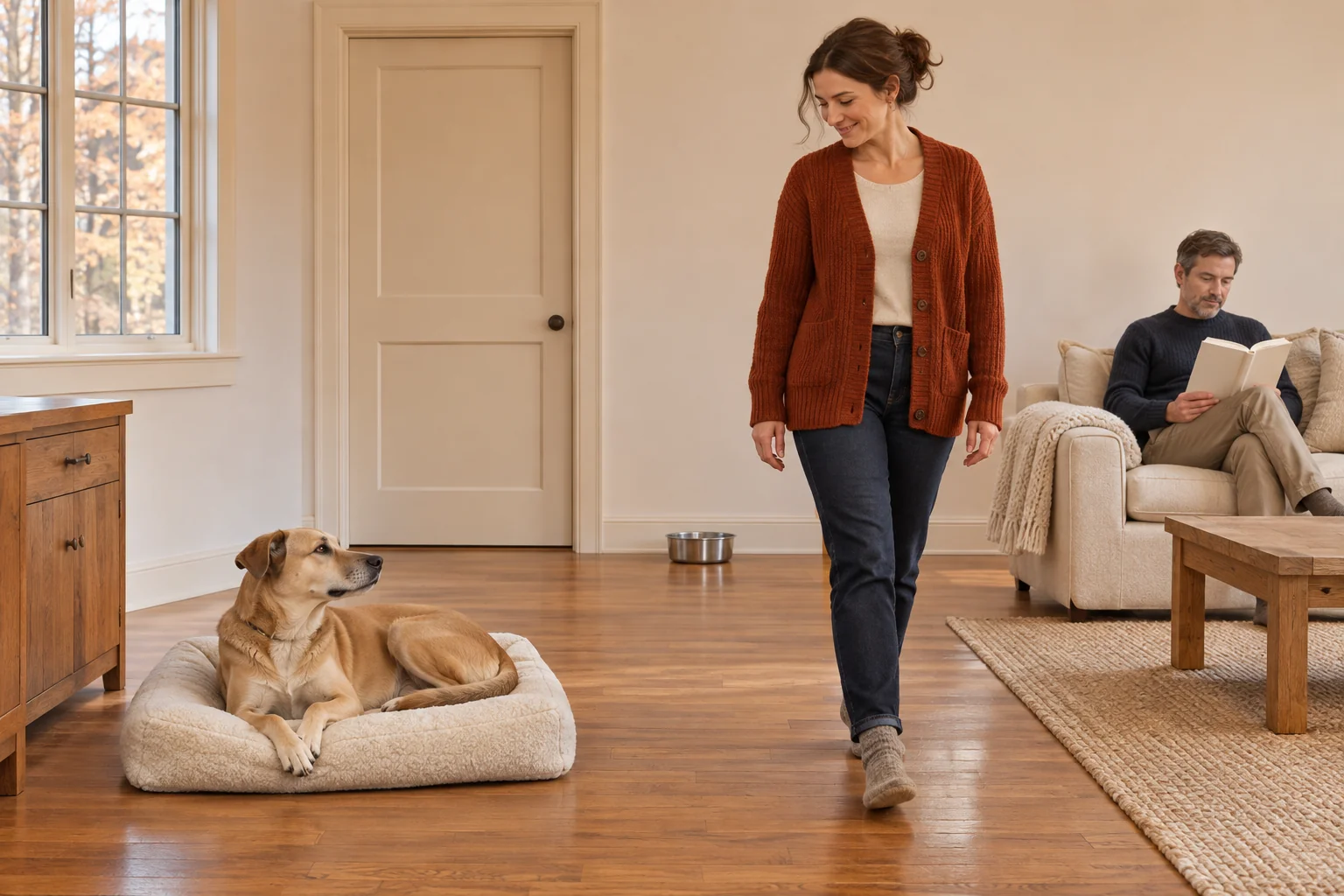
A second informed adult can care for the other dog in a familiar room or take a separate normal activity that already suits that dog. Discuss the route and timing before moving anyone. Do not create a narrow doorway meeting or leave a dog watching food through a barrier. The arrangement should prevent competition without relying on either dog holding a stay while the other receives rewards. If one adult cannot meet both dogs’ needs safely, choose another time.
The Dogs Trust guidance on dogs sharing a home supports individual space, separate resources and professional help when tensions arise. Here those principles inform preparation for existing household dogs; this is not a new-dog introduction programme. Keep familiar resting and drinking places usable. A comfortable nonparticipant is receiving care, not being punished by exclusion from an exciting lesson.

Choose a DogPath foundation for the dog in front of you
Read the existing lesson’s aim, prerequisites and preparation while both dogs are settled. Select work that fits the intended learner’s current experience and physical comfort. A guided training path helps organise a sequence; it does not make an exercise suitable simply because it appears next. If you cannot understand the required response or safe reward delivery, clarify the method before involving the dog. Do not invent a combined two-dog version of a single-dog lesson.
Use a separate paper page for each dog’s context: name, suitable exercise, setting and stopping point. These pages are your own records, not an assumed app feature. Check the context of any available completion record before changing it, and never use one dog’s achievement as evidence that the other has completed the same work. You do not need to assume household scoreboards, automatic comparisons or a specialised multi-dog course to use an existing foundation responsibly.
Dog Train Club and DogPath share the publisher Rocket Digital Limited. This example uses existing guided lessons, prerequisites, preparation, completion controls and weekly planning. It makes no claim that the app assesses compatibility, guarding, separation welfare or group readiness. Prepare before the turn and put the phone away during participation. Our beginner training guide can help you choose a simpler foundation when the proposed task contains too many new pieces.
Give the individual turn a clear beginning and ending
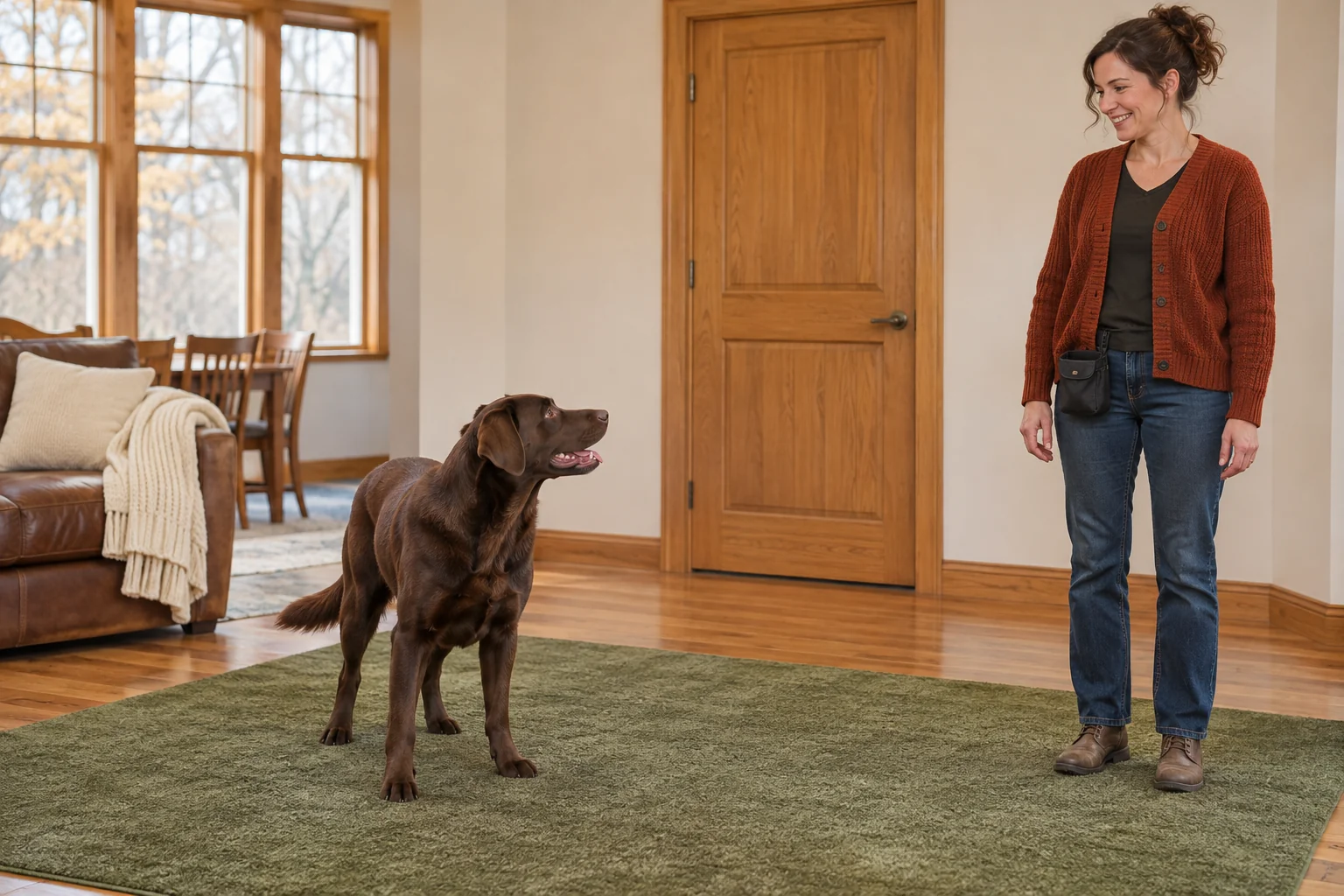
Check the other dog’s care first, then invite the learner into the prepared space without a rush or doorway exchange. Use secure footing and enough room to leave the interaction. Begin with a familiar, physically suitable response in an easy setting rather than a demanding new sequence. Keep rewards prepared for this individual’s dietary and handling needs. Nothing should require the dog to push past your body, reach towards another dog or compete for a shared pile.
Ask clearly and reward the response you intended. Avoid adding a second cue while you look at the phone or fumble with equipment. If the dog is distracted, pause and reconsider the setting rather than repeating louder or expecting the other dog’s performance. Our reward marker guide explains clear feedback; a marker used in a lesson still needs its promised reward. Do not broadcast markers from one room as a test of the other dog’s patience.
End while you can still organise the next movement calmly. There is no quota that must be completed before the other dog can receive ordinary attention. Put optional equipment out of reach when the dog is elsewhere and confirm that the next route is clear. A turn may be very short or postponed. That is preferable to stretching it until either dog becomes distressed, crowded or unable to disengage.
Make the changeover an adult task, not a waiting exercise
Before the second dog moves, finish the first dog’s reward delivery and put food containers away securely. Agree which adult is responsible for which dog and which door remains closed. Avoid opening both routes at once because the first lesson appeared calm. The training task may be complete while the household movement still needs attention. A written handover can be as simple as “first dog comfortable with Sam; room clear; second turn postponed until later”.
Do not ask the first dog to lie beside a bowl or stay on a mat while the second receives food. Remaining still near a competitor is a separate challenge, not a prerequisite for receiving individual attention. Tethering a waiting dog, holding a collar or repeatedly blocking an approach can add pressure and create unsafe handling. This article deliberately keeps the other learner out of the reward scene. Joint practice requires its own suitable assessment and preparation.
If either dog is watching a door persistently, calling, scratching or unable to rest, stop the optional plan and address that dog’s needs safely. Do not turn the sound into background noise to ignore. If dogs unexpectedly meet and tension appears, avoid reaching into the interaction; obtain qualified advice on safe management rather than testing another changeover. Injury or suspected injury needs prompt veterinary assessment. Neither a lesson record nor a closed door replaces an adequate household safety plan.
Review two observations without comparing scores
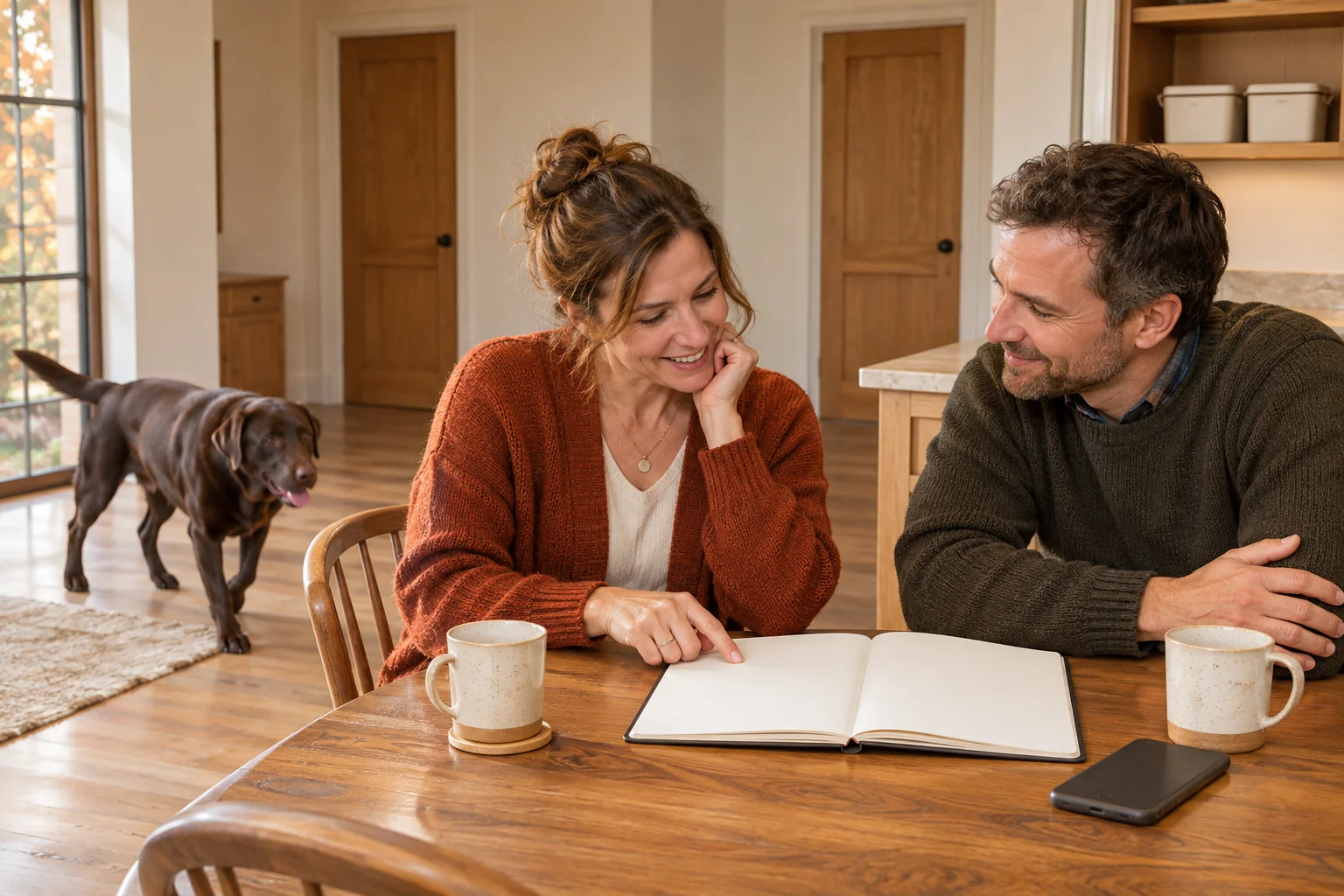
After both dogs’ needs are met, return to the records. For each learner, distinguish preparation, attempted practice and the described lesson actually completed. “Read the instructions” is not the same as “dog performed the response”. One dog may have practised while the other only rested with an adult. Leave unfinished work unfinished and keep your paper context attached to the correct name. Do not mark both done because the household spent time on training.
A useful note describes something another adult can reproduce: “quiet study; familiar cue once; reward ready; stopped before the door change”. Avoid ratings such as “better than the other dog”, which conceal differences in task, setting and experience. Compare each learner with their own previous suitable occasion, while recognising that comfort and performance can change. If a dog seems unwell or suddenly different, seek help rather than extending the comparison table.
The Dogs Trust reward-training guidance explains that rewards must suit the individual and feedback should be timely. Use that principle to review your own delivery. Did you prepare enough, notice the response and reward clearly? More repetitions are not automatically the useful next change. Our short sessions guide helps keep the next opportunity manageable without making minutes a target.
Plan the next week around care and realistic availability
Use DogPath’s weekly planning to reserve a realistic opportunity for an appropriate foundation, then keep each dog’s practical arrangements on their separate page. Two dogs do not necessarily need equal-length lessons or identical tasks. Both do need appropriate daily care, rest, attention and activities. Do not deprive one of ordinary walks or companionship to make training access more valuable. A calendar slot should fit around welfare rather than override it.
Choose one useful adjustment at a time: prepare the reward container before moving the learner, use a quieter room, or arrange help for the other dog. If today’s changeover was awkward, the next goal may be an adult planning conversation with no dogs involved. Do not combine a new handler, unfamiliar separation and harder exercise simply because individual turns worked once. Repeating an easy suitable arrangement is a legitimate decision.
At review, ask whether both dogs could remain comfortable, whether the learner was clear and whether the record describes what occurred. If not, simplify or postpone. Seek individual support when safe arrangements remain difficult. The result you are looking for is a workable household routine and accurate decisions for each dog, not two matching completion marks or a promised date when they can finally train side by side.
Common questions
Must both dogs learn the same lesson?
No. Choose a suitable foundation for each dog’s experience, comfort and reward needs. Separate opportunities do not require identical tasks or matching completion dates.
Should one dog watch while the other gets treats?
This starting plan keeps the other dog comfortably cared for elsewhere. Watching food, holding a stay and coping with separation are different challenges, not tests to add to a first individual lesson.
Does DogPath decide when joint training is safe?
No such assessment is assumed here. Use existing preparation and actual completion controls; keep individual context separately and obtain qualified advice about safety or conflict.
What if one dog becomes distressed behind a door?
Stop optional practice and meet that dog’s needs safely. Do not wait out panic to finish a lesson. Seek individual advice if comfortable separation is not already available.