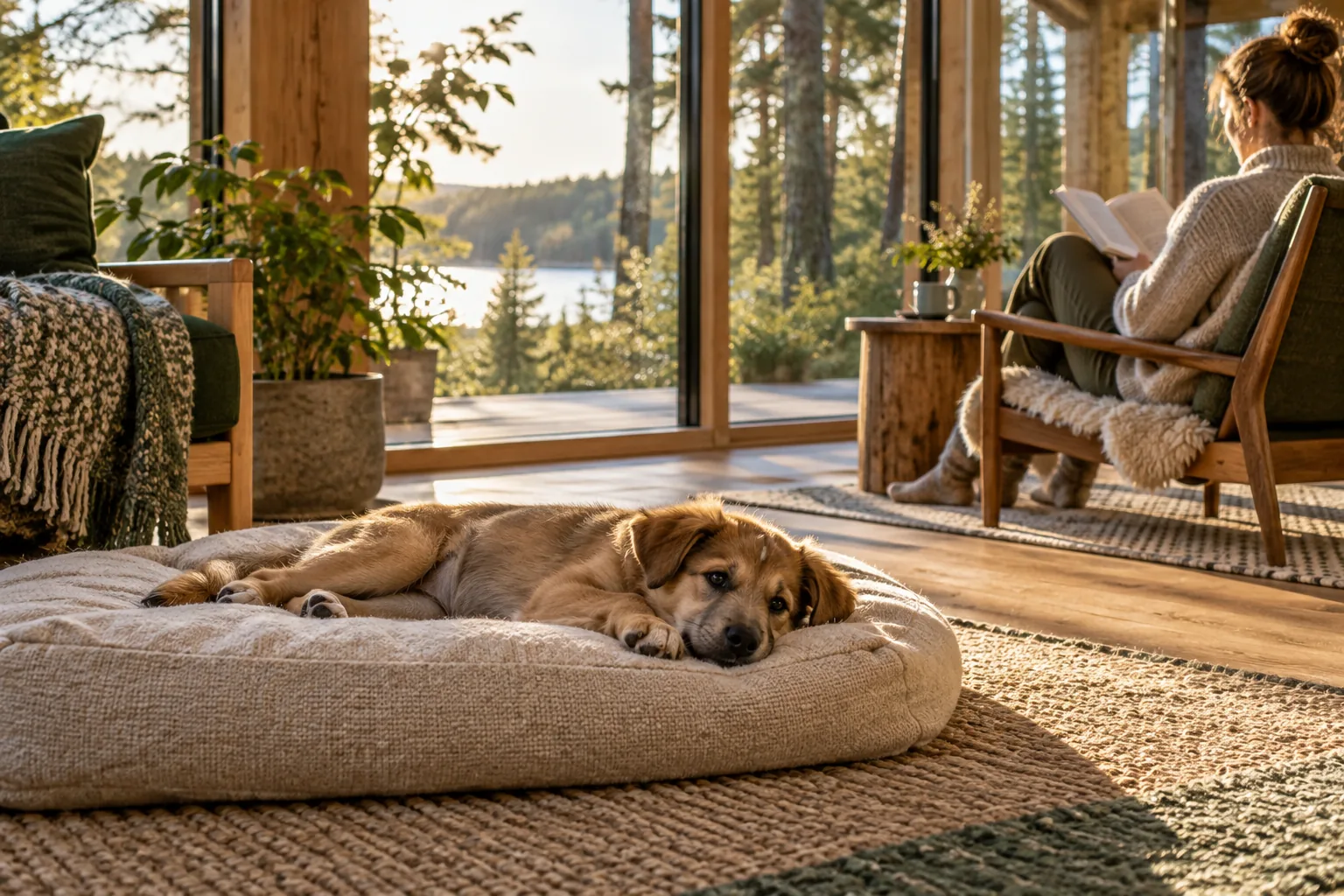
When your puppy won't settle after play, another game can feel like the obvious answer. Yet more movement does not tell you whether your puppy needs a toilet opportunity, a quieter room, company or rest. Start with the transition you control: how the game ends, what happens next and whether the puppy has a comfortable place to pause.
This article is for ordinary post-play restlessness, not a diagnosis of overtiredness or anxiety. It includes an optional DogPath workflow for preparing a relevant foundation lesson and reviewing what you actually practised. Dog Train Club and DogPath share a publisher. The app can organise lessons and progress records; it cannot measure your puppy's sleep needs or assess their health. You can use the practical routine below with a simple notebook instead.
Puppy won't settle after play: describe the transition
Choose one repeatable situation: perhaps a toy game in the garden followed by time in the living room. Describe what you see rather than deciding that your puppy is naughty or needs exhausting. Does the puppy keep seeking the toy, follow your moving feet, circle the room or repeatedly leave the bed? Those are different observations and may need different adjustments.
Record the activity immediately before the difficulty, who was present and what changed when you came indoors. A loud television, another dog approaching or family members continuing the game can keep the scene busy. Also notice where the puppy does rest comfortably at other times. That gives you a useful comparison without assuming every episode has the same cause.
Dogs Trust explains that restlessness can have several causes, including discomfort and worry. Excited behaviour alone does not establish which one applies. If this is a sudden change, the puppy seems painful or they struggle to get comfortable, seek veterinary advice rather than testing a longer exercise session.
Check ordinary needs before asking for a quiet moment
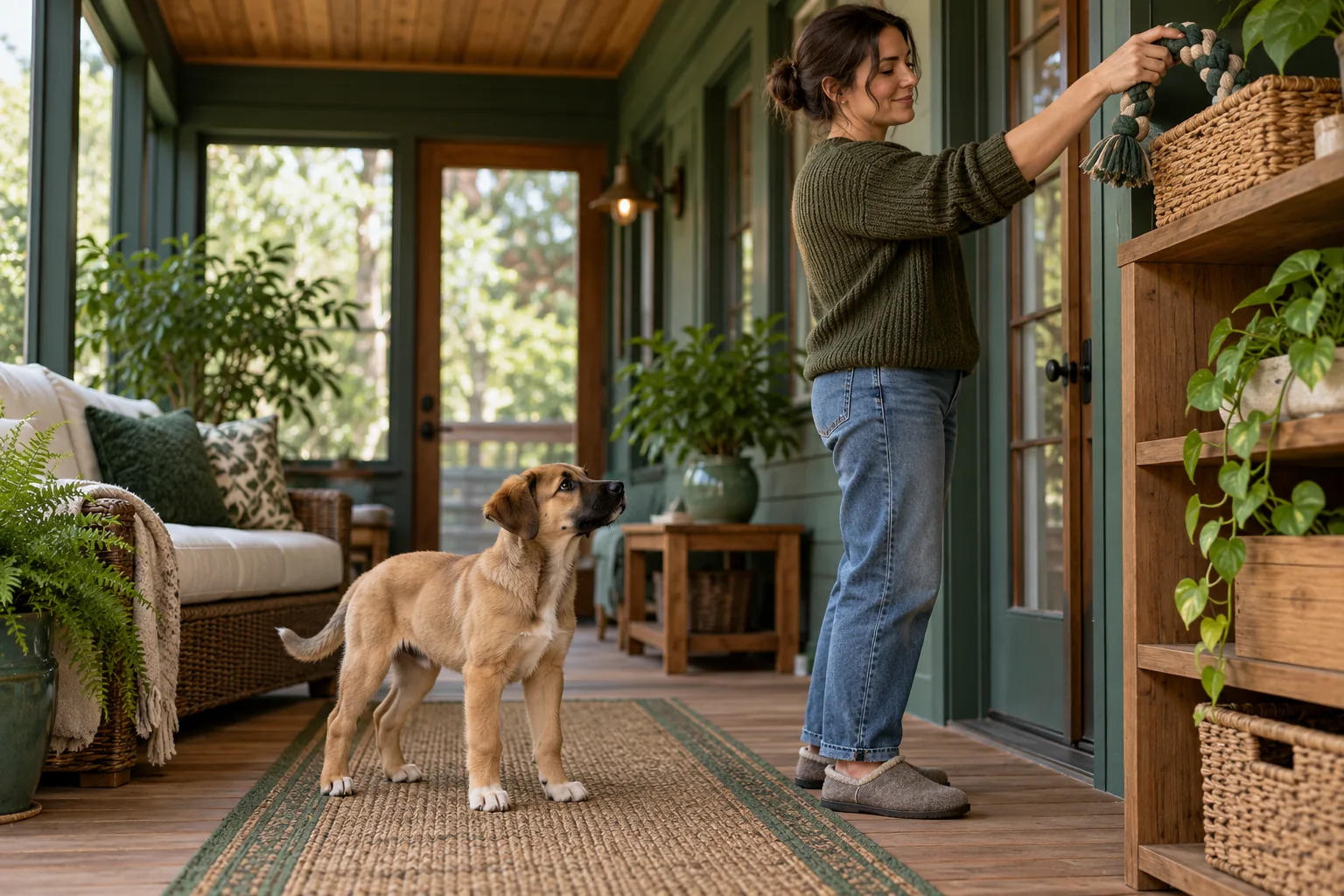
After play, offer a familiar toilet opportunity where appropriate, access to fresh water and a comfortable temperature. Follow the puppy's usual suitable feeding routine rather than using hunger or thirst to make a training exercise work. A toilet break is a chance to relieve a need, not an extra outing full of new sights and games.
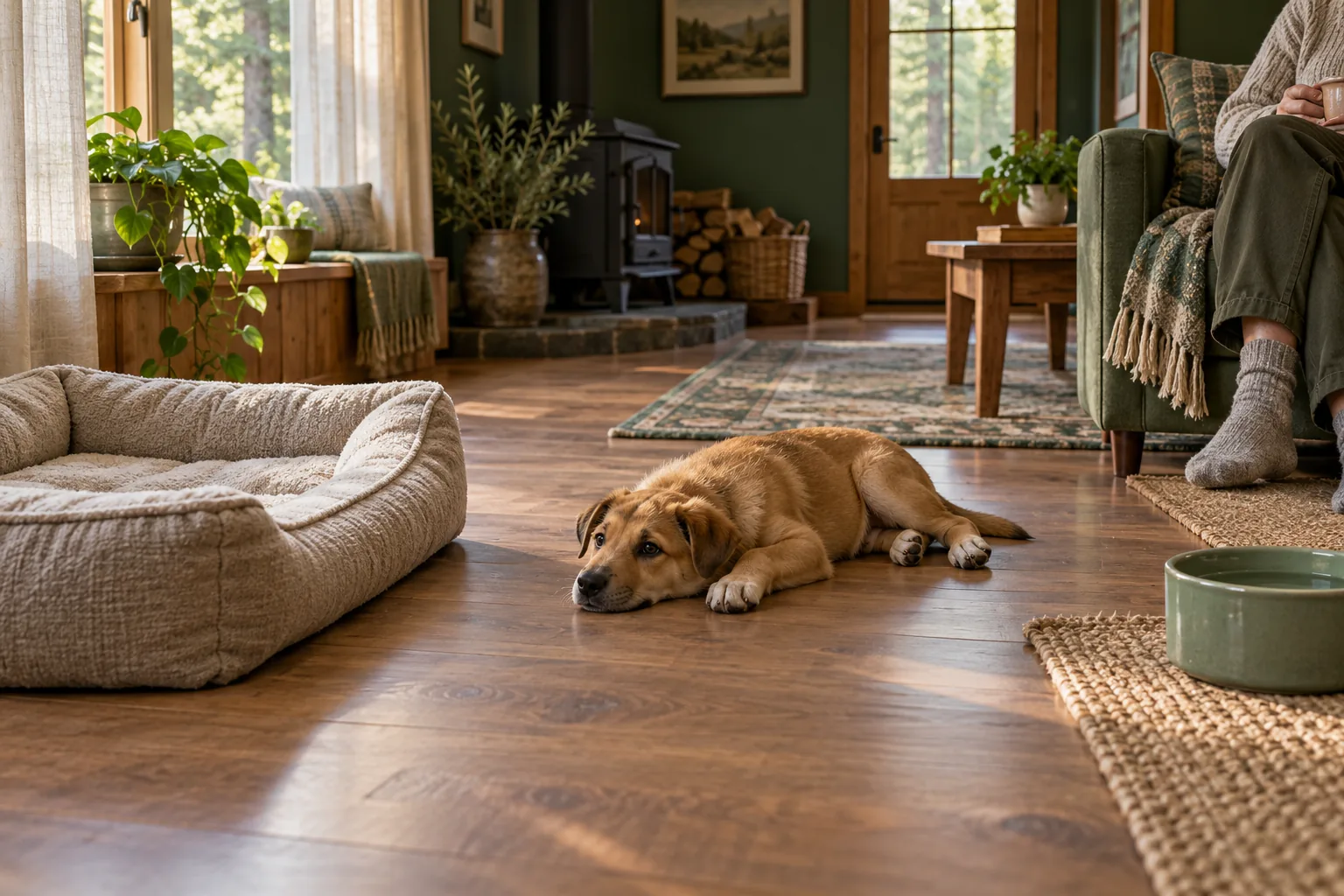
Look at the room from puppy height. Is the surface slippery? Is sunlight heating the bed? Is an appliance making a sudden noise? Can the puppy stretch out, change position and move away from a busy person? A bed that looks attractive to you may not be the place the puppy currently finds comfortable.
The existing first-week puppy guide helps with the broader arrival routine. Here, narrow the question to what happens immediately after one activity. Avoid changing meals, sleeping arrangements and every game together; otherwise you will not know which part of the transition became easier.
Make the end of the game predictable
Prepare the quieter setting before play begins. Clear hazards, place suitable bedding where it is already familiar and agree with other adults that they will not restart the game as you finish. Select an ending you can manage without snatching a toy from the puppy or chasing them through the house.
At a comfortable point in a short game, reduce your movement and put an available toy away. If the puppy still holds it, use a familiar, relaxed exchange rather than pulling it from their mouth. If safe handling is difficult or there is guarding or bite risk, stop experimenting and get personal support from a qualified reward-based professional.
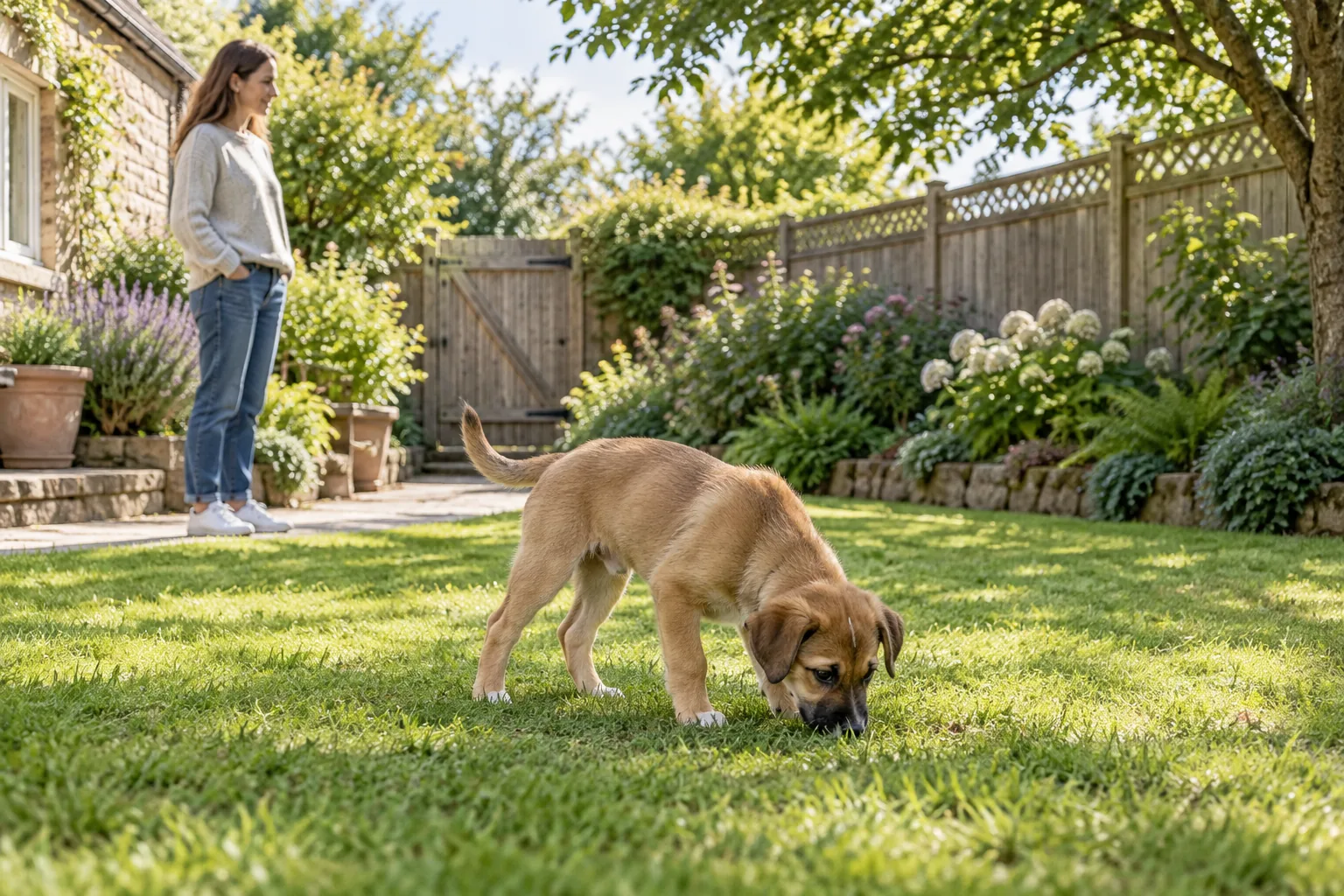
A gentle, familiar sniffing opportunity may suit some puppies. It is optional: if searching for food leads to frantic movement, skip that activity and simplify the environment instead. Do not turn every pause into a puzzle the puppy must solve before being allowed to rest.
Then let the scene become uneventful. Sit comfortably, reduce passing traffic and give the puppy space. You do not need repeated commands to lie down. The practical test is whether the puppy can disengage from the game in that arrangement. If they cannot, change the setup next time rather than insisting on the same ending more forcefully.
Use DogPath to prepare one relevant foundation
Open the app before the puppy joins you. Use DogPath's training path to find a foundation lesson relevant to a skill you genuinely need, such as a comfortable response to you in a quiet setting. Read the instructions, identify the reward and decide whether the starting conditions fit your puppy today. This does not imply that DogPath has a dedicated post-play sleep programme.
Separate foundation practice from the recovery period. If the puppy is already frantic or ready to sleep, the correct choice may be postponing the lesson. A short practice opportunity earlier in the day is often easier to arrange than asking for new learning at the end of an exciting game.
- Before practice, read one suitable lesson and prepare its easiest version.
- During practice, put the phone aside and watch the puppy's comfort.
- Afterwards, record completion only if you actually practised the lesson.
- Keep the play-to-rest context in your own notes, then choose repeat, simplify or postpone.
The weekly plan keeps lessons organised. Record practice honestly; sleep does not prove a lesson was completed. Keep context in your own notebook without assuming a particular app text field.
Support a pause without repeatedly waking the puppy
During a naturally quiet waking moment, you may acknowledge a small comfortable pause with a suitable reward if receiving it does not restart activity. Place it where the puppy already is; avoid drawing them across the room to your hand. Watch the result. A reward that makes the puppy leap up and anticipate another game is not helping this particular transition.
Keep the interaction low key and stop while the puppy is comfortable. Never wake a sleeping puppy to reward sleep. Once rest has arrived, protect it: move conversations and play away from the area and ask visitors to leave the puppy alone. Rest is not something the puppy should perform for an audience.
If you want to teach a distinct bed-related skill on another occasion, use the guide to settling on a mat. A trained position and genuine relaxation are not identical. A puppy can lie down while still watching intensely for the next instruction, or relax on the floor without having been asked.
RSPCA's training guidance supports reward-based methods. Shouting, holding the puppy down or restricting access to necessities does not belong in this routine. Quiet support should make the situation easier to leave and understand, not harder to escape.
Troubleshoot the setup one detail at a time
If the puppy keeps returning to the toy cupboard, examine whether the game ended ambiguously. Another adult may have offered a final throw after you stopped. Agree on one ending and keep the toy out of sight once it is safely available to put away. You are changing a repeated cue in the environment, not punishing an interest in play.
If the puppy settles until you move, consider whether the spot allows them to remain near you. Quiet company beside an open resting area may work better than suddenly moving them to a separate room. Distress on separation needs its own assessment; waiting for it to escalate is not a useful test of independence.
If the puppy keeps switching resting spots, check temperature, bedding and disturbance. Do not keep returning them to the same bed. If they seem unable to lie comfortably, or the pattern is new or persistent, contact your vet. A diary can describe the pattern, but it cannot rule out pain.
If your household is simply too busy at the chosen time, protect a different recovery window. The guide to short training sessions can help you keep practice manageable elsewhere in the day. Extra repetitions should not consume the quiet period you are trying to create.
Review three observations after the puppy rests
Write your review once the puppy is safe and comfortable. Keep it brief enough to use tomorrow: what happened before the transition, what you arranged and what the puppy did next. Avoid claims such as “the app cured the problem” after one easier evening; several details may have changed.
For example: “Toy game on the porch; television off on return; puppy sniffed the room and chose the cool floor while I read.” A harder evening might read: “Visitors kept moving through the room; puppy followed them; planned lesson postponed.” Both records help you decide what to arrange. Neither needs a score for how good the puppy was.
Compare similar situations before making a change. If a quiet room repeatedly helps, preserve that condition. If a food activity consistently raises excitement, leave it out. Change one controllable detail, such as the location or ending of play, and watch comfort again.
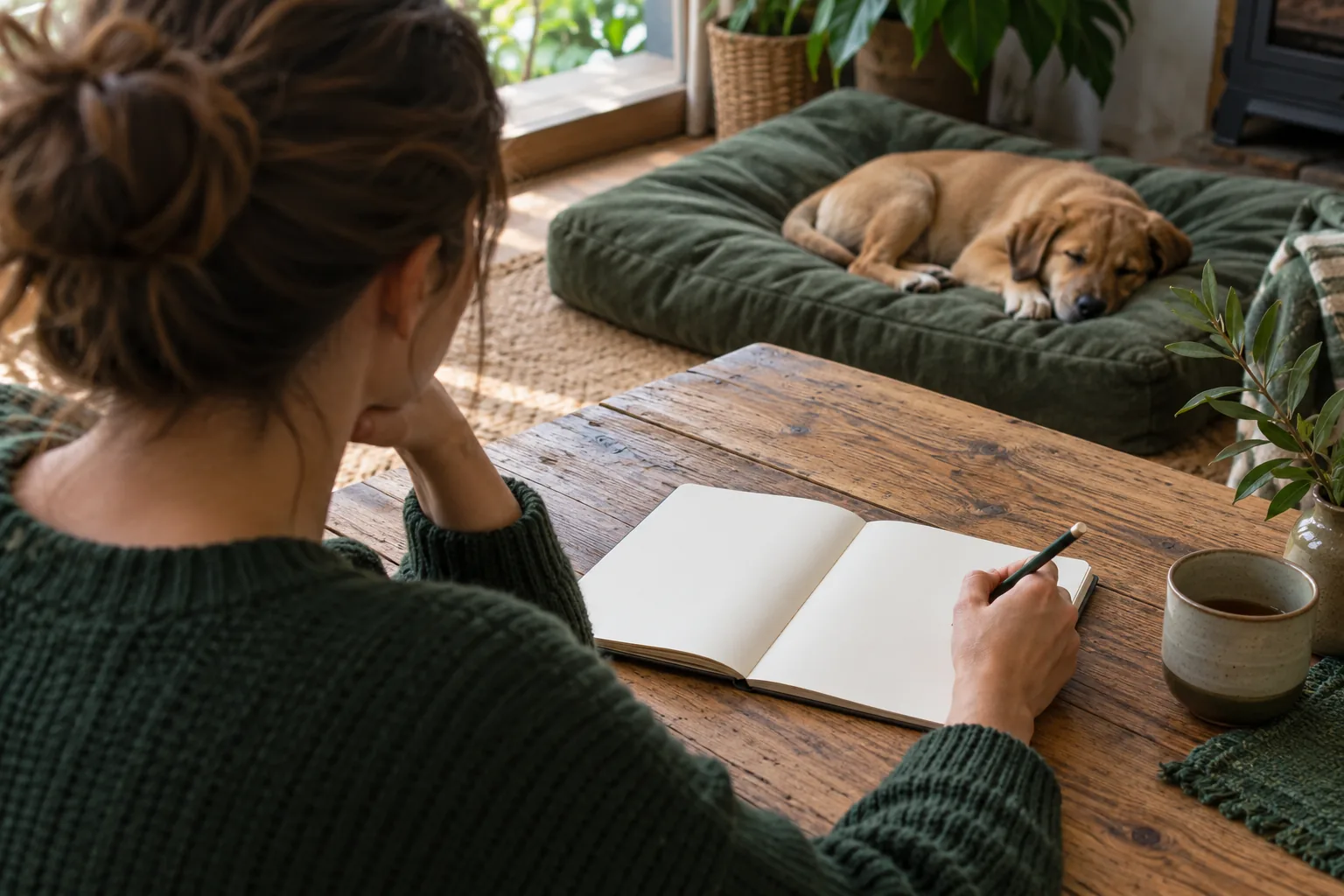
Keep the routine flexible and know when to get help
Build the next few opportunities around what was comfortable. Repeat a familiar ending on an ordinary day; preserve it when a different adult takes over; shorten or postpone activity when the household becomes unusually busy. A missed practice opportunity does not create a debt of extra exercise.
Make a small household agreement: one person manages the game, another protects the quiet area, and everyone leaves a sleeping puppy undisturbed. Reassess the plan as the puppy grows. Their preferred spot, daily activity and need for company may change, so a routine should give direction without becoming a rigid timetable.
Arrange personal veterinary help for suspected pain, sudden behavioural change or persistent difficulty getting comfortable. For ongoing distress, guarding or bite risk, seek a qualified reward-based trainer or behaviour professional, with veterinary involvement where appropriate. An app cannot observe the whole household or assess a safety concern from a completion record.
Your next useful step may be as simple as ending the game earlier and keeping the room quieter. Judge it by your puppy's choices and comfort, not a deadline for sleeping or a promise of a perfectly calm evening. A sustainable transition leaves room for ordinary puppy movement and genuine rest.
Common questions
Does racing around mean my puppy needs more exercise?
Not necessarily. Look at the activity, the surroundings and basic needs before adding more. Running alone cannot tell you whether the puppy needs activity, rest, company or help with discomfort. Make a calmer transition available and seek veterinary advice for a sudden change or difficulty getting comfortable.
Should I shut my puppy away until they sleep?
Do not use distress or forced isolation as a sleep method. Provide a familiar resting area with space, water and suitable company. If a puppy is worried when separated, arrange personal guidance and use a setup they can currently handle comfortably rather than waiting through escalating distress.
Can DogPath tell me whether my puppy is overtired?
No. The workflow described here uses relevant lessons, a training path, a weekly plan and honest completion records. Those are organisational tools. They do not diagnose overtiredness, calculate sleep needs or replace observation, veterinary advice or an individual behaviour assessment.
What if the puppy rests on the floor instead of the bed?
A safe, comfortable floor can be a valid choice. Offer suitable alternatives and check temperature and disturbances. Do not repeatedly move the puppy back to a bed for appearances. If they cannot find a comfortable position or this is a new pattern, discuss it with your vet.