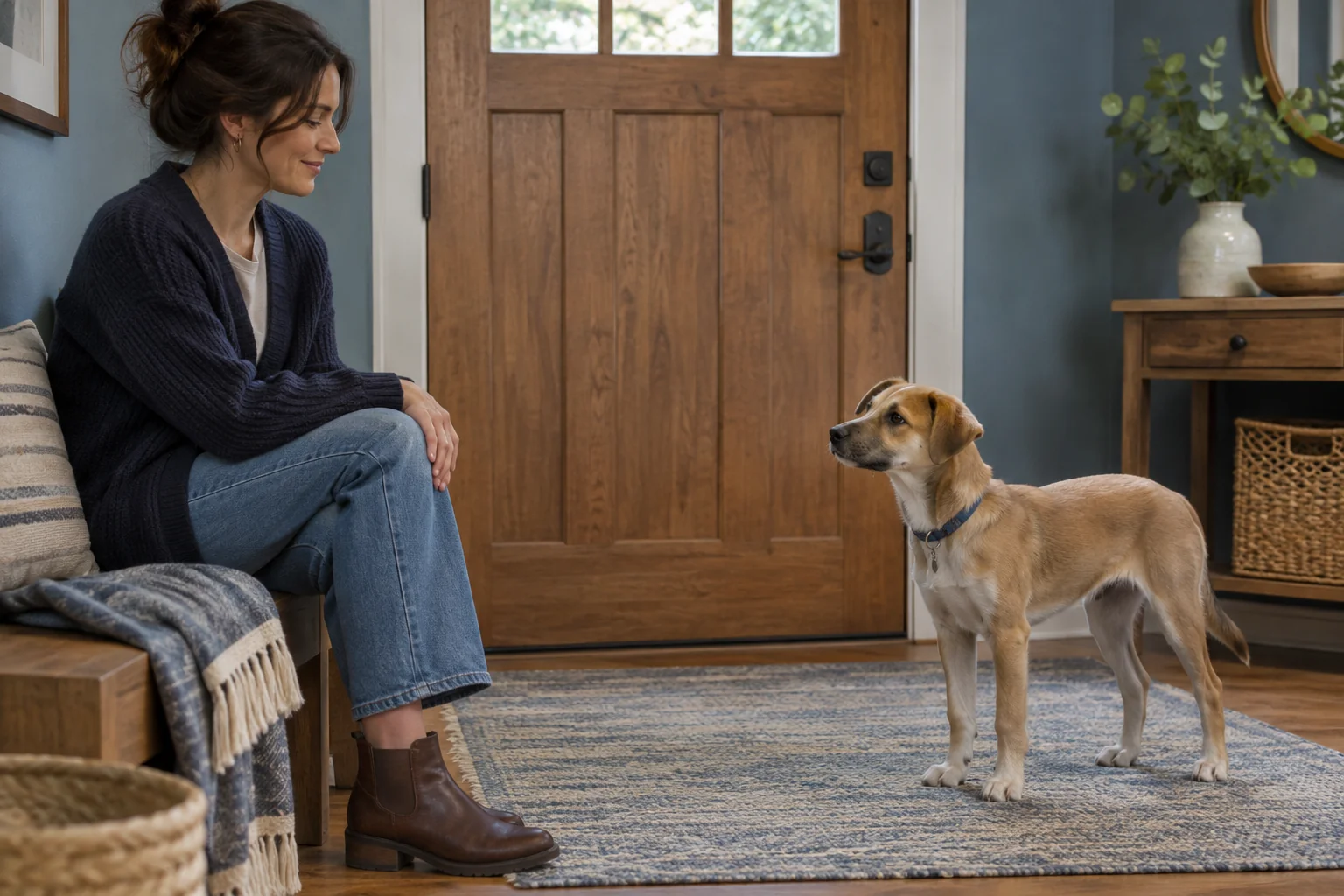
When a puppy pees when excited, the wet patch can appear before anyone has finished saying hello. It might happen when you come home, when a visitor bends down, or during the first moments of a game. Start by making those moments less intense and offering an ordinary opportunity to toilet. Handle cleanup quietly. The puppy needs room to move away, regular access to water and a daily routine the household can actually follow.
The pattern is worth discussing with your veterinarian, especially if it is new or also happens away from greetings. Frequent attempts to urinate, blood, discomfort, increased thirst or wet bedding deserve veterinary attention. If your puppy is repeatedly trying and producing little or no urine, seek urgent advice. Use the plan below for ordinary arrangements while you obtain guidance, and get individual behavioural support if there is intense fear or a risk of biting.
If your puppy pees when excited, change the arrival first
Think through one arrival from the puppy's point of view. The door opens, shoes scrape, bags move and two people may talk at once. A hand reaches down just as the puppy crosses a narrow space. Before changing the puppy's behaviour, change the sequence you control. Put bags away, close the door safely and take a moment to settle your own movements. Ask visitors to let the puppy choose whether to approach.
Choose a place with secure footing and enough room to turn. A puppy that wants to move back toward a bed or another adult should have a clear route. A family member can keep the entrance organised while a guest comes inside. If the puppy is comfortable in a familiar room with someone they know, that can be a better place to spend the first few minutes. Keep it an ordinary, supported arrangement rather than an abrupt isolation after a wet patch.
Tell visitors exactly what to do before they arrive. “Come in, sit here and let her move around” is easier to follow than “please don't make her excited.” Someone who is worried about slipping or being jumped on can stay apart with the door safely managed. Aim for a calm arrival that remains manageable even if the puppy never comes over to greet.
Offer a toilet trip before a busy moment
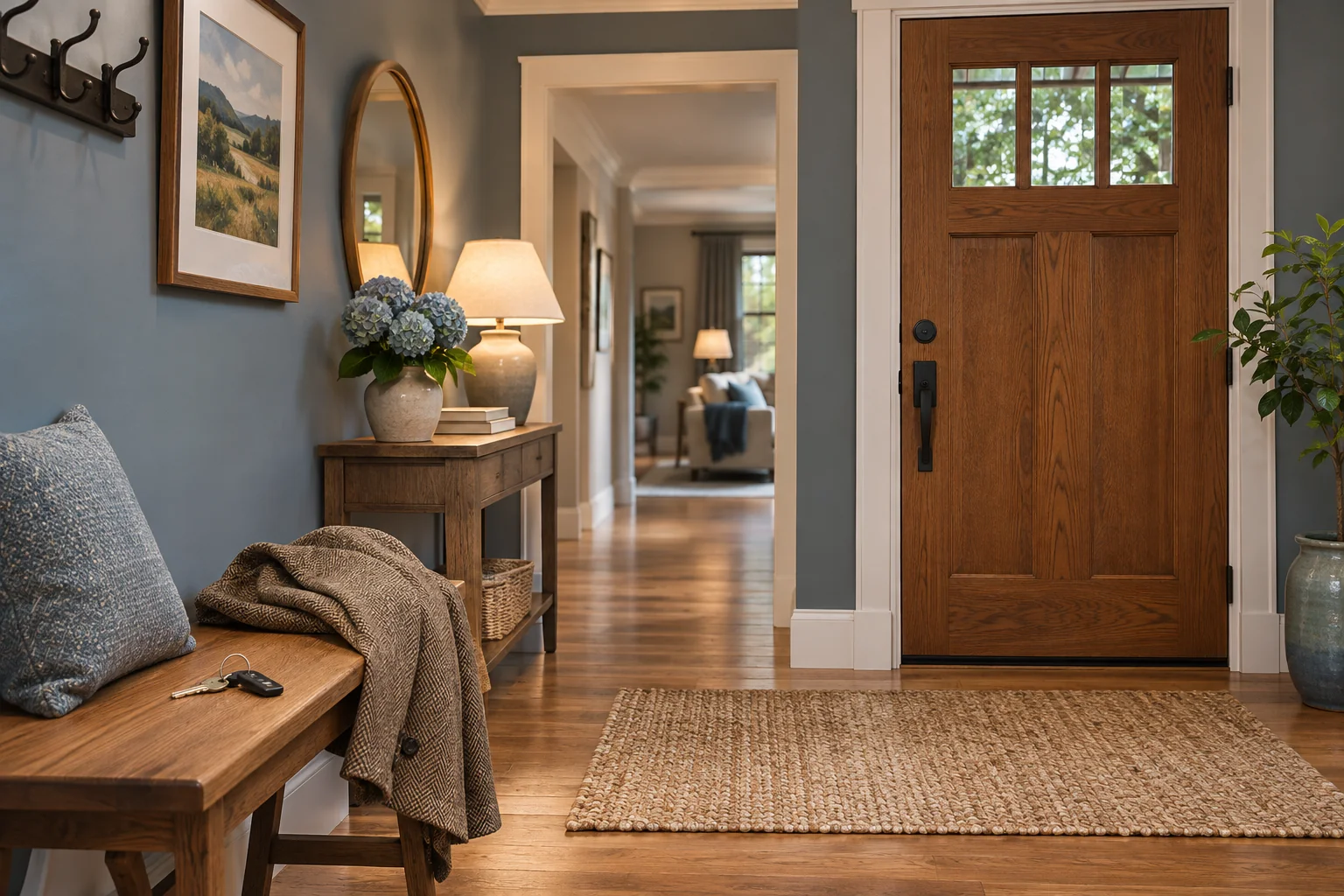
Look at the time since the last opportunity to toilet. Waking, eating, playing and the arrival of visitors can all change the timing of a normal day. Offer a short trip to the usual safe spot before a predictable busy moment if your puppy is comfortable going there. Keep the trip simple. Let them sniff and allow time without urging them or repeatedly changing locations.
If the visitor is already at the door, one adult can take care of the arrival while another offers the puppy the familiar trip. If you are alone, plan the easiest safe sequence for your home. A guest can wait a moment if the entrance is secure, or settle inside first while the puppy is comfortably elsewhere. Keep the leash and bags ready where you normally use them. Check that the puppy cannot slip out during the changeover.
Reward toileting in the usual place if the puppy is comfortable taking the reward. Give it promptly when they finish, without calling them away midstream. Continue normal opportunities throughout the day, including when nobody is coming over. Water and toilet access are basic care. Restricting either to get through a greeting can create a welfare problem and leave the household with less useful information.
Make a greeting optional and easy to leave
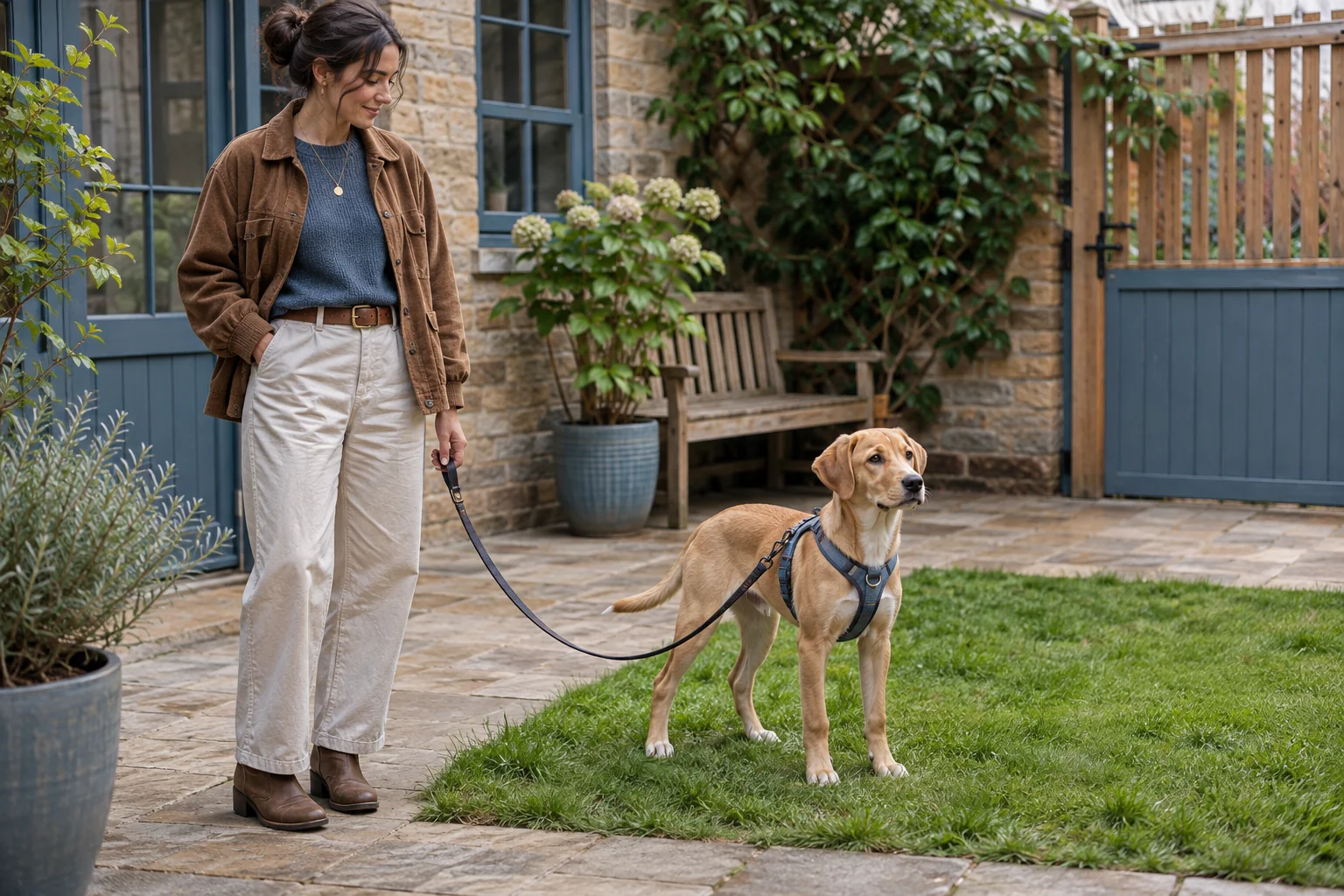
When the puppy is free to approach, sit or stand sideways and keep your hands relaxed. A brief look or sniff can be the whole interaction. If the puppy steps away, let them do so. Leave petting until they appear comfortable with it, and stop after a brief touch to see whether they choose to stay. Avoid reaching over the head or calling the puppy into a crowded doorway.
The San Francisco SPCA's guidance on urination during greetings describes both excitement and fear as possible contexts. You may see a puppy run up eagerly on one occasion and move away on another. Either way, a quieter person and an open path out give you practical choices. The shape of a single greeting does not establish what caused a wet patch.
If there is a wet patch, finish the encounter calmly and check that no one will slip. Make room for the puppy to go to a comfortable area with another person if that suits them. Avoid scolding, pointing at the floor or picking up the puppy in a hurry. The next useful action may simply be to clear the floor and let the evening go on.
Practise a familiar response away from the door
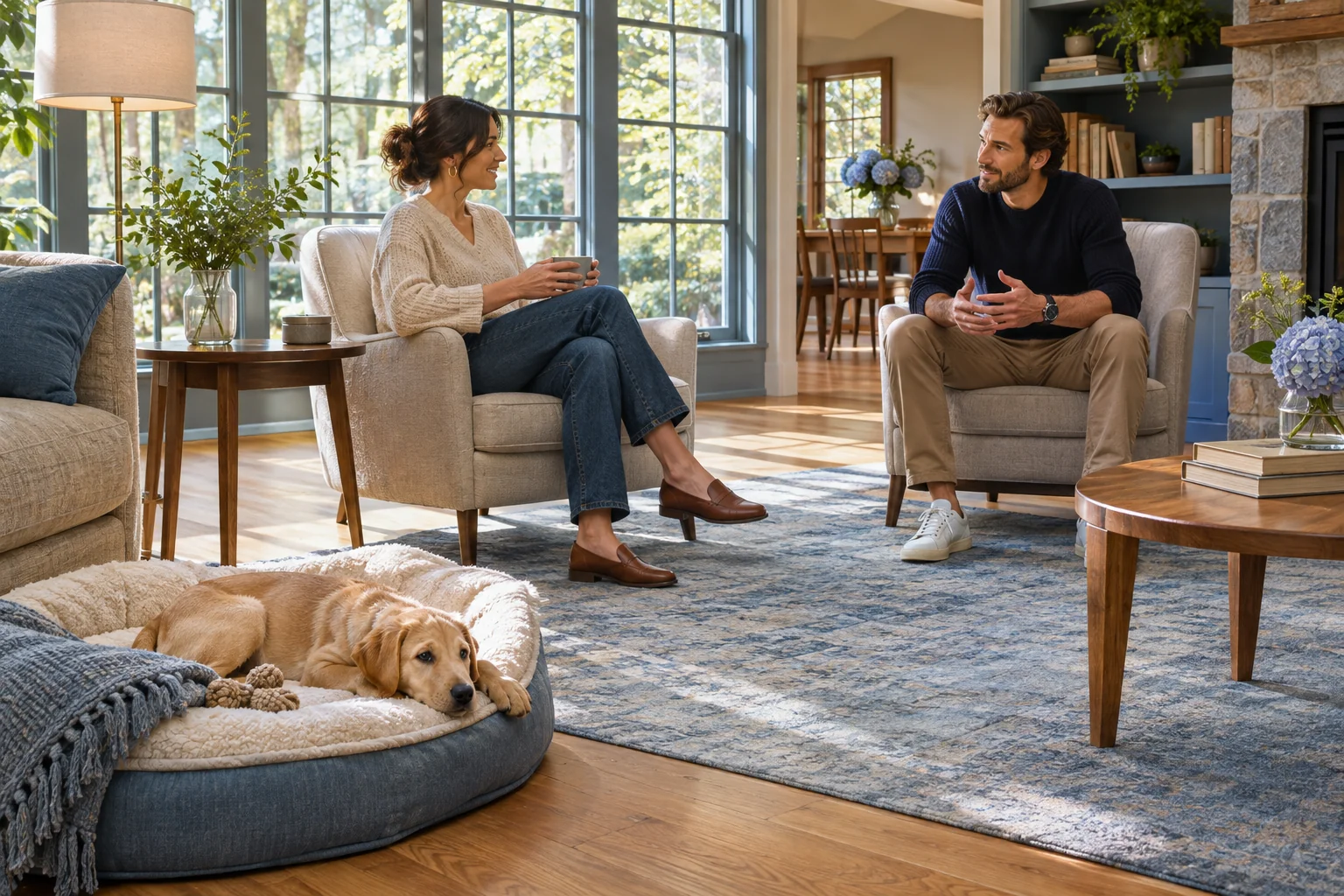
Pick a quiet moment when nobody is arriving. Choose a response your puppy can already offer comfortably, such as looking toward you when you stand sideways or following you a couple of steps away from the entrance. Use a familiar room with stable footing and enough space to leave. Mark and reward a voluntary response, then give the puppy a pause. Our reward marker guide explains how to make that feedback clear.
Keep the exercise small. Two easy responses on an ordinary afternoon may be enough. If your puppy starts racing around, looks for the exit or stops engaging, you can finish. Our short sessions guide offers ways to plan an endpoint. Being able to turn toward you in the living room does not mean the puppy will do it while several people are coming in with bags.
At an actual arrival, use the arrangement that already makes the scene easier. If the puppy happens to orient toward you comfortably, reward that choice and keep the exit open. A familiar response can help you move together. The puppy can also have a quiet arrival without doing an exercise, taking food or standing still for a guest.
Clean up quietly and observe the wider pattern
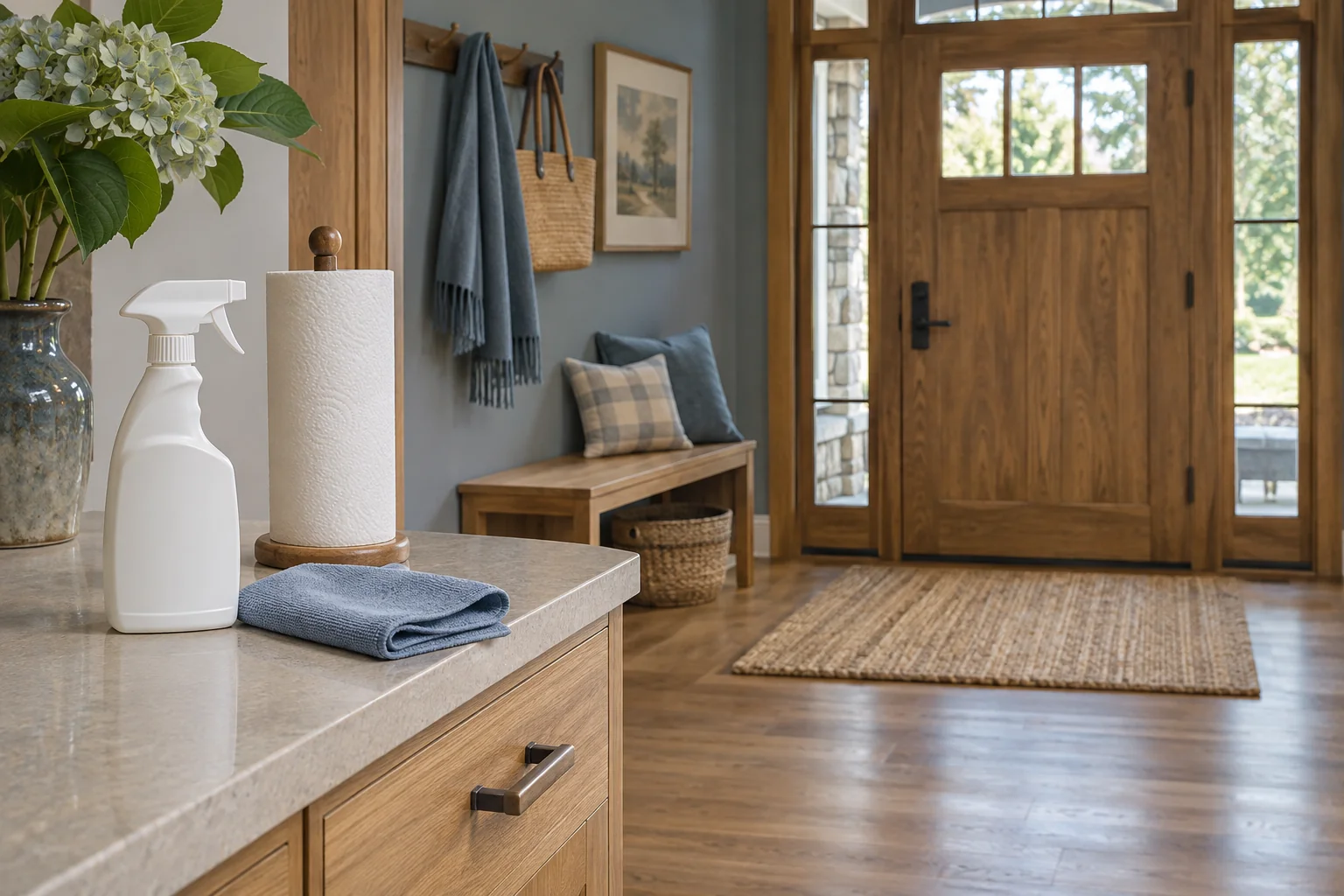
Move people away from the wet area and clean the surface according to the product and flooring instructions. Keep the puppy away from cleaning supplies and allow the floor to dry before normal access. Set supplies where adults can reach them without rushing. If a rug makes cleanup difficult, choose a suitable washable surface with secure footing instead of leaving the puppy on a slippery bare floor.
Make a short factual note after the situation is over. Write down when it happened, what the person was doing, whether the puppy had a recent toilet opportunity and whether you noticed urination at any other time. Record a recent change in sleep, thirst or ordinary movement if relevant. A useful entry might be “Visitor bent down in the hall after dinner. Puppy stepped back and left a small patch. Dry bedding in the morning.” You do not need to repeat the situation to collect more detail.
VCA Animal Hospitals' overview of excitement and conflict urination discusses greetings as one context and the importance of considering medical causes. Bring your observations to the veterinarian and ask what else they want to know. An indoor wet patch can have more than one explanation, even when it happens at a predictable time.
Review what the household can repeat
Choose one practical change for the next comparable arrival. You might have the guest sit before the puppy has the option to approach, or arrange the ordinary toilet trip a little earlier. Keep the rest of the scene familiar. Ask whether the puppy had room, whether people could follow the plan and whether basic needs were met. The presence or absence of a wet patch is only one detail in that review.
If greetings remain difficult, get help with the layout and the people involved. A professional can observe safely and suggest adjustments for your actual home. When a visitor cannot follow the plan, use a comfortably separate area with appropriate support or skip the greeting. Our guide for beginner dog training can help you organise voluntary reward-based practice outside those busy moments.
You can keep a quiet arrival routine even on days when nothing unusual happens. Prepare the people, offer ordinary care and let the puppy choose how much contact they want. A workable routine is one that can continue while you and your veterinarian learn more about the pattern.
Common questions
Should I greet my puppy right away?
Secure the door and put down what you are carrying first. Give the puppy room to move and let them choose whether to come over. You can resume ordinary company once everyone is settled.
Is a toilet break useful if the puppy has already been out?
Offer the usual opportunity when it fits their needs. If they have just finished and are comfortable, focus on keeping the entrance quiet. Keep the usual water and toilet routine regardless of whether a visitor arrives.
What if it also happens when my puppy sleeps?
Share that detail with your veterinarian. Note when you first saw wet bedding and whether normal toileting or thirst changed. This context matters because a wet bed occurs in a different situation from a greeting.
Can I practise with a real visitor?
First prepare an easy response in a quiet room. For an actual visit, ask the person to sit and give the puppy a way to leave. If the household cannot provide space, skip the optional greeting.