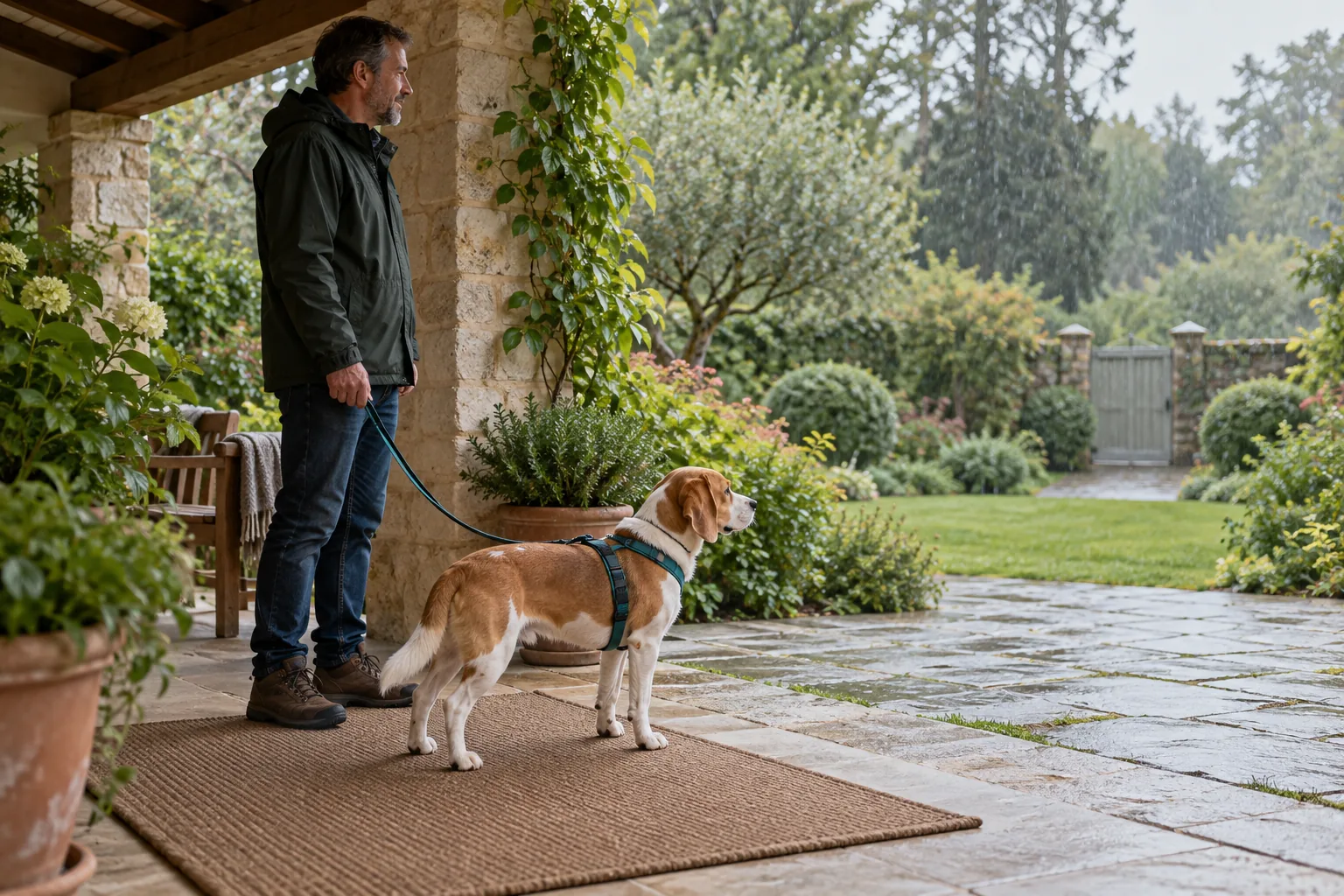
A dog won't walk in rain, the next toilet break is due, and your usual route suddenly feels too ambitious. Begin with a practical question: what does your dog need now, and what is the easiest safe way to provide it? A shorter outing and a different plan for the rest of the day can be sensible choices.
This guide separates necessary care from optional practice. It helps you organise suitable weather decisions, a manageable route and a small voluntary opportunity when conditions allow. It works without an app and does not diagnose why a dog hesitates. Thunderstorms, severe distress, possible pain and unsafe outdoor conditions require their own decisions and individual help where needed.
Dog won't walk in rain: identify the difficult part
Describe what happens during an ordinary necessary outing without taking the dog out repeatedly to test a theory. Does hesitation begin when the raincoat appears, beside the open doorway, at a shiny surface or when paws reach wet grass? Note the place and your own actions. A specific description gives you a practical detail to reconsider.
Keep observations separate from explanations. Standing still beside wet paving does not prove stubbornness or a dislike of all rain. Check whether the dog moves comfortably at other times and whether equipment or the route has changed. You can make an outing easier without deciding the exact cause. Avoid using a longer walk as a test of whether the dog will eventually give in.
For sudden reluctance, possible pain, limping, marked distress or bite risk, seek veterinary and qualified behaviour support. If the dog cannot pass urine, appears unwell or has another urgent health concern, contact a veterinarian promptly rather than treating it as a training problem. Do not drag, scold or withhold necessary care while waiting for a response.
Let conditions decide what is sensible today
Check the local forecast and look at the actual surroundings before preparing a walk. Gentle rain on a familiar sheltered path and a storm with hazardous wind are different situations. Consider footing, visibility and your ability to manage the dog safely. A covered place is useful only when reaching and using it is itself safe; it does not make every weather condition suitable.
The Dogs Trust storm guidance recommends adapting routines around extreme weather and avoiding hazardous water. Keep those boundaries when deciding whether an outing can happen. Do not use thunder, flooding or dangerous conditions as an exposure exercise. Your dog’s immediate care plan may need personal veterinary or local professional advice when normal access is unsafe.
Look for a suitable opportunity when conditions ease, while continuing to meet urgent needs appropriately. Do not require a dog to hold on indefinitely or reduce drinking to avoid a trip. Young, older and unwell dogs can need different arrangements. A general schedule cannot set a safe waiting time for the individual animal in front of you.
Prepare the human end before inviting the dog
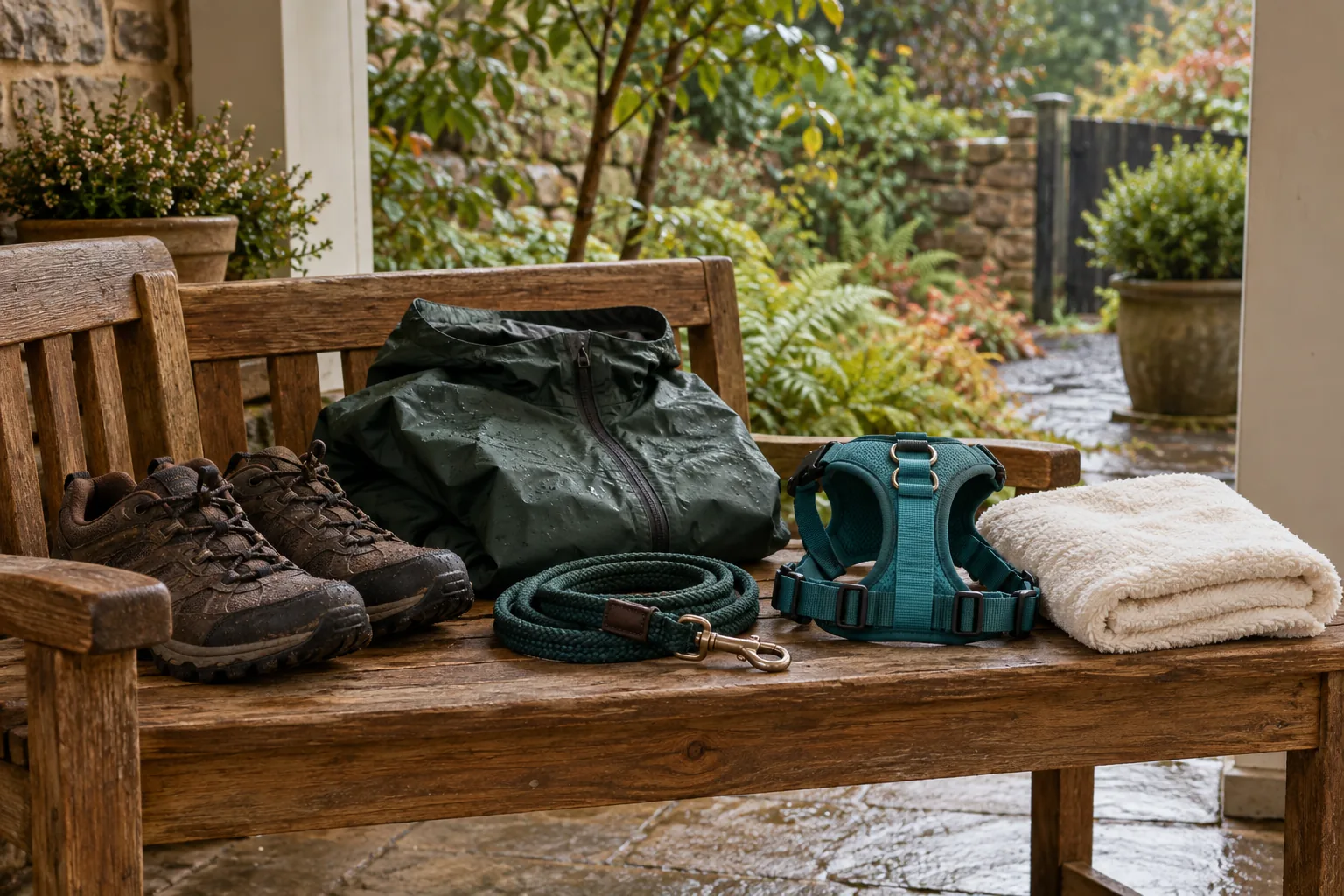
Put your shoes, suitable outerwear, walking equipment and a clean towel where they are easy to reach. Choose footwear that lets you stand and walk securely. Preparing yourself first reduces the time the dog spends waiting through repeated searches. Keep loose straps and small items safely stored, and clear the route through the room so nobody has to step over the dog.
Use appropriate equipment the dog already wears comfortably and check its condition and fit. If protective clothing is suitable for your dog, introduce it gently at another comfortable time before relying on it during an urgent outing. Do not combine a new coat, unfamiliar handling and an unpleasant weather experience as one challenge. Clothing should allow natural movement and be supervised.
Keep door management secure. Attach suitable walking equipment before opening onto an unsecured area, and maintain safe control throughout. Equipment provides practical management, not a reason to pull a reluctant dog forward. If putting it on creates distress, stop the optional rehearsal and get individual help with a workable care arrangement. Do not chase the dog around the room to finish dressing them.
Choose a short route with an easy return
Think of the nearest familiar appropriate place for the necessary trip and the route back. A quieter side path with secure footing may be more manageable than the usual circuit. Avoid slippery-looking surfaces, puddles with unknown contents and routes that force you close to traffic. Check a shared entrance for other people before bringing the dog through, without leaving them unattended.
Keep the plan flexible. If a covered route becomes crowded, water collects or the dog struggles, change the arrangement rather than insist on reaching a chosen point. The loose-lead walking guide covers walking skills separately. A rainy toilet trip does not need to become a lesson in perfect position, long attention or continuous loose-lead walking.
Let the dog investigate an appropriate place while you supervise and keep the lead comfortable. Do not insist on extra distance after the necessary task simply to match yesterday’s route. Equally, returning indoors does not remove the dog’s need for suitable movement and exploration later. Review the day as a whole and find safe opportunities that suit the actual conditions.

Practise small voluntary movement when needs are met
Choose optional practice only after immediate needs have been addressed and the weather is suitable. Start somewhere easy, such as a familiar sheltered area with dry secure footing. Keep safety equipment in place where needed. The goal may be one ordinary voluntary step or a comfortable look towards the garden. It need not involve stepping into rain at all on the first opportunity.
Notice and reward an easy voluntary action with something appropriate for the dog. Keep delivery comfortable and allow them to pause or move back. The RSPCA training guidance supports reward-based learning. Here, food should acknowledge a manageable action; do not hold it out beyond the dog’s comfort to draw them into a situation they are trying to avoid.
Stop if participation becomes difficult, the weather changes or the dog appears uncomfortable. Do not tighten the lead to prevent retreat, repeat a cue until it happens or continue until the food is accepted. Rewarding a small action is not proof that rain has become pleasant. Keep the next opportunity easy and obtain personal help when you cannot find a comfortable starting point.
Keep toileting and practice on separate tracks
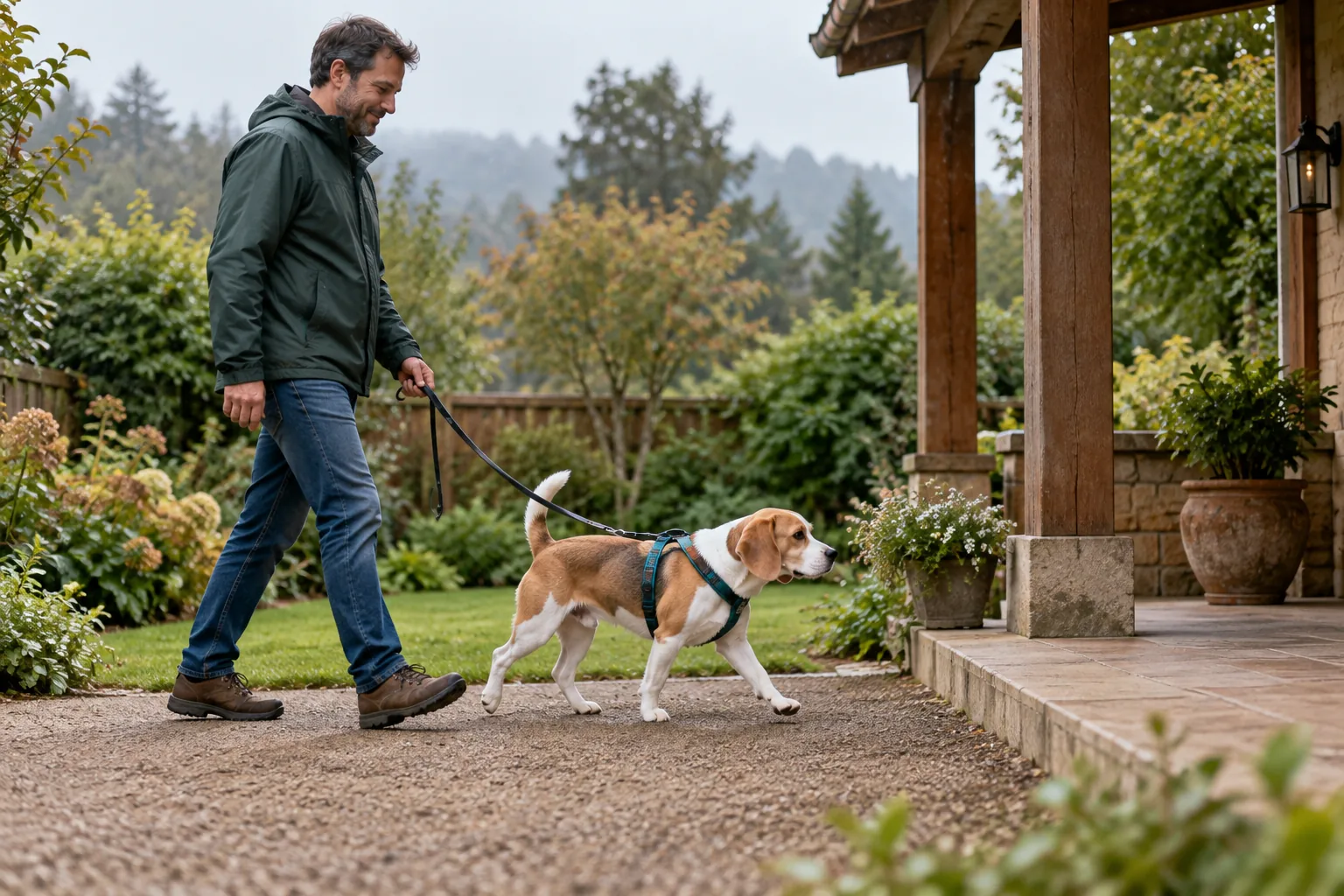
When a toilet break is due, prioritise the safest manageable care routine. This is not the moment to demand a new behaviour before access to an appropriate place. Keep the necessary outing as simple as possible, and seek personal advice if you cannot meet that need safely. Do not treat accidents as deliberate misbehaviour or punish a dog afterwards.
Use the dog’s usual toileting arrangements where they remain suitable. A completely new indoor or sheltered toilet option may need teaching and individual planning; do not assume a dog will understand it immediately. Preserve hygiene and shared-space rules, and ask a veterinarian about health concerns or changing needs. An online training example cannot establish the right solution for every home.
Optional practice can wait for another comfortable moment. Our short-session guide helps you choose a clear endpoint when you do practise. A brief attempt should leave time for rest and ordinary life. There is no need to rehearse at every rain shower, and no fixed number of attempts that makes longer exposure appropriate.
Make coming home comfortable and unhurried
Have a dry, secure standing area ready on return so handling is easier for both of you. Remove wet walking equipment as appropriate once the dog is safely inside, and provide comfortable rest and water. If drying is needed, use the gentle handling your dog already accepts. Do not rub vigorously, restrain for an optional demonstration or use direct heat as a shortcut.
Watch for discomfort and adapt promptly. A dog that shivers, appears unwell or is unable to settle comfortably may need veterinary advice rather than another practice attempt. This guide does not set temperature limits, prescribe clothing or diagnose cold-related illness. Follow advice for the individual dog, especially when age, coat or health makes ordinary weather management more complicated.
A familiar resting area can make the transition simple. If your dog already enjoys a mat, the mat guide offers a way to support that routine separately. Leave the dog free to choose a comfortable position. Rest should not depend on performing a cue, and a bed should not become a place where the dog must tolerate handling they find difficult.

Review one detail and plan the rest of the day
A plain notebook can hold a useful short record: conditions, route, what happened and what you changed. “Light rain, sheltered side path, brief necessary outing, returned comfortably” gives tomorrow a concrete reference. Add uncertainty honestly. One easy step or a completed toilet trip does not establish that every rainy walk will now be manageable.
Choose one practical adjustment for the next suitable opportunity, such as preparing your own clothes earlier or using a familiar covered route. Avoid changing several things and then guessing which mattered. Do not set a deadline for liking rain. Some dogs will continue to need shorter outings and more flexible daily plans, with professional support when discomfort persists.
Include appropriate indoor activity, company, sniffing opportunities and rest around the outings you can provide safely. These support an ordinary day; they do not replace toileting or all outdoor needs. If reluctance spreads to dry days, changes suddenly or remains distressing, bring your observations to a veterinarian and qualified behaviour professional. Planning should stay responsive to the dog’s actual welfare.
Common questions
Should I pull gently until my dog starts moving?
Avoid dragging or using lead tension to stop retreat during an optional exercise. Arrange a smaller, safer opportunity and keep necessary care separate. If you cannot manage an essential outing safely, seek personal veterinary or qualified behaviour help with a practical plan for your home.
Does every dog need a raincoat?
Clothing depends on the individual dog, conditions and health advice. Any item should fit comfortably, allow natural movement and be introduced gently before you rely on it. A new coat is not an instant solution to reluctance, and distress during handling needs its own attention.
Can I practise while there is thunder?
Do not use storms or dangerous conditions as an exposure exercise. Follow local safety advice, keep the dog secure and arrange suitable care. Persistent fear or difficulty meeting necessary needs warrants veterinary and qualified behaviour guidance for the individual dog.
Is a shorter rainy outing enough for the whole day?
Consider all needs across the day. A short necessary outing can be part of the plan, alongside suitable movement, exploration, indoor activity and rest when conditions allow. Do not delay toileting, remove drinking water or assume a single indoor game replaces every outdoor need.