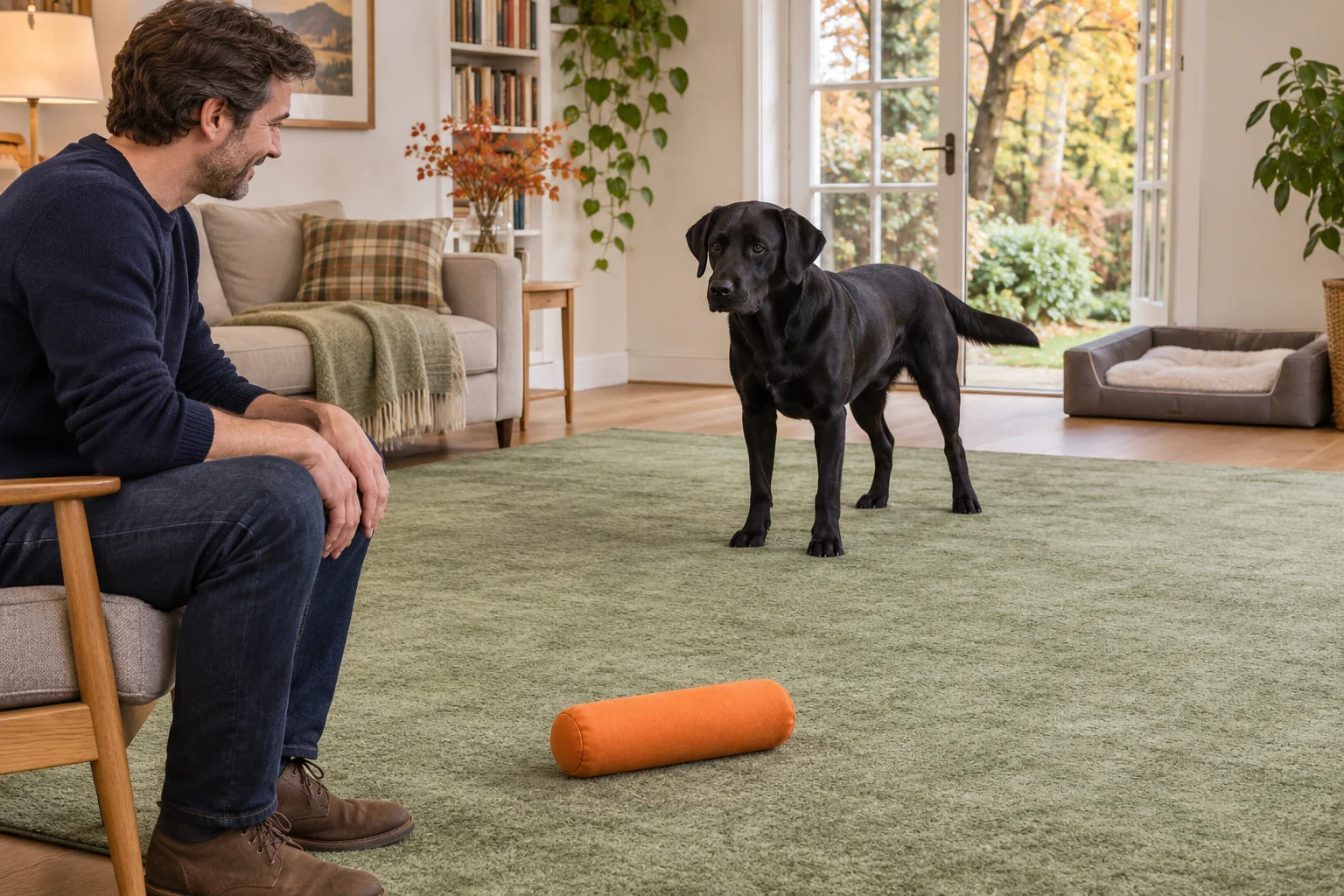
Your dog won't play with toys, so you wave one again, bring it closer and try a more enthusiastic voice. The dog looks away, sniffs the floor or leaves. Before buying another object or repeating the invitation, separate three questions: is the situation comfortable, is this particular activity interesting now, and are you expecting play when the dog has chosen something else?
This example uses DogPath to organise suitable foundations and review actual practice, while keeping toy exploration voluntary. It does not promise to turn every dog into a fetch partner. Sudden loss of interest, difficulty using the mouth or moving, suspected pain, severe distress, guarding or bite risk needs veterinary and qualified individual advice. Do not put a toy into the mouth, withhold normal meals or rest, or let children test a reluctant dog. Necessary care and companionship remain available whatever happens in a lesson.
Dog won't play with toys: describe the choice
Begin with the visible scene rather than a conclusion about motivation. Was the dog resting when you arrived with a toy? Did the object squeak unexpectedly, move towards the face or appear beside another animal? “Looked at the toy, then walked to the bed” describes an observation. “Stubborn” does not explain what made the invitation difficult or whether the dog wanted that activity at that moment.
Keep looking, sniffing, touching, carrying, chasing and sharing a game separate. One brief sniff is interest in an object, not proof that the dog enjoys tugging or will retrieve it. Walking away is also useful information. You do not need to follow with the toy or place it across the route to obtain a more satisfying result. Keep the exit available and let the choice remain real.
Choose a small purpose for the next suitable opportunity: offer one safe object without pressure and observe what happens. A dog who chooses another comfortable activity has not failed the household. This distinction matters when you later plan training: you need a reward and exercise that fit this dog, not evidence that a favourite human game must become a requirement. A short observation can guide that decision even when no play occurs.
Prepare the space and check the object
Use a familiar quiet area with secure footing, room to turn and an open route away. Keep other animals and children out of the invitation so that access to an object does not become a competition. Avoid cramped corners, slippery floors, stairs and elevated surfaces. The dog should not need to squeeze between your legs or pass your hands to leave. Put the phone somewhere safe before bringing the object into the space.
Check the toy's condition and suitability for the individual dog. It should be appropriately sized, intact and free of loose pieces that could be swallowed. An object sold for dogs is not automatically suitable for every mouth, strength or style of interaction. Supervise and stop using damaged items safely. Do not improvise with socks, sticks, small balls or household packaging to make the invitation more exciting.
The Dogs Trust enrichment guidance emphasises individual suitability, preferences and observing engagement. Apply that narrow principle rather than searching for a toy that every dog should like. Start with one appropriate item, not a floor full of options. A clear setup makes the dog's response easier to interpret and keeps your own movements manageable.

Use an appropriate DogPath foundation, not a play deadline
Before practice, read an existing foundation lesson and its preparation. Check what response and reward it actually requires. If it depends on toy play that is not comfortable or available, do not improvise your way through it or mark it complete anyway. Choose an appropriate easier foundation using a reward your dog already finds suitable, or ask for individual guidance when the method is unclear. A place in the training path is a sequence aid, not an assessment of your dog's preferences or health.
Keep toy exploration separate from completing that lesson. On paper, write a practical distinction: “one voluntary toy invitation; afterwards a familiar short exercise only if conditions fit”. This is your own context note, not a special preference test inside the app. Prepare first and put the phone away while the dog is participating. Avoid switching between several screens while holding an object near the dog's face.
Dog Train Club and DogPath share the publisher Rocket Digital Limited. This example uses existing guided lessons, preparation, completion records and weekly planning. It does not assume an automatic play assessment, a toy recommendation engine or a dedicated treatment for reluctance. The app helps organise decisions; it cannot tell you that a particular object is safe or that a dog who walks away should be persuaded to continue.
Make one understandable invitation
Place the suitable object where the dog can notice it without being crowded. Begin with it still rather than adding sudden noise or rapid movement. Sit or stand comfortably to the side and allow a short voluntary opportunity. Do not press the object against the nose, tap the body with it or repeatedly make it squeak to demand attention. If the dog leaves, let the invitation end instead of following around the room.
If the dog shows comfortable interest, keep your response modest. A look or sniff does not need to become a chase, a grab or a long game. Allow space to investigate without taking the toy away the moment the dog approaches. This article does not teach release or sharing an object. Guarding, stiffening, unsafe grabbing or concern about a bite means stopping optional practice and obtaining qualified personal help, not reaching in to test the reaction.
Our short training sessions guide helps keep the opportunity manageable. There is no required number of repetitions and no need to keep offering until the dog finally touches something. A clear ending can be an ordinary pause while the dog chooses rest. Keep normal walks, safe exploration and relaxed company in the day instead of making every interaction a test of toy interest.

Change one useful detail, without escalating pressure
At a later suitable opportunity, change one practical feature if it is safe to do so: a quieter time, a different appropriate texture or more distance from your body. Changing all of these together makes it hard to understand what helped. Do not keep introducing noisier toys or faster throws because a still object received little interest. Your purpose is a comfortable invitation, not a contest to produce the strongest reaction.
Avoid assuming that enthusiasm in one setting applies everywhere. A dog may investigate an object alone but prefer a different activity when a person joins. Carrying a toy does not establish enjoyment of tug, and following something once does not mean repeated high-speed chasing is appropriate. Keep movement low and manageable only if it already fits the dog's comfort and needs; obtain individual advice before adding physical demands you cannot assess.
The Dogs Trust reward-training guidance explains choosing suitable reinforcement. For an appropriate separate foundation, use what actually works for this dog rather than treating a toy as valuable by definition. Our reward marker guide covers clear feedback. Do not withhold an earned reward because the dog did not also take the toy or turn one simple response into an unprepared play challenge.

Record observation and completion separately
After the optional opportunity, put equipment away safely when the dog is elsewhere and return to DogPath. Record only the work actually completed through the available controls. Reading preparation, offering an object and finishing the described foundation are different outcomes. A sniff is not a completed fetch lesson, and a suitable food-rewarded response does not prove toy motivation. Leave work unfinished when its actual requirements were not met.
Use your separate paper note for context: location, object, human posture, invitation and ending. “One still toy; sniffed briefly; chose bed; invitation ended” is useful. “Does not like any toys” reaches beyond that observation. If the house became busy and you postponed, record the postponement rather than inventing participation. Another adult should be able to understand what happened without interpreting a completion mark as a general assessment of the dog.
Our beginner training guide provides wider foundations when the exercise needs to be simpler. Review your own organisation too: did you read ahead, keep the phone away and leave room to exit? One human change may make the next occasion easier to manage. Persistent concern, sudden changes or difficulty around handling belongs in individual professional advice rather than an expanding record of unsuccessful invitations.

Plan around comfortable participation
Keep one suitable foundation in DogPath's weekly plan and allow the next occasion to repeat, simplify or wait. A planned day does not create an obligation to play, and a missed opportunity does not require extra repetitions later. If the dog prefers safe exploration or rest, retain those ordinary needs in the day. Do not remove familiar comforts to increase the appeal of a training object.
When another adult joins, explain the setup and stopping rule before the dog comes into the space. Let them prepare their own posture and understand the difference between observation and a lesson outcome. Avoid two people calling, moving toys and asking for responses simultaneously. A different person is already a change; keep other conditions familiar instead of combining a new handler, toy and room in one attempt.
At the weekly review, choose a modest next decision: repeat the comfortable invitation, use another appropriate foundation reward, clarify a method or seek help. Keep the question practical: what can this dog comfortably choose here? The useful outcome is a clearer plan and an honest account of participation, not proof that an app, a purchase or a deadline has made every dog enjoy the same kind of play.
Common questions
Must every dog enjoy playing fetch?
No. Looking at, carrying and retrieving an object are different activities. Offer suitable voluntary opportunities and plan around the individual dog rather than treating fetch as a requirement.
Should I put the toy in the mouth or make it squeak?
Do not force contact or repeatedly add noise to obtain a response. Keep a safe exit, start with a manageable invitation and stop if the dog is worried or handling becomes unsafe.
Does DogPath diagnose why my dog will not play?
This workflow uses existing lessons, preparation, actual completion and weekly planning. It does not assume automatic diagnosis, a preference score or a dedicated reluctance treatment.
What if my dog suddenly stops playing?
Pause optional practice and seek veterinary advice for sudden change, possible pain or difficulty moving or using the mouth. Guarding or bite risk also needs qualified individual support.