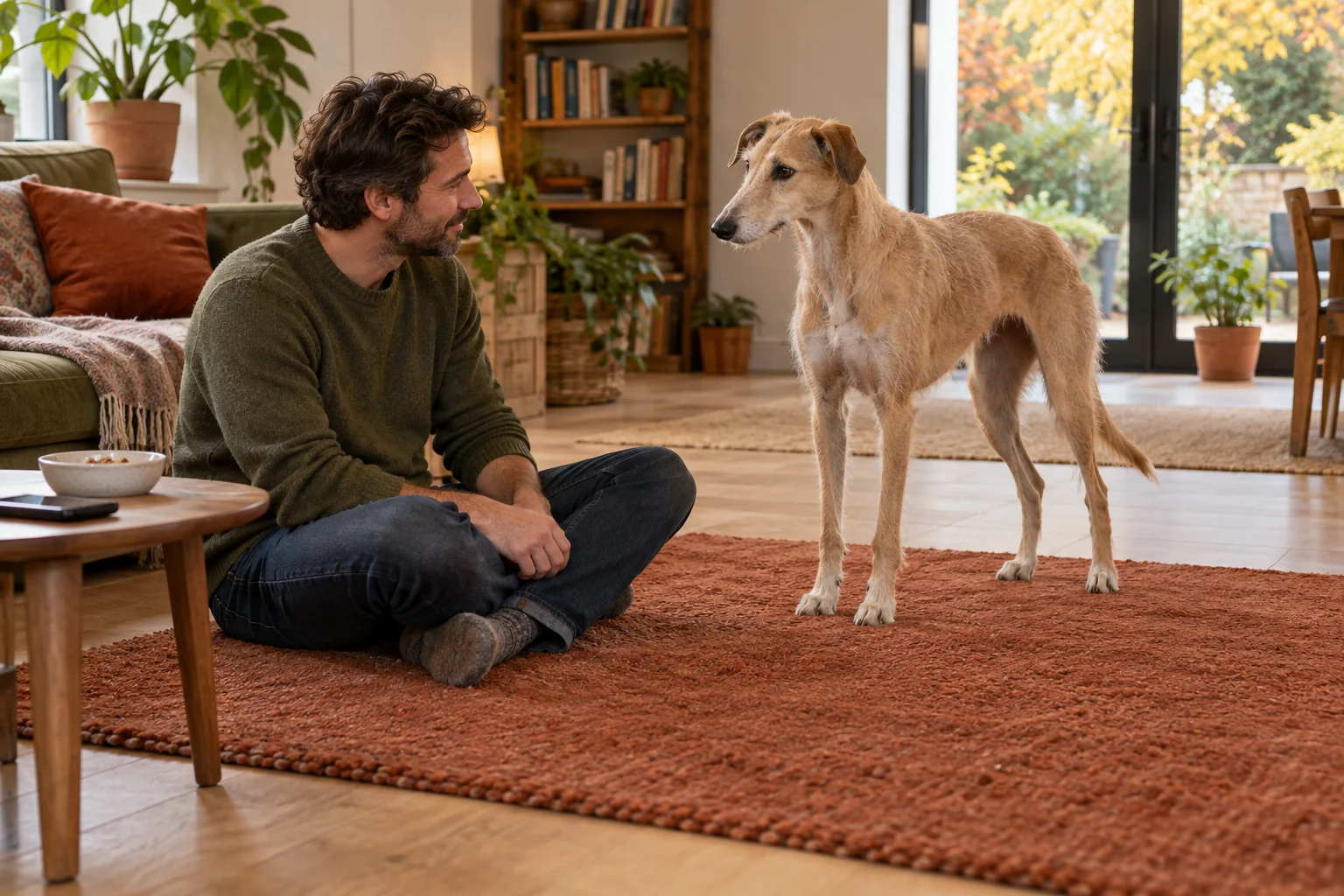
Your dog won't lie down, so you say the word again and move the reward a little farther. The dog stands, steps forward or looks away, and a simple exercise becomes a puzzle. Before trying another repetition, separate three questions: is this movement comfortable, is the starting arrangement clear, and what response are you actually prepared to reward? Those questions are more useful than assuming the dog knows the cue and refuses it.
This example uses DogPath before and after optional practice: choose an appropriate existing foundation, read the instructions, put the phone away, then return to record what genuinely happened. It is not an assessment of pain or a way to make a worried dog lie still. Sudden change, difficulty getting comfortable, possible pain, severe distress or bite risk needs veterinary and qualified individual help. Normal care and rest never depend on finishing a lesson.
Dog won't lie down: separate learning from discomfort
Think about ordinary life before arranging a demonstration. Does your dog lie down comfortably when choosing a resting place, or have you noticed a new reluctance to lower, rise or settle? The latter belongs in a veterinary conversation, not a longer training session. Do not press a dog's shoulders, pull the legs or keep asking until tiredness produces the position. An article cannot tell you whether a movement is physically comfortable.
If everyday movement appears comfortable but this exercise is unclear, describe the actual scene. “Stood when my hand moved forward” gives you something practical to review. “Knows it but ignores me” assumes information you have not established. A familiar response in another room, with another person or on another surface does not automatically tell you what the dog understands here. Keep your description narrow and avoid testing several settings to prove a point.
Choose a modest purpose for the next suitable opportunity: arrange comfortable footing and prepare one easy part of the movement described in an appropriate lesson. There is no requirement to obtain a complete down today. If concern remains about comfort, stop and seek advice before continuing. A short note about an observation is useful even when you decide that optional practice should not take place.
Prepare the surface and your position
Choose a familiar quiet space with a flat, secure surface that does not slide or bunch under the dog's feet. Give the dog room to stand, turn and leave. A rug is comfortable footing, not a boundary the dog must obey. Avoid asking for this exercise on an elevated table, beside stairs or in a narrow gap between your legs and furniture. Keep children and other animals outside the practice area.
Check your own posture without the dog first. Can you sit or kneel comfortably, reach the intended reward position and put the phone somewhere safe? If crouching makes you loom over the dog or lose balance, arrange a different appropriate starting position with guidance. The dog should not need to squeeze beneath a leg or tolerate hands on the body to obtain the reward. Prepare small suitable rewards rather than searching in a packet midway through the first attempt.
Our settling on a mat guide covers the wider arrangement of a restful place. This article concerns learning a movement; a down position does not by itself prove relaxation. Keep comfortable everyday resting opportunities available separately, without turning every time your dog lies down into another training demand. Rest is part of normal care, not an exercise reward to withhold.
Read one appropriate DogPath foundation first
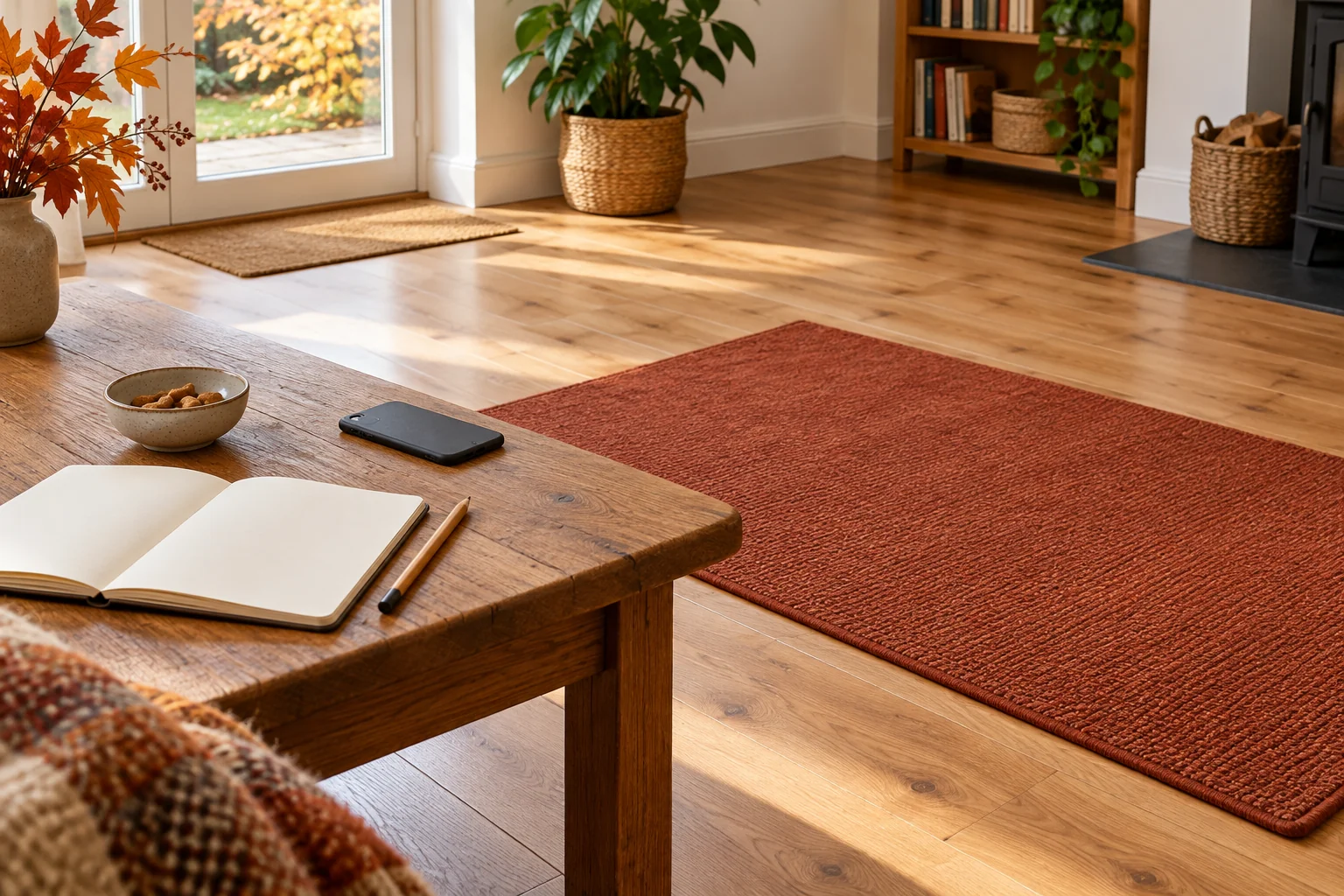
Open an existing DogPath foundation lesson relevant to the movement you want to practise and read its preparation and prerequisites before inviting the dog. Use it only when the starting conditions fit your situation. The path helps you organise a sequence; its next item cannot establish whether a particular dog is comfortable or ready. If you cannot identify a suitable lesson or interpret its instructions, clarify the method with qualified personal support instead of improvising a harder version.
Write a separate practical sentence such as “quiet room, secure rug, reward prepared, one easy movement, then pause”. This is your household context, not a claim about a special field inside the app. Keep the lesson instructions and your observations distinct. Do not move through several lessons in search of a button that will explain why the dog stood up. Read once, rehearse any awkward hand movement alone, and put the phone away before practice.
Dog Train Club and DogPath share the publisher Rocket Digital Limited. This example uses existing guided lessons, the training path, completion records and weekly planning. It does not assume posture recognition, a pain score, automatic video analysis or a dedicated refusal treatment. The app supports organisation; it cannot decide whether your surface, handling or dog's physical condition is appropriate. Those decisions still require your observation and professional advice when needed.
Reward an appropriate small movement
Start with an easy version of the method you have prepared. If the dog is already comfortable with the starting position, observe the first suitable movement rather than waiting only for the finished posture. A small appropriate lowering movement can be a useful point to reward, provided the dog remains comfortable and the method fits. Pause afterwards. Do not drag food along the floor indefinitely while the dog becomes more stretched or follows with the hindquarters still raised.
The Dogs Trust down-training guidance supports rewarding smaller movements towards the floor and avoiding physical force. Use that limited principle rather than treating a complete position as the only worthwhile outcome. Reward where the dog can receive it comfortably. If your hand travels away and the dog follows it by walking, review that movement before repeating the same confusing arrangement.
Our reward marker guide explains feedback when that foundation needs attention. Avoid adding a new marker sound, a new verbal cue and a new body movement simultaneously. If you miss a moment, reset gently and simplify the next suitable opportunity; do not hold back a promised reward to obtain a more impressive posture. Accurate preparation matters more than making one attempt look complete.
Keep the cue and the ending understandable
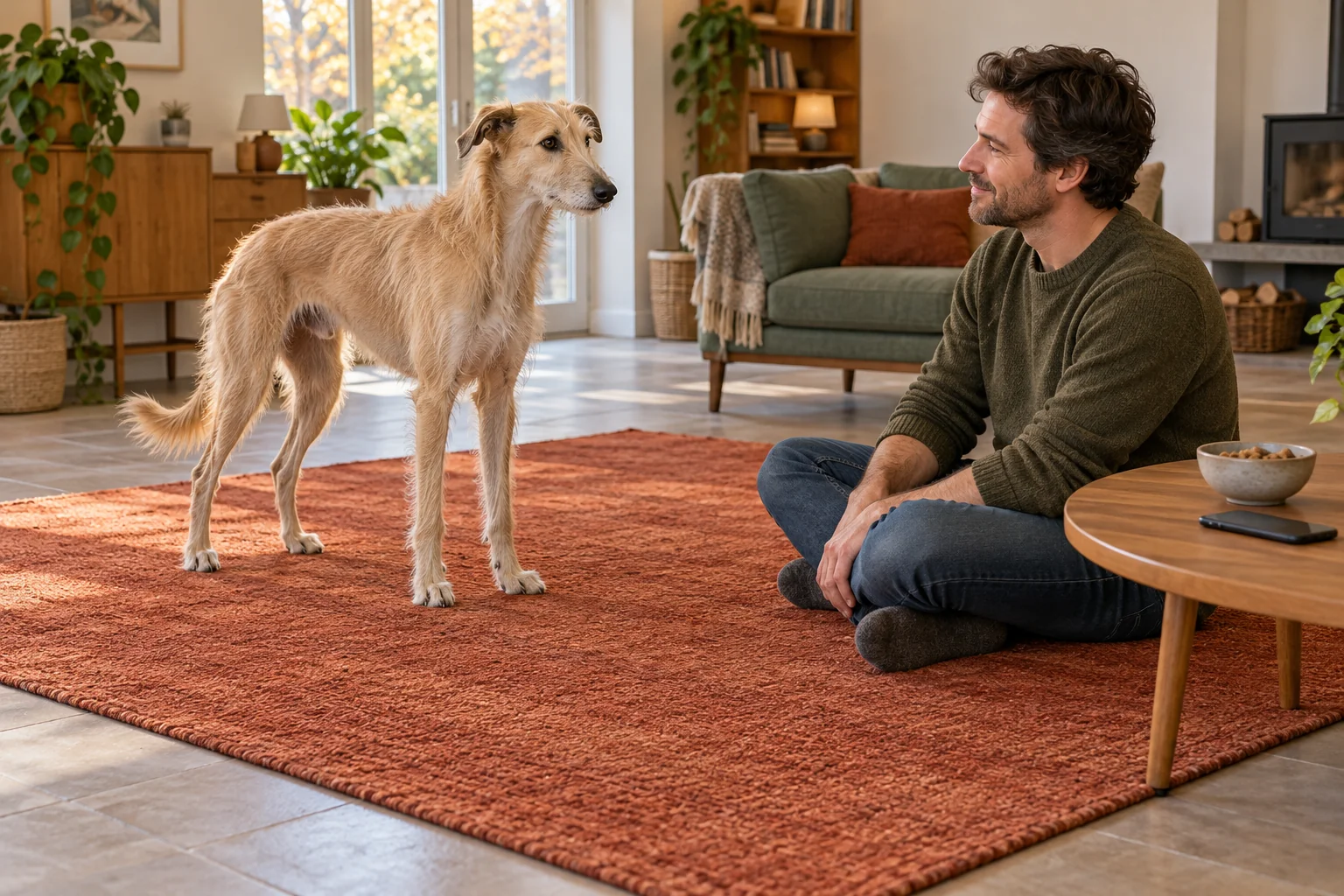
Repeating a word over and over does not explain a movement the dog has not yet learned in this situation. Follow the suitable lesson's guidance about when to introduce or use a cue, and keep your voice ordinary. Do not add pressure by leaning closer, blocking movement or raising your volume. A dog who remains standing has given you information about this attempt, not an invitation to escalate your handling.
The Battersea guide to teaching a down distinguishes gradual learning, reward delivery and changes of surface. Use these as separate decisions. If one arrangement becomes comfortable, keep it familiar before changing the room or asking for duration. Lying down once does not mean the dog understands a stay, accepts handling or can remain there through distractions. Those are additional demands with their own preparation.
End with an ordinary pause and allow the dog to move. Do not insist on remaining down while you search for the next instruction. Necessary water, toileting, company and rest remain available regardless of the exercise result. If the dog moves away, avoid following with food or repeating the cue across the room. Review whether the surface, human position or length of the opportunity made the task less manageable.
Record what happened, not what you intended
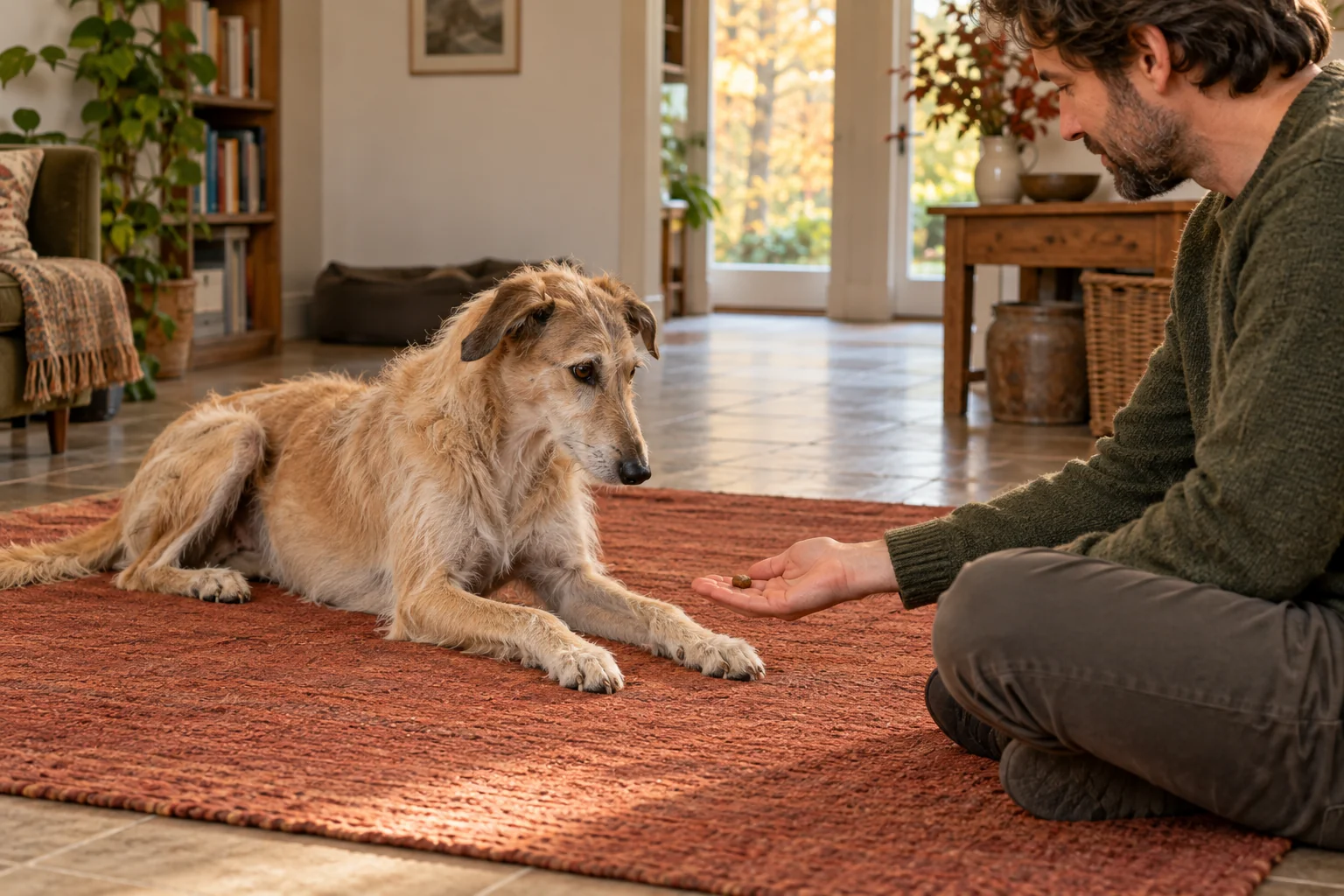
After putting rewards and equipment away, return to DogPath and use the available completion controls honestly. Reading the lesson, attempting a small part and completing the exercise described are different outcomes. Leave unfinished work unfinished. A comfortable lowering movement on one rug is not evidence of a reliable full down in several locations, and it does not justify marking later lessons complete.
Keep context on your separate paper note: surface, human posture, hand movement, reward location and stopping point. “Head lowered; rewarded; paused before another attempt” is useful detail. If a doorbell interrupted the setup and you postponed, record that fact. Such a note helps you prepare the next opportunity without inventing a successful repetition or assigning an emotion that you could not confidently observe.
Our short training sessions guide helps with a manageable practice window. Review your own organisation alongside the dog's response. A reward bowl placed closer to your hand, a clearer rug edge or reading ahead may remove unnecessary waiting. Change one useful detail instead of creating a completely new exercise each day. If the same difficulty persists, seek guidance rather than accumulating attempts.

Use the weekly plan to repeat an easy version
Keep one appropriate foundation visible in DogPath's weekly plan and allow the next occasion to repeat or simplify it. A planned day is not an obligation to finish the whole movement. If the household becomes busy, postpone optional practice and retain the comfortable setup for another opportunity. A missed day does not create a debt of extra repetitions, and a completion streak cannot establish the dog's readiness for a harder task.
When another adult joins, explain the starting conditions, reward position and stopping rule. A new person is already a meaningful change. Let them begin with an easy suitable version instead of copying your furthest attempt while also moving rooms. Avoid two people giving cues or reaching towards the dog together. Rehearse the human part without the dog if the handover feels awkward.
At the review, choose the smallest sensible next decision: repeat the familiar setup, make the first movement easier, or ask for help with the method. Keep ordinary walks, exploration and unrequested rest in the day. The useful outcome is a clearer plan and comfortable participation, not proof that an application has removed every difficulty or that your dog must lie down whenever anyone asks.
Common questions
Should I push my dog into a down?
No. Do not press shoulders, pull legs or use restraint to obtain the position. Stop optional practice if comfortable voluntary movement is not available. Suspected pain or sudden change needs veterinary advice.
What if my dog follows the food but stays standing?
Review the surface and your hand movement, and use a smaller appropriate part of a suitable method. Avoid dragging the lure farther or repeating the cue. Qualified individual guidance can help clarify the setup.
Does DogPath automatically assess posture or discomfort?
This workflow uses lessons, honest completion records and weekly planning. It does not assume automatic posture analysis, pain diagnosis or a readiness score. Keep observations separately and seek veterinary or qualified handling advice when needed.
Does one down mean my dog can stay there?
No. Learning the movement, remaining in position, coping with distractions and relaxing are different demands. Record only the practice actually completed and prepare any later change separately, without treating one response as general reliability.