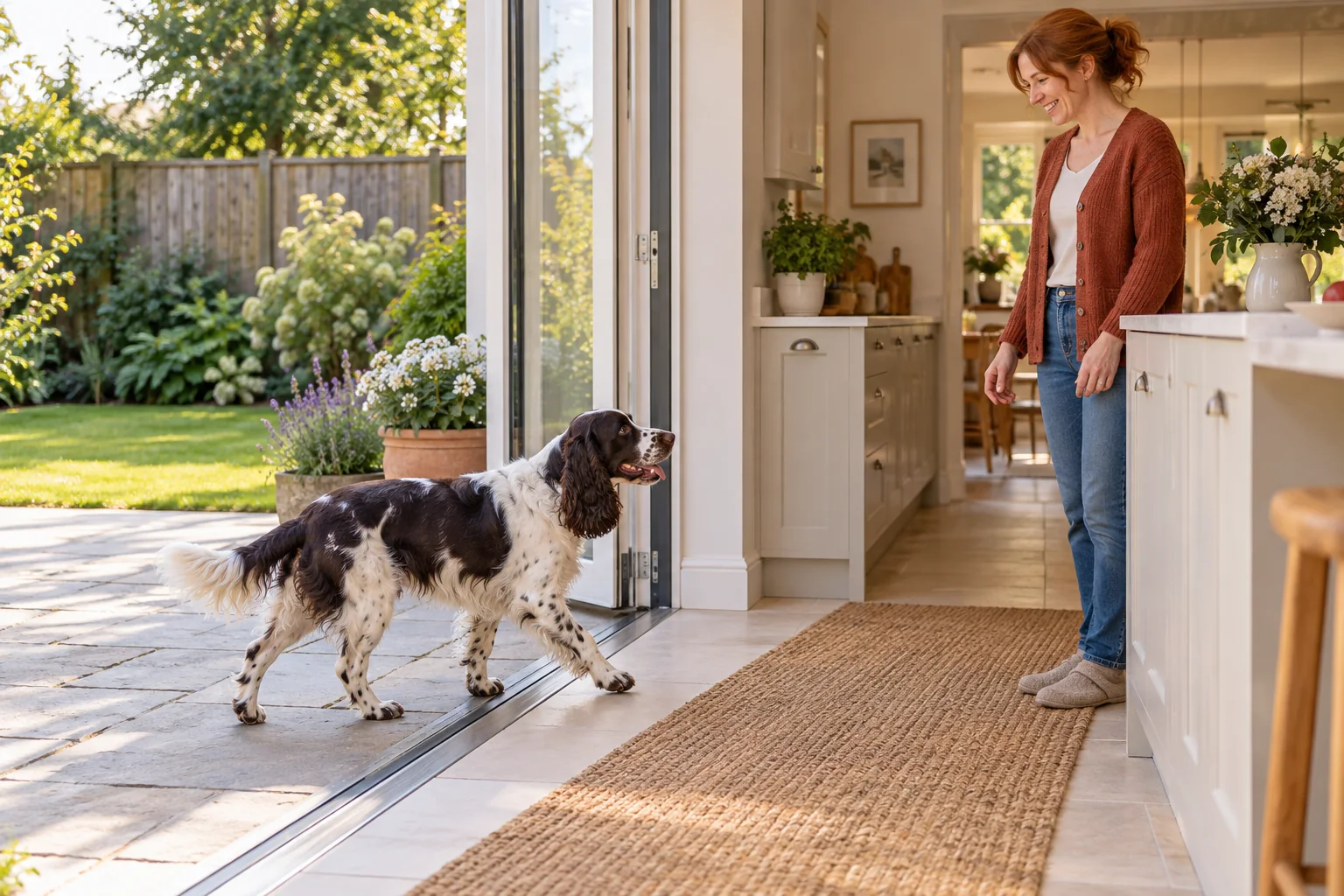
Your dog won't come inside, and the last few minutes in the garden have become a familiar negotiation. You stand at the back door, call again and watch the dog return to an interesting patch of grass. Before making the cue louder, look at the whole journey: leaving the outdoor activity, approaching you, crossing the threshold and settling into whatever happens next.
This guide is for a supervised return from a securely enclosed private garden, when the dog is comfortable enough for optional practice. It offers a practical household routine you can use without an app. It is not an emergency retrieval method or permission to leave a dog outside until they give in. Necessary care, safe boundaries and individual help come before training. An ordinary arrival is enough to examine; you do not need to stage another refusal.
Dog won't come inside: find the stopping point
Describe the sequence rather than deciding that the dog is stubborn. Did they fail to turn from the flowerbed, walk towards you then stop at the door, or enter and immediately head back out? Those are different observations. The first suggests reviewing the approach and competing activity; the second calls for attention to the entrance. Neither observation, by itself, identifies a motive or establishes a diagnosis.
Recall your own movements too. Perhaps you leaned across the opening, reached for a collar, or closed the door while the dog's tail was still near it. Maybe arriving indoors is usually followed immediately by a difficult towel routine. These details are worth changing without testing the dog first. Write one sentence about what happened before the pause and one about what happened after arrival.
If the change is sudden, or there is stiffness, limping, unusual tiredness, disorientation, apparent pain or distress, contact your veterinarian. Growling, snapping or concern about being bitten needs qualified personal help and safe separation from children or other animals. Do not reach in to test tolerance. Collapse, breathing difficulty or inability to move needs urgent veterinary care, not a more tempting reward.
Prepare the route while the dog is elsewhere
Check the garden's actual containment, including gates and gaps, before allowing the dog out. A successful recall does not secure a boundary. Keep the front entrance and any route to the street closed while the garden door is open. If you cannot maintain a safe enclosed setting, arrange suitable handling with professional help; do not use this article as an experiment beside an escape route.
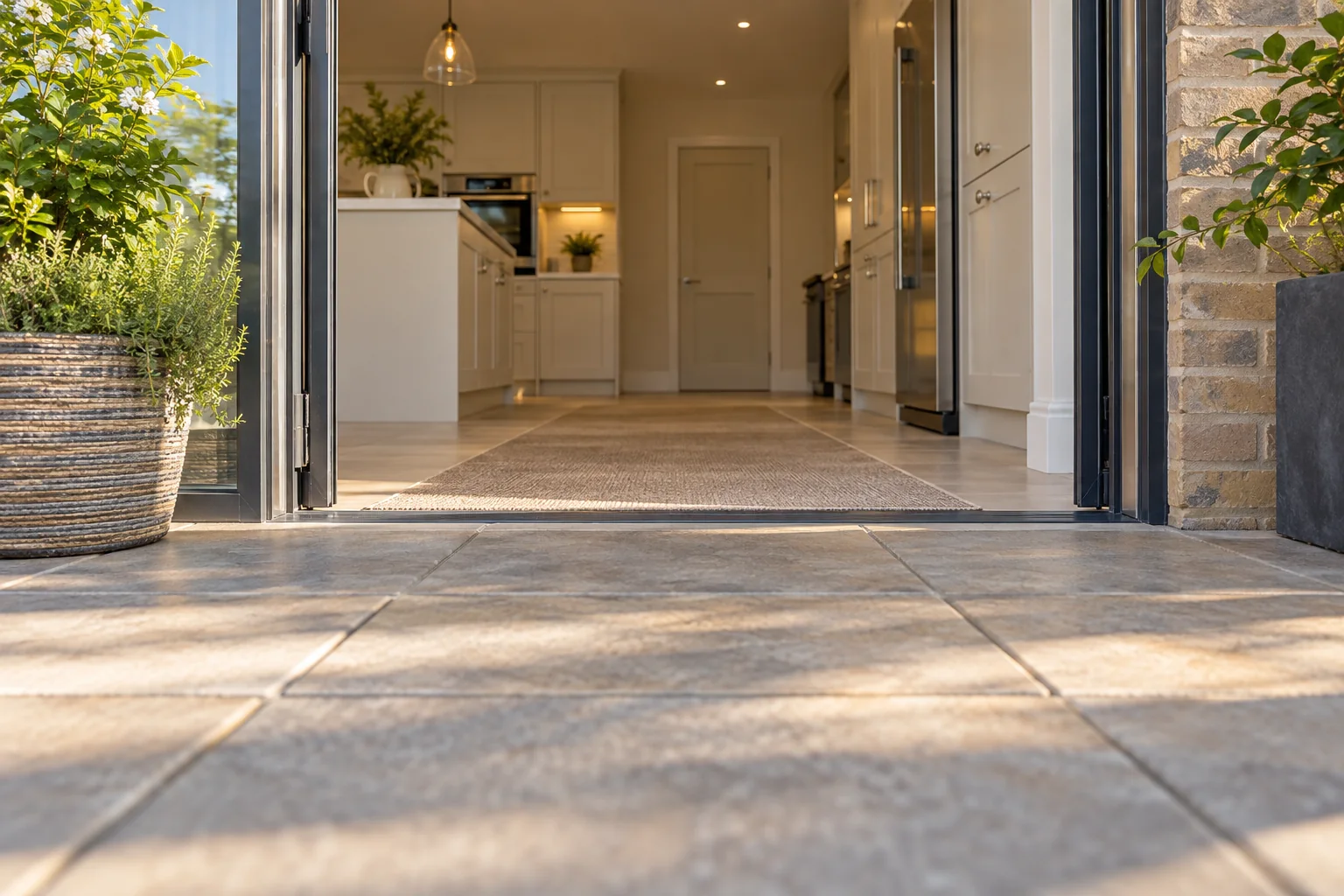
Inspect the doorway from the dog's height. A loose mat, glare, a moving door or a noisy appliance can make the entrance less straightforward. Provide stable footing and adequate light. Secure the door so it cannot swing onto the dog, leaving a generous passage. Do not build an improvised ramp or cover a difficult step and assume mobility is solved. A dog struggling with the movement needs individual assessment.
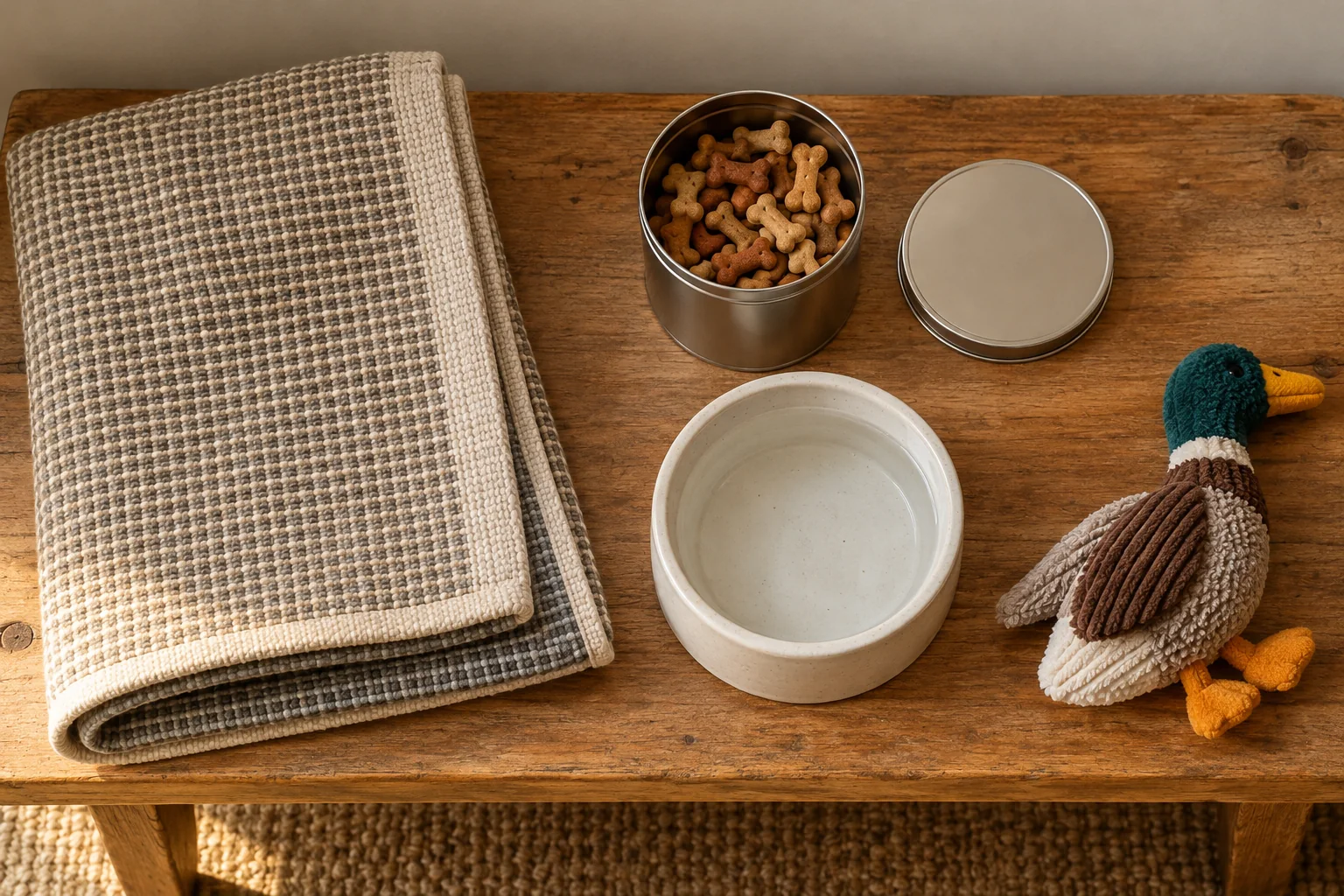
Prepare suitable small rewards within easy reach, together with water and a comfortable indoor destination. Keep food appropriate to the dog's health and avoid hard, unsuitable pieces or competition between pets. Our reward marker guide explains feedback timing separately. You can simply reward the arrival; adding a new marker is not a prerequisite for making this doorway easier to use.
Practise one nearby return when time is available
Choose a quiet opportunity after ordinary toileting and some unhurried exploration, rather than the minute before you must leave. Join the dog in the secure garden. Begin near the entrance, where approaching you is already easy, and keep your body out of the passage. If the dog is absorbed in something or looks uncomfortable, reduce the demand or postpone. Repeated calling does not make that moment more suitable.
Use your familiar invitation once when the dog can notice you. Take a small step towards the comfortable indoor space, without retreating so far that the dog loses sight of you. Allow a voluntary approach and crossing. If the dog only comes partway, do not turn the reward into a trap or stretch the food hand across the doorway to pull the nose through.
Pause if the attempt stalls. You might need a nearer starting point, an easier surface or a calmer indoor scene. Our recall foundations cover learning to approach a person. Here the extra question is whether the entrance and its consequences are comfortable. A dog who cannot yet approach nearby needs that simpler foundation, not a longer garden test or a stronger demand at the threshold.
Reward arrival without adding a surprise
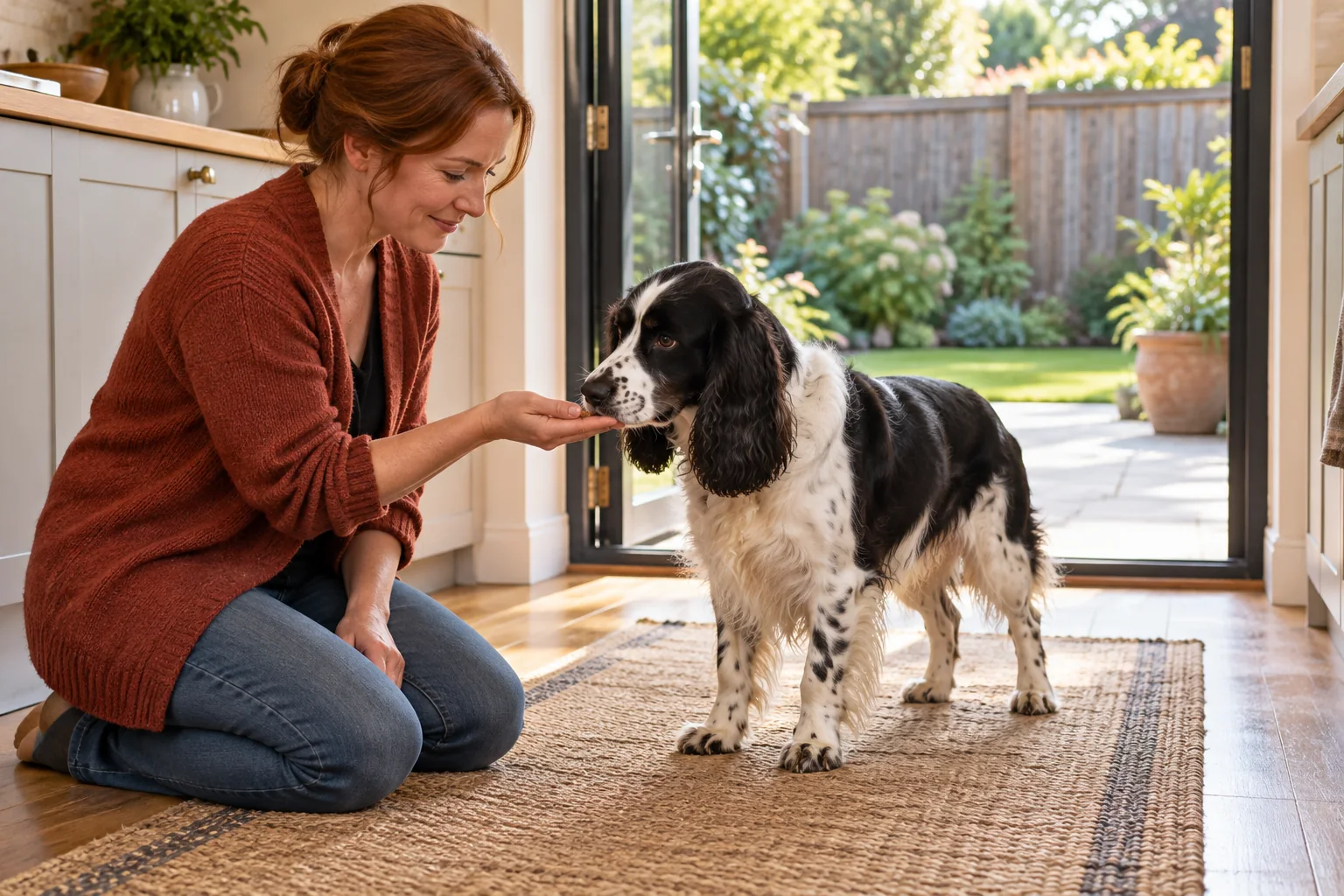
Have the reward ready before the dog starts across. Offer it promptly at a comfortable point once the dog is safely indoors, without asking them to squeeze past your knees or stretch towards a raised hand. Stay clear of the door's movement. The photograph illustrates a reward well inside a level entrance; your own arrangement must suit your dog's body and your handling ability.
The Dogs Trust recall guidance supports making return rewarding and welcoming a dog even after a delay. Keep that principle when you are tired: an eventual arrival is not the moment for a reprimand. Avoid adding an unrelated sit, paw or long wait before giving the reward you prepared for this return.
On some suitable practice occasions, a brief indoor reward can be followed by another supervised visit to the secure garden. Decide that beforehand, keeping the boundary safe throughout. This is an option, not a requirement to reopen the door whenever the dog asks. Other returns end outside time because ordinary life requires it. Make those endings comfortable too, rather than promising outdoor access you cannot safely provide.
Give the first indoor minute a useful shape
Consider what the dog actually finds after crossing. An empty noisy kitchen while everyone disappears may be a less inviting destination than a quiet room with company. Prepare an ordinary next activity: water, a familiar comfortable bed, a suitable toy or calm time beside you. This is not a rule that the dog must immediately lie still. It is a way to avoid finishing every return with abrupt handling and isolation.
If drying is necessary, distinguish immediate essential care from optional practice. Have what you need ready and use the gentlest familiar arrangement you can safely manage. Do not conceal a difficult procedure behind a food invitation. If handling regularly produces avoidance or conflict, get qualified help with that issue separately instead of trying to solve it by calling more persuasively from the garden.
Our mat settling guide offers a separate resting routine. A familiar bed can be available without making stillness the price of entry. Let the household know the small goal today: an easy return and a comfortable ending. Children should not run to close the door or crowd the dog as they arrive. Keep the passage quiet until everyone is clear.
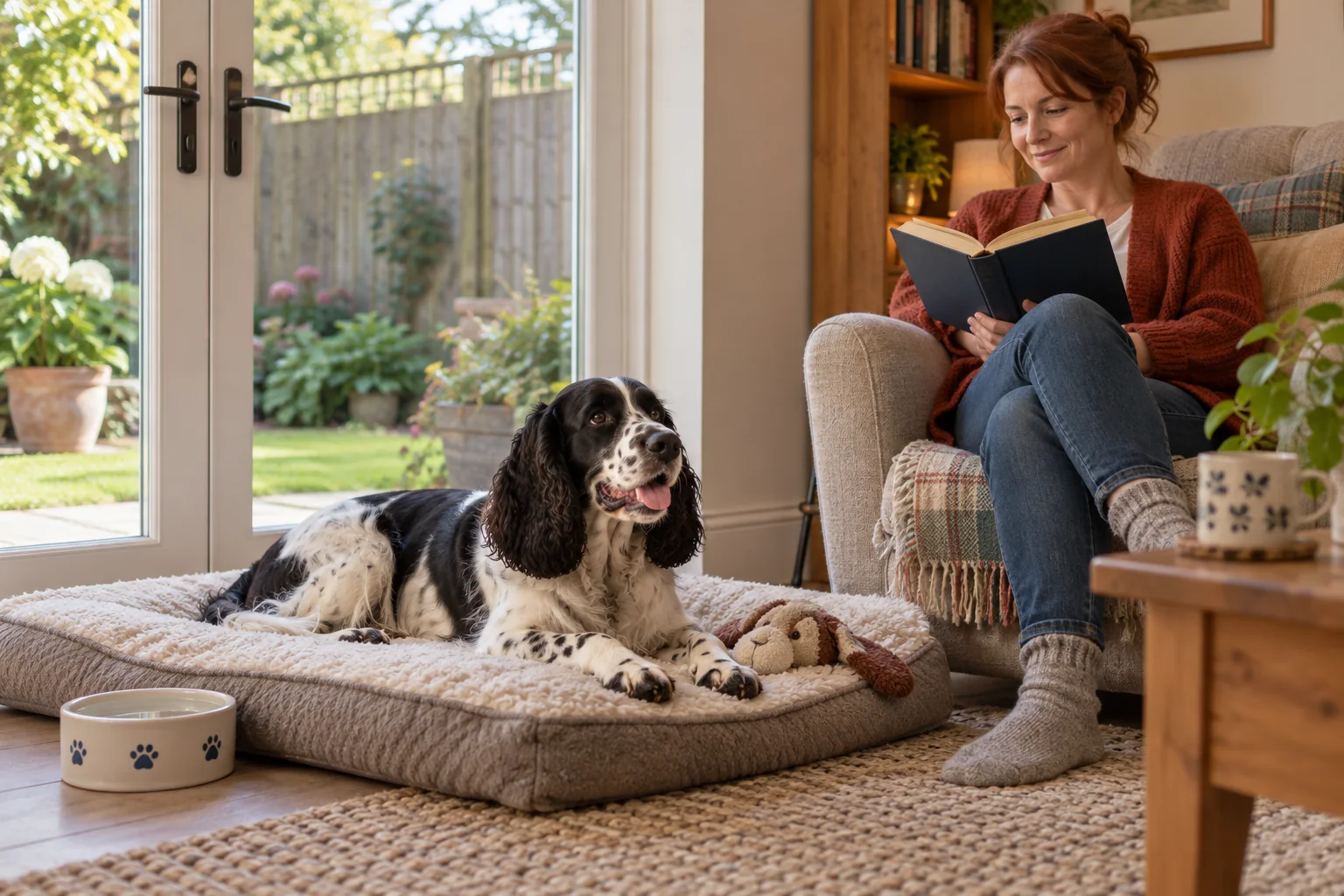
If the dog stops at the threshold
A dog who approaches promptly but pauses at the edge is giving you a useful distinction. Avoid treating that as failed recall. Look for a change in surface, height, light, door movement or the activity immediately beyond. You can prepare a quieter level entrance before the next outing, but do not repeatedly lead the dog up to a place that already causes distress in order to identify the exact trigger.
Keep hands away from the collar and allow space. Do not push from behind, pull on equipment, block retreat or have another person close in. If necessary access cannot be managed safely, contact your veterinarian or a qualified reward-based professional for a practical plan. Explain the actual stopping point and any physical changes. A household description is useful information; a staged demonstration of fear is unnecessary.
The RSPCA training advice recommends reward-based learning in manageable sessions. In this situation, that means choosing a comfortable small opportunity, not increasing pressure until the dog crosses. Stop optional practice when the setting is unsuitable. You can change your preparation and seek help without first obtaining a final successful repetition.
Adjust evening returns and household timing
At night, compare the setting with the daytime route. Is the interior unexpectedly dark? Does a light create sharp reflections? Are bins being moved nearby? Turn on useful indoor lighting before the outing and keep the route visible without shining a torch into the dog's face. Supervise the garden visit and plan enough time for toileting. Darkness is not a reason to leave a reluctant dog unattended outside.
Agree one clear sequence between adults. One person supervises the dog; another, if needed, keeps household traffic away from the entrance. Avoid several people calling different words. Decide where the reward is delivered and who manages the door once the whole dog is clear. This coordination matters more than buying new equipment or choosing a special phrase whose meaning the dog has not learned.
When you are rushed, use a familiar safe routine already comfortable for the dog rather than attempting a harder lesson. Training is preparation for another day, not a demand to solve today's schedule. If returning indoors is repeatedly difficult, plan individual support before the next unavoidable deadline. No short article can promise a reliable response in every garden, weather condition or family situation.
Review the whole journey, not just the last call
After an ordinary return, note the starting point, whether the dog approached, whether crossing was voluntary and what happened inside. A simple example is: near the patio, turned at one invitation, crossed the level entrance, rewarded on the runner, then drank and rested nearby. This tells you more than recording how many times you called or how long you eventually waited.
Keep the next opportunity similarly easy. Increase distance, change the time of day or add household activity only one at a time, and only when appropriate for the dog. A good daytime return does not require a night trial. If a new difficulty appears, step back to preparation. The aim is an everyday transition you can manage kindly, not a demonstration of obedience at the farthest corner of the garden.
Common questions
Should I chase my dog to bring them inside?
Avoid chasing, cornering or grabbing. Maintain secure containment and use an already safe familiar arrangement. If you cannot manage necessary access without conflict, obtain qualified personal help rather than escalating the training attempt.
Should coming inside always end garden time?
It sometimes must. During suitable supervised practice you can occasionally reward indoors and return outside together, but prepare comfortable final endings too. Do not offer outdoor access when the boundary or conditions are unsafe.
What if my dog comes to me but will not cross?
Treat the threshold as a separate question. Check footing, movement, light and the indoor scene. Pain, sudden change or distress needs veterinary assessment; do not drag the dog through to prove the entrance is safe.
How quickly should this routine work?
There is no fixed timetable. Look for comfortable voluntary steps in a suitable setting. Repeated difficulty, deteriorating movement or unsafe handling calls for individual help rather than more repetitions or withholding ordinary care.