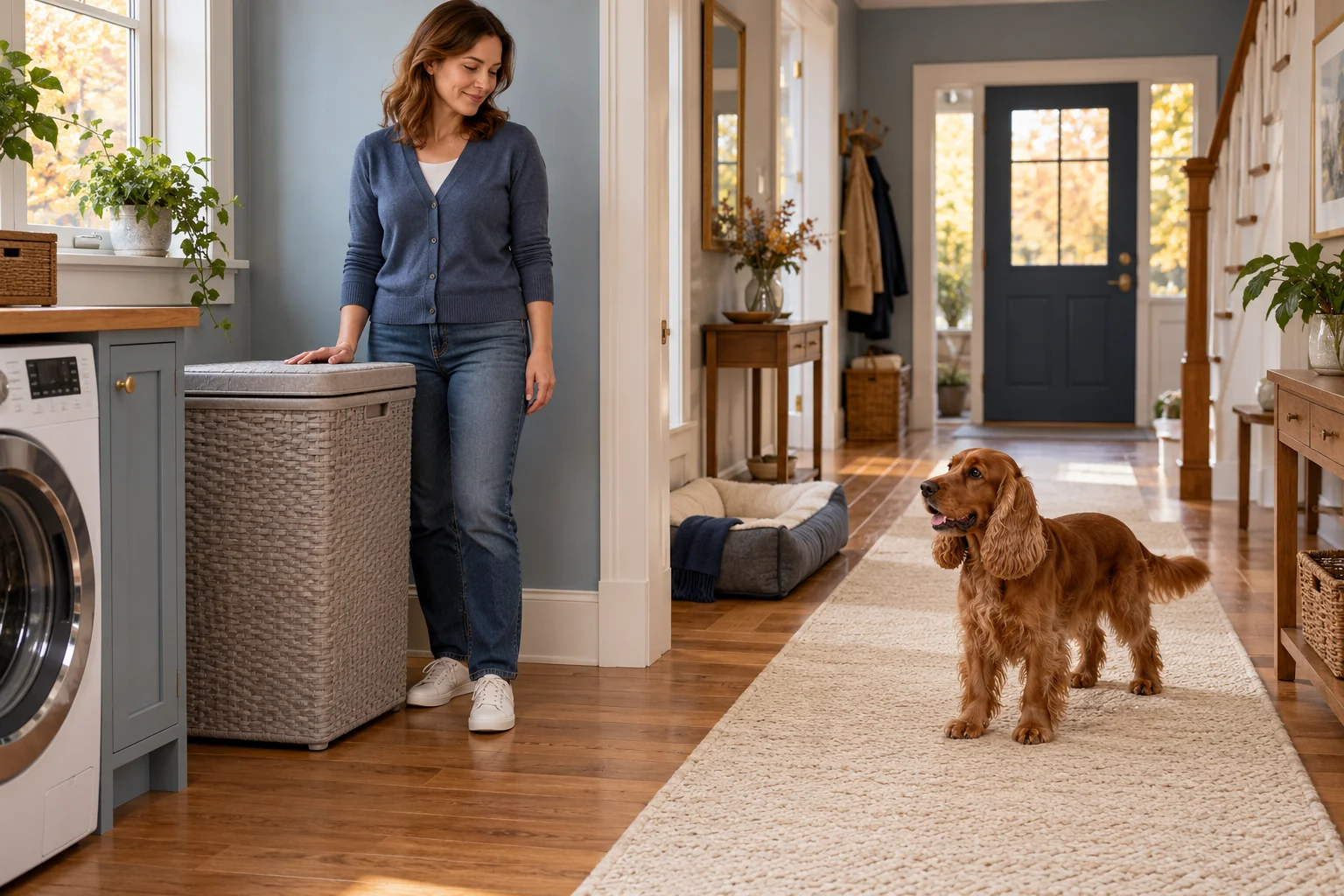
A dog stealing socks can turn one dropped item into a noisy trip around the house. You reach for the laundry, your dog picks something up, and everyone starts moving faster. For prevention, work on the moment before that sequence begins. Follow the clothes from bedroom to basket, washing machine, drying area and drawer. The weak point is often a short handover rather than the storage place you already checked.
This is an independent household guide: you can use it without an app, by securing access and rewarding a familiar alternative early. It does not teach forceful retrieval. Suspected swallowing needs immediate veterinary advice; do not induce vomiting. Guarding, bite risk, severe distress or sudden behavioural change calls for veterinary and qualified individual support. Keep children away from incidents and do not stage another theft to demonstrate the problem.
Dog stealing socks: start before the grab
Describe the first moment at which the sock becomes available. Does it drop while you carry a pile upstairs, remain in an open sports bag, or land beside the washing machine while you sort? “Picked up a sock as I put the basket down” identifies a practical handover. “Steals because he knows it is wrong” assigns an explanation that does not tell you what to change. Start with the visible sequence and the part you can organise differently.
Think about your own response too, without blaming anyone. A shout, quick approach and moving hands may turn an ordinary object into the centre of a lively interaction. That does not establish a single cause for every dog. It simply means the household can remove an unnecessary chase from its routine. Prevention is easier to practise when there is no sock in the dog's mouth and no urgent decision about how to get it back.
Choose one manageable goal for the next laundry task: keep every item contained from one secure place to the next. Do not test the dog by leaving a sock on the floor or waiting to see how close they get. A clear room and a closed container are successful arrangements even if they produce no dramatic training moment. The aim is a safer ordinary chore, not a video of resisting temptation.
Walk the laundry route without the dog
Before the next load, walk through the route yourself. Include the bedroom floor, changing area, gym bag, basket, machine, drying rack and clean-clothes pile. Look for the short pauses: opening a door, answering a message or putting a container down while reaching for detergent. Keep cleaning products securely stored as well. You are checking what actually happens during a normal chore, rather than assuming the utility room is the only relevant place.
The Battersea guidance on taking household items supports keeping tempting objects such as socks out of reach and avoiding a chase. Apply those limited principles to your own route. A hamper with a lid helps only while it is closed and inaccessible to the dog. A tall basket that can tip, a loose lid or an open bag underneath the bed still leaves a gap in the same chain.
Pick a practical transfer that fits your home: a secure closed container carried between closed storage places, or a familiar comfortable dog-free work area while an adult handles clothes. Do not introduce isolation that causes distress just to finish the washing. If separation from the chore is difficult, choose another manageable arrangement with appropriate help. Secure storage should reduce conflict, not create a new struggle at a doorway.
Close the gap between clean and dirty clothes
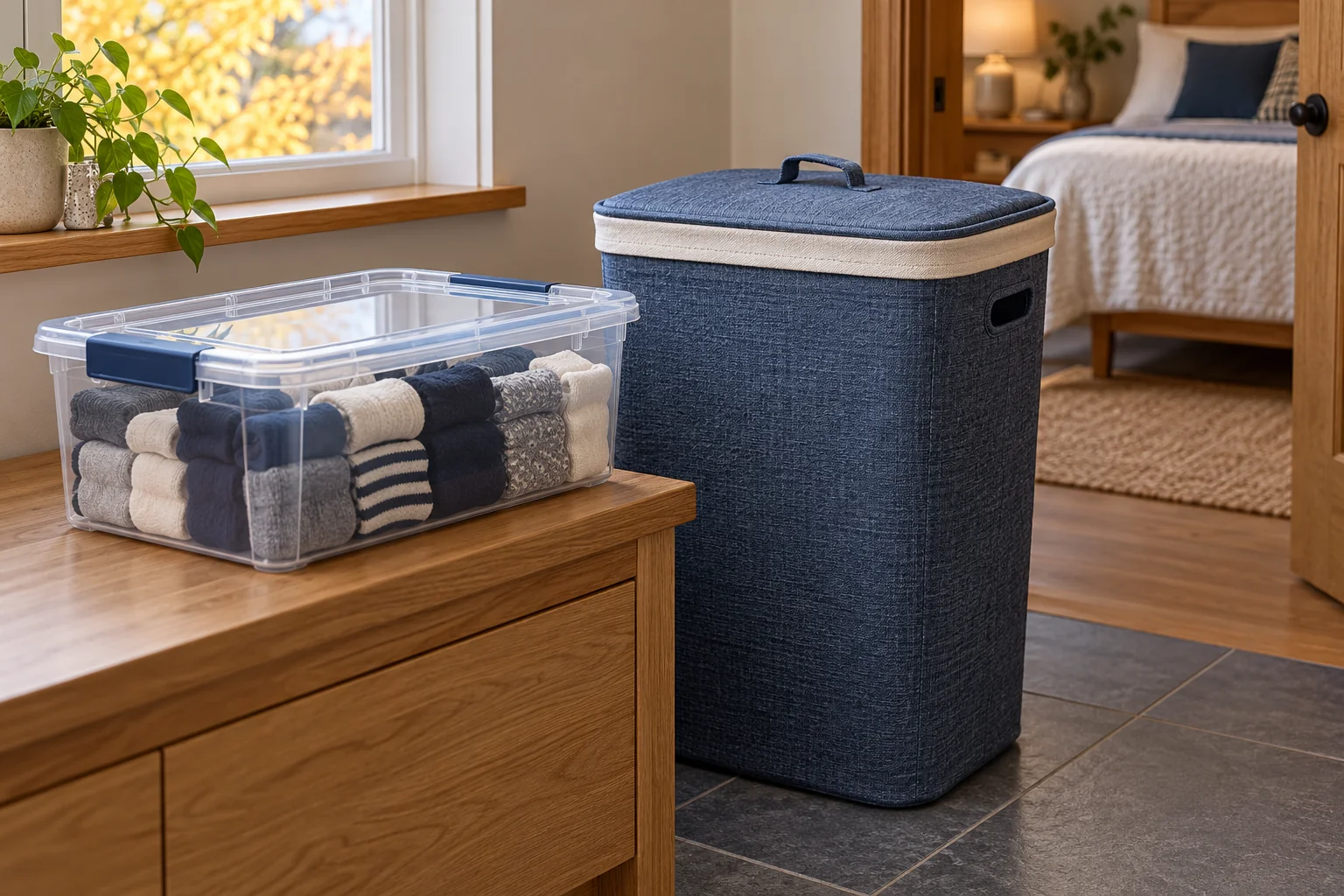
Clean socks deserve the same attention as used ones. A folded pile on the sofa, open suitcase or drying rack may be reachable even when dirty laundry is secured. Put finished clothes directly into closed storage rather than leaving a convenient stack for later. Check low rails, hanging ends and anything that falls behind a door. Do this without the dog present so you can tidy thoroughly instead of repeatedly interrupting them beside accessible fabric.
Make responsibility clear during a handover. If one adult puts a load down and another will finish sorting, agree where the closed container stays in between. “I thought you were watching” is not a reliable storage method. Keep the setup easy enough to use on a busy evening. A prevention plan that depends on maintaining uninterrupted eye contact with a dog while carrying a full basket is likely to become difficult at the exact moment it matters.
Avoid interpreting a quiet week as proof that access is now safe. Continue using the arrangement that prevented incidents. If an item disappears, check the environment and account for it promptly; do not assume the dog merely hid it. A missing sock and a suspected ingestion need different decisions from an ordinary laundry delay. Safety comes before completing the chore or preserving a record of apparently successful days.
Prepare a familiar alternative before carrying clothes
Decide what your dog can comfortably do while you complete one short part of the chore. This might be a familiar resting place nearby, a brief interaction with another adult, or a suitable supervised activity already known to be safe for that dog. Choose something available before the basket appears. Do not offer an old sock or clothing scrap as a substitute, and do not assume a toy is suitable simply because it is marketed for dogs.
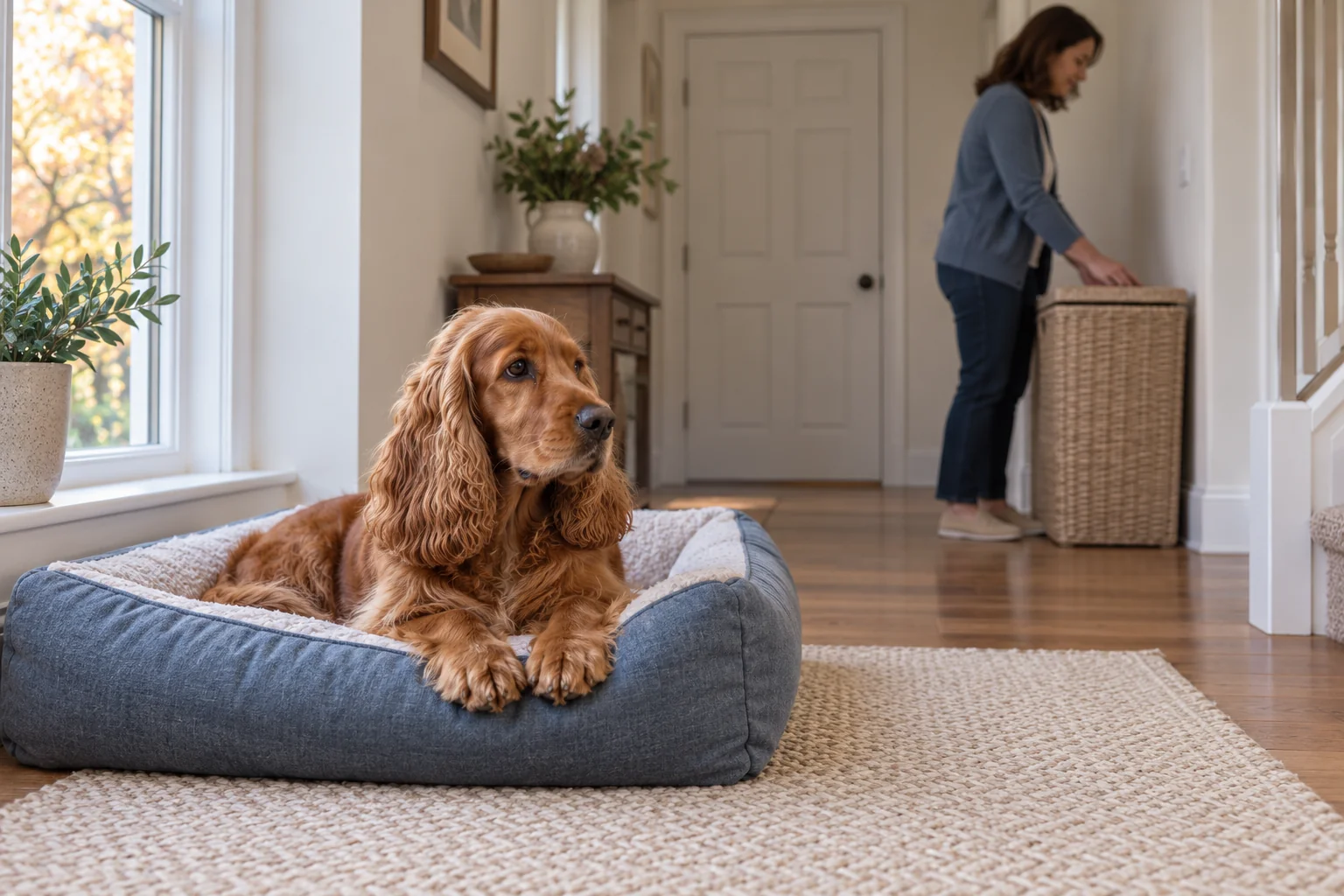
Our guide to a comfortable mat place explains the general arrangement of a resting option. Here, a bed is an invitation, not a requirement to stay through a whole laundry cycle. Keep the route open, choose a small manageable task and have an adult available when supervision is needed. A dog who leaves the bed has not failed a household test; review how much you asked while the clothes were out.
Keep normal walks, exploration, company and rest in the day rather than making laundry the only moment when something interesting happens. A safe alternative need not be elaborate. It should fit the dog's needs and your actual capacity to supervise. If the dog regularly eats non-food objects or struggles to settle during ordinary care, obtain individual veterinary and qualified behavioural advice rather than adding increasingly complex distractions to every load.
Reward the early choice, not a repeated theft sequence
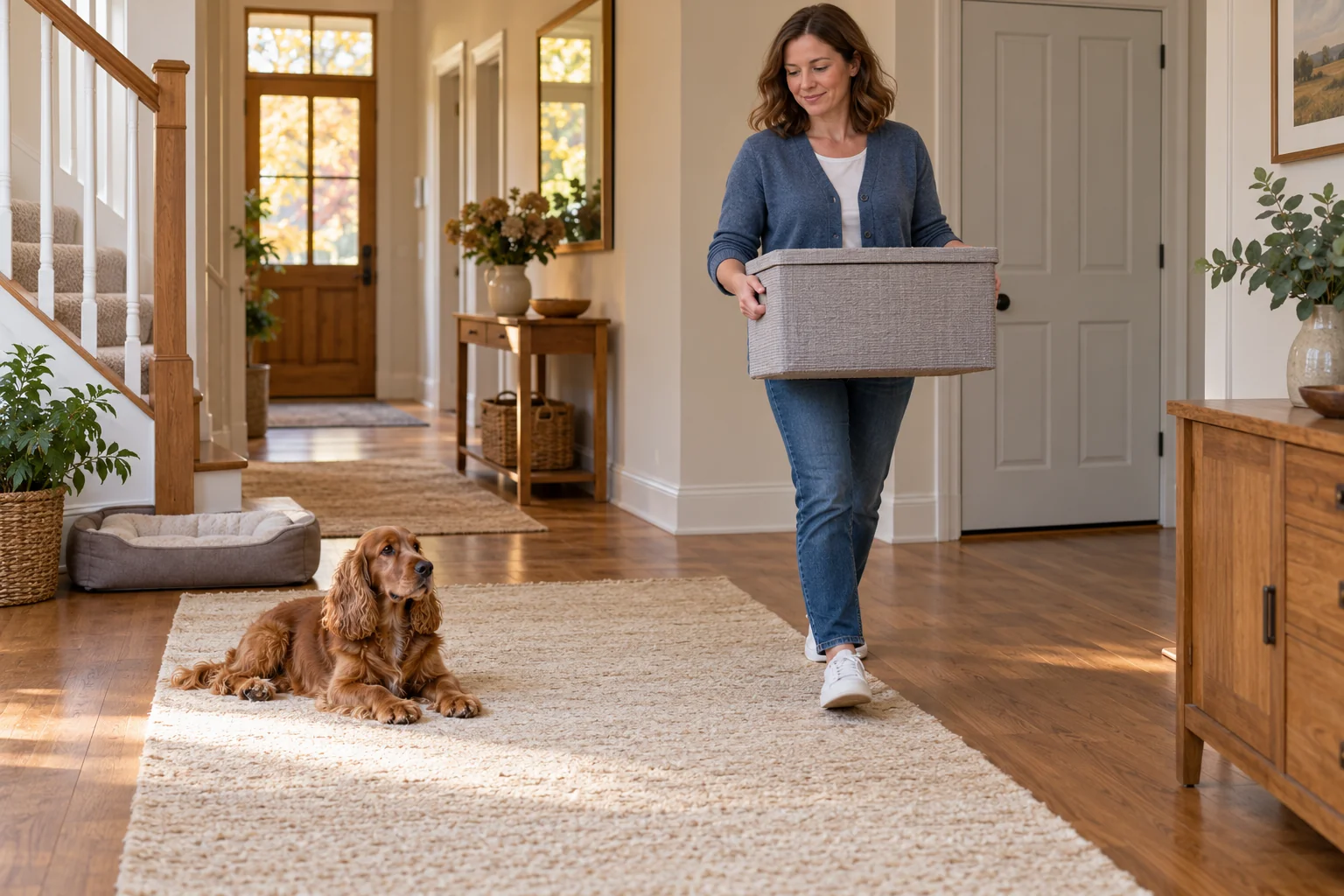
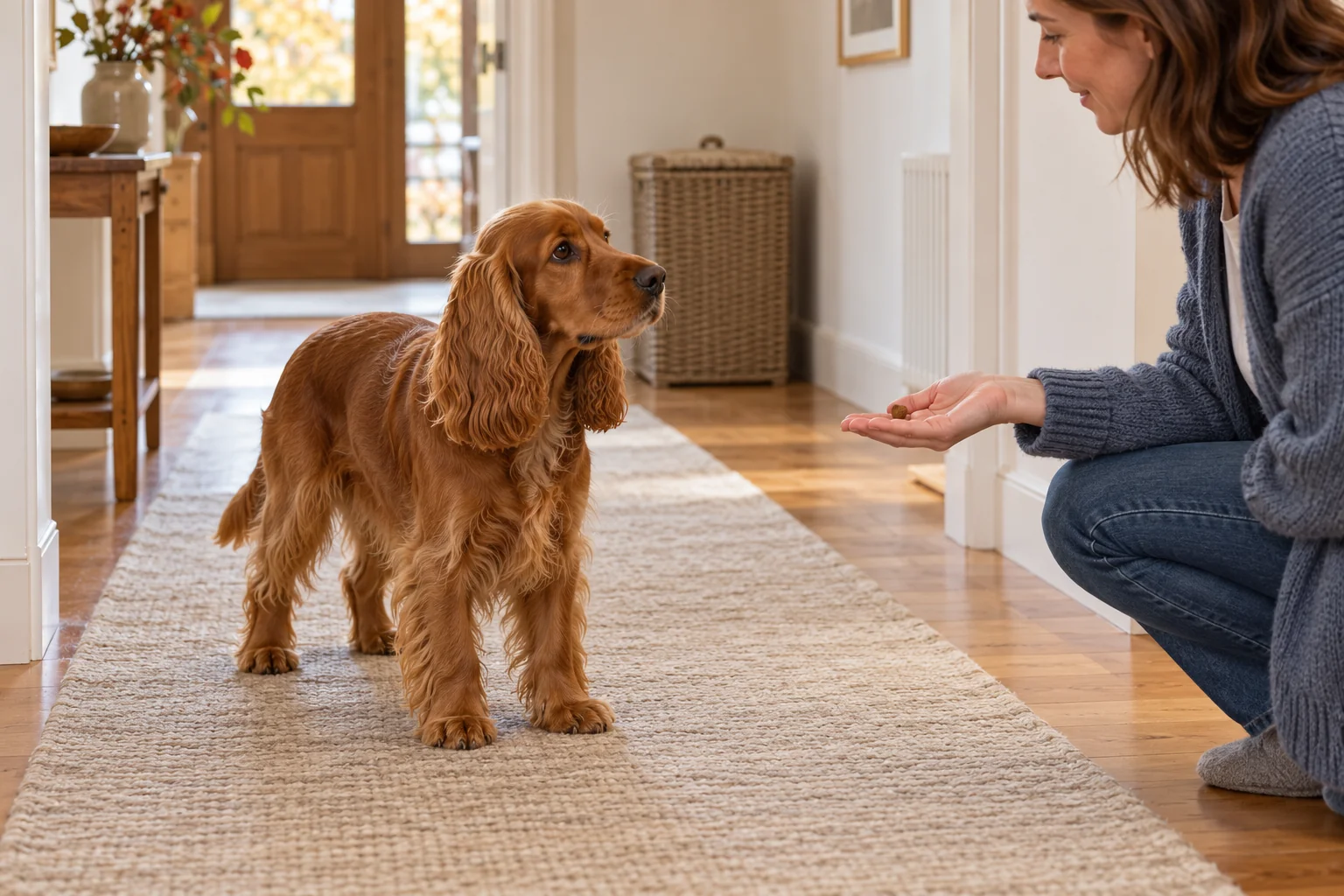
During an easy, supervised version of the routine, notice a familiar appropriate response before any access to clothing. That might be turning towards you beside the clear hallway or remaining comfortably near the resting option while the closed container passes. Give an appropriate reward where it is easy to receive, away from the laundry route. You are reinforcing an available alternative while keeping the tempting item inaccessible, not paying for a sock to appear first.
Our reward marker guide can clarify feedback if that foundation is missing. Keep the response familiar and the chore small. Avoid adding a new cue, a difficult stay and a moving basket all at once. If your hands are full, have another adult organise the simple interaction or shorten the task. Do not balance a load precariously while trying to deliver a reward or keep the dog physically out of the way.
If the dog moves towards the work area, pause the chore and secure the clothes. Review the arrangement before another suitable attempt. Do not wait for a grab to make the reward more obvious, then repeat that same grab-and-exchange pattern as practice. Teaching release with safe appropriate objects is a separate foundation; this guide concentrates on the earlier household decision that prevents laundry becoming the training equipment.
Treat an actual incident as a safety decision
If a sock is already in the mouth, stay calm, keep others away and avoid chasing, cornering, tugging or putting hands near teeth. A familiar taught release or exchange is suitable only when it can be used safely; this article is not an emergency retrieval protocol. If safe handling is uncertain, seek immediate professional advice appropriate to the situation. Do not turn a concerning incident into a demonstration for another family member.
The PDSA veterinary guidance on swallowed objects advises immediate veterinary contact when ingestion is suspected, without waiting for symptoms. Never try to make the dog vomit at home. Give the veterinary team the facts you know, including the possible item and timing, and follow their instructions. A training plan cannot determine whether an item has been swallowed or will pass safely.
Once the immediate situation has been addressed, return to prevention rather than punishment. Do not remove normal comforts, shout later at an empty basket or force the dog to approach the laundry again. Identify the accessible point and change it. Repeated guarding or concern about a bite needs a personalised plan; a general suggestion about staying calm cannot replace safe individual handling guidance.
Review one real chore and share the arrangement
Afterwards, note a few concrete details: where the clothes started, how they moved, where the closed container paused and what the dog did instead. “Basket closed before leaving bedroom; one hallway trip; dog with adult in living room” describes an arrangement you can repeat. If a phone call interrupted and the basket stayed securely closed, that is useful success in organisation even when no planned training took place.
Our short practice guide helps when you want to rehearse a familiar alternative separately. Rehearse without socks available and avoid turning an entire household job into continuous obedience work. Choose the smallest useful improvement for next time: close the bag earlier, reduce the pile carried or change where sorting happens. Add no extra difficulty merely because yesterday was uneventful.
Share the same storage and handover plan with every adult. Children should not retrieve clothes from a dog's mouth or be responsible for preventing an incident. Explain where a dropped item goes and whom to tell when something is missing. The useful result is a routine that ordinary people can maintain when tired or busy, with early suitable rewards and fewer opportunities for conflict. It is not proof that a dog can now be trusted with reachable laundry indefinitely.
Common questions
Should I chase my dog to get a sock back?
Avoid chasing, cornering or reaching near teeth. Use a familiar safe response only when appropriate and seek help if handling is uncertain. Prevention works on the earlier access point, before another incident.
Can an old sock become a permitted toy?
Do not use clothing as the alternative in this plan. Select an appropriate activity already suitable for your dog and supervise as needed. Keep both clean and dirty laundry securely inaccessible.
What if I think a sock was swallowed?
Contact your veterinary team immediately, without waiting for symptoms, and follow their instructions. Do not induce vomiting at home. This is a veterinary decision, not a release-training exercise.
When can I stop using closed storage?
A quiet period does not prove safe access. Retain the arrangement that prevents incidents and review handovers when household routines change. Repeated non-food ingestion, guarding or sudden change needs individual professional support.