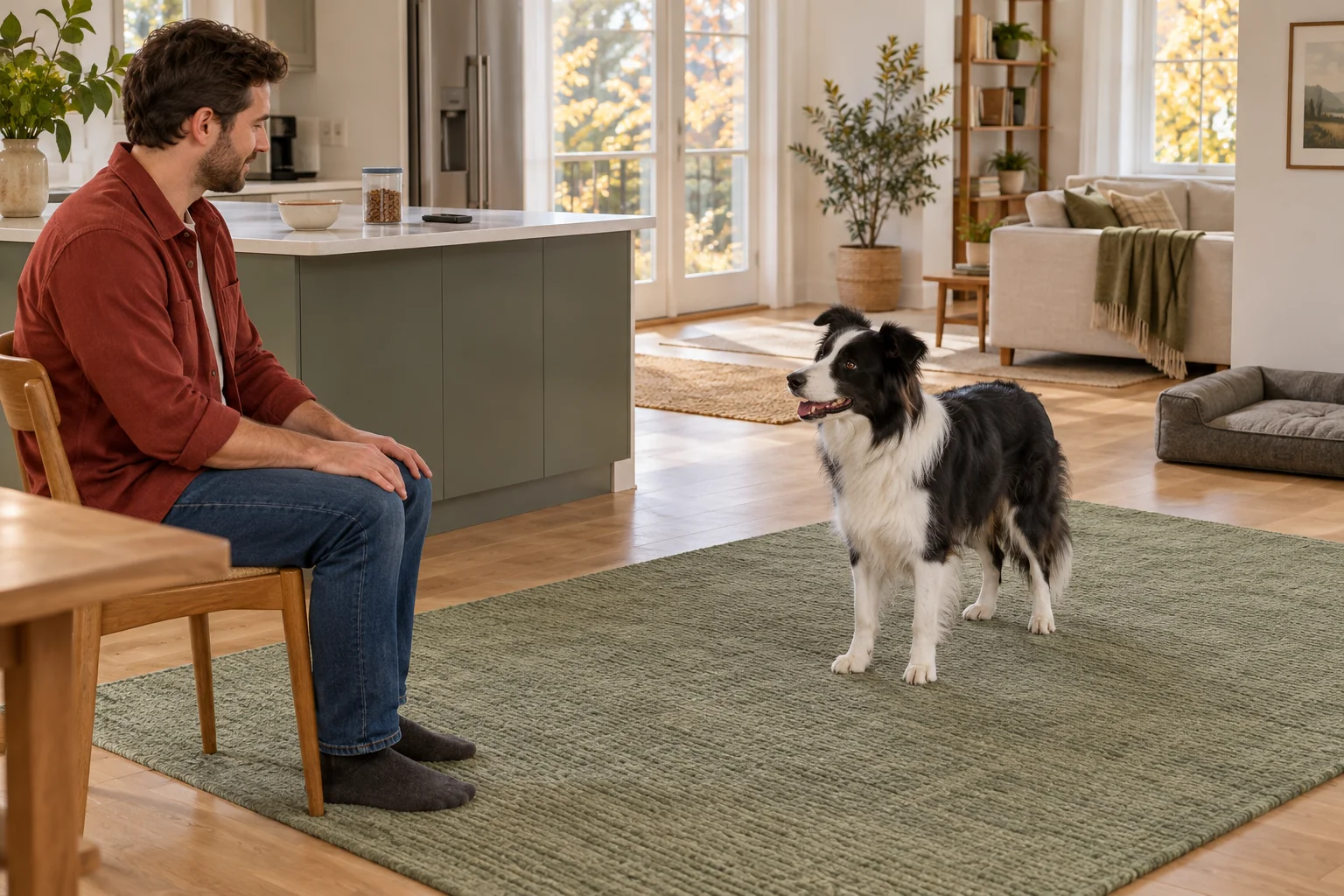
Your dog snatches treats and an ordinary reward suddenly feels awkward. Your hand moves faster, the dog follows it, and you start concentrating on protecting your fingers instead of the response you meant to reinforce. Before another attempt, review the human arrangement: where the food starts, where it will arrive and whether that delivery method is already safe and familiar for this dog.
This example uses existing DogPath foundations to prepare and review optional practice. It is not a technique for teaching bite inhibition through exposed fingers. If safe delivery is uncertain, stop and obtain qualified individual help. Guarding, bite risk, severe distress, suspected pain or sudden change needs veterinary and appropriate behavioural support. Keep children and other animals away from the setup; ordinary meals, water and care never depend on completing a lesson.
Dog snatches treats: describe the whole moment
Start with the visible sequence rather than a label about manners. Was the reward already beside your fingers, hidden in a crinkling bag or moving above the dog's head? Did you pause while deciding what to do next? “Reached into pocket after the response, then moved my hand twice” identifies a human action you can prepare differently. “Greedy” does not explain where the confusing part happened or what would make the next opportunity safer.
Avoid demonstrating the problem again for a camera or another person. You do not need another uncomfortable contact to establish that the arrangement needs review. A written account of the last ordinary opportunity is enough to begin organising your own movements. Do not compare how strongly different people are grabbed or invite someone else to test whether the dog will be gentler with them.
Choose a modest purpose: prepare one familiar response and an already suitable reward-delivery method, then pause. If that cannot be arranged safely, your useful action today is preparation and professional clarification. There is no requirement to hand-feed, obtain a delicate mouth movement or finish an exercise before the day ends. Keeping an uncertain situation from being repeated is a sensible decision, even when it produces no training repetition.
Prepare rewards before inviting the dog
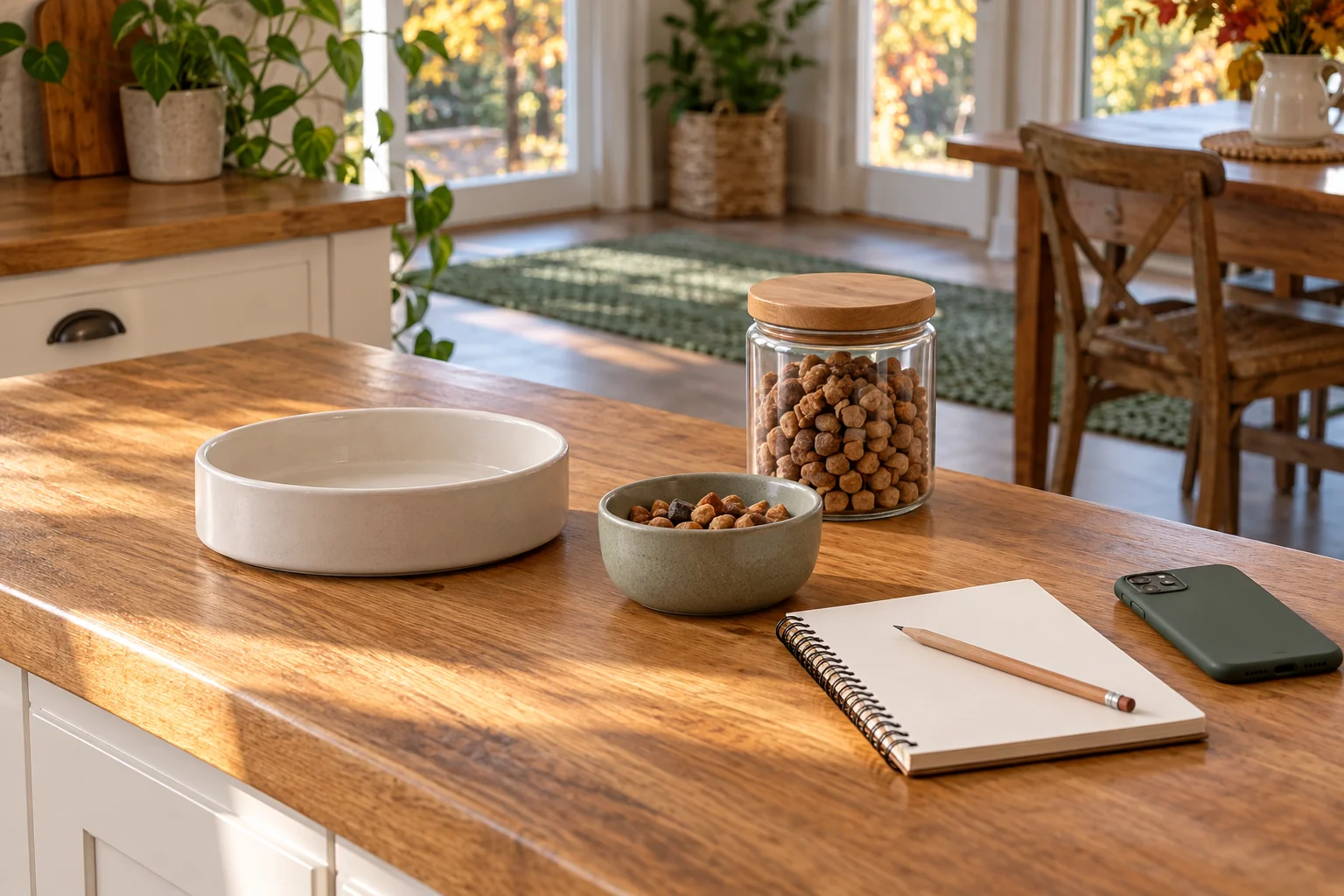
Select suitable small portions within the dog's ordinary dietary needs and any individual veterinary advice. Prepare them before practice rather than breaking a large item beside an expectant mouth. Keep the main supply securely out of reach. This is practical organisation, not a recommendation for a particular food, supplement or restrictive feeding routine. Do not withhold normal meals to make the rewards more exciting or increase the pressure to participate.
Choose a quiet familiar space with secure footing and an open route away. Keep the floor free of dropped food, wrappers and objects that could be swallowed. Other dogs and children should not share the reward area. If food around a dish or a person brings guarding concerns, do not use this example as a way to investigate them. Seek an individual plan before arranging optional practice.
Rehearse your movements without the dog. Put the phone somewhere safe, check where your hands will rest and decide how you will end. Our short training sessions guide helps make the opportunity manageable. A small prepared window is easier to review than a long sequence interrupted by searching pockets, reading instructions and repeatedly changing the food position.
Choose an appropriate existing DogPath foundation
Read a suitable existing foundation lesson and its preparation before bringing rewards into the interaction. Check that its method, starting conditions and prerequisites fit your situation. A place in the training path cannot establish whether your dog is comfortable around food or whether your hands are safe. If the lesson assumes a delivery method you cannot use confidently, clarify it with qualified personal support rather than improvising through repeated grabs.
Keep one practical sentence on separate paper: “familiar quiet room, portions ready, known response, safe delivery, then pause”. This note belongs to your household, not to an invented app field. Read ahead, rehearse the human part alone and put the phone away before inviting the dog. There is little benefit in trying to manage a screen and food simultaneously while the dog waits for unclear instructions.
Dog Train Club and DogPath share the publisher Rocket Digital Limited. This workflow uses guided lessons, the training path, actual completion records and weekly planning. It does not assume a dedicated gentle-treat course, automatic bite-risk assessment or analysis of mouth pressure. The application helps organise work; it cannot approve a handling arrangement or replace veterinary and qualified behavioural advice.
Decide where a reward can arrive safely
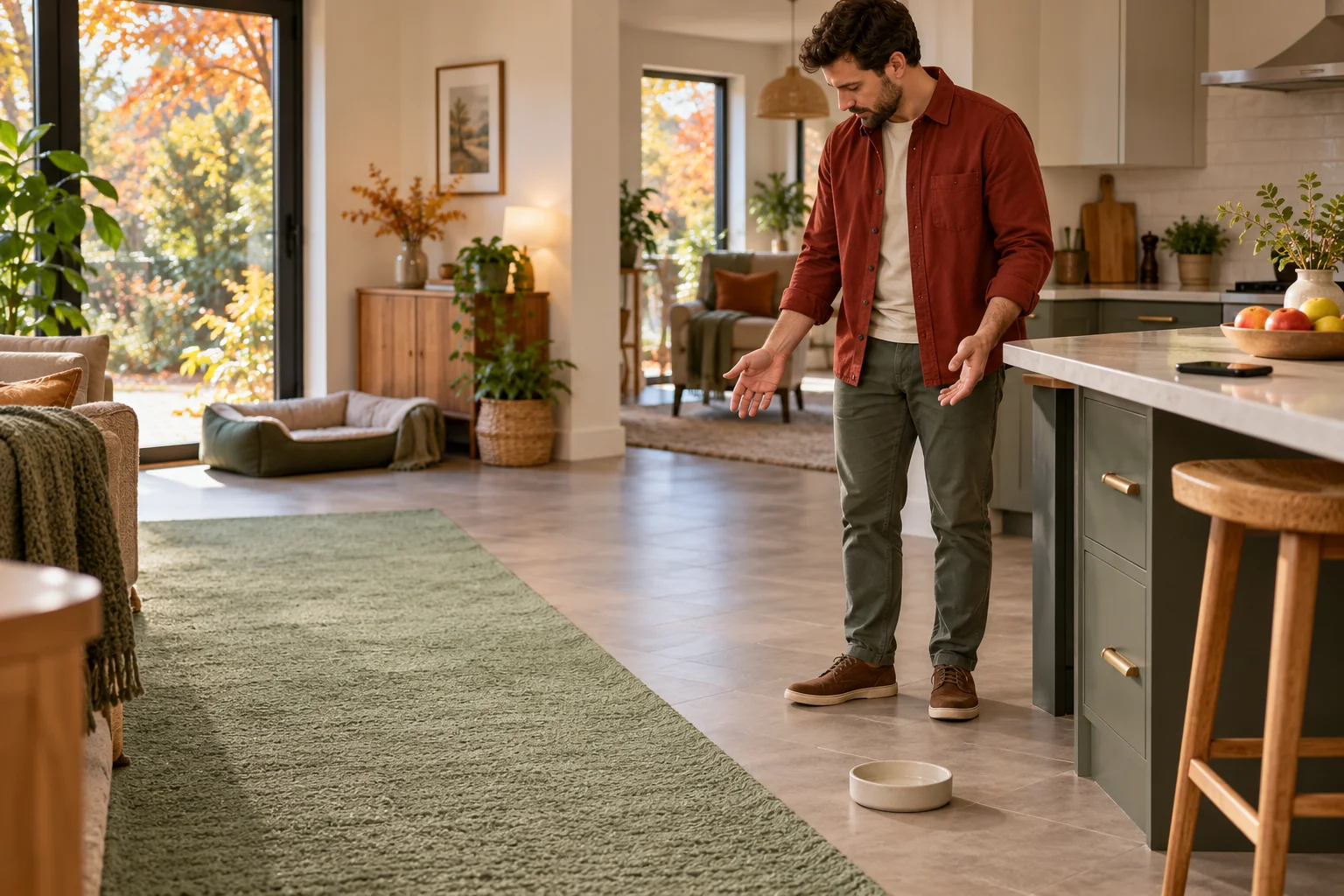
Use a delivery method that is already familiar, comfortable and appropriate for this dog and the exercise. A known low dish or clean designated reward point can sometimes keep hands away from the mouth, provided it is already safe in that household. Arrange it without the dog present, remove your hands before access and do not reach towards food while the dog eats. This is an example of preparation, not a universal recommendation to introduce a bowl to a dog who guards.
Do not hold a closed fist at the muzzle, repeatedly withdraw food, make the dog chase your hand or wait for teeth to touch before changing course. Those arrangements expose fingers and can make the interaction less clear. If safe delivery is not available, postpone optional practice and ask for help. An article cannot assess the distance or equipment that would make an individual bite-risk situation safe.
The Dogs Trust reward-training guidance explains choosing appropriate rewards and making their relationship to behaviour understandable. Apply that limited principle: know what you are rewarding and prepare how it will arrive. Do not assume that food on a public path, unrestricted scattering or a new feeding device is suitable simply because it avoids direct hand-feeding.
Keep feedback clear without adding another test
Begin only when the prepared conditions are suitable. Choose one easy response the dog already knows, compatible with the lesson and delivery point. You are reviewing the organisation of an ordinary reward, not asking for a difficult stay beside visible food. Avoid simultaneously adding a new cue, a new person and a more demanding environment. If the response does not occur, pause and simplify the plan instead of moving food closer to the face.
The Battersea training guidance emphasises timely rewards and clear feedback. Our reward marker guide explains that foundation in more detail. Use a marker only as already taught and appropriate; do not add a new sound while also changing the reward arrangement. A missed moment calls for better preparation next time, not a longer wait with food withheld near the dog's mouth.
After a manageable opportunity, let the dog move and end the optional exercise. Put remaining food away safely when the dog is elsewhere rather than reaching into an occupied reward area. If the dog moves away, do not follow with food to obtain another repetition. Necessary toileting, rest, meals and company remain available. The ending should not become another surprise demand while you search for a completion button.

Record the work that actually happened
Return to DogPath after practice and use the available completion controls honestly. Reading preparation, arranging equipment and completing the described lesson are different outcomes. Leave unfinished work unfinished. One easier delivery does not prove gentle hand-feeding, general safety around food or readiness for a harder lesson. Keep the record narrow enough that another adult can understand what it actually represents.
On your separate note, record the starting arrangement, response, reward location and stopping point. “Prepared portions first; familiar response; reward delivered to known point; paused” is more useful than “fixed grabbing”. If you decided not to practise because the setup felt uncertain, write that instead. Do not create a successful repetition just to keep the weekly plan looking complete.
Our beginner training guide provides wider foundations when you need to step back. Review your actions alongside the dog's response: was the reward ready, was the phone away, did you know the ending? Change one practical detail at the next suitable opportunity. If the same difficulty persists, obtain individual guidance rather than collecting increasingly uncomfortable attempts.

Plan a manageable repeat and share the arrangement
Keep one appropriate foundation in the weekly plan and allow the next occasion to repeat or simplify it. A planned day is an invitation to prepare, not an obligation to finish regardless of circumstances. If the house becomes busy or the safe reward point is unavailable, postpone. A missed session does not create a debt of extra repetitions later.
When another adult helps, explain the familiar response, delivery method and stopping rule before the dog joins. Let them rehearse without the dog first. Do not have two people reaching for food or giving cues at the same time. A different person is already a meaningful change, so keep other conditions familiar and avoid using them as a test of whether the problem has disappeared.
At the weekly review, choose a useful next decision: repeat the prepared arrangement, clarify an instruction or seek professional help. Keep ordinary walks, exploration and relaxed company in the day. Success here means clearer human preparation and an honest record of comfortable participation, without a promise that an app or one household routine will remove every difficulty around food.
Common questions
Should I hold a fist of food until my dog stops grabbing?
Do not use this guide to place fingers beside a snapping mouth or repeatedly withdraw food. Stop optional practice when safe delivery is uncertain and obtain qualified individual advice.
Can I use a dish instead of hand-feeding?
Only when that method is already comfortable, safe and suitable for your dog and lesson. Prepare it with the dog absent, keep hands away during eating and seek individual advice for any guarding concern.
Does DogPath assess biting risk?
This example uses existing lessons, completion records and weekly planning. It does not assume automatic risk assessment, diagnosis or a dedicated gentle-treat course.
What if the change started suddenly?
Stop optional practice and discuss sudden changes, possible pain or unusual food-related behaviour with your veterinary team. Bite risk or guarding also needs appropriate qualified personal support.