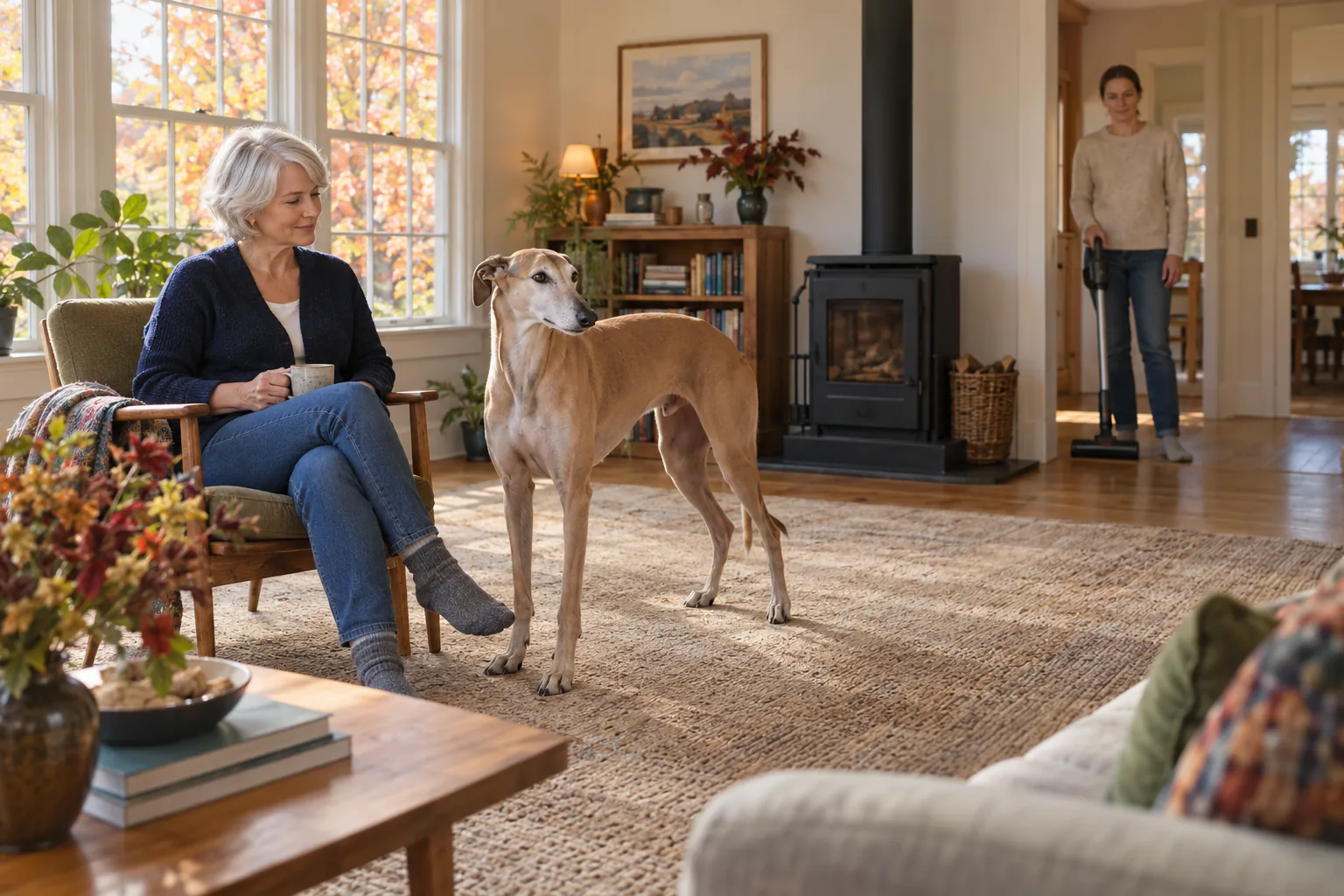
Is your dog scared of the vacuum, leaving the room as soon as you reach for it? Start with a practical cleaning arrangement that keeps them comfortable, rather than turning every chore into a lesson. The machine's appearance, movement, clicks and motor sound are different experiences; prepare them separately while leaving the dog free to move away.
This guide uses DogPath to organise suitable foundation practice before and after a small household exercise. The app cannot identify the cause of fear or approve a noise level for your dog. Pain, sudden behavioural change, severe distress or bite risk needs personal veterinary or qualified reward-based behaviour support. Necessary cleaning and training have different aims, and there is no deadline for accepting a running appliance.
Dog scared of the vacuum: make cleaning manageable
For an ordinary cleaning job, arrange a comfortable place away from the appliance before bringing it out. Choose an area your dog already enjoys, with water, a resting place and room to move. A closed door may help separate activity, but check whether the dog is comfortable with that separation and whether the noise remains manageable. Another adult can keep quiet company if that suits the dog.
Do not shut a frightened dog somewhere they panic and then assume the problem is solved. If the home has no suitable quieter area, arrange help with a practical cleaning plan. A familiar adult might take the dog on an appropriate ordinary outing while someone cleans, if that is safe and comfortable for this individual dog. Do not replace care with isolation.
Put the appliance away before reuniting areas. Keep cords, attachments, dust containers and cleaning products out of reach. Never chase a dog with the nozzle, allow them to bite a powered appliance or start a robot vacuum near them to see what happens.
This arrangement protects ordinary life while you consider practice. A quieter cleaning routine is useful even if the dog never chooses to be beside a running vacuum. Success does not require sharing the same room with every household machine.

Observe the first difficult moment without provoking it
Think back to the last ordinary occasion rather than creating a new scare. Did the dog move away when a cupboard opened, when the vacuum appeared, when it rolled or only when the motor started? Note what you actually saw: retreating, stiff posture, barking or difficulty settling afterwards. Those observations identify a starting condition, not a diagnosis.
Look at the room too. A narrow passage can leave little room to avoid an object. A slippery floor, a noisy attachment or an appliance stored beside the dog's bed may make the setup harder. Move storage and clear routes where useful. Avoid placing rewards right by a device the dog is trying to avoid.
If the response has changed suddenly, discuss that with your vet. Pain, sensory changes and other concerns cannot be assessed by a blog or a progress badge. Describe when the change began, what ordinary sounds are now difficult and whether anything else in daily life changed. Do not repeat the trigger for a dramatic video.
Choose one easy possibility for later practice, such as seeing the stationary switched-off appliance from across a large room. If even that is uncomfortable, begin farther away or keep it out of view and seek individual advice. You do not need to show the entire machine immediately.
Prepare a suitable DogPath foundation before practice
Open DogPath while your dog is resting and the vacuum is put away. Read an actual available foundation lesson and its prerequisites. The verified workflow includes guided lesson setup, a training path, honest completion and a weekly plan. It does not establish that a dedicated vacuum-fear programme is available, so do not invent or promise one.
A suitable familiar attention or reward-timing foundation can help the adult prepare. Read the instructions before handling equipment; you should not divide attention between a screen, a dog and an appliance. Choose an exercise your dog can comfortably do in this setting, rather than asking for a demanding stay beside something worrying.
Prepare small appropriate rewards and decide the smallest observation worth recording. For example: the dog sees the switched-off appliance at a comfortable distance, takes a reward and can turn away. Our short-session guide helps you keep the opportunity brief. The dog's response decides whether to continue, regardless of a scheduled task.
Dog Train Club and DogPath share a publisher. The app offers organisation, not a remote assessment of fear, a guaranteed result or permission to expose the dog to a louder sound. If the available lesson does not fit, leave it unfinished and arrange another appropriate starting point.
Begin with a still appliance and an easy retreat
Use a roomy safe indoor space with nonslip footing and exterior exits securely closed. The vacuum stays switched off, stable and well away from the dog. For a corded machine, unplug it and keep the cord safely out of the route; prevent accidental operation of cordless or robotic equipment. The dog should not have to pass it to reach water or rest.
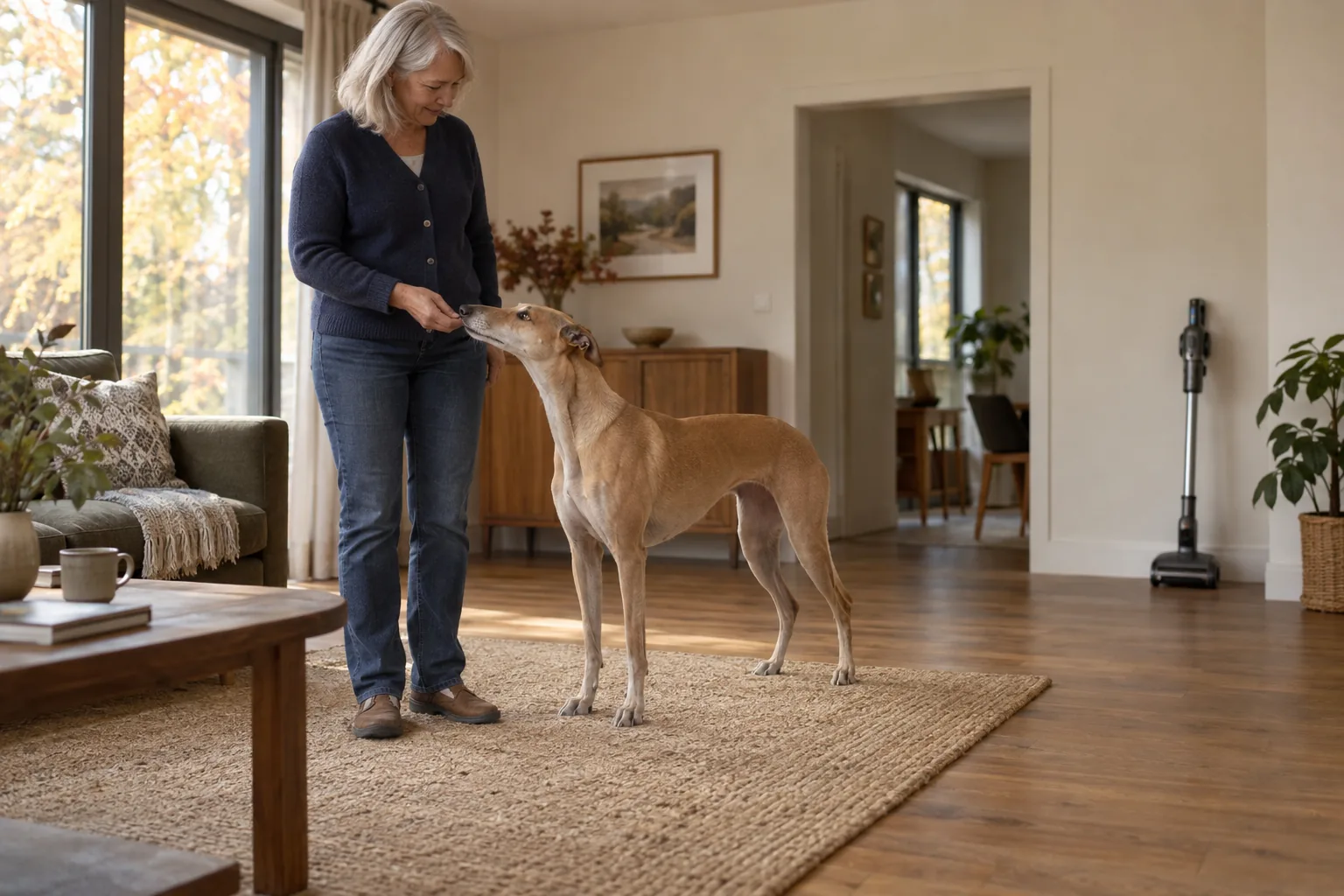
Notice a brief comfortable glance and offer a suitable reward beside the dog or farther from the appliance. Do not put food on the nozzle, lure the dog towards the machine or make access to a treat depend on investigating it. They can turn away, sniff elsewhere or leave the practice area.
Our reward-marker guide explains how to identify a useful moment. A relaxed body and ability to move naturally matter more than remaining motionless. Eating alone does not prove comfort; a dog may still show tension. End and simplify if the setup looks difficult.
After a few easy moments, put the appliance away and resume ordinary quiet activity. Keep the reward delivery away from moving parts. You are creating a small predictable introduction, not checking how close the dog can be pushed before reacting. Repeat an easier arrangement when needed.
Treat movement as a separate change
A familiar stationary object can feel different when it moves. If the previous arrangement was comfortable, a helper can reposition the switched-off machine a very small amount on an empty area of floor while you and the dog remain at a suitable distance. Do not move it toward the dog or along their escape route.
Keep the movement brief and predictable. Then stop, observe and offer a suitable reward in the dog's comfortable area. If the dog retreats, allow that retreat; do not call them back for a harder repetition. Increase distance or return to the stationary presentation on another appropriate occasion. You can also postpone this stage entirely.
Wheels, attachments and handles may each make a sound even with the motor off. Avoid combining a rolling movement, a new attachment and a new room. A robot cleaner moving unpredictably is not an appropriate substitute for a controlled small introduction. Disable automatic schedules while arranging safe household management.
Dogs Trust’s vacuum introduction advice supports a gradual approach. Your observation determines what is manageable here. Keep physical space generous and put the device away after the tiny opportunity rather than turning an easy demonstration into a complete cleaning session.
Consider sound only within a genuinely manageable setup
A quiet visual or movement exercise does not prove that a motor sound is comfortable. Treat sound as another stage requiring its own plan. If your dog has marked noise fear, reacts strongly or cannot settle after ordinary sounds, get professional help before attempting this stage. An app cannot set a safe volume or exposure duration.
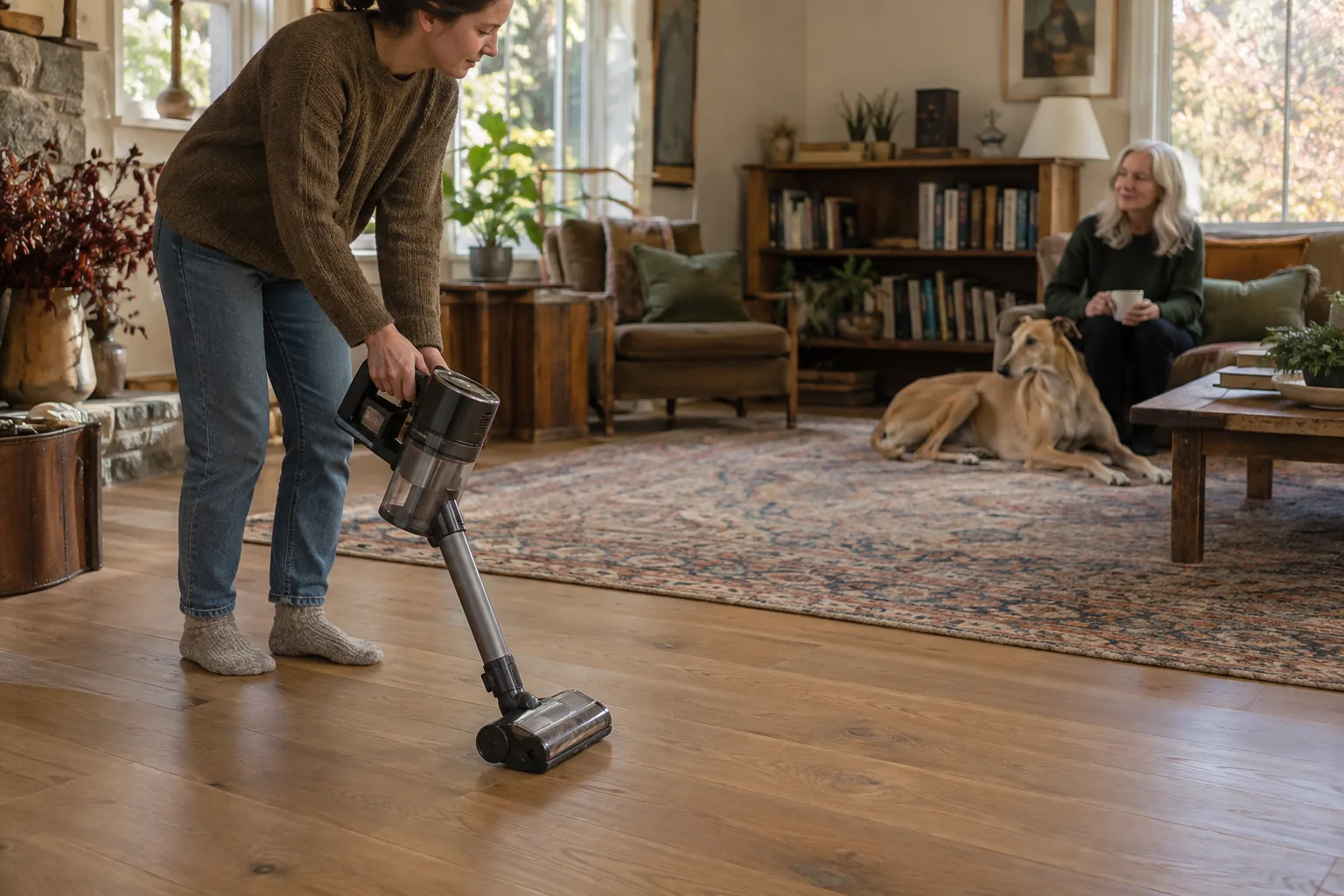
Where a personal plan allows sound practice, a helper may operate the appliance at a sufficient distance or in another room while you stay with the dog. Check that the dog can move away and that you can immediately ask the helper to stop. The starting sound must be genuinely manageable for that dog, not merely quieter to the person cleaning.
Do not require a sit, trap the dog behind furniture or keep the motor running until barking stops. Freezing or going silent is not proof of comfort. Stop if the response becomes difficult, return to ordinary care and revise the arrangement. Avoid repeatedly switching on a worrying sound as a test.
For necessary chores, continue using the separate comfortable cleaning routine. A recording on a phone also does not reproduce every aspect of the real appliance; do not claim it certifies tolerance of the motor, airflow or movement. Progress should preserve wellbeing, not provide a reason to remove management.
Review honestly in the app and keep context separately
After the brief opportunity, return to DogPath and mark only the lesson work you actually completed. Reading instructions is not the same as practising all the steps. Use the available progress controls honestly; an incomplete lesson is a useful boundary rather than a failure that needs hiding.
Keep appliance observations in an ordinary separate notebook if there is no suitable field. This workflow does not assume custom vacuum records, fear scores or automated behaviour analysis. Write the room, distance, power state, movement and visible response. “Switched off; far wall; brief look; dog turned back to me” keeps the limits clear.
Add what you did not attempt. A note saying “no motor sound” prevents another adult from assuming the dog is ready for normal cleaning alongside them. Record how the dog settled afterwards and whether the management routine worked. That everyday information may be more useful than a completion label.
Use the weekly plan to reserve another appropriate foundation opportunity alongside normal care. The reminder does not create a deadline for accepting the vacuum. If the household is busy or the dog needs rest, move the opportunity and choose an easier condition. Do not create repeated exposure just to maintain a streak.

Make the next household decision small and kind
Agree a shared cleaning arrangement: who prepares the comfortable area, who checks the appliance schedule and who puts equipment away. Keep children's play and other animals separate from practice. Adults operate the device and organise the dog's space; the dog should not have to negotiate a crowded room or compete for rewards.
Our comfortable mat foundations can support an ordinary rest area when that skill is already easy. A mat is an option, not a place the dog must remain beside noise. Do not tie them there or repeatedly send them back when they want distance.
Choose qualified reward-based help for persistent distress, chasing or biting equipment, difficulty keeping separation safe or unclear responses. The RSPCA recommends reward-based training. Avoid intimidation, punishment and the idea that a dog must confront the machine to learn. Veterinary advice is appropriate for pain or sudden change.
The useful next step might be storage in another cupboard, a quieter chore window or another comfortable glance at a switched-off object. Keep your record specific and your expectations modest. Ordinary care and a workable household arrangement remain worthwhile outcomes while you decide what practice is suitable.
Common questions
Should I leave the vacuum running until my dog gets used to it?
No. Prolonged worrying exposure can overwhelm the dog. Organise comfortable separation for chores and seek help for a suitable gradual plan.
Is taking treats proof that the sound is comfortable?
No. Look at the whole response, including body tension, retreat and recovery. An app cannot assess these conditions for you.
Does DogPath provide a dedicated vacuum-fear lesson?
This guide does not assume that. Use suitable actual foundation lessons for preparation and honest progress; keep appliance context in a separate notebook.
When should I contact a professional?
For marked or persistent distress, pain, sudden change, biting or chasing equipment, or difficulty arranging safe care. Start with veterinary advice where health concerns may be involved.