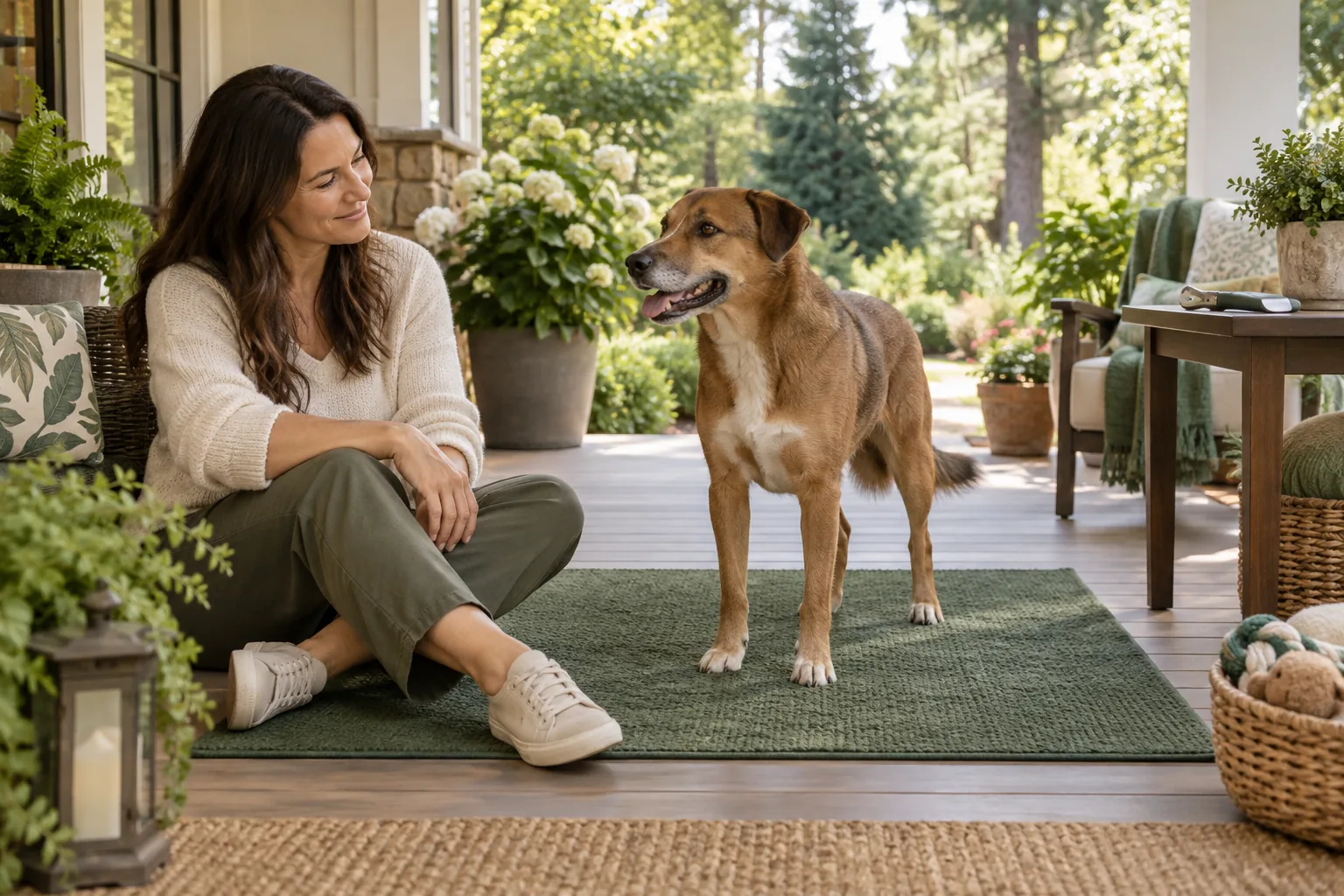
A dog scared of nail clipping may leave when the drawer opens, pull a paw away or become still as you reach down. Trying to finish the job quickly can make that moment harder. Start by separating the preparation from the cutting: choose one small experience your dog can meet comfortably, reward it and stop before the exercise becomes a struggle.
This guide covers voluntary preparation, not a nail-cutting technique or a diagnosis of fear. You can practise without an app and without cutting a nail. If your dog is painful, suddenly reacts differently, has an injured nail or needs urgent care, contact your vet. Where handling carries a bite risk, arrange personal help before trying the exercises. A home practice plan must fit around necessary care, never postpone it indefinitely.
Dog scared of nail clipping: find the first difficult moment
Think about the most recent routine without recreating the whole event. Was your dog comfortable until you sat beside them? Did the trouble begin when your hand approached, when you lifted a foot, when the tool appeared or when it made a sound? Those are separate parts. Naming the earliest change gives you a useful starting point that does not require testing the final procedure.
Write one observation rather than a label: “Moves away when I reach toward the front leg” is more useful than “hates grooming”. You do not need to know whether an earlier experience caused it to make today's exercise gentler. Avoid repeatedly reaching down to check whether the reaction still happens.
Dogs Trust's veterinary-reviewed nail-care advice recommends gradual paw-handling preparation, a nonslip surface and stopping when the dog appears worried. Use that principle to select an easier beginning. For a dog uncomfortable with an approaching hand, the first practice may simply be sitting nearby with both hands resting on your own knees.
Arrange a comfortable place and a genuine way to leave
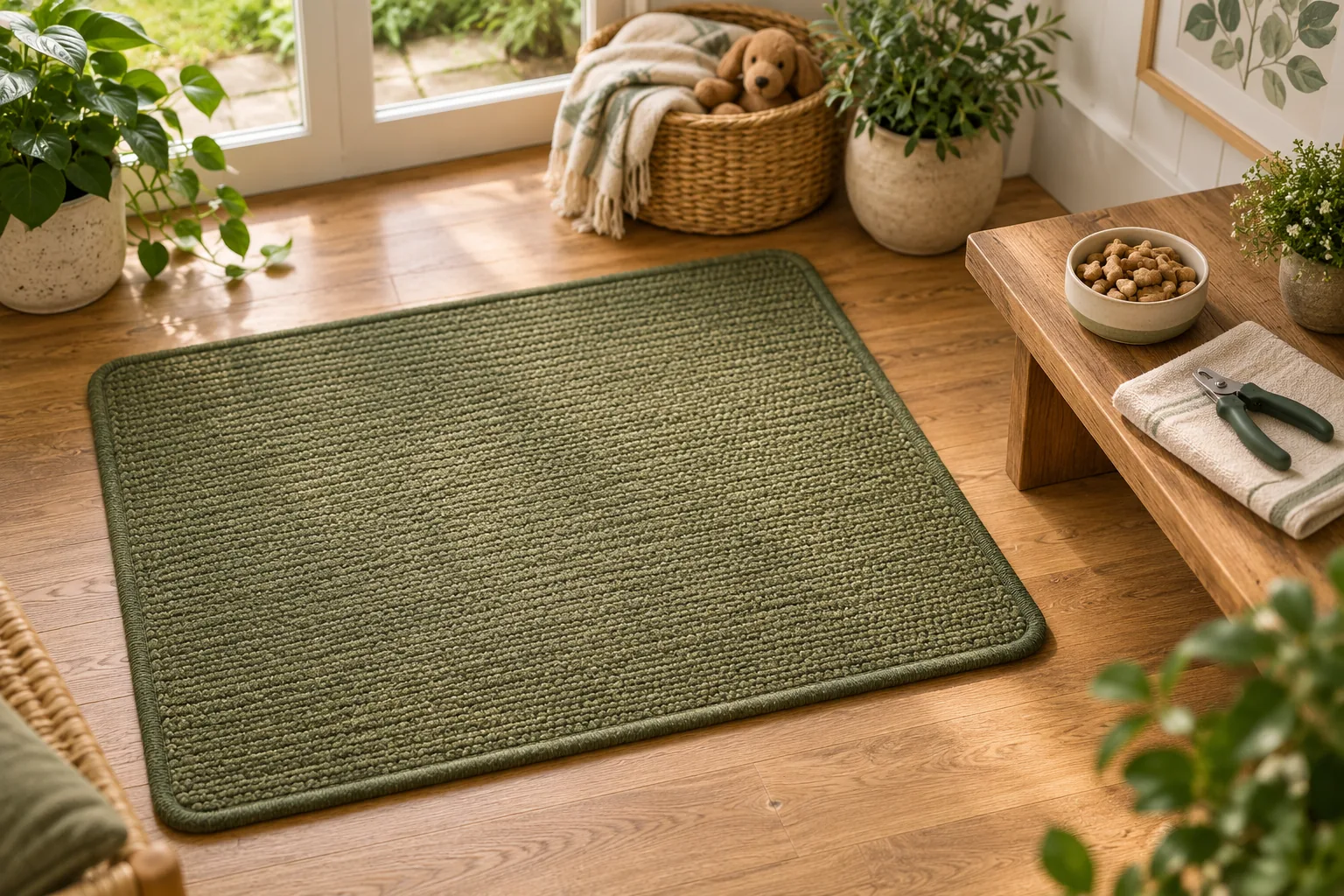
Pick a familiar, quiet space with secure footing. Put down a mat only if your dog already finds it comfortable; do not drag them onto a new surface. Clear a path away from you. An enclosed room can prevent access to household hazards while still giving the dog room to move away from the exercise.
Sit sideways at a comfortable distance, rather than bending over the dog. Keep other pets and excited family activity out of the practice area. Prepare small suitable food rewards within reach, respecting any dietary advice. Put the nail tool safely away during handling practice. You should not have to lean across the dog or rummage through a noisy bag between repetitions.
A familiar mat can help make the setting predictable. Our settle-on-a-mat guide explains the foundation, but resting there does not grant permission to hold a paw. Keep ordinary mat relaxation separate from care practice so the dog can still enjoy the bed without expecting handling every time they lie down.
Choose a moment when you are also unhurried. If you need to rush out shortly, save the exercise for another occasion.
Make a tiny contact predict a reward
Begin at a body area your dog already accepts being touched, if there is one. With the dog voluntarily nearby, make one brief, gentle contact, remove your hand and offer a small reward. Pause with empty hands. If reaching toward the leg is already uncomfortable, start with a smaller hand movement that stops well before contact.
Watch the whole dog between repetitions. A paw staying in place is insufficient if the body stiffens or the head repeatedly turns away. Look for a comfortable posture and the freedom to shift position. Eating alone does not prove comfort; some dogs take food while still finding the situation difficult.
If you use a familiar quiet reward word, say it at the moment of the easy step and follow with the reward. The reward-marker guide explains this timing. A loud click is optional and may be unhelpful around a sound-sensitive dog.
Do not hold food at the nose while secretly taking the paw. The reward should follow the small experience, not keep the dog occupied through more handling than they would freely accept. If the dog leaves, let the repetition end.

Build a handling ladder without lifting or squeezing
Describe several possible steps, then choose only the easiest suitable one today. A sample sequence might be a small hand movement, a brief touch to an accepted part of the leg, a lower-leg touch, then a moment of contact at the side of a grounded paw. These are options, not a schedule every dog should complete.
Keep the other demands steady when changing one part. If the hand moves lower, do not also hold it there longer or introduce the tool. That makes the result easier to understand. A different foot can feel different; start easier there rather than assuming the front-paw exercise transfers automatically.
Try a few comfortable repetitions and finish while the situation is still easy. Returning voluntarily after a pause is useful information, but it is not permission for every subsequent step. Ask the same small question again through your next gentle movement.
No lifting, gripping, pressure on a nail or cutting is needed for these early exercises. You can prepare useful contact while the paw remains on the floor. Stop the session if you find yourself bargaining for “just one more”. The goal is an experience the dog can participate in, not a completed list of body parts.
Introduce the tool separately from touching the paw
On a different brief practice occasion, keep your hands away from the dog's feet. Show the stationary tool at a distance where the dog remains comfortable, offer a reward, then put the tool away. Never bring a cutting edge near the dog during this introduction. Keep equipment out of chewing reach.
If the dog backs away as soon as the tool appears, increase distance or use a shorter glimpse in a later session. Do not chase the dog with the clippers. The sight of the tool, its movement and its sound can each need separate preparation. A dog who watches it calmly from across the room may still dislike it moving beside their leg.
Tool sounds are optional practice only when the visible tool is already easy. Start with a quiet sound well away from the dog, followed by a reward, with no simultaneous paw contact. If you cannot make a sound suitably gentle, seek help choosing an introduction instead of repeating a startling noise.
A grinder brings different sensations and noise. Switching equipment is not an automatic solution. Discuss suitable tools with the professional who will demonstrate your dog's eventual care.

Use the pause as information and adjust one thing
Withdraw your hands if the dog pulls the paw back, leans away, freezes, repeatedly turns their head or tries to leave. Put the tool away and allow space. A growl is a reason to stop and arrange personal professional support, not to punish the warning or prove that you can finish.
If a small step was difficult, the next attempt belongs on another comfortable occasion with a lower demand. For example, replace a paw touch with a brief lower-leg touch, or show the tool farther away. Do not resume immediately at the same intensity because the dog has taken a treat.
Keep notes practical: the place, the exact movement, the dog's response and how they behaved after you withdrew. “Three brief touches, then moved away; next time start higher on the leg” gives you a clear adjustment. There is no need for a daily quota or a score based on nails completed.
The RSPCA's training guidance supports reward-based learning in short sessions and recognises that dogs learn at different rates. Let observation determine your next step rather than expecting a fixed number of days to solve the problem.
A worked example: tomorrow can stay at the same step
Suppose Mara's dog stands comfortably beside her on a mat but moves away when she reaches toward a foot. Mara puts the clippers away. In the first practice, she moves her hand only from her knee toward the space beside the dog, stops before contact, rewards and rests both hands. She finishes after a few easy repetitions.
On the next occasion, she begins with that same movement. Only if the dog remains comfortable does she try a brief touch on an already accepted part of the leg. If the dog leans away, she withdraws. Tomorrow's plan can still be the original hand movement; repeating an easy step is useful practice, not a missed deadline.
Use our short-training-session guide to organise a small start and a clear ending. For care preparation, the ending includes putting equipment away and allowing normal activity. Do not spend the rest of the evening following the dog to collect extra repetitions.
The example deliberately stops before a paw lift or a cut. It shows how to select a manageable question, observe the answer and change the next practice. Your dog's starting point may be earlier or later.

Keep necessary nail care on a separate professional plan
Ask your vet whether the nails need attention and how soon. The sound of nails on a floor alone is not a reliable home decision rule. If a nail is damaged, bleeding, catching repeatedly or the dog seems uncomfortable walking, seek veterinary advice promptly rather than continuing a training experiment.
Explain what your dog finds difficult before a visit. Share the earliest worrying step and what contact is currently comfortable. Ask how the appointment can be arranged safely, whether preparation visits are appropriate and who should carry out the immediate care. This gives the team useful information without promising that home practice will make the appointment straightforward.
Before cutting at home, obtain a personal demonstration appropriate to your dog, including how to avoid injury and when to stop. Dark nails, previous injury and difficult handling can make individual guidance especially important. This article does not teach you to judge a safe cutting point.
Do not improvise sedation, administer medicines without veterinary direction or restrain a struggling dog to meet a grooming target. Your independent practice can continue at a comfortable level alongside the care plan. A useful next step may be one accepted touch and an arranged appointment.
Common questions
Should I hold the paw until my dog stops pulling?
No. Release contact when your dog withdraws and give them space. Holding through resistance adds pressure and can create a safety problem. Choose an easier step on another occasion. If reaching for the paw carries a bite risk, seek personal reward-based professional support before practising.
My dog eats treats but stays very still. Is that progress?
Food acceptance is only one observation. Notice posture, head movement and what happens when your hands withdraw. Stillness can be uncomfortable too. Reduce the demand if the dog stiffens or seems unable to move freely, even when they continue eating.
How many days will preparation take?
There is no reliable timetable for an individual dog. Prior experiences, comfort and the exact step all matter. Repeat manageable practice and keep necessary nail care on a separate veterinary plan. Do not delay treatment while waiting for the training sequence to finish.
Must I teach my dog to give a paw?
No. A paw-offering cue is optional and does not automatically mean the dog accepts care. Early practice can happen with all feet grounded. Whatever position you eventually use, continue responding to withdrawal and get an appropriate personal demonstration before cutting.