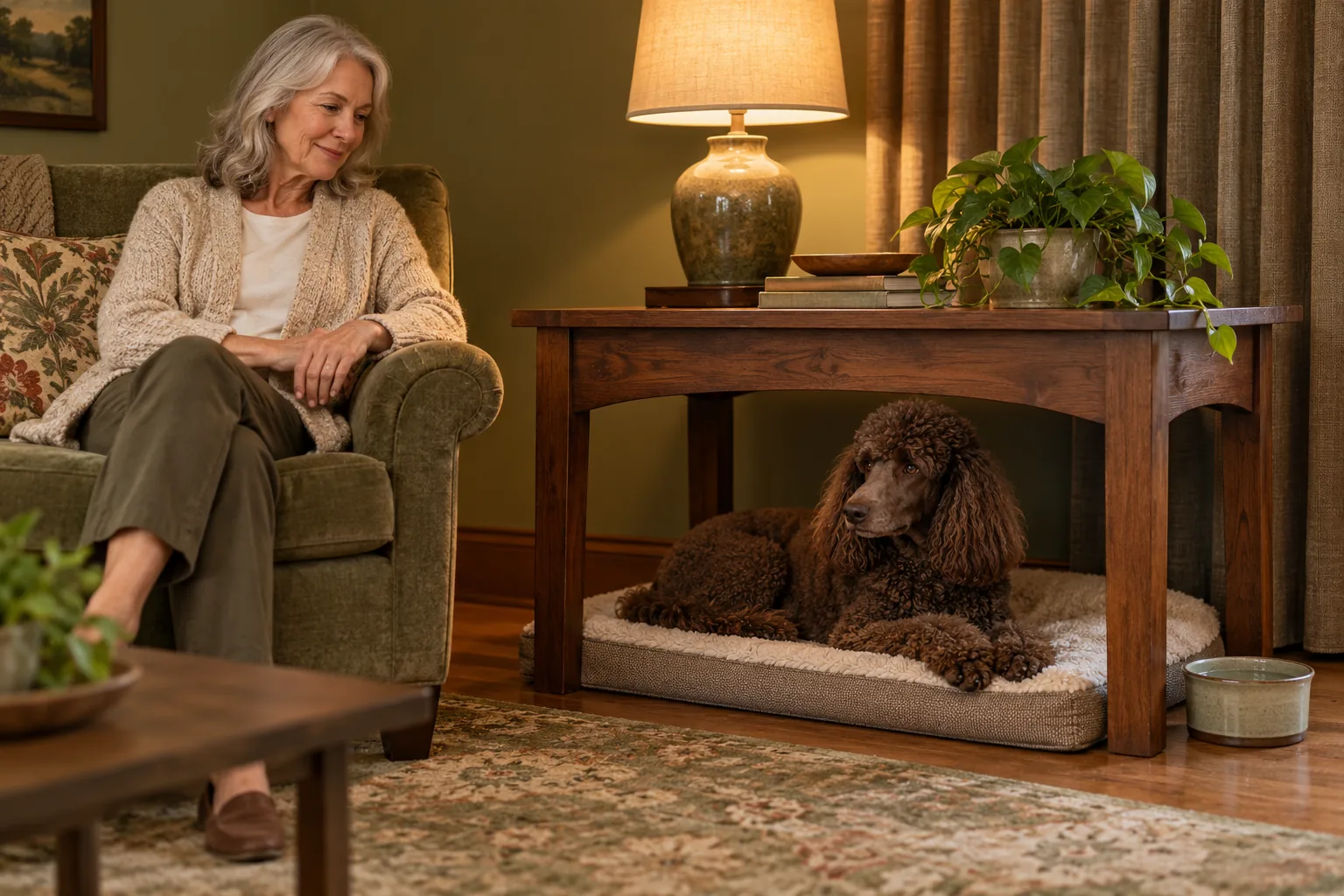
A dog scared of fireworks needs a manageable place to be, not a last-minute test of bravery. The noise may begin earlier than an advertised display, stop for a while and return unexpectedly. Plan for that uncertainty. Choose where the dog can stay, who will be present and how necessary care will work without repeatedly opening an outside door.
Begin with your own home and your dog's familiar preferences. A quieter room, a choice of resting places and an agreed door routine are practical starting points. This guide provides an independent household plan, not a diagnosis or a promise that preparation will remove fear. If your dog has struggled before, arrange individual veterinary advice in advance rather than waiting to see how severe the next evening becomes.
Dog scared of fireworks: observe without testing
Recall what happened during an ordinary noisy evening. Did your dog pace between rooms, seek company, hide beside furniture or stop eating? Write down what you saw and roughly when it happened. Include what was changing around the dog: an open curtain, a door being used by visitors or people repeatedly calling them out of a resting place. Describe events without trying to prove a particular emotional label.
Use that account to make a practical decision. If the dog chose the inner hallway, consider whether it can become a safe, comfortable option. If visitors repeatedly used the garden door, change that route. Do not play a firework recording or take the dog towards a display to find the point at which they react. You already have enough reason to improve the setting.
For sudden changes, possible pain, marked distress, aggression or bite concerns, seek personal veterinary and qualified behaviour support. Injury, collapse or breathing difficulty need urgent veterinary contact. Do not reach into a hiding place, grab a distressed dog near the mouth or physically move them to demonstrate that a room is safe. A general checklist cannot assess an individual's health or handling risk.
Prepare a retreat the dog can choose
Choose a familiar resting area with comfortable footing and an unobstructed way in and out. It might be beside the sofa or under a suitably spacious, stable table. Clear cables, unstable objects and small items the dog could swallow. Put water within easy reach without creating a spill hazard across the entrance. The useful feature is access and choice, not how impressive a den looks in a photograph.
The Dogs Trust fireworks guidance supports a safe space and allowing the dog to choose where to rest. Keep that principle separate from obedience. A dog does not have to lie on command, stop trembling or accept a particular bed before receiving ordinary care and reassurance. A different safe spot may be the one they actually prefer.
Set the area up during an ordinary quiet period so it is available before the evening becomes difficult. Invite exploration without shutting the dog in or repeatedly drawing them out with food. Our mat guide covers a separate taught skill; a refuge during noise is not a performance exercise. Keep familiar bedding accessible even if today's chosen resting place is somewhere else.
Check windows, curtains and the household door routine
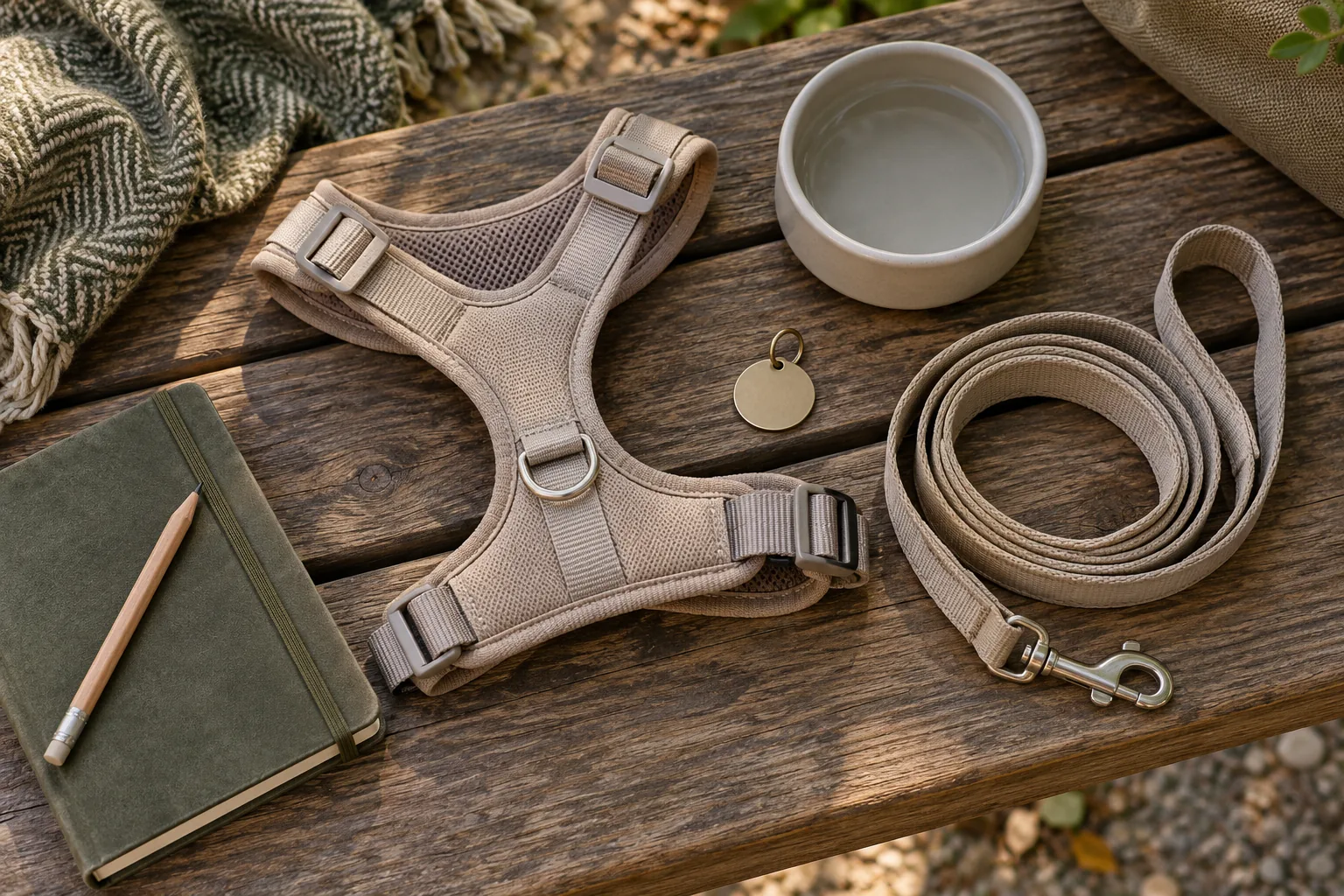
Close outside windows and doors securely before likely noise, and draw curtains to reduce visible flashes. Keep the room comfortably ventilated and at a suitable temperature; a closed, overheated space is not a safe refuge. If the dog already enjoys ordinary background music, use a comfortable familiar level. Do not turn it up to overpower every bang or introduce an unfamiliar loud soundtrack as another challenge.
Walk through the route that people will use to enter and leave. Choose one adult to manage the entrance and keep the dog safely separated from it before a delivery or visitor arrives. A separate closed internal room can provide an additional barrier while someone opens the outside door, provided the dog is comfortable there and appropriately supervised. Return access to their usual safe area afterwards.
For example, tell a visitor to call before arriving, bring them in through the agreed entrance and settle the household before giving the dog access to that passage. Do not rely on a newly learned stay beside an open door. Keep identification and contact details current, check gates and avoid leaving the dog unattended in the garden. Planning human movements matters even when the dog appears quiet.
Make necessary outdoor care easier to organise
Arrange normal exercise and toileting before likely fireworks where possible, using a suitable quiet route and secure, comfortably fitted equipment. Daylight alone does not guarantee silence, so check actual conditions and keep a way home available. Do not add strenuous exercise simply to exhaust the dog. The aim is meeting ordinary needs without creating an extra difficult outing immediately before the evening begins.
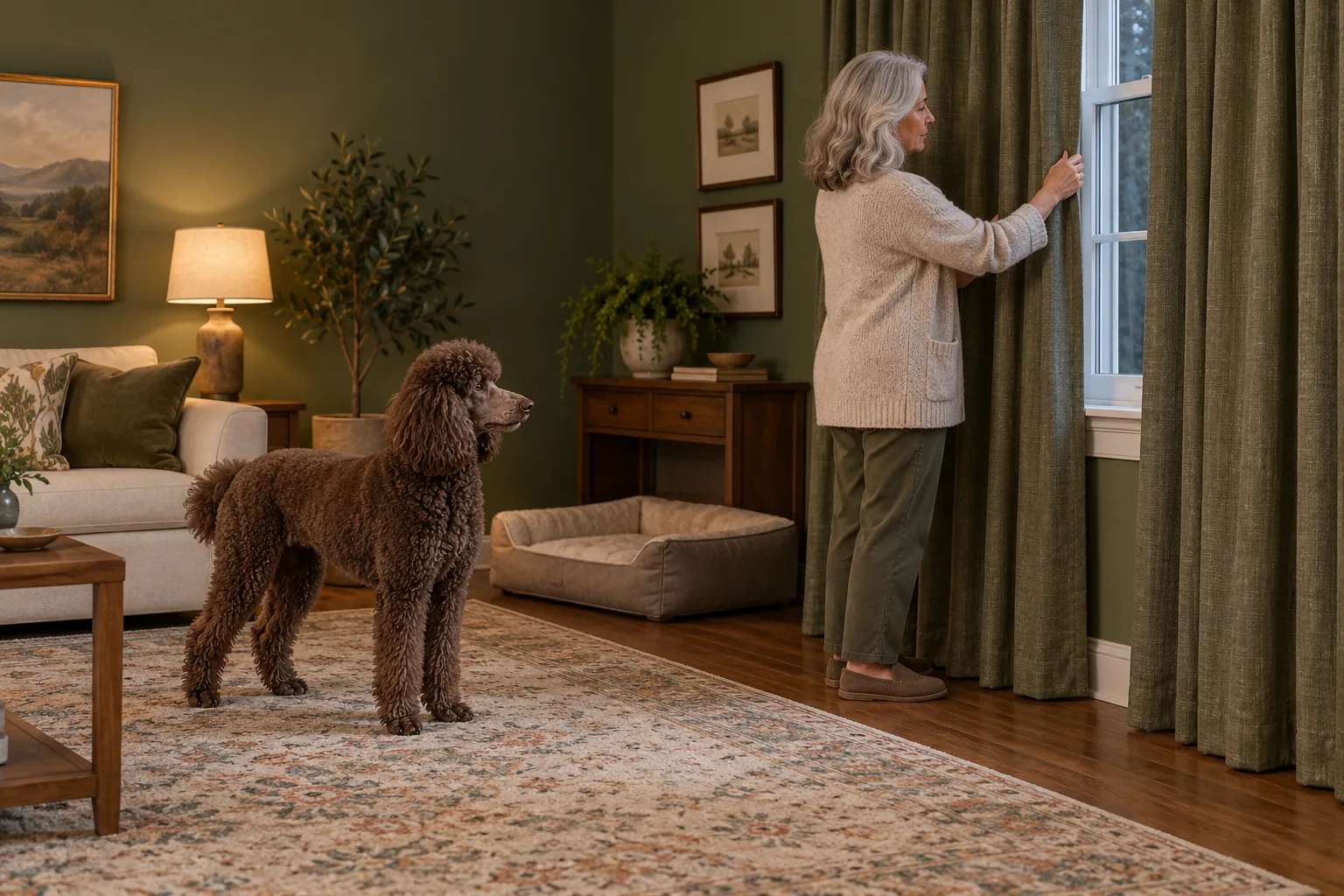
Keep the lead and familiar harness ready near the agreed door, out of the dog's resting area. Our loose-leash walking guide is for separate practice in suitable conditions. It does not make a frightened dog ready to walk beside fireworks. Avoid a new harness, a sudden fitting exercise or off-lead access as part of the evening's emergency arrangements.
If another toilet opportunity is needed, consider a quieter gap and the safest available supervised option. Keep the dog securely on a lead even in a garden, and keep the outing brief and necessary. Never force them outside through active noise. If you cannot meet toileting needs safely, contact your vet for an individual plan. An accident indoors is a care issue, not a reason to punish or prolong the outing.

Offer company without making contact compulsory
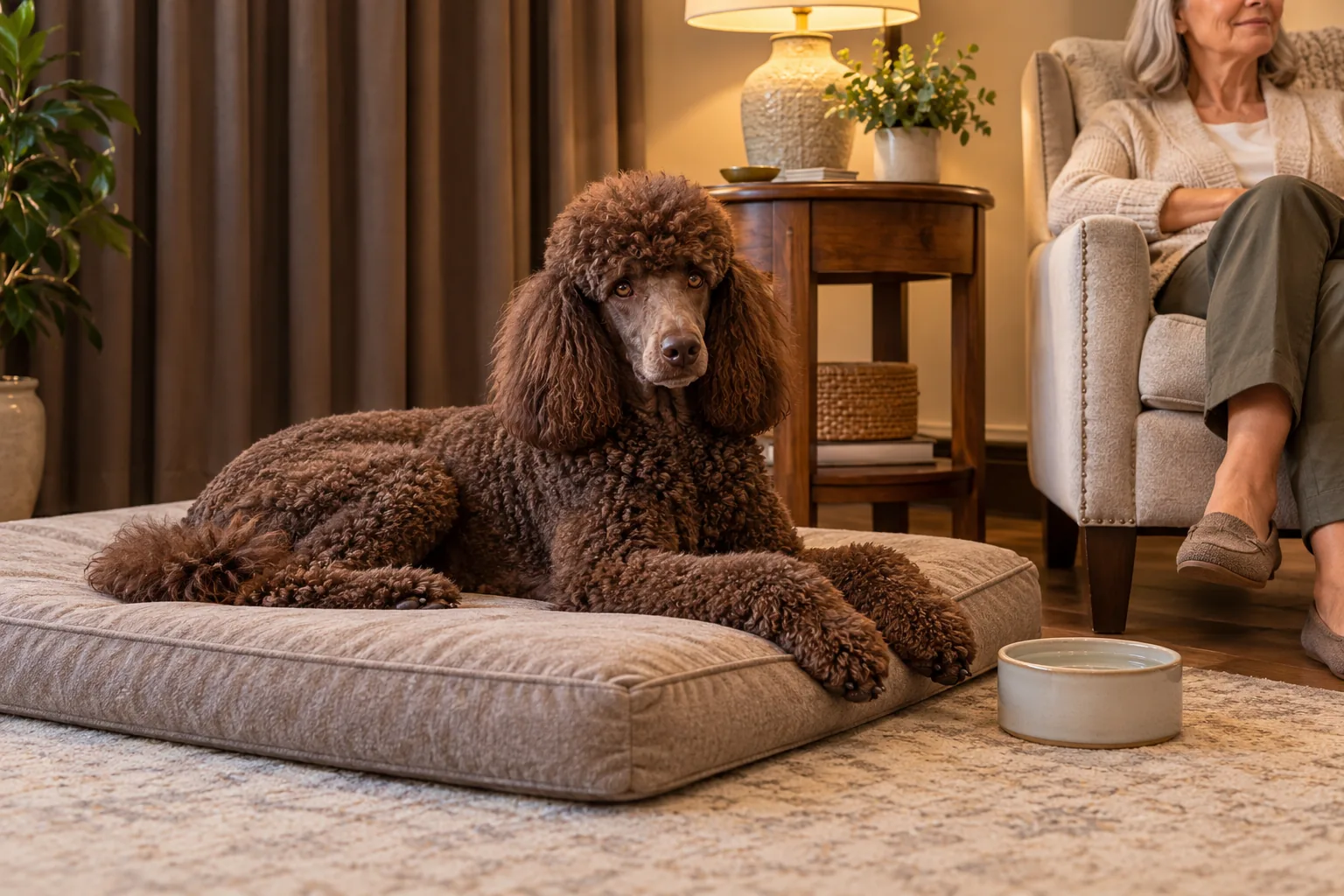
Stay available or arrange a familiar trusted adult to be present. Let the dog decide whether to come close or remain in a safe resting place. If they seek gentle contact and usually enjoy it, respond calmly. Do not follow them into a confined space, crowd their face or insist on stroking. Children and visitors should give the dog room rather than taking turns trying to make them feel better.
You can offer a familiar activity or suitable food if the dog wants it and it can be provided safely. Refusing it is information to respect, not a reason to present more exciting rewards repeatedly. Do not make drinking, company or a comfortable place conditional on being quiet. Keep other pets' access and resources manageable so the dog does not also have to negotiate competition around a small retreat.
Imagine the dog moves from the mat to the armchair side, then returns under the table. You can remain available without calling them back to either place. Watch the overall situation from a respectful distance. If distress increases or you cannot keep everyone safe, contact professional help rather than adding demands. A dog being still is not, by itself, proof that they are comfortable.
Keep tonight separate from future sound work
An unpredictable display is not a controlled training session. Do not add recordings, move the bed nearer a window or open a curtain to check whether the dog has improved. The practical job is reducing avoidable difficulty and preserving care. You can leave optional exercises unfinished. You do not need one final sit, a successful look towards you or evidence that the dog will accept a treat beside a bang.
If you want a longer-term noise plan, discuss it with your vet and a suitably qualified reward-based behaviour professional. The plan needs to account for the individual dog, health and actual home. A recording is not identical to a real event, and turning the volume up because yesterday seemed easy is not a reliable measure of readiness. This article deliberately supplies no exposure schedule or promised recovery period.
Keep unrelated foundation work for genuinely comfortable opportunities. Our short-session guide can help organise ordinary practice on another day; it is not a fireworks treatment protocol. Write down what you want to ask a professional before choosing equipment or a sound program. Familiar calm routines can continue without converting the whole evening into a learning test.
Prepare a useful conversation with your vet
Contact the practice ahead of anticipated noise, especially after previous difficult events. Describe concrete observations, the conditions at home and any change from the dog's usual behaviour. The PDSA veterinary guidance on fireworks advises planning veterinary support in advance and having sudden fear checked. A professional can decide what assessment or support fits your individual dog.
A short paper note might say: “Started pacing when the first bangs began; preferred the hallway; refused the usual food; entrance opened twice for guests.” Add your questions about handling, necessary outdoor care and what to do if the plan is not enough. You do not need to recreate the event or film the dog at close range to make the account useful.
Do not use human medication, another animal's prescription or an internet dose. If your vet prescribes something, follow the individual instructions and ask the practice when any part is unclear. This guide cannot choose a drug, assess a supplement or guarantee that a product will help. Keep urgent contact information accessible to the adults responsible rather than searching for it during a difficult moment.
Review the next morning without another test
Allow ordinary rest and attend to normal food, water and toileting needs. Check the safe outdoor area before letting the dog use it, because debris or changed surroundings may need attention. Do not assume the event has ended permanently after a quiet interval. Keep practical precautions available if further fireworks are possible, while allowing the rest of the day to be ordinary.
Record one or two useful changes for next time. Perhaps the inner room stayed quieter than the front room, the dog wanted company at a distance or a delivery interrupted the door plan. Those observations help household organisation. They do not establish that fear has disappeared. Share the notes with the vet or behaviour professional if the dog struggled, and mention any continuing change in behaviour.
Keep the chosen resting area available without requiring the dog to use it. A helpful evening may still include difficult moments, and another dog may need a different arrangement. Your next step can be improving an entrance routine, arranging a familiar carer or booking a consultation. Make decisions from the individual dog's needs rather than a deadline for coping or a comparison with someone else's dog.
Common questions
Should I ignore my dog when fireworks frighten them?
Remain available. If the dog seeks reassurance and enjoys gentle contact, you can offer it. Respect a wish to rest at a safe distance, and do not force touching or pull the dog from a refuge.
Should I play fireworks sounds tonight to practise?
Do not add exposure while real fireworks are occurring or the dog is already distressed. Longer-term sound work needs an appropriate individual plan. A recording and an actual display are different situations.
What if my dog will not go outside?
Never force a frightened dog through active fireworks. Consider the safest necessary supervised option during a quieter gap, and contact your vet if you cannot meet essential needs safely. Do not punish indoor accidents.
Can I give a calming medicine from home?
Do not use human medication, another animal’s prescription or an online dose. Ask your vet in advance about appropriate individual support and follow any instructions prescribed specifically for your dog.