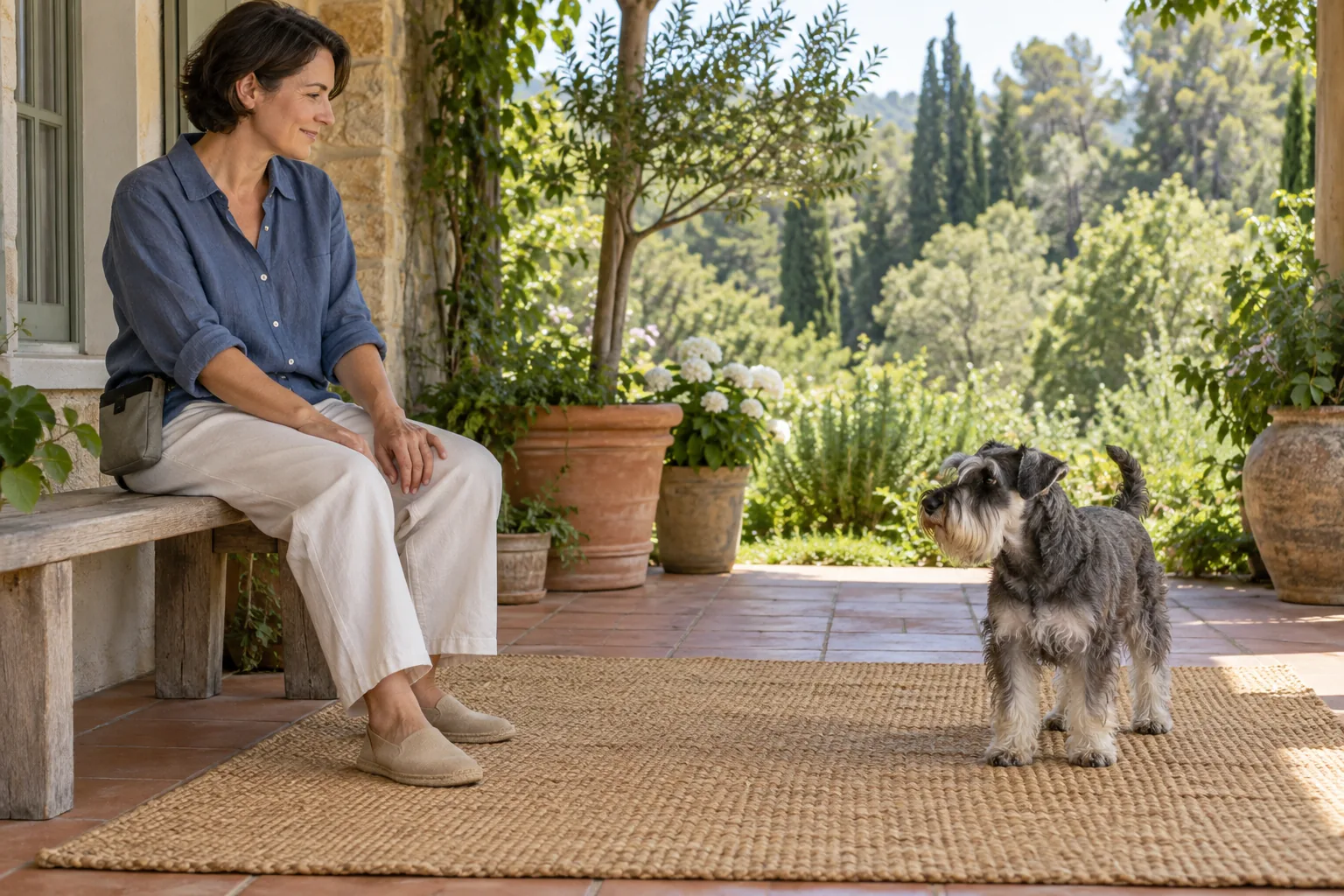
If your dog only listens with treats, it is easy to start every request by reaching for food. A more useful question is what the dog sees before the familiar cue and what actually happens after a response. Choose one easy moment in a quiet place and review that sequence without testing loyalty, demanding patience or removing all the rewards.
This guide uses DogPath to prepare a suitable foundation lesson and record the step you actually practise. A separate paper note holds the details of your hands, pouch and reward delivery. The app cannot identify why your dog did not respond, measure understanding or certify that a cue is reliable around hazards. Keep those decisions grounded in observation and personal professional advice where needed.
Dog only listens with treats: describe one request
Choose an already familiar, comfortable action in a quiet setting, such as a small attention response taught in your normal practice. Do not use emergency recall, dropping a dangerous object or remaining beside traffic as the test. Write down the cue, your hand movement and where the food was before the dog moved. These details help you decide what to prepare.
Describe a specific observation: “looked towards me after I opened the pouch” gives you more information than “only works for payment”. A response may depend on several parts of the setting. You do not need to recreate a difficult moment to prove a cause. Keep expectations modest and allow the dog to pause or choose another activity during nonessential practice.
Sudden difficulty responding, apparent pain, unusual appetite changes, fear or bite risk needs personal veterinary and qualified behaviour support. This exercise cannot rule those concerns out. Do not withhold meals, care or access to toileting while waiting for a response. The purpose is a clearer practice arrangement, with ordinary wellbeing protected throughout.
Keep a visible prompt and a later reward distinct
Food in a guiding hand can be part of teaching an action. Food delivered after an action has a different place in the sequence. The AVSAB discussion of visible food explains why it matters that a reward can still follow when it was not displayed first. That principle does not diagnose your particular dog or set a deadline for changing an exercise.
For your notebook, draw an ordinary three-part line: what the dog saw, the action, and what followed. You might discover that your hand was already in the pouch before you said the familiar cue. That is useful information about your own sequence. Avoid calling food a trick or deciding that the dog should perform without anything they value.
Keep appropriate rewards readily available. You are changing a small part of the preparation, with reinforcement still part of the plan. Do not combine this review with longer duration, a different room and fewer rewards. If a task was only just introduced with guidance, return to the teaching steps and obtain help before treating it as a well-understood cue.
Read a suitable DogPath lesson before starting
Open the actual foundation or attention lesson available in your DogPath training path while your dog is resting. Read the prerequisites, setup and instructions, and choose a step that matches your current work. The aim is to prepare properly for a real lesson. Do not assume that every app activity includes a specific procedure for changing food visibility.
DogPath’s verified workflow provides guided lessons, preparation, completion records and a weekly plan. Use these to organise the foundation practice that supports this review. If your chosen exercise is separate from the lesson, keep those activities separate in your records. The app is not established here as a video analyst, a lure detector or a score for how well a dog understands a word.
Dog Train Club and DogPath share the publisher Rocket Digital Limited. We are describing our own app’s planning role. Put observations about your hand and pouch in a separate notebook rather than assuming a custom logging feature. Marking a lesson complete records what you practised; it cannot establish readiness to use the cue in a difficult real-world situation.
Prepare an easy place and an uncomplicated reward
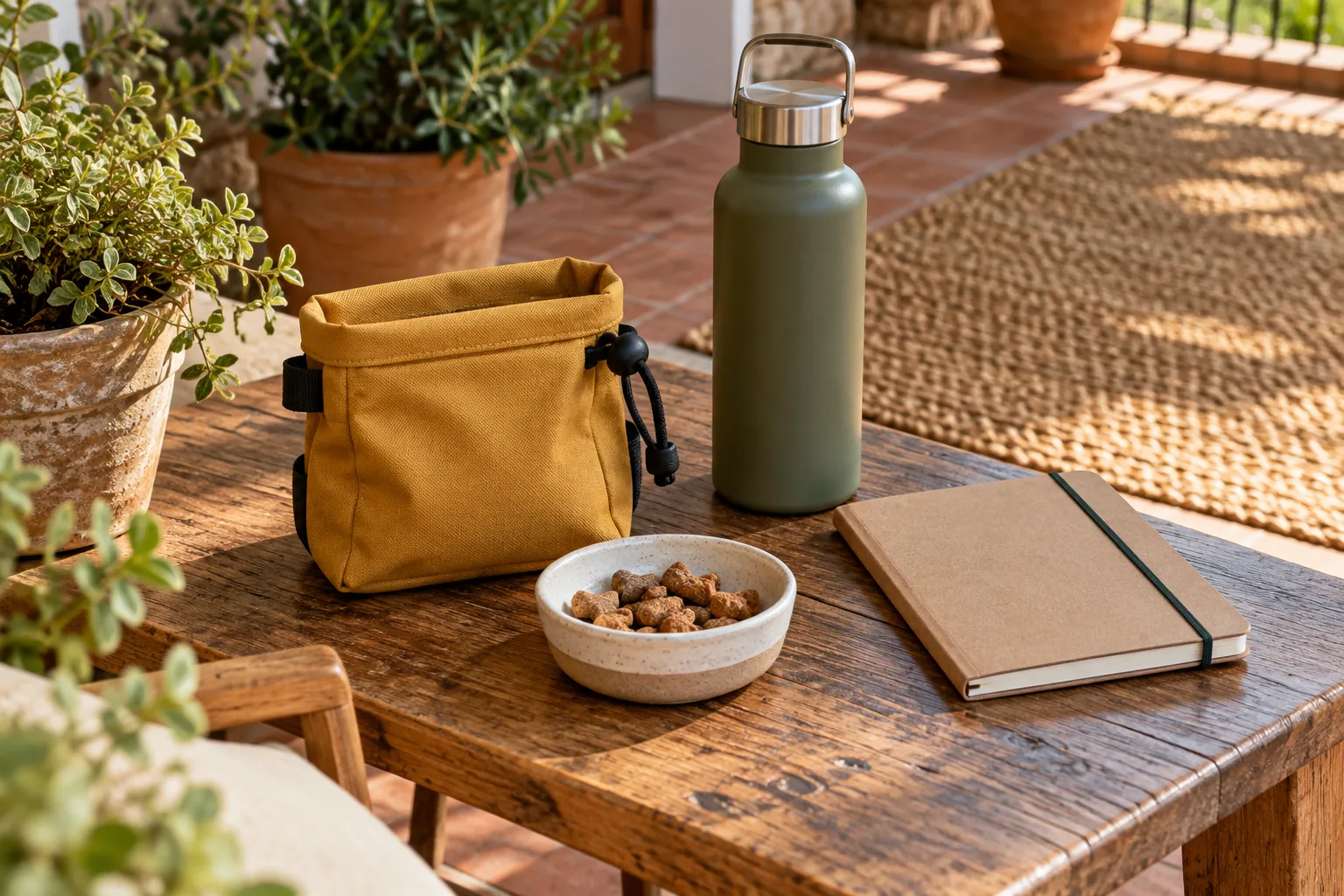
Choose a quiet familiar area with secure footing and space to move away. Prepare a few small rewards appropriate for the dog’s diet and health, with water available and normal care already considered. A closed pouch can keep rewards convenient. Arrange it so you can retrieve a reward smoothly without accidentally dropping food or requiring the dog to reach past furniture.
Rehearse your own movement once without the dog: hands relaxed, give the familiar cue as taught, then reach for the reward after the relevant action would have occurred. If using a known marker, include its usual place. You are checking your organisation, not adding gestures the dog has never learned. Our marker guide can help you keep that established timing clear.
Put away distracting food packaging and keep other animals comfortably occupied elsewhere if that arrangement suits them. A second person should avoid coaching during the attempt. The person handling the dog needs enough attention for the actual response. You can leave the exercise for another day if the room is busy or essential needs make this an unsuitable moment.
Try one familiar cue while keeping the reward ready
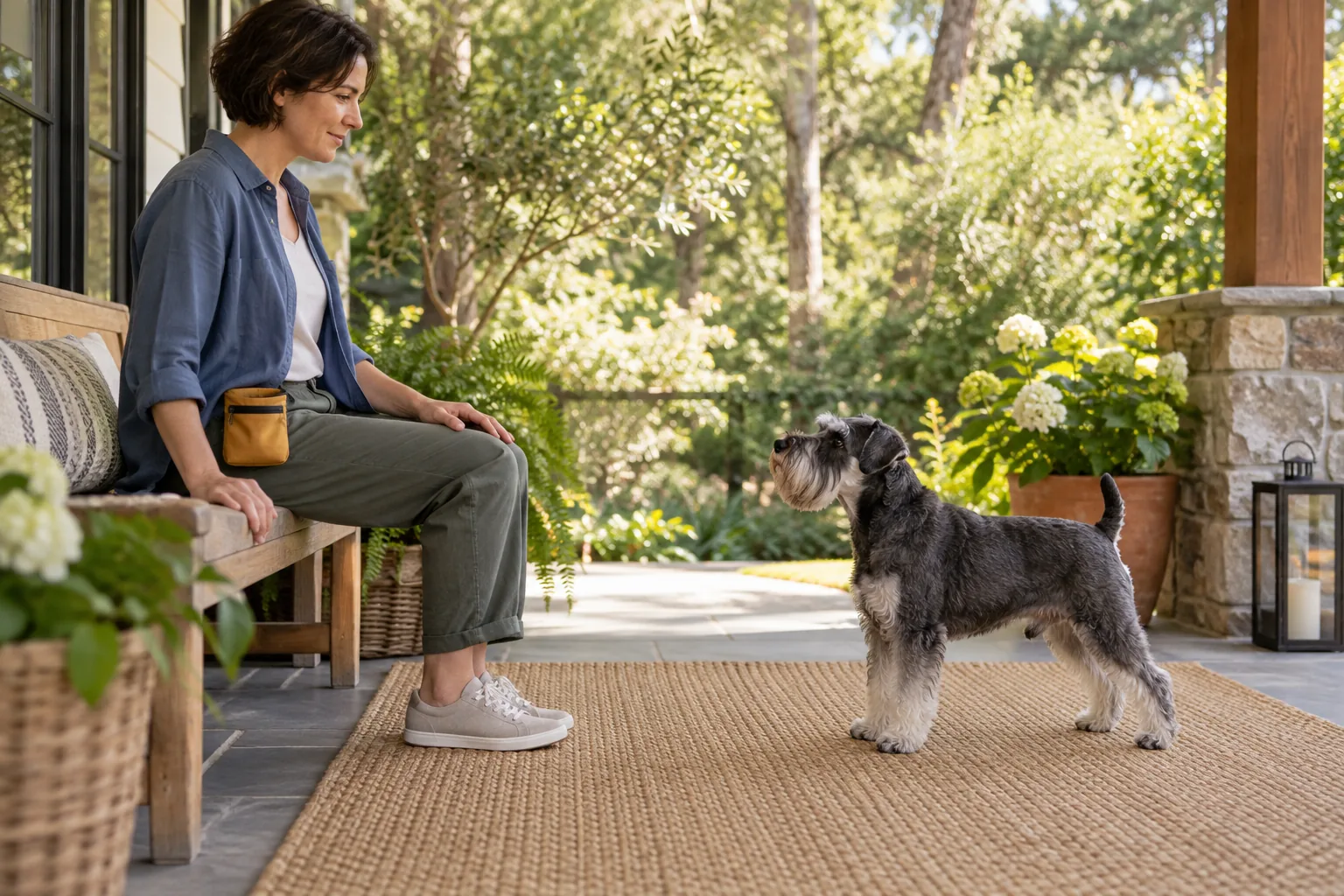
Begin with the same easy version the dog already knows, in the same sort of setting. If the step you are following supports it, keep food accessible without holding it in front of the dog before the cue. Use the familiar signal once and allow a comfortable opportunity to respond. Do not turn the attempt into prolonged waiting or a contest over who gives in first.
When the known action happens, acknowledge and reward it promptly in the way you prepared. Keep the delivery easy and the dog free to move afterwards. The Dogs Trust reward guidance supports choosing something the dog values. Here, a clear, manageable response should continue to have a worthwhile consequence; removing the visible prompt is not an instruction to stop reinforcing.
If the dog hesitates, looks away or cannot participate comfortably, finish that attempt and make the next opportunity easier. Avoid repeatedly saying the cue, adding a louder voice or producing food only after a long argument. Use the lesson’s teaching steps or qualified help to work out a smaller version. You can also reward ordinary voluntary engagement without pretending the requested action occurred.

Keep the action, place and person manageable
An indoor response beside a familiar adult may be easier than the same word outside or with another person. Treat those as separate changes. Stay with your simple example long enough to observe it honestly, without making claims from a handful of attempts. This guide does not provide a number of repetitions that proves understanding or a timetable for removing visible food.
If another adult later practises, explain the action, cue and reward arrangement beforehand. They should begin in an appropriate easy setting, with rewards available and no pressure to match a previous result. A change of handler or room is enough to review on its own. Do not also increase distractions and ask for a longer response at the same time.
The beginner training guide helps connect preparation with small practice goals. Keep safety management independent of an exercise result. A comfortable glance on the porch gives no permission to remove a lead near roads, rely on recall around wildlife or use a cue to handle a guarding situation. Those contexts require their own preparation and support.
Finish with a useful record instead of extra tests
Choose an endpoint before practice, then shorten it if your dog needs a break. Our short-session guide gives that finishing point a place in the plan. Stop while you can still describe what happened clearly. An enjoyable small attempt does not need to be followed by several surprise requests around the house to prove that it worked.
Record the actual suitable DogPath lesson step as completed only if you practised it according to its instructions and prerequisites. A separate cue review does not automatically complete a different activity. Use the weekly plan to make room for appropriate foundation work, while leaving normal rest, exercise, enrichment and veterinary care intact. The next activity can remain an easy familiar one.
In your paper note, record what was visible before the cue, whether the action occurred and how the reward arrived. Include any difficulty in getting the reward out smoothly. Those details offer a practical adjustment for next time. You do not need a score for obedience, a chart comparing family members or a claim that a hidden reward has changed the dog’s motivation.

Choose the next change from what you observed
If your preparation felt clear and the dog participated comfortably, you can return to a similar suitable opportunity another day. Change one small detail only when the current step is genuinely manageable. Avoid setting a date for food-free responses. Different dogs, actions and contexts need different support, and a general article cannot decide which progression fits your household.
If every attempt needs a visible food prompt, that is useful information to take to a qualified reward-based trainer. Bring the ordinary sequence from your notebook, not a deliberately staged confrontation. The professional can help assess how the action was taught and whether the current step is appropriate. Keep rewards and care reliable while you seek that advice.
Your practical aim is to organise teaching so the dog has a fair opportunity to understand and respond. Success may include preparing more smoothly, recognising that an action is still being learned or stopping before frustration rises. Continue observing comfort and health. A sudden or persistent difficulty deserves individual help, even when an app schedule or a previous session suggested a different plan.
Common questions
Should I stop carrying treats so my dog learns to listen?
Keep suitable rewards available. Removing visible guidance and withdrawing reinforcement are different changes. Choose a familiar easy task, follow the teaching steps and reward useful responses. Do not make ordinary meals, water, affection or necessary outings depend on completing this exercise.
What if my dog only follows a hand that contains food?
The action may still need teaching support. Return to a manageable lesson step and ask a qualified reward-based trainer for help with the sequence. Avoid repeated empty-hand tests or claims that the dog is stubborn. You can document what happens without creating a struggle.
What does DogPath record in this plan?
It supports preparation of the actual available lesson, honest completion and a weekly plan. Record only the step you really practised. Keep hand movements, food visibility and context in a separate notebook; this article does not claim a lure-analysis feature or automatic understanding score.
Can I try this with recall or a dangerous object?
Use a low-stakes familiar task in a quiet safe place. Maintain physical safety management for roads, wildlife, stolen objects and bite concerns. Do not turn a safety-critical moment into a reward-visibility experiment. Those situations need their own training plan and personal professional guidance where appropriate.