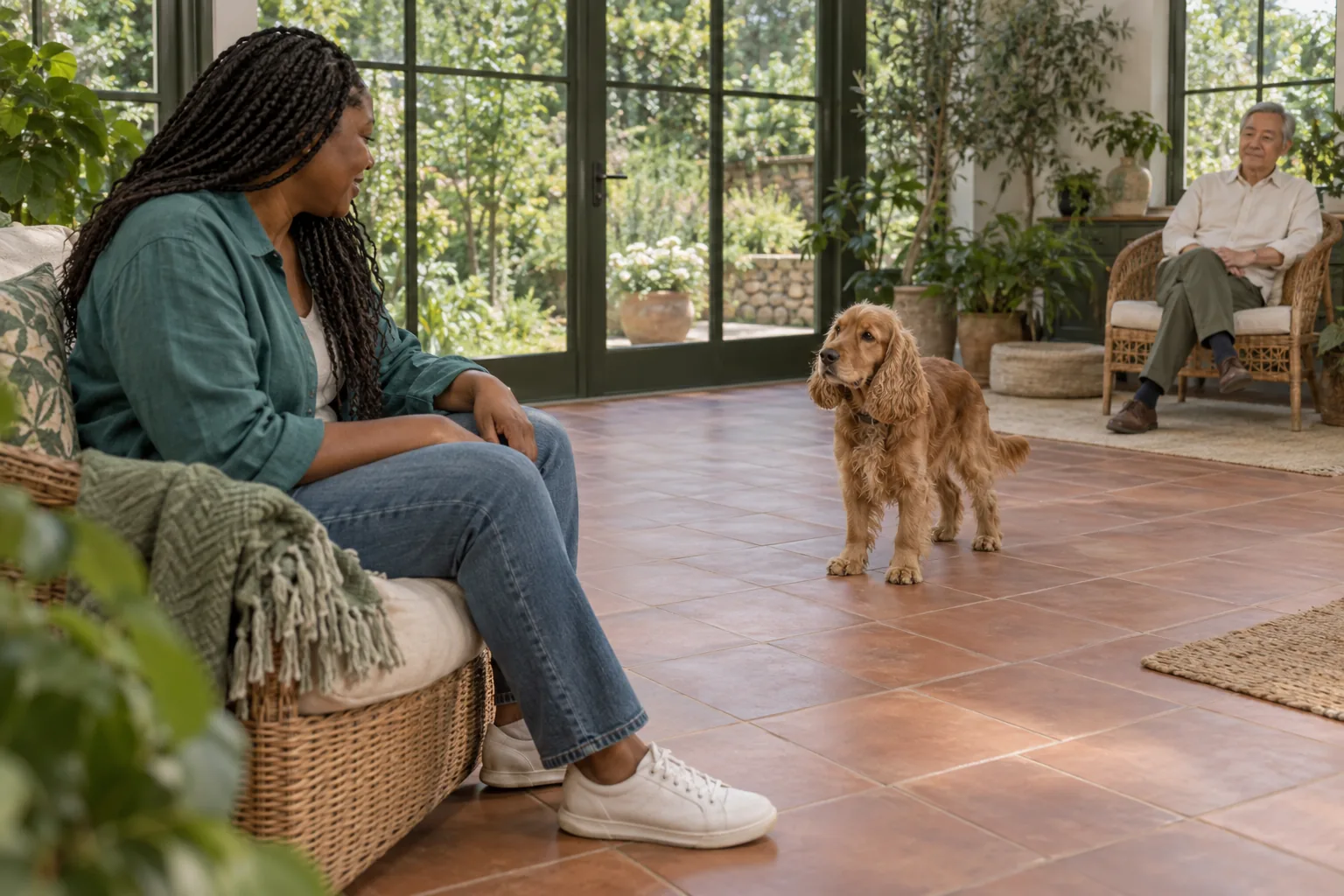
If a dog only listens to one person, the next conversation at home can quickly become about who has the better relationship. A more useful starting point is one ordinary moment: what action was requested, what the person did and what the dog could manage in that setting. You can compare those details without testing loyalty or asking anyone to become stricter.
This article uses a small household handover, supported by DogPath’s existing lesson preparation, completion record and weekly plan. The people still need to agree and observe the dog themselves. The app cannot decide why one person receives a response, judge whether an interaction is safe or promise equal responses from every family member.
A dog only listens to one person: describe one moment
Choose a modest example in a quiet room, such as a voluntary glance towards a seated adult. Avoid using a difficult doorway, a busy walk or a moment with a stolen object as the comparison. Those situations need their own management. Write down who was present and what each person said or did before the dog moved.
Keep the description neutral: “looked towards Alex after Alex sat down” is more useful than “respects Alex and ignores me”. Notice extra information such as a hand movement, a familiar seat or a visible food pouch. This is not a scorecard for the people. It is a way to make the next opportunity clearer and easier to arrange.
If the change is sudden, or there is pain, unusual difficulty responding, fear around a person or bite risk, seek personal veterinary and qualified behaviour help. Do not use this exercise to investigate aggression or force contact. Keep normal food, water, rest and safe access available regardless of whether the dog participates.
Agree on the action before inviting the dog
While the dog rests elsewhere, each adult describes the chosen action in one sentence. For an attention example, you might mean a brief head turn towards the active person, without asking for a sit, approach and prolonged stare as well. If the descriptions differ, simplify the goal before anyone starts another repetition.
Choose the wording of an already learned cue only if it is needed for that exercise. Do not invent a louder version for the second person or combine several requests into a sentence. The AKC guidance on consistency highlights the value of household members using the same cues. That is a narrow principle, not proof of the cause in your home.
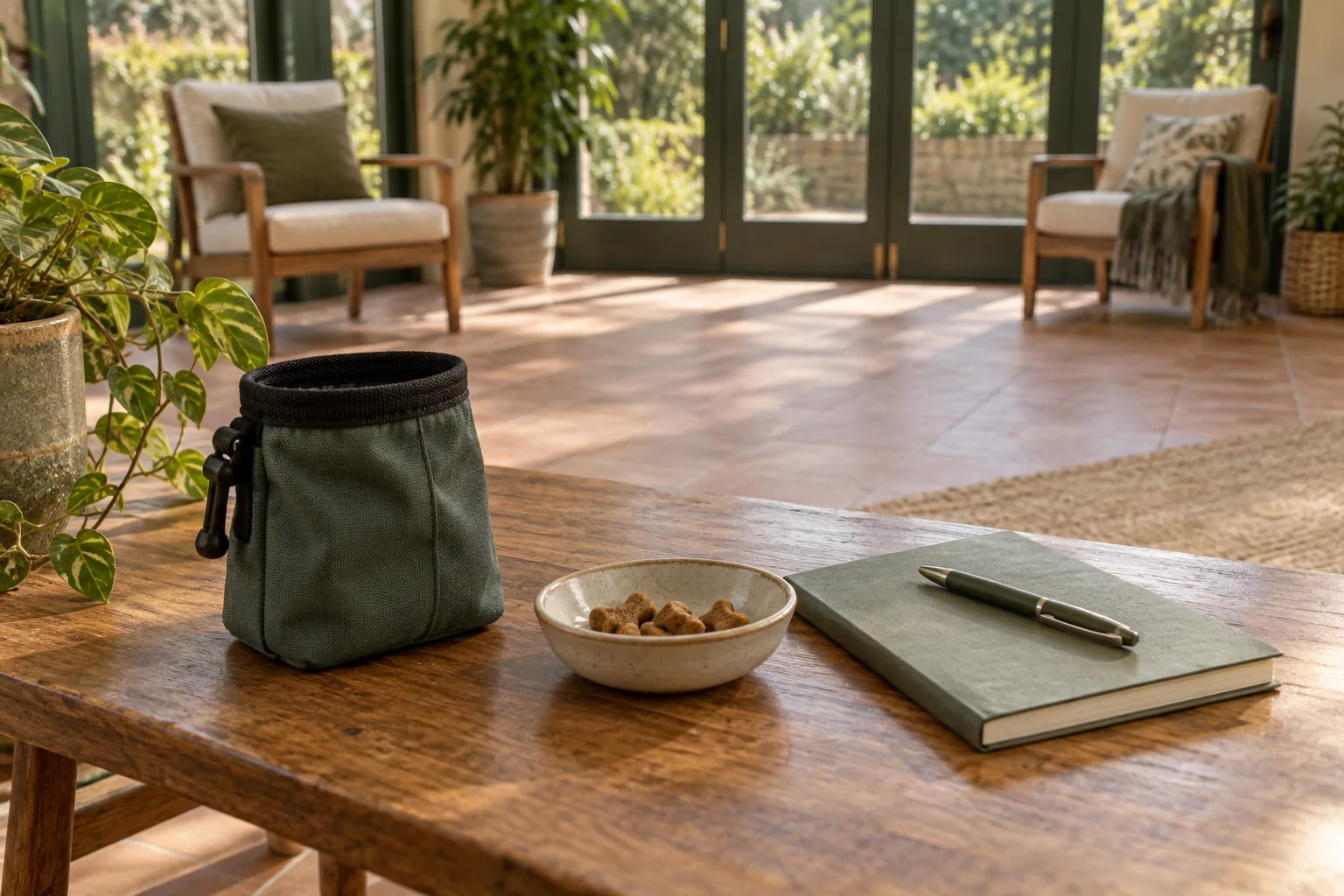
Make a short paper handover: action, familiar cue if used, reward delivery and a clear stopping point. Add who will remain quiet. This can be a plain notebook entry; it does not require a special chart. Agree that nobody will repeat the request from the background to rescue a trial that the other adult is finding difficult.
Use the actual DogPath lesson as preparation
Open DogPath while the dog is resting. Look at the actual foundation or attention lesson available in your training path and check its prerequisites and instructions. Choose a suitable starting step rather than skipping ahead because one adult already practised it. If the lesson does not match the task or the dog’s present needs, do not pretend that it does.
Read the setup before putting the phone away. Prepare the suggested rewards and equipment, choose a quiet place and decide what a manageable attempt would look like today. The website’s DogPath workflow covers guided lessons, preparation, honest completion and a weekly plan. It does not establish a dedicated two-handler programme or automatic comparison between people.
Dog Train Club and DogPath are both published by Rocket Digital Limited. We are describing our own app’s planning role. Keep the household handover in your separate notebook and follow the access arrangements for the account you actually use. There is no need to assume shared logins, synchronized family notes or a tracker that identifies which adult gave a cue.
Give one adult the floor and the other a quiet role
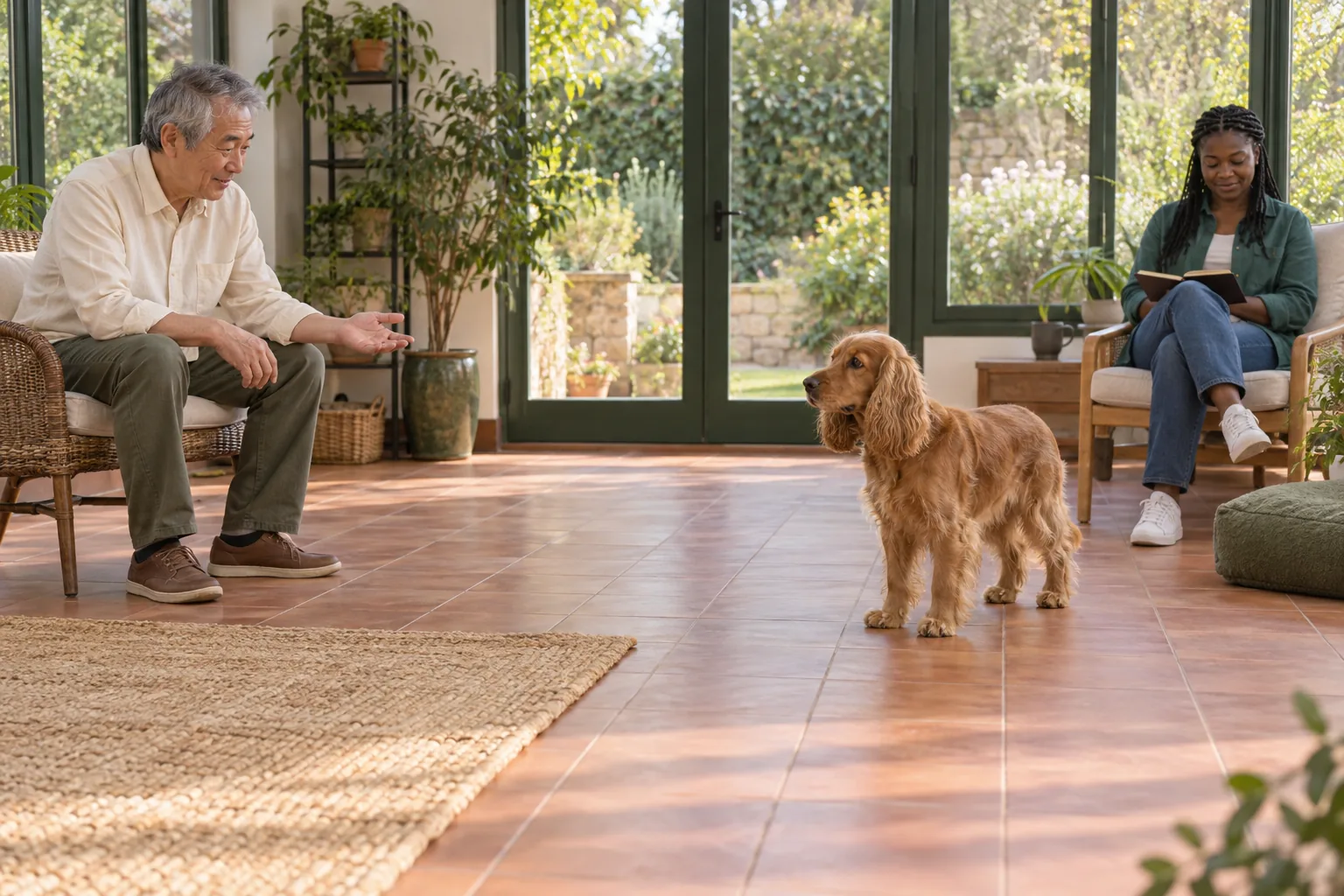
Set up a comfortable room with clear footing and space for the dog to leave the activity. One adult becomes the active person. The other waits to the side with quiet hands and no calling, pointing or food offer. If their presence makes the task harder, give the dog an ordinary break and arrange the next opportunity more simply.
The quiet adult can observe a practical detail, such as whether the reward was ready when needed. They should not stare at the dog or provide a running commentary. Discuss observations after the attempt, away from the dog. A room full of people coaching each other can make a small exercise unnecessarily busy.
You do not have to switch people within the same session. The second adult can practise another time when the dog is rested and the room is quiet. Keep children out of this comparison: adults are responsible for handling and safety. Nobody should withhold affection or ordinary care to make themselves more valuable than the other person.
Start the second person with an easy response
For the voluntary attention example, the second adult sits comfortably to one side and waits for an ordinary glance. When the dog offers it, acknowledge it and deliver a small suitable reward without asking for extra movement. Keep the hand close enough that the dog need not stretch, climb or squeeze between people to reach it.
If you use an established marker, our reward marker guide explains timing. Agree on how it is used before practising. The RSPCA training advice recommends reward-based learning. Here a reward follows the manageable action; it is not a reason to block the dog’s exit or insist on participation.
If no glance occurs, do not repeat the dog’s name until someone intervenes. End the attempt, check whether the setting or task was too demanding and return to an appropriate foundation. When food is involved, account for it within the dog’s normal feeding. Skipping meals or holding essentials back is not part of this handover.

Keep the record honest about person and context
After the dog has finished and moved away, discuss what actually happened. Separate the lesson’s completion record from your household observation. Mark only the lesson work you completed in DogPath. A successful step with one person should not be entered as proof that every adult can perform it in every setting.
In the paper handover, describe the adult, place and action briefly: “Morgan seated near the chair; one voluntary glance; reward ready; finished there.” If the task did not happen, record that without calling it a failure of the relationship. Do not turn a handful of attempts into a percentage ranking the people or the dog.
Use the next planned opportunity to repeat or simplify the relevant starting point. Our short training sessions guide can help keep the amount of practice modest. Stop before the household becomes frustrated. One clear observation can be more useful than continuing simply to get the same result the first person achieved.
Let the weekly plan protect an ordinary week
Use DogPath’s weekly plan to keep a suitable next practice opportunity in view. Decide which adult is available, what preparation is needed and whether the dog will have a quiet moment. Write the person-specific arrangement separately if your app view does not provide that function. A calendar entry is an intention, not evidence that practice was completed.
Keep normal walks, rest, enrichment, feeding and veterinary care in the week. Do not make the second person responsible for every enjoyable activity as a competition for attention. A household can share care fairly while still preparing a particular exercise carefully. If only one adult can practise this week, maintain the clear wording and leave the next handover for a suitable time.
At the end, let the dog rest without another request from somebody across the room. Our settling on a mat guide describes a separate resting skill if that is useful. The dog still needs comfortable downtime whether or not a particular lesson or household comparison went as planned.

Change the situation gradually without making it a contest
When the small starting point is comfortable, consider just one change at the next opportunity, such as the active adult’s seat. Keep the action and other conditions simple. Do not add a new person, a noisy room and a more demanding cue together, then conclude that the dog has forgotten everything or prefers someone else.
Practical safety remains separate from lesson progress. A glance in the garden room is not permission for off-lead recall trials, an unprotected exit or handling around valuable objects. Keep the management those situations require. If you need help deciding the next step, a qualified reward-based professional can observe the people and dog together.
Review whether the handover is helping the household communicate. Can each adult describe the same small action, prepare it and report it without blaming the other? Keep what is useful and simplify what is not. The aim is a manageable shared routine and useful learning opportunities, without a deadline for the dog to respond identically to everyone.
Common questions
Should the person the dog responds to leave the house?
Not as an automatic rule. If that person’s presence makes a simple exercise too busy, arrange a quieter opportunity with ordinary care and safety maintained. Do not deliberately create distress or separation problems. A dog who becomes distressed when someone moves away needs individual support rather than a loyalty test.
Can I use the same DogPath completion as proof for both adults?
Treat completion as a record of the actual lesson work. Keep the details of who practised and under what conditions in your separate handover note when the app does not offer those fields. Do not claim synchronized accounts or person-specific reports that you have not verified in your version.
Do both adults need to move and sound exactly alike?
They need an agreed action and clear familiar information, not identical bodies or voices. Compare unnecessary differences in wording, gestures and reward timing, then make the exercise manageable. Adapt the arrangement to each person’s abilities and seek individual help when physical or safety needs affect the setup.
What if the dog is worried about the other person?
Stop the comparison and do not encourage that person to approach, hold or corner the dog. Arrange safe distance and personal professional assessment. Fear, bite risk, possible pain or a sudden change are outside an ordinary household lesson handover. An app cannot establish that contact or a particular exercise is safe.