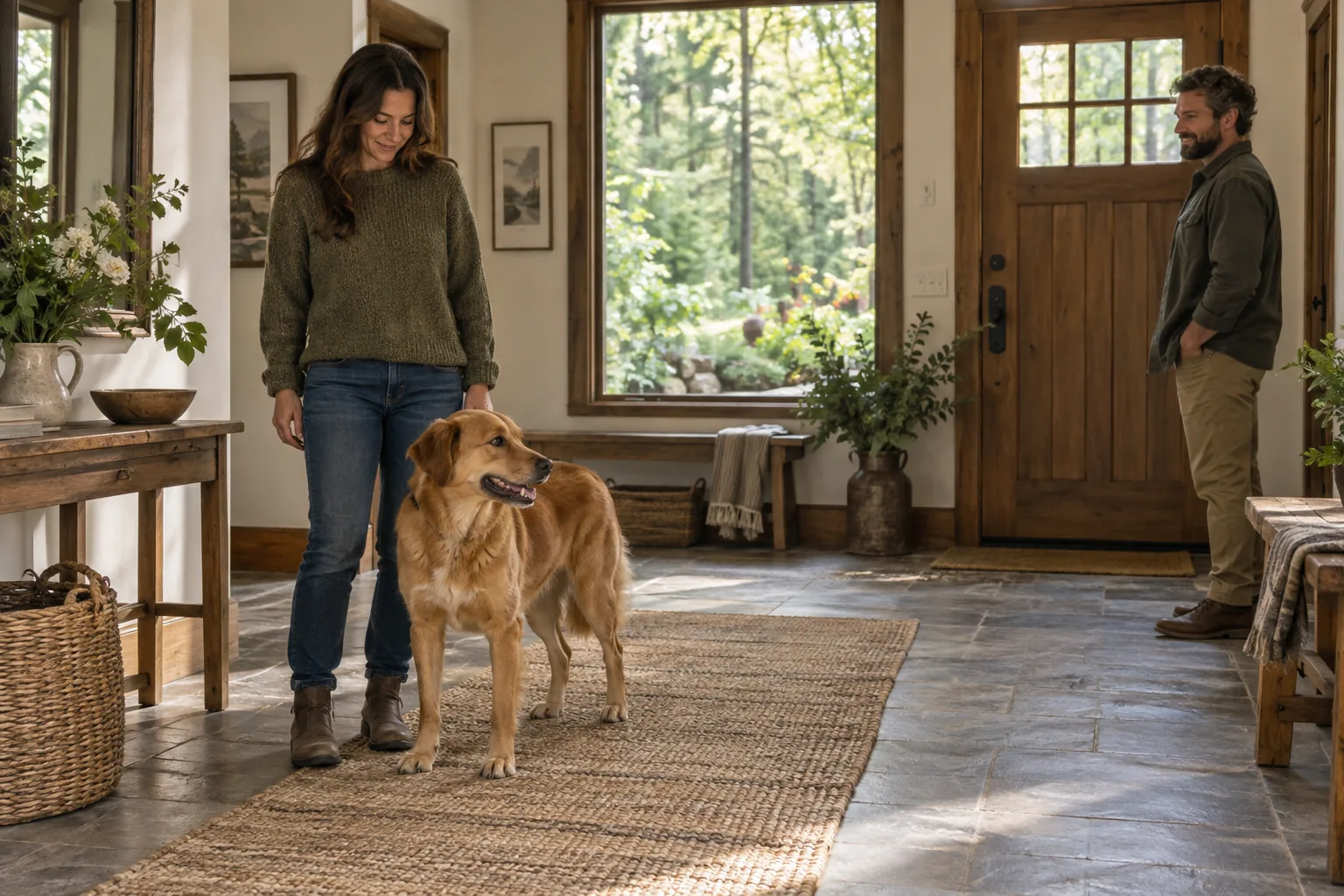
A dog jumping on guests can make a friendly visit uncomfortable before anyone has taken off their coat. Perhaps your dog can sit beautifully in the kitchen, yet cannot manage that same request when a familiar person walks through the door. Start by changing the arrival you arrange, then practise a small greeting skill in an easier setting. Repeatedly asking for a sit during the busiest moment rarely gives you a clear picture of what needs work.
This plan is for everyday greetings you can manage safely. It combines a four-paws-down exercise with an optional DogPath workflow: read an appropriate foundation lesson, prepare its setup, practise with your attention on the dog, then review completion and your own observations. Dog Train Club and DogPath share the same publisher. The app helps organise practice; it cannot assess a visitor interaction or replace individual professional support.
Dog jumping on guests: define the moment
Choose one scene rather than a broad goal such as “be calm.” It might be your adult friend entering the living room after the front door has closed. Write what happens immediately beforehand: footsteps, a coat moving, someone leaning down, or the dog running from another room. You are looking for an arrangement you can change, not a label for your dog's personality.
Define a first observable goal: your dog notices that person and keeps four paws on the floor long enough for you to deliver one reward. Standing is acceptable. A sit is optional if it is comfortable and familiar; stillness for an entire visit is not the starting requirement. Also notice whether the dog can turn away, take space and recover between repetitions.
Dogs Trust explains that jumping has different possible causes, including excitement and worry. That distinction matters when deciding whether a greeting is appropriate. Do not infer comfort from a wagging tail alone. Stiffness, avoidance, growling or frantic grabbing call for a safer arrangement and individual help.
Arrange arrivals before the door opens
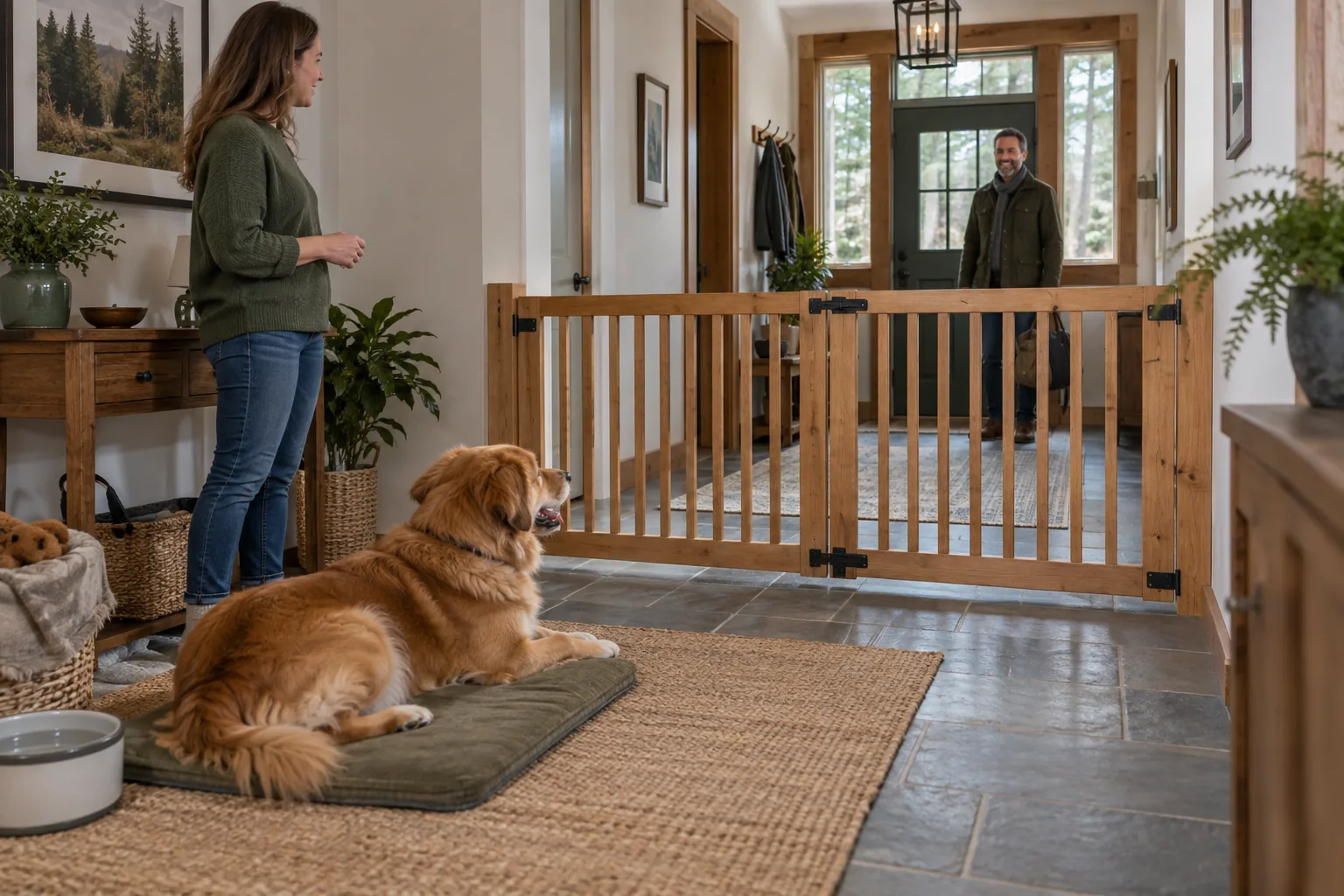
Prepare two separate jobs: admit the visitor and care for the dog. If possible, one adult handles each. Close the outside door before any greeting practice. Use a secure gate or a familiar comfortable room to prevent rushing into the entrance. Check that the dog can rest there without becoming distressed, and that a gate cannot be jumped, pushed over or used to trap a paw.
Put suitable tiny rewards within reach before the arrival. Respect your dog's diet, allergies and veterinary feeding advice. Keep bags, hot drinks and fragile belongings outside the practice area. Choose a nonslip surface and enough room for the dog to move away. If your home cannot provide that space, skip the greeting and use calm separation for this visit.
A guest who is afraid of dogs, has limited balance or simply wants to sit down should not become your training helper. Children should not carry the responsibility for stopping jumping. Management is a useful outcome by itself: a visit can go well while the dog enjoys a familiar resting area and nobody attempts direct contact.
Teach four paws down without a visitor
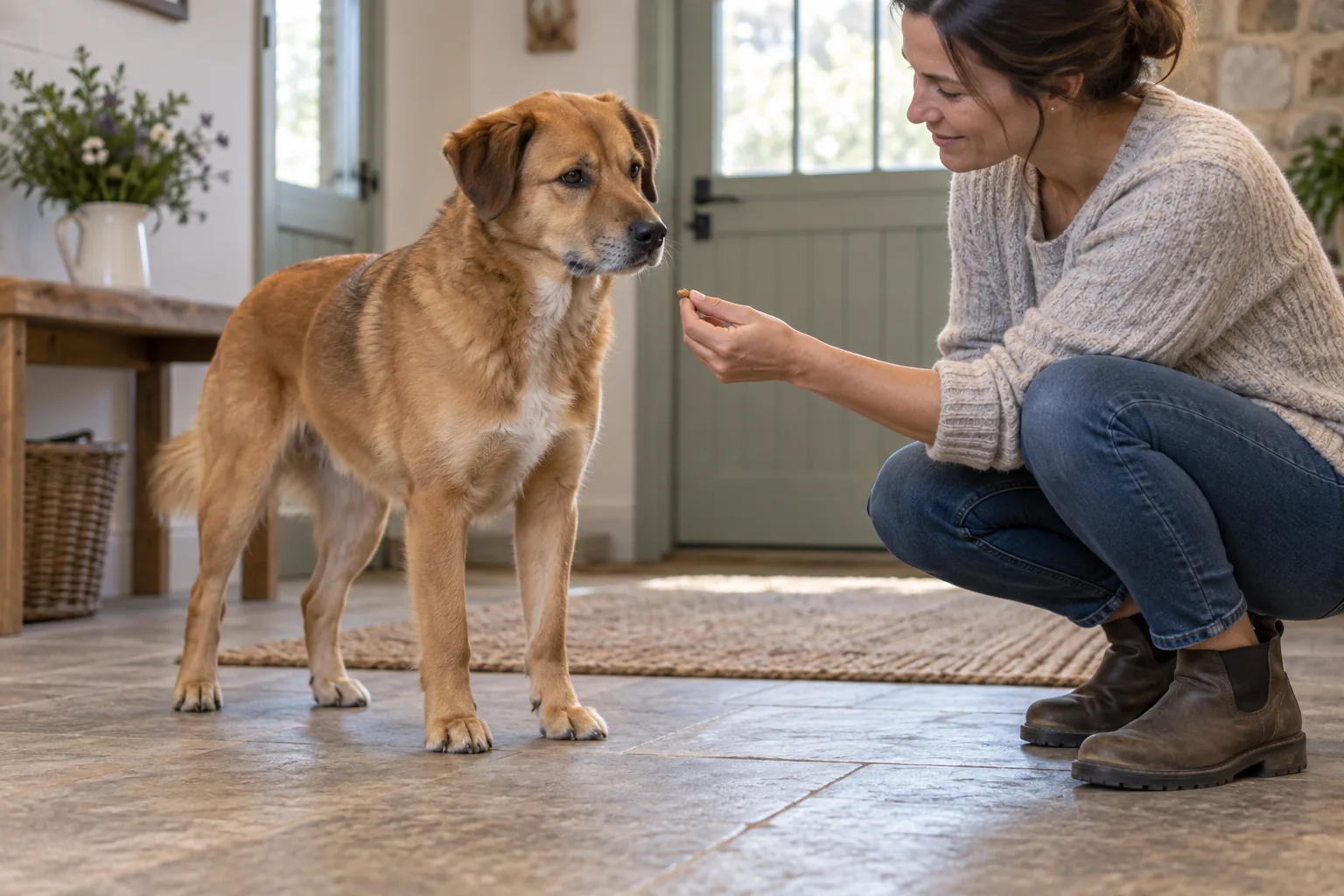
Begin in a quiet room with an adult the dog knows. Have a small reward ready, stand slightly sideways and wait for an ordinary standing posture with all four feet grounded. Mark that moment with a familiar quiet word, then deliver the food low enough that reaching for it does not invite a jump. Keep your hand close to the dog's natural head position.
Move your hand away and allow a brief reset. Reward the next grounded moment before you add movement or excitement. Our reward-marker guide explains how to teach a clear signal if you do not already have one. You do not need a phone clicker, several cues or a long sequence to make this first exercise useful.
If the dog jumps toward your hand, stop raising the reward and simplify the setup. Avoid pushing the chest, catching the paws or bringing a knee up. Prepare an easier starting position and reward before the dog launches. If repeated jumping makes the interaction difficult to handle safely, pause and create space rather than turning the exercise into a physical contest.
Use DogPath before and after practice
Open DogPath while your dog is resting. Use its training path and weekly plan to choose an appropriate foundation lesson for attention or a familiar response. Read the prerequisites and reward instructions first. This article supplies the household greeting rehearsal; it does not claim the app has a visitor-specific module or an automatic jumping detector.
Before you begin, decide on the room, helper, reward position and stopping point. Put the phone somewhere secure, then give your attention to the dog. After the session, return to the lesson and record what you completed honestly. Keep details such as guest distance and interruptions in a notebook or another note tool you choose; do not assume the app has a particular custom-note field.
Separate completion from readiness. Practising a lesson in an empty room does not establish that your dog is ready for an excited visitor. Use the recorded practice together with what you observed to decide whether to repeat or simplify. Reopening the same foundation is a sensible choice, even when the weekly plan presents another step.
Rehearse with one cooperative adult
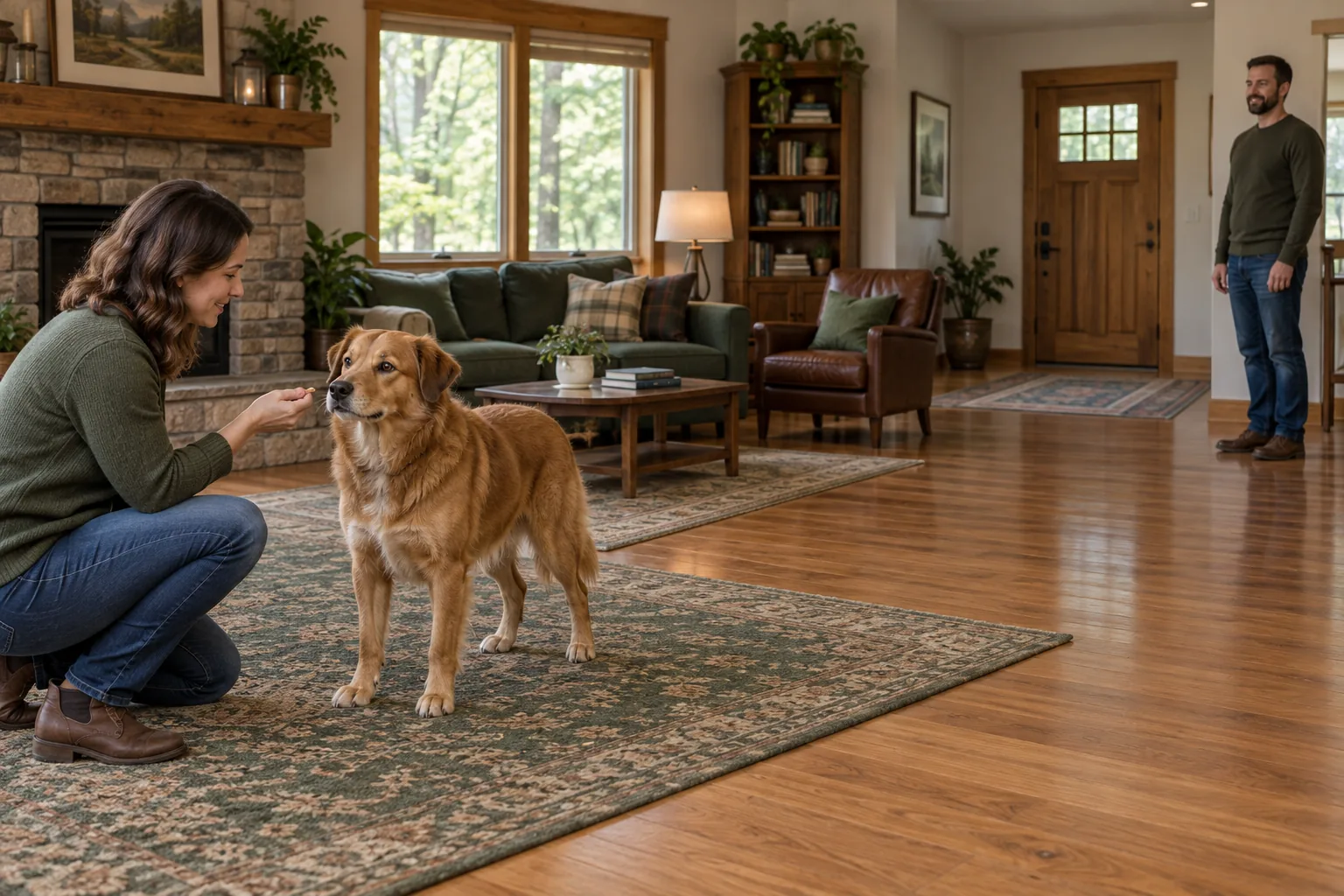
Ask a helper to begin several metres away, already inside with the outside door closed. Agree on a short instruction: “Stand sideways and wait; I will reward while the paws stay down.” Let the dog see the person without requiring contact. Reward one grounded moment beside you, then let the helper step away or leave the room calmly.
Repeat only while everyone is comfortable. On a later repetition, change one feature: the helper takes a small step closer, or turns slightly, or speaks quietly. Do not combine a closer person, waving hands and a ringing bell. If the dog rushes forward or cannot return attention to you, restore more distance and finish with an easier opportunity.
Direct greeting is optional. If it is safe and the dog seeks interaction, the helper can offer a brief touch without leaning over the dog, then pause and allow withdrawal. If the dog lifts off, the helper stops contact and you calmly reset at more distance. Do not ask the visitor to withstand jumping while waiting for learning to happen.
Review the setup, not just the jumps
Use a compact observation after each opportunity: who was present, where they stood, what the dog did before contact, and what you will arrange next time. “Three grounded moments with our friend across the room; jumping when the coat swung” is more actionable than “bad greeting.” Record management-only visits too, so you remember which safe arrangement worked.
Keep the observation distinct from the app's completion record. A completed foundation lesson means you practised that lesson, not that the whole behaviour is solved. A missed opportunity needs no catch-up marathon. The short-session guide helps you choose an achievable stop while attention and comfort are still available.
Compare similar situations before making training harder. Different guests, rooms and arrival sounds are different conditions. One easy rehearsal does not justify removing the gate at a busy gathering. A sensible review may say “keep the arrival separate, repeat the familiar helper,” and leave the next app lesson for another day.
Build a flexible practice week
Here is a planning example, not a seven-day success promise. At the first opportunity, read the foundation lesson and practise a few grounded rewards with a familiar adult. At the second, repeat the room and reward position. At the third, ask one quiet helper to stand far away. If any step is too difficult, return to the easier version.
On a day with real guests, protect the arrival with your established gate or room arrangement. Treat that visit as everyday management rather than an examination. Later, when the home is quiet, review the circumstances. At another opportunity, practise the helper's small movement, keeping the distance familiar. End before anyone becomes frustrated.
Give the dog recovery space after practice. Our mat-training guide can help develop a comfortable resting place separately. Do not demand a long stay on the mat while a crowd gathers around it. The useful week is one that leaves a repeatable next step and meets the dog's ordinary needs for rest, enrichment and care.
Know when the plan needs personal help
Stop greeting rehearsals if the dog freezes, lunges, snaps, guards space or objects, or if anybody may be bitten or knocked over. Keep visitors safely separated and contact a qualified professional using reward-based methods. Pain or a sudden behaviour change belongs with a veterinarian. This article cannot identify the cause from a description.
RSPCA training guidance recommends reward-based methods. Avoid advice that asks you to scare, hurt or overpower your dog. If you use an AI coach to organise a question, check any suggestion against safety and the dog's actual response. A fluent answer is not an individual assessment.
Progress may first look like a quieter arrival behind the gate, an easier reward delivery or a guest who knows where to stand. Keep those practical gains in view. The next useful action is the smallest safe setup you can repeat, with professional guidance whenever the interaction exceeds what your household can manage.
Common questions
Should I insist on a sit for every greeting?
No. Four paws on the floor can be a clear first goal without requiring a particular posture. Choose something comfortable for your dog. If sitting seems painful or changes suddenly, ask your veterinarian rather than repeating the cue.
What if guests encourage my dog to jump?
Explain the greeting arrangement before they arrive. If a guest cannot follow it, keep the dog in a comfortable separate area. Your visitor does not have to help train, and your dog should not rehearse repeated jumping as the price of company.
Does marking a DogPath lesson complete mean the dog is ready?
It records practice, not reliability around every visitor. Keep your own context observations, repeat the appropriate foundation and retain safe management until real conditions support a change. No app can certify a greeting from a completion mark.
How long will this take?
There is no fixed timetable. Previous learning, comfort, household consistency and the situations you can arrange all matter. Review the quality of the setup and seek personal support if safe practice is difficult, rather than promising a result by a particular date.