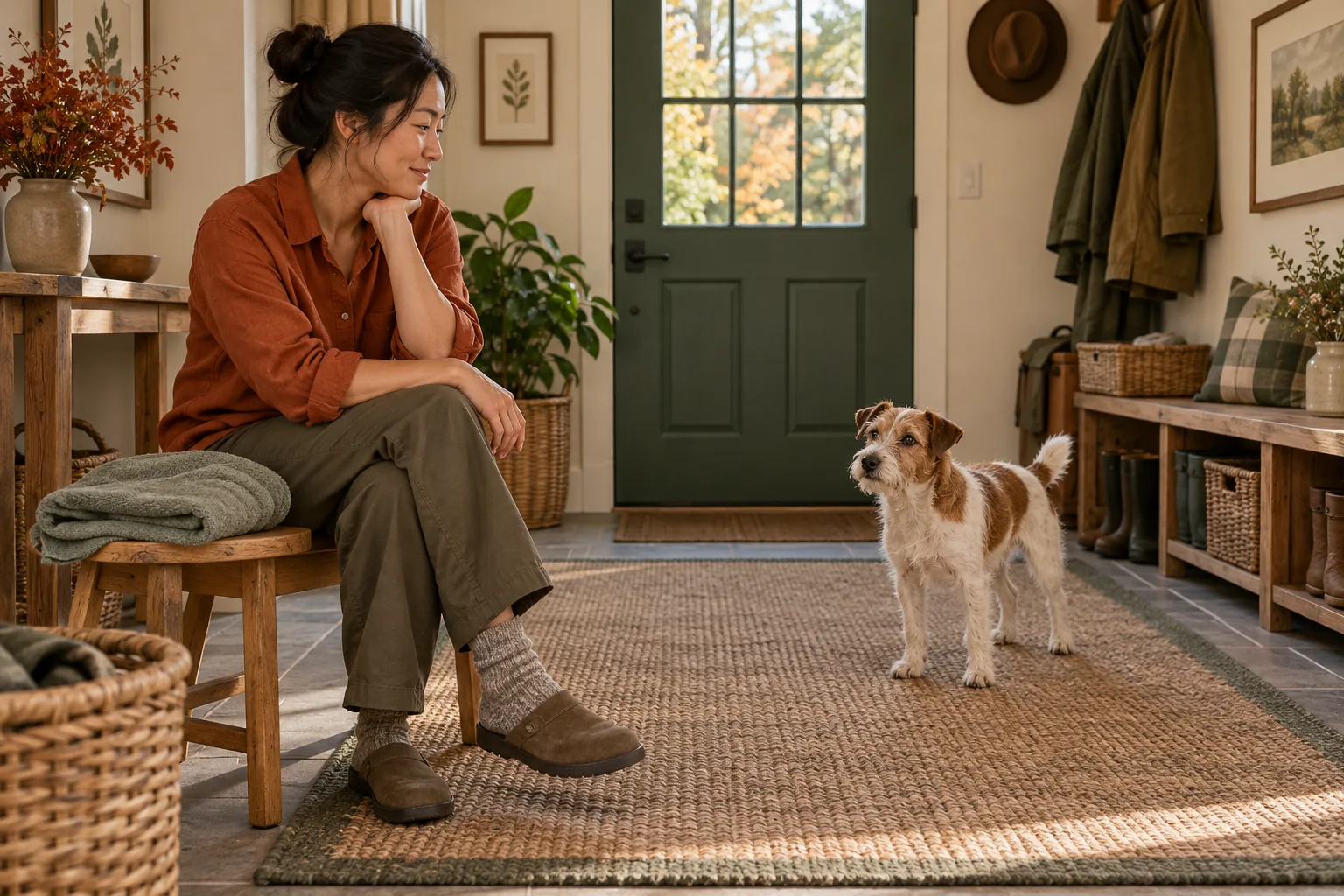
If your dog hates towel drying, a rainy arrival can become a hurried negotiation beside the door. A clean floor matters, but grabbing a wet dog and rubbing faster is a poor starting point for comfortable care. Prepare ordinary arrivals first, then practise a much smaller towel experience when everyone is dry and unhurried.
DogPath can help you prepare an appropriate foundation lesson, mark work honestly and plan another suitable opportunity. It cannot assess skin discomfort or certify that a dog accepts drying. This guide separates the household routine, voluntary practice and records so you can decide what is actually manageable. Pain, sudden change, persistent fear, growling, snapping or bite risk needs personal veterinary and qualified reward-based help.
Dog hates towel drying: organise the rainy arrival
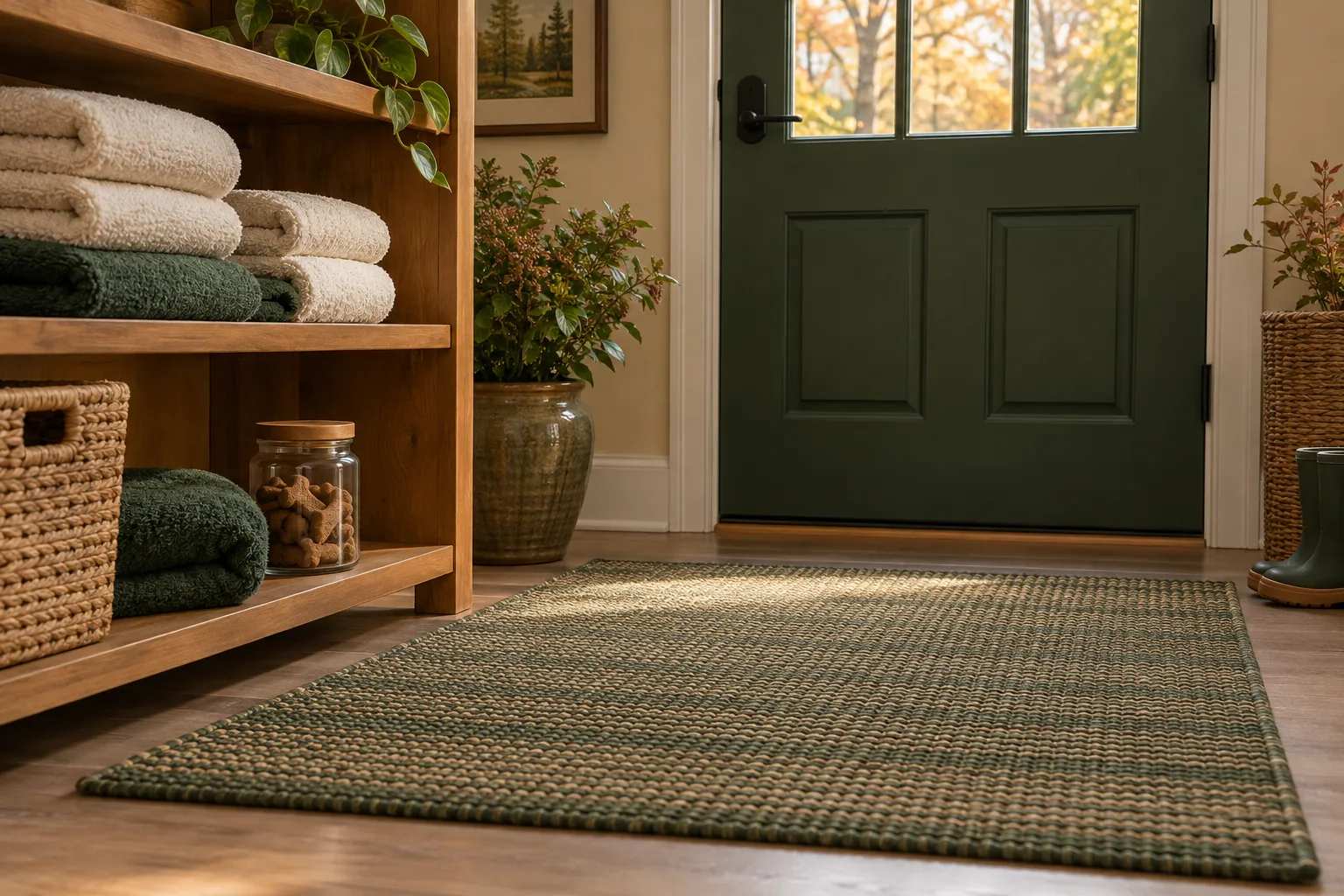
Before the walk, clear a route into a comfortable indoor area with secure exterior exits. Put a broad nonslip washable rug where it will stay flat, not a loose towel that skids beneath the dog. Keep fresh towels within your own reach and water available elsewhere. Avoid crowding the doorway with bags, shoes and several people reaching down at once.
Give the dog room to pause and shake without being scolded. Choose washable surroundings rather than demanding perfect stillness on the best carpet. If two adults are available, one can deal with coats and the door while the other calmly attends to the dog. Close the outside door before considering a handling step; an open escape to traffic is not a training arrangement.
Use only care the dog already finds manageable. Do not keep a cold, shivering or thoroughly soaked dog waiting for a training experiment. Ask your vet or an appropriately qualified groomer for a suitable coat-care arrangement if necessary drying cannot be done comfortably. Different coats and health needs require individual advice; a brief towel lesson does not replace that care.
A warm room, stable floor and less rushing are useful preparation even without towel contact. Keep normal toilet outings and appropriate exercise.
Identify the moment that becomes difficult
Use memories of an ordinary arrival to narrow the problem. Does the dog move away when a towel appears, when you lean over, when a hand approaches or when rubbing begins? Record observable actions, such as turning the head, stepping back or stiffening. Do not translate every movement into a claim about stubbornness or the cause of discomfort.
Look at the whole sequence. Perhaps the slippery doorway matters, or the towel is routinely followed by a collar grab. Perhaps one adult gently blots while another covers the face. Those differences are useful to discuss without staging an upsetting demonstration. Keep children and other animals outside the practice area so the dog can move freely without competing for space.
A response that appeared suddenly deserves a veterinary conversation before further handling practice. Describe the timing, body area and any other changes you have noticed. Do not rub a sore area to check whether it still hurts. A blog, app reminder or food reward cannot establish that the skin, joints or ears are comfortable.
Choose a starting condition from what is already easy. For one dog it may be a folded towel visible on a distant chair. Another may be comfortable seeing it in your lap. If neither is manageable, put it away and obtain individual help rather than searching for a stronger reward to overcome avoidance.
Prepare the actual foundation before opening the towel
Open DogPath while your dog rests and the care equipment is put away. Read an actual available foundation lesson, including its setup and prerequisites. The verified app workflow provides guided lessons, a training path, progress records and a weekly plan. That does not establish a dedicated towel-drying programme, a custom consent tracker or a grooming assessment.
Choose a foundation suited to your dog's existing abilities, such as familiar reward timing or an easy voluntary check-in. Prepare the rewards and room before inviting participation. Our short-session guide helps you define a modest opportunity. You should be able to watch the dog without looking back and forth between a screen and your hands.
Decide what you will not do in this attempt. A dry towel presentation is not an occasion to clean muddy paws, introduce a dryer or finish a bath. Write the smallest intended step on paper if that helps: “folded towel at my knee; no contact.” Keep that boundary clear.
Dog Train Club and DogPath share a publisher, Rocket Digital Limited. The app offers organisation and instruction, not a remote evaluation of discomfort. If no available lesson fits the situation, leave the app task unfinished. A suitable care arrangement and personal professional advice remain more useful than forcing a completion mark.
Introduce the folded towel without asking for contact
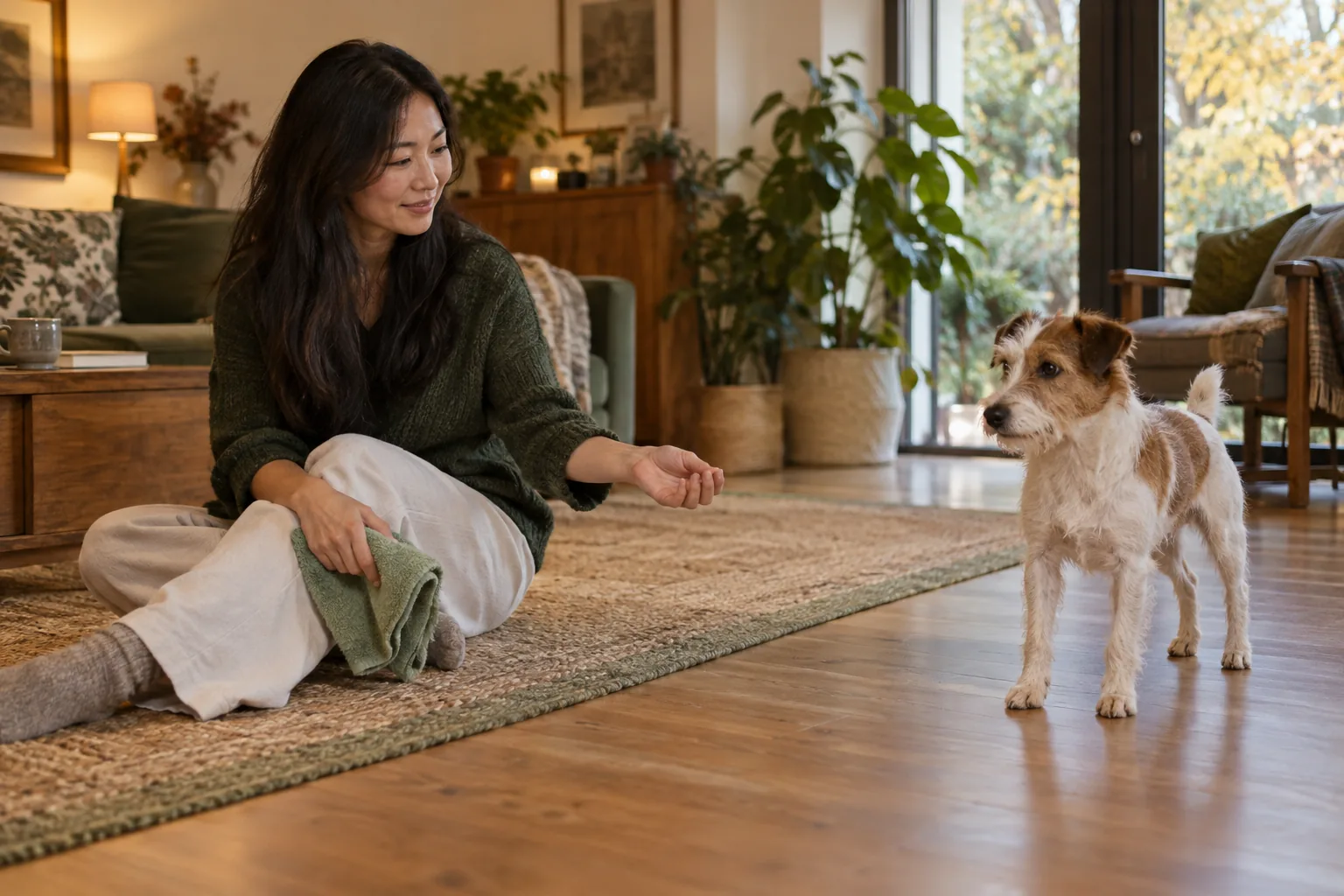
Choose a quiet dry day when ordinary needs have been met. Sit sideways in a roomy indoor space, with a small soft clean towel folded beside your own knee. The dog can watch from a comfortable distance, turn away or leave the immediate area. Do not drape the towel over the dog or hide food inside it to attract their face.
Notice a comfortable glance and offer a small suitable reward in the dog's current comfortable area. The reward should not pull them into reach of your other hand. Put the towel down again and allow a pause. A couple of simple opportunities may be enough; you are observing a manageable introduction, not counting how many approaches you can obtain.
If you use a familiar marker, our reward-marker explanation helps identify the moment without delaying delivery. Keep the sound ordinary and gentle. Eating does not, on its own, prove comfort. Look at movement, posture and the ease with which the dog can disengage as well.
If the dog avoids the towel, make the arrangement easier or stop. A smaller visible corner, more distance or a different quiet occasion may be useful possibilities for a personal plan. Do not follow the dog around the room with the towel. Put it away and resume ordinary companionship without withholding social contact.
Separate one gentle touch from a drying motion
Only consider contact when ordinary gentle handling is comfortable and the towel introduction remains easy. Start with a small corner against a familiar comfortable area on the side of the body, remove it promptly and offer a suitable reward. Keep the face uncovered and leave all four paws on the stable floor. Do not hold the collar or trap the dog against your knees.
Pause between opportunities. If the dog turns away, steps off or becomes tense, stop contact and allow space. Stillness can be a sign of difficulty, so a motionless dog is not automatically consenting. Do not add a longer touch merely because a treat was eaten. Choose an easier condition or seek help if the response is unclear.
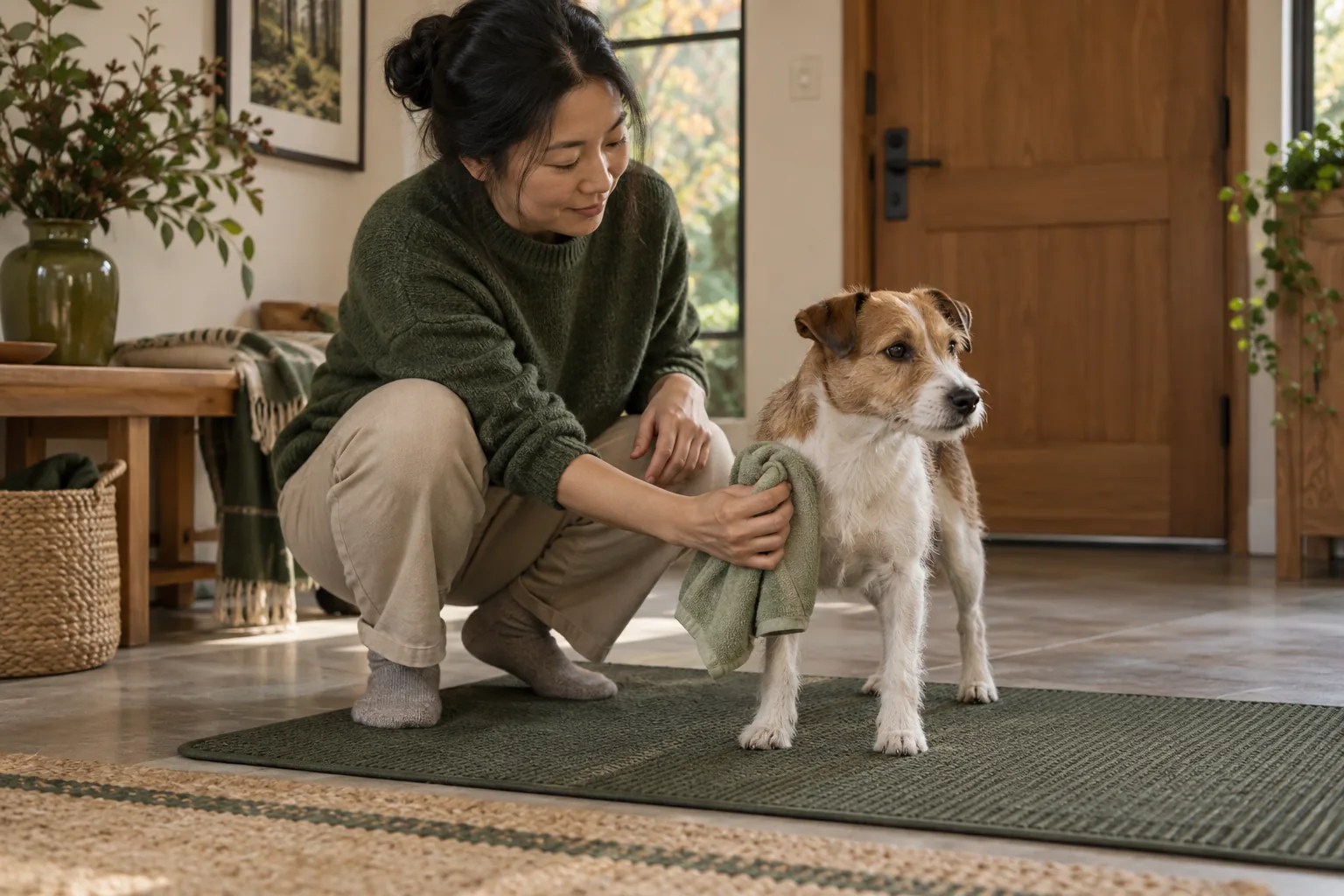
After comfortable brief contact, a tiny blotting movement can be considered as a separate change on another suitable occasion. Avoid vigorous rubbing, lifting paws, wrapping the body or covering the head. Do not introduce duration, pressure and a new body area together. A successful shoulder touch does not authorise handling the belly, feet or ears.
Dogs Trust's handling advice explains gradual, gentle introductions and stopping when a dog is uncomfortable. The household towel examples here are small practical applications, not a veterinary drying protocol. Necessary coat care may require a different individually agreed arrangement.
Keep real wet-weather care within its own limits
A comfortable dry-day touch is a narrow observation. Coming home wet, cold or excited changes the situation, and muddy paws may require care that was never practised. Do not transfer the whole rehearsal to a rainy arrival just because the app shows progress. Keep the manageable arrival routine and use only agreed comfortable care.
For example, a dog might accept one gentle shoulder blot indoors but pull away when someone reaches under the chest. Record that boundary and avoid repeating the difficult reach. Ask for a practical personal plan for the needed care instead of restraining the dog while another person finishes. The absence of a struggle after restraint does not establish comfort.
Do not add dryers, heated towels or coat products to this exercise. If the dog grabs the cloth, stop safely rather than wrestling and review the setup.
Choose a household response that you can repeat on a busy evening. Leave enough space, have supplies ready and agree who manages the door. If the routine consistently feels unsafe or essential care remains difficult, get individual support. Training progress is useful only when ordinary welfare and practical safety remain protected.
Record completed work without enlarging the claim
Return to DogPath after the dog is resting. Mark only the actual lesson work completed, using the available progress controls. Reading a lesson, practising its first step and completing all its appropriate steps are different events. Do not mark a whole foundation finished because a towel happened to be nearby during the walk.
Keep towel-specific observations in an ordinary separate notebook unless an actual suitable field is available. This workflow does not assume custom grooming logs, automated body-language analysis or a fear score. A useful note might say “dry room, folded cloth on chair, dog looked and turned away comfortably; no touch attempted.” That tells the next adult what the record does and does not mean.
Add the body area, movement and response when contact occurs, plus how the dog settled afterwards. Write “brief side touch” instead of “drying solved.” Note a floor change or a rushed arrival separately, because those conditions can affect tomorrow's decision. Keep unfinished steps specific.
Use the weekly plan for another appropriate foundation opportunity, with room for rest and weather changes. A scheduled task does not impose a deadline on handling. If the dog needs care or the household is hurried, adjust the plan. Protecting a comfortable routine matters more than continuing practice merely to preserve a streak.

Agree the next small step as a household
Make the next decision concrete. One adult might prepare the rug before outings; another might check towels are clean and ready. Ask everyone to use the same modest contact limit and to stop when the dog disengages. Explain that a record of looking at the towel is not permission to wrap the dog on tomorrow's wet return.
Our comfortable mat foundations can support an ordinary resting option when already easy. The mat is not a station the dog must remain on while being rubbed. Keep a route to another safe indoor space and avoid turning a familiar rest cue into compulsory handling.
The RSPCA recommends reward-based training. Seek personal veterinary and qualified reward-based behaviour support for pain, sudden changes, persistent distress, growling, snapping or bite risk. Share factual notes with the professional and ask how necessary care should be managed while training is paused. Do not punish warning behaviour or attempt to prove that your dog will tolerate more.
The next useful change might be a less crowded doorway or simply putting the towel back on the shelf sooner. Keep the evidence small and the care plan workable. A calm dry-day practice opportunity can inform future decisions without promising that every coat, body area or rainy evening will become easy.
Common questions
Should I hold my dog still to finish drying?
Do not turn practice into restraint. If necessary care cannot be done safely and comfortably, obtain a personal care plan from your vet or a qualified professional.
Does a completed app lesson mean towel drying is accepted?
No. Completion describes the lesson work you performed. Record towel conditions and boundaries separately; it is not a handling or health assessment.
Can I practise while my dog is soaked after a walk?
Prepare practice on a dry, unhurried occasion. A wet or cold dog needs appropriate care, not a new training test or delayed help.
What if my dog grabs the towel?
End contact safely, avoid wrestling and review the setup. Persistent grabbing, distress or bite risk needs individual reward-based guidance.