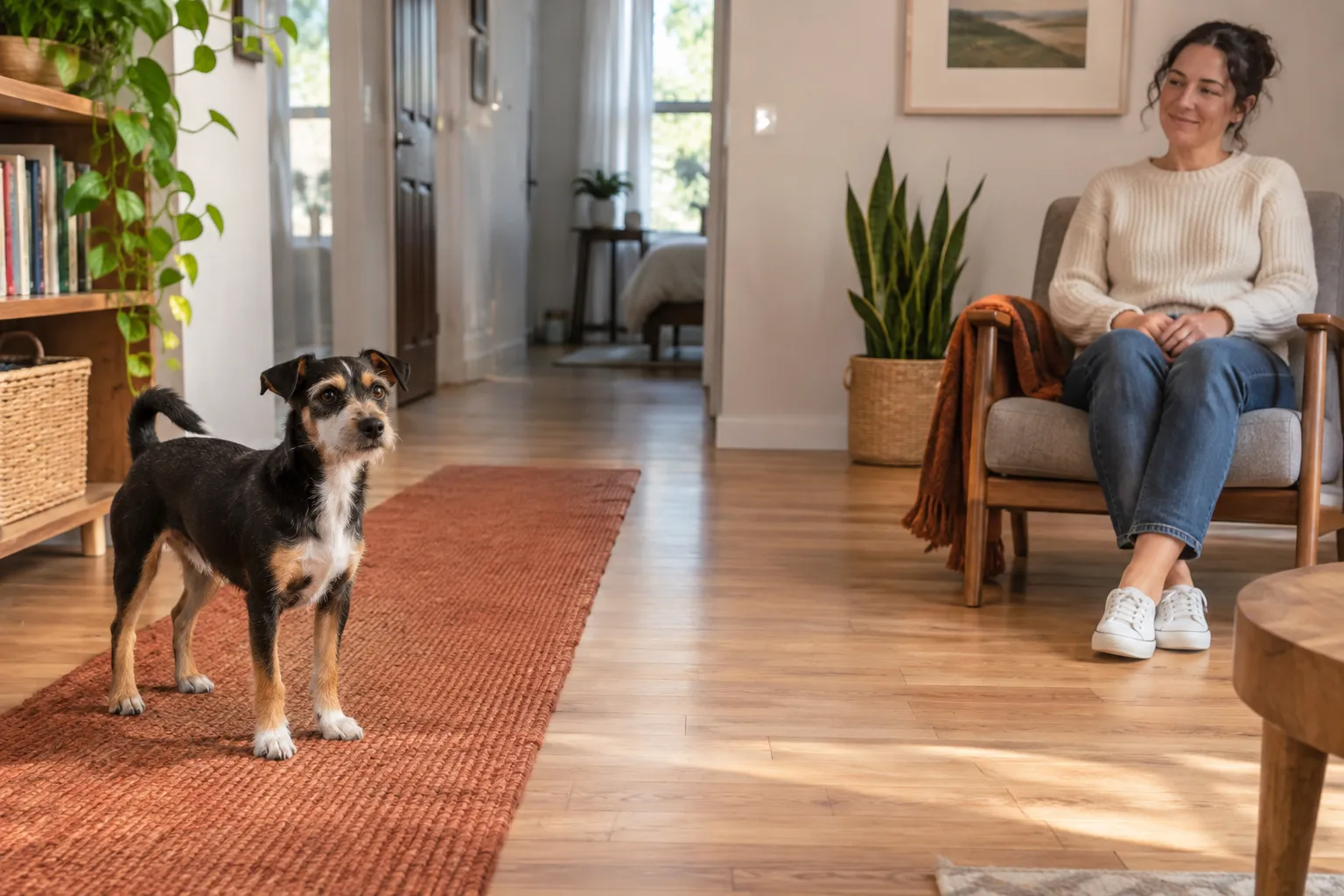
When your dog growls when picked up, stop making lifts part of the normal routine while you work out what has changed. A dog who stiffens when someone reaches down, or growls as their feet leave the floor, is giving you information you can act on. Let that information change what happens next. A second attempt to check whether they meant it can put both of you in a worse position.
Think about the job the lift was supposed to do. Did you want to move the dog away from a busy doorway, bring them onto your lap or get them into the car? You can often remove the need for the first two immediately. A necessary journey needs a conversation with the veterinary team when handling is difficult. The priority today is a safer routine and a clear account of what you saw.
When a dog growls when picked up, give them room
If the dog is still on the ground, stop reaching and create space. Stand or sit where you leave a clear way past you. Ask anyone else nearby to move away, especially children. If you're already holding the dog, avoid sudden movements and put them down as safely as you can. Keep your face away from their face. Once they are on the floor, give them room to move away.
Avoid scolding the growl. It gives you a chance to end an interaction before it escalates. Skip optional lifts for now, even if the dog seems comfortable again a few minutes later. Tell the household about the change in plain terms. For example, ask everyone to leave the dog on the floor and call you if a move seems necessary. If there has been a snap, contact or a risk of being bitten, avoid practising handling and arrange help in person.
Replace the job that lifting usually does
Start with the parts of the day when everyone is already calm. If you tend to pick your dog up as guests come in, set up a quiet room they can walk to before anyone arrives. Check that the floor is easy to walk on, the dog has water and a familiar resting place, and no visitor needs to pass through. Plan this before the doorbell rings so you have time to walk the usual route together.
If you were about to move the dog off a chair, think about how to keep the seat available for people next time. You might close the room before it is in use and set a familiar bed nearby. Avoid pulling the dog down by their collar or tempting them to jump. If they choose to stay where they are and you can use another seat, do that. Some changes work by removing the situation altogether, which leaves you less to manage when you are tired.
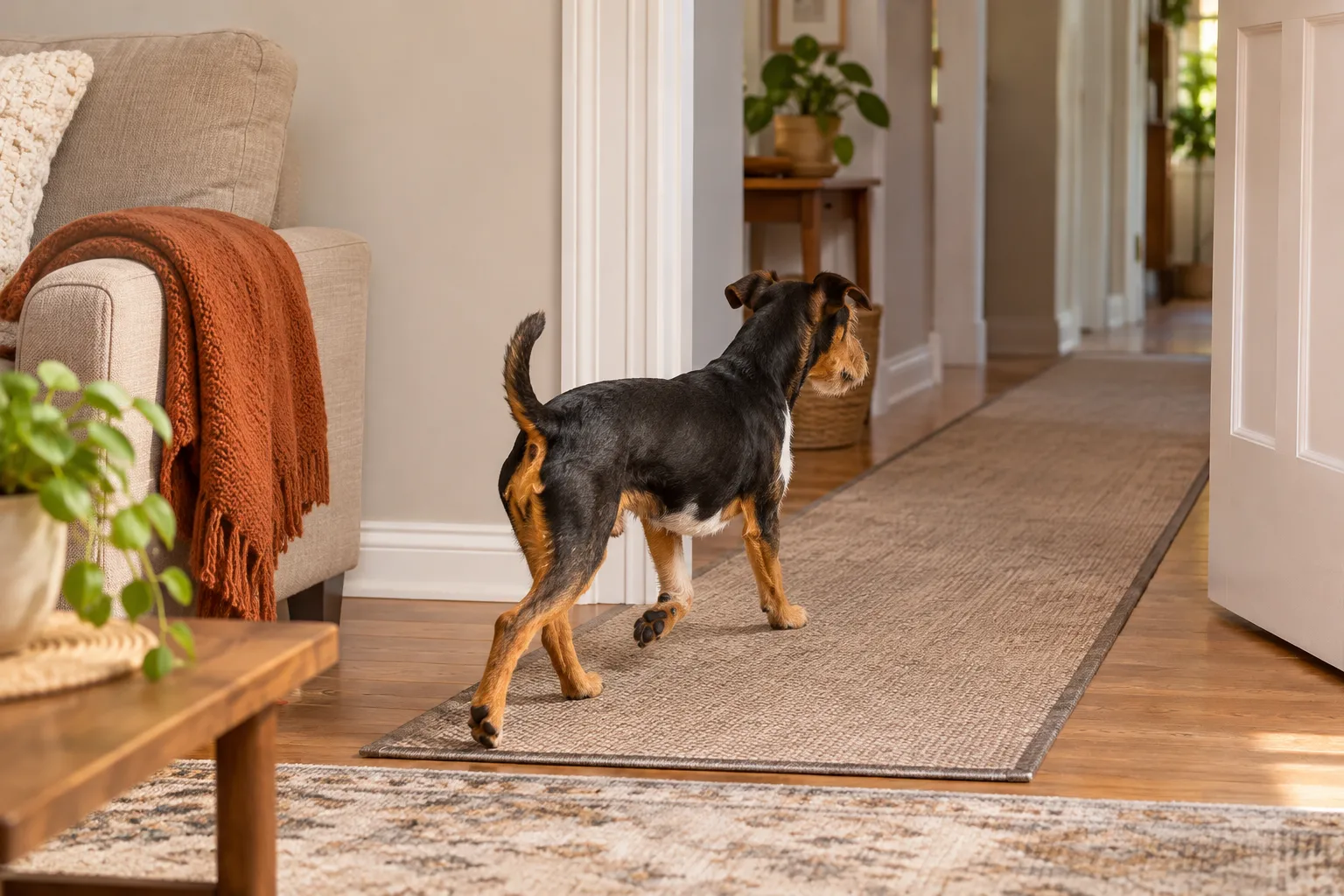
Watch where the dog can get around easily under their own power. If there is a rug that slides or a threshold they already avoid, choose a familiar level route instead of building an obstacle course. Check that rugs lie flat and do not slide underfoot. If your dog has recently started to avoid walking or needs physical assistance, call the practice for advice before trying any exercise.
If people in the house have different routines, choose a single phrase for handovers. “She's on the ground now, please leave her there” is easier to follow than an explanation about training just as someone comes through the door. List the situations that used to involve lifting and agree who will organise each alternative. Keep the routine simple enough that someone can follow it without knowing the dog's training cues.
Give resting dogs a predictable amount of space
Sometimes the first thing the dog notices is a hand coming down from above while they are lying on the sofa or asleep. Wake a dog with your voice from a distance if you need their attention. Let them look around and orient themselves. A child who wants to cuddle can sit with an adult somewhere else and leave the dog to rest. Take responsibility for that separation even when your dog has never growled at the child.
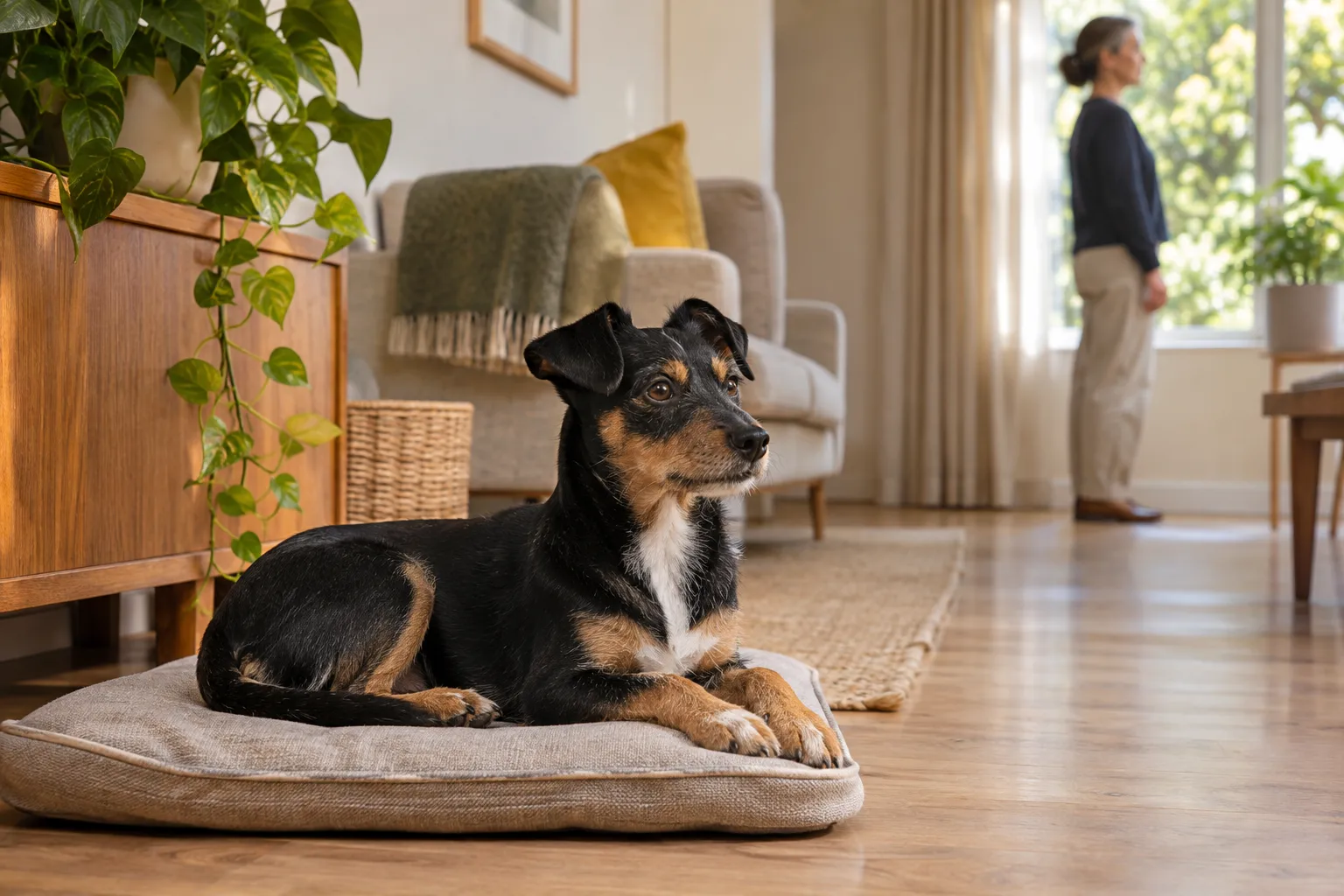
A resting spot on the floor can be useful because nobody needs to lift the dog into it. Put the bed somewhere peaceful with a clear way in and out, as long as your dog can move there comfortably. Give them time to discover it. If they walk over on their own, you can allow them to settle or place a small suitable reward on the floor without reaching over them. A dog who picks a different bed still needs the same space.
For a dog who already enjoys a mat routine, an optional cue from a distance can help with everyday organisation. The guide to settling on a mat covers that skill. Keep any familiar practice brief. The short training sessions guide offers ideas for ending while the task is still easy. Keep the mat independent of being touched or picked up. The dog should be able to leave it. If you have to repeat the request, go back to adjusting the room instead of using your hands to complete the move.
Describe what happens without recreating it
A note to the clinic is most useful when it says what happened in sequence. For example, your dog was awake on the floor after a walk, a familiar adult bent down, and the dog went still before there was any contact. Compare that with a different observation such as a growl after the dog was already in the air. Those observations help someone ask the next question. They cannot tell you which body part hurts or why the dog responded that way.
Make a note of relevant changes you saw in ordinary life. Did the dog start taking longer to get up from their bed? Did they stop volunteering for a familiar movement? Have they recently fallen, come home after a procedure, or started a new prescribed medicine? Include the date you first noticed the reaction and whether the dog is eating and behaving as usual in other situations. You can report a single incident without waiting for it to happen again.
If you already have a recording of ordinary movement, the clinician can tell you whether to share it. Avoid testing a touch, pressing on the body or asking someone to lift the dog so that you can film it. A dog who takes food afterward can still be uncomfortable. A dog who has let one person lift them in the past also deserves a fresh look at any change in their behaviour.
Call ahead when handling is necessary
New reluctance to be held, difficulty getting up and unusual growling can all be reasons to ask about discomfort. The AAHA and AAFP pain-management guide gives examples of changes to report. Only an examination can determine what is happening. Call your veterinarian promptly if this is sudden, if pain is possible or if usual movement has changed. If your dog is injured, very distressed or cannot move normally, call an emergency veterinary service for immediate instructions.
Explain before the visit that lifts have led to growling or snapping. Describe what your dog can still do independently and what part of the journey is difficult. For instance, the dog may walk to the car but be unable to get into it, or leave the car only if someone reaches inside. Ask the clinic how they want you to handle arrival and transport. If the dog may bite, say so clearly so the team can plan where to meet you and what support is appropriate.
Once the veterinary team has assessed your dog, they can tell you whether handling still needs to be avoided and when reward-based help would be appropriate. If necessary, ask for a referral to a qualified professional who can work with you in person. Keep relying on the safe floor-level routine while you wait for a plan. A lift is something to discuss in the context of your dog's care, and it does not have to be the next thing you attempt at home.
Common questions
What if my dog growls only when one family member picks them up?
Keep the same no-lift rule for everyone while you seek advice. Note where the person was, what the dog was doing and when they reacted. A difference between two people is information to share with the clinician. It does not establish that pain or discomfort is absent.
Can I give a treat first to make a lift easier?
For now, use rewards only for actions the dog can freely choose with their feet on the floor, such as walking to an ordinary resting spot. Avoid using a treat to keep the dog in position while somebody lifts them. If a lift is necessary for care, get advice specific to the dog and the situation first.
What if the growling stops after I put the dog down?
Keep giving the dog space. The immediate interaction is over, and there is no benefit in trying to make the sound happen again. Write down what you remember and carry on with a routine that does not require an optional lift. Seek personal help if this was new, if you suspect pain or if anybody could be bitten.