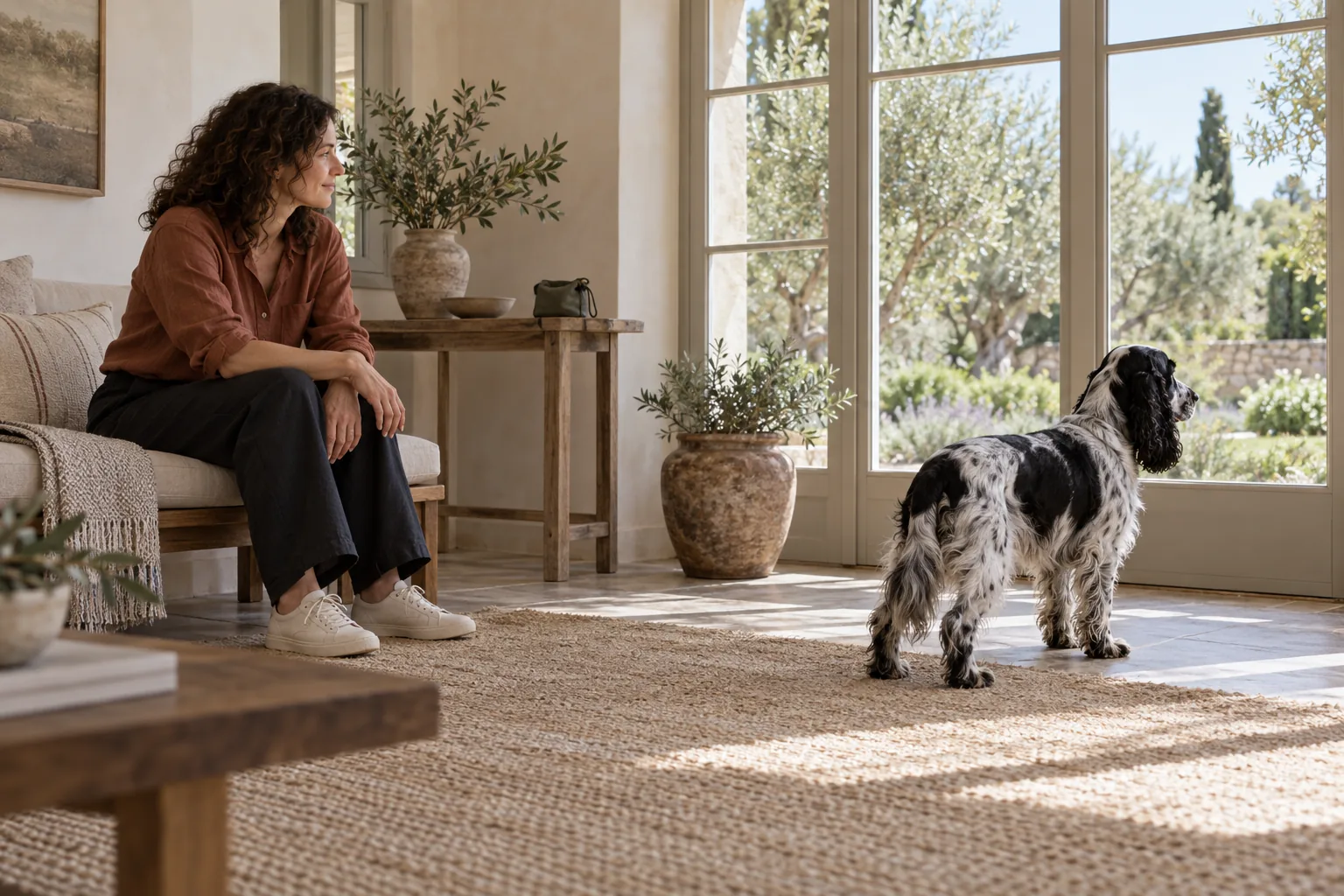
Is your dog frustrated during training, or is the exercise simply becoming difficult to organise? Barking, turning away or offering several different actions can make you want to repeat the cue more firmly. Begin by stopping the attempt. You can protect an ordinary practice session without deciding exactly what your dog is feeling or obtaining one final correct response.
This guide uses DogPath for preparation and an honest record of completed work. A separate paper note holds the details of the moment that became difficult. The app cannot diagnose frustration, assess pain or decide when a dog is safe to continue. The useful aim is one manageable change to the next optional exercise, with everyday care and freedom to pause preserved.
Dog frustrated during training: describe the moment
Write down what you actually saw before choosing a solution. For example: “I asked for another familiar check-in, moved the reward pouch and then repeated myself while the dog turned towards the window.” That description identifies several human actions you can review. “He gave up” or “she is testing me” supplies an explanation you have not established and makes the next decision harder.
Look at the whole ordinary setting. Was this a new room, a longer request, a different hand movement or a series of repetitions after a busy day? You do not need to recreate the difficult sequence to collect evidence. Use what you already noticed, then allow the dog to move away safely. A single action, such as looking aside, cannot establish a particular emotional state.
Sudden changes, possible pain, marked distress, growling, snapping or bite concerns need personal veterinary and qualified behaviour support. Stop the exercise and manage space safely rather than trying to train through those concerns. Do not approach, restrain or remove an item from a dog to investigate a reaction. An app and this article cannot assess the individual risk.
Finish the attempt without a final test
Lower your hands, stop giving cues and make space for an ordinary break. In a secure room, the dog can choose another comfortable place without being followed around for another attempt. Keep water, necessary toileting and normal care available. Ending optional practice does not require a sit, eye contact or a demonstration that the dog has become calm enough to deserve rest.
If you are becoming impatient yourself, put the training materials away safely and attend to ordinary needs. Do not trade louder speech for clearer instructions, grab the collar or try to exhaust the dog. You can decide that today’s planned exercise will not happen. A weekly plan is useful only when it remains flexible enough to accommodate the animal and the person actually taking part.
Avoid repeatedly restarting to check whether the pause worked. The purpose of a break is to stop asking for a while, not to create another performance requirement. Recovery time varies with the individual and the situation; a fixed countdown cannot establish readiness. If the dog remains unsettled or the difficulty recurs, seek help instead of extending your own experiments.
Review the task before reviewing the dog
Separate the exercise into the response you wanted, the setting and your reward delivery. Suppose the dog usually turns towards you in the kitchen but you asked for a longer look while somebody crossed the garden room. Duration and distraction changed together. For a later opportunity, return to the familiar room and the original brief response rather than demanding persistence in the harder arrangement.
The American Kennel Club discusses avoiding excessive repetition. Treat that as a reason to review your requests, not a diagnosis of burnout in your dog. A notebook can show that the difficulty followed several attempts even when each attempt seemed easy to you. It cannot prove that repetition was the only cause.
Choose one detail you can genuinely simplify. That might mean removing an incidental distraction, returning to a comfortable starting position or asking for the small part already taught. Do not make rewards less accessible to test commitment. If the foundation itself is unfamiliar, return to learning it with appropriate guidance. An easier version still needs to be clear, comfortable and worthwhile for the dog.

Prepare a suitable DogPath lesson while the dog rests
Open DogPath when you can read without simultaneously asking the dog to perform. Look for a suitable existing foundation lesson and check its prerequisites and setup. A basic attention lesson may be relevant when a familiar check-in is your chosen task; it does not follow that every barking or avoidance concern needs that lesson. Read the current instructions and decide whether they fit this specific, low-stakes situation.
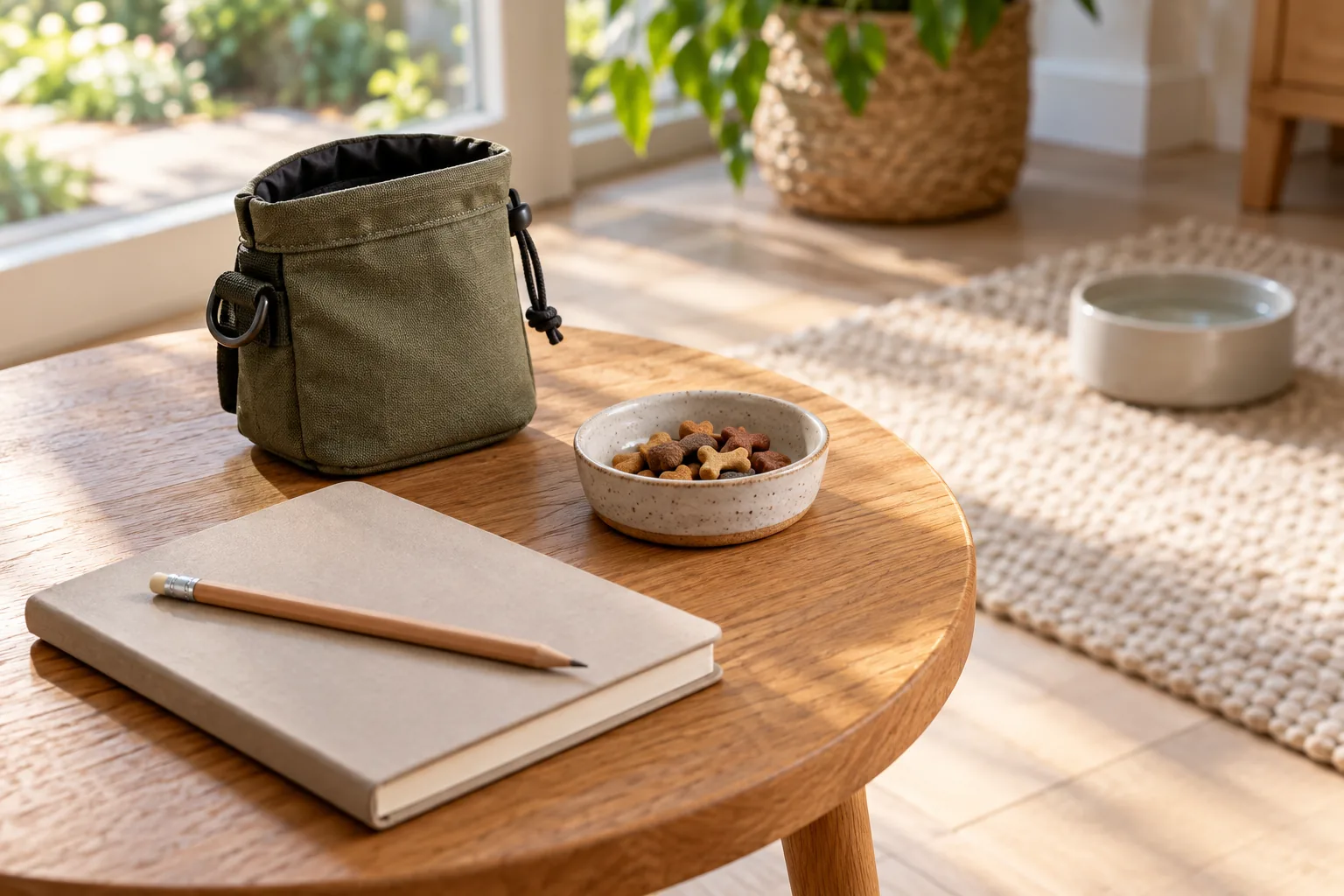
Prepare the suggested equipment, rewards and safe practice space before another opportunity. Write your own smaller starting point on paper so you do not improvise progressively harder requests. If you cannot identify a suitable lesson or comfortable prerequisite, leave the exercise for now and ask a qualified reward-based trainer. An app sequence cannot judge what your dog has understood merely because you opened the next screen.
Dog Train Club and DogPath share the publisher Rocket Digital Limited. This workflow describes the app’s existing lesson preparation, training path and progress records. It does not assume a frustration detector, a dedicated treatment program, a custom behaviour log or automatic analysis of your dog. You remain responsible for checking the instructions against reality and obtaining individual advice when the situation falls outside ordinary practice.
Make a later opportunity deliberately modest
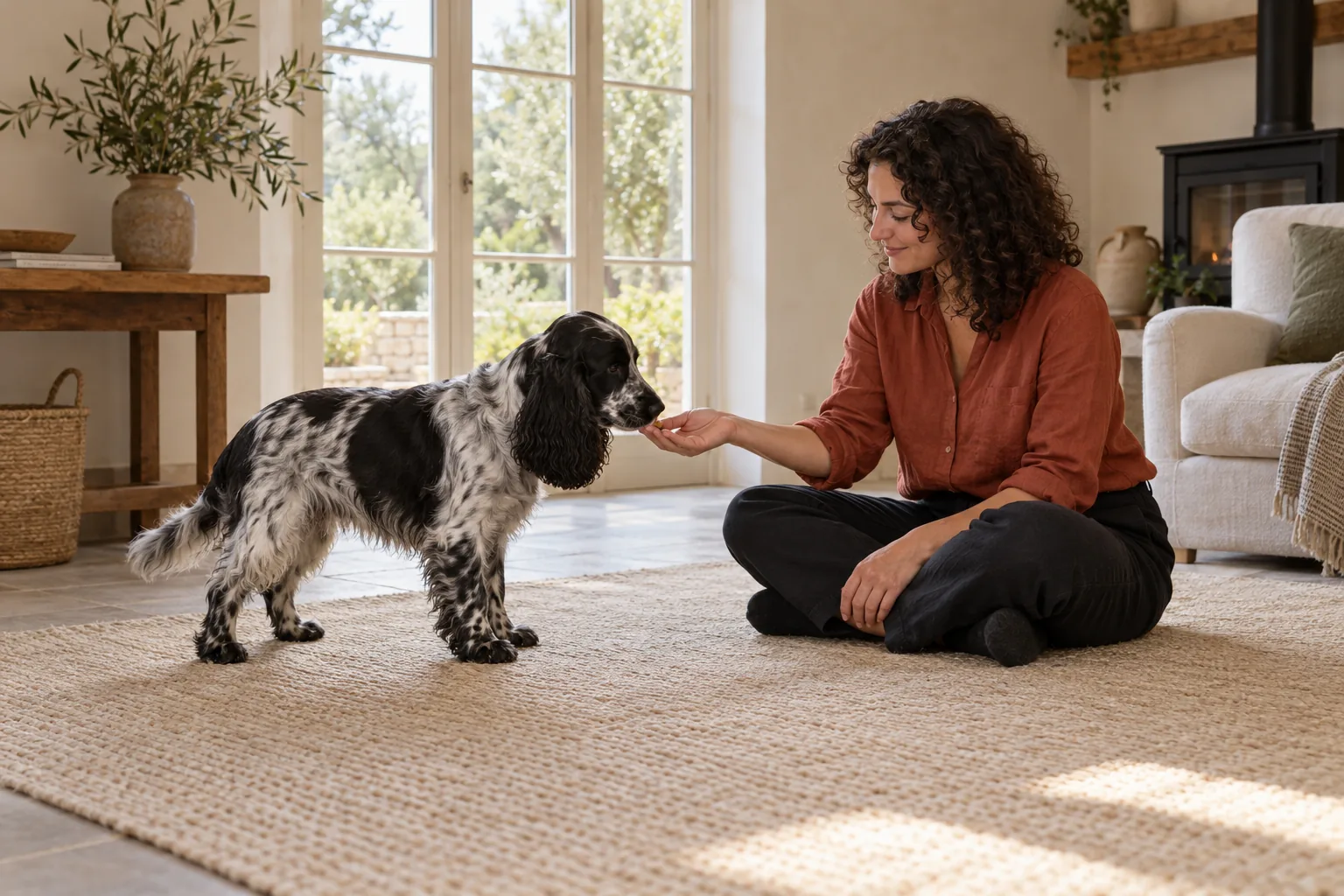
Choose a quiet familiar place with secure footing and a clear route to rest. Have suitable rewards ready without holding them out of reach to create frustration. Invite one familiar, comfortable response using the instructions you already know. If the dog is not participating comfortably, stop asking and reconsider the setup; repeatedly calling the dog back would recreate the very sequence you intended to change.
The RSPCA recommends reward-based training. In this example, keep reinforcement available for the response you have actually taught. Do not turn the exercise into a test of whether the dog will work without payment. Arrange reward delivery so you can respond promptly without leaning over the dog, fumbling through equipment or adding a new cue while the previous action is still unclear.
Imagine the dog comfortably glances towards you once in the original kitchen setting. Reward that small response and decide whether the opportunity can simply end there. One manageable attempt can be enough information for your next decision. It does not certify reliability in a garden, near visitors or beside traffic. Continue necessary safety management independently of what happened during an easy indoor exercise.
Record completed work without inventing a result
Afterwards, use DogPath’s progress record to mark only the lesson work you actually completed. Reading instructions, preparing materials and attempting a difficult version are different from completing the stated exercise. Follow the app’s available completion options honestly. A plan that remains unfinished is preferable to a record that suggests you and the dog practised something you did not do.
Keep your contextual observations separately on paper: where you were, what you asked, which detail changed and what you saw. “One comfortable check-in in the kitchen; ended there” is a useful entry. “Frustration cured” is not supported by that observation. Include your own contribution, such as repeating the cue or reaching too slowly for the reward, without assigning blame to either participant.
Use the weekly plan as a reminder to revisit a suitable starting point, with room to repeat, simplify or skip optional practice. Do not add several replacement sessions to compensate for an unfinished day. Normal exercise, exploration, rest and care still belong in the week. A record helps organise your thinking; it cannot supply a timetable for emotional recovery or certify that a behaviour is safe.

Compare a specific change over ordinary opportunities
Look for practical differences across naturally available opportunities, without repeatedly provoking the difficult sequence. Did preparing the pouch beforehand remove the interruption? Did returning to the familiar room let you give one clear request? Keep the comparison modest because sleep, health and the day’s events also vary. A small notebook entry helps you avoid remembering only the most dramatic moment.
For the general organisation of a brief practice opportunity, use our short training sessions guide. This article’s narrower job is reviewing an exercise that has started to unravel. If your reward signal itself is unclear, revisit the reward marker guide separately instead of adding a new signal halfway through an already difficult attempt.
Do not measure improvement by how long the dog will tolerate an uncomfortable request. Useful changes concern an easier setup, clear communication and willing participation. If your adjustments do not help, bring the observations to a qualified trainer rather than increasing the difficulty. You can protect the dog’s routine while a professional helps decide whether the task, environment or another concern needs attention.
Give the rest of the day room to be ordinary
Keep a comfortable resting place available without requiring the dog to perform on it. Our mat guide can support separate future practice if that skill is appropriate; a break after a difficult exercise is not the moment to insist on learning it. The dog may prefer a different safe resting spot, and you can respect that choice while supervising the surroundings.
Tell other adults which exercise you stopped and what you intend to simplify. Ask them not to repeat the difficult version as a test. Share concrete details rather than a label such as “frustrated dog”, so the household can keep expectations consistent. Children should not be given responsibility for testing a dog’s response or handling concerning behaviour.
The next useful step may be reading a prerequisite, preparing a quieter place or booking personal support. None requires you to obtain a final repetition today. Keep the goal small enough to explain clearly, preserve the dog’s ordinary needs and return only when the situation is suitable. Better organisation is a human responsibility, and ending an unhelpful attempt is a legitimate part of that work.
Common questions
Should I always end with a successful repetition?
You can stop optional practice without asking for one last response. If the task is becoming difficult or either participant is uncomfortable, further requests may simply continue the same problem. Provide a safe ordinary break and review the setup later.
Does barking during training prove frustration?
No. Describe the behaviour and setting without assuming a diagnosis. Barking, looking away or offering another action can have different explanations. Sudden change, pain, marked distress or bite concerns need personal professional assessment.
Can DogPath tell me when my dog is ready again?
The lesson path and progress records help organise practice; they cannot observe the whole situation or certify readiness. Review the actual dog and environment, keep context notes separately and obtain qualified help when you are uncertain.
Should I withhold rewards to build patience?
Do not withhold essential care or manufacture frustration as part of this exercise. Keep suitable reinforcement available, simplify the optional task and preserve rest, water and toileting. Individual behavioural concerns need a tailored reward-based plan.