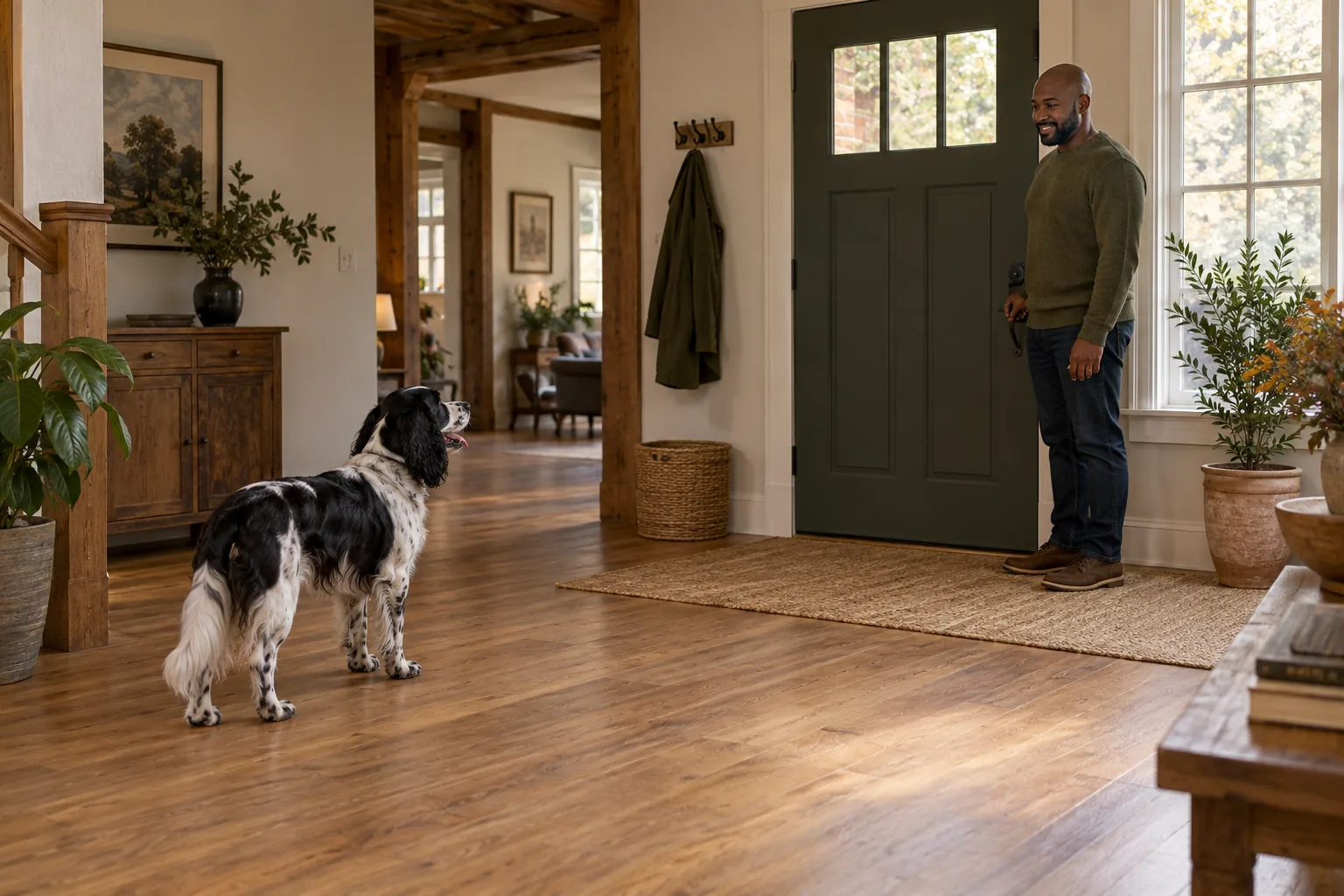
Dog door dashing can turn a routine delivery or walk into a frightening moment. Start by changing how the entrance is managed, before asking your dog to resist an open route outside. A secure physical barrier protects against mistakes while you practise tiny, rewarding moments of staying comfortably inside.
This guide separates everyday safety from teaching. You can work with a closed interior door, a few suitable treats and an adult helper; no app is needed. A learned pause never replaces secure gates, properly fitted equipment or an adult responsible for the entrance. If your dog is distressed, painful, suddenly behaving differently or likely to bite when handled, arrange personal veterinary or qualified reward-based behaviour support.
Dog door dashing: secure the route before teaching
Walk through an ordinary arrival without the dog present. Where does the front door open? Can a garden gate lead straight to a road? Who carries bags, receives parcels or opens an automatic gate? Identify the moment when a person loses track of where the dog is. That practical weak spot matters more than whether your dog can already sit.
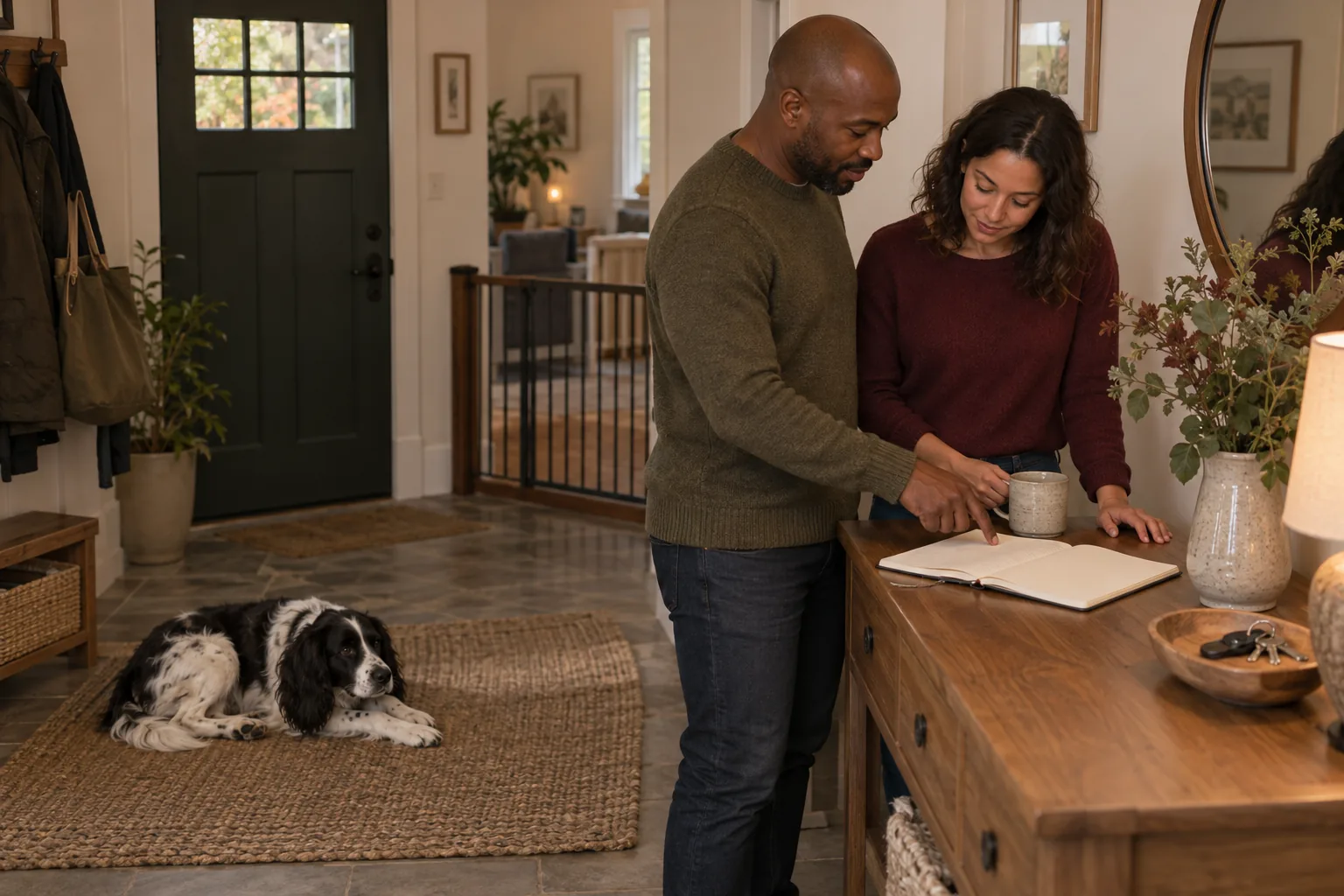
Choose a reliable arrangement that keeps the dog separated from an exterior opening. This might be a suitable securely latched interior gate or a comfortable separate room with a closed door. Check height, gaps, fixing points and whether the dog can climb, jump or push it. A barrier your dog defeats is not a useful backup. Ask for help choosing suitable management if you cannot secure the space.
Keep one secure barrier closed while another opens. Everyone must know who checks it. Do not rehearse a mistake with an unrestrained dog to see whether the arrangement works. Explain the routine to visitors before they arrive, and secure the dog before answering rather than asking someone to squeeze past.
Outside access is appealing for many reasons, but labelling the dog stubborn does not repair a loose latch. Start with something you can verify: the route is physically contained and the adult handling the door has free hands.
Make an ordinary exit easier to organise
Prepare coats, keys, suitable rewards and walking equipment while the exit remains closed. Put parcels and bags on a stable surface. Choose footwear that allows you to move safely on the floor. Clear anything that could trip a person, and give the dog room to turn away from the busy entrance.
For a necessary walk, use equipment already comfortable and appropriate for your dog. Check the fit, attachment and your grip before opening any exterior route. A lead should prevent unsafe access without being used for jerks, dragging or punishment. If holding the dog safely is beyond your ability, get individual practical support rather than trying a difficult doorway lesson during the departure.
If the dog becomes frantic whenever walking equipment appears, lower the pressure in your preparation. An urgent toilet outing is not the time to demand a long wait. Meet care needs with your secure routine and practise later under easier conditions. Do not delay access to water, toileting or normal exercise to make the dog cooperate.
Automatic vehicle gates need their own reliable separation arrangement: a person pressing the remote must not be the only thing keeping a dog away from moving machinery. Never use the movement of a gate as a training prop. Ask for a safe physical setup before considering any behaviour practice nearby.
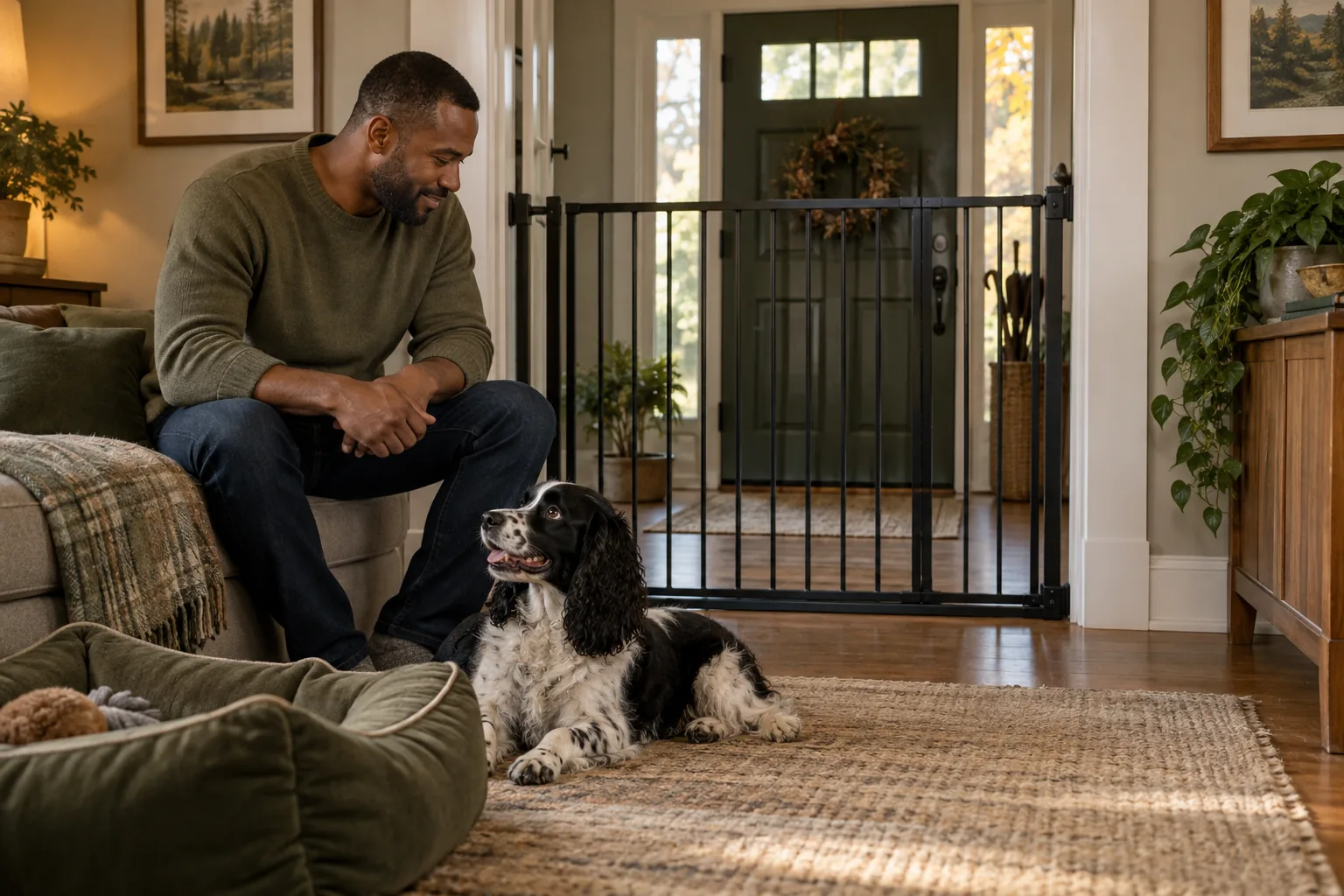
Reward a comfortable pause away from the entrance
Begin in a quiet room with the outside routes securely closed. Choose a spot far enough from the practice door that the dog can comfortably stand, look around and move away. You are teaching a small pause, not testing how long a dog can suppress excitement at the front door.
Notice a brief moment with paws on the floor and the body relaxed. Mark it with a familiar quiet word if you use one, then deliver a small suitable reward where the dog already is. Our reward-marker guide explains the timing. Avoid drawing the dog toward an exit with a treat and then asking them to stop beside it.
A sit is optional. A comfortable stand can be easier, especially on a slippery floor or for a dog with physical limitations. Provide a nonslip surface and ask your vet about uncomfortable posture or movement. The useful behaviour is remaining safely inside for a brief moment while the adult prepares, not a particular photograph-ready pose.
Finish after a few easy opportunities. Say your usual end-of-practice word and move together to another safe indoor activity. Do not wait for the dog to struggle before deciding the session has been long enough. A short success gives you a clear place to begin next time.
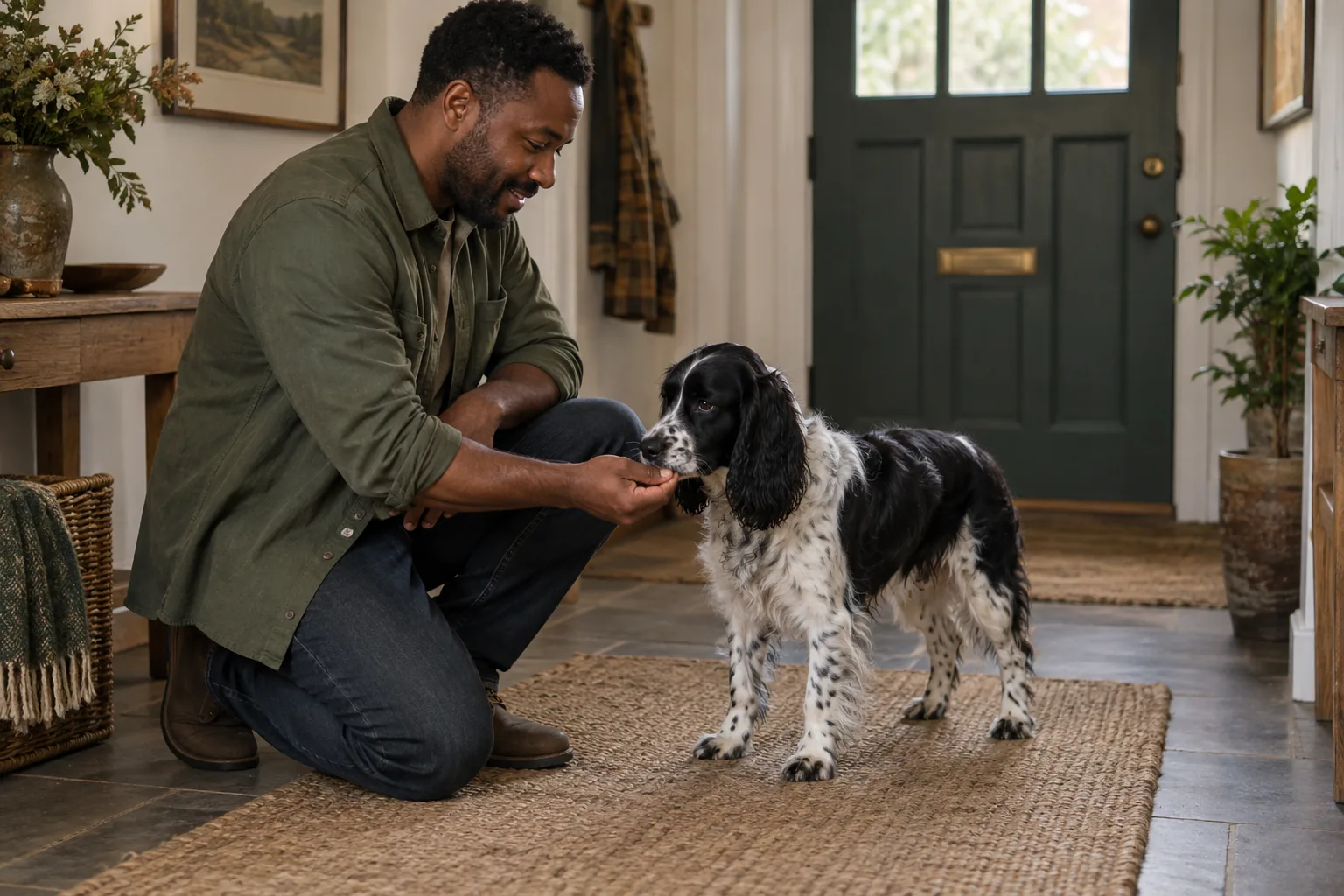
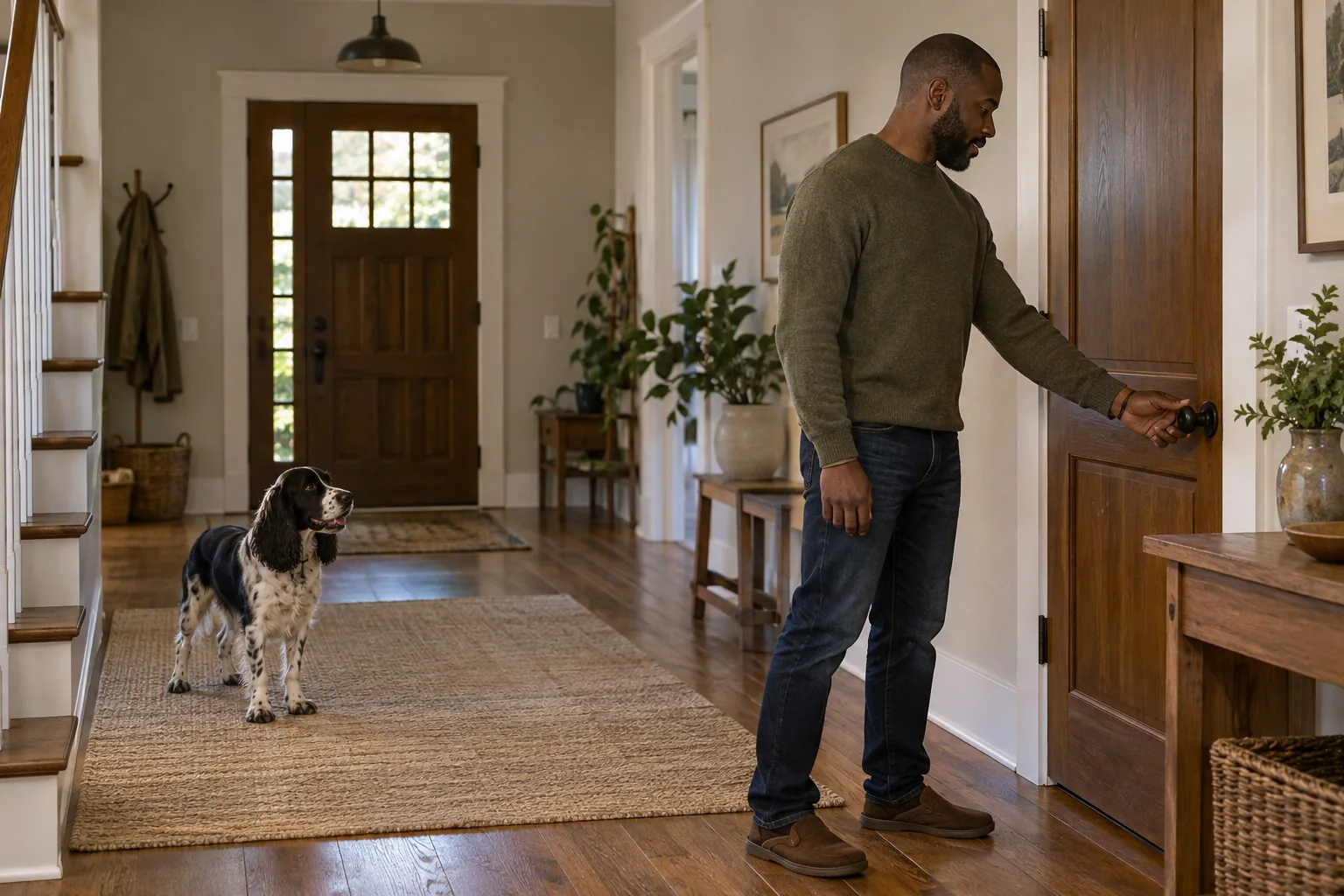
Introduce one small door movement at a time
Choose an interior door that leads only into another secured indoor area. Keep exterior doors and gates closed. This lets you practise the movement without creating an escape opportunity. Start with standing near the handle while your dog remains at the comfortable inside position, and reward that brief moment.
Move a hand slightly toward the handle, then return it. Reward a comfortable pause. Touching the handle, turning it and opening the door a tiny amount are separate changes. Do not combine them because one attempt looked easy. You can end a session after the hand movement alone; progress is a decision based on the current dog and setup.
If the dog moves toward the practice door, stop making the exercise harder. Safely reset when paws, nose and tail are clear; do not swing a door against the dog or use closing it as a threat. Return to a smaller hand movement or increase the distance. Repeated lunging or frustration means the arrangement needs a larger change, not louder instructions.
Dogs Trust’s doorway advice supports calm preparation and gradual practice. Adapt the setting to a secured indoor rehearsal rather than treating an exposed entrance as a classroom. Door movement should be predictable and safe for everyone present.
Separate practice from a real departure
A delivery person, another dog passing outside and someone carrying groceries can each change the task. Success beside an interior door does not demonstrate that the front entrance is safe without a barrier. Keep your normal management arrangement and choose a quiet moment for any later practice at a more stimulating location.
Before a necessary departure, secure and check suitable familiar walking equipment. Keep the dog comfortably inside while an adult manages the door. When the route is safe and you are ready to move together, use a clear departure word, then guide the ordinary exit without dragging. Reward suitable attention in a safe place rather than dropping food beside moving traffic.
If the doorway remains too difficult, return to management for that outing and arrange professional support for the transition. It is reasonable to need a helper or a different secure arrangement. Do not try to prove the dog can wait by loosening the lead, leaving a gate open or introducing a tempting person outside.
Keep the departure cue distinct from a casual release during indoor practice. Decide what each word means for your household. A dog should not need to interpret a visitor saying a similar phrase while the front door is open. Physical containment remains the safeguard when words are missed or misunderstood.
Use short rehearsals that match your household
Choose a practice moment when the dog’s ordinary needs have been met and nobody is waiting outside. One adult handles the door; another can observe from a safe place if needed. Start with the same simple indoor arrangement, then change only one factor, such as which adult approaches the handle.
Our short-session guide helps you keep the exercise small. A different person, a carried bag and a longer opening are three changes, not one. Practise the new person without the bag first. Make the setup easier when a visitor arrives unexpectedly, rather than letting the visit become an improvised test.
Children should not be responsible for opening exterior routes or holding an excited dog for this exercise. Adults arrange the separation and access. In a home with several dogs, give each dog a safe comfortable arrangement and practise separately before asking them to share a narrow entrance. Crowding and competition around rewards can complicate an otherwise simple pause.
Discuss accessibility too. A person using mobility equipment or carrying a baby needs a routine they can actually follow. Adjust the physical setup with appropriate help rather than expecting a fast recall or a hand signal to make up for an unsafe door arrangement.
Record conditions and adjust the next attempt
After practice, write one clear observation: which door, which adult, what movement and what the dog did. “Closed interior door; hand moved toward handle; dog stayed relaxed two metres away” says more than “wait trained”. Record the barrier that stayed closed as well, so another person understands the safety conditions.
If the dog approached the door, note when that happened without blaming them. Perhaps the handle click was new, the adult carried a coat or the reward arrived late. Choose one smaller next step. Do not change the cue, increase duration and move to the main entrance all at once.
Separate a training note from the household checklist. The checklist remains the same even after an easy session: secure the dog, confirm the barrier, prepare equipment, then manage access. Put it somewhere adults can consult before answering visitors, without exposing personal information outside the home.
Our recall foundations can support ordinary safe movement within contained spaces. They are an additional skill, not an escape-prevention system. Never remove physical safeguards because the dog came when called during practice. A new distraction can change the response.
Know when the situation needs personal help
Repeated escapes, intense distress at barriers, inability to manage the dog’s strength or conflict between dogs deserve individual help. A qualified reward-based trainer can review the actual entrance, equipment and household movements. If behaviour changes abruptly, or the dog appears painful, arrange veterinary assessment as well.
Do not grab an unfamiliar or distressed dog by the collar to stop an exit. Bite risk changes what is safe to attempt, and requires professional planning. Avoid shouted corrections, startling devices, painful collars or deliberately frightening the dog at the boundary. The RSPCA recommends reward-based training; intimidation can add another problem to an already busy entrance.
If an escape happens, prioritise immediate safety and seek suitable local help; do not chase the dog toward traffic or punish a return. Afterwards, review the physical failure before attempting another lesson. Repairing a latch or changing who handles deliveries may be the most useful next action.
The aim is a workable everyday routine with several protections: secure separation, prepared adults and a brief learned pause where conditions allow it. There is no deadline for trusting an open entrance. Keep the safeguards while making the easiest next practice opportunity clear.
Common questions
Does my dog have to sit before every door opens?
No. A comfortable brief pause with paws on the floor can be useful. Choose a posture your dog can manage comfortably and preserve physical containment.
Can I practise at an open garden gate?
Do not create an escape route for practice. Start at an interior door with exterior routes securely closed; later steps need an appropriate individual safe setup.
Why does my dog wait indoors but rush outside?
The location, smells, movement and expectation are different. Make practice easier and keep normal management rather than assuming the skill transfers automatically.
When can I remove the backup barrier?
A training result does not certify an entrance safe. Keep reliable physical safeguards and ask a qualified professional about the actual risks in your household.