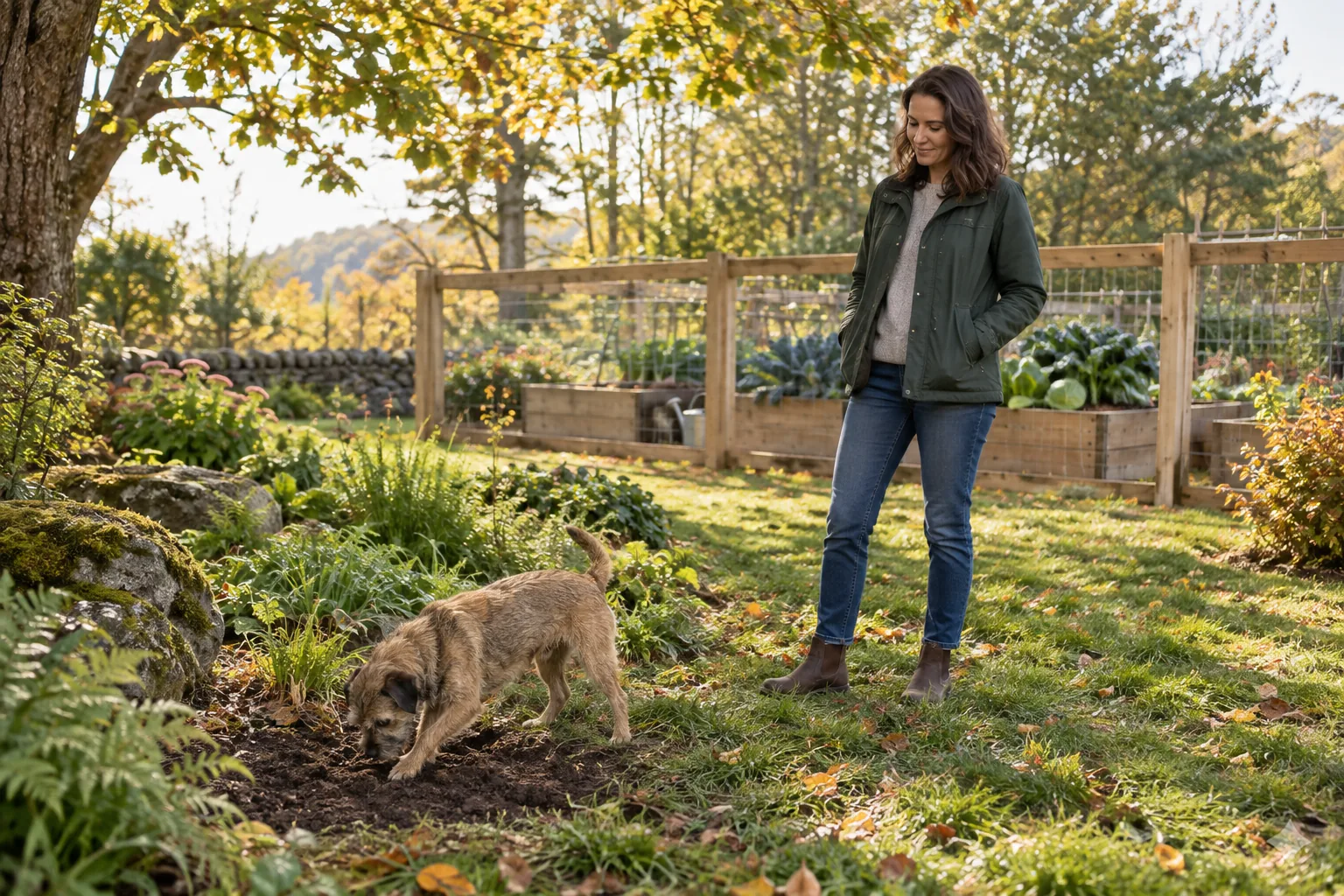
Dog digging holes can turn a pleasant garden visit into a scramble to rescue plants. Before trying another deterrent, separate two questions: which places must be protected, and what can your dog safely do instead? A patch of disturbed soil does not tell you the whole story. The location, weather, company and what happened just before the digging are more useful starting points.
This guide is for supervised everyday garden exploration. It gives you a practical arrangement to try without an app: secure vulnerable areas, provide a suitable alternative, reward voluntary movement and review what changes. It cannot diagnose anxiety or explain sudden behaviour changes. If your dog is trying to escape, appears painful, guards a hole or cannot disengage comfortably, organise personal veterinary or qualified reward-based behavioural help alongside immediate safety measures.
Dog digging holes: observe before choosing a response
For the next few garden visits, watch from a comfortable distance. Write down where the paws start working: soft new soil, one shaded corner, a recently planted bed or the perimeter. Record whether someone is outside with the dog, how warm it is and whether the dog can pause to sniff somewhere else. Describe what you see rather than assigning a motive such as revenge or stubbornness.
A simple note might read: “After watering the bed, two minutes of sniffing, then scratching beside the new plants; turned towards me when I stepped onto the lawn.” That suggests a useful first experiment: block access to the tempting bed and offer a different texture. It does not prove boredom, a breed trait or a medical explanation.
RSPCA Australia explains that digging is normal behaviour and that understanding its context matters. Use that starting point to make one manageable change, then observe again. Avoid leaving the dog outside to create a bigger demonstration. You already have enough information to improve the arrangement.
Make the unsafe and fragile places inaccessible
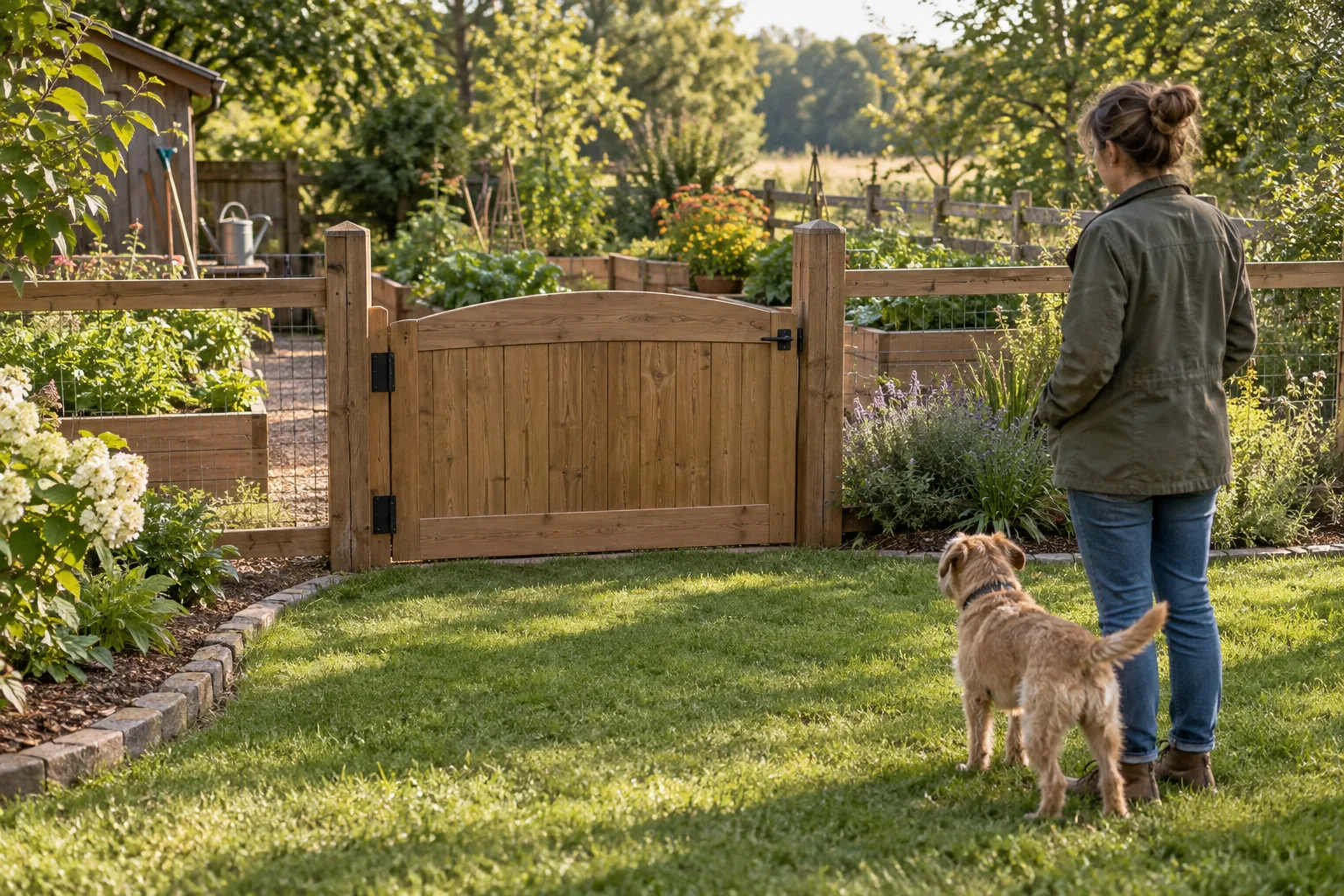
Walk the garden without your dog first. Check the gate latch, damaged fence sections, gaps beneath boundaries and any existing holes that could trip a person or animal. Keep the dog in a secure comfortable place while repairs are made. A training session is not an acceptable test of a weak perimeter.
Separate planted beds, compost, fertiliser storage and tool areas with a stable barrier that suits your dog. It should not present sharp edges, protruding stakes or an invitation to climb. Give the dog a generous accessible area and company; do not turn protection of plants into long periods of isolation. Fill dangerous holes only while the dog is elsewhere.
Remove access to garden chemicals and unknown plant material. Do not put pepper, irritants, painful surfaces, buried wire or startling devices into a hole. These can create another problem without teaching a safe option. If you cannot protect a bed reliably, choose a different supervised outdoor space for now.
Make household rules concrete: the closed gate stays closed, tools are stored after use, and everyone checks access before letting the dog out. Clear arrangements reduce the number of moments when you need to interrupt.
Choose a digging outlet that fits this dog
An allowed patch is an invitation, not a requirement. Choose a location inside the secure garden, away from perimeter fencing, roots, utilities and fragile plants. Before disturbing ground, check what lies beneath it and obtain appropriate advice if you are unsure. A small supervised patch of clean loose earth can be easier to inspect than an elaborate installation.
Keep entry level and the surface shallow at first. Check for glass, stones with sharp edges, mould, contaminated soil and materials your dog might swallow. The area needs enough room for comfortable movement and an easy route away. If your dog eats soil or objects, skip the digging experiment and ask your vet about suitable enrichment.
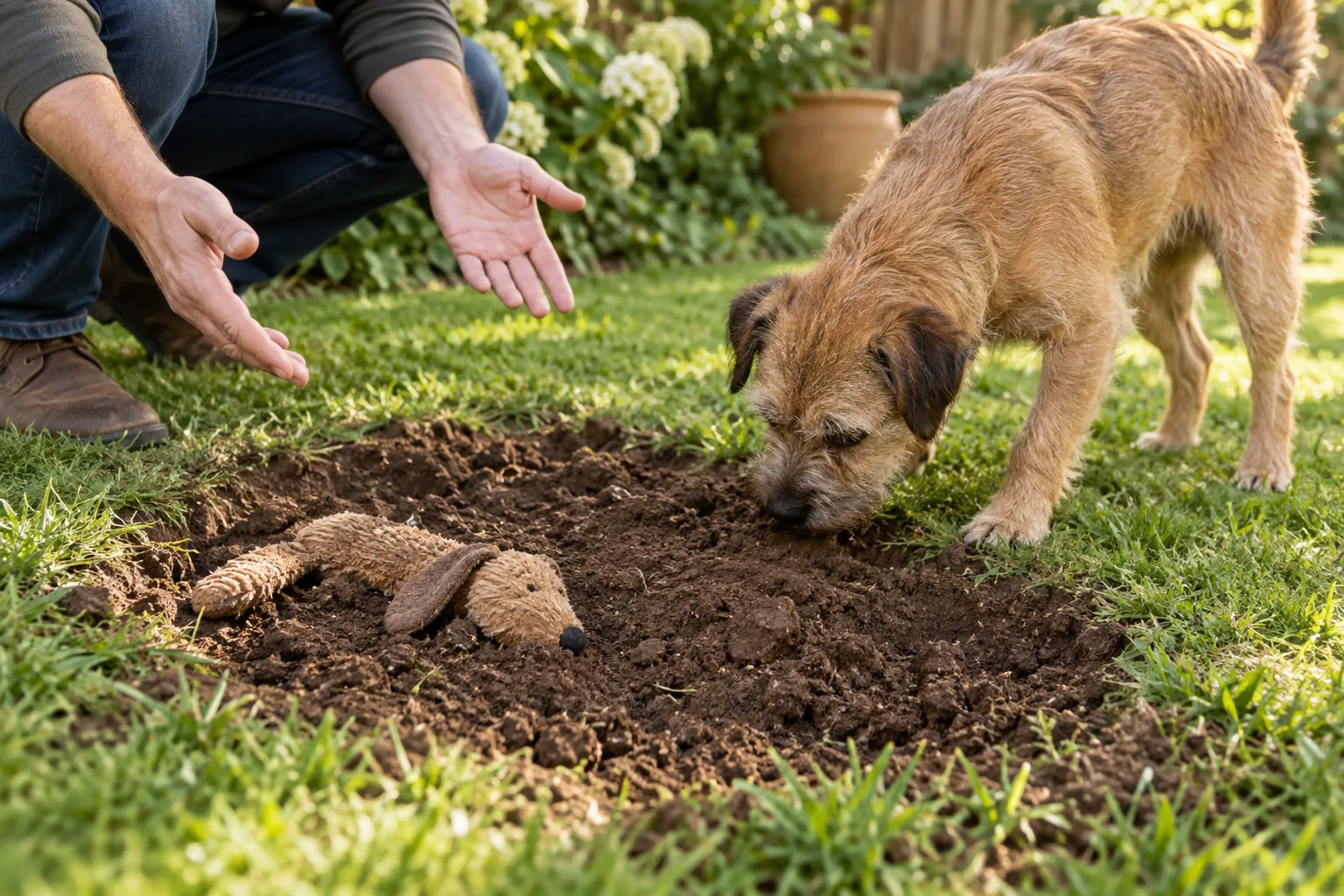
Dogs Trust describes permitted digging areas and supervised enrichment. You do not need to copy a particular construction. For your first trial, leave a familiar safe toy visible at the surface if your dog enjoys toys; avoid deep treasure hunts or competing dogs around valued items.
A dog who simply sniffs and leaves has given you useful feedback. Offer another comfortable activity rather than pushing paws into the soil.
Try one quiet invitation, then leave room to choose
Start when the weather is comfortable and you have time to supervise without gardening at the same time. Let the dog approach the new patch freely. Stand to the side. A small hand movement towards the surface may invite investigation, but do not lean over the dog, hold them in position or demand digging.
If the dog explores there, quietly acknowledge it. You can offer an appropriate small reward by hand on clean ground nearby, without encouraging soil eating. Use rewards suited to your dog and account for them within their usual food allowance. If handling food or toys leads to guarding, stop this setup and get personal professional guidance.
After a brief comfortable visit, offer a chance to leave, drink or return indoors with you. The first goal is a safe experience, not a large hole. Watch the dog's whole movement: loose exploration and easy departure are different from frantic scratching or repeated attempts to reach a barrier.
Keep the trial small enough that you can tell what happened. Five new toys, a changed meal and a completely different garden layout would make that harder. This first visit can end with nothing more dramatic than a sniff.
Reward a change of direction before digging takes over
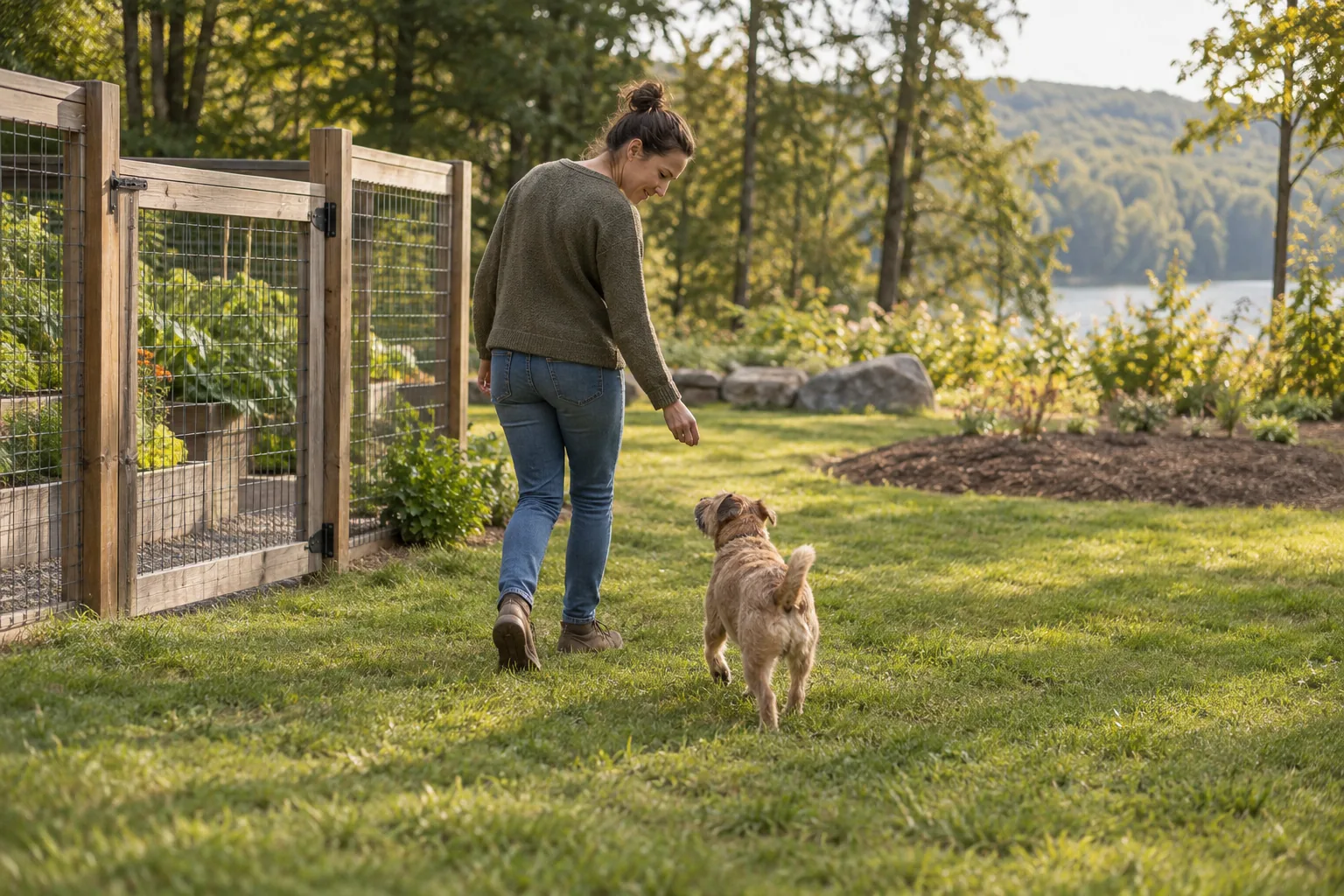
Access management does most of the work. Alongside it, practise moving together in an easy part of the garden. When your dog looks towards you or takes a step alongside you, reward on the lawn, away from the beds. The reward-marker guide explains how to make the moment of reward clearer if you use a familiar marker.
Begin while there is little competition for attention. Walk two or three relaxed steps, reward, and allow more sniffing. You are making movement with you worthwhile, not repeatedly calling the dog away from the most interesting hole. A garden cue is useful only at a level the dog can manage.
If the dog approaches a protected bed, invite a change of direction once from a distance they can handle. Reward the voluntary turn, then offer a permitted place or another activity. If they cannot respond, calmly end access and improve the barrier for the next visit. Do not grab the collar, chase, shout or repeat a cue until it loses meaning.
Keep training separate from emergencies. When an exit is insecure, bring the dog safely indoors and repair it; do not attempt a recall test beside traffic.
Build a garden visit with company, activity and rest
A garden visit can contain more than one kind of opportunity. Let the dog toilet, sniff alongside you, explore an allowed surface and then choose a comfortable place to rest. Keep fresh water accessible and provide shelter appropriate to the weather. A patch of earth cannot replace protection from heat, rain or cold.
For example, on a mild morning you might share a short sniff around the safe lawn, offer the checked patch, then sit together near the open back door. If the dog chooses rest immediately, respect that choice. If the ground is hot, frozen or unpleasant, use an indoor activity instead. There is no need to complete a garden routine every day.
The short training sessions guide can help you keep the active practice brief. Time outside is not the same as useful exercise, and tiring a dog out is not a reliable answer to every behaviour.
A familiar resting spot can support the quieter part of the visit. If you want to teach that skill separately, use the settle-on-a-mat guide. Let the mat remain an available option; avoid demanding stillness while the dog needs water, a toilet break or a cooler place.
Review the arrangement, not just the number of holes
After a few supervised visits, compare like with like. Was the same bed protected? Was someone present? Could the dog explore the permitted patch and leave comfortably? Note unsuccessful attempts as well as the pleasant moments. One undamaged afternoon does not establish that the behaviour has disappeared.
Useful progress might be fewer attempts to reach the bed, an easier voluntary turn, or a dog who rests near you after investigating the patch. Write down which change was in place. If your record only says “good dog today”, it will be hard to repeat the helpful arrangement tomorrow.
Change one practical factor when a visit is difficult. You might shorten it, move company closer, improve access protection or choose a cooler time. Avoid making the allowed patch harder to use as a reward for success; predictable access is part of the arrangement.
If a small garden cannot accommodate digging safely, do not force the idea. A shared sniffing walk or another supervised activity may suit the dog better. Protect the garden and assess welfare separately. A tidy lawn is not evidence that a dog feels comfortable, and an allowed patch is not permission for unattended outdoor time.
Know when a garden plan is not enough
Repeated digging at an exit needs a safety response first. Stop unsupervised access, keep the dog securely with appropriate company, and arrange competent repairs. Ask a qualified reward-based behaviour professional for an individual assessment when escape attempts, persistent distress or inability to settle continue. A digging outlet cannot make an insecure fence safe.
Contact your vet for sudden changes, apparent pain, damaged paws, unusual soil eating or behaviour that seems compulsive. If there may have been ingestion of a chemical or harmful material, seek veterinary advice promptly rather than waiting for a training experiment. Do not diagnose the cause from a photograph of the hole.
If the dog stiffens, growls or protects an area, stop approaching and keep people and other animals safely away. Do not reach into the hole, take a valued item by force or ask a child to help. Bite risk needs personal support and a household management plan.
For ordinary exploration, your next step can stay small: protect one vulnerable bed, offer one safe choice and watch one comfortable garden visit. Keep what helps, adapt what does not and maintain the safety arrangements even when the lawn looks better.
Common questions
Should I punish my dog after finding a new hole?
No. A finished hole is information about the garden setup, not a useful training moment. Keep your dog comfortably elsewhere while you check hazards and repair damage. At the next visit, protect that area and reward a manageable voluntary alternative. Do not drag the dog back to inspect the damage.
Will a digging patch encourage more digging everywhere?
An allowed patch does not replace barriers or supervision. Watch whether your dog uses it comfortably and whether access to vulnerable places remains secure. Some dogs enjoy it, others do not. There is no guarantee that one patch will prevent every hole; adjust the whole garden routine.
What if my dog digs only when left outside alone?
Do not keep leaving the dog alone to test the pattern. Arrange secure access with appropriate company and record what you already know. Persistent distress or escape attempts need an individual assessment. Simply adding a toy or digging area may not address the underlying difficulty.
Can I use this with a puppy or an older dog?
Adapt access and activity to the individual. Keep ground easy to enter, rewards suitable and visits brief enough to stay comfortable. A puppy who swallows materials or an older dog showing pain needs veterinary guidance before the experiment. Neither age nor breed makes a risky setup acceptable.