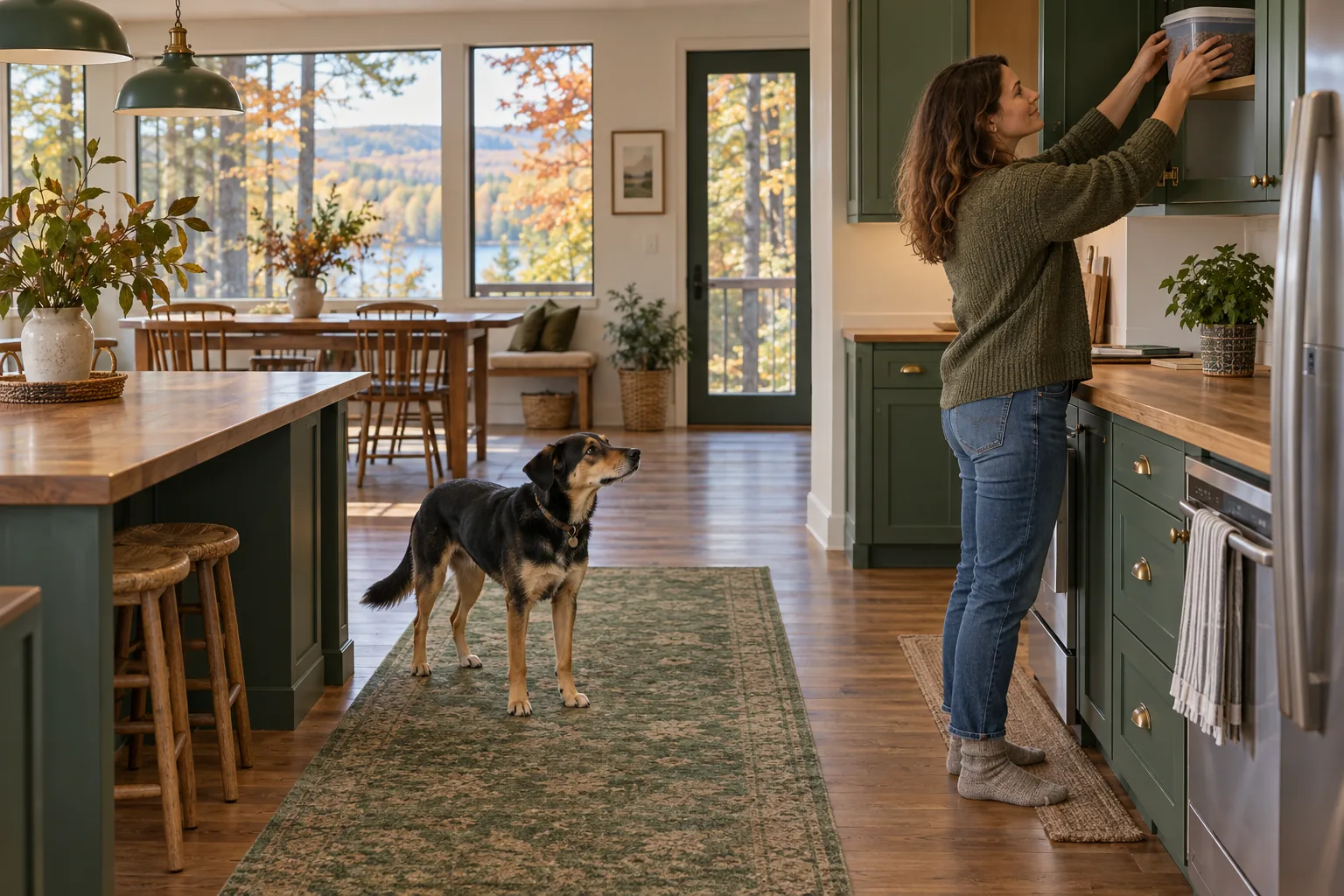
Dog counter surfing can turn a moment of meal preparation into a hurried chase. Perhaps your dog reaches the table while you unload groceries, or finds something on the worktop as you turn away. Start by changing access to food and the way the household uses the kitchen. Training has a better starting point when it does not compete with a reachable snack.
This guide combines practical prevention with an optional DogPath workflow for preparing relevant foundation lessons and reviewing completed practice. Dog Train Club and DogPath share a publisher. The app can organise lessons, a training path and progress; it cannot monitor your kitchen, assess guarding or make food safe. If there is bite risk, suspected pain or a sudden change in behaviour, seek personal professional help. Possible harmful ingestion needs prompt veterinary advice.
Dog counter surfing: map one repeatable kitchen moment
Choose the situation that most often creates an opportunity. Unpacking shopping, preparing lunch, serving plates and clearing the table have different weak points. Write down where food is placed, who can supervise and what happens when that person leaves. You are examining a household routine, not trying to catch the dog doing something wrong.
A precise observation helps: “The open shopping bag stays on the floor while I put milk away” identifies a change you can make. “He knows better” does not. A dog may find a worktop rewarding without anyone deliberately teaching them to search there, and an occasional successful grab can keep the habit worth trying.
Best Friends Animal Society explains the role of food access in counter surfing. Use prevention as your starting point. You do not need to leave food out to establish whether the dog would take it.
Include ordinary needs in the picture. Keep a suitable feeding routine and access to water. Do not withhold meals to make rewards more powerful. Discuss a marked new change in appetite or behaviour with your vet rather than assuming every episode is a training issue.
Move food into secure storage before you ask for a skill
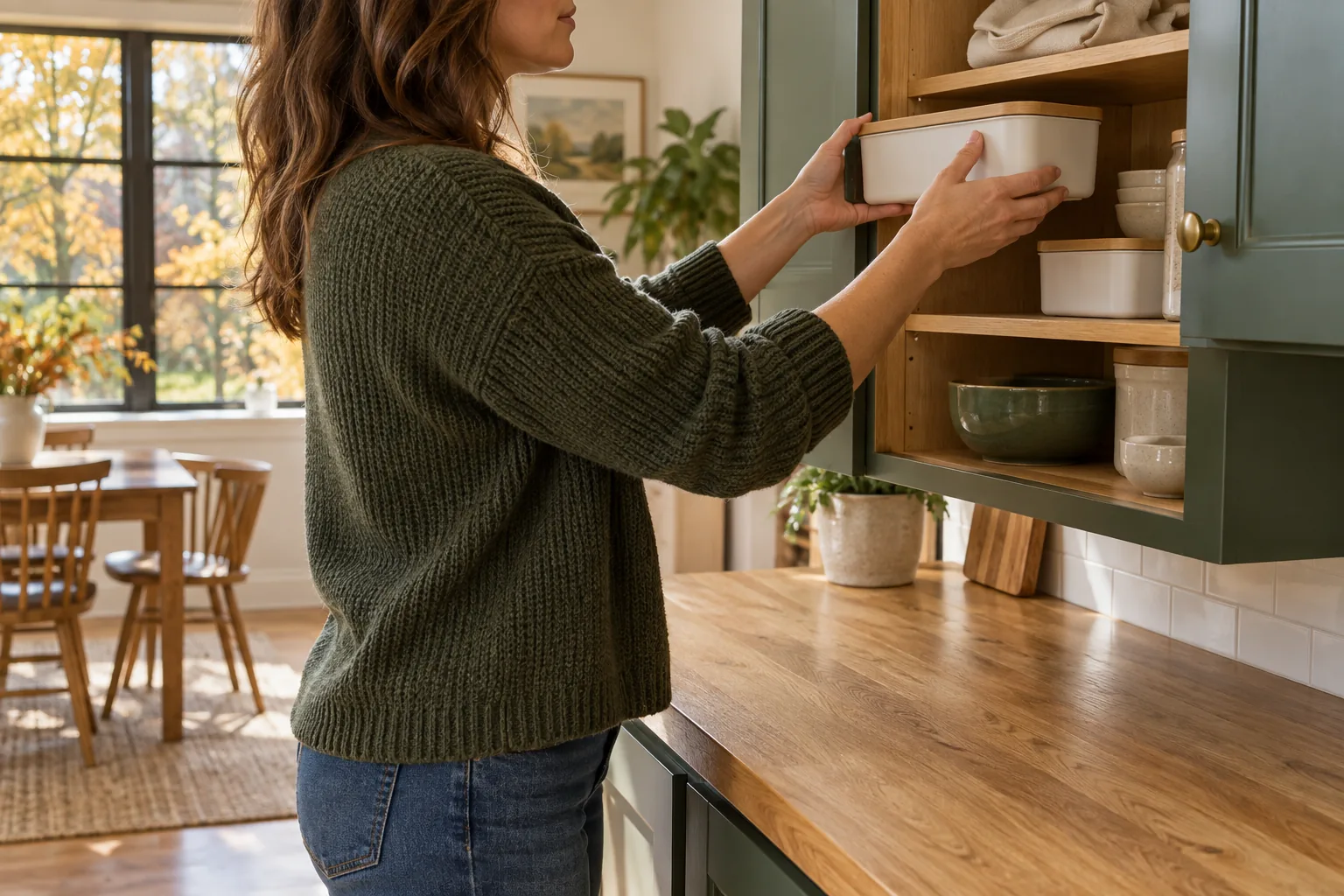
Put food in closed cupboards, the fridge or genuinely secure containers. Moving it slightly farther back on the same counter may still leave it reachable. Tall dogs, chairs and open bags can change what your dog can access. Look at the room while it is empty and cool, not while carrying a hot dish.
Plan the grocery transition: place shopping beyond reach, put vulnerable items away first and close the storage before moving to another task. Clean up residue and check the floor after handling food. A locked-away loaf does not help if a dropped piece or open bin keeps the kitchen rewarding.
Agree who clears serving plates and who manages the dog's safe area during a busy meal. Guests should know where to put bags and food. A useful rule is about the environment: “No unattended food within reach,” rather than a demand that the dog resist every mistake.
This remains worthwhile after practice improves. No training record makes an unattended counter reliably safe. Avoid traps, startling objects, harsh corrections or deliberately tempting tests; they add risk without solving the storage routine you need every day.
Provide a comfortable alternative outside the cooking traffic
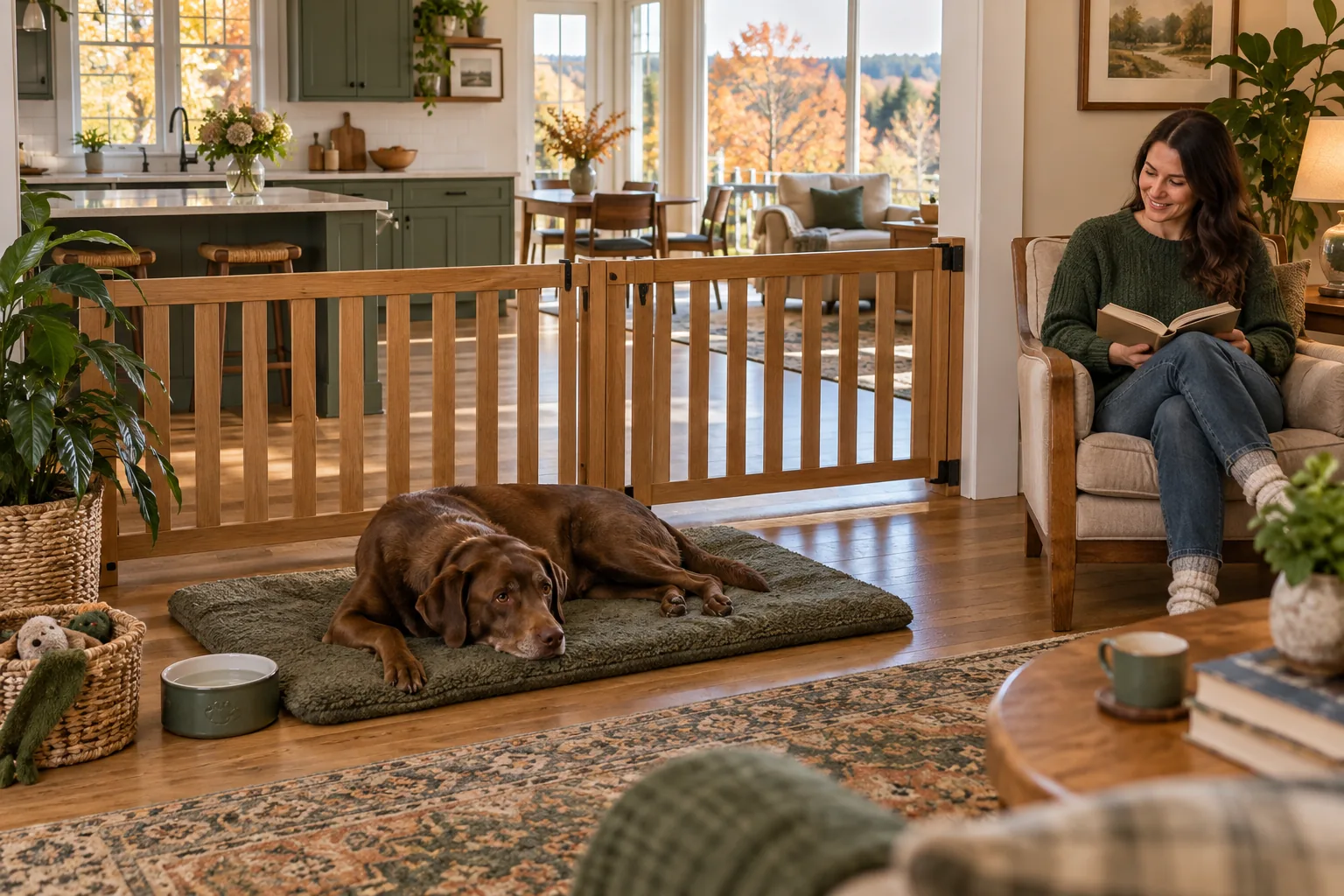
Choose somewhere the dog can comfortably spend a short period while cooking is underway. A familiar adjoining space with water, suitable bedding and enough room to change position may work. A secure gate can keep the dog away from hot equipment while an adult remains nearby. Introduce it when the kitchen is quiet, before relying on it at mealtime.
If the dog paws at the barrier, becomes distressed or cannot settle, simplify the arrangement and seek guidance where needed. Forced isolation through escalating distress is not the exercise. Another adult sitting with the dog in a familiar room may be the easier option for a busy meal.
When you can practise, select a safe mat or reward location away from the counter and the path of moving adults. Our settle-on-a-mat guide covers the foundation. Here the particular question is whether that location fits the kitchen routine. A mat under the sink or beside a hot oven does not provide a safe alternative.
Do not insist on a rigid down position for an entire family dinner. Begin with something small and comfortable, then use management whenever the real task exceeds the dog's current experience.
Use DogPath to prepare a relevant foundation lesson
Open DogPath while the dog is resting safely, before cooking or training. Review the training path and choose a suitable available foundation lesson, such as attention practice. Read the setup and steps first. The verified workflow is preparation, manageable practice and an honest completion record; this article does not claim a dedicated counter-surfing programme or a kitchen detector.
Decide what the lesson is preparing. A comfortable check-in with you in a quiet room can support later kitchen practice. It does not prove that the dog will ignore unattended food. If the lesson's prerequisites are unfamiliar, return to them rather than skipping ahead because tonight's meal feels urgent.
Use the weekly plan to leave room for that foundation on a quieter occasion. During meal preparation, rely on the storage and safe-area arrangement already prepared. There is no need to handle a phone while managing the dog and kitchen equipment at the same time.
Keep the goal narrow: a few voluntary check-ins with all paws grounded in an empty, safe space. App content and availability can vary by version; use the actual lesson you can read. Do not mark it complete merely because the counter stayed untouched behind a gate. That was successful management, not necessarily lesson practice.
Reward the alternative before the dog reaches up
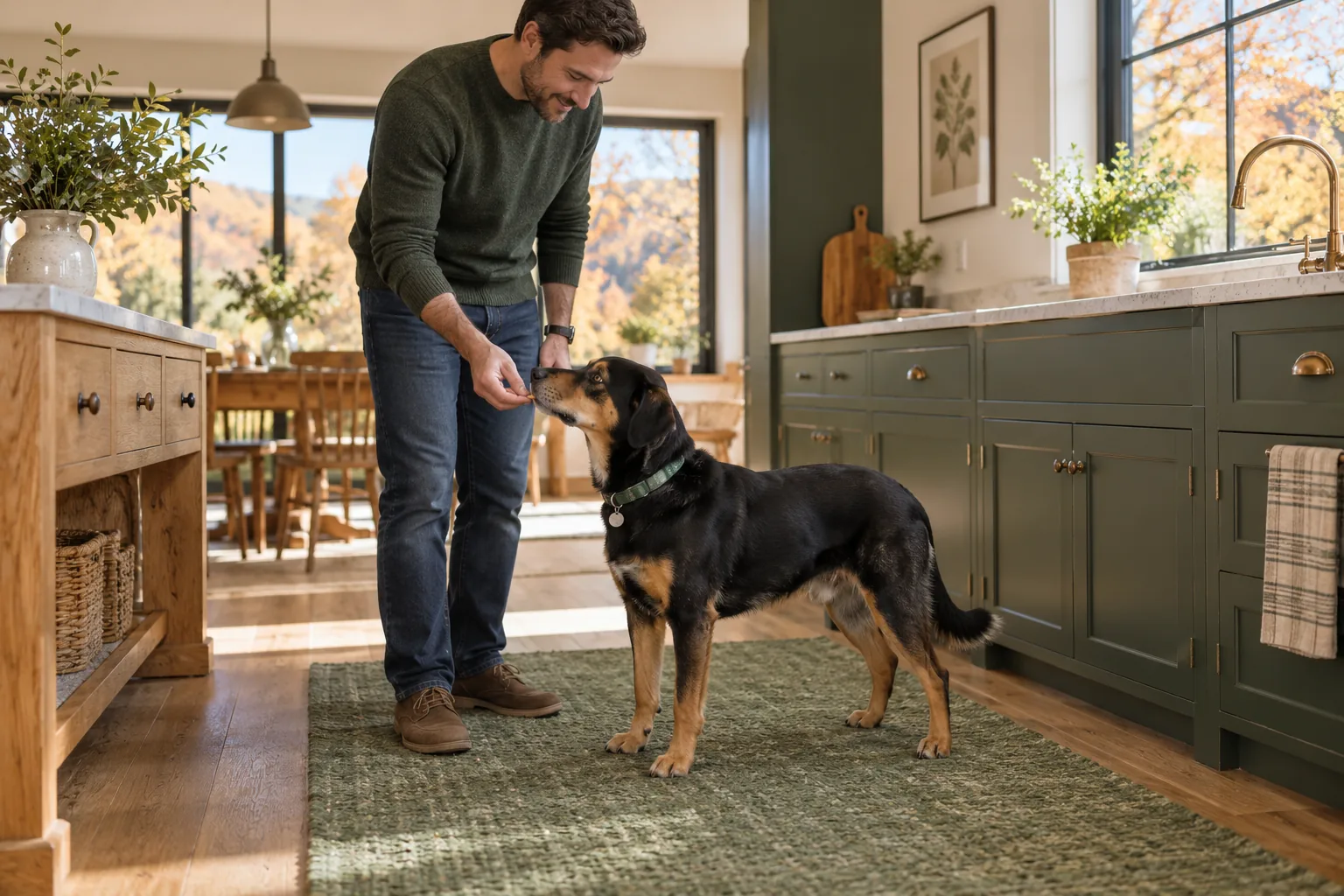
Practise with clear counters, cool appliances and no cooking underway. Stand near the chosen reward location, well away from food storage. When your dog voluntarily looks toward you or stands comfortably with four feet on the floor, mark that moment and deliver a small suitable reward low at the location you want to make useful.
Our reward-marker guide explains how a quiet word or familiar click can identify the moment. Keep your delivery clear: reaching toward a shelf before producing a reward may draw the dog's attention back upward. Prepare rewards so you can deliver them without moving toward the worktop.
Pause between repetitions. If the dog keeps searching the counter, change your location or shorten the exercise. Do not wait for repeated jumping so you can reward coming down each time; that sequence gives you a less useful habit to rehearse. Arrange the easier choice before the reach happens.
Allow the dog to change position and leave the activity. Standing near you, returning to a familiar spot or choosing to rest can all be useful observations. Avoid extending the exercise until the dog is frustrated simply to fill a planned session.
Rehearse the household action with the food already secured
Choose one harmless kitchen action: an adult takes an empty plate from a cupboard while another adult rewards comfortable behaviour away from the counter. Keep appliances off and food stored. A small rehearsal shows whether your movement makes the exercise harder without using an edible temptation.
If that is manageable, practise another ordinary action on a later occasion. Change one detail at a time, such as the adult moving a little farther or briefly opening an empty cupboard. Do not also add a long wait, visitors and accessible food. Those changes obscure which demand became difficult.
Our short-session guide helps you plan a modest beginning and a clear ending. Stop while the dog remains comfortable. When a meal needs preparing, put management back in place; dinner is not an examination of an unfinished skill.
For example, Noah can practise an empty-plate movement after breakfast when the kitchen is cleared. At a busy evening meal, he uses the familiar adjoining area with an adult nearby. The two arrangements have different purposes, and neither creates a debt of extra training tomorrow.
Review practice and management as separate observations
After the exercise, return to the DogPath lesson and record only what you actually completed. A brief attention exercise may be completed in that quiet setting while kitchen practice still needs an easier setup. Treat the progress record as a history of practice, not proof that safety arrangements can be removed.
Keep household context in a separate notebook if needed. This workflow does not assume an app field for counter incidents, food access or custom kitchen notes. Three useful lines are: the meal or task, the management used, and the dog's response during any deliberate practice.
A clear entry might read: “Lunch groceries stored before dog entered; three easy check-ins beside rug; no food exposed.” A harder entry could be: “Visitors left bags near table; practice postponed; next time assign an adult to storage.” The second note identifies a human action to improve rather than a failure score for the dog.
Compare similar occasions and change one controllable detail. Keep the suitable weekly lesson opportunity, repeat prerequisites when necessary and preserve food storage consistently. A streak or completed lesson cannot tell you what would happen in an unsupervised kitchen.
If something is taken, protect safety and arrange help
If your dog already has food or an object, do not chase, corner them or force their mouth open. Keep other people and animals away and avoid confrontation. A previously taught, comfortable exchange may help in a safe ordinary situation, but do not experiment with handling where there is guarding or bite risk.
Dogs Trust's advice on stealing emphasises prevention, avoiding punishment and getting professional support for severe stealing or guarding. Describe what happened to a qualified reward-based professional rather than provoking the behaviour to demonstrate it.
If the item may be harmful or has been swallowed, contact your vet or veterinary emergency service promptly. Tell them what may have been taken, when and any available packaging details. Do not wait for a training exercise to work or attempt home treatment without veterinary direction.
Review the opportunity once everyone is safe. Was storage left open, a bag placed within reach or a gate unsuitable? Improve that arrangement before the next meal. The next useful step may be secure storage and a personal appointment, with foundation practice postponed. DogPath cannot assess poisoning, pain or the safety of retrieving an item.
Common questions
Will a “leave it” cue make unattended food safe?
No cue replaces storage and supervision when you are absent. A skill practised in one setting does not establish reliability around every food or distraction. Keep food secured and the kitchen arrangement safe while working on manageable reward-based practice.
Should I leave a sandwich out to test progress?
No. A tempting test can let the dog rehearse taking food and may introduce a safety risk. Rehearse an ordinary action with food already secured instead. Judge the practice you can observe, not a trap the dog must avoid.
Does DogPath include a counter-surfing tracker?
This article does not claim one. It uses guided foundation lessons, a training path, the weekly plan and honest completion records. Keep household food-access observations separately if needed. The app cannot watch the kitchen or decide when supervision is unnecessary.
What if the behaviour has suddenly increased?
Review what changed in the household, but also seek veterinary advice for a marked change in appetite, suspected pain or other sudden behaviour changes. For guarding or bite risk, arrange individual reward-based professional help. Do not treat an app record as a diagnosis.