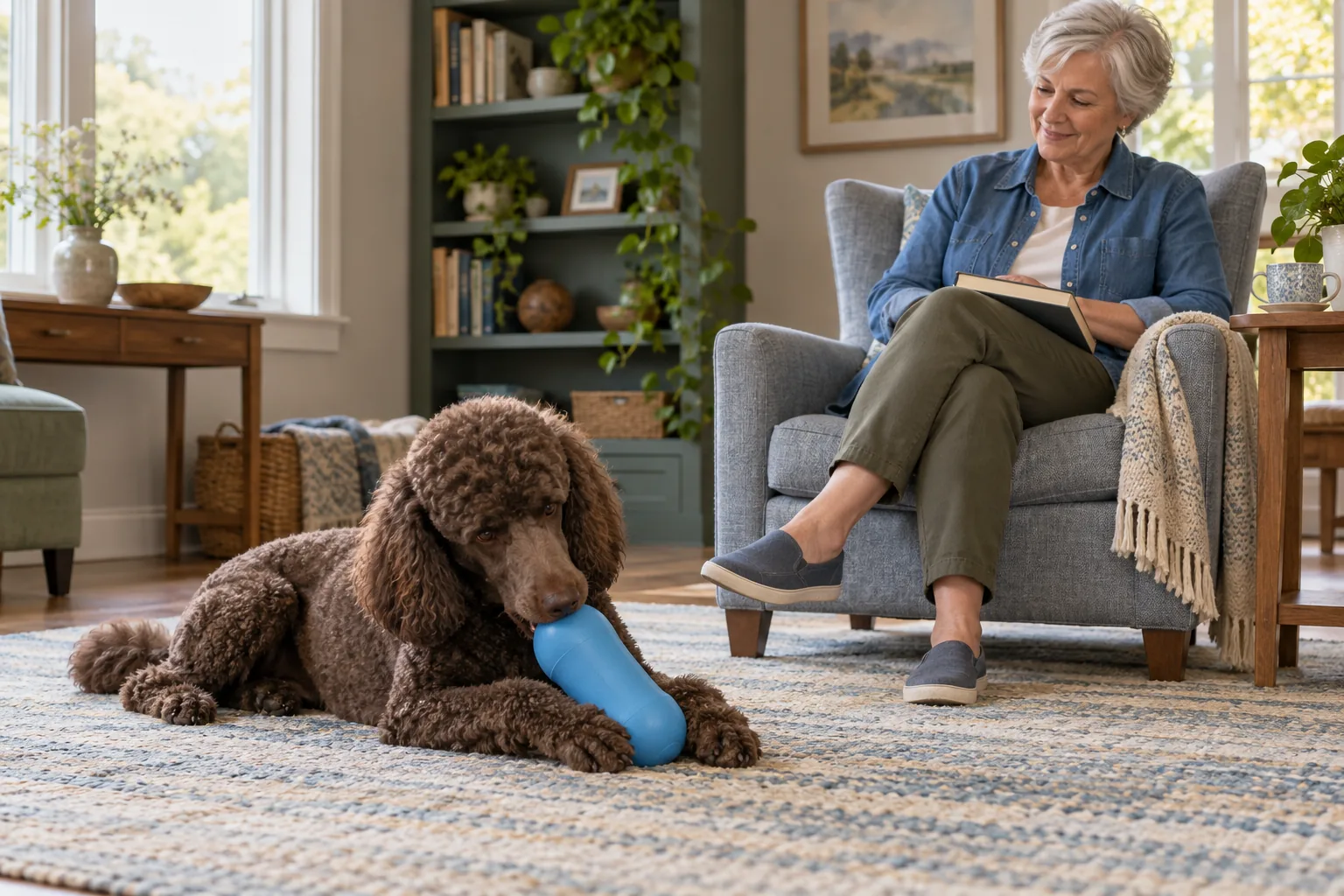
A dog chewing furniture can turn a quiet evening into repeated interruptions: you sit down, hear a scrape and find a mouth around a chair leg. Before asking for another command, look at what the room and the routine make available. Protecting the furniture and meeting the dog’s needs belong in the same plan.
This guide focuses on everyday chewing while an adult can supervise. It offers a practical way to organise access, choose an appropriate alternative and prepare for predictable busy moments. It does not diagnose the reason for damage, prescribe a treatment for distress when alone or promise that a particular toy will suit every dog.
Dog chewing furniture: start with the moment, not a label
Describe one ordinary situation: which item, what time, who was present and what happened just beforehand. “Started on the chair after dinner while we cleared the table” gives you a useful place to plan. Do not arrange another chewing episode to check your theory, and do not assume a damaged object reveals the dog’s intention.
Separate what you saw from what you found later. A marked table leg tells you that damage occurred; it does not tell you whether the dog was relaxed, uncomfortable or distressed at the time. Keep notes brief and neutral. They should help you decide what access to change and what to discuss with a professional, not build a case against the dog.
Seek veterinary advice for a sudden change, possible pain or repeated eating of non-food material. If material has been swallowed, contact a vet promptly for case-specific advice; breathing difficulty or an acute emergency needs urgent care. Do not force open the dog’s mouth or improvise treatment. Bite risk or guarding calls for personal professional help and safe distance.
Prepare one manageable part of the room
Choose an area where you can remain present and the dog already feels comfortable. Put tempting or hazardous portable items away, including cables, loose fabric and cleaning supplies. For a vulnerable room that cannot be supervised, arrange suitable alternative access rather than expecting a cue to protect every object when nobody can observe.
Keep essential care accessible: water, a comfortable resting place and appropriate company. A closed door is not a complete plan if it leaves the dog distressed or cuts off what they need. Do not introduce an unfamiliar crate or restricted space as an instant solution. If an access change worries the dog, simplify and seek advice rather than insist.
Walk through a real household task before the dog joins: clearing plates, answering a call or reading beside the chair. Can you still observe the dog? Is the alternative resting area usable, with no awkward squeeze behind furniture? Move what you can now. A small well-prepared area is more practical than trying to guard every chair leg in the house.

Choose for this dog and inspect before use
Pick a chewing item intended for dogs and suitable for the individual’s size and chewing habits. Read its instructions, including supervision and replacement guidance. A label describing something as durable does not make it suitable for every mouth or every way of chewing. Ask your veterinary team when dental issues, swallowing habits or other individual needs affect the choice.
The ASPCA position statement on chews advises following product directions and actively observing use. It also recommends immediate veterinary consultation if a chunk is consumed. The useful lesson here is individual selection and supervision, not a universal shopping recommendation. This article’s illustrative toy is not a tested product endorsement.
Before offering the item, look for damage, loose components or a size that is no longer appropriate. Set aside anything unsuitable while the dog is elsewhere. Do not leave a newly chosen item with the dog and go out to see what happens. If the dog regularly breaks or swallows pieces, get individual advice rather than keep trying progressively harder objects.

Offer the alternative before the predictable busy moment
Use your observation to choose a manageable time. If the vulnerable moment is when you settle down after dinner, prepare the supervised chewing opportunity before you start reading. Place the suitable item in an easy, comfortable area where you can see the dog. Do not push it into their mouth or hold it against their face.
Let the dog investigate or decline. A dog who walks away may need a different activity, rest, an ordinary care break or a simpler setting. Offering the same object more insistently does not explain that choice. Keep the furniture protected by the arrangement while you reassess, instead of waiting for a mistake so you can present the alternative dramatically.
Think about where people move. A narrow walkway where someone repeatedly steps over the dog is a poor place for a chewing opportunity. Give enough room for the dog to change position without being crowded. Other animals and children should not approach or compete for the item. An adult remains responsible for observing and ending the opportunity safely.
Notice the useful choice without interrupting it
When the dog chooses their appropriate item, acknowledge that choice calmly. There is no need to create excitement or repeatedly ask for a different action. If you use an established marker for a brief choice before chewing begins, our reward marker guide explains its timing. Chewing itself can then continue quietly under supervision.
The Dogs Trust guidance on destructive behaviour supports managing access, offering appropriate alternatives and rewarding useful choices instead of punishment. Apply that principle to the actual room. Do not shout, startle or scold after discovering damage, and do not chase the dog around to recover a piece of furniture or another object.
If the dog starts towards the protected item, calmly reassess the setup and offer an easier opportunity when it is safe to do so. Do not turn every approach to a chair into an exciting performance with guaranteed attention. The practical change is to make suitable choices available early and reduce repeated access to the vulnerable object.

Supervision means noticing when to stop
Stay attentive to how the item is being used, not just whether the furniture remains intact. If the object begins to deteriorate or the dog tries to consume parts, the opportunity needs to end safely. Do not reach into the mouth or pull an item away from a dog who is tense, guarding or difficult to approach. Get individual guidance for safe management.
Arrange the next occasion so there is a clear way to put unsuitable items away while the dog is elsewhere. If you cannot do that without confrontation, do not repeat the same setup. Our short training sessions guide concerns learning opportunities; it does not turn a risky item into an appropriate one through shorter exposure.
An adult looking at a screen for a long meeting is not necessarily supervising a chew. Plan around what you can actually observe. If you need to concentrate elsewhere, provide an already suitable comfortable arrangement and meet the dog’s needs before the task. Do not assume that a toy replaces supervision or that confinement resolves distress.
Leave room for rest and other everyday needs
Chewing does not have to fill every quiet moment. A dog may prefer to settle nearby, go out for a routine break or join an appropriate activity with you. Keep the week balanced around the individual dog’s ordinary movement, exploration, social contact and rest. Do not add exhausting exercise simply to obtain an evening without damage.
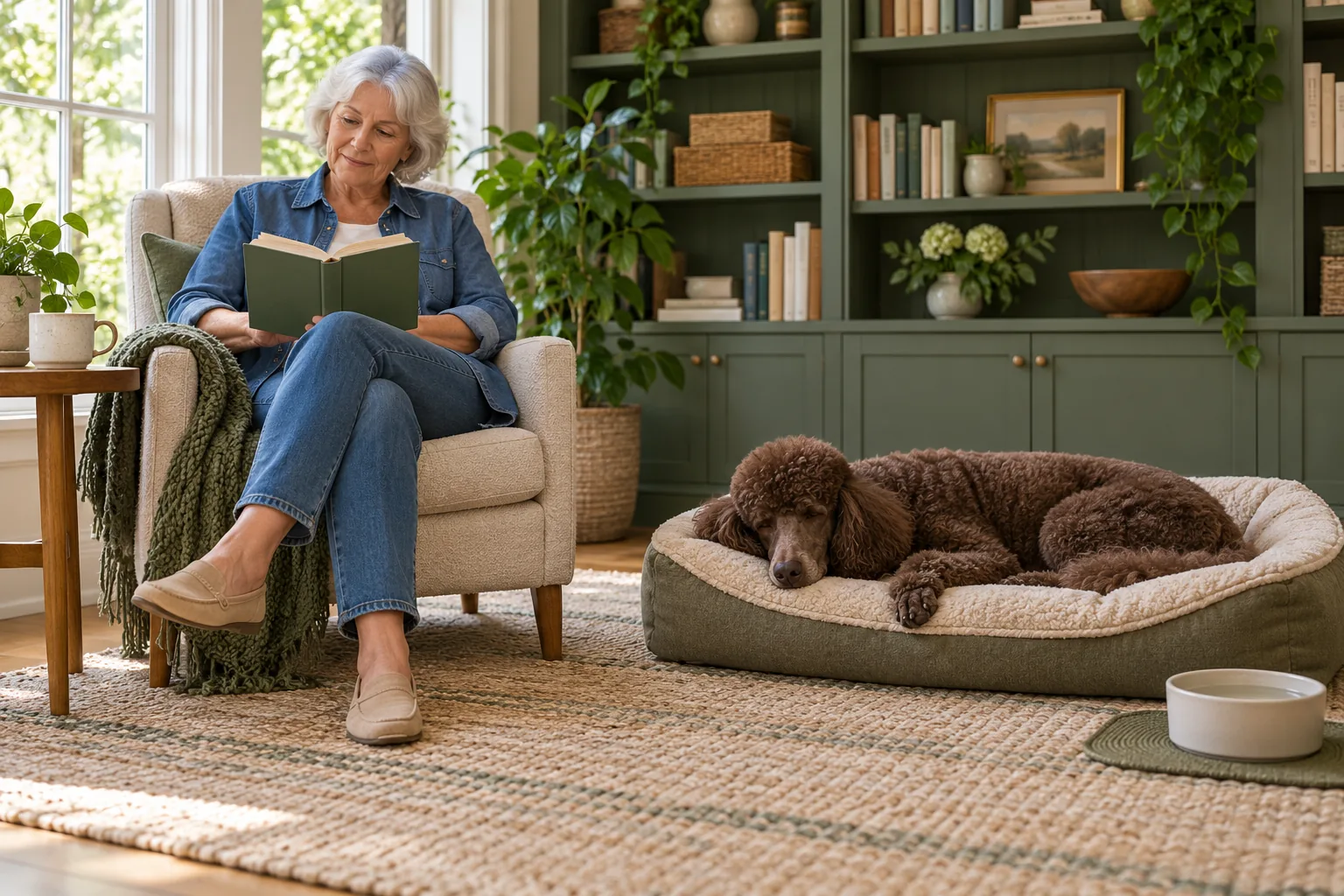
Provide a comfortable resting option with easy access to water. Our settling on a mat guide describes a separate resting skill if helpful. Rest is still available without completing that exercise. Put chewing items away safely when the opportunity is over; do not leave a damaged item beside a sleeping dog because they enjoyed it earlier.
Ask the household to use the same practical arrangement: which area is available, what requires supervision and where the unsuitable items are stored. Describe the plan clearly to another adult before handing over. A visitor should not have to guess whether a particular item is appropriate or whether the dog is comfortable being approached while using it.
Review the pattern without promising a quick cure
After a few ordinary opportunities, review practical facts: was the room prepared, was an adult able to observe and did the alternative fit the dog’s interest? Record what needs to change rather than count days without damage as a guaranteed cure. A new room, visitor or schedule change may require another look at the arrangement.
Damage mainly associated with being left alone, especially with signs of distress, needs a different assessment. Do not conduct long absences to test a chew or wait for the dog to work it out. Speak with your vet and an appropriately qualified reward-based behaviour professional about the individual situation. Household management cannot establish a diagnosis from the damaged furniture.
Keep the useful support while you seek help or adjust the routine. Success is an arrangement that meets needs, reduces hazardous access and allows appropriate activity and rest. The furniture matters, but so does whether the dog is comfortable and safe. There is no fixed deadline by which every dog should stop chewing every household object.
Common questions
Why does my dog still choose furniture when toys are available?
A pile of toys does not show that any particular option suits this dog at this moment. Look at accessibility, the item’s suitability and the routine, without concluding a cause from the choice alone. Repeated or sudden problems deserve individual assessment. Do not keep adding objects that the dog breaks or swallows.
Should I use a homemade spray on the furniture?
Do not apply household chemicals, strong flavours or improvised mixtures to something your dog may mouth. This plan relies on access, suitable alternatives and supervision. Ask your veterinary team before using a deterrent product, and never treat a sprayed surface as safe access to an otherwise hazardous object.
Can I leave the new chew while I go out?
Do not test a new item during an absence. Follow its directions and seek individual advice about suitability and supervision. Distress when alone needs its own professional plan. No chew, photograph or article can guarantee that a dog will be safe with a particular object while nobody is watching.
What if my dog growls when I approach the item?
Stop approaching and keep others safely away. Do not punish the warning, grab the item or try repeated tests. Seek personal professional advice for guarding and bite risk, alongside veterinary assessment where appropriate. Arrange prevention without forcing contact; this household chewing guide is not a guarding treatment programme.