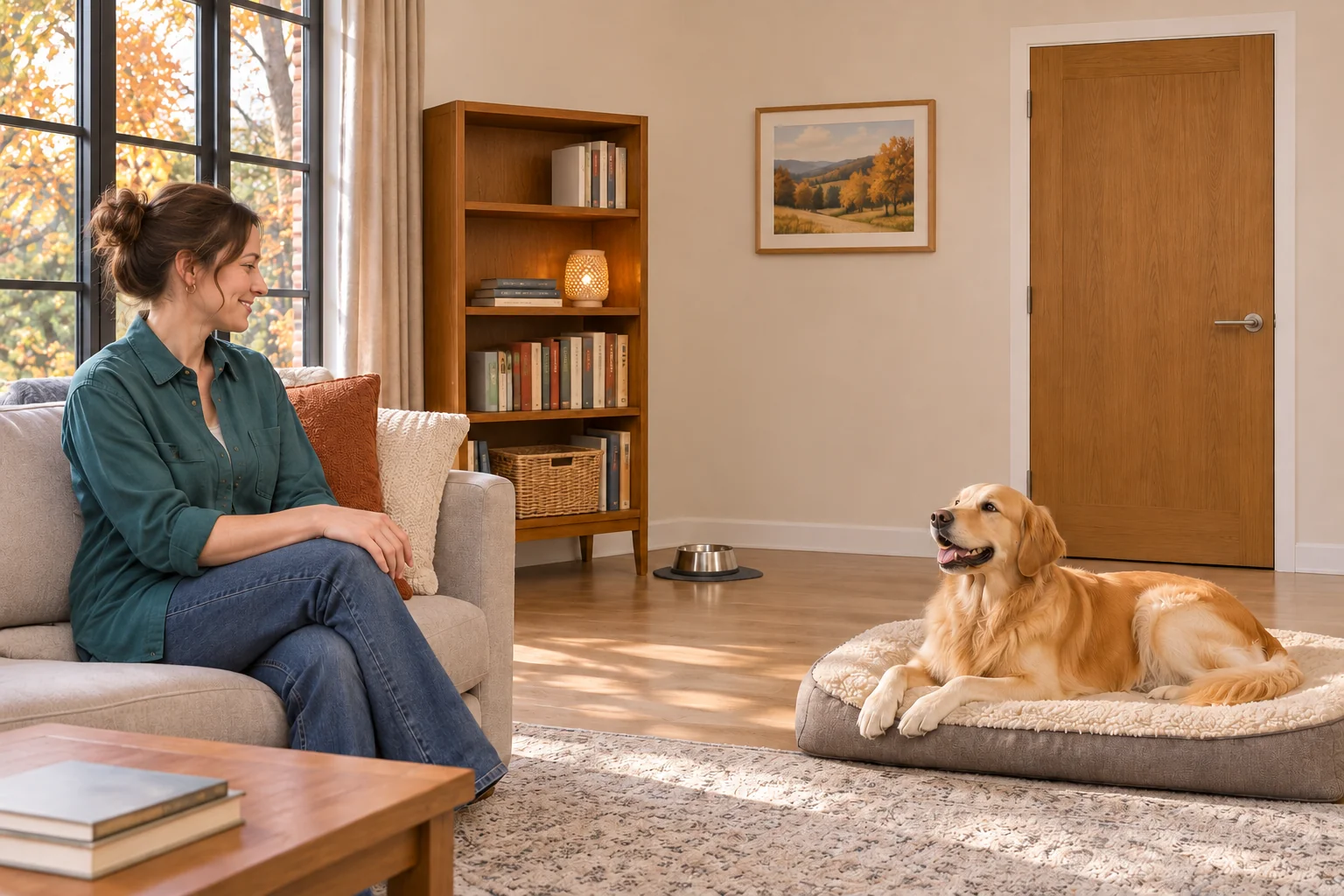
When your dog chases the cat around the house, a quick call from the sofa is not a reliable safety plan. The cat may move through a doorway, the dog follows, and an ordinary trip to food or a resting place becomes a frightening encounter. Begin before that sequence: how the rooms connect, which doors must stay closed and who is responsible when an animal needs to move.
This independent guide focuses on preventing another encounter and organising normal care while you obtain appropriate help. It needs no app and does not assess whether two animals can eventually share space. Keep them securely separated when chasing is a concern. Injury or possible injury after contact needs prompt veterinary advice; bite risk, intense fixation, distress, pain or sudden change needs veterinary and qualified individual behavioural support. Do not arrange a meeting to test them, hold a cat in front of a dog or put hands between animals.
Dog chases the cat: stop arranging another opportunity
Describe the last ordinary approach without recreating it. Did the cat cross the hallway while someone carried shopping, leave a room when a door was propped open, or pass the dog's resting place to reach water? “Door opened before the dog was secured elsewhere” identifies a household transition. “Only wants to play” assigns a motive and does not establish safety for the cat. You do not need to settle the motivation before preventing another chase.
Stop optional shared access while you seek advice about the individual animals. A person watching, a shouted cue or a high perch is not a replacement for secure separation. Keep both animals comfortable in suitable areas with normal care and human company. If separation itself causes distress or cannot be maintained reliably in your home, obtain urgent practical guidance from your veterinary team or relevant qualified support rather than improvising repeated encounters.
Choose one concrete household goal: each necessary movement happens without the animals meeting. This is useful management even if no training occurs. Do not measure progress by how close the dog can get before reacting, or by how long the cat tolerates being watched. A general article cannot give a safe distance, a deadline for introductions or a guarantee that these particular animals will be compatible.
Make the separate areas usable for ordinary life
Plan suitable areas for both animals before moving them. The cat needs access to its own essential resources, comfortable resting and hiding options, and space it can use without passing the dog. Keep food, water and toileting arrangements appropriately separated within the cat's area, rather than clustering everything tightly beside a door. Consider the individual cat's mobility and established habits; a high shelf is not useful if getting there is difficult or unsafe.
The Cats Protection guidance on cats and dogs emphasises separate spaces suited to the animals. Use that limited principle to check an actual day: can the cat eat, drink, rest and use the litter tray without a risky corridor crossing? Do not make essential care depend on the dog remaining still. Any arrangement that leaves an animal unable to meet basic needs needs individual review promptly.
Give the dog a comfortable area too, with enough room, normal water, rest, exercise opportunities and appropriate company. Avoid turning separation into punishment or prolonged distress in a cramped space. Our guide to a comfortable resting place can help with that everyday foundation. A bed is an available resting option; it is not a barrier that prevents a dog leaving to pursue another animal.

Check doors and handovers before moving an animal
Use a secure separation arrangement appropriate to the animals and your home, with qualified advice if you are unsure. A fully closed solid door may form part of that plan; check that it closes and latches properly without using the animals to test it. Do not assume a low gate, a chair, a partly open door or a cat's ability to jump provides enough protection. Visual access can also be difficult, so avoid placing animals on opposite sides of a transparent barrier as an experiment.
Walk through the human task while the animals remain safely in their own areas. Who needs to enter, what will they carry and which door might be left open? Put supplies where you can reach them without juggling a handle and an animal at the same time. If a planned route cannot be used without overlap, change the route or obtain help with the layout. Do not rely on moving faster through an unreliable gap.
Agree who owns each transition. Before one adult opens a relevant door, the other confirms where the animals are and that the separation is secure. A visitor, delivery or phone call is a reason to pause, not to assume someone else is watching. Keep children out of this responsibility. Clear adult handovers are easier to repeat than a plan that depends on everyone noticing a cat entering a shared hallway.
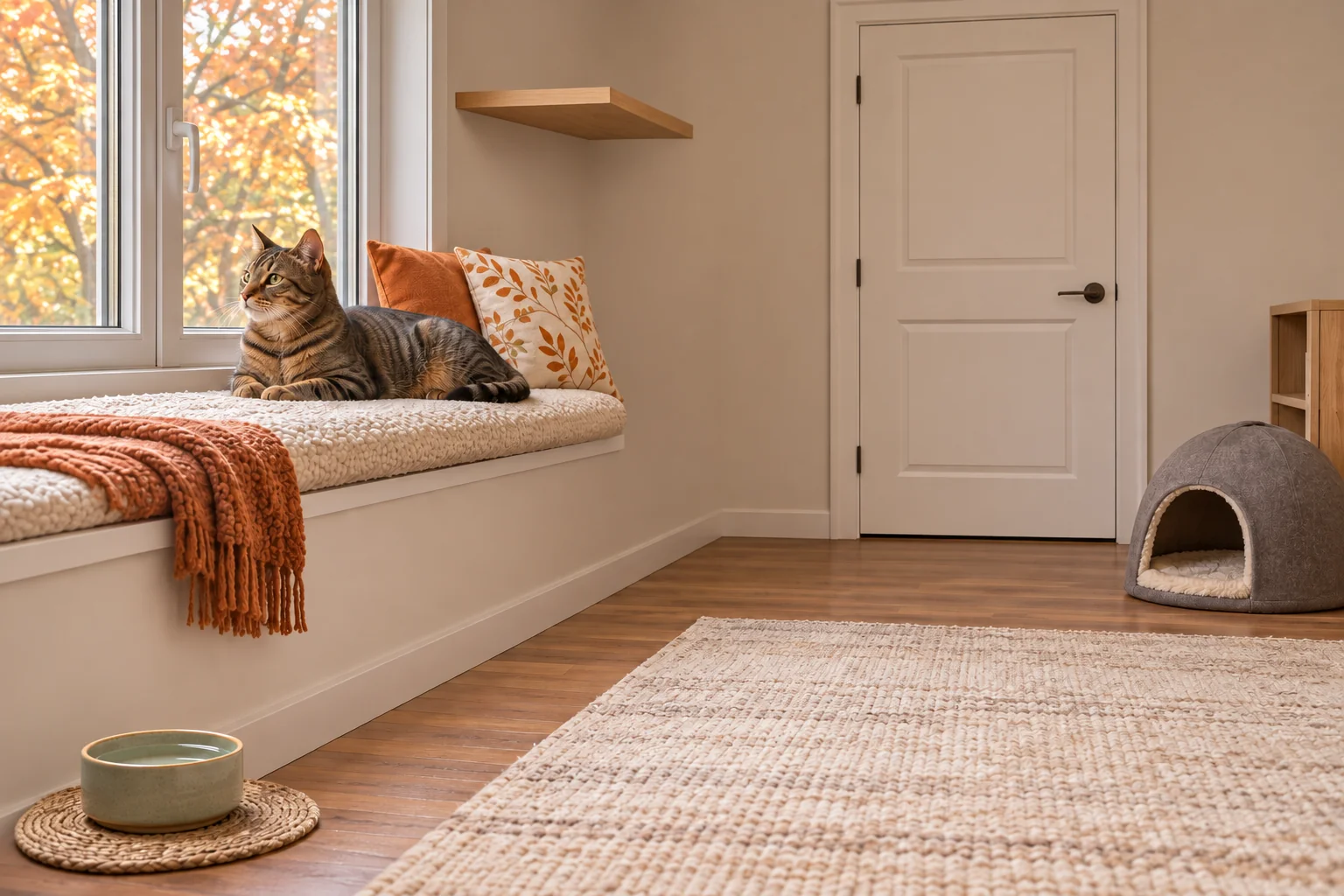
Practise familiar dog responses with the cat absent
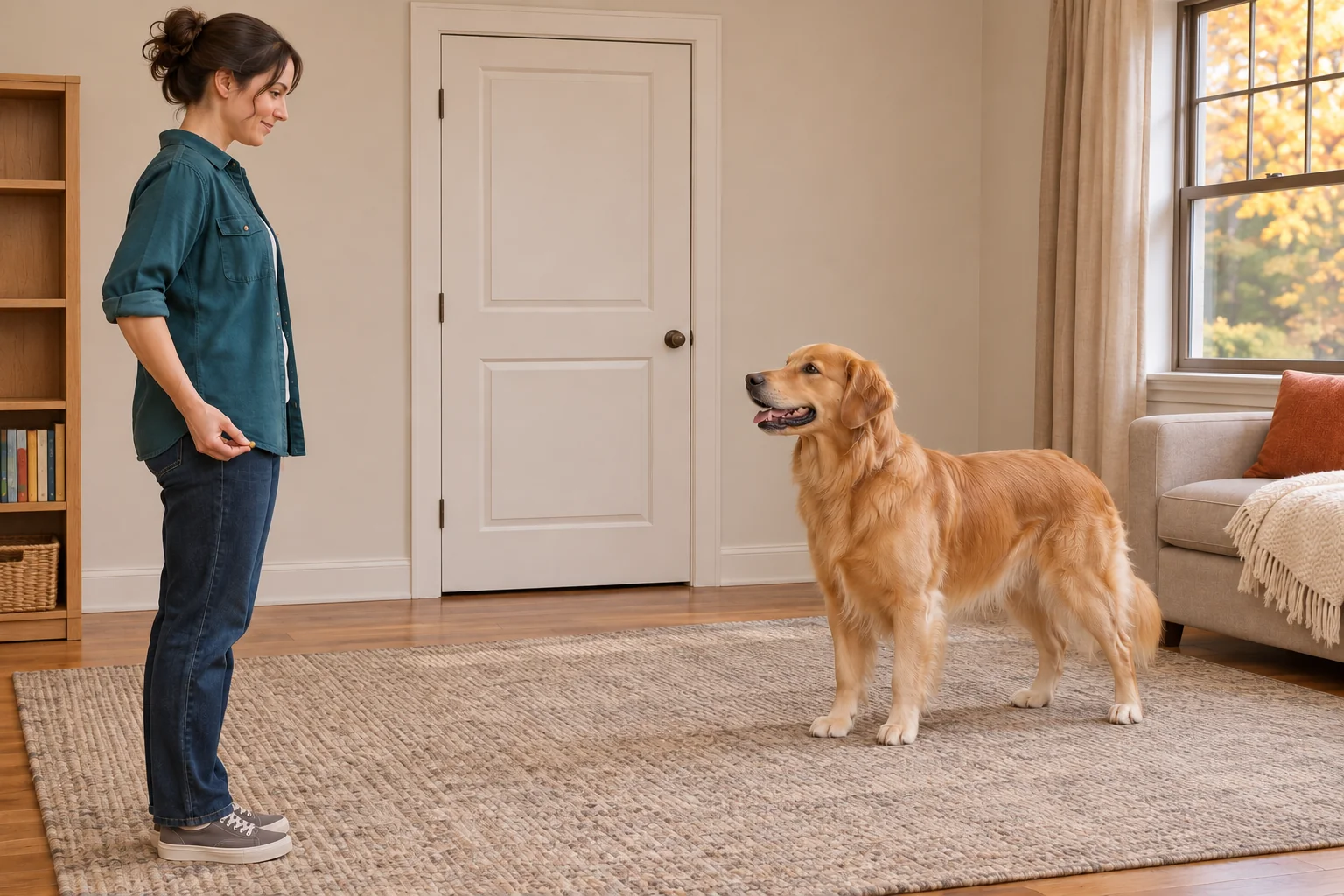
If optional practice is appropriate, use a quiet part of the dog's secure area without the cat visible or nearby as a training target. Choose an easy response already familiar to the dog, such as turning towards you when invited. Prepare a suitable reward, keep your movements ordinary and pause after a manageable opportunity. You are rehearsing human timing and a known response, not proving the dog can ignore a moving cat.
Our reward marker guide explains clear feedback for a familiar foundation. Reward at an accessible point away from the separating door. Do not place food beside the cat's route, feed the animals nose to nose through a gap or use the cat to make the exercise more interesting. Food and toys can be valued resources; adding them near an uncertain encounter does not automatically make that encounter safer.
A response in a quiet room does not establish reliability around a cat. Keep the secure management in place even if the dog turns promptly every time in that separate rehearsal. If the dog cannot settle away from the cat or repeatedly fixes on the door, stop optional practice and seek individual advice. Repeating cues closer to the trigger or withholding a reward until the dog stops watching is not the next step in this guide.
Ask for assessment before considering shared access
Contact your veterinary team and a suitably qualified reward-based behaviour professional with a clear description of the animals and household. Include any injuries, previous chasing, difficulty maintaining separation and changes in eating, resting or ordinary behaviour. Give observations rather than a diagnosis of play, jealousy or predatory intent. An individual assessment can consider needs and risks that a general article cannot resolve from a few sentences.
The PDSA guidance on introducing cats and dogs notes that compatibility varies and advises professional support when they do not get along. That is not a promise that every combination can safely progress to shared access. Follow advice tailored to your animals rather than choosing an introduction stage from a checklist because a certain number of days has passed.
Do not stage a video of the chase for the appointment, restrain the cat in a carrier near the dog or exhaust the dog to make a meeting appear calmer. Describe events that already happened and ask what information can be gathered safely. If you cannot meet both animals' welfare needs while keeping them apart, tell the professional promptly. The next decision needs a workable care plan, not a more ambitious demonstration.
Record a normal day and its difficult transitions
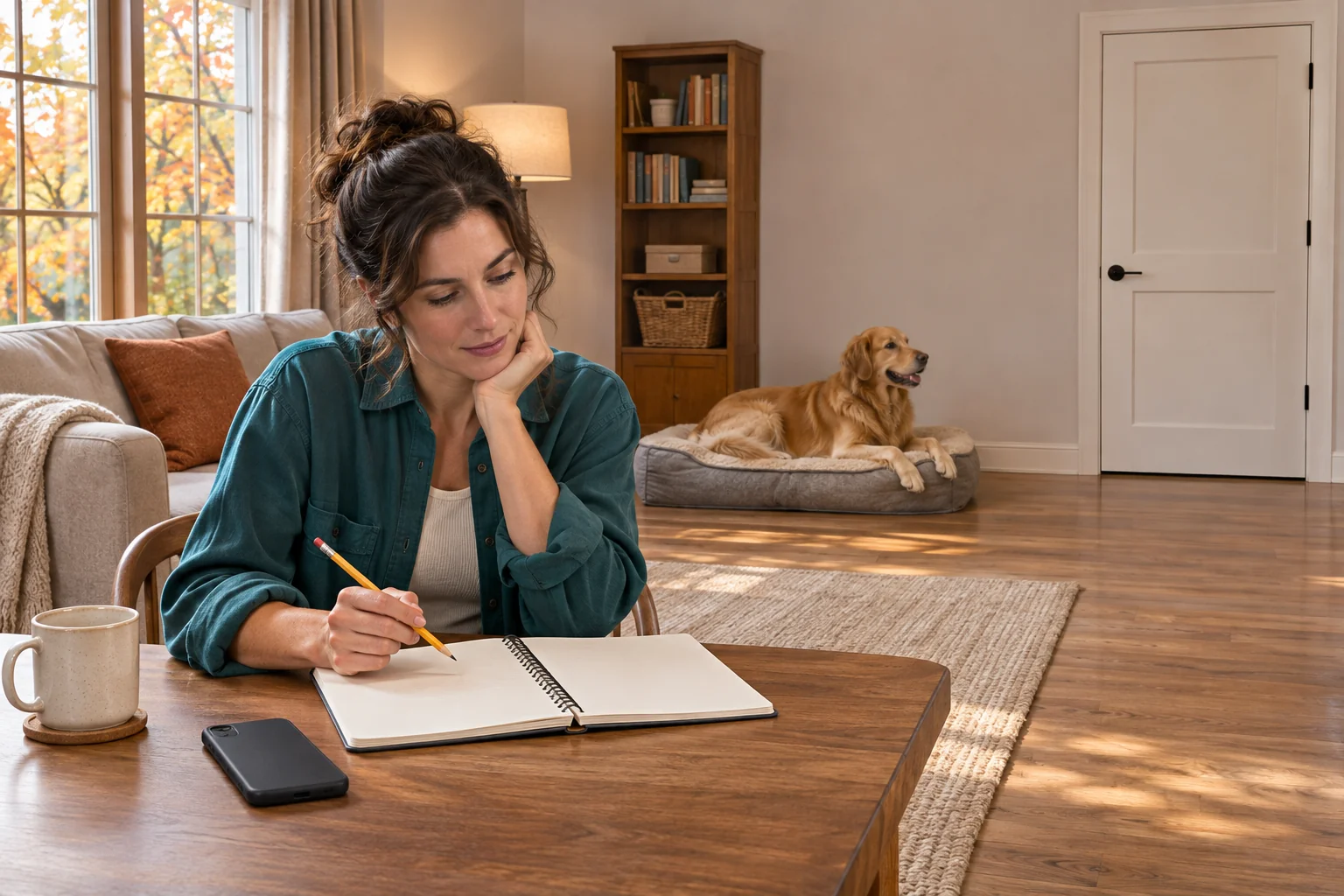
Use a simple paper note to record the arrangement: animals' locations, relevant doors, necessary movements and the adult responsible. “Cat resources available in own area; dog walk before room change; doors checked by adult” explains an ordinary sequence. Keep observations about each animal separate. A quiet dog does not tell you whether the cat is eating normally, and a cat staying out of sight does not by itself prove comfort.
Our short practice guide helps keep an optional dog-only rehearsal brief. Household safety continues outside that rehearsal, including overnight, when visitors arrive and when you leave home. Avoid treating the end of a training session as permission to remove separation. If no suitable practice took place, record the care and management that actually happened instead of inventing a successful exposure.
At the review, identify one weak handover you can improve without bringing the animals together: prepare supplies earlier, clarify who checks the door or simplify a route. If an unexpected encounter occurs, seek advice appropriate to any injury or immediate risk and revise the arrangement. Do not punish afterwards or recreate the scene to see whether it happens twice. A near miss provides a reason to improve protection now.
Keep welfare and reliable routines in the plan
Continue normal appropriate walks, enrichment, rest and company for the dog while arranging the cat's care separately. Each animal needs a life beyond avoiding the other. A schedule that is impossible for the adults to maintain, leaves one animal distressed or repeatedly depends on an unsecured door is not a sustainable solution. Tell your professional support team what the real limitations are, including working hours, access needs and household interruptions.
When another adult takes over, explain the exact arrangement rather than saying only “watch them”. Show the relevant doors while the animals remain secure, agree who can change the plan and make sure visitors understand the boundary. Do not turn the handover into a demonstration with both animals present. A new person should be able to carry out routine care without guessing which room is currently safe to enter.
At the next review, judge success by prevented encounters, usable separate spaces and needs being met, not by closeness or apparent friendship. Keep the plan conservative until individual advice supports any change. There is no requirement for a photograph of the animals together and no promised timetable. The practical aim is a safer, more manageable household while the right people help you decide what is realistic for these animals.
Common questions
Should I let them sort it out together?
No. Prevent further chasing with secure suitable separation and seek individual advice. Watching a meeting or calling the dog is not enough to establish safety for the cat.
Is a high cat shelf enough protection?
A resting or hiding option can support the cat’s welfare, but it does not replace reliable separation. Its accessibility and the complete household layout need to suit the individual animals.
Can a good recall prove my dog is safe with the cat?
No. A familiar response practised without the cat does not establish reliability during a chase. Keep management in place and obtain qualified assessment before considering shared access.
What if there has been contact or an injury?
Seek prompt veterinary advice for injury or suspected contact and appropriate professional help with immediate risk. Do not put hands between animals or recreate the encounter for a demonstration.