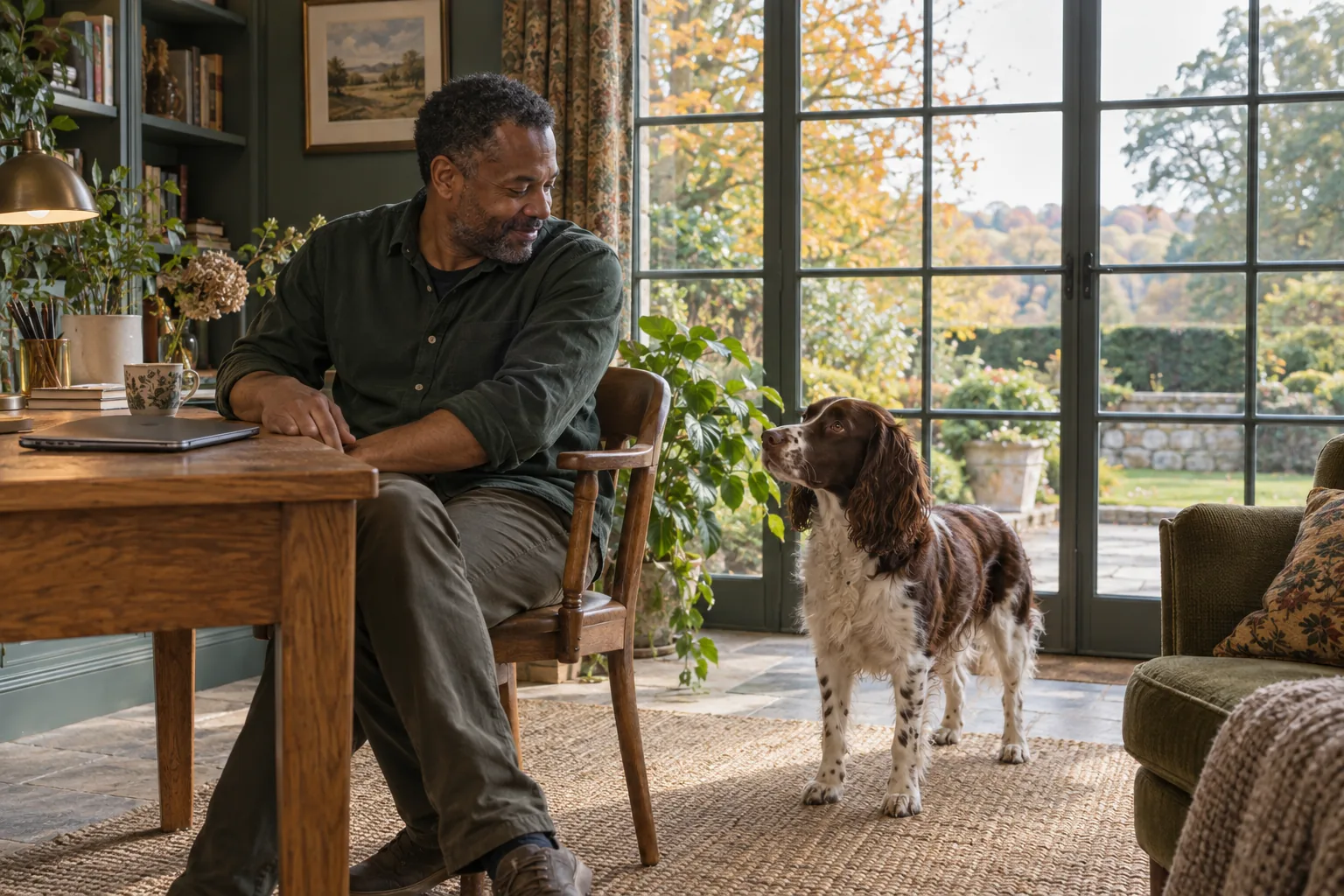
Is your dog barking for attention just as you sit down to work or open a book? It is tempting to make silence the first task. Start earlier: check what the dog needs, arrange ordinary contact and practise an easy quiet way to approach you while you are available. The aim is a manageable shared routine, not a dog who never communicates.
This independent guide works without an app. It addresses brief occupied moments with an adult still present, not distress during separation, alarming sounds or handling. You cannot diagnose the reason for barking from its sound. Pain, sudden change, marked distress or bite risk needs individual veterinary or qualified reward-based behaviour support. Normal care must never depend on a dog staying quiet.
Dog barking for attention: describe the routine first
Pick one recurring situation rather than every bark in the day. Write down where you are, what happens immediately beforehand and what you do next. “I sit at the desk after lunch; she approaches; I keep reading; then she barks” describes a sequence. “She is demanding” is an interpretation that does not show you where an easier opportunity belongs.
Notice what else is happening. A delivery sound, a passerby or another animal could change the picture. If the dog is directing attention toward the window, repeatedly checking an exit or reacting to touch, this quiet-request exercise may not address the relevant problem. Do not recreate the event to find out how long the dog will bark.
Keep observations modest. You can record a loose body and an ordinary approach without concluding that every bark is harmless. You can note pacing without diagnosing anxiety. Bring uncertain or substantial changes to a professional rather than assigning a label from a checklist.
Dogs Trust's barking guidance explains that vocalisation has different functions and that the surrounding situation matters. For your first adjustment, choose a quiet occasion when needs can be met and another person or household task is not competing for your attention.
Prepare ordinary care before a practice opportunity
Check water, the normal feeding routine, an appropriate toilet opportunity and a comfortable place to rest. Consider whether your dog has had suitable movement, exploration and social contact. These are care decisions, not rewards to withhold until an exercise succeeds. Keep meals and necessary outings available regardless of barking.
Prepare the room while the dog is elsewhere or comfortably occupied with supervision. Clear trailing cables, bags and objects that can fall from the desk. Leave a route away from you and a familiar resting option. Do not tether the dog to furniture or close them into an unfamiliar space to obtain quiet.
If you offer an activity, choose one appropriate for this particular dog and supervise it. An intact toy that is suitable for one dog may not suit a dog who tears and swallows pieces. Do not introduce a new chew immediately before a call during which you cannot watch. An activity should add comfort, not conceal a problem.
Separate a real work commitment from training. A meeting that cannot be interrupted needs care arrangements first, perhaps another adult who can provide company. The first exercise happens when you can stop. Attempting a long call and hoping the dog remains quiet gives you little room to respond safely.
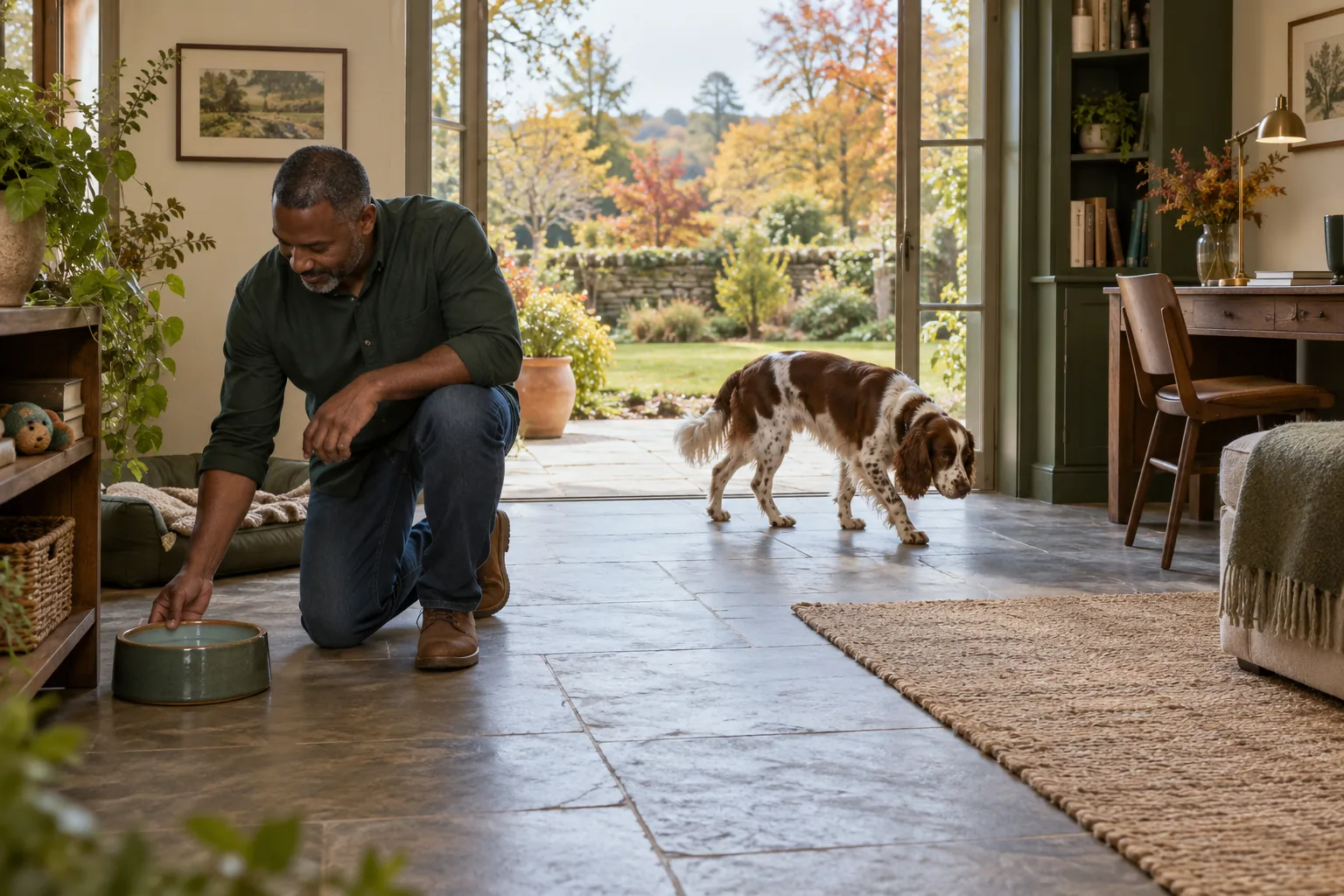
Choose one easy way for the dog to ask
A quiet approach with all paws on the floor is enough to begin. It need not include sitting, lying down or touching a special target. Choose something comfortable that you already see in relaxed moments. A dog with physical difficulty should not have to perform a prescribed posture to receive normal contact.
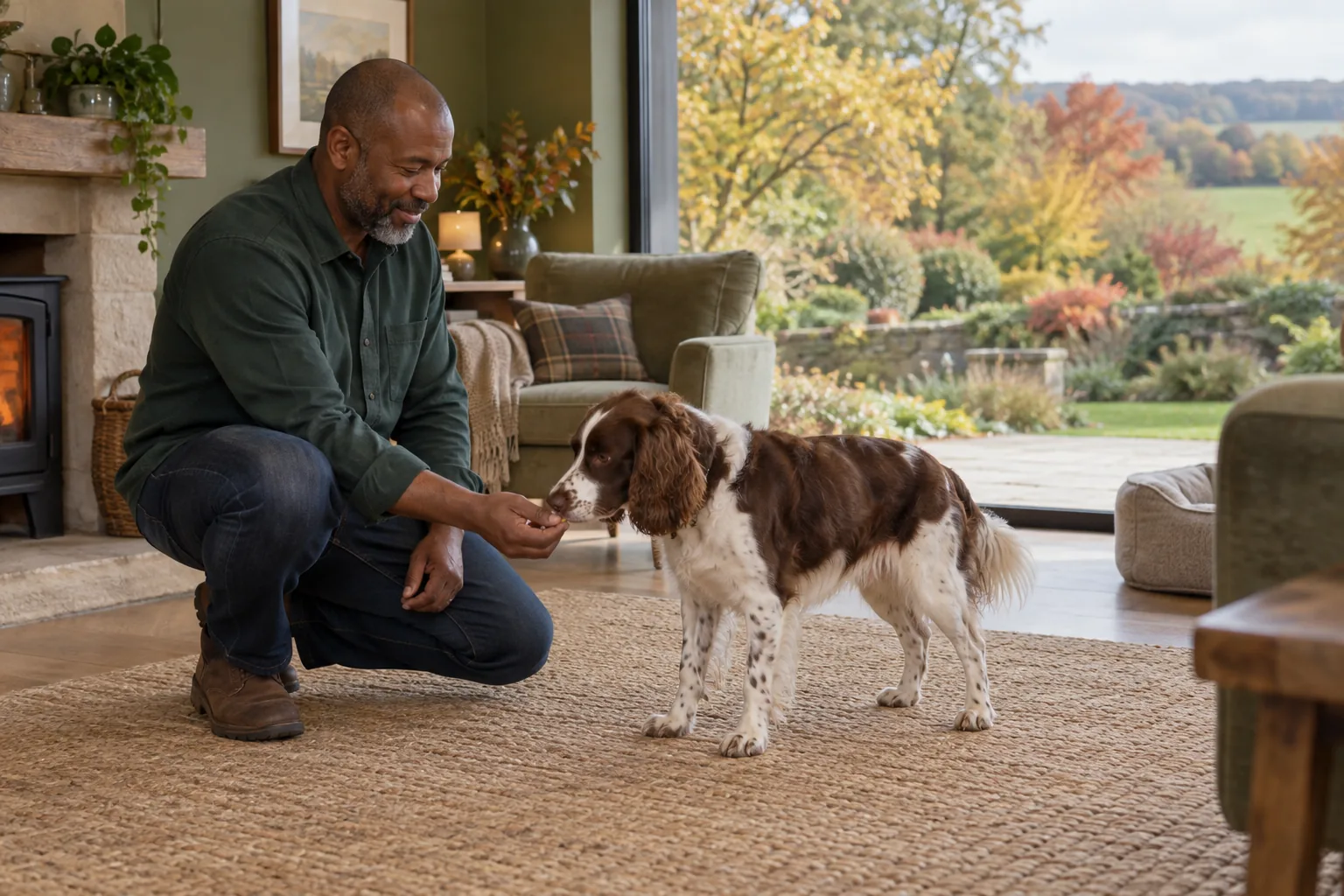
Agree what counts in plain words: “Walks toward me without jumping, body comfortable.” Decide how you will respond when you are available. That might be a brief friendly greeting, a suitable small food reward or gentle contact the dog enjoys. Let the dog decline touch or move away.
Make the response easy for you too. Keep appropriate rewards within reach before practice, using ordinary dietary allowances. Pick a position where you can deliver without bending over the dog's head or causing a scramble under the chair. Do not hold food visibly out of reach while waiting for the dog to give up barking.
This is an opportunity to teach a useful request, not a rule that a dog must earn water, toileting or help. If needs are uncertain, attend to them first. The dog can ask in different ways outside this little exercise; your plan should increase your understanding rather than narrow it to one approved movement.
Rehearse while your attention is fully available
Begin away from a busy task. Stand or sit comfortably in a quiet room and notice an ordinary voluntary approach. Mark the visible action with a familiar marker and respond promptly. Our reward-marker guide helps you coordinate a marker with a reward; establish an unfamiliar marker separately before using it here.
Deliver food low enough that the dog can remain comfortably grounded. If you use gentle contact, pause to see whether the dog stays voluntarily or moves away. An enthusiastic human greeting can make the exercise harder for some dogs. Match the response to the dog in front of you, rather than copying a dramatic demonstration.
After one comfortable interaction, allow a break. Do not keep stepping away to provoke another request. You might return to a normal shared activity or let the dog explore the safe room. There is no required repetition count or deadline. A single clear experience can be the whole opportunity.
RSPCA's training advice supports rewarding wanted behaviour and avoiding punishment. Here the practical question is whether your arrangement lets you notice the quiet action before frustration builds. If approaches are already urgent, food grabbing appears or the dog is tense, stop and choose an easier setting on another occasion.
Add one tiny occupied moment
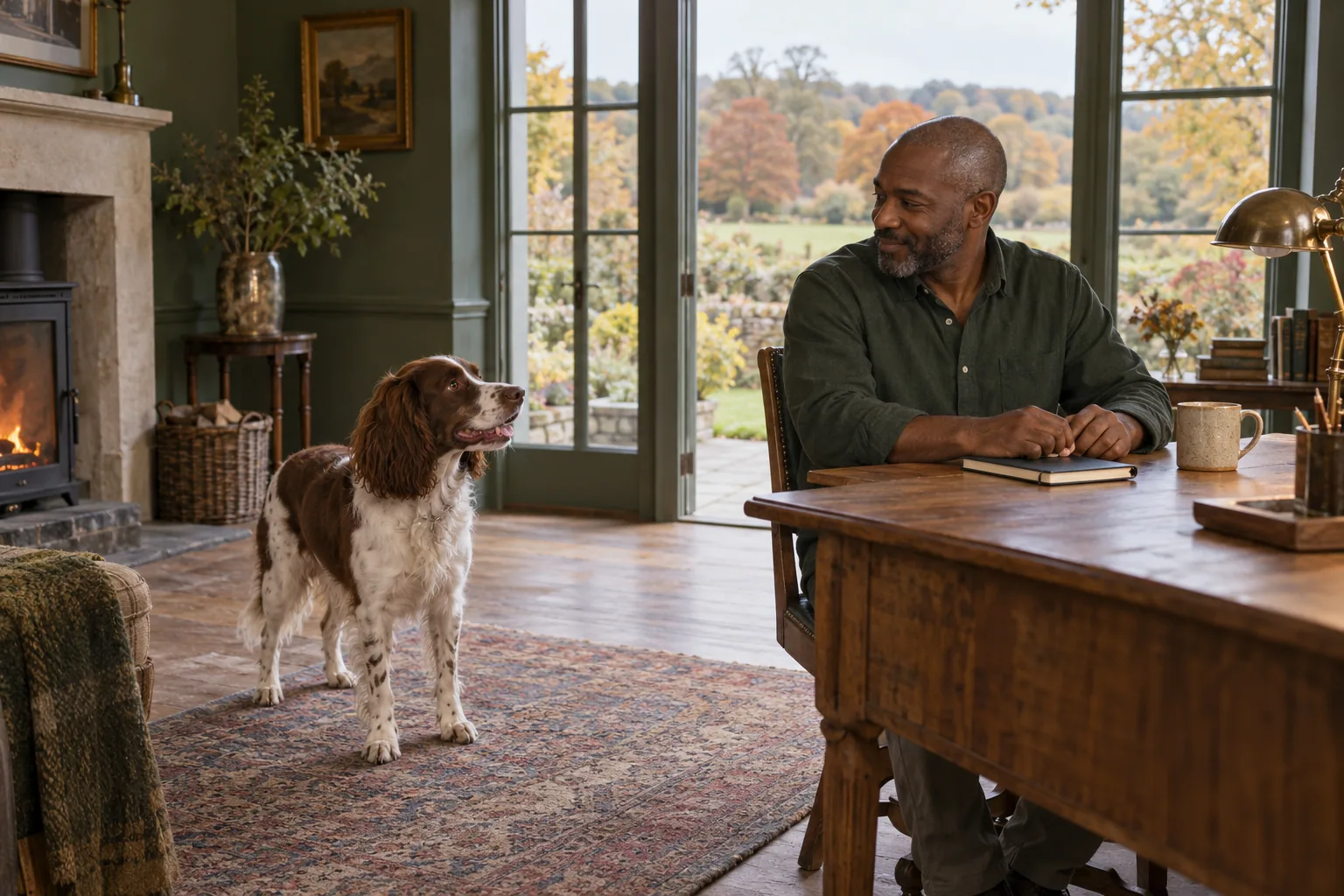
Now introduce a very small version of your activity while remaining able to respond. You might put a hand on a closed notebook, look at one page or sit briefly at the desk. Avoid starting a real meeting, opening noisy software and answering the phone simultaneously. Change one part of the situation.
Notice comfortable quiet behaviour already occurring, including an easy approach or relaxed standing nearby. Offer the prepared response before the noisy sequence begins. Then finish that small desk action and take a normal break. You are looking for a workable starting point, not measuring the longest silence you can obtain.
If your dog becomes watchful, crowds the chair or starts barking, the step was not a reason to persist. Return attention to safety and needs, end the exercise and make the next opportunity easier. A shorter action, less clutter or a different time may be a sensible change.
Our short-session guide can help organise these tiny opportunities. Keep an actual occupied period separate: arrange support that fits how your dog can currently cope. Successful practice with a notebook does not establish readiness for an hour of uninterrupted work.
When barking starts, review rather than test
Stay calm and check the immediate situation. Does the dog need to go outside? Is something unexpected visible or audible? Are they uncomfortable, worried or seeking distance? Address care and safety. Do not decide that barking must be ignored merely because you are sitting at a desk.
End the practice if the dog is struggling. Avoid shouting, holding the mouth shut, startling devices or following the dog to insist on a posture. You also do not need to stand motionless through escalating distress to prove consistency. Arrange a manageable normal activity and seek help if you cannot understand or safely respond.
Try not to build an exercise in which barking is deliberately provoked and then followed by a staged quiet moment and food. Repeatedly holding a reward while waiting beside a barking dog gives you a difficult sequence to manage. The next planned opportunity should begin earlier, with needs attended to and the quiet request easy to notice.
One noisy interruption does not tell you that everything is lost. Record what made the arrangement difficult, and change it before trying again. If barking accompanies separation, substantial fear or persistent discomfort, obtain an individual plan rather than stretching this exercise to cover a different problem.
Make social breaks part of the household routine
Offer enjoyable ordinary contact outside training as well. A brief garden visit together, gentle touch when invited or quiet company can fit between household tasks. Social contact should not appear only after a noisy interruption. Choose breaks the dog can comfortably enjoy, without turning every greeting into a test.
If two adults share care, explain the routine before work begins. One person might provide company while the other takes a call. Agree who checks water and handles the toilet opportunity. “I will take the next break with her before opening the laptop” is more useful than telling everyone to be stricter.
A resting place can be an optional alternative nearby. Our settling guide offers separate foundations if that is suitable for your dog. Do not repeatedly send the dog away to remain still, or treat getting up as failure. Comfortable rest is different from holding a position while an unmet need continues.
Busy days need realistic arrangements. If you cannot offer company and breaks, organise suitable help. Extending work hours while withholding interaction is not a progression step. A routine is useful when it allows both people and dog to meet ordinary needs, including on days when no formal practice takes place.
Keep a small record and know when to get help
Write a short description after the opportunity: setting, needs checked, quiet action observed, your response and next adjustment. “After a toilet break, approached quietly when I touched the notebook; greeted briefly; stopped before opening email” is something another adult can understand. “Good all afternoon” hides the practical details.
Compare comfort and preparation rather than counting only barks. A dog who is silent but tense is not the goal. A routine with fewer interruptions may simply have had better support that day; it does not prove a permanent change. Keep the helpful care arrangements in place.
Speak to your vet about pain, sudden changes, new night-time vocalisation or other concerns about wellbeing. Substantial distress, possible separation difficulties, repeated unsuccessful practice or bite risk needs personal help from an appropriate qualified reward-based professional. Keep people safe without forced handling while arranging support.
Your next step can remain small: prepare the room, check needs, notice one quiet request and take a planned social break. A useful starting routine gives your dog more ways to connect and gives you clearer information about what the household needs to change.
Common questions
Should I ignore every bark for attention?
No. Check needs, surroundings and wellbeing first. Do not ignore pain, toileting needs, fear or separation distress. This guide teaches a quiet request before the noisy sequence starts; it is not an instruction to wait through escalating distress. Seek individual help when the reason is unclear.
Must my dog sit to receive attention?
No. A comfortable quiet approach can be the starting action. Choose something physically suitable and voluntary. Normal care is not conditional on performing it. Gentle contact should also be optional: pause and allow the dog to move away rather than holding them beside you.
What if I have a work call that cannot be paused?
Arrange suitable company and care before the call, using support your dog is comfortable with. Practise tiny occupied moments separately when you can stop. One easy notebook rehearsal does not demonstrate readiness for prolonged work or for being left alone.
How soon will barking stop?
This plan does not promise silence or a timetable. Look for comfortable participation and a more workable routine, not a fixed number of quiet minutes. If the situation stays difficult, changes suddenly or includes fear, pain or bite concerns, get personal professional help.