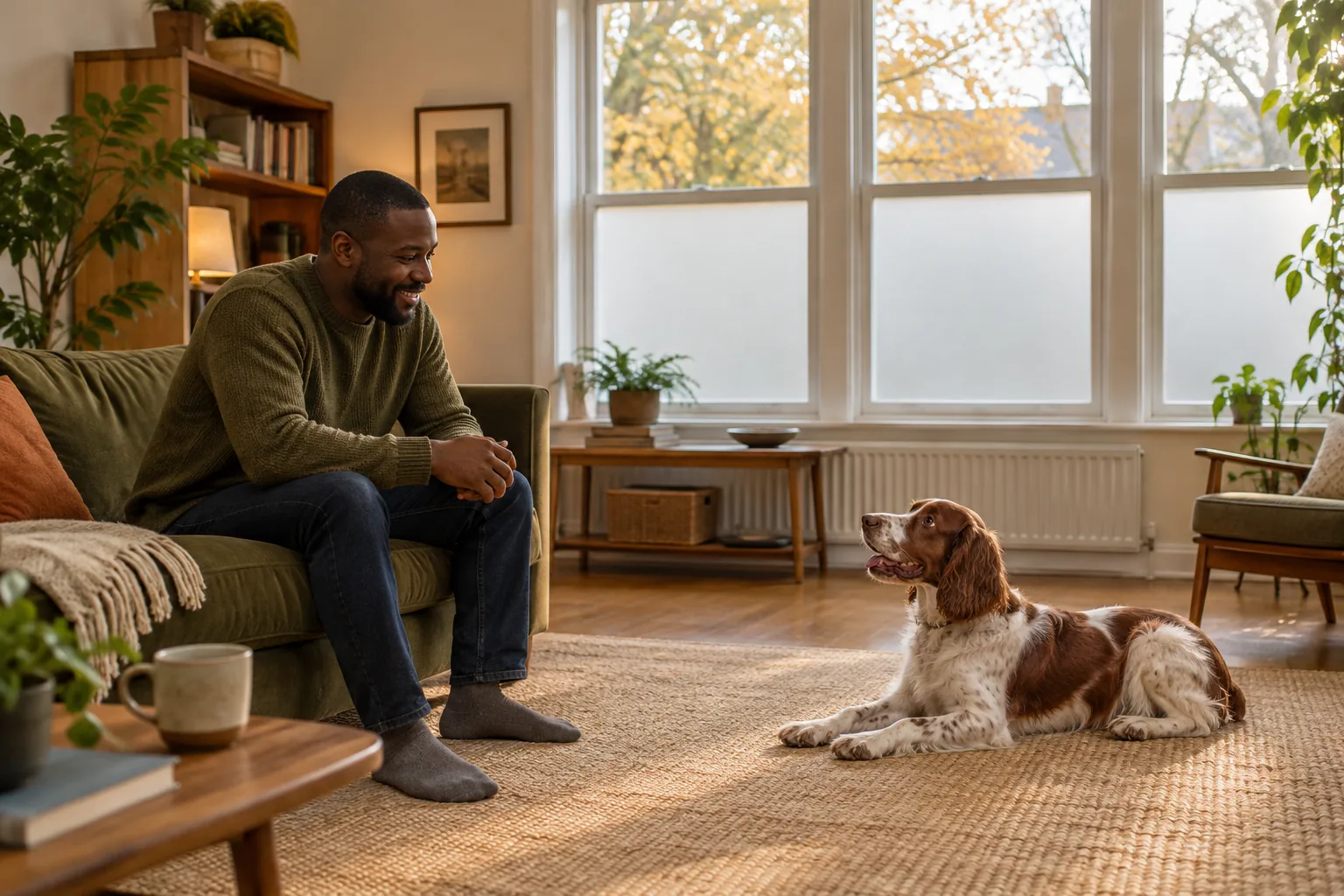
Is your dog barking at the window whenever someone passes? Begin by making the room easier to inhabit. A useful first change may be covering the part of the view that repeatedly draws your dog's attention and providing another comfortable place to rest. Ordinary care comes first; you do not need a passing person for every practice opportunity.
This independent guide gives a small household plan, an easy turn-away exercise and a way to review the conditions. It cannot diagnose the reason for barking. Seek personal veterinary or qualified reward-based behaviour advice for pain, sudden changes, persistent distress, rushing at glass or bite risk. Keep windows and exterior routes secure throughout. A quieter moment never proves that an open window or off-lead outdoor setting is safe.
Dog barking at the window: start with the view
Walk through the room while your dog is comfortably elsewhere. Which part of the street can they see from the floor, a chair or the sofa? A narrow strip of pavement may bring every pedestrian close to the glass. Notice the places that allow prolonged watching, then choose one practical change rather than rearranging the entire home at once.
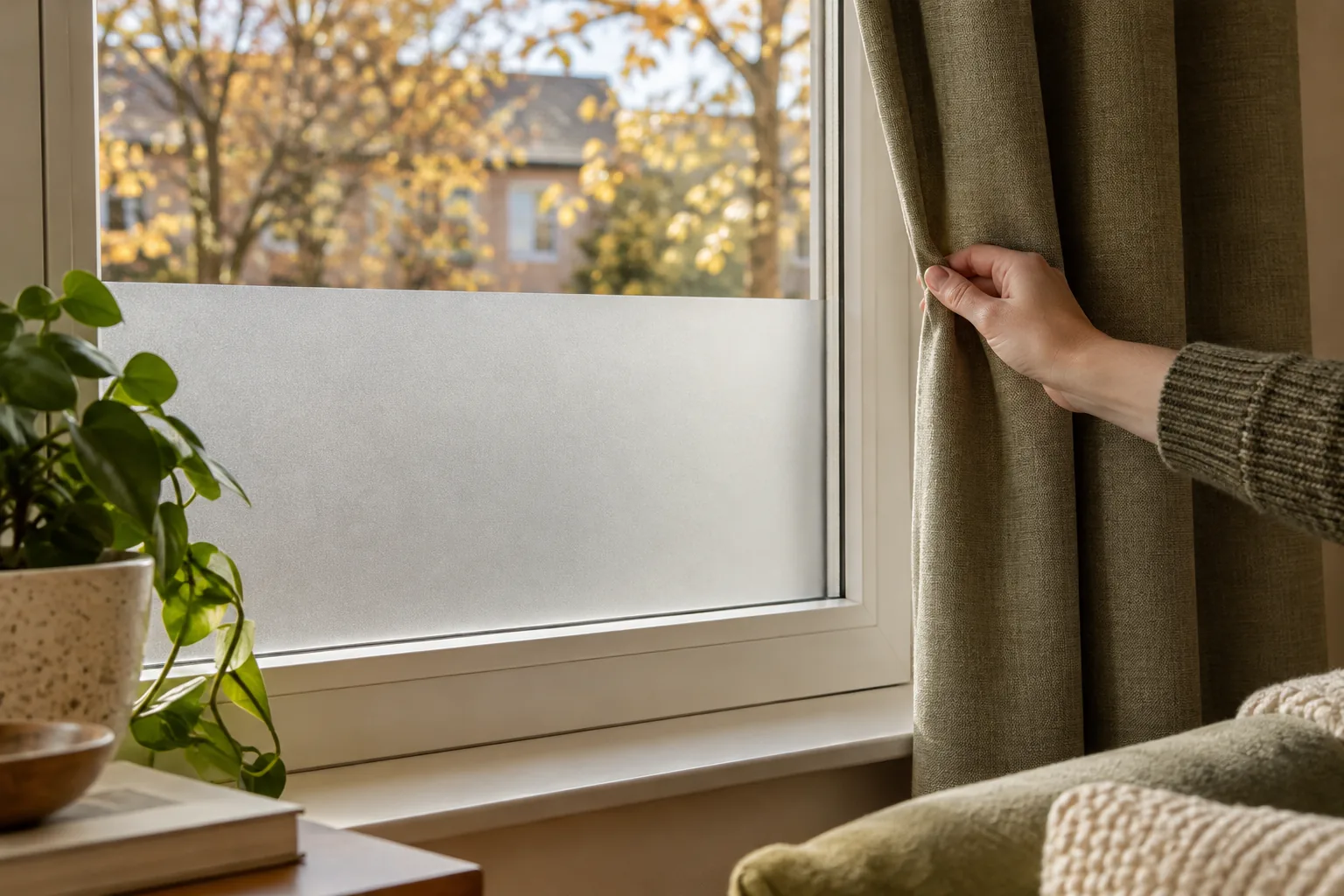
An appropriate curtain or securely installed opaque privacy covering can reduce that view while retaining useful daylight. Check the installation and the materials for your actual window. Keep blind cords inaccessible, remove loose pieces the dog could chew and preserve required ventilation. Never open a window to offer a clearer view during an exercise. Screens intended for insects are not secure dog barriers.
Make the change when the dog is away from the area, so ladder use and handling are separate from practice. Consider reflections and gaps at the sides: the apparent cover may still leave a busy line of sight. Check from the dog's usual height without encouraging them to climb. Covering a view can remain an ordinary household arrangement for as long as helpful.
The Dogs Trust barking advice includes managing access to window views. Here, the practical aim is reducing repeated difficult encounters while you organise care and decide whether a small exercise is suitable.
Give resting a comfortable alternative location
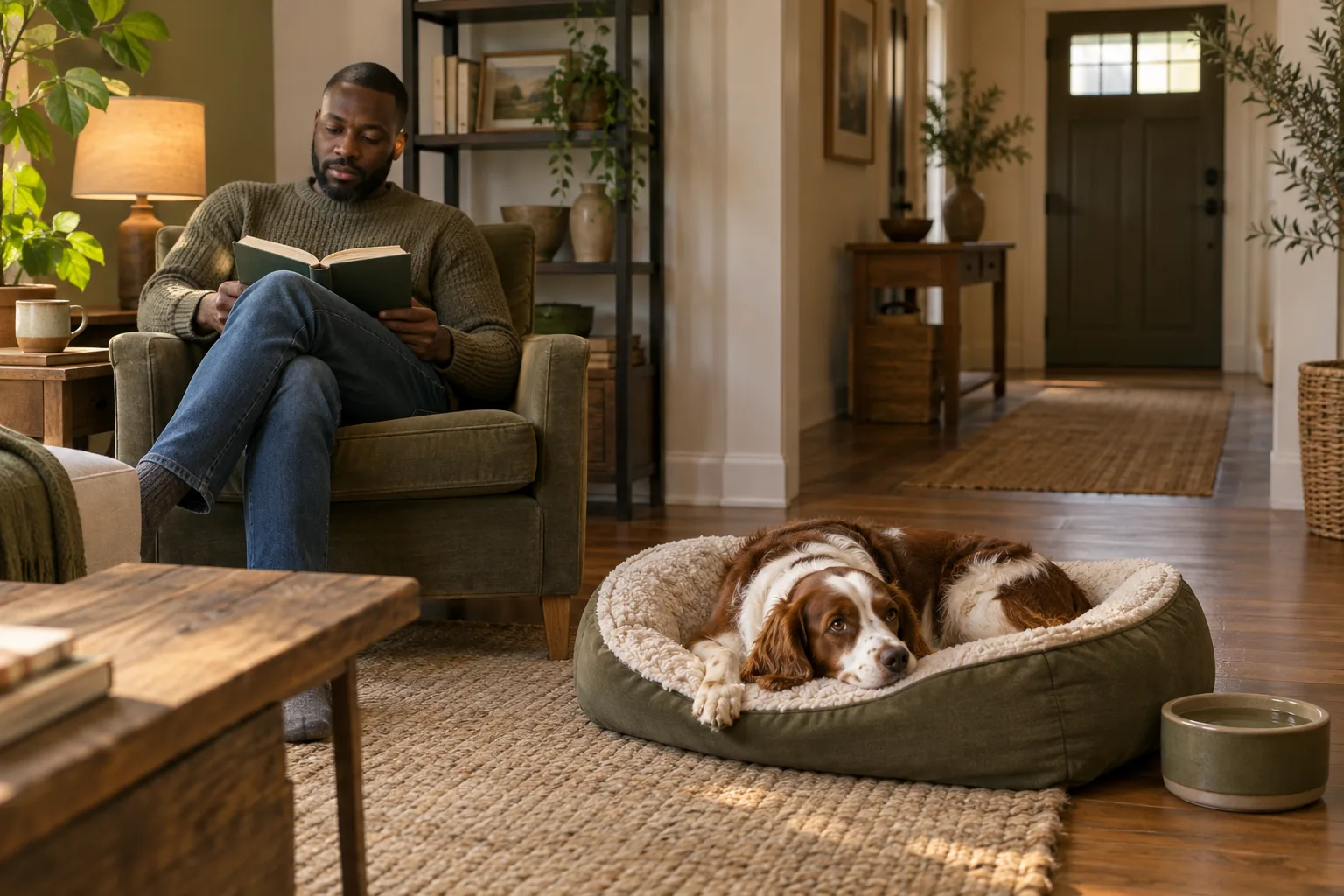
Choose a resting area where the dog can settle without constantly facing street movement. Include water, comfortable footing and a bed they already enjoy. Leave a clear route between ordinary indoor spaces. Place the bed far enough from the window that a person passing does not immediately fill the dog's view. A familiar adult can share quiet company if useful.
Do not make the new area a place of punishment after barking. Offer it during an ordinary quiet period, when there is no urgency to move the dog. Our mat foundations can support familiar comfortable resting choices. The dog need not hold a posture or stay on a mat while a difficult sight remains in front of them.
Check the everyday schedule too: suitable opportunities for toileting, rest, social contact, sniffing and movement should not disappear because the window is covered. Avoid exhausting the dog to obtain silence. Choose activities appropriate to their age, health and preferences, and ask your vet if you are unsure about sudden changes in comfort or activity.
If separation from the front room causes distress, revise the arrangement rather than closing the dog away and assuming it works. A quieter position within the same room may be easier. Management needs to improve the dog's experience as well as the household's noise level.
Record ordinary patterns without staging a reaction
Use a short notebook entry after a normal event. Write the time, the visible movement, where the dog was and what happened afterwards. “Delivery vehicle stopped; dog left sofa, barked, then kept watching” is more informative than “being territorial.” The same barking sound can accompany different experiences; a label is not a reliable assessment.
Notice whether the dog can turn away, move naturally and return to ordinary activity. Look at the whole body rather than one tail position. Eating a treat does not by itself prove comfort. You may also find that the sound of footsteps matters even when the view is covered. That is useful information for a professional, not a reason to expose the dog repeatedly.
Avoid deliberately asking strangers to approach the window, knocking on the glass or using another dog as a test. People outside should be able to carry on without being recruited into your training. Never create a crowd or provoke a response for a video. The first few observations can come entirely from existing ordinary incidents.
If reactions are intense, the dog cannot recover or anyone risks being bitten when approaching, concentrate on safe management and obtain individual help. A sudden unfamiliar response belongs in a veterinary conversation. Explain what changed and what you observed without recreating the event.
Teach an easy turn away during a quiet moment
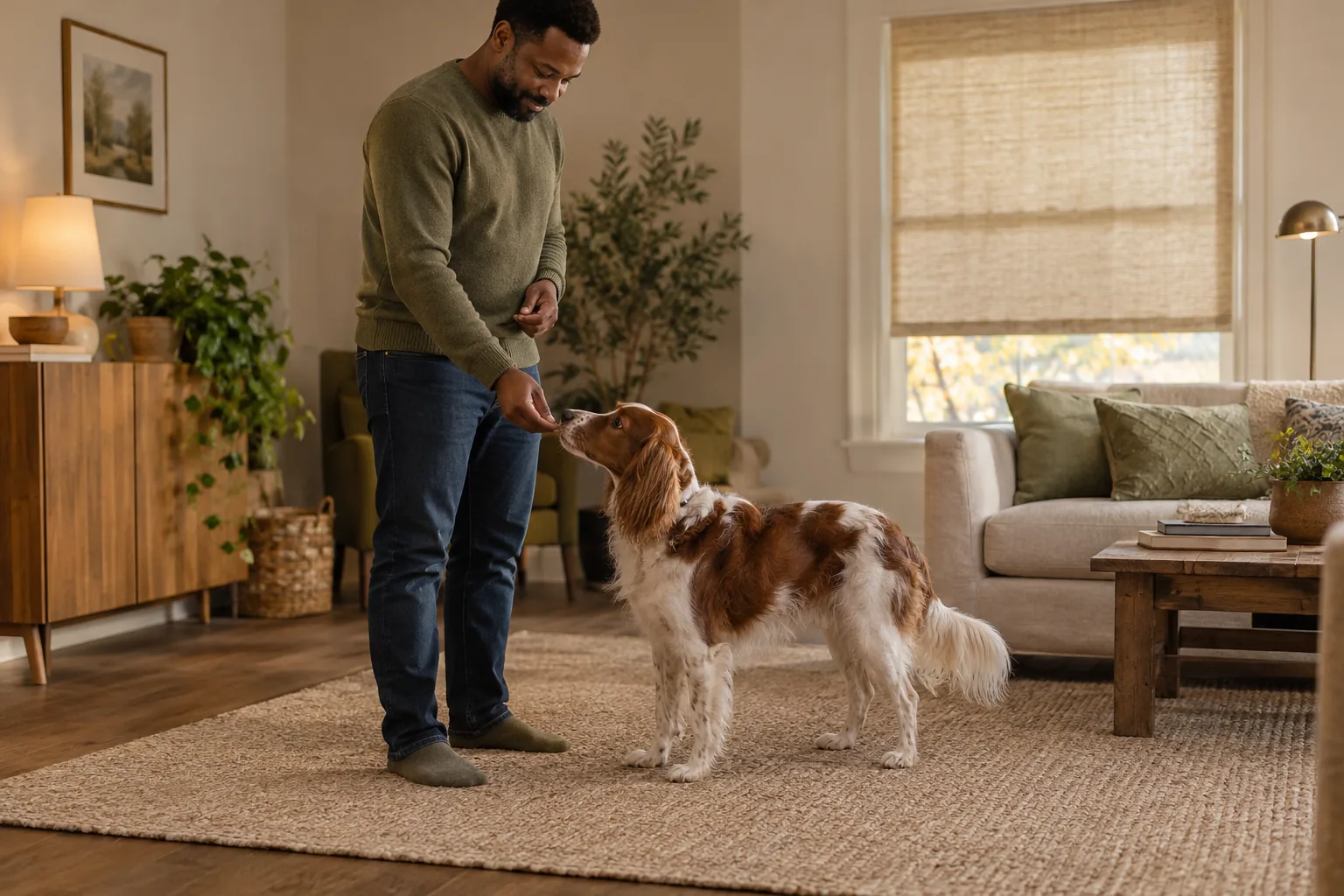
Begin when the view is managed and the room is quiet. Stand comfortably in the middle of the room with small suitable rewards ready. The dog can choose to be nearby. When they naturally glance toward you, mark that moment if you already use a familiar marker, then give the reward beside you, away from the glass.
Our reward-marker guide explains that timing. You can simply reward a useful voluntary glance if you do not yet have a marker. Keep your hands low and predictable, and allow the dog to move away again. You are practising a comfortable choice, not requiring a rigid sit or uninterrupted eye contact.
Once turning toward you is easy in this quiet arrangement, a familiar short invitation can help the dog find the same pleasant place. Say it once in an easy moment and reward the voluntary movement. Avoid repeatedly calling into a barking episode. If the dog cannot join you, simplify the conditions instead of increasing your voice or pulling them from the window.
End after a few easy opportunities. Put rewards away and resume ordinary life. Keep children and other animals outside the practice area, with adults supervising care. A calm nearby response is the entire starting exercise; it is not evidence that street activity should now be uncovered.
Add only a manageable everyday sight
Practice with visual movement is optional and depends on the individual dog's response. If quiet-room work is comfortable, you may notice an ordinary distant sight from a position that still allows the dog to turn away easily. Keep most of the view managed and the route to the resting area clear. You do not need to uncover a full window.
Reward a comfortable brief observation followed by voluntary orientation toward you or another ordinary activity. Give the reward away from the glass. The purpose is a small tolerable experience, not keeping the dog watching until they react. Do not lure them up to the pane or insist they face a passing person.
If watching becomes fixed, posture tightens or barking starts, end the opportunity and reduce the view or increase distance. Avoid grabbing the collar or reaching between an aroused dog and the glass. Arrange the cover and adult positions beforehand so you can simplify safely. If that is not possible, obtain help before trying this stage.
The next opportunity can return to the quiet-room exercise. A new time of day, closer pedestrian and longer viewing period are three separate changes. Keep the environment predictable and make only one easy change when appropriate. No particular number of repetitions guarantees readiness.
When barking happens, create space for recovery
An unexpected passerby may still appear. Stay calm and use your prepared arrangement to reduce the view when it is safe to do so. Offer access to the comfortable area and quiet company. If the dog can respond to a familiar easy invitation, you may invite them away; if they cannot, avoid repeating cues while they remain absorbed.
Do not shout, bang on the window or spray the dog. Punishing noise does not explain how to cope with the sight. Do not hold them beside the glass until they stop. A dog who becomes silent may still be tense. Watch for a return to comfortable movement and ordinary activity rather than counting silence as the only outcome.
Allow time for recovery before another exercise. The next pedestrian arriving immediately does not make the next repetition suitable. Keep the covering in place and protect rest. If sounds continue to be difficult despite view management, discuss those conditions with a qualified professional; do not turn up audio to test tolerance.
Neighbours may notice the barking too. A clear private household plan can help you respond consistently to concerns. Keep notes about patterns and the changes tried, and avoid promises about a date when all noise will stop. Serious welfare or safety difficulties need personal support.
Review the room instead of testing a perfect result
Compare like with like. A quiet Sunday morning and a busy delivery period are different conditions. Write whether the view was covered, how far the dog was from it and how easily they resumed ordinary activity. A useful entry might say: “Lower view covered; rested on back-room bed; one brief bark at a sound.” That is a limited observation, not a cure.
Keep our short-session approach for the next opportunity. Choose one detail worth repeating, such as a nearby voluntary turn in the quiet room. If the day becomes busy, management alone is a valid decision. Normal rest and care do not need to be replaced by scheduled practice.
Coordinate adults so nobody uncovers the whole view to check progress or moves the bed back as a surprise. Keep rewards stored safely and do not let children supervise a dog near a trigger. A written note about what was not attempted is helpful: “No close pedestrian practice; window remained shut.”
Retain helpful environmental changes while skills develop. Improvement in one room does not establish that another window, balcony or public route is suitable. Safe household boundaries remain necessary regardless of a training record.

Know when personal advice is the next useful step
Contact your vet for pain, sudden behavioural change or new difficulties with ordinary sounds, movement or rest. Describe the pattern, existing care and any recent changes at home. A general guide cannot separate medical and behavioural contributors. Avoid sending a staged dramatic clip; practical observations are more useful and safer to collect.
Seek qualified reward-based behaviour help for persistent distress, lunging at glass, inability to recover, redirected snapping or difficulty safely changing the environment. Keep people and other animals separated from bite risk through appropriate physical management. Do not ask a visitor to approach a dog who is already struggling.
The RSPCA recommends reward-based training. Choose support that considers both the environment and the dog's wellbeing. Avoid methods based on pain, intimidation or forcing the dog to remain beside a trigger. Equipment advertised to suppress barking does not replace an individual plan.
For an ordinary manageable situation, the next decision can stay modest: improve one sightline, preserve a comfortable resting area or repeat an easy voluntary turn. The household benefits from a workable room and clear adult routines even while you decide what further practice is suitable.
Common questions
Should I uncover the window to check whether training worked?
Do not create a harder test. Keep helpful view management and compare ordinary situations. A quiet exercise does not establish tolerance of closer movement.
Is a silent dog necessarily comfortable?
No. Consider body tension, movement and recovery. Silence or taking food alone cannot show how the dog experiences the situation.
Must I use an app for this plan?
No. The room arrangement, exercise and notebook review stand alone. The optional store card is not required for any step.
When is this more than ordinary window barking?
Seek personal help for marked distress, rushing at glass, bite risk, inability to recover, pain or sudden changes. Protect people and animals while arranging support.