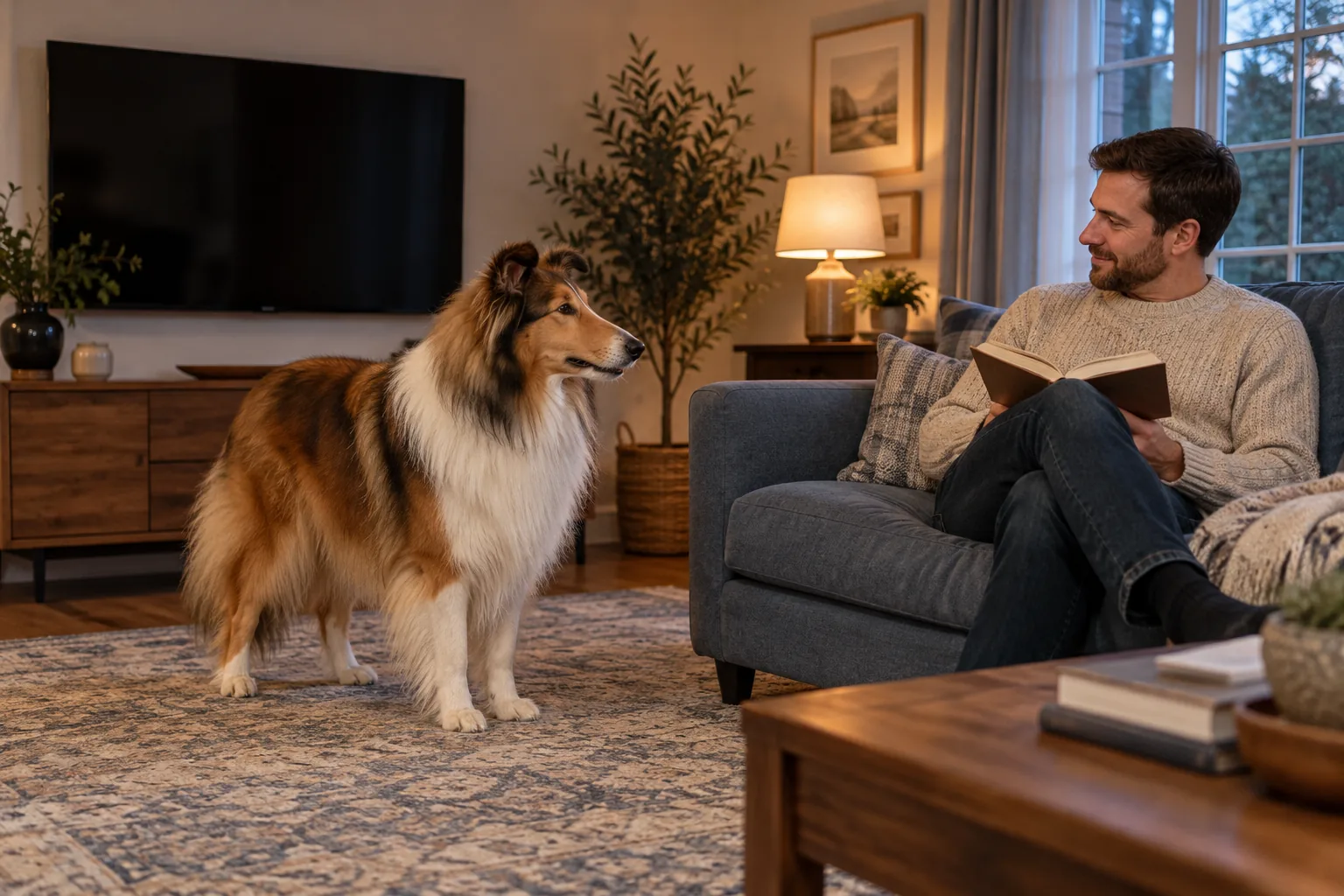
A dog barking at TV can interrupt the evening before you have found the remote. A sudden animal image, a sound in an advert or an unexpected scene may be part of the moment you notice. Start with what you can control: the programme, the equipment and the room. You can choose a quieter evening without first proving that the dog can watch a whole episode.
This guide gives you an everyday management plan and a small way to practise voluntary attention away from the screen. It works without an app. It does not identify the cause of barking or establish that viewing will be suitable for every dog. Keep personal veterinary and behaviour support available for concerns that need an individual assessment.
Dog barking at TV: describe the moment you saw
Make a short note after an ordinary incident, without replaying it to see whether the dog reacts again. Record what was happening on the television, where the dog was and what changed first. “Stood up at the sound of a bark during an advert” gives you a useful detail. Guessing that the dog is protecting the family goes beyond what you observed.
The RSPCA Queensland discussion of dogs and television notes that dogs can respond to pictures and sounds on TV. That supports considering both parts of the setup. It does not tell you which detail matters to your dog, whether they enjoy watching or why a particular reaction occurred. Avoid assigning a diagnosis from one evening’s behaviour.
For a sudden change, apparent pain, persistent distress or bite risk, seek veterinary and qualified behaviour help. If the dog charges at the screen or cannot move away safely, stop viewing and arrange an individual plan before practising. Do not move closer to film the reaction or put your hands near a dog that may redirect a bite.
Give the remote a practical place in the plan
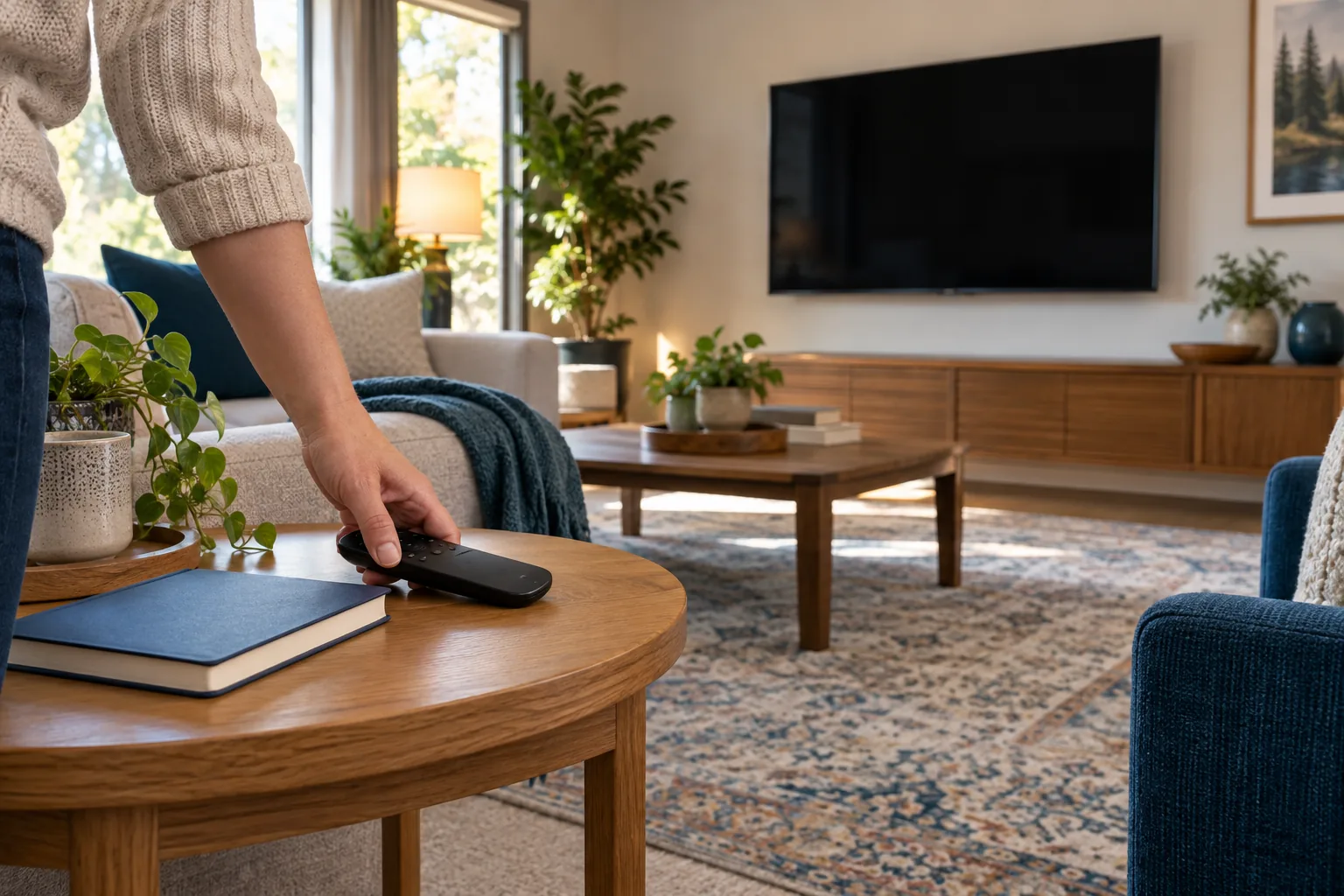
Keep the remote where a responsible adult can reach it immediately, with batteries and small parts secured from the dog. Check how to stop playback and switch the set off before an evening begins. Some pause screens, menus and adverts still move or make noise. Turning the television off may be the simpler choice when you need an actual break.
Decide who has control if several people are watching. A child should not be responsible for managing a dog’s response or deciding when to continue. Agree that an adult can stop the programme without a debate about whether the dog should cope. Watching later with headphones on a suitable personal device may be easier, provided its screen and sound do not trouble the dog.
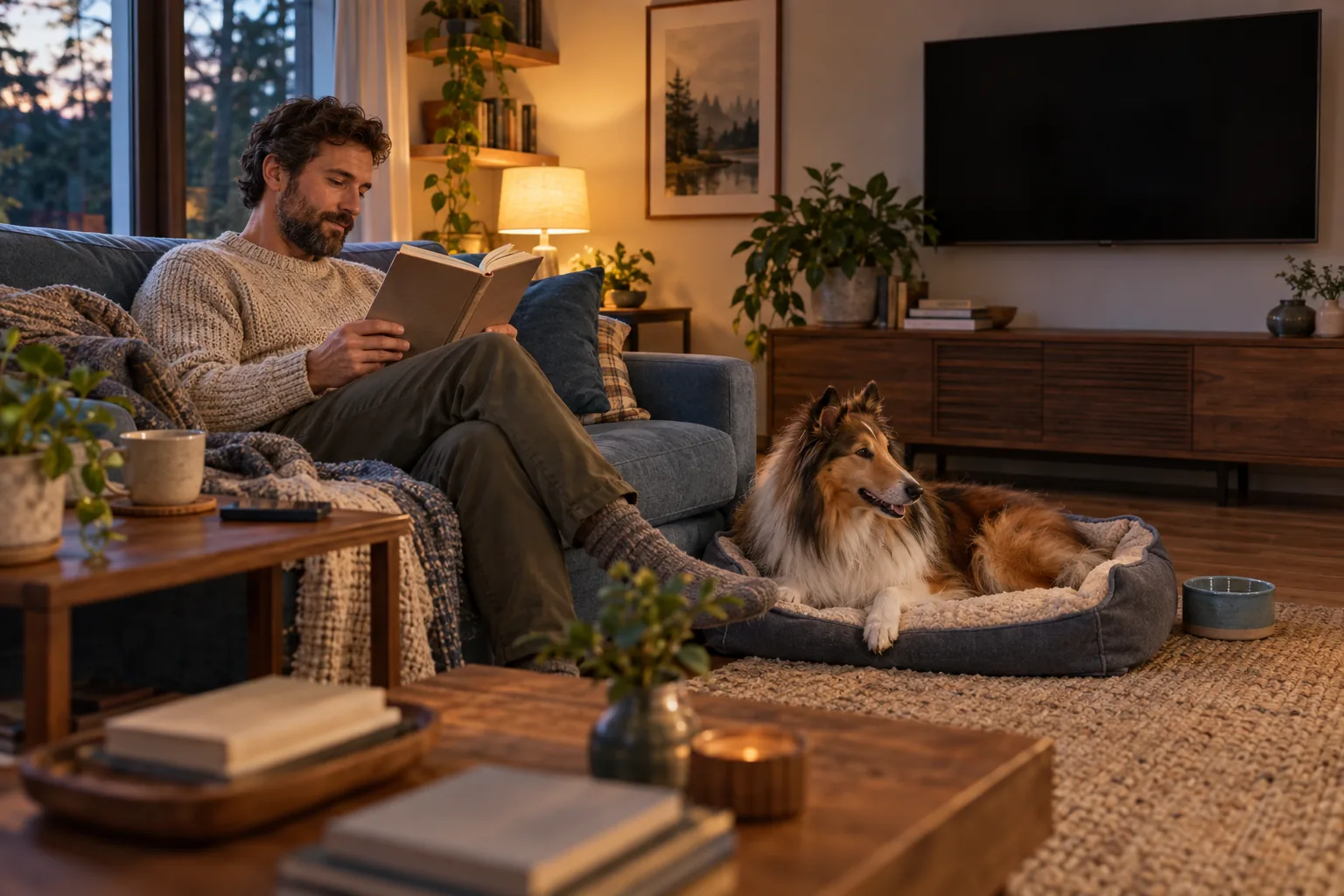
Prepare a realistic backup activity for the people: reading, a quiet conversation or another ordinary task with the screen off. This makes it easier to end viewing promptly. Avoid presenting television as something the dog must tolerate so the household can function. You are organising a flexible shared space where the dog’s ordinary care and comfort remain part of the evening.
Arrange a comfortable route away from the screen
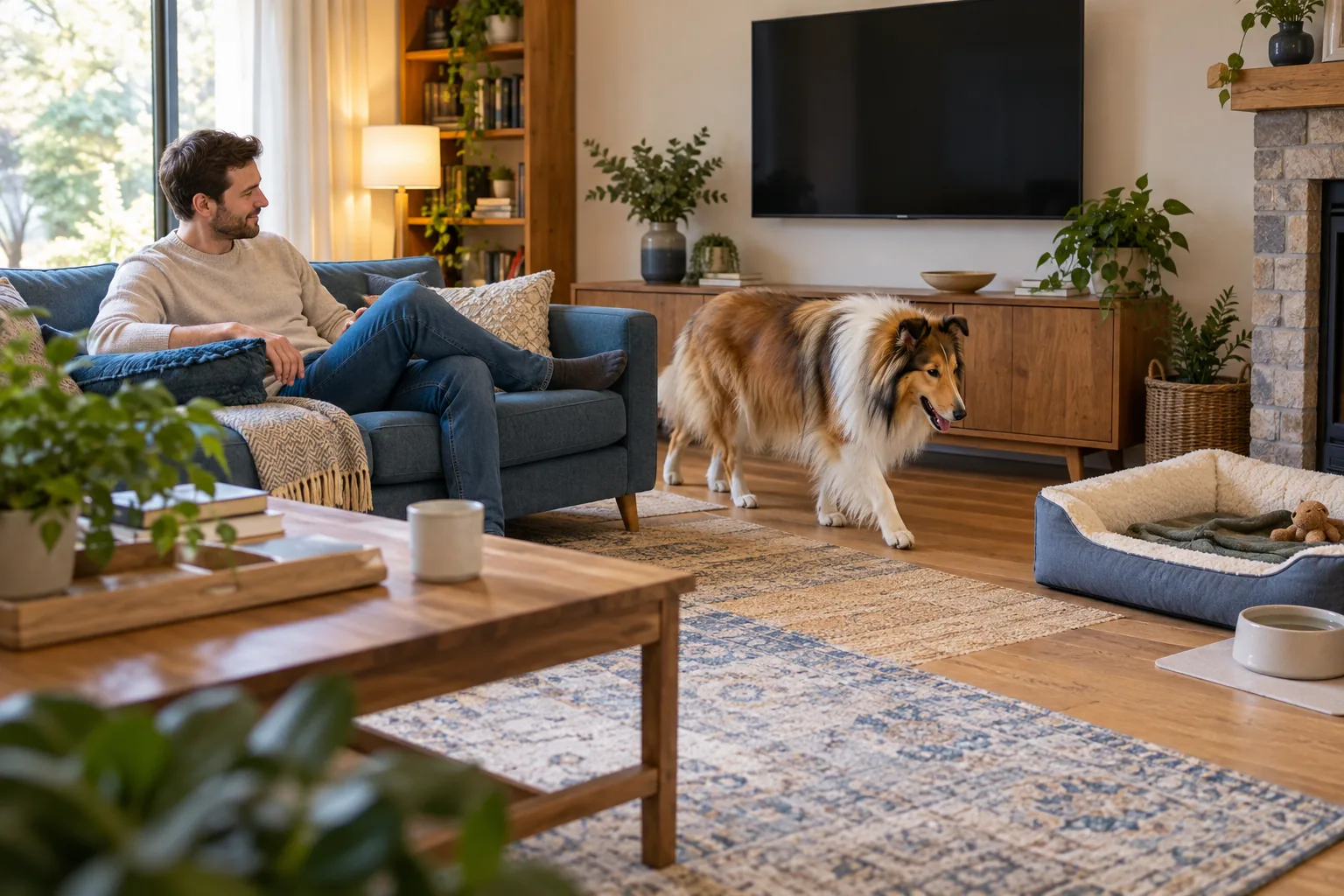
Choose a familiar resting place at the side of the seating area, with an easy route to another comfortable part of the room. Keep water reachable and the floor clear. Secure the television and manage cables according to the equipment’s safety instructions. If the dog can collide with the set, shelves or glass, address that physical risk before considering any practice.
Notice how the furniture directs movement. A bed immediately in front of the screen may leave the dog facing every change of picture. Another familiar spot beside the sofa could offer more choice. Make changes gently and observe whether they suit the dog. A moved bed is an invitation; do not repeatedly return the dog to it when they choose to leave.
If your dog already enjoys resting on a mat, our mat guide can help you keep that activity comfortable. Practise it with the television off first. Do not make a rest cue an instruction to endure a difficult scene. A dog lying down can still be uncomfortable, so look at the whole situation and remain ready to stop viewing.
Choose manageable viewing before pressing play
Select material you already know and can stop, if you decide to try viewing with your dog present. Unpredictable live broadcasts, adverts and automatic previews can make that harder. Check playback settings yourself while the dog is elsewhere comfortably. Avoid searching for a clip that reliably causes barking; provoking a reaction is unnecessary for arranging a safer evening.
Begin with an ordinary, brief piece of material that has previously been unremarkable to your dog, at a modest comfortable sound level. You might choose a short section of a familiar conversation programme. This is an example, not a universally safe genre. If switching on alone changes the dog’s behaviour markedly, leave the screen off and seek a more individual starting point.
Sound and picture are separate things you can adjust, but muting a scene does not guarantee that its images will be easy. Increasing volume to test a theory or showing exciting animal footage is not needed. Keep the remote ready and the dog free to leave. If you cannot find an easy starting point, choose a screen-free evening while arranging appropriate help.
Practise a voluntary turn with the television off
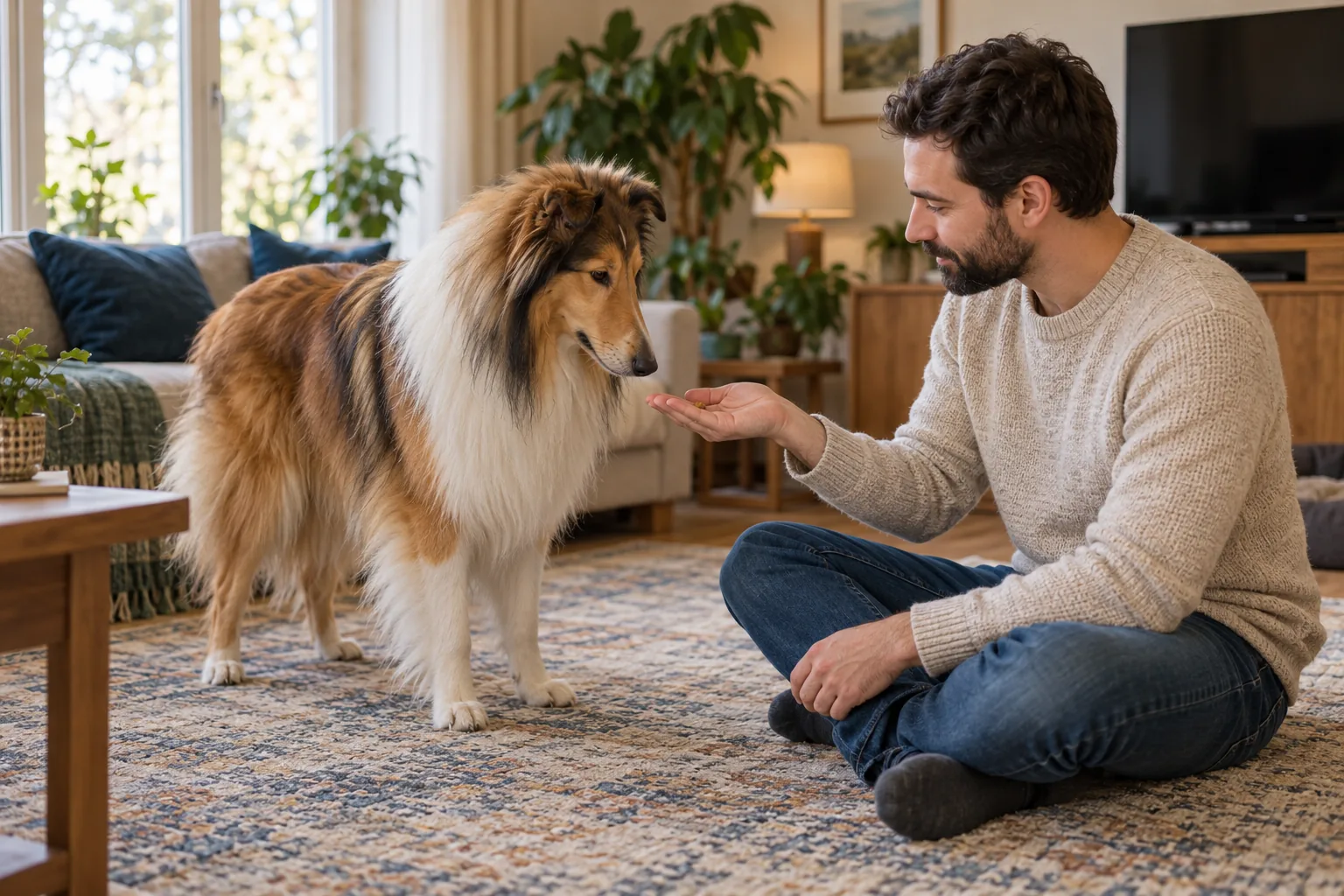
Start in the familiar room without any programme playing. Sit comfortably with a few small rewards appropriate for the dog’s diet, and notice a natural glance towards you. Offer the reward at an easy height without bringing the dog into a corner. Let them return to ordinary activity. You are building a simple interaction that can stand on its own.
If you already use a familiar reward marker, our marker guide explains how to make the timing clear. Avoid repeating the dog’s name until they respond or holding food beside your face to maintain a stare. One easy glance is enough for a starting point. The dog remains free to sniff, rest or choose a different position in the room.
The RSPCA training guidance supports reward-based learning. Apply that principle to a manageable action rather than using food to keep the dog beside a disturbing screen. Rewards should remain comfortable to take. Stop if the dog struggles to participate, and do not withhold normal meals to make the exercise more attractive.
Keep any combined attempt short and adjustable
Only consider adding manageable viewing once the screen-off interaction is easy and the room is suitable. An adult starts the chosen short material while remaining able to stop it immediately. Notice whether the dog can move naturally, respond voluntarily or settle comfortably elsewhere. There is no requirement to look at the television first or remain in the same position.
You may acknowledge an ordinary voluntary turn towards you, then let the dog choose what to do next. Do not repeatedly call them away from a scene that keeps drawing them back. If your plan requires continuous food or constant prompting to hold things together, reduce the difficulty or turn the television off. A shorter or simpler opportunity is a useful adjustment.
Our short-session guide helps you give practice an endpoint. End before you become absorbed in the programme and stop observing. A few manageable moments do not establish readiness for a film, a different programme or unsupervised viewing. You can finish the evening with the set off, even if the small attempt appeared uneventful.
When barking starts, stop and simplify
Use the remote to end the material or switch the television off. Give the dog room, keep your own movements predictable and allow ordinary recovery. Shouting, clapping, spraying water or restraining the dog beside the screen adds difficulty. Do not insist on a quiet cue before removing a programme that appears to be troubling them; reducing exposure can happen immediately.
If the dog can comfortably move with you, you may invite them to a familiar quiet area without grabbing their collar. Keep normal company, water and access to suitable rest available. Do not shut a distressed dog in an unfamiliar space so the programme can continue. If moving the dog would create bite risk, keep distance and obtain individual professional guidance on safe management.
Write down the useful detail later: perhaps an advert appeared sooner than expected, or the resting place was closer to the screen than you realised. You do not need to replay the moment to confirm it. Repeated difficulty is a reason to pause practice and consult a professional. The next evening can be organised differently without demanding another attempt from the dog.
Review the evening with a useful small note
Use a plain notebook if you want a record. Three details are enough: material and sound setting, the dog’s available space, and what you actually saw. “Screen off, read together, dog rested beside sofa” is a legitimate entry. Silence alone is an incomplete measure if the dog remained rigid, unable to disengage or uncomfortable in the room.
For a later manageable opportunity, change just one practical detail, such as the resting location or the length of the selected material. Avoid a timetable that increases difficulty every day regardless of the dog’s response. Some households will mainly use management and screen-free time. Television viewing is optional; access to rest, social contact, movement and other ordinary needs remains important.
You are finished for the evening when the household can follow the chosen plan without pushing the dog. That might mean switching off earlier or deciding not to practise. If responses spread to other sights and sounds, discomfort persists or a change is sudden, take your observations to a veterinarian and a qualified behaviour professional. An individual assessment can address questions that a general guide cannot resolve.
Common questions
Should I show my dog more animal videos until they get used to them?
Do not keep playing material that causes distress or repeated barking in the hope that exposure alone will resolve it. Stop viewing and choose a manageable setup. If even a small attempt is difficult, seek personal professional guidance before adding further screen exposure.
Will turning the sound off solve the problem?
Muting is one practical adjustment, but pictures and other features may still matter. Observe ordinary situations without provoking tests. If the dog remains uncomfortable, turn the set off. No single sound setting or type of programme is guaranteed to suit an individual dog.
Can I leave a television on when my dog is alone?
Do not assume that television provides comfortable company or treats distress when alone. This guide concerns supervised shared evenings. If you are concerned about behaviour during absences, seek individual veterinary and behaviour advice and arrange suitable care rather than relying on a channel or playlist.
Does a quiet dog mean the practice worked?
Look at comfort, freedom to leave and ordinary behaviour as well as sound. Being still or silent does not by itself prove relaxation. Record what you saw, keep the next opportunity modest and stop if the dog appears unable to disengage or recover comfortably.