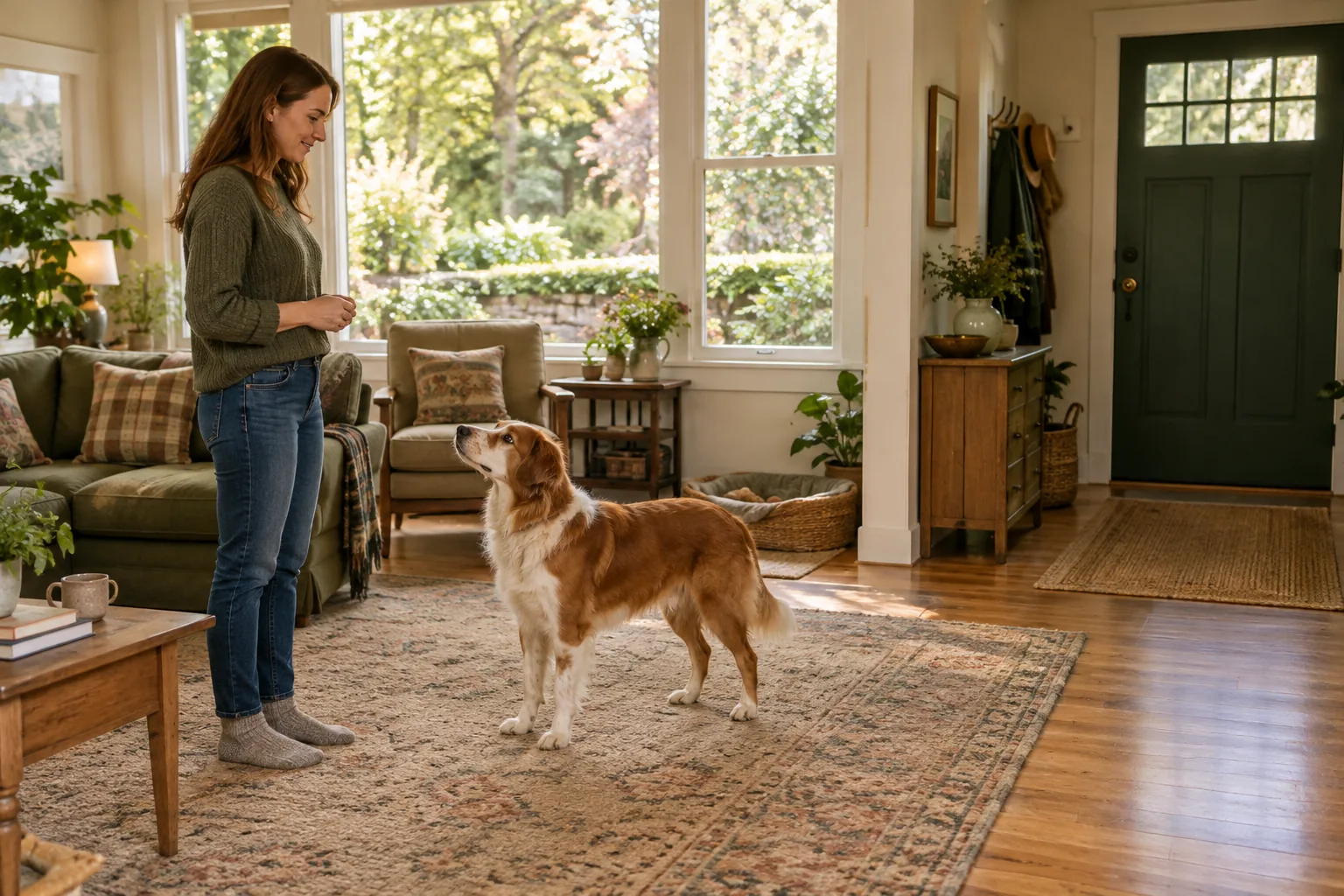
If your dog barks at the doorbell, the hardest moment may be the few seconds when everyone starts moving. You reach for the handle, a parcel arrives, and your dog has already rushed into the hallway. Begin with an easier version of the event: one controllable sound, a safe distance and no person entering. That gives you time to notice the dog and deliver a reward without juggling the door.
This guide supplies a complete household practice plan. It does not promise permanent silence or decide why an individual dog is barking. The first useful goal is a dog who can hear a mild sound, stay comfortable and return attention to something familiar. Real arrivals can remain separate from training. If there is bite risk, panic, pain or a sudden behaviour change, protect everyone with safe separation and seek individual professional help before rehearsing.
Your dog barks at the doorbell: map the sequence
Watch an ordinary arrival from a safe position, without provoking another one just to collect information. Does the first response follow footsteps outside, the chime, your movement or the door handle? Record what you actually see: ears turn, the dog stops chewing, walks to the hall, then barks. Those details identify which part you can make easier. They do not diagnose fear, guarding or excitement.
Choose one sound for your first exercise. A recording of your own bell may be convenient, although a speaker will not reproduce every detail of the real sound. A gentle tap on a table can be a separate starting exercise. Do not mix bell, knocking, keys and visitor voices into one track. Later you can practise each relevant sound individually.
Decide what comfort looks like for this dog before testing anything: normal breathing, a loose body, willingness to look away and an ordinary response to food. Taking a treat alone does not prove comfort. If the dog freezes, scans the entrance or cannot settle afterwards, the setup needs less intensity or professional guidance.
Make real arrivals manageable now
Ask expected visitors to message rather than ring. A short note to a regular delivery person can help, but assume someone may still knock unexpectedly. Prepare a familiar room or secure separation arrangement where the dog is already comfortable. Give the dog space before opening the outside door. Check that doors, gates and windows prevent an escape without trapping or frightening the dog.
If two adults are available, agree who answers the door and who attends to the dog. When alone, make separation the first task; a parcel can wait while you secure the entrance. Do not ask a courier to stand there through a training exercise. Children and visitors who fear dogs should not carry responsibility for managing the arrival.
Dogs Trust's visitor guidance supports preparing an alternative routine before adding door sounds. Use that idea within a setup your household can safely manage. A quieter delivery behind a closed door is a worthwhile outcome even when no bell practice happens that day. Management protects the conditions for later learning.

Prepare rewards and a response away from the door
Start in a quiet room with the entrance closed. Place suitable tiny food rewards where you can reach them immediately, accounting for diet, allergies and veterinary advice. Keep the sound device on a stable surface, out of the dog's reach, and silence unrelated notifications. Test the volume while the dog is elsewhere so the first playback is not an accidental loud surprise.
Before adding sound, reward an easy voluntary turn toward you. Deliver food near the dog's normal head height or on a clear nonslip surface beside you if that is appropriate for this dog. Never scatter food between dogs who might compete, or near children reaching for it. A comfortable standing posture is enough; you are not testing a long sit.
If you use a marker word, teach it separately with our reward-marker guide. The sound exercise also works with prompt food delivery, without adding another noise. Let the dog move away between opportunities. Practise where you can remain attentive, rather than holding the dog still beside the entrance and waiting for a reaction.

Pair one gentle sound with something pleasant
Choose a low sound level and generous distance at which the dog can remain comfortable. Play one brief sound, then offer a reward promptly. The order is sound followed by reward; do not wait for a bark and then play the bell again. Let the dog finish eating and return to an ordinary activity before considering another opportunity.
Notice the whole response. A small ear movement followed by an easy turn toward you may be a useful start. Rushing, tension, repeated barking or inability to recover means the exercise was too difficult. Stop the sound, allow space and lower the intensity next time. Do not keep ringing until the dog becomes exhausted or gives up responding.
Make the first practice deliberately small. A few comfortable opportunities can be enough, and sometimes one is plenty. If even a faint recording causes concern, skip home sound rehearsals and ask a qualified reward-based professional for a tailored plan. A phone recording is a tool for controlling intensity, not proof that the real bell will now be easy.
Change one detail, then check again
Keep a simple progression: sound level, distance from the sound source, your movement, then a helper's activity. Change just one of those at a time. If a low recording across the room is comfortable, you might later raise it slightly while keeping everything else familiar. You do not need to reach the loudest setting within a session.
A real knock is a new exercise, even if the recording went well. Ask a cooperative adult to make one gentle tap on a closed interior door, with the dog several metres away. Agree on a stop signal beforehand. Reward after the tap and keep the door closed. If the dog watches the helper tensely, use an easier sound or stop; the helper need not enter.
Only add movement toward the entrance after the sound itself is manageable. One small step by you is enough to examine. Turning the handle, opening the outside door and admitting a person are separate changes. Maintain secure separation for real arrivals until your household has a safe plan for them.

Use a short record to choose the next step
Write four observations after practice: which sound, its level or location, the dog's response, and the next adjustment. For example: “Quiet recorded chime across the room; looked up, took food normally, went back to sniffing; repeat this setup.” Another entry might say: “Tap closer to the hall brought barking; increase distance and postpone door movement.”
Do not compare unlike sessions as if they were a score. A sleepy morning in an empty home differs from an evening after visitors and traffic noise. Record interruptions, including unplanned ringing, because they affect what you can reasonably try next. The short-training-session guide helps you select a stopping point while attention and comfort are still available.
Count practical improvements alongside barking: an easier turn away, less rushing or quicker return to resting. Silence with a stiff body is not your target. Keep the next decision small enough to repeat. Nobody needs a perfect chart or a streak; the record simply prevents you from increasing difficulty because one isolated attempt seemed successful.
Plan a flexible week with recovery built in
Here is an example of opportunities, not a seven-day result promise. At the first quiet opportunity, arrange visitor messages and prepare a safe arrival routine. At the next, practise turns toward you without sound. Later, try the mild recording if the dog is comfortable. Repeat the same level at another opportunity before changing anything.
On a delivery day, use the management routine and let the dog recover. That day need not contain training as well. At a later quiet time, consider one gentle helper tap with the outside entrance closed. If the previous sound was difficult, return to the earlier setup instead. The sequence can take longer, and some dogs need individual support throughout.
A resting place should be comfortable before you use it around arrivals. Our mat-training guide explains that separate foundation. Do not make the bed a place where the dog must endure frightening noises. Offer ordinary rest, sniffing and appropriate enrichment after practice, with no demand to hold a posture while you measure recovery.

Adjust safely when barking interrupts
If an unexpected ring causes barking, secure the arrival first. Speak calmly, create space and help the dog return to a familiar area if you can do so safely. Do not grab a collar near a tense dog or put your hands between the dog and visitor. Skip the practice plan for that moment; safety does not require waiting for silence before acting.
A bark during a planned repetition is information, not a reason to punish or withhold necessary comfort. Stop, make the next setup easier and review whether the dog had already shown tension. RSPCA training advice recommends rewards; avoid startling devices, spray, physical corrections or forced exposure. Those are not part of this plan.
Seek a veterinarian for pain or sudden change, and qualified behavioural help for persistent distress, snapping, lunging or bite risk. Barking when left alone may require a different assessment entirely. The achievable next step might be safer separation and a professional consultation, rather than another sound exercise. Keep the dog's comfort and everyone's safety ahead of a quiet doorway.
Common questions
Should I reward if my dog has already barked?
Prioritise safety and help the dog recover; do not withhold comfort to enforce a rule. For planned practice, arrange an easier sound and deliver the reward promptly after it, before the dog is overwhelmed. Repeated barking means the setup needs changing, not repeated testing.
Can I just keep ringing until the dog gets used to it?
No. Repeated intense exposure may leave the dog more distressed, even if barking eventually stops. Use manageable opportunities with pauses, and stop when tension appears. If you cannot find a comfortable starting level, obtain individual professional advice.
What if the recording is easy but the real bell is difficult?
They are different sounds in different contexts. Treat the real bell as a new step, retain safe arrival management and make other features easier. Do not assume phone practice transfers automatically to the doorway or to every visitor.
Does the dog have to be completely quiet?
The aim is a safer, more comfortable routine, not guaranteed silence. Notice posture, recovery and ability to disengage as well as barking. A household may keep visitor separation long term while building manageable responses at the dog’s pace.