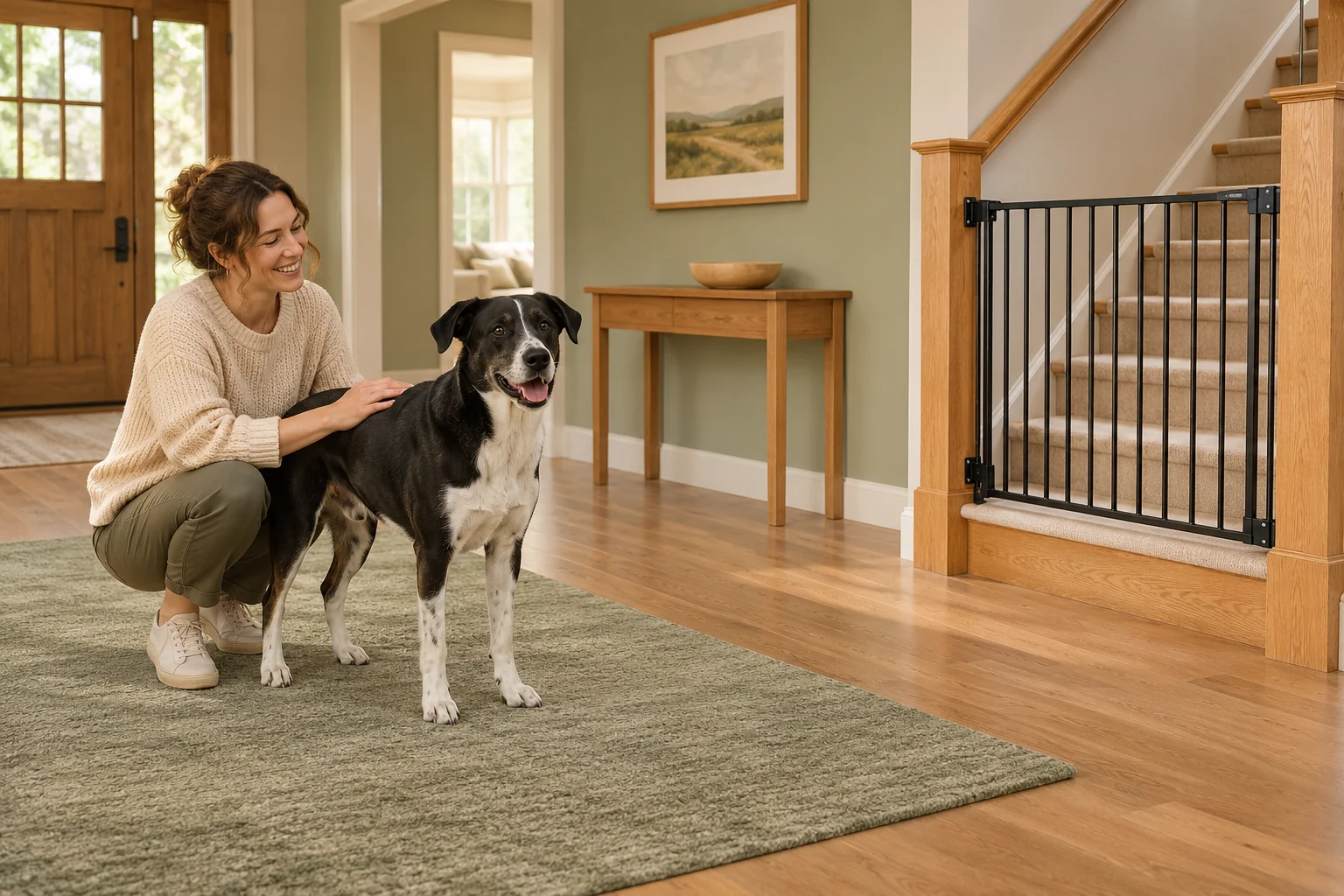
A dog afraid of stairs may stop well before the first step, take one look and turn back, or hurry through a route that used to be ordinary. What matters today is whether the dog can reach water, rest and a toilet area without that trip. Arrange an alternative first. A stairway is a poor place to find out what happens when a dog loses footing or feels unable to retreat.
Treat sudden reluctance, a fall, altered movement or possible pain as a reason to contact your veterinarian. Pause practice and describe what you have seen during ordinary activity. This guide starts with access and offers an optional reward exercise on level ground for a comfortable dog. If you need to use an unavoidable staircase or see snapping or bite risk, ask for a plan tailored to your dog and home.
A dog afraid of stairs needs another route first
Walk the route yourself while your dog is elsewhere. Start where they sleep and follow the actual trip to their water, the exit and the people they normally spend time with. In a split-level home, the obstacle may be a single transition between rooms rather than the obvious main flight. In an apartment, the shared landing may be the point where traffic from neighbours leaves little room to turn.
Write down which trips can move to the same level. A bed and water downstairs can make an evening easier, but they do little if the only toilet route still begins at the top of a flight. If a lift is available and the dog already travels in it comfortably, it may be a practical option. A dog that finds the lift frightening needs a different arrangement and time to work it out with help.
Make the alternative available before you call the dog. Stand where they can see the way out, leave a generous turning area and avoid sending two people to opposite ends of the stairs. Change the evening routine so company comes to the dog. That may solve the practical problem for today even if the dog never puts a paw on a step.
Tell the veterinarian what changed
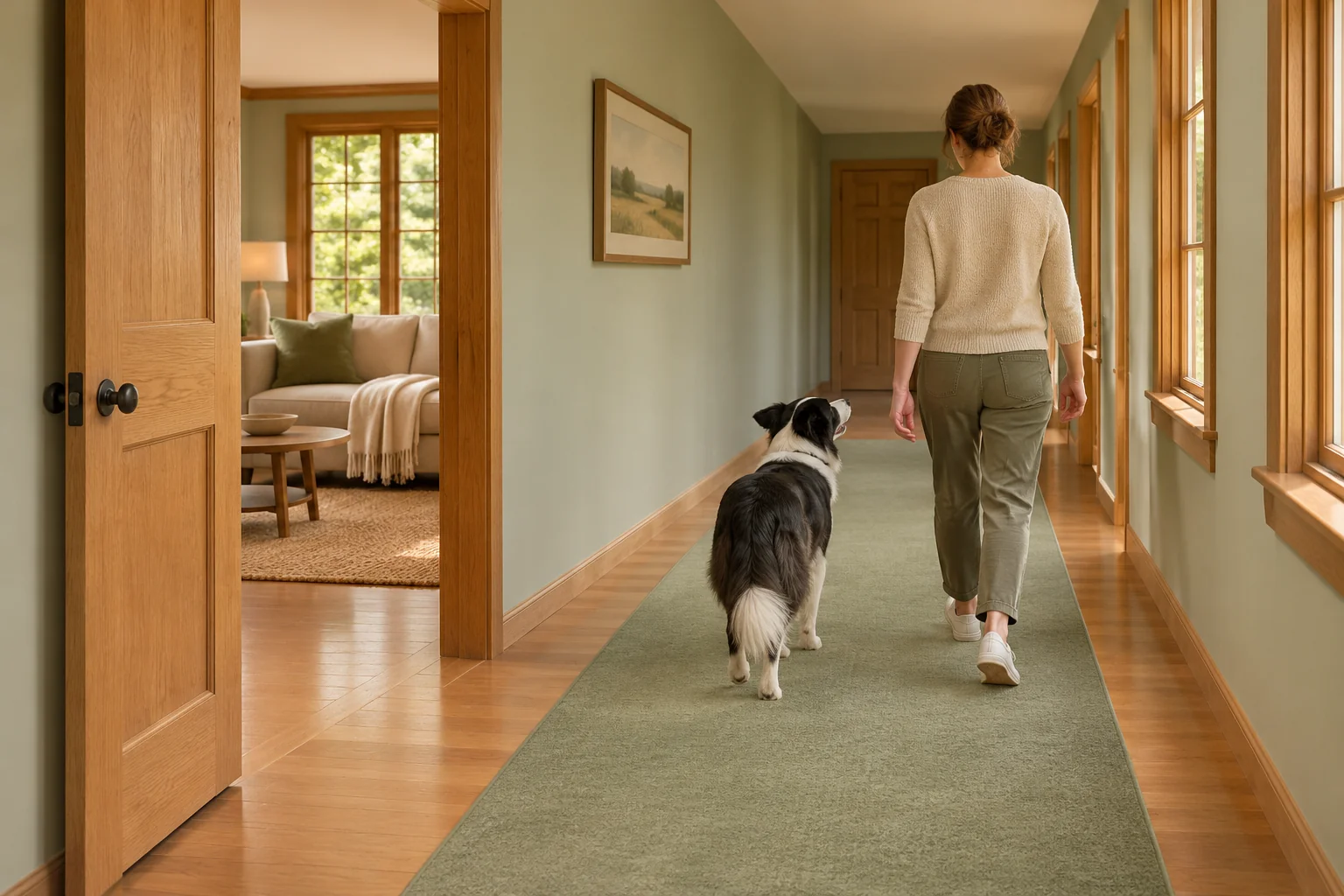
Separate what you observed from the label you gave it. “She walked to the first step, shifted back and went to her bed” is easier to use than “she was being difficult”. Note when the change started, which direction was involved and whether you have also seen changes while the dog rises, walks, rests or gets into the car. Include any fall or recent treatment the veterinary team should know about.
The PDSA guide to arthritis in dogs lists reluctance to climb stairs among possible signs. Many explanations can lead to a similar pause at the foot of a flight. The observation is a reason to ask for an assessment, and you can do that even when the dog is eating normally or seems eager to go for a walk.
Avoid asking for another trip to produce a better video. Describe what already happened, and only share footage you already have or can safely take of ordinary movement without staging a test. If your dog has fallen and cannot stand, appears badly hurt or is stranded in an unsafe position, contact veterinary help urgently and ask how to handle the situation safely.
Check where the dog can stop and turn
Examine both ends of the flight from the human side while the dog is away. See whether a door swings across the approach or a shoe rack leaves just enough space to get through but too little to turn. Look for unstable coverings, loose edges and objects that might slide. Consider the lighting at the time your dog usually comes through. A route that looks clear at noon can be hard to read when the hall light is off.
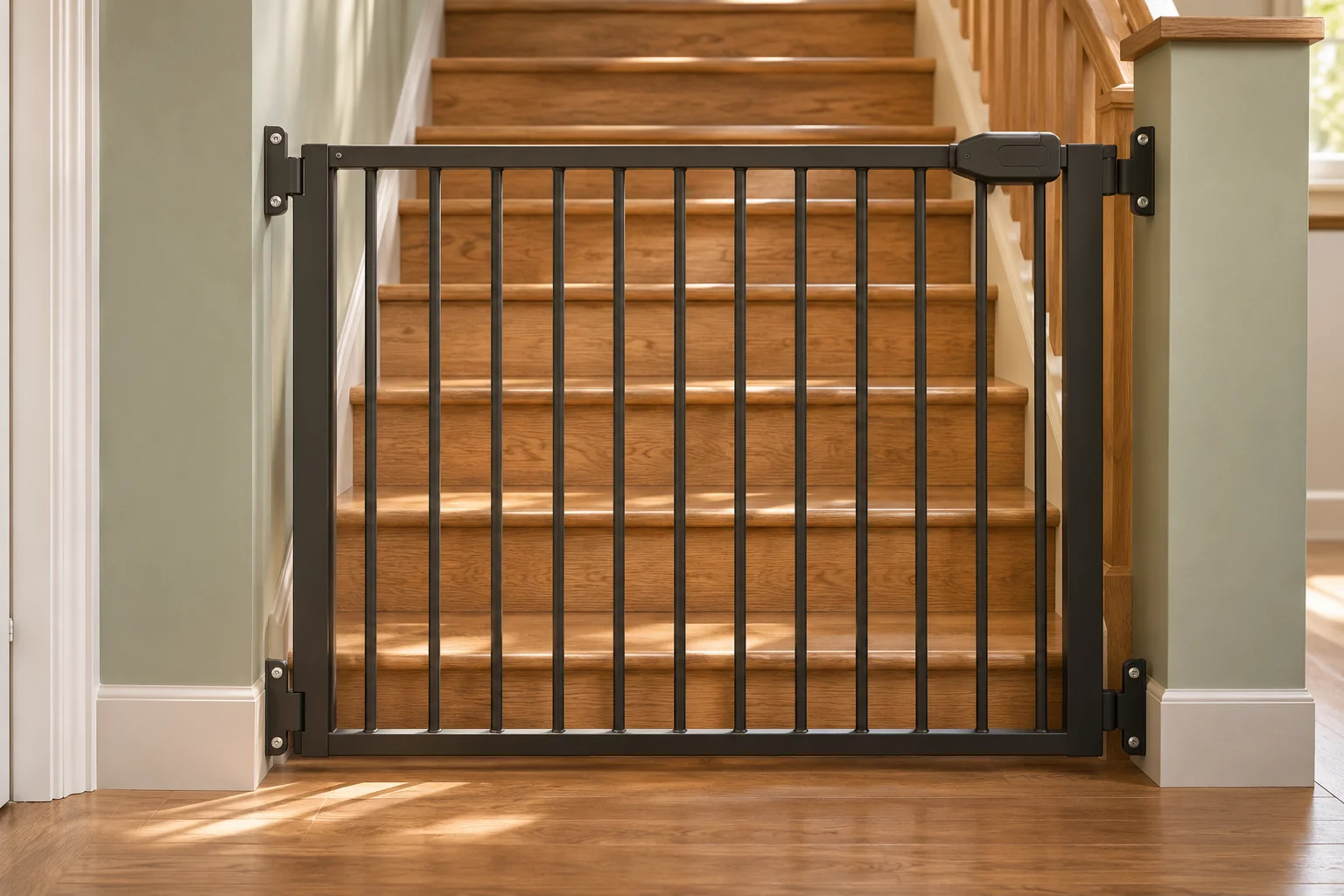
Use an appropriate secured barrier when you need to prevent unsupervised access. Follow its installation instructions for the specific location and check it without the dog nearby. A loose chair, a stack of boxes or a panel that can tip is a poor substitute. Keep clear human passage and avoid using the barrier as the point where your dog has to wait, take food or watch other animals pass.
Keep the resting place and resources on the usable side of the arrangement. Confirm who opens which door and where the dog will be when people carry bags or children come home. A barrier can prevent access to a hazard, but a workable routine also requires enough room and predictable choices away from it.
Rehearse an easy exit on the level
If movement is comfortable and there is no unresolved veterinary concern, choose a familiar room with stable footing and space to leave. Practise a response your dog already finds easy, such as turning their head toward you. Let it happen naturally or use the familiar cue once. Give the suitable reward where the dog is already standing, so the movement you want does not lead toward a drop, a narrow doorway or a staircase.
Our reward marker guide explains how to connect clear feedback to a reward. If you already use a marker, follow it with the reward it predicts. You can then walk away together at an easy pace if your dog chooses to follow. Keep the path available even when they stay put. One turn in a quiet room may be all you need to learn whether the setup is convenient for you both.
This is a flat-ground exit rehearsal. It gives you a low-pressure way to leave a situation when you have enough room, without using the flight as a destination. Avoid placing food on treads, throwing it into a landing or drawing the dog farther than they would go voluntarily. A dog can reach for a treat and still find the place difficult.
Leave room for an early decision
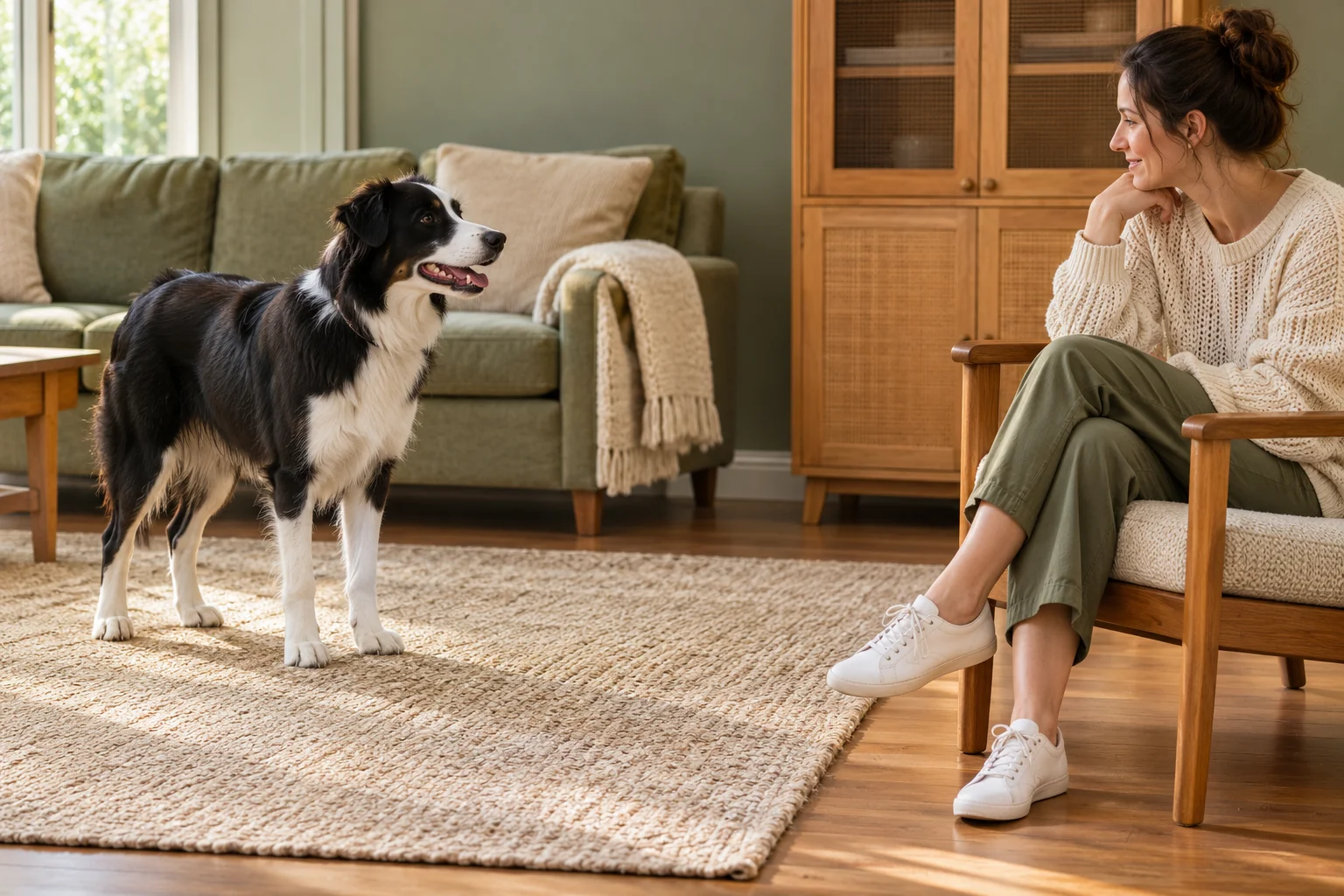
On an ordinary day you might notice your dog slow down when the hallway comes into view. Give them space before they reach a bottleneck. Take the available alternative if they can use it comfortably. When they move away, let that movement work. Repeating a cue, moving closer behind them or positioning yourself in the retreat route can remove the choice that made the exercise manageable.
Dogs Trust’s guidance on fear and stress recommends allowing an unsettled dog to move away and avoiding forced exposure. Look at the whole situation rather than taking one sign as a diagnosis. A dog turning back toward the living room may be giving you enough information to change the plan. You can do so before there is barking, scrambling or pulling.
If you want to practise again, use an easy place your dog already chooses to enter. Our short sessions guide helps you choose an endpoint. Ending while the dog can move comfortably and you still have space is more useful than trying to finish a planned number of repetitions. When even the approach feels difficult, plan the route farther away and ask for advice if you cannot provide it.
Organise care when a staircase is unavoidable
Talk through the trip that remains unresolved. A veterinary appointment, a toilet outing or a building entrance may have a time constraint that changes what is practical. Tell the veterinary team or qualified professional the size and condition of the dog, where the flight begins, the space available and who can help. Ask for safe transport or handling guidance before the trip. Lifting an uncomfortable dog on a staircase can put both of you at risk.
If the dog is already on a flight and freezes, clear the area of people and other animals where this can be done safely. Avoid pulling, crowding or reaching suddenly for the collar. When there is risk of falling, injury or biting, get immediate individual guidance appropriate to the situation. A written training article cannot assess a trapped dog's position or select a safe way to move them.
For routine planning, give one adult responsibility for the alternative route before a busy period. Put essential supplies where they will be used and tell everyone where the dog can rest undisturbed. The guide to settling on a mat can help you offer a familiar rest option on level ground if the dog already enjoys it. Keep the bed usable without a cue, reward or performance requirement.
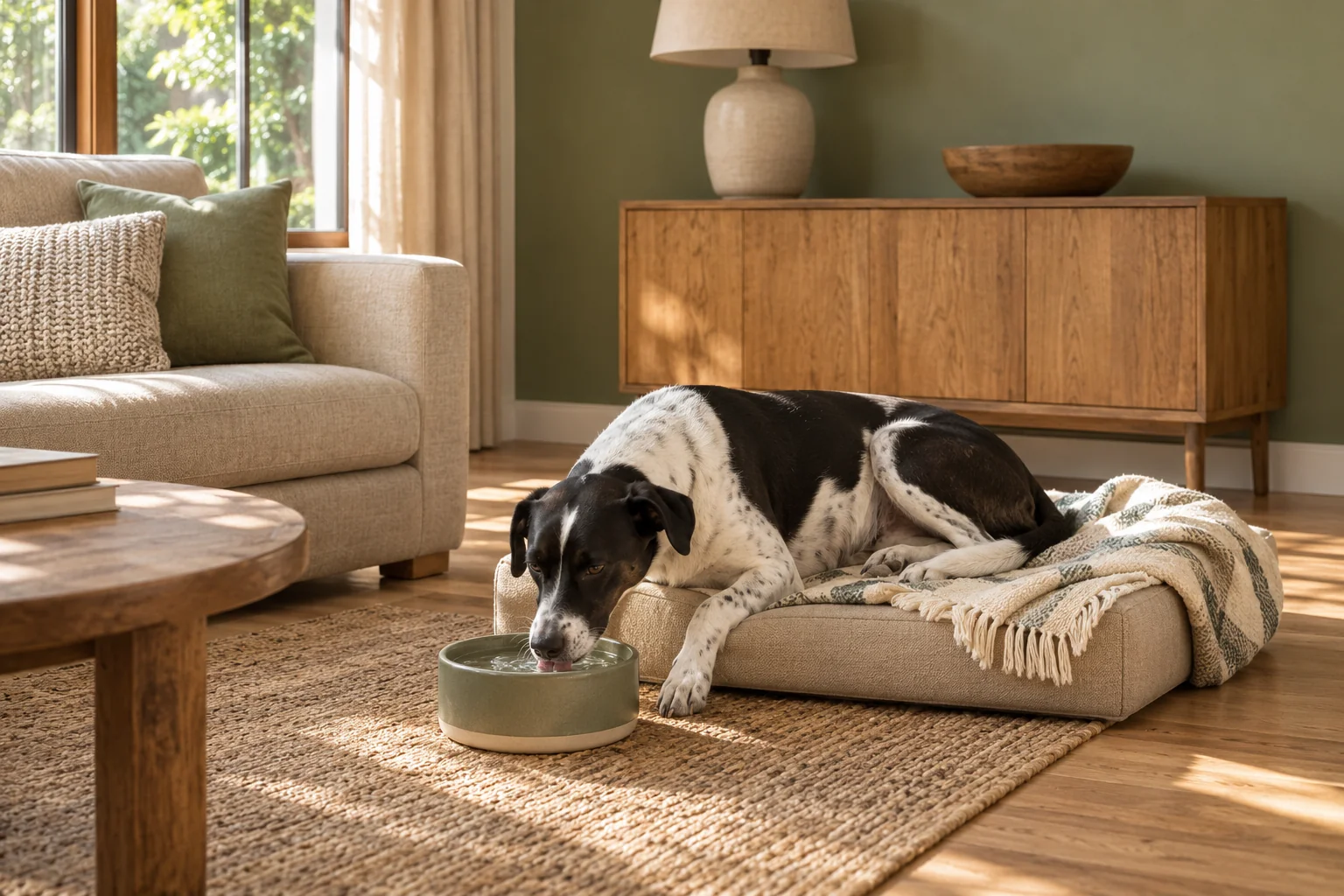
Review access before adding difficulty
At the end of the day, note whether your dog could get to the essentials without pressure. Record where they chose to turn back, which route worked and whether new movement changes appeared. Make tomorrow's adjustment specific. Move the water to a stable place on the occupied level, clear the return path or agree to use the familiar side entrance. One change you can repeat is easier to assess than several changes made together.
A comfortable week on one level does not establish that climbing is safe. If stairs are important to your household, discuss physical suitability and a gradual plan with your veterinarian and a qualified reward-based professional. They can consider the dimensions, surfaces and route out, along with what your dog can comfortably do. Some households can keep a ground-floor arrangement as the everyday solution.
The useful measure is whether the dog can get where they need to go and whether you can respond early when something changes. Keep normal companionship, appropriate activity and rest available during that review. A smaller route can restore a workable day while you get the information you need for the next decision.
Common questions
Should I put treats on the steps?
Keep rewards on level ground where the dog is already comfortable. Food on the stairs can draw a dog into a position where returning is difficult.
What if my dog suddenly stops climbing?
Pause practice and contact the veterinarian. Describe the onset, direction and any changes in ordinary movement without asking the dog for another stair trip.
Can a ground-floor arrangement be permanent?
Yes, when it gives the dog reliable access to daily care, suitable activity, rest and company. Discuss unavoidable trips with a professional.
Should I practise both directions?
Keep practice on the level. Going down and going up pose different practical demands, so discuss each necessary route with a professional before attempting it.