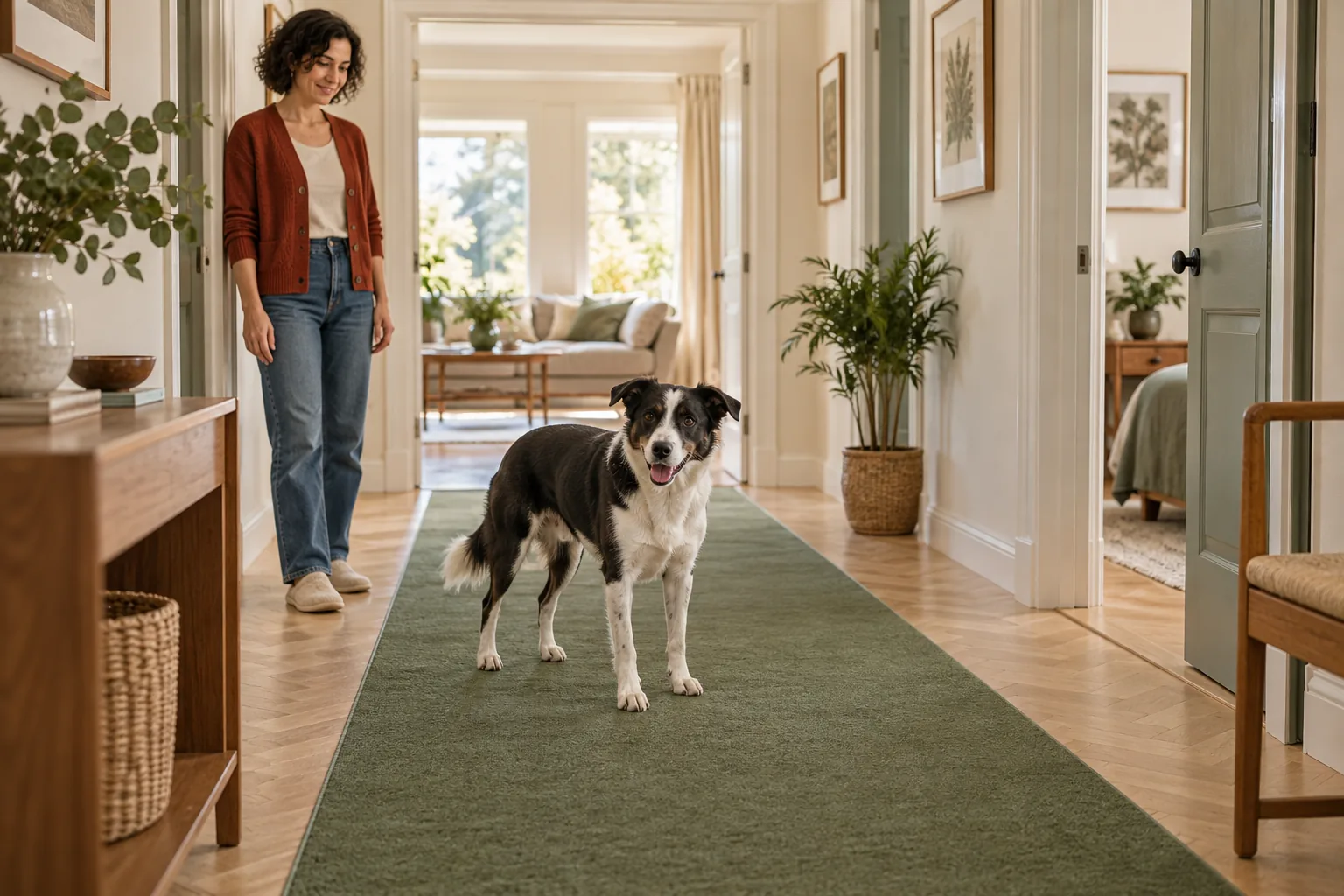
A dog afraid of slippery floors may pause at a doorway, stay on one rug or hurry across the hallway. Calling more loudly does not change the surface under their feet. Begin by making ordinary routes easier to use, while checking whether this hesitation is new or accompanied by a change in movement.
The aim is comfortable access to water, rest, company and the way outside. Your dog does not need to prove they can cross bare tiles. This guide offers a household planning routine and optional reward-based practice on stable footing. It is not a diagnosis, rehabilitation programme or promise that every dog will become comfortable with every floor.
Dog afraid of slippery floors: check the change first
Write down what you actually see: which doorway, which direction, whether the dog stops before the surface or slips while moving. Keep observation ordinary. Do not repeatedly call the dog across a difficult patch to collect examples. A description such as “paused at the kitchen doorway after getting up” is more useful than deciding they are stubborn.
A sudden change, pain, limping, weakness, repeated falls or difficulty rising calls for veterinary advice. If the dog cannot stand or seems injured, seek urgent help. Even apparently mild changes deserve a conversation with your vet. Keep the dog on secure footing while arranging care; do not start a floor-training challenge.
The PDSA arthritis advice includes covering slippery household surfaces among home adaptations. That does not mean hesitation identifies arthritis. A floor observation cannot tell you whether discomfort, the surroundings or several factors are involved. Your vet can assess the individual dog; household adjustments do not replace that assessment.
Plan one useful route before changing every room
Choose one ordinary journey: bed to water, resting place to the exit, or sitting room to a place where the household gathers. Sketch it on paper. Include the places where the dog must turn, pass a doorway or stop while a person opens a door. Those details matter more than creating an attractive straight strip in the centre of the hallway.
Walk through the plan without the dog. Is furniture narrowing the turn? Does a door catch the edge of a mat? Would someone carrying laundry step into the dog’s path? Move obstacles and agree on a quiet time to inspect the route. Leave room for the dog to turn around without stepping off the supported area.
If a favourite water location is currently inaccessible, provide another suitable, easily reached water station while you work out the layout. Do not keep daily essentials beyond the difficult surface as an incentive to cross. A route should make care available immediately, rather than turn care into the reward for completing an exercise.

Check the runner underneath and around its edges
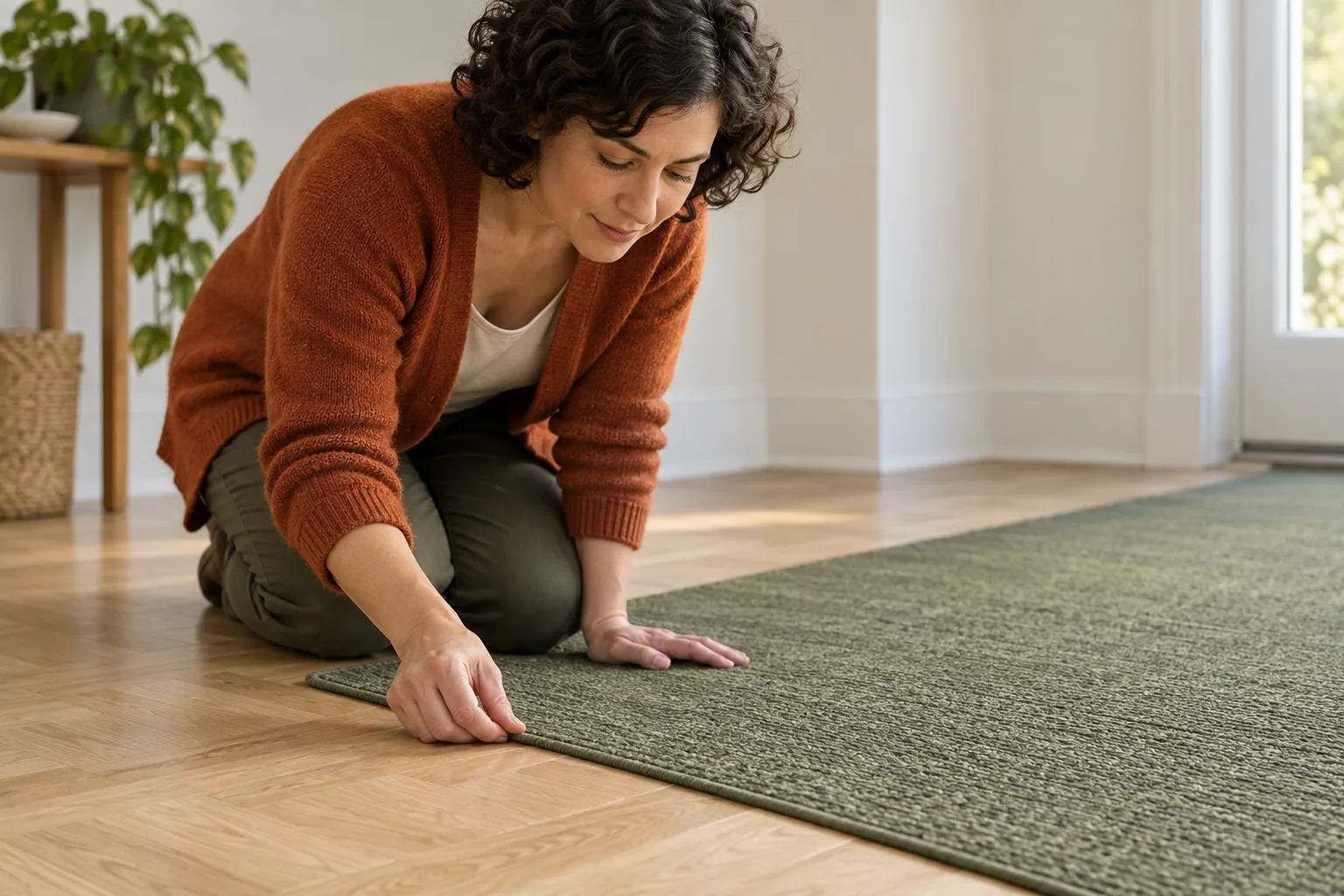
A rug that travels with the paws is not a dependable walking route. Select suitable low-profile flooring or runners with a secure nonslip backing or an appropriate compatible underlay. Follow the product instructions for your floor. Check that the covering stays in place, lies flat and does not create a raised edge for either dogs or people to trip over.
Check the whole journey, including its ends. A stable central runner can still leave a difficult landing at the water bowl or a bare gap at a doorway. Arrange continuous supported access and enough coverage at turns. Do not create stepping stones that ask the dog to jump between islands of carpet. This is an access plan, not an obstacle course.
Inspect again after cleaning, moving furniture or washing a runner. Keep the dog elsewhere until the floor and coverings are dry and correctly positioned. Remove loose threads and replace damaged materials. If your dog chews or pulls coverings, supervise and choose a more suitable secured solution with professional advice rather than leave loose pieces available.
Let the dog inspect the route without a performance
Once the route is ready, invite the dog into the ordinary room from an already comfortable area. Stand to one side instead of filling the doorway. Let them look, sniff or remain where they are. Keep other dogs, excited greetings and fetching games away from this first quiet opportunity so the route is not immediately associated with a rush.
Do not push from behind, pull with a collar or hold a treat across an uncovered gap. Avoid a line of food leading onto bare flooring. The dog should be able to move away on the same safe route. If moving around the room is still difficult, stop arranging practice and ask for individual help while keeping essential access secure.
Notice the whole movement rather than counting paws alone. A hurried dash does not necessarily mean the dog is comfortable. Equally, stopping to investigate does not by itself establish fear. Describe what happened, keep your interpretation modest and leave the route available without repeatedly testing it. Quiet everyday access can be the useful outcome on its own.
Reward one comfortable choice on supported footing
If the dog is physically comfortable and voluntarily engaging, an easy step entirely on the secured runner can be enough. Offer a small suitable reward where the dog already has support. Keep your hand at a comfortable height and close enough that reaching it does not require stretching, twisting or crossing onto a slippery patch.
If you already use a familiar marker, our reward marker guide explains its timing. There is no need to introduce a new cue and a new surface together. You can simply acknowledge the voluntary step and deliver the reward calmly. Account for food within normal feeding and do not skip meals to increase motivation.
The RSPCA training guidance recommends reward-based learning. Here the reward follows a manageable choice; it is not a reason to remove traction. If the dog declines food, freezes or retreats, finish the attempt and reassess the situation. Eating a treat would not prove the absence of pain or make an unsafe floor safe.

Keep the practice small and leave support in place
A useful first opportunity might be entering the room and stopping comfortably, then going back. It does not need a full circuit. Pick one small action that the dog is already close to offering and stop before the activity becomes repetitive. The household should not gather round, cheer loudly or call from opposite ends of the hallway.
Our short training sessions guide can help you keep that practice modest. Change one practical detail at a time, such as where you sit or which quiet doorway you use. Keep the secured route itself consistent. Do not shorten the runner each day as a compulsory progression towards bare flooring.
Support can remain a permanent part of the home. There is no prize for removing it. If a particular room cannot be made suitable, consider a comfortable alternative layout with appropriate professional input. A dog who comfortably reaches water and rejoins the family on a covered route has gained something useful even if the uncovered floor remains unused.
Fit the route into real household traffic
Imagine the next busy evening rather than only the quiet practice moment. Groceries arrive, someone opens the garden door and another person walks towards the kitchen. Agree that nobody calls the dog through a crowded turn or starts a chase along the runner. Give the dog time and space while people pass, especially at narrow doorways.
Connect the resting area as carefully as the hallway. A bed can feel easy to reach but leave a slippery place to stand after sleeping. Make the supported area generous enough for standing and turning. Our settling on a mat guide covers a separate resting skill; the walking surface still needs to stay physically secure.
Keep a simple household check: route clear, edges flat, floor dry, water reachable. After visitors or cleaning, check again before the dog returns. For a dog with an individual mobility plan, ask the treating professional how that plan applies to your particular doorways and rest areas rather than inventing extra repetitions or handling techniques.

Review access rather than setting a crossing deadline
Record a few useful observations in an ordinary notebook: route used, condition of the covering, whether movement was unhurried and any change you want to discuss with the vet. A brief description is enough. Avoid filming repeated crossings for comparison or assigning a confidence percentage from one successful journey. The record should support decisions, not pressure the dog.
If hesitation persists despite stable footing, a qualified reward-based behaviour professional can help assess the situation alongside veterinary care. Get personal help if approaching or handling the dog creates a bite risk; keep others at a safe distance and do not attempt to move the dog by force. Pain and sudden changes always take priority over a training timetable.
Review the arrangement whenever the household changes: a washed runner, a new bowl position, a moved bed or a different room in use. Keep the support that makes daily life workable. The practical question is whether the dog can access what they need comfortably, with a safe way to stop and return, rather than whether they have met an arbitrary floor-crossing target.
Common questions
Should I remove the rugs once my dog starts crossing?
There is no requirement to remove useful support. Keep the route that makes everyday movement comfortable. If you are considering a flooring change, plan it around the individual dog and seek advice when movement is affected. A successful crossing does not establish that bare flooring is suitable.
Would carrying my dog across solve the problem?
Do not improvise lifting or force a reluctant dog into handling. Size, discomfort and bite risk matter. Arrange accessible essentials on secure footing and ask your vet for an appropriate transfer plan if movement between areas is necessary. Carrying across does not address the route the dog must later use.
Should I buy socks or apply something to the paws?
Avoid improvising products, adhesives or treatments on paws. Wearable aids need an individual fit and suitability check, and some dogs chew or dislike them. Start with the environment and ask your veterinary team before adding equipment. Do not use a product to justify asking for a difficult crossing.
Can I practise if the dog has always avoided one room?
First make access physically suitable and consider whether the avoidance or movement warrants veterinary assessment. If the dog is comfortable, offer quiet voluntary choices on supported footing. Stop when the opportunity is not manageable and ask a qualified professional for individual help. There is no need to insist on using every room.