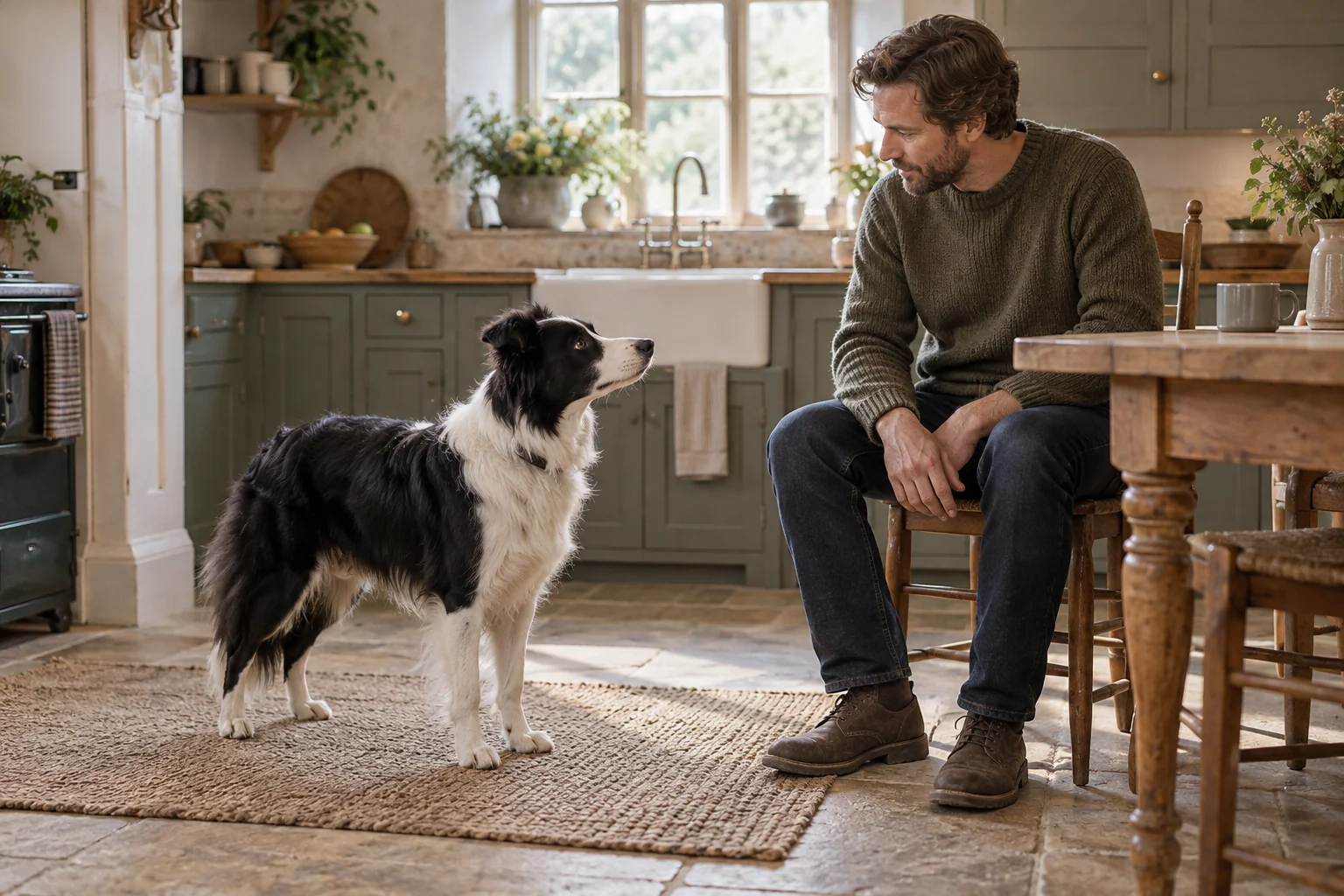
Not every useful training moment looks like a new trick. Sometimes progress is the decision that makes the next attempt more comfortable.
A better observation is useful work
Imagine returning from a walk and writing “still pulling.” It captures the frustration, but gives tomorrow very little direction. Now try: “We managed three loose steps on the quiet path. Near the playground, we needed more distance.” The second note identifies both a working setup and a practical change.
This is not about inventing a success when something was difficult. It is about recording enough context to make a better decision. Conditions matter. A skill practised at home is not automatically ready for every place you visit.
Record your part of the exercise
Perhaps you prepared rewards before clipping on the lead. Perhaps you noticed the busy entrance and chose a quieter path. Perhaps you stopped before another repetition became frustrating. These are observable actions you can repeat, even when your dog’s response varies.
A useful entry can be only three lines: where we practised, what happened, what we will do next. Avoid turning every outing into an examination. The purpose of a log is to support life with your dog, not to create another obligation you resent.
Keep the next step small enough to use
If the next note says “fix recall,” you are back at the beginning. Write “repeat two short recalls indoors with the same reward” instead. A narrow next step is easier to remember and easier to adjust.
Our short-session guide gives you a simple structure. If you prefer to keep lessons and progress together, the DogPath training path offers a place to organise daily practice. A notebook is equally capable of holding a thoughtful observation.
Leave space for an ordinary day
You can keep a routine without demanding the same result every day. Different surroundings, household events and your dog’s comfort can change what is sensible. Review the situation in front of you before following yesterday’s plan. When a change is sudden or suggests pain or distress, seek appropriate professional help.
Replace the verdict with the scene
A verdict feels efficient: “good walk,” “bad session,” “still no progress.” It compresses a whole experience into a few words. The difficulty appears tomorrow, when you want to know what to repeat. The verdict has discarded the setting, the sequence and your own decisions.
Try describing a single scene instead. “At the wide part of the path, we managed a few comfortable steps. At the narrow gate, another dog appeared and we moved away.” This account leaves room for both a useful moment and a difficult one. It does not need to turn the whole outing into a success story.
The detail changes the next question. Instead of asking whether the dog is getting better in general, you can ask whether the wider path is a useful place to begin again. You can also identify the narrow gate as a route-planning problem before the next outing.
That is the value of a small observation: it preserves a choice. The next session can start from something concrete rather than from the emotional summary you wrote at the end of a tiring day.
Keep three kinds of observation in the same record
A balanced note can include the dog’s visible response, the surrounding context and the handler’s action. None of those alone describes the whole event. Together they offer a clearer starting point for review.
- The dog’s response
- What happened that you could see? A turn, a step, a pause or leaving the resting place is more specific than a personality label.
- The context
- Where were you, what was nearby and what changed? The same room can become a different setting when visitors arrive.
- Your action
- What did you prepare, reward or adjust? Include the choices you want to make again.
For example, you might record: “Dog stepped onto the mat while I remained seated. The room was quiet. I had the reward ready and delivered it without standing.” Tomorrow’s note can then compare a real change, such as your movement, without assuming that the mat means the same thing in every situation.
Keep the account modest. A brief observation does not diagnose why something happened. It gives you a practical reference and helps you explain the scene if you later need individual support.
Recognise the value of an earlier decision
Sometimes the useful action happens before the exercise. You notice the path is crowded and choose a wider route. You realise the reward is buried in a bag and prepare it first. You recognise that a visitor has changed the room and postpone the lesson.
Those decisions may leave no new trick to demonstrate. They still matter to the plan because they change what the dog is being asked to handle. Record them as actions you can repeat, rather than inventing a training outcome that did not occur.
A fictional journal entry
“We planned a short walking exercise, but the usual path was busy. I chose the wider route and kept the outing simple. Next time, check the route before deciding where the lesson belongs.”
This note is useful even though the planned exercise did not happen. It captures a decision and an improvement to preparation. It also leaves the original skill unfinished, which is honest.
Avoid turning every sensible adjustment into a claim of progress in the dog’s behaviour. Better handling and learned responses are related, but different. Your record can acknowledge one without asserting the other.
Review a week by looking for a repeatable choice
Read a few entries together and look for a practical pattern. Perhaps the same quiet room keeps providing a comfortable start. Perhaps sessions become muddled when rewards are unprepared. Perhaps a particular route repeatedly leaves too little space.
Choose one decision from that review. Keep the useful room. Prepare the reward before the dog joins. Change the route. A specific change gives the next week direction without needing an ambitious new training target.
A short weekly reflection
- Name one setup that was comfortable enough to use again.
- Name one part of your preparation that could be clearer.
- Write the next exercise or management choice in a single sentence.
- Identify any concern that needs professional advice rather than another general lesson.
If the notes contain mixed results, leave them mixed. A record becomes less useful when it is edited to look like constant improvement. Ordinary weeks contain interruptions and changes; the job of the review is to help you respond to them.
Then put the record away. A notebook is there to support life with the dog, not to occupy every moment of it. Keep enough detail to make a better next choice and leave the rest of the day room to be ordinary.