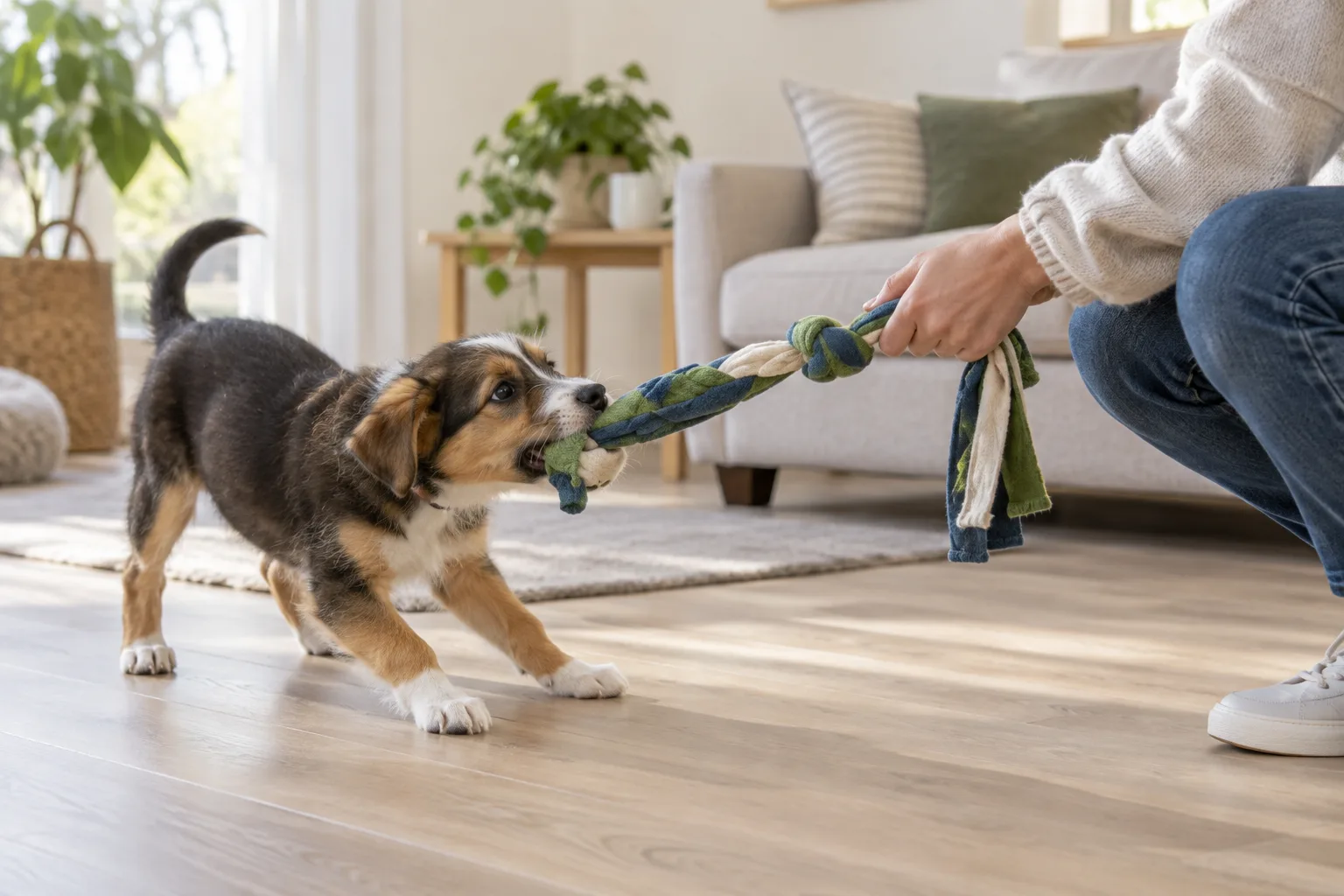
If you are dealing with puppy biting hands, you may be wondering whether play has gone wrong or your puppy is “being aggressive.” Mouthy play is common in young dogs. They explore with their mouths, rehearse social play and may seek something to chew while their teeth change. Common does not mean you have to tolerate painful contact. The useful question is what happened just before the teeth reached you, and what you can make easier next time.
This guide is about ordinary play nipping, not about evaluating a particular dog from a distance. You will learn how to prepare a game, interrupt it without frightening the puppy, provide an appropriate alternative and protect rest. If bites are hard, accompanied by fear or guarding, or seem suddenly different, ask a veterinarian and a qualified, reward-based behaviour professional for individual advice.
What puppy biting hands during play can mean
A puppy does not arrive knowing that human skin and clothing are more fragile than a littermate's coat. Hands move quickly and offer exciting toys. Trouser legs swing past a small dog at the height of a play target. Mouthing can be part of an ordinary game, but that explanation is a starting point, not a diagnosis. Watch the whole puppy: loose or tense body, ability to pause, response when space is offered, and the context in which contact happens.
Notice the sequence. Did the puppy grab a sleeve after several minutes of lively play? Did hands reach toward the face while the puppy was chewing? Was the household busy and noisy? Those situations call for different adjustments. The first suggests ending the game sooner; the second suggests giving the chew space; the third suggests a quieter setup or a rest opportunity.
According to Dogs Trust's guidance on mouthing and nipping, suitable toys, management and attention to the dog's needs are part of the response. A painful nip means the interaction needs to change. It is not a cue to shout or hold the muzzle shut.
Prepare play so skin is not the easiest toy
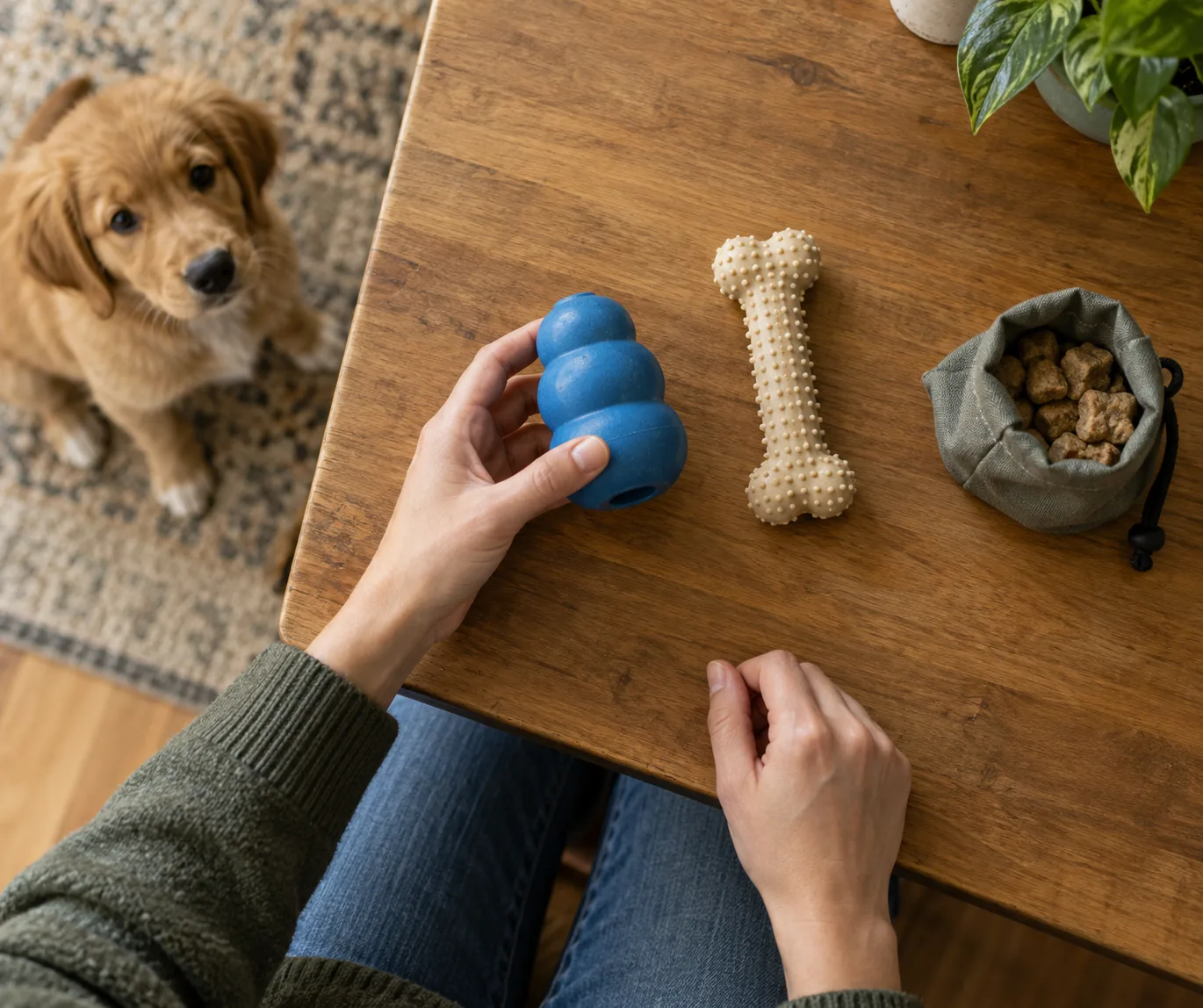
Before inviting the puppy into a game, pick a toy with enough length to leave comfortable distance between teeth and fingers. A soft tug toy may suit a puppy who wants to grab and pull; another puppy may prefer a chew or a toy that can move along the floor. Inspect toys for loose pieces, choose an appropriate size and supervise play. Keep a second option nearby so you can change the activity without reaching into the puppy's mouth.
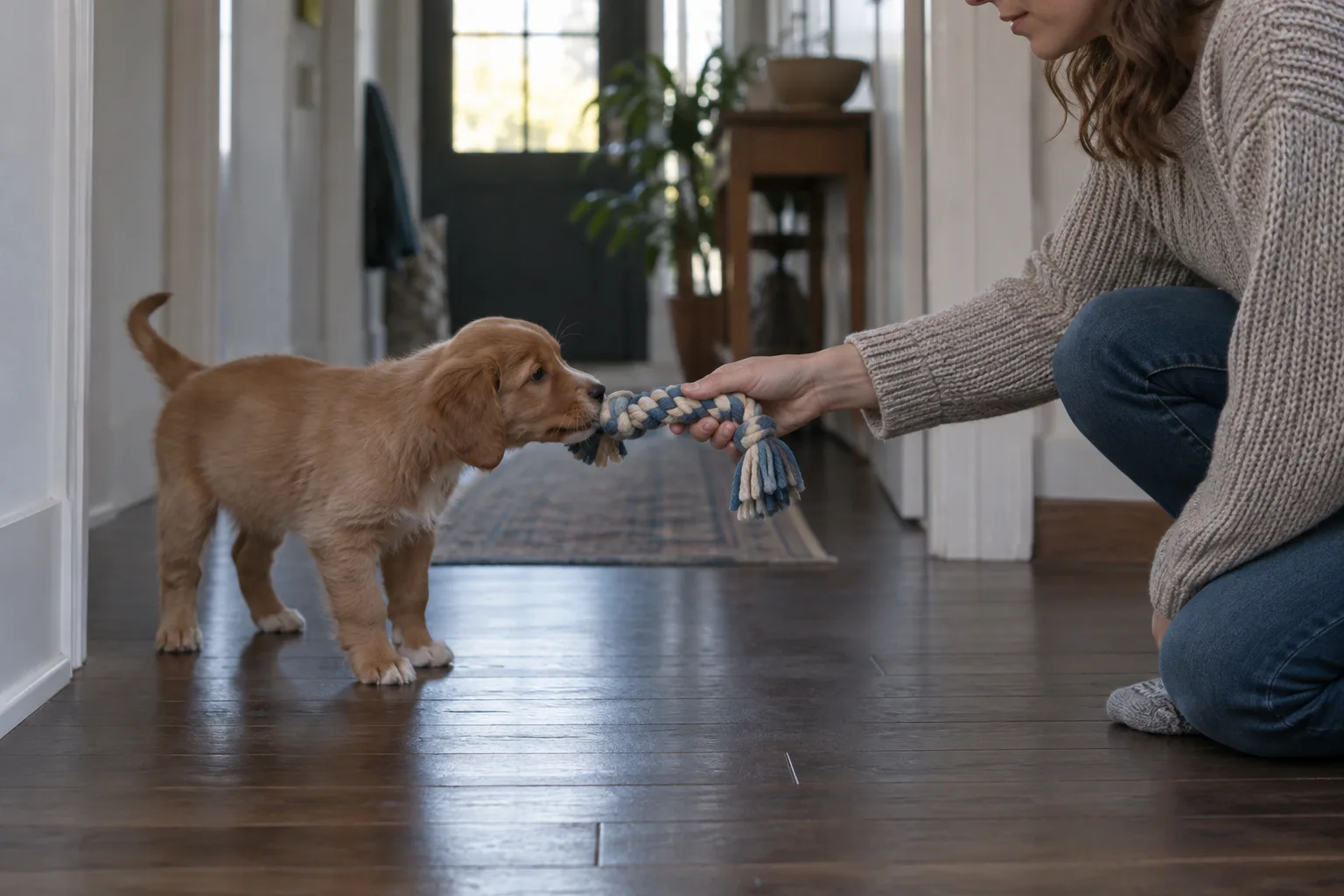
Put your hands in a predictable place on the toy, then move the toy rather than wiggling bare fingers near the puppy's face. If the puppy chooses the toy, continue the game for a few moments. Pause before excitement rises too far. You are teaching a pattern: toy in mouth keeps the interaction going; skin contact makes the interaction become still and brief. Rewarding toy choices can be as simple as restarting enjoyable play.
Other people in the home need the same simple arrangement. An adult can model where hands go and where the spare toy stays. Children should not be made responsible for teaching bite control or for enduring nips; supervise and separate their play when needed. The first-week overview in our puppy home routine can help you arrange rest, supervision and supplies before a difficult evening arrives.
Respond to a nip with a short, calm pause
When teeth touch skin, stop the movement that made the game exciting. Keep your voice neutral and avoid flapping your hands, pushing the puppy away or turning the moment into a chase. If you can safely withdraw, pause briefly. Then offer the toy again and resume only if the puppy is still comfortable and able to take it. The point is not a dramatic punishment; it is a clear contrast between play with a toy and play that becomes unavailable for a moment.
If the puppy immediately grabs clothing or hands again, do not repeat the same failed invitation indefinitely. End that round and create a little space: stand behind a gate, move to the other side of a doorway, or arrange a short quiet break while the puppy has a suitable activity. Do not use a crate or resting area as a frightening penalty. If you cannot safely move away, prioritize protection and help from another adult rather than wrestling the puppy.
Some advice suggests yelping sharply when bitten. For some puppies, a high-pitched sound may increase excitement rather than reduce it. You can use a quiet pause without trying to imitate another dog. Watch whether your puppy can settle and re-engage with the toy; that response tells you more than whether a particular word or noise felt authoritative.
Redirect before the puppy reaches your sleeve
It is easier to reward an appropriate choice than to interrupt an already frantic one. Learn the early signs that your puppy is looking for a target: tracking moving socks, rushing at a swinging cuff, repeatedly opening their mouth toward your hand. Present the toy before contact, move it gently at floor level and let the puppy choose it. You do not need to shove an object into their mouth. Offer the alternative and make it worth noticing.
Change one feature if the alternative is ignored. Perhaps the toy is too still, the session has lasted too long, or the puppy needs distance from a stimulating person. A different texture or a brief, calm movement can help. If no toy holds attention and the puppy becomes increasingly frantic, stop trying to train through the moment. Offer water and a comfortable chance to rest, without assuming that every active puppy is sleepy.
For useful timing, our reward-marker guide shows how a brief signal can identify a choice you want to see again. You can mark the moment the puppy turns toward the toy or releases clothing, then reward in a way that suits the situation. Do not lure the puppy into another overexcited round merely to earn more repetitions.
Make play shorter before you make it harder
A game can begin well and end with teeth on hands simply because the exciting part lasted longer than your puppy could manage. Try a short turn with the toy, pause, offer a sniff or chew opportunity, and see whether the puppy can return to play comfortably. There is no universal minute rule. The useful length is the one at which this puppy, in this room, can still make a calm choice.
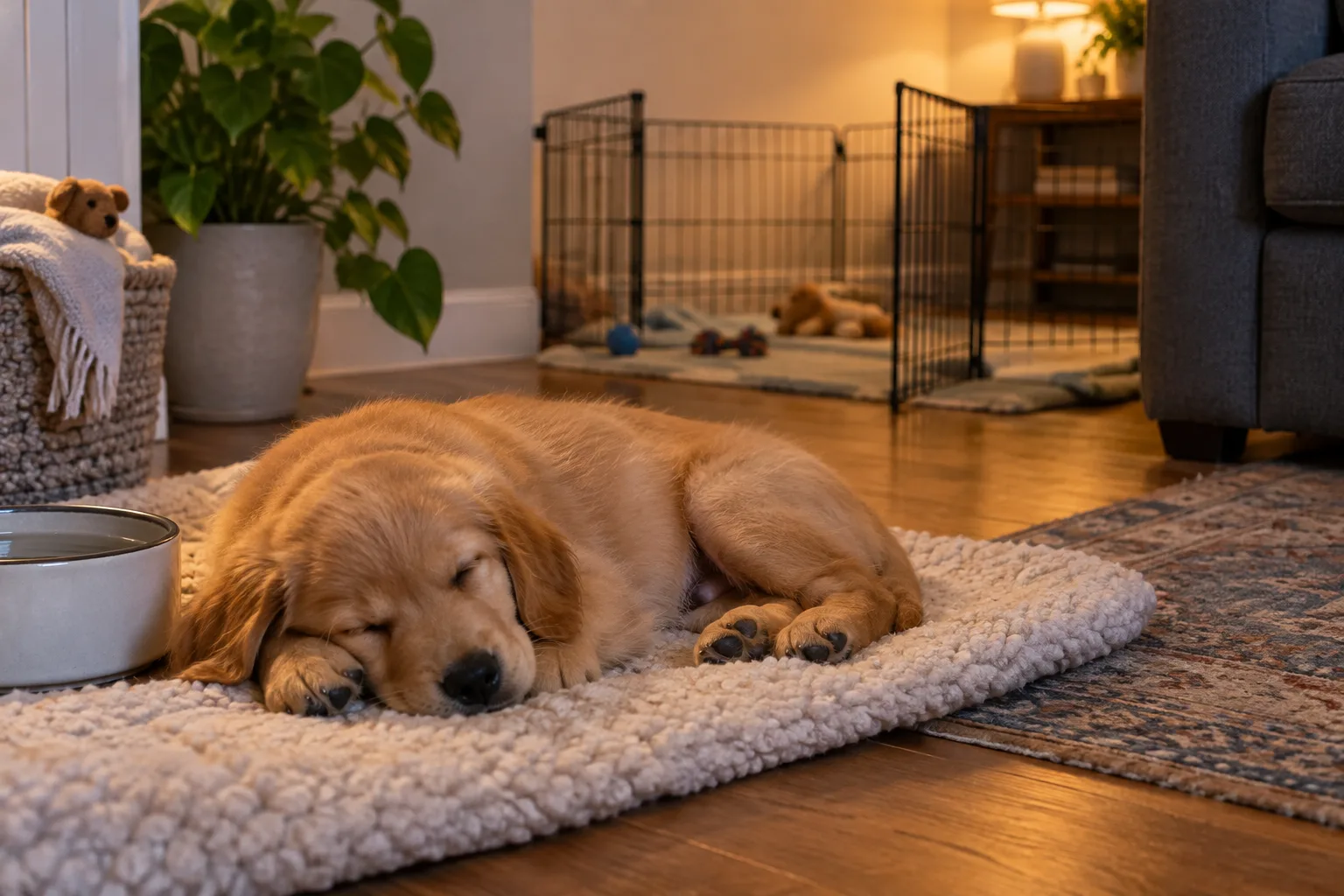
Look at the rest of the day too. Several visitors, little sleep, roughhousing and a late meal may change how much the puppy can handle in the evening. Giving a predictable quiet place is not giving up on training. It is designing a setting where learning is possible. An adult can arrange a gate or pen so the puppy has space from moving feet while remaining able to rest, drink and be supervised.
The AKC's puppy-biting overview also discusses anticipating mouthy moments and substituting an appropriate toy. Use that idea flexibly: if a puppy repeatedly nips just after waking, prepare the toy before greeting; if it happens after a crowded afternoon, shorten the greeting and protect a quiet transition.
Rest, chewing and teething are part of the plan
Chewing can serve a different need from a game of tug. Offer a suitable chew selected for your puppy's size and chewing style, following the product's safety guidance and supervising use. Avoid giving hard objects that could damage teeth or small pieces that could be swallowed. If you are unsure what is appropriate, ask your veterinarian. Do not pull a valued chew away casually; trading for something worthwhile is safer than inviting a struggle.
When an active period ends, lead the puppy toward a familiar resting area without forcing them to remain in contact. Keep the space comfortable and accessible. An open pen, mat or bed can be a useful boundary when introduced gently, but no setup is a substitute for observing the individual dog. Let the puppy sleep without someone repeatedly reaching in to pet them or test whether the biting has stopped.
Teething may make chewing more salient, but it should not be used to explain every change. Pain, injury or illness can alter behaviour too. If your puppy suddenly resists touch, cries while chewing, cannot eat normally or shows a major behaviour change, contact a veterinarian. A training article cannot tell you which physical cause is present.
Keep everyone consistent without making a rigid rulebook
Write a household plan that fits on a few lines: keep a suitable toy available, stop moving when skin is nipped, pause the interaction, restart only while the puppy is able to choose the toy, and arrange rest when excitement keeps climbing. Agree which adult can step in if a child or visitor becomes uncomfortable. Consistency means the puppy sees the same broad pattern, not that every person must speak with the same voice or time a pause to the second.
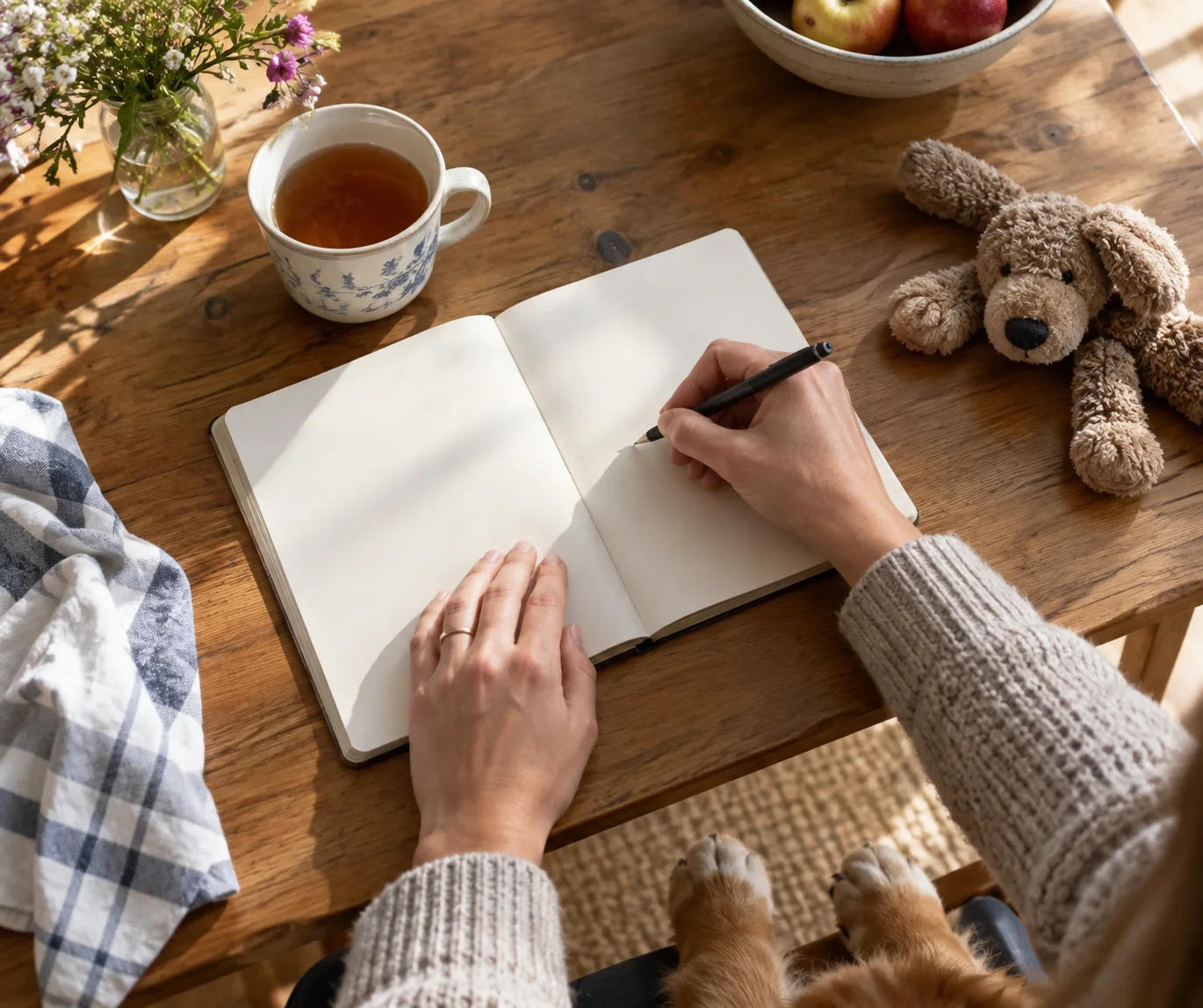
Record one or two useful observations after a difficult game: time of day, who was playing, how long the game had run, what the puppy had done before it, and what helped the next attempt. Avoid scoring the puppy as good or bad. “Grabbed sleeve after visitors left; accepted a chew after a quiet break” suggests a practical adjustment. “Bad again” does not.
Use a notebook or a simple routine record; the method matters less than being able to see patterns. Our short training sessions guide explains how to choose one easy change at a time rather than increasing duration, movement and distraction together. A plan should make everyday life more predictable, not turn every interaction into a lesson.
When puppy biting needs individual help
Ordinary play nipping and a potentially dangerous bite cannot be sorted reliably by an online checklist. Seek prompt professional help if contact breaks skin, bites are escalating, the puppy becomes stiff or fearful around handling, guarding is involved, or people feel unsafe. If the change is sudden, begin with veterinary advice because discomfort or illness may contribute. Tell the professional what happened just before the bite and what the puppy did afterward; do not provoke a repeat to collect evidence.
Keep children and vulnerable visitors physically separate from a dog whose behaviour you cannot safely manage. Management is not a verdict on the puppy. It protects everyone while a qualified person can assess the whole situation. Choose someone who uses humane, reward-based methods and can explain how they will evaluate risk. Avoid advice that relies on intimidation, pain or a claim that all biting is dominance.
The aim of this guide is a calmer ordinary play routine: prepare the toy, interrupt skin contact without drama, lower the difficulty when it repeats, and notice when rest or expert input is needed. You do not need a perfect day. A few safer, easier interactions give you better information for tomorrow.
Common questions
Is puppy biting hands always aggression?
No. Mouthing and nipping often occur during ordinary play, but context matters. Stiffness, fear, guarding, escalating force or a sudden change deserve individual assessment. An article cannot diagnose your puppy.
Should I stop playing every time my puppy nips?
Pause briefly when teeth touch skin, then offer the toy again if the puppy is able to engage calmly. If nipping repeats immediately, end that round and lower excitement rather than repeating the same setup.
Will a chew toy fix biting on its own?
A suitable toy gives the puppy an appropriate target, but timing, supervision, rest and a consistent response still matter. Choose safe sizes and textures for your dog and supervise chewing.
What if my puppy bites harder in the evening?
Review stimulation, rest and how long games are lasting. Prepare a shorter play turn and a quiet transition. If force is increasing, skin is broken or behaviour changes suddenly, consult a veterinarian and qualified behaviour professional.