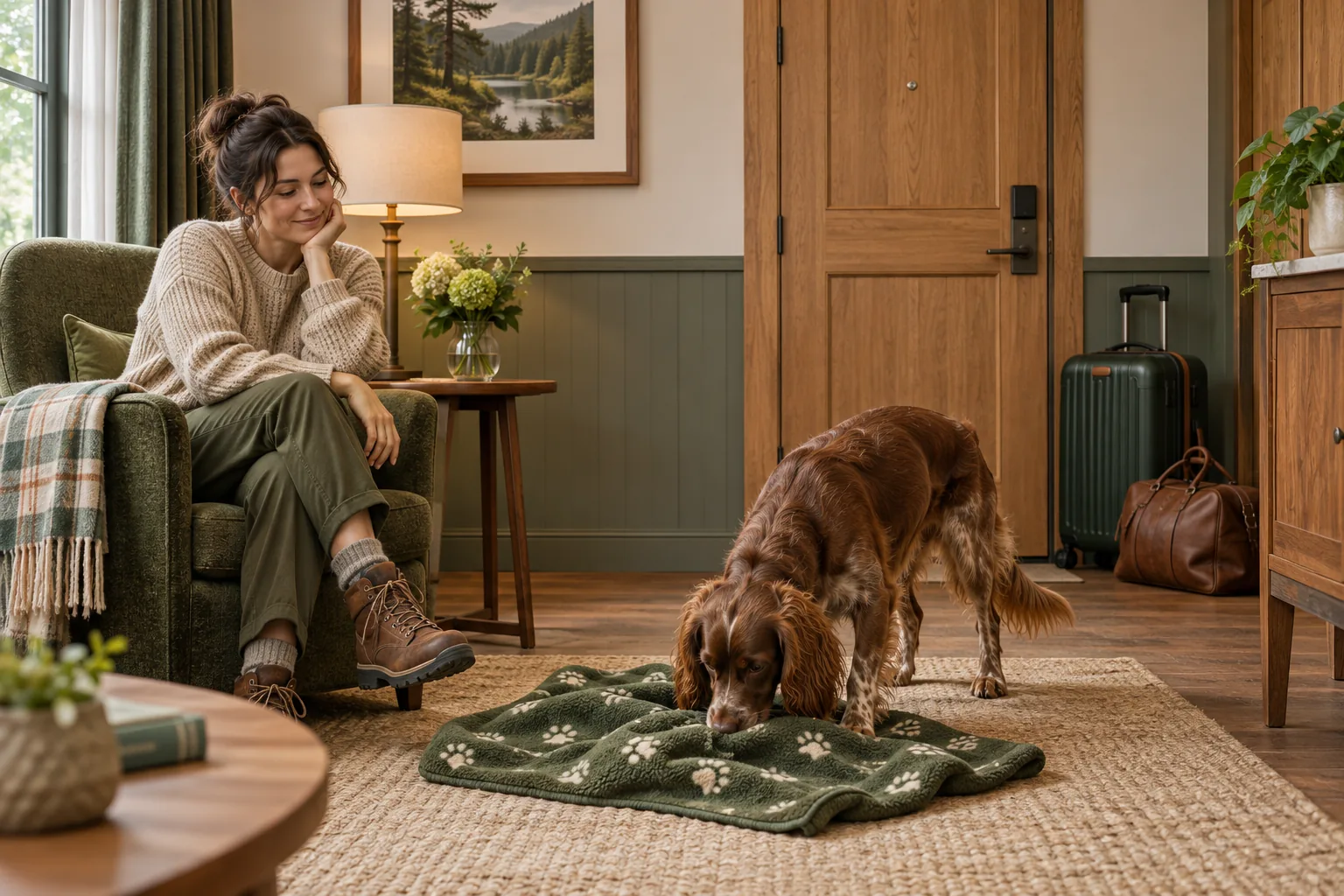
When your dog won't settle in a hotel, begin by making the next hour quieter and more predictable. A familiar blanket, a normal toilet opportunity and a person staying nearby can help you work out what the dog needs. Look at the room from their level, including the door, unfamiliar floor and noises outside. Plan around the dog you brought with you, and be ready to change the evening if they cannot get comfortable.
Dog won't settle in a hotel? Rewind the arrival
Think about the journey and the first few minutes indoors. Your dog may have stepped straight from a long drive into a busy reception, then crossed a shiny floor and heard suitcases behind the door. Write down what happened before the pacing or barking began. Perhaps they were comfortable outdoors but started watching the door when you unpacked. That gives you one part of the setting to change.
Check basic needs before asking for a behaviour. Offer water, a normal toilet opportunity and the usual meal at an appropriate time. Notice whether the room is too warm and whether the dog can reach water without crossing a surface they avoid. Keep medications and any veterinary instructions on their usual plan. A new room does not remove the needs your dog has at home.
Look for signs that deserve veterinary advice. Pain, vomiting, unusual weakness, difficulty breathing or a sudden major change in behaviour should prompt a call to a veterinarian, with urgent care when needed. Persistent pacing or panting can have several causes. If you are unsure whether the dog is physically comfortable, seek advice rather than repeatedly asking them to lie down.
Check the room before unpacking everything
Keep the dog with a capable adult while you check the room. Look for accessible food, cleaning items, discarded medication, open bins and small objects under furniture. Check windows, balcony access and the entry door. Secure anything that could let the dog escape and keep bags with food or medicine out of reach. Ask staff for help with hazards you cannot resolve safely.
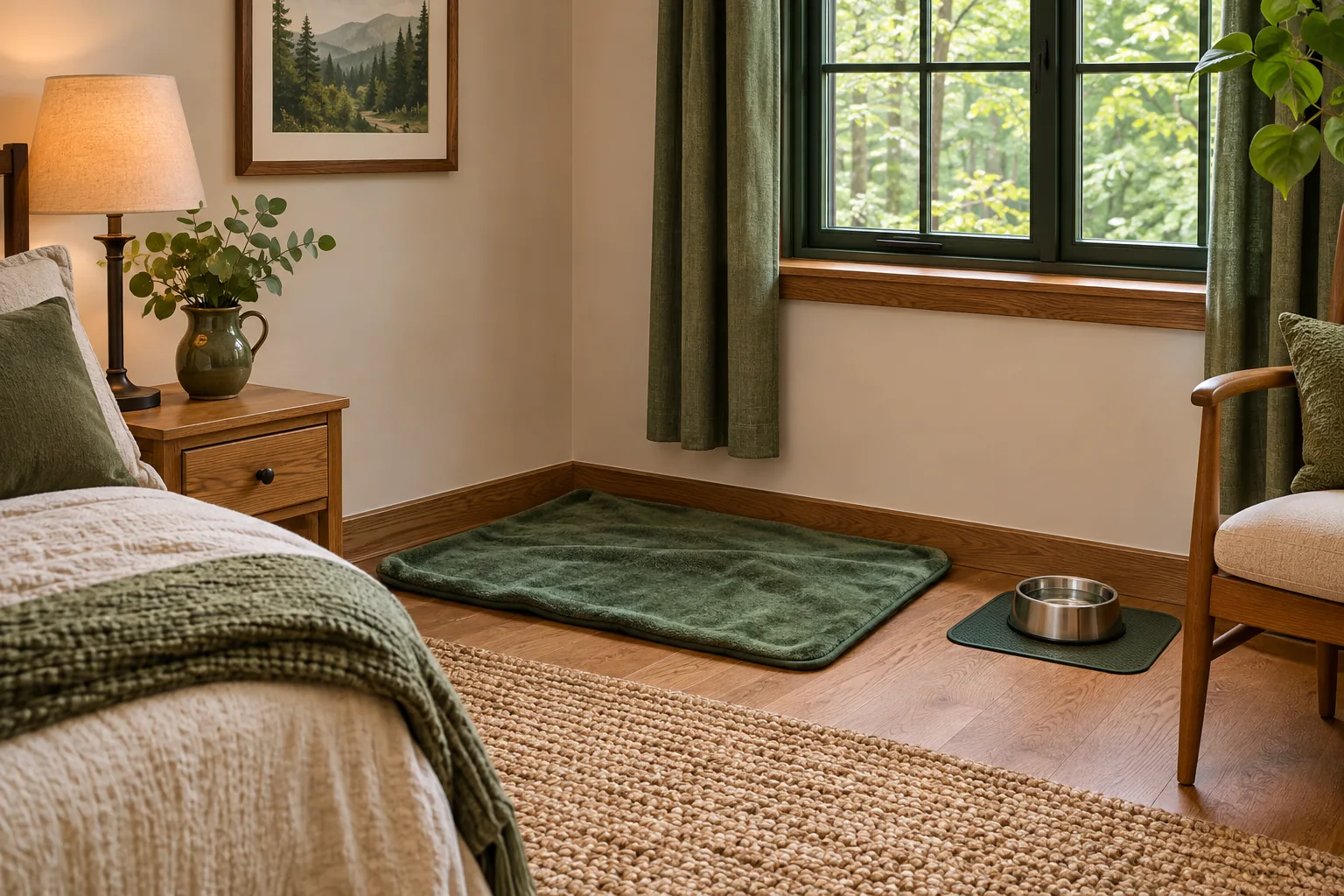
Choose a quiet sleeping area away from the main walking route and, where possible, away from the door. Make sure the dog can stretch out and get up on a stable surface. You can place a familiar blanket over a suitable grippy mat if the floor is slippery. Keep a clear route to water. Avoid wedging the bed behind luggage or creating a narrow space where the dog cannot turn.
Confirm the accommodation's actual arrangements for dogs, room servicing and access to outdoor areas. Agree with staff how to avoid unexpected entry while your dog is present. If you need food or supplies, arrange for someone to stay with the dog while another person collects them. A quiet first evening is easier to organise before everyone leaves for a restaurant.
Bring familiar rest into the new space
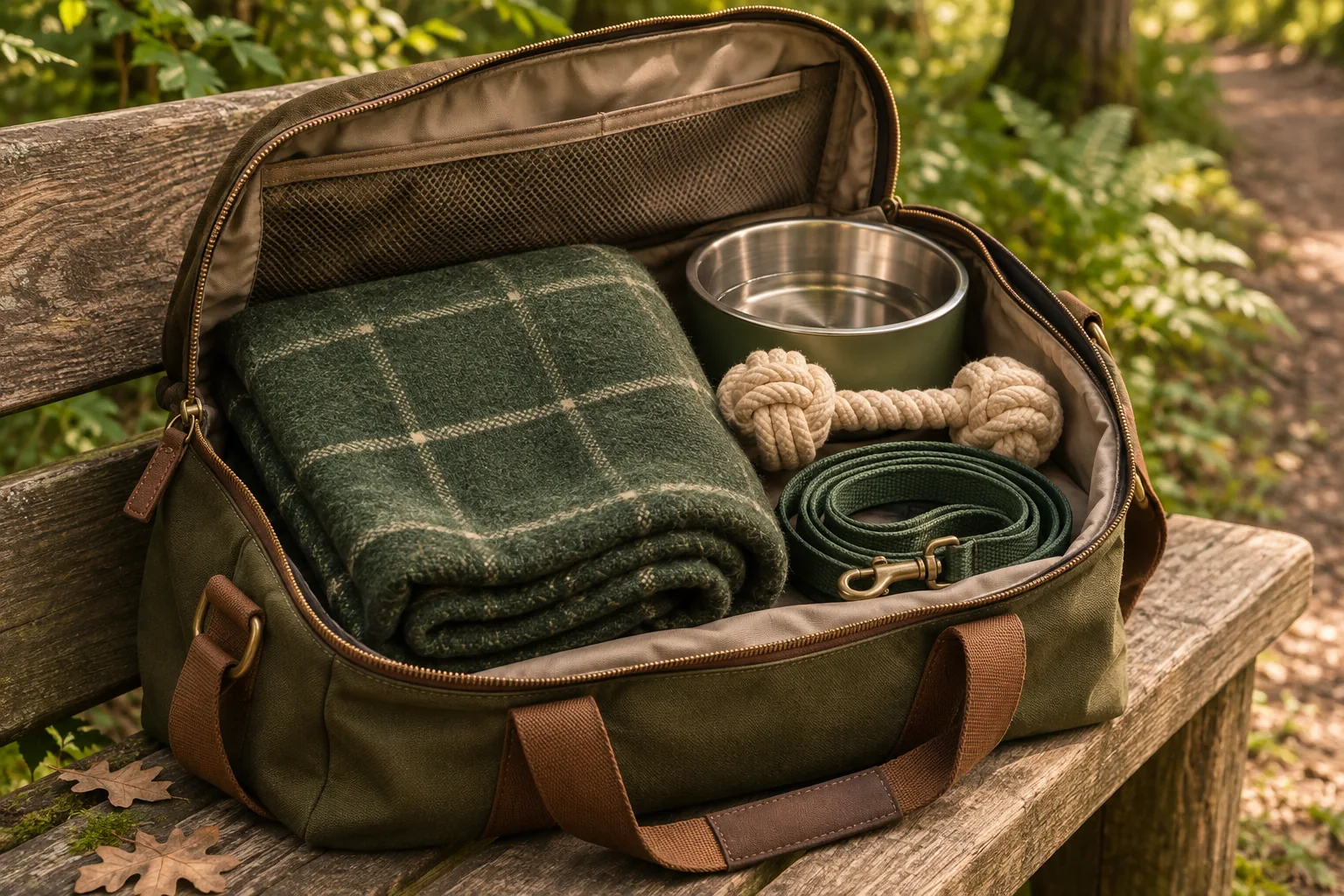
Put down a bed or blanket your dog already uses comfortably. Keep it available without repeatedly sending the dog onto it. Let them look around safely and choose whether to approach. The RSPCA holiday guidance recommends familiar-smelling items and considering the individual dog when planning a holiday. A familiar object is one part of an arrangement that also needs space and companionship.
Sit down and reduce your own movement for a while. Leave the suitcase closed if unpacking makes the room busier. You can quietly reward a voluntary visit to the resting place, then allow the dog to leave again. If they stay standing near you, start by accepting that comfortable position rather than repeatedly asking for a down.
If the dog already has an easy mat routine, use only the part they know well. Our settle-on-a-mat guide describes foundations to practise before travel. On the first night, keep the exercise brief and optional. A dog who settles on a mat at home may need time to feel comfortable doing the same thing beside an unfamiliar bed or doorway.
Make hallway noises easier to manage
Notice which sound interrupts rest. It may be a suitcase wheel, a lift chime or someone talking just outside. Move the resting area farther from the source if the room allows it. Closing an internal door or drawing curtains may reduce activity the dog can see. Check that any change keeps ventilation comfortable and leaves the room safe.
Stay with the dog and allow space when a sound happens. If they look up and then return to resting, leave that recovery undisturbed or offer quiet recognition if it suits them. If they become stuck watching the doorway, pace or bark repeatedly, lower the demands on the evening. Ask whether a quieter room or a different arrangement is available rather than exposing them to a busy corridor over and over.
Avoid standing beside the door with the dog to watch people pass as an impromptu training exercise. The corridor may be too narrow for comfortable distance, and other guests need to move freely. Use a quiet route for necessary exits. When opening the door, have the dog safely attached and check the corridor first, with another adult helping when available.
Keep the first evening small
A short sniffing outing in a suitable area may fit better than a long tour of a busy town. Look for permitted space away from crowds and traffic. Keep the lead loose enough for ordinary movement while maintaining safe control. Our loose-lead walking guide can help with familiar handling. If the dog has had a tiring journey, allow rest between essential outings.
Keep meals and toilet opportunities close to the dog's normal pattern. Bring their usual food and familiar equipment. Avoid adding a collection of new activities, rich treats and unfamiliar social encounters to an already different day. A comfortable evening can consist of a short outing, dinner, company and sleep. Share the plan with everyone travelling so the dog is not repeatedly invited into more activity.
If you need to attend an event, decide beforehand who stays with the dog. Being comfortable alone at home does not tell you how they will feel alone in a hotel. Check the property's conditions and make a practical plan for company. If no suitable arrangement is available, reconsider that part of the trip. Watching a distressed dog through a camera cannot provide the company or support they may need.
Watch for rest rather than a perfect pose
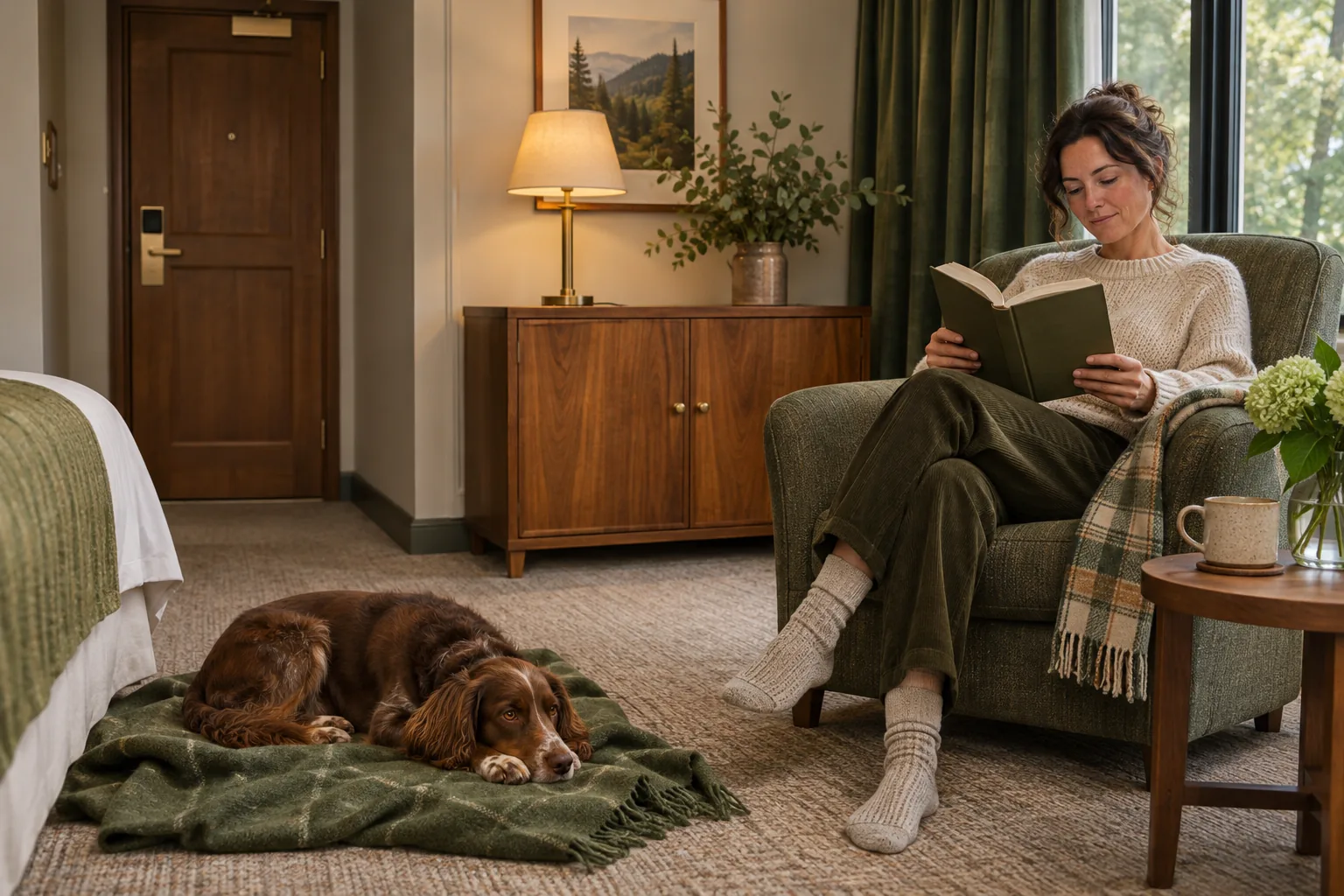
A dog may first stand near your chair, then sit, then lie with their head raised. Observe whether their breathing, movement and attention return toward what is ordinary for them. Real rest includes the ability to change position, drink, move away and resume resting. Remaining still while staring at the door gives you different information.
Give breaks from requests. Repeatedly saying “settle” can make the room feel like an ongoing task. You can sit quietly, keep access to the resting place open and allow the dog to choose a comfortable position. If they enjoy gentle contact, offer it briefly and pause to see whether they remain close or move away. Let their response guide the next moment.
If the dog cannot rest despite a quieter setup, contact your veterinarian or a qualified reward-based behaviour professional for individual advice. Describe the journey, room conditions and what you have tried. If there is guarding, snapping or a bite risk, keep people safely apart and seek in-person help before practising close interactions. Consider whether returning to a familiar environment is the kindest practical option.
Prepare for the next stay at home
Once home, note what was difficult and what helped. Record the room's location, floor surface, noises, rest area and how the dog responded. A note such as “rested after moving blanket away from door while I stayed seated” gives you a useful request for the next booking. It does not guarantee the same result in a different building.
Practise carrying and using the familiar blanket in easy places before a future trip. Start with another quiet room at home, then a suitable calm place with room to leave. The Dogs Trust holiday guide discusses planning around routine and familiar items. Build short experiences that your dog can manage comfortably instead of using a whole holiday as the first rehearsal.
Include an alternative in future plans. A trusted familiar carer or a different type of trip may suit some dogs better. Ask about room location and outdoor access before booking and allow a quiet arrival period. Discuss health or significant behaviour concerns with your veterinarian early. Travel preparation works best when it reflects the dog's actual needs and the activities you intend to do.
Common questions
Should I leave to see whether my dog settles alone?
Arrange company in the unfamiliar room and check the accommodation's conditions. If being alone is already difficult, seek individual help before planning a stay that depends on it.
Can I tire my dog out with a long walk?
Choose activity that matches their normal needs, health and journey. Rest, water, toilet access and a quiet environment may be more appropriate than adding strenuous activity.
What if my dog keeps panting?
Check the temperature and immediate comfort, and contact a veterinarian if panting persists, is unusual or comes with other concerning signs. Seek urgent help for breathing difficulty or severe illness.