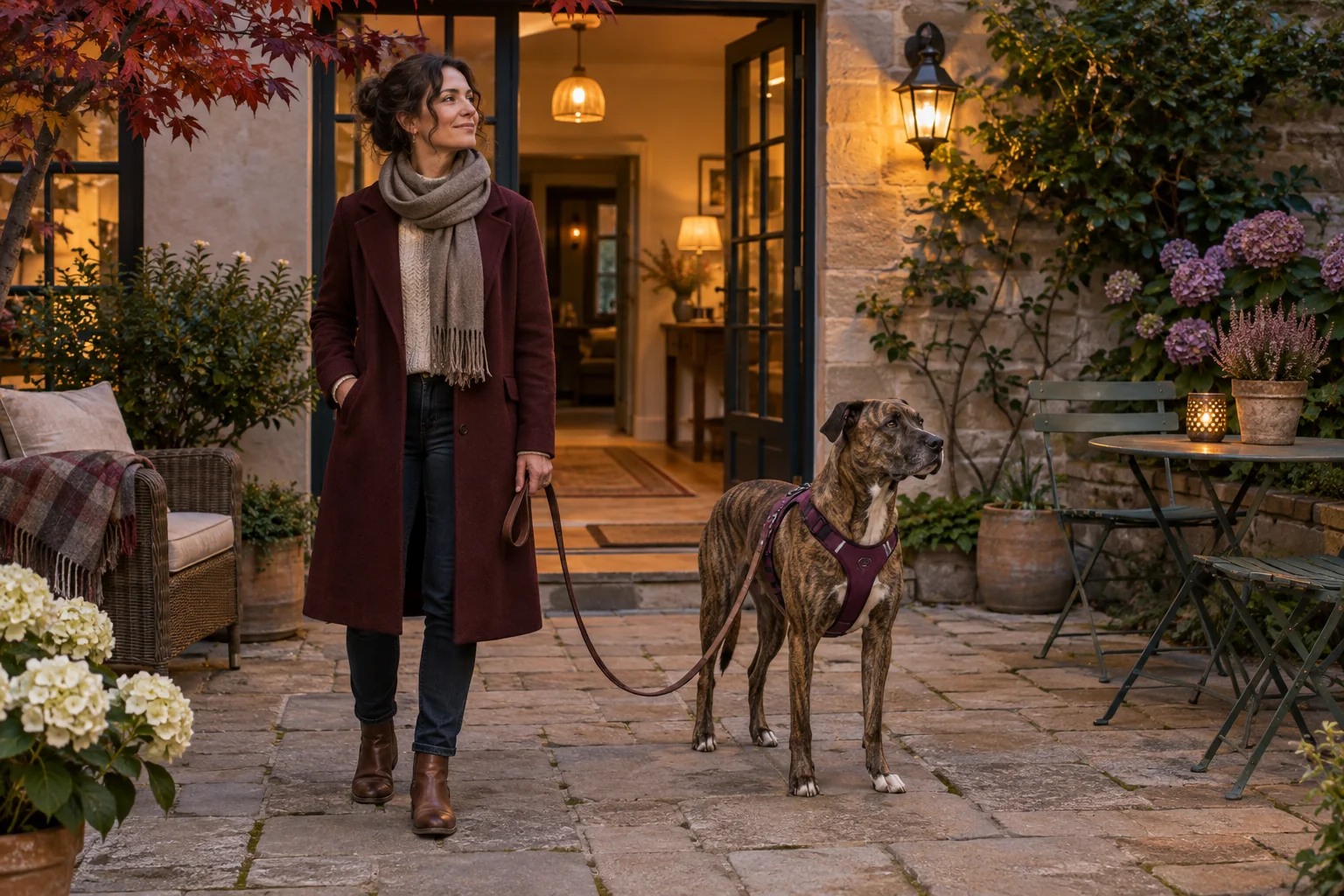
Your dog won't go out at night, although the same door is easy to use in daylight. At dusk they stand back when you reach for the leash or step outside and immediately turn toward home. Tonight's priority is a safe opportunity to toilet. A longer walk and an optional practice session can happen at another time. Begin with the shortest familiar route where you can see the surface and leave easily.
Sudden reluctance, difficulty seeing in dim light, bumping into objects or signs of pain warrant a conversation with your veterinarian. Describe what changed instead of trying to confirm a cause by taking the dog into darkness again. Ask for qualified individual help if there is panic, bite risk or no safe way to meet daily needs.
When your dog won't go out at night
Consider the particular trip that needs to happen. A toilet outing, a walk for exercise and a practice session have different aims. If the dog can comfortably reach a suitable toilet spot just outside, you can return from there. Choose daylight for longer activity when practical. A quiet evening does not mean the dog should lose all opportunities to explore, move and spend time with you.
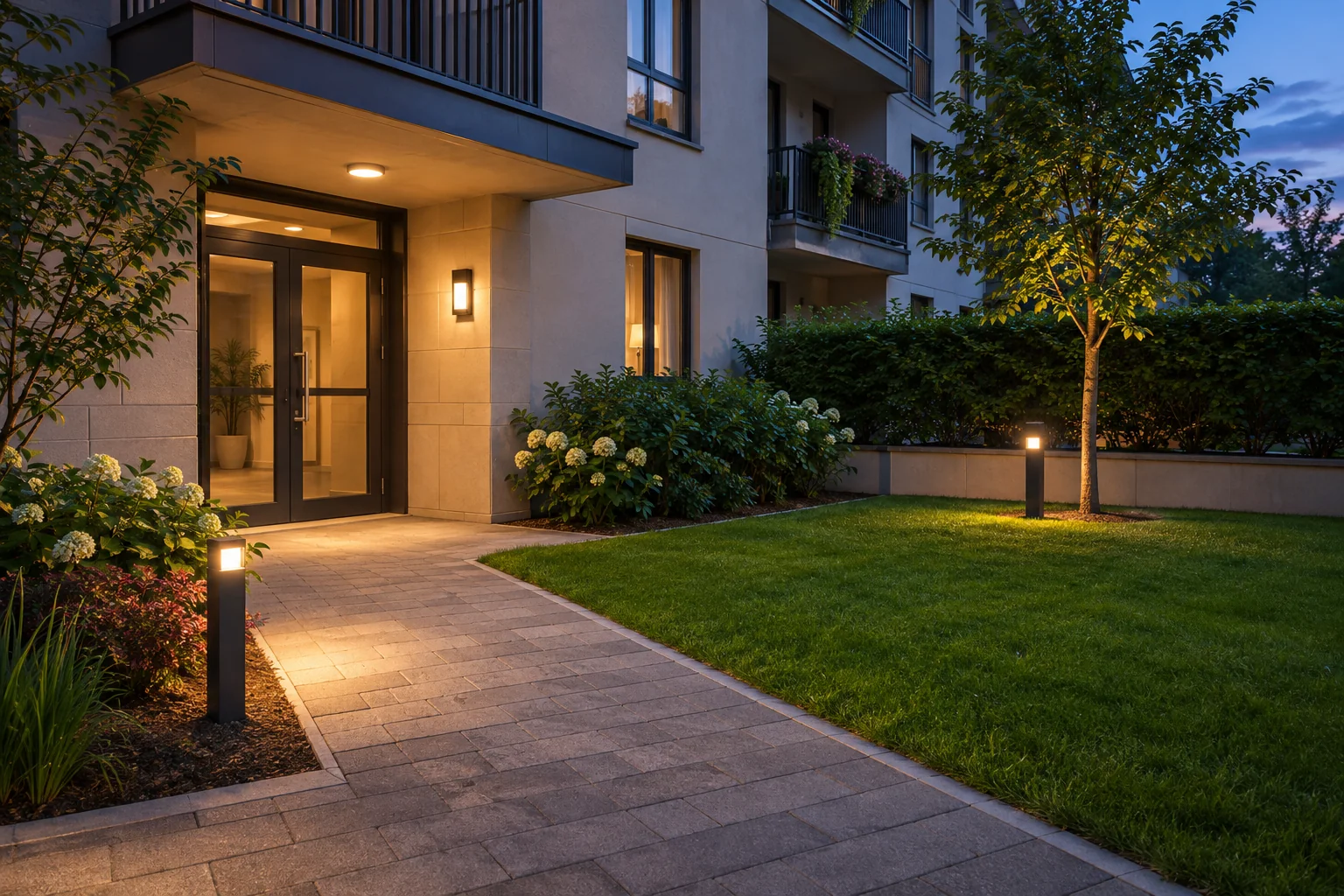
Check the view from the doorway before inviting the dog. A bright interior can make the first few metres outside hard for you to see. Notice whether motion lights switch abruptly, whether the path crosses a busy entrance and whether you can turn around without stepping into traffic. Walk the proposed route yourself without the dog first. You are checking your options, not looking for a place to stage a test.
Agree on a backup with anyone who shares care. Name a familiar illuminated exit and the nearest suitable spot. Decide what you will do if the exit is blocked by a delivery or another dog. Preparing that choice means you can respond before you and your dog are in a narrow passage with few ways out.
Prepare familiar equipment indoors
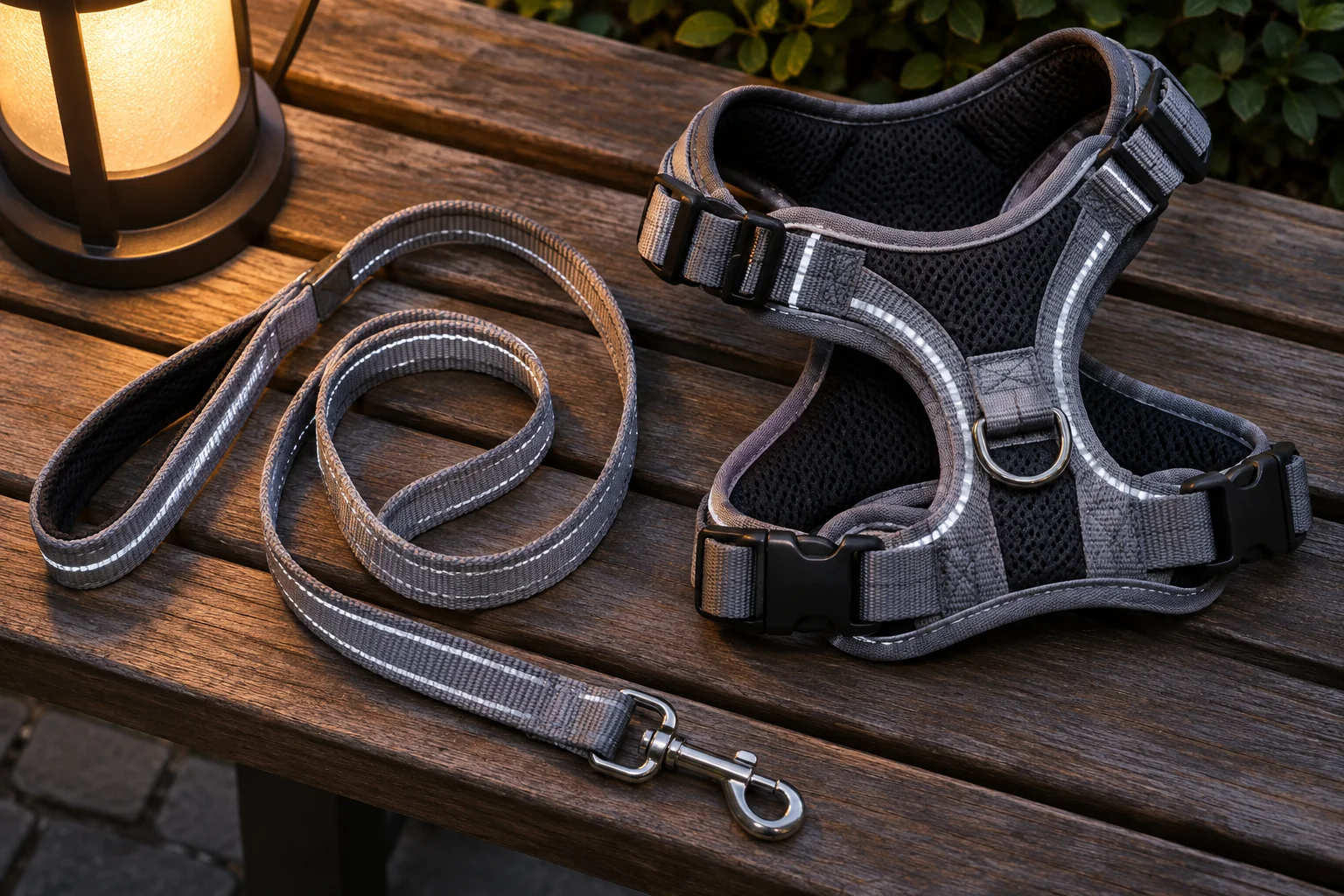
Choose a familiar, well fitted harness or collar and a regular leash suited to the situation. Check the clip, attachment and condition in good light. Put equipment on where the dog normally accepts it. This is an awkward time to discover that a clip sticks or that a new coat changes how your dog moves. If familiar equipment has suddenly become hard to put on, pause and consider whether the dog is uncomfortable.
The Dogs Trust winter advice recommends visibility and equipment the dog is comfortable wearing. Reflective material can help you be seen when light reaches it. Choose a route with enough steady light to see your footing as well. A light does not make a roadside shortcut appropriate, and a flashing attachment may itself be something your dog needs time to become comfortable with.
Keep your hands available for the outing. Prepare bags and a reward before opening the door. Use light to see the ground without shining it into your dog's eyes. If managing the door, leash and light at once is difficult, ask another adult to operate the door or choose a simpler exit. Use the arrangement you can handle calmly while maintaining safe control.
Read the change as an observation
Write a brief description of the last ordinary outing. “At seven she walked to the doorway, looked toward the courtyard and stepped back” gives someone else a scene to picture. “She is afraid of the dark” is a possible interpretation. Other things may differ after sunset, including sounds, temperature, passing dogs and where the household usually enters and leaves.
Notice what happened before and after the pause. Did the dog walk comfortably in the hall? Was the familiar route available? Did a person come through the entrance as you were leaving? If the dog also hesitates in dim indoor spaces, misses familiar edges or moves differently, mention that to the veterinarian. Existing observations can be useful without rehearsing the troublesome moment for a recording.
The Dogs Trust guide to fear and stress recommends giving an unsettled dog a way to move away. A single posture cannot tell you the cause. In practice you can make room or return to a calmer area while you gather information. If routine access remains difficult, ask a professional to help assess your options in the actual setting.
Use DogPath to prepare one known skill
Open a suitable existing foundation lesson while the dog is relaxed indoors. Read its preparation and prerequisites. Choose a familiar response that would help you leave together, such as orienting toward you or changing direction with you in a spacious room. Work in the place where that response is already easy. The selection is about the part you can safely practise, even if the evening trip itself remains difficult.
Use the weekly plan to reserve a daylight or indoor practice opportunity. A scheduled session can be skipped if the dog is worried, unwell or already tired. Check your setup before involving the dog and put the phone away when you start. Read our guide to short sessions if you need a simple way to decide when to finish. Keep the goal small enough to end while the dog can still choose to move away.
Dog Train Club and DogPath share the publisher Rocket Digital Limited. The app can organise lessons, preparation, completion and a weekly plan. It cannot assess your dog's vision, tell you why the dog stopped, confirm that a path is safe at night or replace professional advice. Use a separate note for route conditions. Do not infer that there is a dedicated night walking course or automatic safety score.
Rehearse the turn in a bright room
Give your dog room to stand or move on stable footing. Stand to the side rather than blocking the return route. Invite the familiar response once when they are free to choose it. If they orient toward you comfortably, deliver a suitable reward where they are or on the easy side of the turn. Give them a pause and end the session if they move away or no longer participate comfortably.
A reward marker can make your timing clearer when it is already familiar. Follow it with the reward it predicts. Avoid using food to pull attention away from the only safe way back, and do not place treats beyond the point the dog chooses to approach. One comfortable response in a room is useful practice even if you never open the outside door.
If your dog is already waiting to toilet, handle that need separately. Keep the way clear, secure the equipment and offer the familiar short route without requiring the indoor exercise first. Rewards can acknowledge comfortable choices, and the dog can come back without completing a training task. A walk is ordinary care, so avoid making access conditional on performance.
Follow the available route and leave early
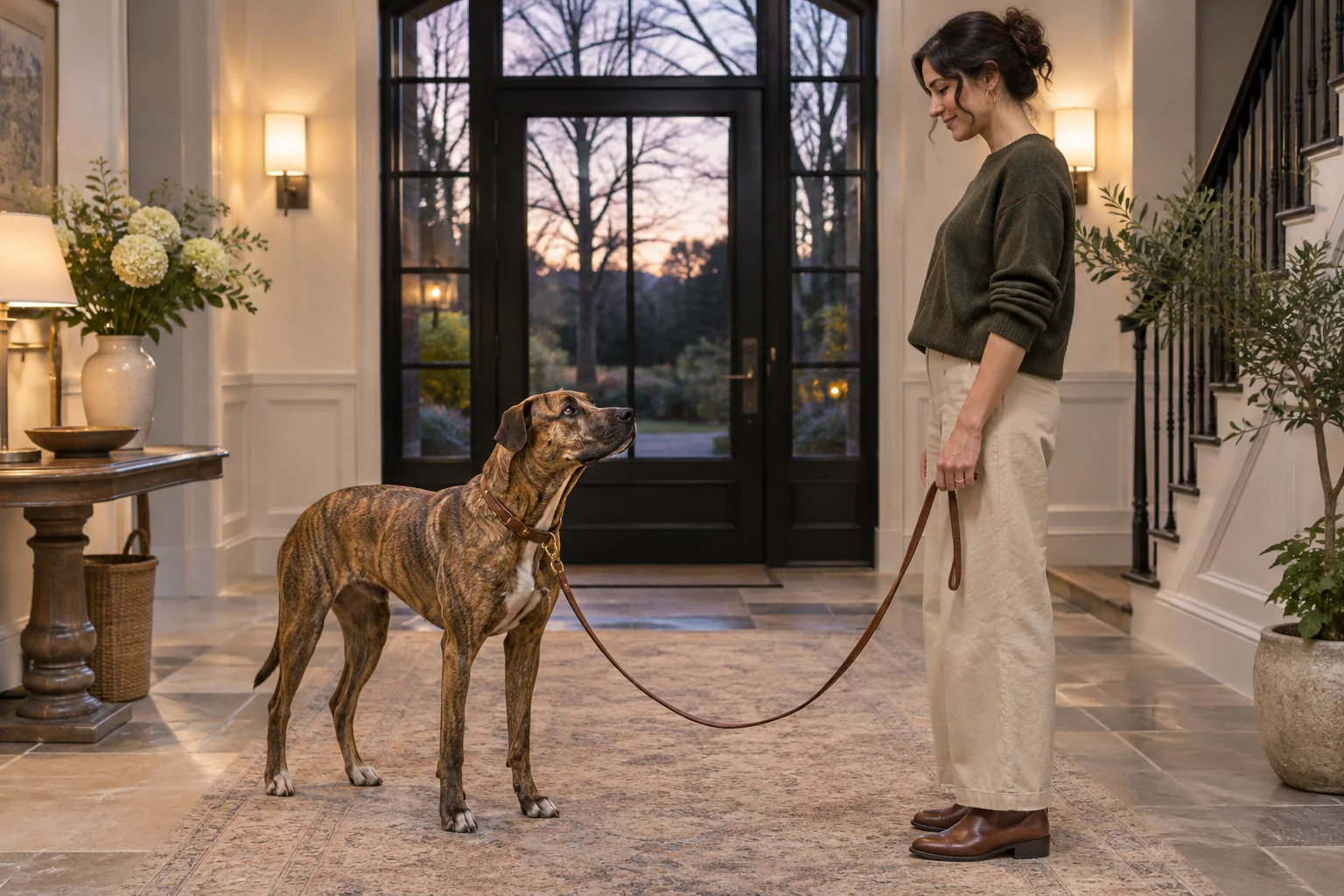
When you reach the doorway, see whether the space outside is still clear. People may have arrived since you checked. Leave enough room for the dog to turn with you. If they pause, give them time without leaning into the leash or repeating the cue. If they choose to head back, make that option work while it is easy to do so. Avoid waiting for a stronger reaction to confirm the decision.
Our loose leash walking guide offers foundations to practise in easier conditions. Near an exit, safe handling matters more than training repetitions. Keep a secure hold and adequate space, and move away from situations where another animal or moving vehicle can close the gap. If the planned option no longer feels safe, return and use the backup when it is available.
If the dog cannot reach a toilet spot comfortably, seek individual advice rather than repeatedly bringing them to the same difficult threshold. Describe the building, time constraints and alternatives you have. For a sudden change or symptoms suggesting pain or illness, contact the veterinarian. A routine you can reliably use with one dog in one place may need a different arrangement for another household.
Keep a record you can act on tomorrow
After you are both settled, record only the lesson practice that actually happened. If you read the preparation but skipped the exercise, leave completion open. Keep notes about lighting, exit, other activity and where the dog chose to return separate from the app's completion control. A completed indoor foundation says what you practised there. It tells you little about what the dog can manage on a busy evening.
Review two comparable outings before changing several things together. You might keep the same quiet exit and move a longer walk earlier, or move practice back indoors while you ask about the dog's comfort. Write the next decision in a way another adult can follow. For example, “Use the courtyard for the evening toilet trip if it is clear, then come back through the same door.”
A useful plan protects ordinary care and lets you stop optional practice promptly. Improvement can mean making a shorter route available, being ready to turn sooner or sharing a more useful observation with your vet. Retain time for daylight activity that suits your dog. The evening need not become a regular test of how far you can get.
Common questions
Do we need to finish the evening walk?
A short trip to a suitable toilet spot may meet the immediate need. Plan appropriate activity during daylight and ask for individual support if the necessary trip is still difficult.
Can I repeat the exercise at the door?
Start indoors with a response the dog knows. When an actual trip is needed, offer the easiest safe route without requiring the dog to perform before leaving or coming back.
What if this started suddenly?
Contact your veterinarian and describe the ordinary changes you have noticed. Include bumping into objects in low light, unusual movement or discomfort if present.
Should I mark a lesson complete after reading it?
Record completion only after the corresponding practice actually happened. Keep a separate note about the route and conditions.