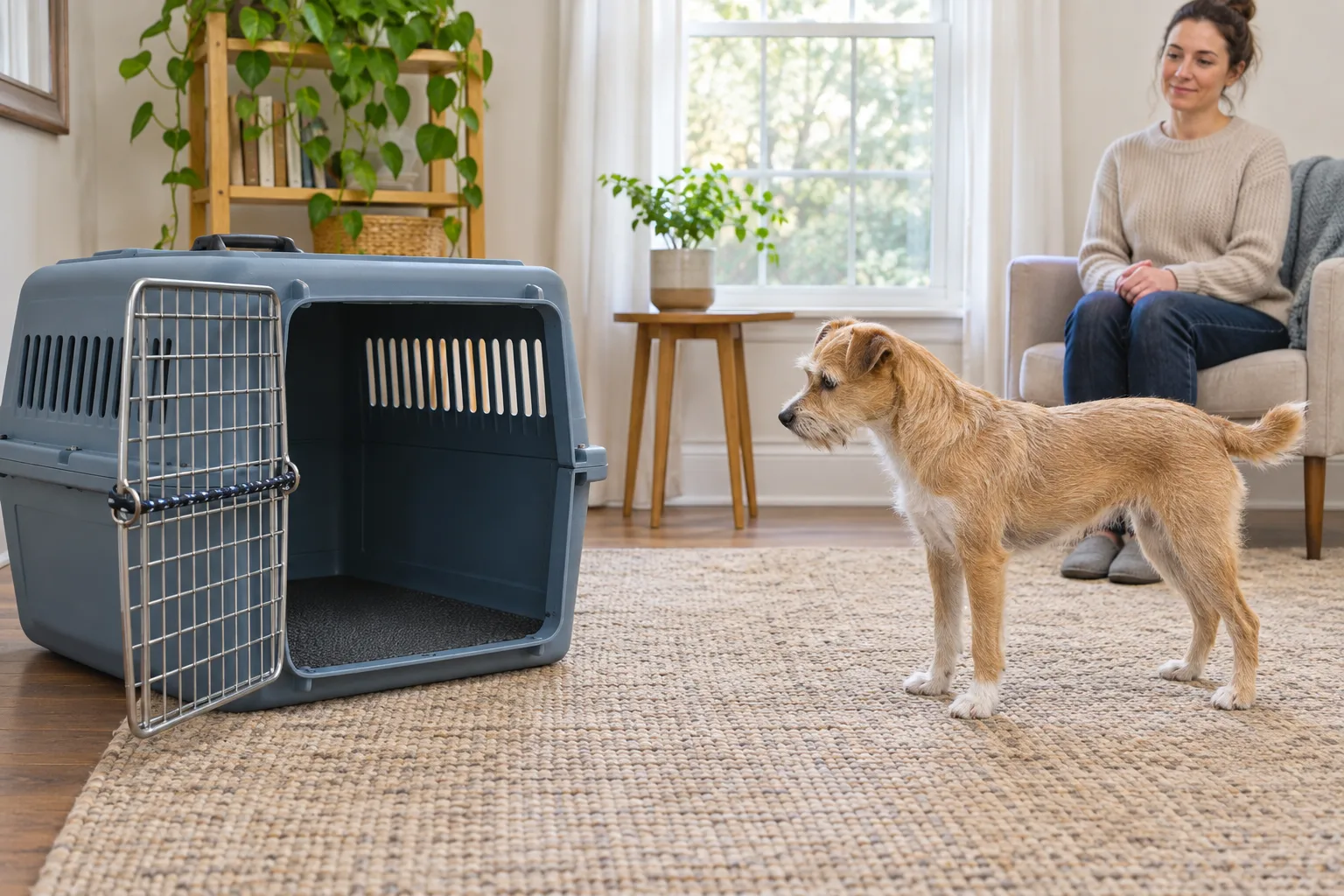
When your dog won't go in the crate, the first useful thing to practise may happen several feet from the door. A carrier that only comes out before a trip can change the atmosphere of the room before anyone touches the latch. Give your dog a chance to look at it, walk past it or leave while the opening stays clear.
This plan is for an open transport carrier on the floor at home. It covers voluntary approach and, if your dog offers it comfortably, a brief visit with a free exit. It also shows where DogPath can help you organise foundation practice. If you have a trip coming up, arrange safe transport separately. Your dog's progress at home does not tell you how they will cope with a door closing, being lifted or travelling.
When your dog won't go in the crate, start here
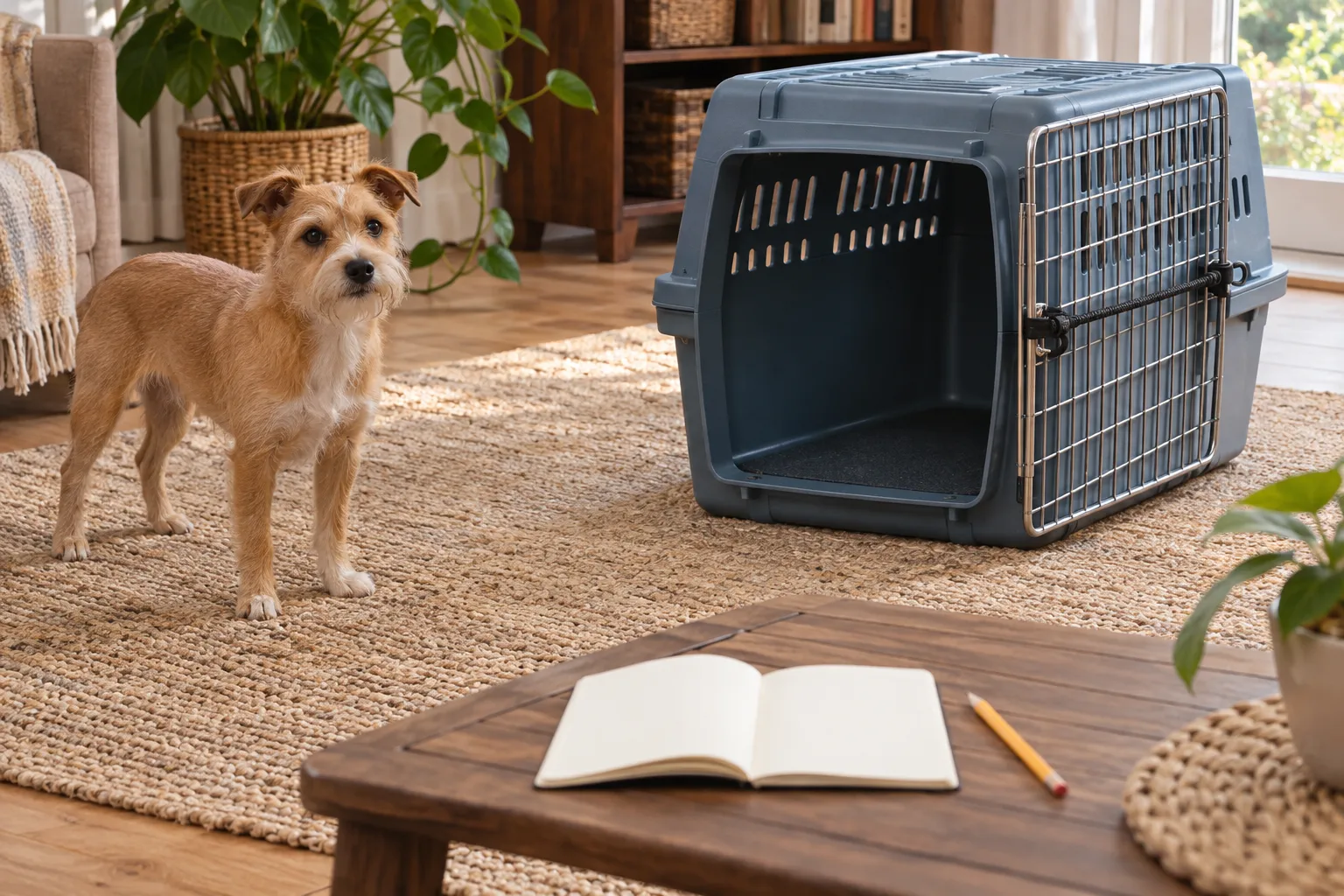
Put the empty carrier in a quiet part of a familiar room while your dog is elsewhere. Leave enough room for them to take a wide route around the opening and to reach their usual bed or water without crossing the practice area. Sit to the side at a distance. Give your dog a little time to go about their ordinary business. Watch which path they choose when you're doing nothing with the carrier.
Choose one action they can offer easily, such as glancing over and then turning back to you, or walking along their usual route without detouring. You can quietly reward that action where it happens. Give them a few moments to decide what to do next. A look from across the room is enough to end a first session. If they leave, allow their departure to end the session as well.
Make the doorway easy to inspect
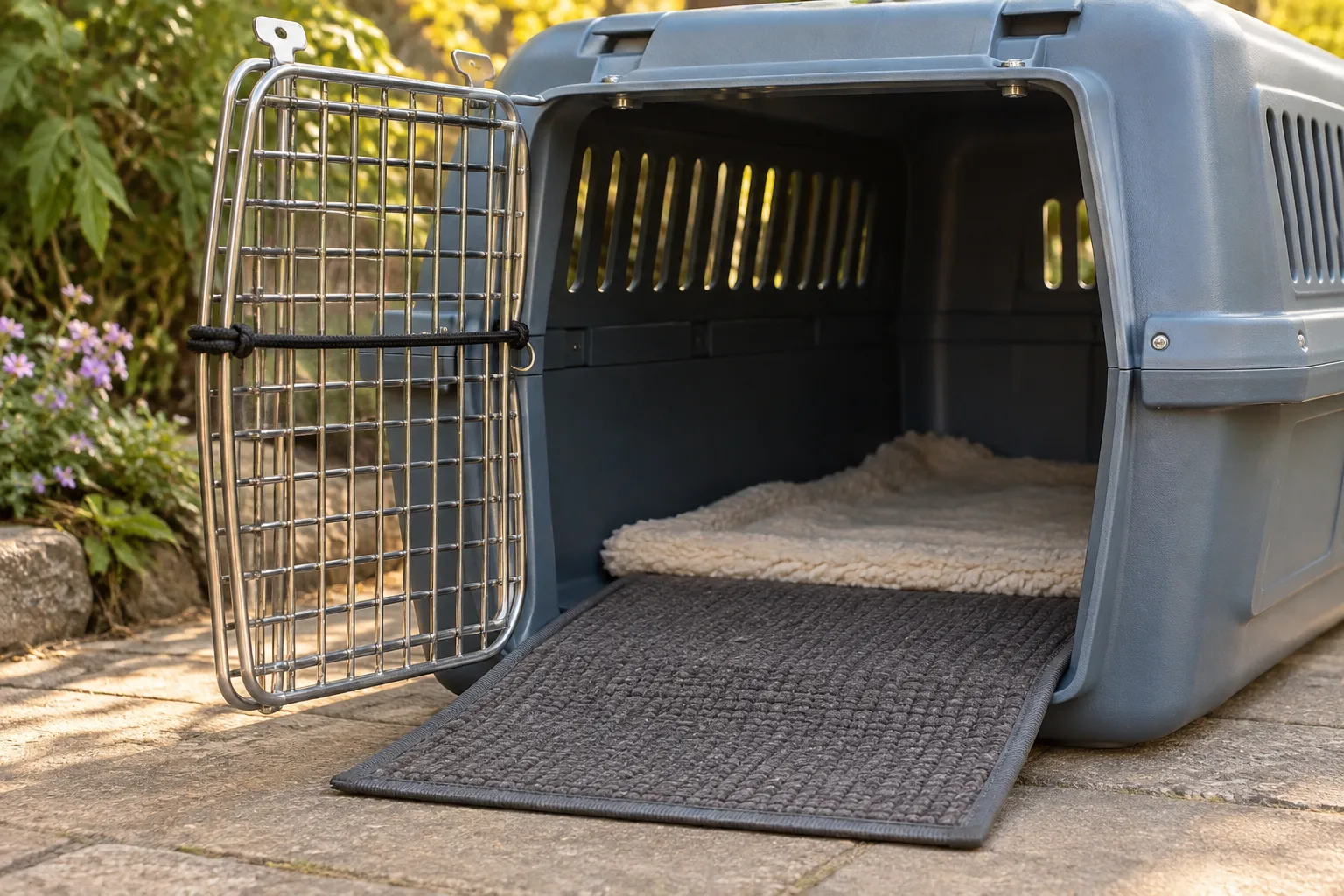
On an empty carrier, check for wobble by pressing gently on the floor near the entry. Use a suitable nonslip base if the carrier moves. Secure the door fully open according to the equipment design, with any fastener out of the dog's path and reach. An opening that swings back when brushed by a shoulder can change the exercise abruptly. Check the threshold for protruding edges and make sure any lining lies flat and does not bunch under a paw.
The direction of the opening matters as much as its distance from the bed. Aim it toward usable floor space. Check the view from dog height before you start. A shiny gap between rugs, a deep shadow or the narrow space next to a chair may be more relevant than the carrier itself. Make any changes while the dog is elsewhere. Keep another familiar resting spot available so the carrier remains one option among several.
For the principle of keeping the exit available during familiarisation, see PDSA's guidance on crate training. The exercise here ends with the door open and takes place while you supervise. A carrier suitable for looking into at home still needs a separate suitability check before it is used for travel.
Use a familiar lesson to prepare
Dog Train Club and DogPath share a publisher. In DogPath, choose an applicable foundation lesson and read its preparation and prerequisites before practising. The reward marker guide explains the idea if a marker is new to you. A familiar marker can identify an easy action before the reward arrives. Practise its timing well away from the carrier first. A new click or a loud word beside the opening can add an unnecessary surprise.
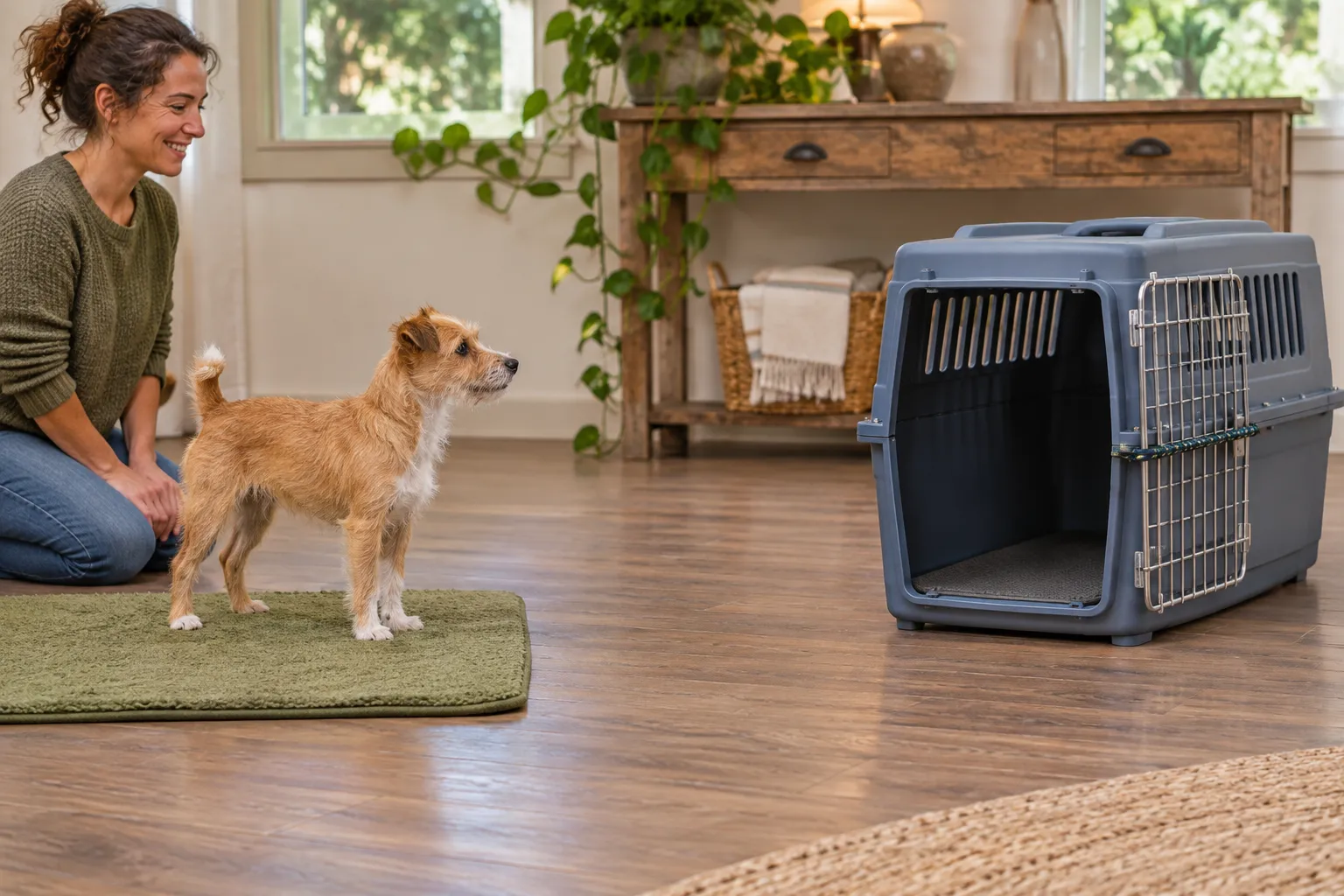
Another option is familiar mat practice. Keep the mat a comfortable distance away and reward your dog for choosing it as usual. Let them step off whenever they want. After a few easy repetitions you can finish for the day. Leave the mat in a place where your dog can use it outside practice too. Its regular value comes from being predictable.
Use the app's weekly plan to make room for brief foundation sessions, then log only the practice you actually complete. Keep the carrier details in a separate note if you want a record of them. There is no need to select a new lesson at each threshold or to mark a lesson complete because your dog happened to sniff the carrier. DogPath can organise your practice, while your decisions in the room depend on what your dog does.
Reward where the dog already feels comfortable
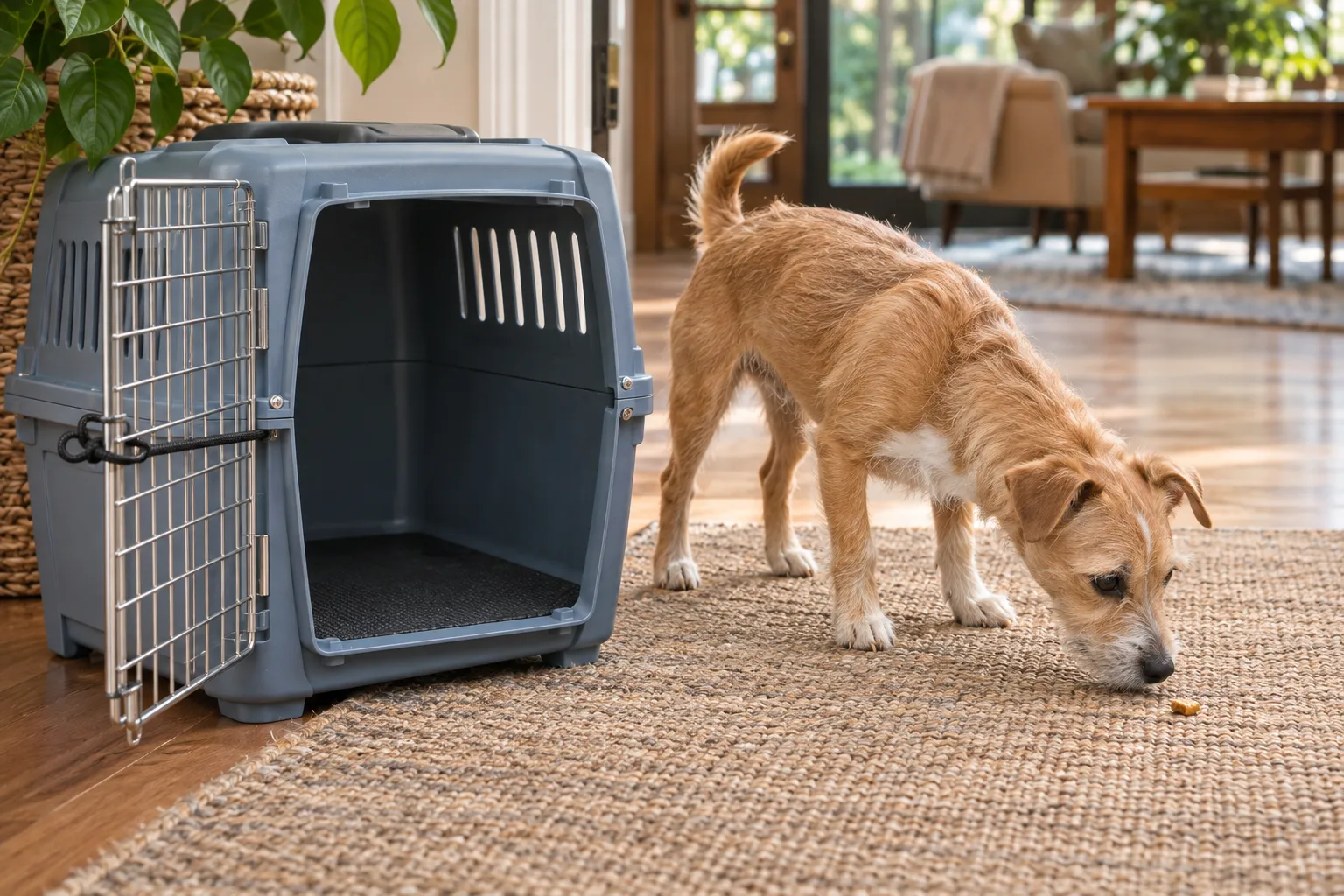
Suppose your dog stops with their front paws on the runner and looks across at the entrance. You might place the reward beside their paws, or on the side that leads away from the carrier if they would prefer space. They'll be free to eat and look away. Pause afterward so you can see whether they choose to stay, move farther away or glance again. None of those choices requires a command.
A dog can stretch their neck to reach a treat while keeping most of their weight back. If you see that posture, place the next reward where they can eat without stretching. A line of treats all the way inside can get paws across the lip while leaving the dog's hesitation unchanged. Shorten the approach when you see a quick retreat, repeated scanning or a refusal of a reward that your dog normally takes in this room. Give them a break if they're still uneasy after you simplify it.
If your dog walks inside under their own steam, make room for the return. Keep your hands off the door and handle. Don't lean in to stroke or photograph them. They may step back immediately, turn inside and walk out, or decide to stand outside and sniff the rim on the next try. Let them choose the route and end while the room is still quiet.
Compare two ordinary sessions
Write one observation before deciding what to change. For example, Monday afternoon: she walked past the side of the carrier twice and took a reward near her mat. Wednesday morning: the same mat was in place, and she sniffed the rim, turned and walked back. These are records of actions, so another person can follow them without deciding what the dog must have been feeling.
For the next session, keep the room, equipment and your position familiar. Pick one variable only if your dog gives you a reason to. For instance, if they repeatedly stop where the runner ends, changing the footing could answer a useful question. If they move away the moment you pick up a handful of treats, start with the rewards in a pocket or try observing quietly. End before the household gets busy. You can skip a planned day when the dog needs rest or when the room is unavailable.
If you live with several dogs, arrange separate practice turns and avoid food competition at the entrance. Agree with everyone in the household that the door stays open during these exercises. A family member reaching for the latch while you reward a step inside can spoil the predictability you've established. If the room needs to be used for something else, wait until your dog is elsewhere before moving the carrier.
Know when to put the plan aside
A necessary journey can make the situation urgent. If you have a vet appointment soon, call ahead and tell the team what happens at the entrance, whether your dog can safely be handled and whether they've travelled in another approved setup before. Let the team guide you on safe transport or appointment options. Do not put off urgent care while you wait for a training milestone.
Stop home practice and seek in-person veterinary help if the reluctance is sudden or you notice pain, unusual movement or another change in behaviour. If the dog freezes, growls, snaps or you think someone might be bitten, step back and keep others away from the equipment. A veterinary professional can check for medical factors and help you find qualified reward-based behaviour support. An open carrier that fits comfortably on the ground may still pose difficulties if your dog needs assistance moving or has already had a frightening experience at the doorway.
Common questions
What if my dog will eat near the carrier but never steps inside?
Record where eating is easy. The location that works is a starting point, and repeating it may give you a better picture than placing the treat farther in. See whether the floor, the lip of the carrier or your position changes what the dog chooses. Leave more space if the dog holds their body back while reaching for food.
Can I practise when the carrier is usually kept in a cupboard?
Yes, set it up and secure it open before inviting your dog into the room. If the sound of getting it out prompts your dog to hide, separate those events where possible. Let the room settle before observation. If your dog still can't relax with the carrier in view, put it away while they are elsewhere and consider personal guidance.
Should I add a word for going in?
Wait until the dog can easily offer the movement you want to name. At these early stages, an extra cue can make it harder to tell what they would choose on their own. A familiar marker after a volunteered look is different from a repeated request to move closer.
How do I know when to close the door?
This plan always leaves the door secure and open. A doorway your dog can leave freely is a different situation from confinement. Arrange instructions specific to your dog's transport needs with your veterinarian or a qualified professional. For an upcoming trip, call early, even if the first session at home looked comfortable.