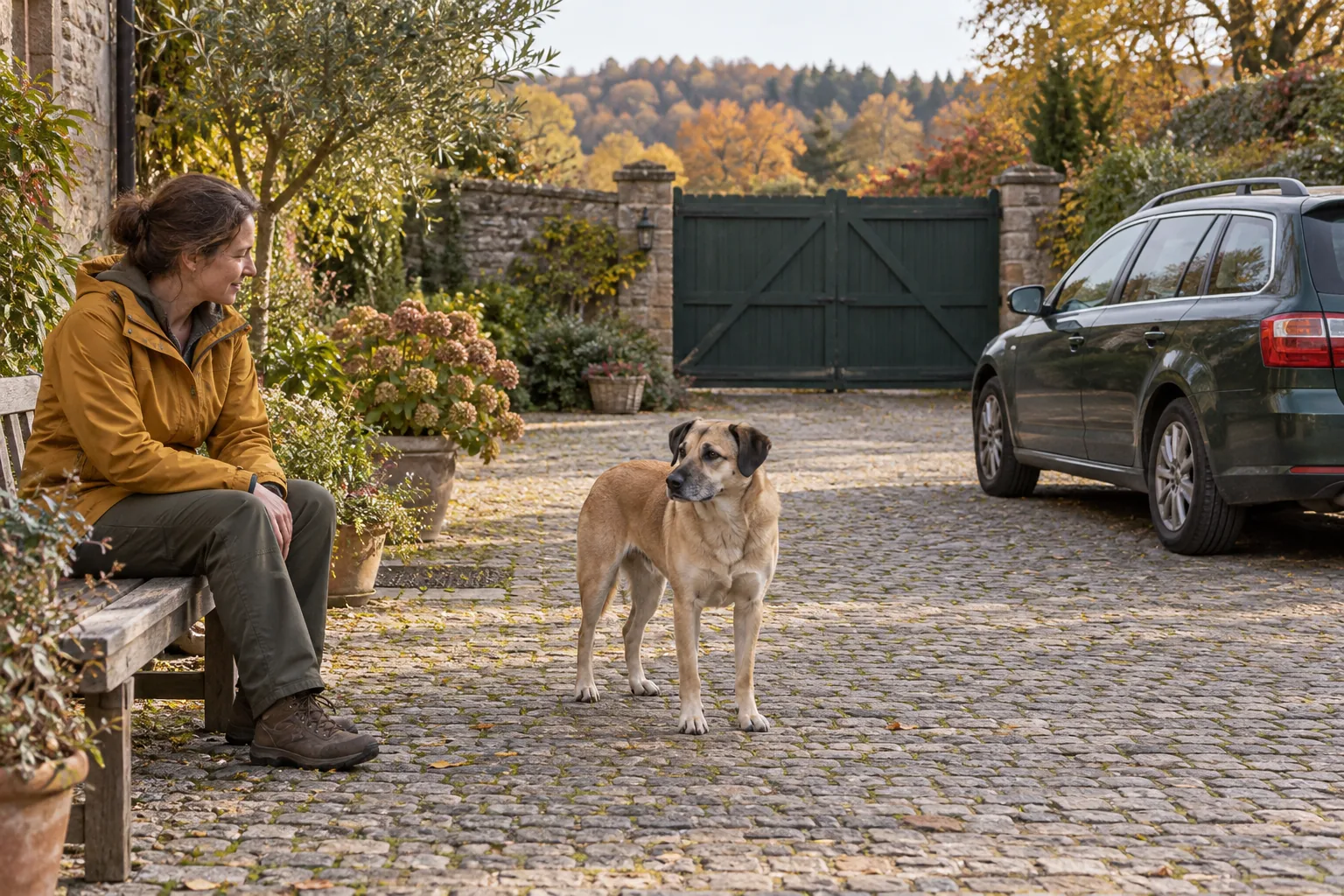
“Dog won't get in car” often describes a moment when departure is already overdue. Your dog stops on the driveway, and each invitation becomes more urgent. For practice, remove the journey and the time pressure. You can begin on the ground, at a distance where your dog is comfortable, without asking for entry today.
This independent guide separates approaching a parked car, seeing a door move and using physically suitable access. No app is needed. It does not diagnose why a dog refuses, cure travel sickness or establish that a vehicle restraint is safe. Suspected pain, a sudden change, nausea or substantial fear needs veterinary advice. Panic, escape attempts, aggression or bite risk requires an individual plan with a qualified reward-based professional. Necessary medical transport should be organised with your vet rather than delayed for this exercise.
Dog won't get in car: locate the first difficult moment
Write down where the hesitation begins. It may happen when you collect the car keys, walk toward the driveway, reach a door or ask for a step upward. A dog who approaches happily but avoids a high opening presents a different observation from one who cannot comfortably look at the car across the yard. Neither tells you the cause by itself.
Observe an ordinary occasion without creating another test. Record what you saw, such as “Stopped several paces from the closed car; moved away when the door opened.” Avoid labels like stubborn or dramatic. They provide no useful information about what to change.
Discuss pain, new difficulty moving or a sudden change with your vet. If earlier journeys involved vomiting or other possible nausea, describe that history too. Do not repeatedly drive to see whether the dog is still unwell.
Decide whether a gentle practice occasion is appropriate. If the dog is highly distressed near the car, cannot recover with distance or presents bite risk during handling, get personal help first. The next useful action may be an appointment and alternative arrangements, rather than another invitation to climb in.
Prepare a parked setting with room to leave
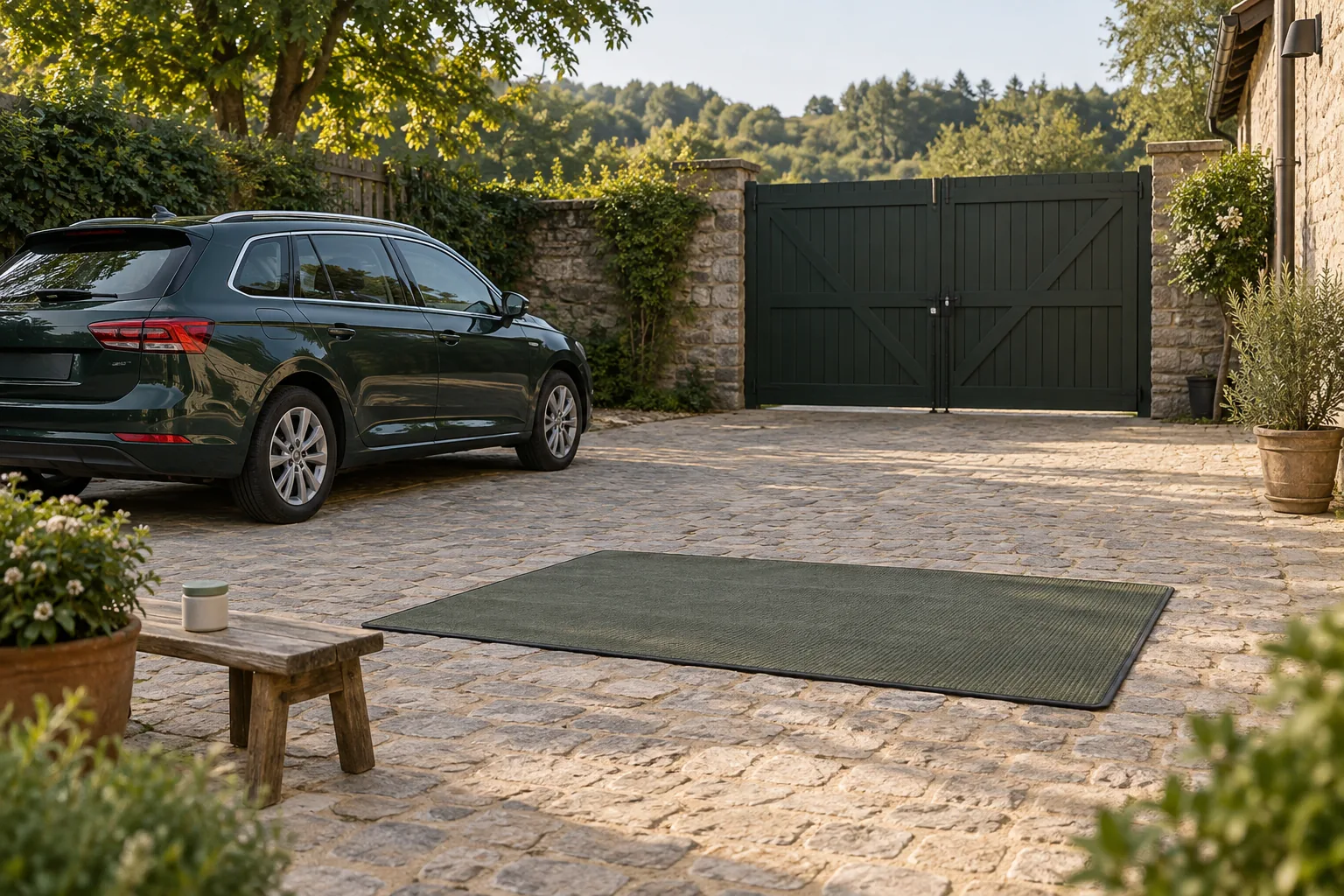
Use a quiet, secure place away from traffic, preferably an enclosed private area with the gate closed. Park on level ground, secure the vehicle against movement and keep the engine off. Check that the surface is not hot or slippery and that the dog cannot reach vehicle fluids, tools or other hazards.
Have an adult oversee the activity. Keep children and other animals elsewhere. If a lead is necessary, use familiar, suitably fitted equipment and leave room to turn away. Our loose-lead guide helps with rewarding easy movement; pulling toward the door is not part of this exercise. Choose a different location if you cannot manage traffic or escape risk safely.
Prepare suitable small rewards before bringing the dog out. Keep them beside you, away from the car opening. Allow for dietary needs and do not skip ordinary meals to increase motivation.
Agree an ending: a short walk or rest in the familiar secure area. You will return there even if the dog never moves closer. Do not start while someone is waiting in the driver's seat to leave immediately afterwards.
Start where an ordinary check-in is still easy
Begin far enough away that your dog can stand or move with a comfortable body and notice familiar things. There is no correct starting distance for every dog. If the chosen spot already produces tension or attempts to leave, increase the distance or finish and arrange help as needed.
Reward an easy voluntary action: turning toward you, briefly looking at the closed car or taking a comfortable step nearby. Deliver the reward where the dog already is, so accepting it does not require moving closer to the vehicle. Leave the path away open.
Our reward-marker guide explains how a familiar marker can identify a visible action. Establish a new marker in a quiet setting first. At the car, keep the task simple enough that you can observe the dog rather than juggling several new skills.
After a small reward, pause or move away together. Do not wait for the dog to get so hungry that they approach despite discomfort. Eating a treat is one observation; it is not a certificate of relaxation. Watch the whole response, including whether movement stays easy and the dog chooses to remain.
Let a nearer position be a choice
Repeat the easy starting position on another occasion before reducing distance. If the dog voluntarily moves a little nearer with a comfortable body, reward there and allow a return to the previous spot. You do not need a straight line of progress toward the car.
A treat trail ending on the seat can draw a dog farther than they are ready to remain. Keep early rewards outside instead. Your aim is to see comfortable approach, not to discover how far food can pull the dog before they stop.
For example, Sam practises after breakfast when no journey is planned. His dog looks toward the car from the courtyard corner, then turns back. Sam rewards the check-in and ends after a few easy opportunities. On a later quiet morning the dog chooses a nearer position. That is information about this setting, not permission to rush the next trip.
If progress varies, compare the circumstances. A delivery van, another adult or a wet surface can change the experience. Keep the familiar setup or finish earlier. Do not add distance, duration and handling simply because yesterday's exercise looked easy.

Rehearse the door before asking for entry
Door movement is its own change. With the dog comfortably away from the vehicle, have an adult open the chosen door slowly while another manages the dog at the familiar distance. If you practise alone, prepare the open door before bringing the dog to the starting spot. Keep the engine off and watch for wind that could move the door.
Allow looking, turning back and moving away. Reward comfortable responses away from the opening. If the movement startles the dog or they try to escape, stop and restore an easier arrangement. Do not repeatedly swing the door to make them get used to it.
Check the entrance without the dog: stable footing, secure door, clear space and no loose objects. Keep keys and controls managed so the car cannot start unexpectedly. Do not shut a door to prevent a hesitant dog from retreating.
Dogs Trust's car-travel guidance supports gradual rewarded preparation and advises against forcing a frightened dog to travel. Treat the open door as another observation opportunity. It does not create an obligation to enter before you can finish.

Make physical access suitable before practising it
Look at the height, gap and landing surface your dog would need to negotiate. A willing approach does not establish that a jump is comfortable or medically appropriate. Ask your vet about mobility concerns and suitable help; do not lift, push or pull a resisting dog into position.
If an appropriate ramp or other access aid is needed, use equipment suited to the dog and vehicle, following its fitting and weight instructions. Introduce the surface separately at a safe low level with competent guidance where needed. Do not improvise a steep plank or use an unstable stool at the car.
When the dog is comfortable with the opening and physical access has been addressed, invite one manageable voluntary movement. Reward what they choose, allow a safe return, and keep the car stationary. Pause before adding time inside, restraint attachment or door closure. Those are separate changes.
A familiar nonslip cover can improve an appropriate resting surface, provided it does not interfere with the restraint or access. Supervise throughout and never leave the dog alone in the vehicle. If you cannot arrange safe entry and exit, postpone this stage and get individual help.
Record what stayed comfortable, then take a break
Keep a simple paper record after the dog has returned to the familiar area. Note the starting place, whether the door was open, the action you rewarded and how you ended. These details make the next practice choice clearer than a success score.
An entry might read: “Closed car, dry courtyard; looked toward it from garden corner; reward beside me; walked away together.” Another might be: “Door already open; dog stayed farther away than usual; finished early; next time return to closed door.” Both describe a manageable decision without claiming the dog has passed a stage permanently.
Our short-session guide helps you choose a small exercise and an unhurried ending. Missing a planned day creates no need to double the next session. Choose occasions when the adult can watch and the dog has ordinary needs met.
Keep approach, entry, time inside and travel as separate observations. Change one detail at a time and repeat easier arrangements whenever useful. Progress is not a countdown to a holiday; it is a record of what this dog could comfortably do under these conditions.

Plan real travel and necessary appointments separately
Before any journey, arrange suitable correctly fitted transport restraint and safe loading and unloading. Follow the equipment instructions and current local requirements. A training cue does not replace physical security or supervision, and the driver must be able to concentrate on the road.
Possible nausea needs veterinary input. PDSA's veterinary guidance on car sickness explains why suspected problems should be discussed with a vet. Describe what you observed; do not diagnose from refusal alone or give human medicines or home remedies without veterinary direction.
If an appointment cannot wait, call the clinic about practical transport and handling arrangements. Explain both the physical needs and behavioural concerns, including any bite risk. A plan for necessary care has a different purpose from a voluntary practice occasion.
Optional trips can be postponed while you organise help. Later preparation may include comfortable restraint use, door closure, sound and brief travel, introduced separately under suitable guidance. Never run an engine in an enclosed garage for practice. No fixed schedule guarantees readiness; keep the next step matched to the dog and the safety of the actual journey.
Common questions
Should I lift my dog in to get the first attempt finished?
Do not use lifting to override resistance. Pain, size, handling comfort and bite risk can all affect whether lifting is appropriate. Ask your vet or a qualified professional about a safe access plan for your dog. You can keep ordinary practice on the ground while arranging suitable help.
Why does my dog approach but refuse the opening?
That observation does not identify a cause. Height, footing, the doorway, prior experiences or discomfort may matter. Check the physical setup and discuss suspected pain or nausea with your vet. Practise comfortable door exposure separately instead of repeating demands for a jump.
Does taking food mean the dog is ready to enter?
No. A dog may take food while still uncomfortable. Observe their body and movement, keep the route away available, and reward where they already are. A reward should not be a requirement to cross a difficult threshold. End or simplify if comfort is uncertain.
How many sessions should this take?
There is no fixed number or guaranteed deadline. Record the exact conditions and repeat easy steps when useful. If fear remains substantial, progress becomes harder or there is pain, sudden change or bite risk, seek personal professional help. Keep necessary veterinary care organised separately from training.