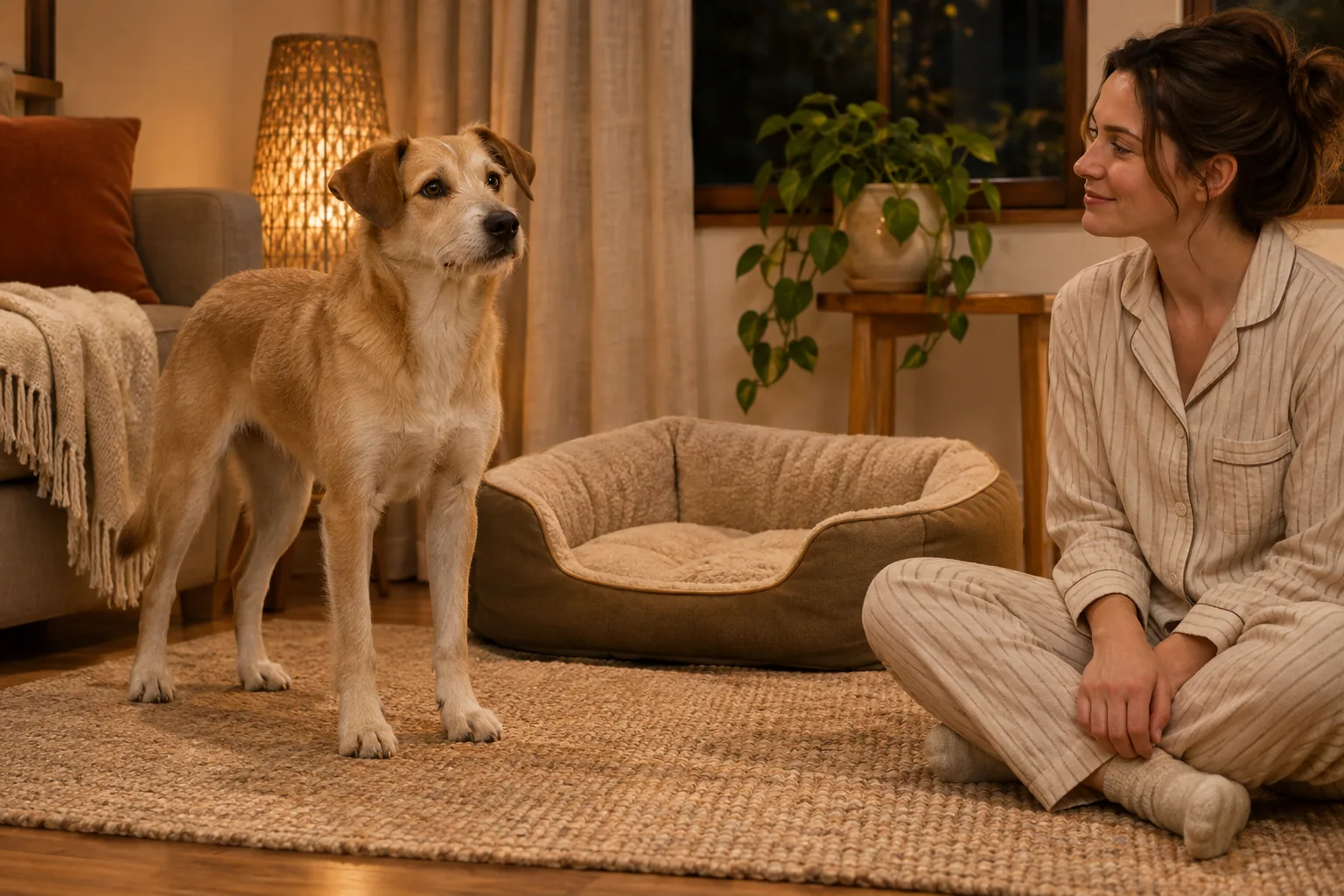
Your dog gets out of bed at two in the morning, walks to the door, and looks back at you. When your dog wakes up at night, the immediate question is what they need right now. Make it easy to see them and reach water, the toilet area or a comfortable place to lie down. Then notice what happens next. A dog who goes outside, urinates and comes back to bed gives you different information from one who keeps shifting position and cannot rest.
This guide is for responding calmly to waking at home and making an ordinary evening easier. If waking is new, frequent or accompanied by discomfort, changes in drinking or toileting, or unusual confusion, contact your veterinarian. You can make the route safer and take notes while arranging care.
When your dog wakes up at night, check what changed
Switch on enough light to see how your dog is moving. Look from a comfortable distance before reaching for a collar, touching a sleeping dog or asking them to move. Are they looking at the usual exit, standing beside an empty bowl or trying repeatedly to lie down? Does the floor between you and the dog feel secure? Start with observations you could describe to another person.
If the dog clearly needs to go out and can move comfortably, offer the familiar route. If they seem frightened or prefer to move away from you, give them room. Keep children and other pets clear of the resting area. A person who cannot safely guide the dog in the dark can turn on the main light or ask another adult to help. Predictability matters, but seeing where you put your feet matters more.
A sudden change deserves attention even when it happens at a familiar hour. For severe breathing trouble, collapse, severe pain, or repeated attempts to urinate without passing urine, contact an emergency veterinary service immediately. For a new change that is less urgent, call your practice promptly and describe what you are seeing. You do not need to establish a pattern before asking for help.
Make it easy to reach water, the bed and the door
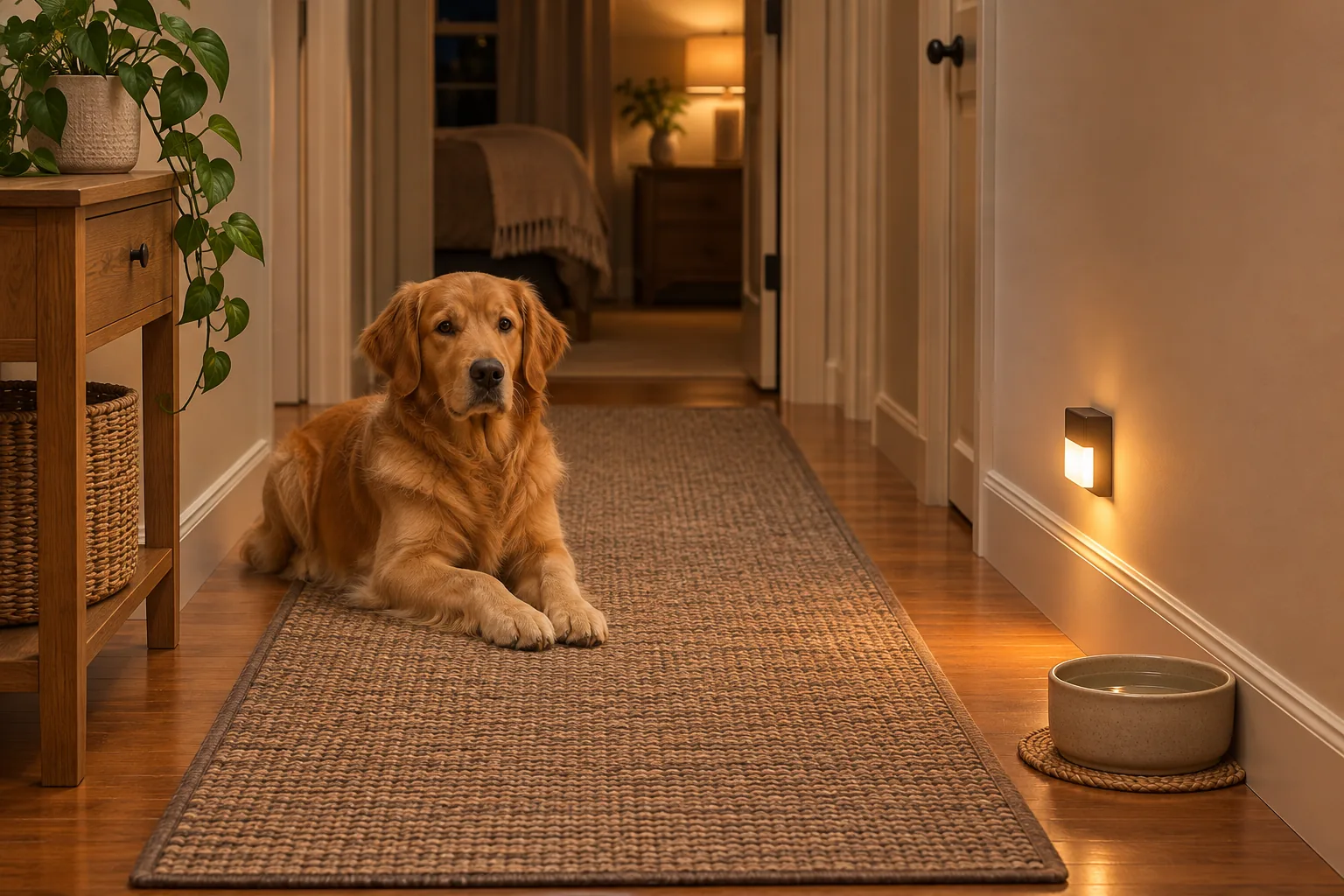
Walk the route your dog takes at night during daylight. A bag in a hallway or a door that swings shut can change where a dog is able to go. Move obstacles, check that a runner lies flat and leaves no curled edges, and put a soft light where you can see the transition between surfaces. If an older dog normally walks more easily on a familiar rug, maintain a continuous path between the resting spot and the door, as far as practical.
Leave fresh water accessible on a shallow, stable surface away from the middle of the walkway. Keep the dog able to reach it through the night. If the bowl is regularly empty or water consumption appears to have changed, tell the vet. Restricting water to reduce trips outside can conceal useful observations and is inappropriate unless a veterinarian has advised you about that dog's situation.
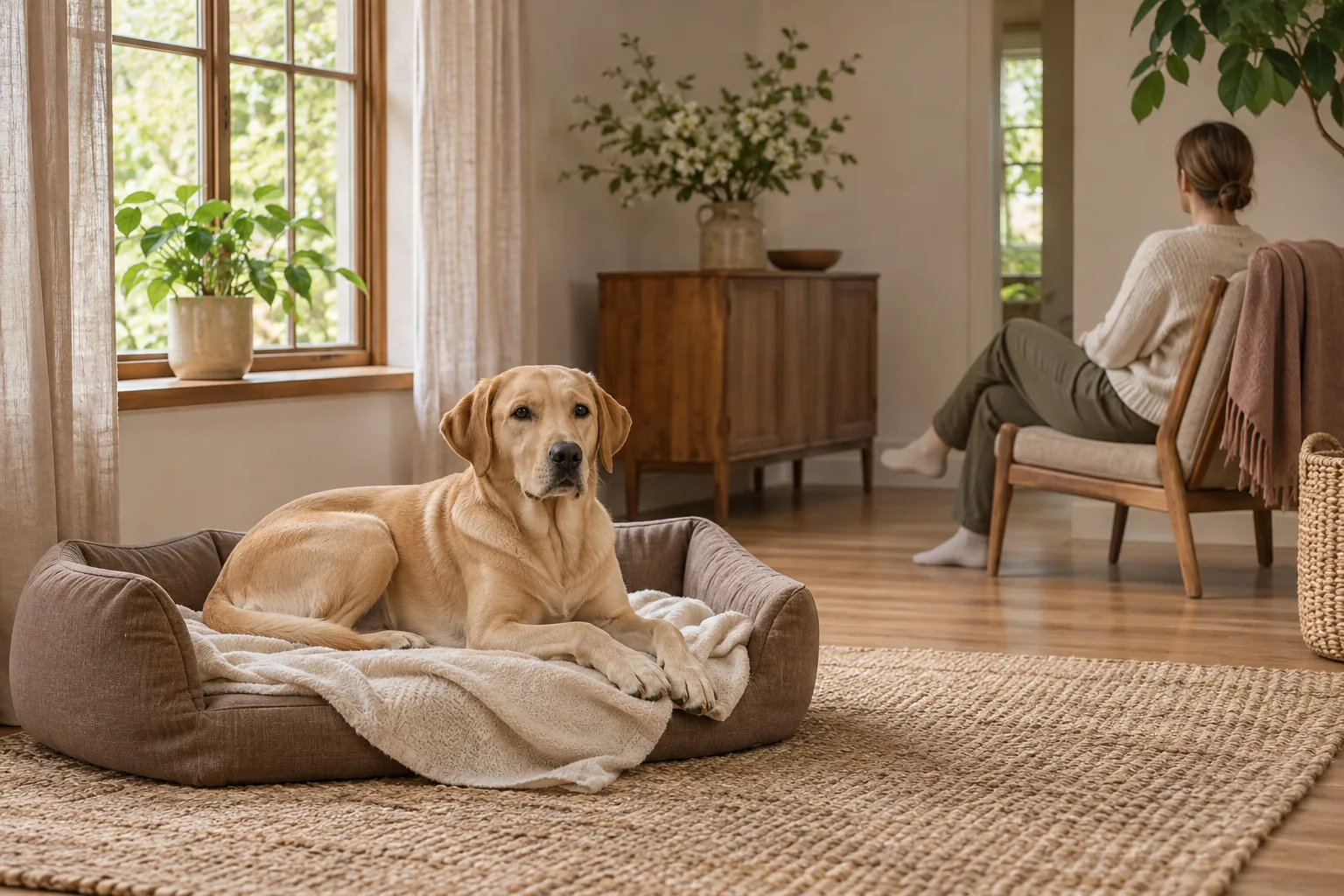
A bed needs a secure place to stand before and after lying down. A low, open bed with room to turn can be an option if a tall edge or a tight corner is awkward. You can offer it beside the familiar spot and let the dog choose. A moved bed should still be accessible and away from door traffic, heating vents or another pet's resting area.
Keep a toilet outing short and predictable
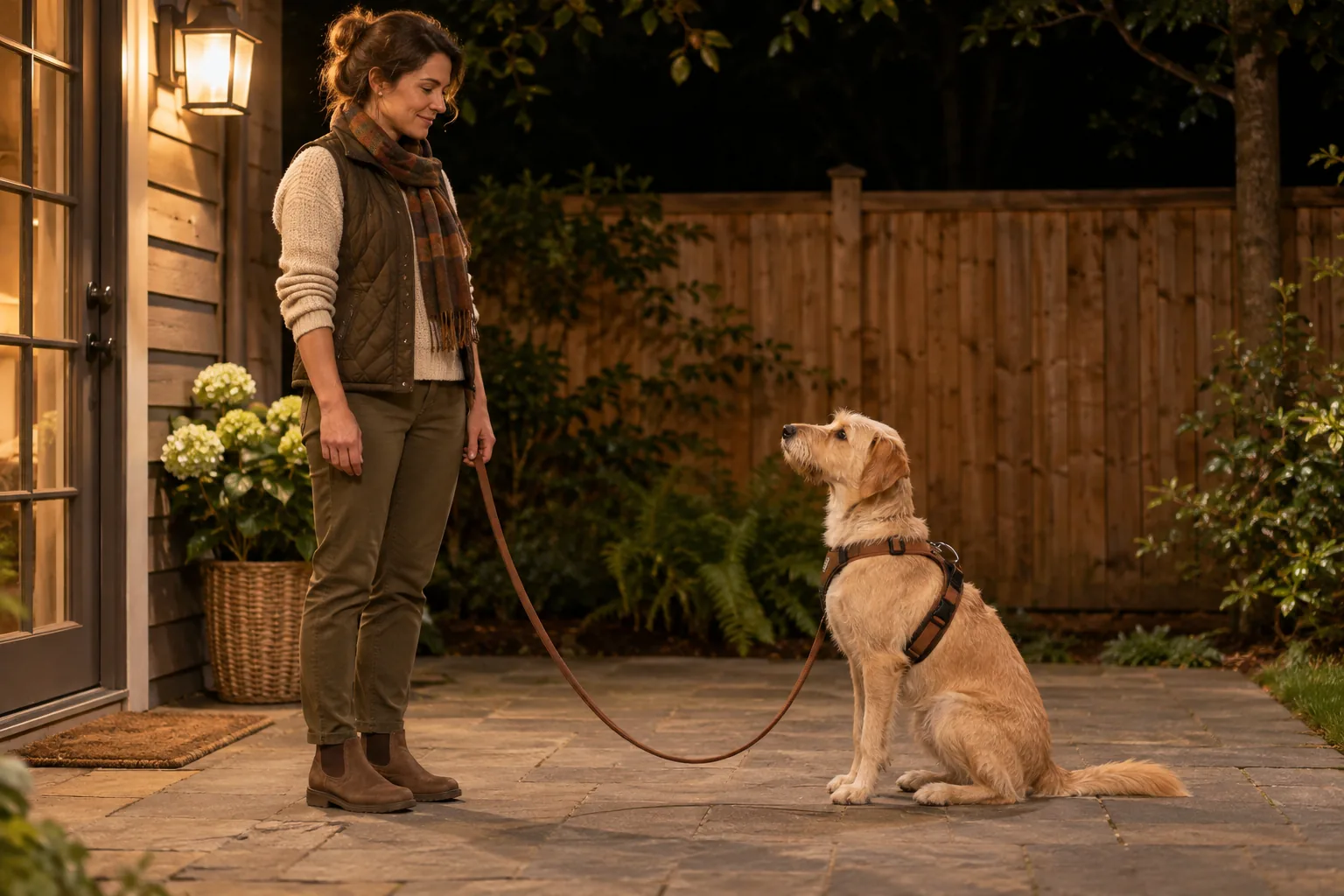
Use the light and route you normally take for a toilet trip. In an unfenced yard or shared outdoor area, use your dog's familiar well-fitted walking equipment and a secure leash. Choose a safe spot within easy reach and stay with them. Give them time to sniff and relieve themselves without turning the outing into a game or a long walk. If they hesitate at a dark threshold, light the space and allow a moment to look. Avoid dragging them into the dark.
On return, make the next step obvious. Open the familiar route to the bed or other resting place and give the dog room to move. If using a small reward helps an already familiar routine, offer it where the dog is comfortable. A return to the normal quiet setting is enough for many dogs. They do not need to demonstrate a timed stay before you go back to bed.
Notice whether they actually urinated or defecated, whether they went willingly and whether they rested afterwards. One ordinary toilet break can be expected in some households, especially with a young puppy. Repeated requests, changed amounts, accidents in a previously house-trained dog or unusual difficulty deserve veterinary advice. To practise guiding your dog in easier conditions, use the loose leash walking guide in a quiet, well-lit place. A dog with a new movement change should be assessed rather than repeatedly tested on the route.
Give bedtime a few familiar steps
Choose an order that already fits your household. A calm last toilet trip, regular access to water and a chance to choose a resting spot may be enough. Keep the late evening predictable without expecting a precise timetable. If work finishes at different times, use the same small sequence when you are ready to close the day. Ask other adults in the home which parts they can reliably repeat.
Practise an optional settling cue in daytime when the dog is already comfortable. Try the mat settling exercise with an accessible surface, a reward for choosing it and the freedom to leave. The eventual cue can serve as a familiar invitation after a routine toilet break. If the dog is restless late at night, attend to the current need first. Leave formal repetitions for a time when you can watch how the dog responds.
Keep awake and asleep dogs separate from household activity as much as they want. A dog may choose a cooler spot or a quieter room. Compare what happens when you adjust one thing, such as a lamp, a rattling door or the location of an optional bed. If noise or household movement seems to wake them, you can reduce it without expecting them to stay on a bed against their preference.
Keep a record a veterinarian can use
Write down the approximate hour, what you heard or saw, whether the dog went outdoors or had a drink, and what happened afterwards. Use concrete descriptions such as “stood up three times and changed beds” or “peed outside, then slept”. Add relevant changes from earlier that day, such as a new household schedule or trouble getting up from a usual bed. Do not deliberately recreate an episode to make the note better.
For example, one household might record only two lines the next morning. At 01:50 the dog walked directly to the door, urinated in the yard and went back to sleep. At 04:15 they paced repeatedly without approaching the door and stayed awake after a short outing. That distinction is useful when you call the clinic. It may also suggest which practical adjustments make your part of the routine easier, such as putting the leash by the exit.
Bring the notes if you need an examination. Mention water, appetite, daytime energy, changes in movement and any recent medication changes you already know about. Ask when to call again if episodes repeat. Keep recording only as long as it helps. A record is a tool for describing events, never a reason to postpone a call while the dog seems uncomfortable.
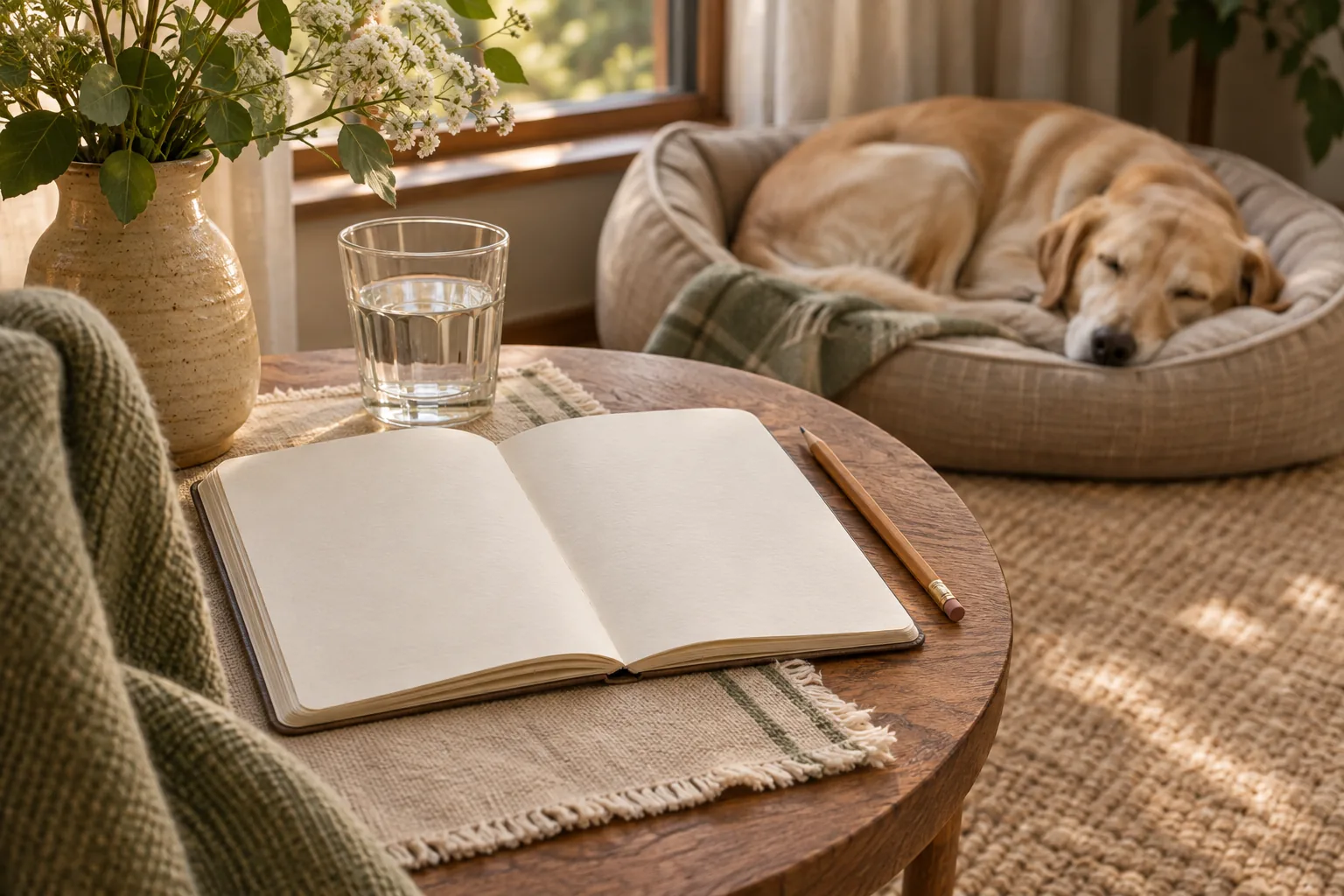
Decide what to carry into the next evening
Keep the steps that made the night safer and simpler. If finding the leash was difficult, assign a hook near the exit. If the dog came back indoors but avoided the corridor, examine the footing in daylight. If a second resting spot was chosen freely, leave it available. Make adjustments small enough that you can tell what actually changed on the next night.
Give yourself permission to seek help when the situation is hard to manage safely. A dog who guards a resting area or snaps when approached needs space and in-person guidance from a qualified reward-based professional, with veterinary input if there is pain or change. Set up the room so nobody needs to step over or reach across the animal. A useful night plan is one the humans can follow half awake and the dog can navigate without pressure.
Common questions
Should I ignore my dog if they wake me?
Check whether the dog needs toileting, water, help getting somewhere or veterinary attention. You can keep the response quiet and predictable while meeting those needs. If waking is new or frequent, discuss it with your veterinarian instead of waiting for it to stop.
Should I wake a dog who moves in their sleep?
Let a sleeping dog rest and give them space. If you are concerned about what you see, contact your veterinarian, especially if there is an unusual episode or trouble breathing. Avoid leaning over or touching a sleeping dog to test their reaction.
Can an earlier or later last trip solve the problem?
If your dog reliably urinates and goes back to sleep, try making the normal final opportunity fit the household better. A recurring or sudden change in elimination, drinking or comfort merits advice regardless of the schedule. Take notes on both the trip and what happened after it.