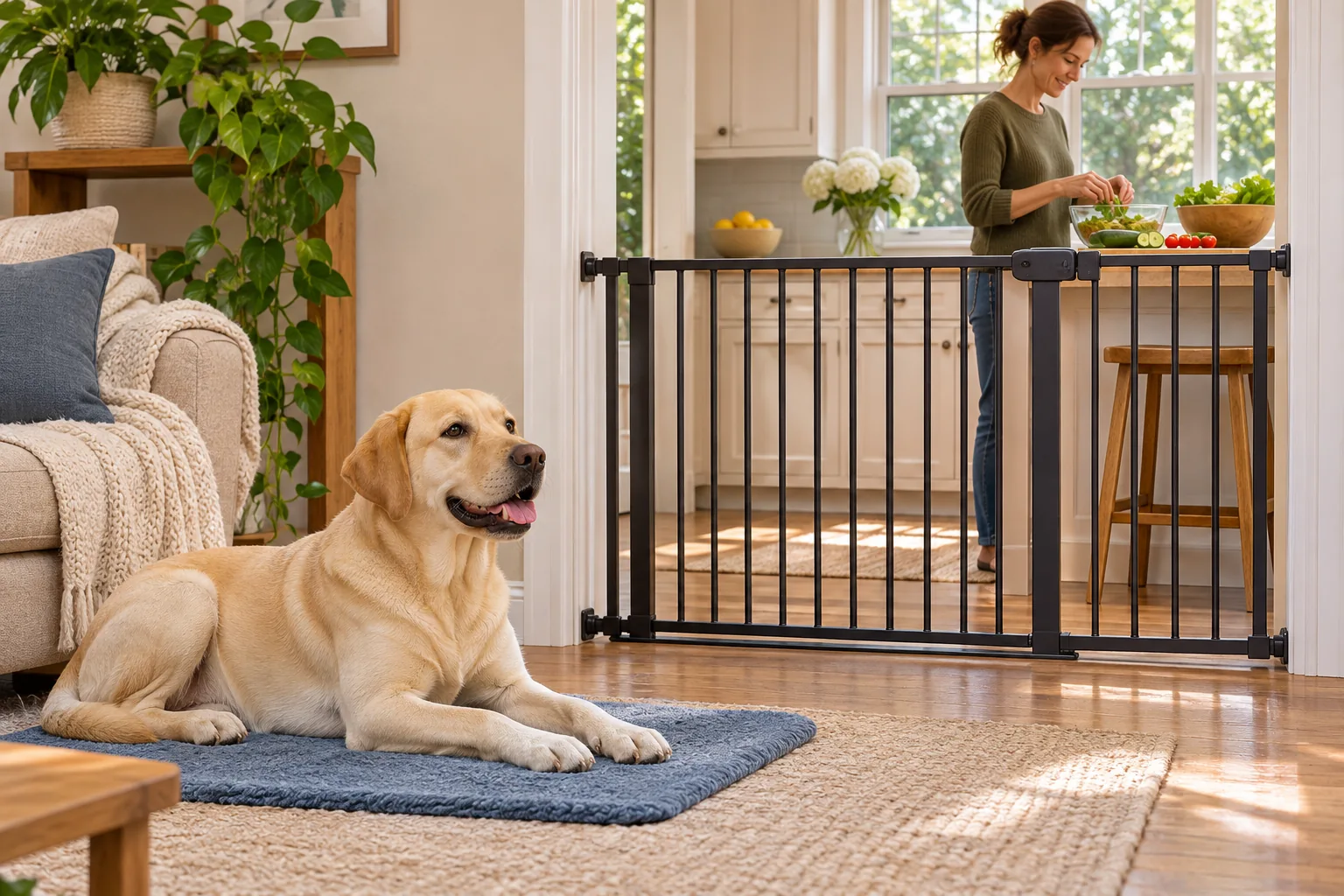
A dog underfoot in the kitchen can be hard to see. It can take only one backward step to trip over them. A comfortable spot outside your cooking route gives both of you room to move. Teach your dog to visit that spot while the kitchen is quiet. For actual cooking, set up a barrier before the pans come out, even if practice has been going well.
Dog underfoot in the kitchen? Clear a walking route first
Walk through a typical meal in your head. You might turn from the sink to a chopping board, step sideways to open the fridge, then carry a pot to the stove. The space you need includes the area behind your heels and the swing of the oven door. A dog lying quietly can still be in the way if their tail or paws reach into that space.
Choose a resting spot outside the kitchen where your dog can stretch out and move away on their own. If the kitchen opens into a living room, look along the far wall. Leave a clear route to water and another comfortable place to rest. A mat between the kitchen and the dining table usually just transfers the problem to the route you use to serve dinner.
For meals that involve heat, sharp utensils or ingredients your dog might pick up, use a secure, familiar gate or a room your dog already feels comfortable in. Set it up before you begin. If the dog struggles when separated, ask another adult to spend time with them elsewhere or choose a preparation routine you can interrupt safely. Avoid leaving a dog tied to furniture or asking them to hold position while you carry something hot.
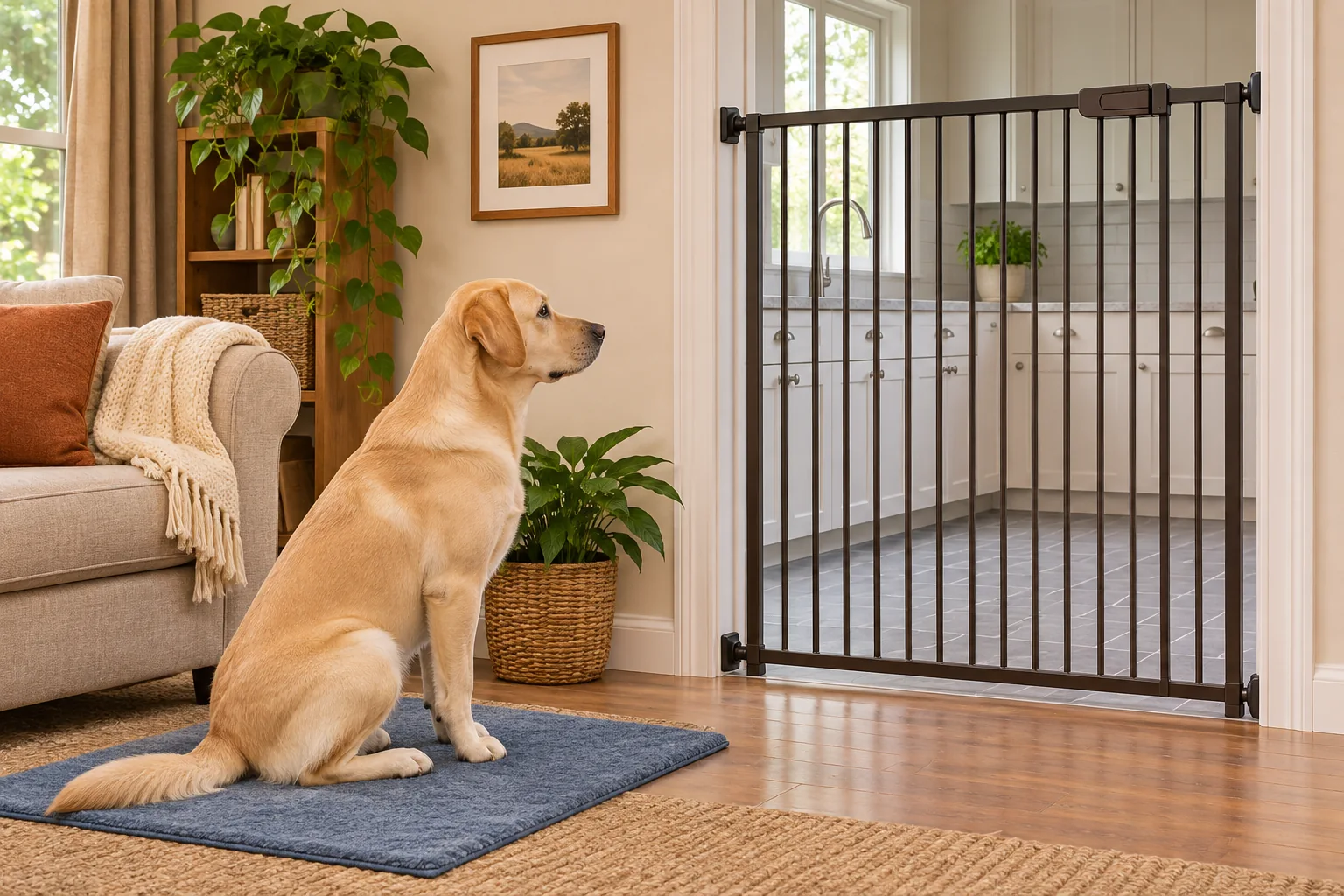
Check whether the spot suits your dog
A large washable mat with a grippy underside is a good starting point. Lay it flat and press an edge with your foot to see if it slides. Check whether the dog can approach it without stepping onto a slick patch. Older dogs or dogs with stiff joints may prefer a more supportive bed with a low edge. You can reward standing on the mat if lying down looks uncomfortable.
Watch what happens when the mat is simply available. Some dogs go straight to it. Others walk around it or hesitate because the surface bunches up, the fridge hums nearby or there is no clear way past you. Moving the mat a short distance may make practice much easier. A spot where the dog routinely chooses to nap can be a better starting point than the one that looks most convenient to you.
Give everyone in the household the same plan for the resting spot. Children can walk around it without touching the dog, and adults can avoid using it as a place to send the dog after a spill. If you have two dogs, prepare separate areas and practise one at a time. Food delivered to one mat can draw a second dog into a confined space and make both dogs less comfortable.
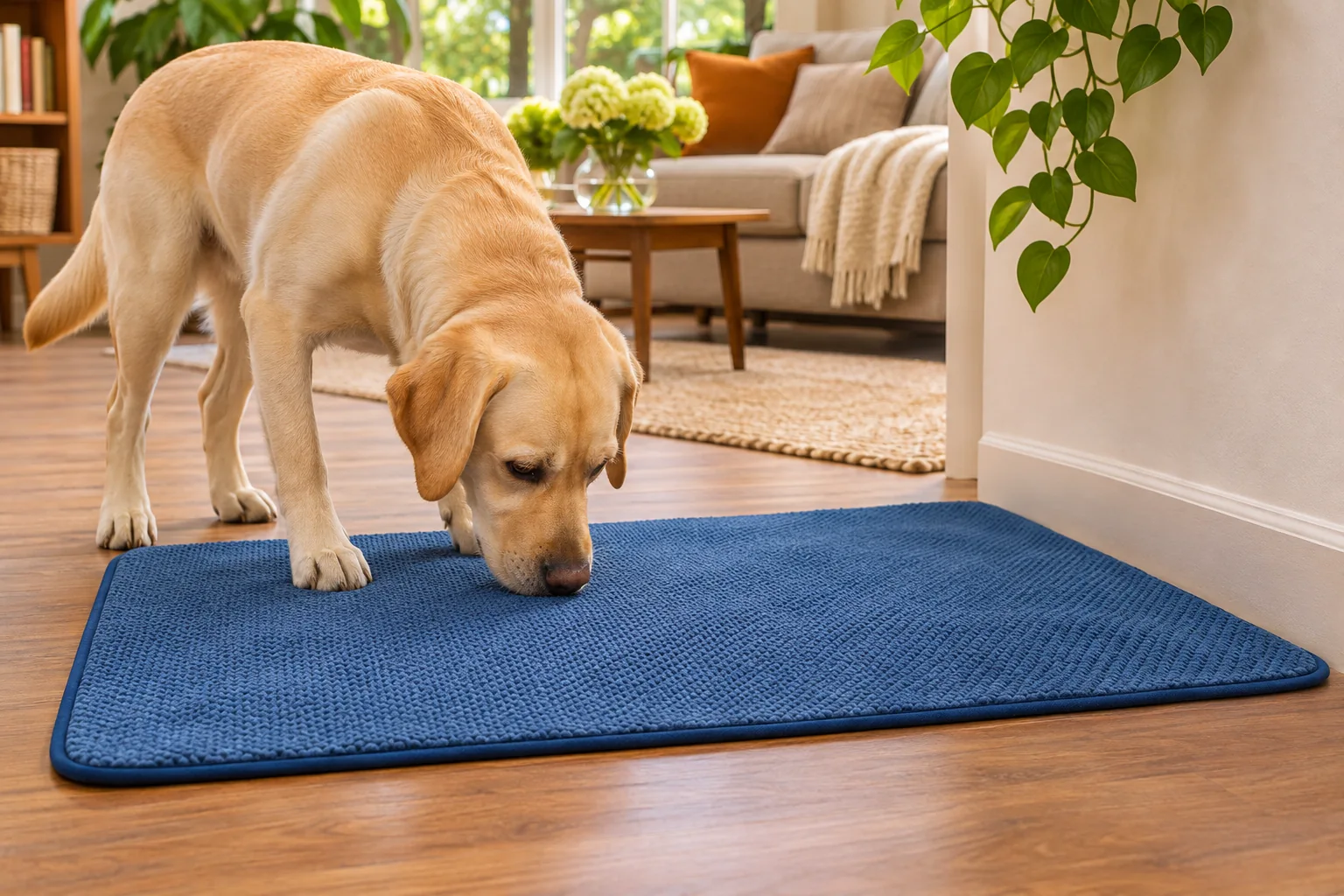
Reward a visit while everything is cold
Start with the stove off, the counters clear and the kitchen quiet. Stand beside the mat with your body turned a little away. When your dog looks toward it or steps closer, mark that choice with a familiar word if you already use one, then place a small suitable treat on the mat. If the dog readily steps on with all four paws, reward that too. Keep your hand low enough that the dog can eat without jumping or crowding you.
Then allow a reset. You can step away and let the dog follow, or let them wander off on their own. If they return, you have another opportunity to reward the approach. Finish after a few easy visits. The Oregon Humane Society mat exercise gives another example of building up this skill with rewards. Our guide to short training sessions can help you decide when to stop.
Once the dog regularly heads toward the mat, say a short cue once just before they start. If they look back at you without moving, make the setup easier by starting closer. There is no need to take hold of the collar, repeat the cue until they give in or push them into a down. You want to see the dog choose to travel to the spot, eat comfortably and feel free to leave.
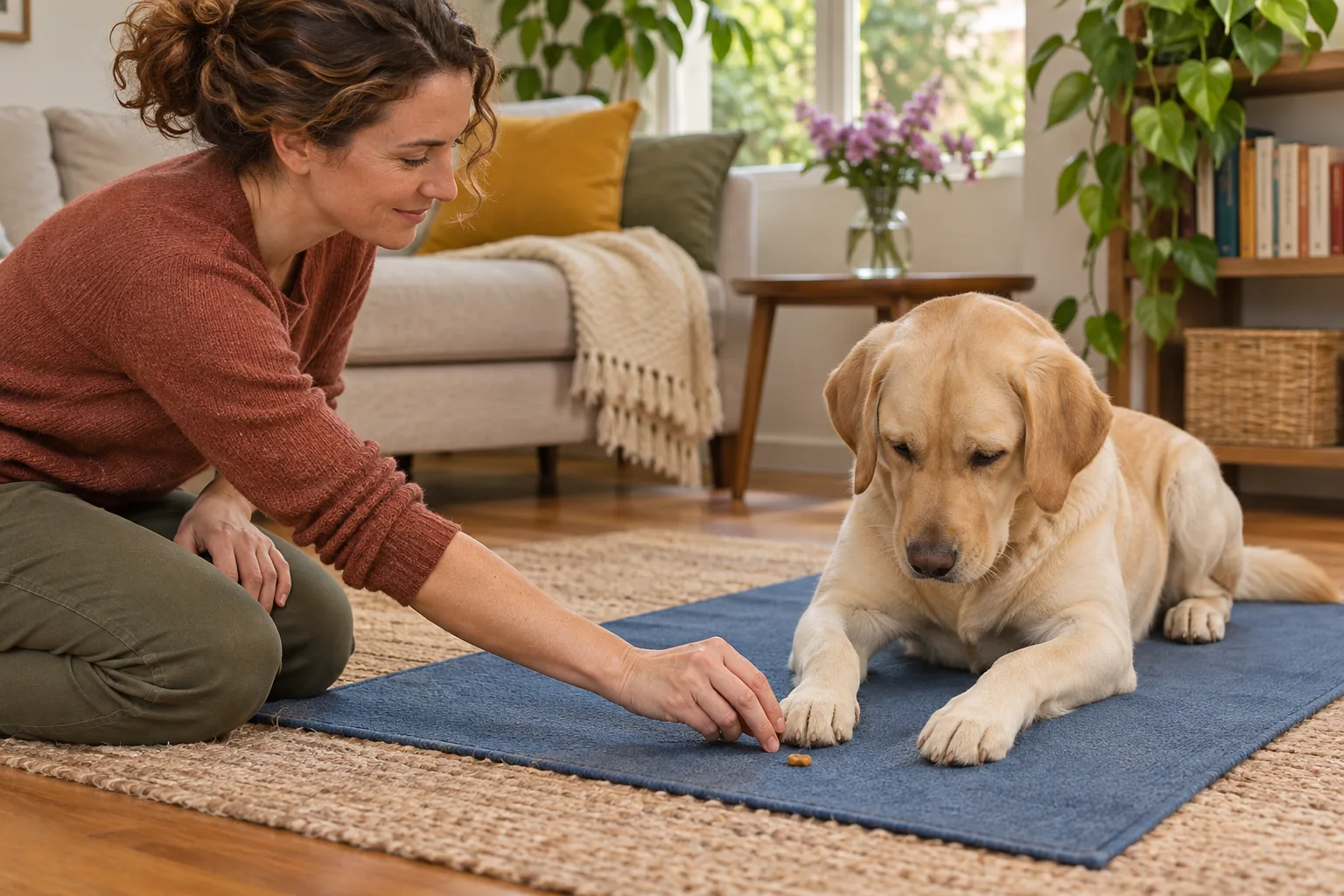
Rehearse one movement you make when cooking
Practise with an empty bowl or a clean tea towel. Reward a visit to the mat, shift your weight toward the kitchen and return to deliver the next reward while the dog is still there. If they follow, shorten your movement to a glance or half a step. That is enough information to plan the next repetition. A dog who knows where the mat is may still need help with the sound of a drawer or with seeing you turn your back.
Change one detail at a time. For example, keep your distance the same while you open a cold drawer a few centimetres. On a later occasion, keep the drawer shut and take one extra step. Turn back early enough that your dog can succeed comfortably. If they leave, let them go. A return to the mat is a separate choice you can reward once you are both ready.
A second adult can help by rewarding at the mat while you move. Agree beforehand on one small action, such as setting an empty bowl on the table. The helper can deliver a treat promptly for staying in the spot and then allow a break. If your dog keeps watching the helper's pocket or pacing between you, pause and make the setup quieter before trying again.
Use DogPath to prepare one short session
Pick one observable goal, such as “walks to the mat from one step away”. In DogPath, look through the foundational lessons for a skill that supports it, such as reward timing or a familiar stay. Read the instructions and check the prerequisites away from the kitchen. If your dog is still learning a down or has difficulty lying comfortably, choose a starting skill you can practise with the dog standing.
Use the weekly plan to reserve a short slot when the kitchen is cold. Start at a distance that already worked, prepare a few suitable rewards and decide what will end the session. A single easy visit can be enough on a busy day. The reward marker guide explains how to make the moment you are rewarding clear.
After practice, record the lesson you actually did. Keep a separate note about the setting and what you saw. For example, “three easy visits with the drawer shut, followed me when it opened” suggests a smaller drawer movement next time. A completed app lesson cannot tell you whether your gate is secure or whether your dog can cope with the noise of dinner preparation. Dog Train Club and DogPath share a publisher.
Make the dinner routine predictable
Do the separation part first, before you handle food. Let your dog settle in their prepared area with water and their usual bed. If they already enjoy a safe enrichment item and you can supervise its use appropriately, prepare it before you start cooking. Keep children and other pets away from food items the dog may guard.
Have a plan for an accidental entrance. Put down what you are holding if it is safe to do so. Ask someone to open a clear route back to the resting area or wait until you can move safely. Avoid reaching suddenly for a dog's collar or stepping over them. If food has fallen, separate the dog before cleaning and contact your veterinarian promptly if they may have swallowed a hazardous ingredient or object.
When the kitchen is cool and cleared, open the gate if you normally allow access. Leaving the mat can be part of the routine. If the dog comes right back to your heels when you wipe the counter, keep the barrier up until that job is done. The aim is a path that stays clear during the work you actually need to do.
Decide what to change after three ordinary sessions
Write down which movement your dog found easy, where you stood and whether the dog was able to leave and return comfortably. Compare similar moments. A visit while you stood next to the mat and a visit while you opened the fridge are different exercises. Keep the easier version available while you decide which part of the harder version to teach first.
If the dog repeatedly paces, barks or cannot settle behind a gate, choose a setup they can already tolerate and ask a qualified reward-based professional for individual help. If you see guarding, snapping or a bite risk, keep people safely apart from the dog and seek in-person help before practising. A sudden change in how closely your dog follows you, reluctance to move or signs of pain is a reason to contact your veterinarian. Use your notes to describe what changed and when you first saw it.
Common questions
Does the dog have to lie down?
No. A voluntary approach or comfortable stand is enough for the first sessions. Use a comfortable surface and contact your veterinarian if lying down suddenly becomes difficult.
Can I remove the gate when my dog learns the cue?
Keep the physical separation while handling hot dishes or sharp tools. Use the cue during planned, cold practice when the dog is free to leave the mat.
What if I have no space for a mat?
Use another familiar room with a clear route to water and a comfortable bed. Practise the mat skill elsewhere if your kitchen layout cannot accommodate it safely.