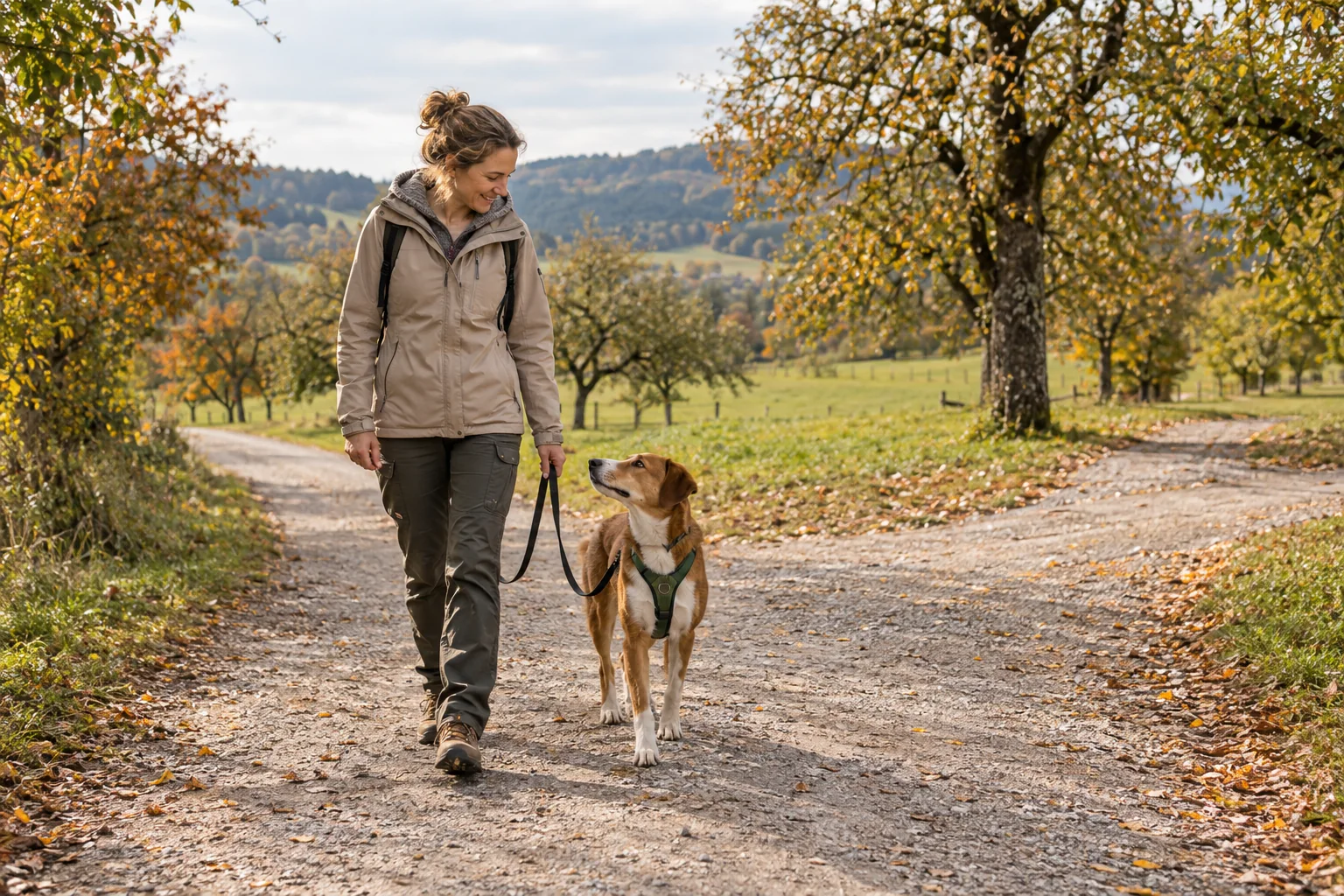
Dog scavenging on walks can leave you watching the ground more than enjoying the route. Perhaps your dog reaches for scraps near a picnic bench or small objects in long grass. For the next outing, begin with an observable plan: look ahead, create space and offer a familiar alternative early. Unknown items are never practice equipment, and a successful exercise cannot make them harmless.
DogPath can help you prepare a suitable foundation lesson and record practice you actually completed. Dog Train Club and DogPath share a publisher. The app cannot identify poisoned food, detect something swallowed or assess medical risk. This guide separates preparation, brief exercises on checked clean ground and real walking decisions. Possible harmful ingestion, pain, sudden changes or a bite risk require personal professional help.
Dog scavenging on walks: describe one actual moment
Choose one ordinary incident from your last walk. Where were you, how far away was the dog and when did you notice the item? “Beside the picnic bench while I searched for my key” describes something you can change. “She never listens” tells you little about whether there was time to respond. Observe from a safe distance; do not reconstruct the scene by leaving food outside.
Distinguish sniffing, picking something up and swallowing. Looking toward the ground need not be interrupted every time, but appearances cannot establish whether an unknown object is safe. If something has already been picked up, use the boundaries later in this guide. A training note is neither a diagnosis nor proof that nothing happened.
Record who held the lead and whether rewards were accessible. Shopping bags or a phone call can divide attention. Set aside a short practice opportunity rather than combining it with several errands. For necessary everyday journeys, choose a route with a clear view of the ground. Sudden or marked changes in eating behavior warrant veterinary discussion; never withhold ordinary meals to make rewards more interesting.
Choose the route before the dog discovers something
Find a broad, quiet stretch with visible ground. Look ahead around benches, open bins and places where people eat. If you cannot inspect an area, choose a different path. You need not enter a difficult section to prove learning. Distance and an early route change are useful decisions in their own right, even if the dog never notices what you avoided.
A properly fitted harness and well-handled lead support supervision. Offer the movement space you can safely oversee in that setting. Avoid wrapping the lead around hands, legs or trees, and prevent a fast run into its end. The lead manages access; jerking or dragging does not teach a prepared response. If keeping enough distance requires constant pulling, choose an easier place for practice.
Check the return route too. Roadworks or a crowded pavement may change your plan. Agree on a simple alternative with anyone else walking the dog. Our loose-lead walking guide explains the handling foundations. A clean-looking path offers no guarantee, so supervision and local rules still matter. Planning gives you time to decide rather than a promise of safety.

Read a DogPath foundation lesson at home
Open DogPath while your dog is resting safely. Read an appropriate attention lesson in the training path, check its prerequisites and select an opening step you can actually carry out. This article assumes no dedicated poison-bait lesson. The planned exercise is a quiet glance or voluntary turn toward you, with no discovered object within reach.
Prepare small rewards suitable for your dog and check the practice area. Decide how a comfortable attempt would look: relaxed movement, voluntary participation and no crowding around the reward bag. Then put the phone away. During a walk, your attention belongs with the dog and surroundings. Reading instructions happens before leaving, rather than while approaching a place with food scraps.
For example, read the first steps of a familiar attention exercise, practice them in a quiet hallway and finish while participation is easy. Afterwards, take a short walk on a checked route. Foundation practice and the outing remain separate observations. Completing a lesson cannot establish that unknown food will be ignored. Use the weekly plan to arrange another manageable opportunity, without treating it as a deadline for the dog.
Reward a voluntary check-in on clean ground
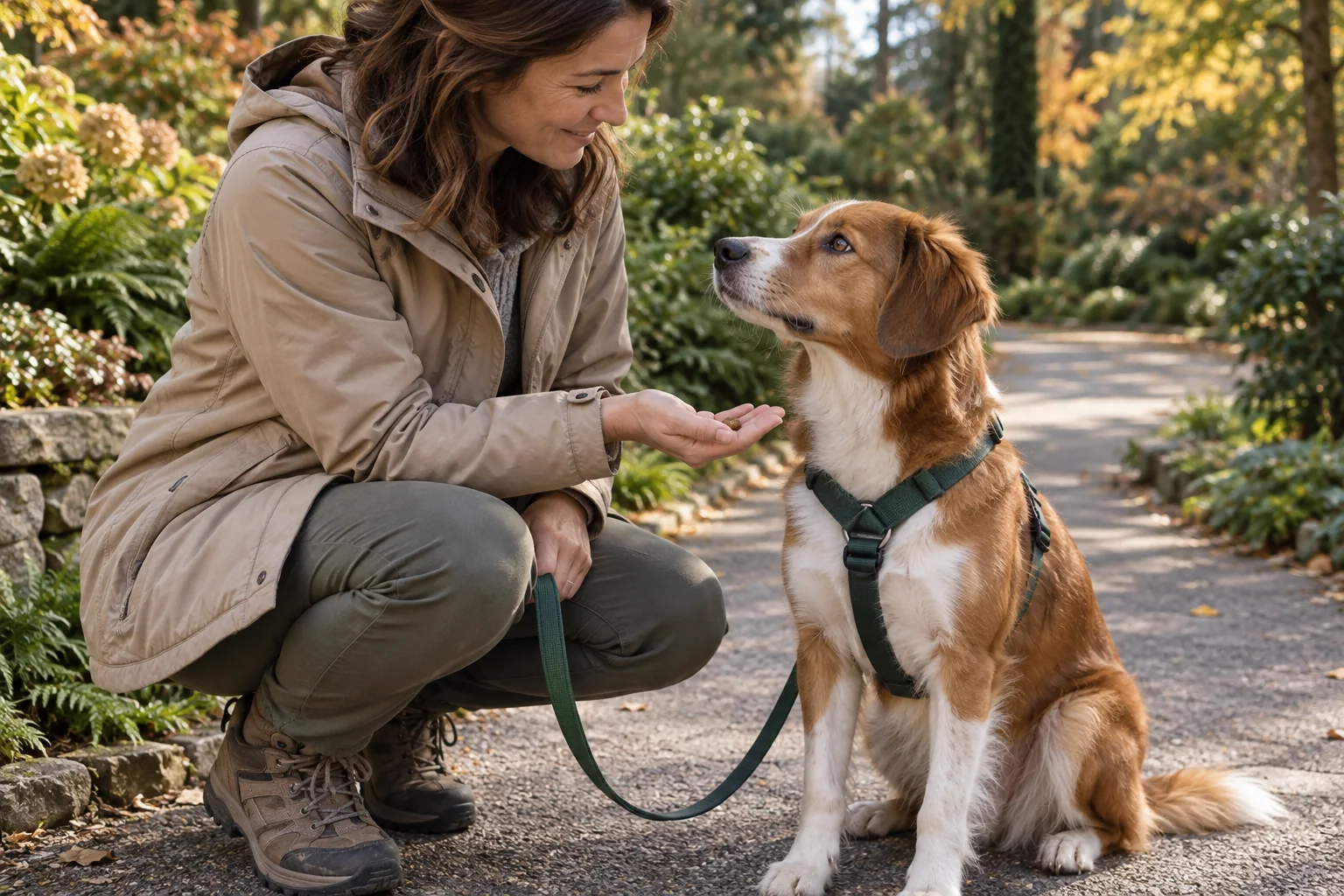
Begin on a familiar, checked surface without a distraction object. Keep rewards accessible without holding them constantly in front of the dog’s nose. Wait for brief voluntary attention toward you, mark that moment with your familiar marker and offer the reward from your hand at a comfortable position. The dog should not need to jump or be physically held in place.
Pause after rewarding. Looking around and sniffing a suitable area are compatible with practice; constant eye contact is not the goal for an entire walk. One opportunity might contain a check-in, two shared steps and another pause. If coordinating the marker and reward is unfamiliar, read our reward-marker foundation guide before asking for more difficult participation.
The Dogs Trust leave-it lesson explains rewarding voluntary disengagement and simplifying difficult stages. A reliable cue needs safe preparation. Do not expect its first successful use beside unknown leftovers. This opening exercise teaches attention without planted bait. If your dog stays tense or refuses a familiar reward, finish and reassess location, distance and wellbeing instead of increasing the urgency of your invitations.
Practice a wide turn without a discovered item
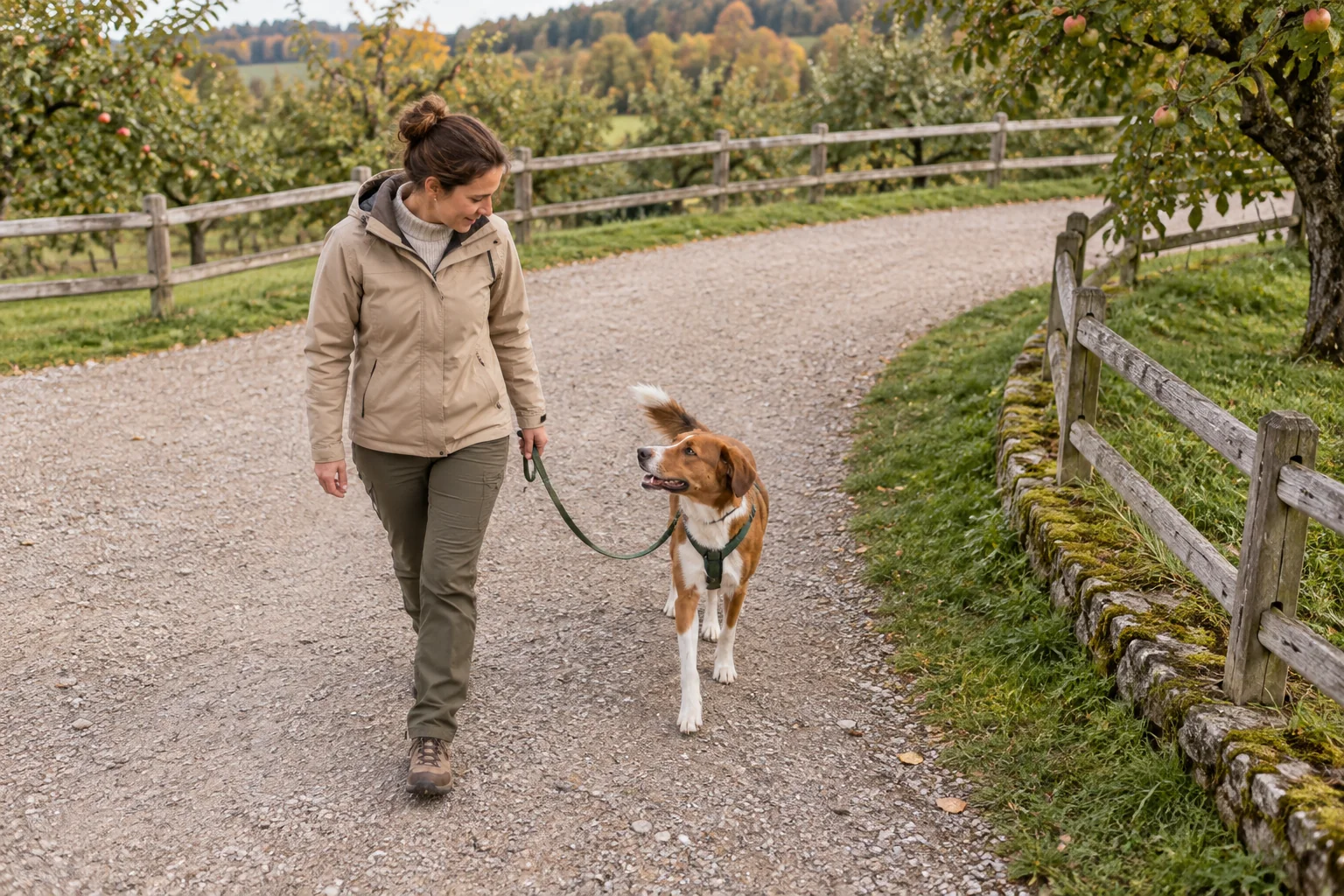
Choose open ground with room for a comfortable curve. Invite your dog using a familiar friendly signal and move slowly in the new direction. Reward voluntary movement with you. Keep the lead loose and assess whether the invitation was understandable. Pulling a dog along does not count as a successful training attempt, even if you reach the intended place.
Start with a small direction change and a short shared distance. If the dog looks uncertain, pause safely or return to an easier starting point. Repeating the cue louder is unlikely to clarify the task. A familiar location or more accessible reward may help. Change one condition and see whether following becomes easier before adding another challenge.
On a later walk, use the prepared turn well before an unclear patch. The purpose is to create space while your dog can still participate. If that is impossible, use another management choice. A difficult test beside the item defeats the plan. Seeing a busy picnic area ahead and taking a broad side path is a useful outcome; you need not investigate exactly what was left under the table.
Change one part of the exercise at a time
A comfortable hallway check-in does not transfer automatically to every street. Try another similarly quiet, checked place while keeping duration and proximity familiar. Change the setting first. When relaxed participation is possible there, consider one further small change at a later opportunity. This makes the observation clearer than changing place, duration and distractions together.
A calendar cannot provide a fixed difficulty ladder. Weather, crowds and the dog’s day change the outing. After a busy walk, the next opportunity may belong back in the hallway. Our short training sessions guide helps keep practice manageable alongside ordinary exercise, rest and care. Progress need not mean going farther or asking for longer attention.
Use concrete descriptions: “On the clean courtyard she followed two steps after my invitation” is more useful than “The cue is finished.” “I could not inspect the ground near the busy bench” describes a route-planning problem. Do not lay out unknown food, litter or dangerous objects. If specific non-pickup training is needed, ask a qualified reward-based professional to assess an individual setup, particularly with repeated swallowing or strong fixation.
Separate app progress from walking observations
After returning, meet your dog’s care needs and allow undisturbed rest. Then record the foundation lesson you actually practiced in DogPath. Reading preparation alone or stopping because of discomfort does not equal completing an exercise. Avoiding an area on the walk also does not automatically complete a different lesson. Honest records help you choose a suitable starting point next time.
Keep environmental observations in a separate notebook. This does not assume a found-object log, custom app note fields or automatic assessment. One line can record the section, ground visibility, timing of your choice, observed response and next adjustment. Do not enter a guessed medical cause as a settled explanation. Keep uncertainty visible so another walker can understand the same situation.
For example: “Pond bench busy; side path chosen early; loose lead maintained; use side path next time.” That is more helpful than “Perfect today.” Agree who brings rewards and the veterinary contact number. Use the weekly plan for another easy foundation opportunity when it fits around care and rest. Sometimes the sensible next step is simply preparing the walking bag consistently.

Possible harmful ingestion takes priority over training
If your dog may have swallowed something harmful, contact a veterinary practice or emergency veterinary service immediately. Do not wait for symptoms. PDSA’s veterinary advice on harmful ingestion sets this boundary and advises against inducing vomiting without veterinary instructions. Do not give homemade remedies or medicines on your own initiative.
Describe what you saw, when it happened and what remains uncertain. A safely available photo may help explain, but do not return with the dog to collect evidence or touch unknown substances. Follow the personal instructions you receive. The app cannot handle this situation and must never delay the call. An absence of visible distress does not resolve uncertainty about ingestion.
Do not force the mouth open or chase the dog. If freezing, growling or other behavior suggests a bite risk, keep other people and animals away and arrange professional support. Retrieval or swapping exercises require an individually assessed plan in such circumstances. For everyday prevention, keep clear practice locations, attentive route choices and prepared voluntary responses. A calm outing remains one observation, not proof that management is no longer necessary.
Common questions
Should I put food down for practice?
Not for this starting plan. Practice attention and turning on checked clean ground without bait. Unknown food and objects are never exercise materials. Ask a qualified reward-based professional to assess an individual setup if specific non-pickup training is needed.
Does sniffing mean my dog will swallow something?
No. Looking or smelling is different from picking up and swallowing. Allow sniffing in suitable visible areas while supervising. You cannot establish an unknown item’s safety by its appearance. Possible harmful ingestion needs veterinary help.
Does DogPath have a poison-bait log?
This guide assumes no such feature. Verified foundations include lessons, a training path, honest progress records and a weekly plan. Keep route notes separately. The app does not identify harmful substances, diagnose ingestion or declare a walk safe.
When should I simplify the practice?
Finish if the dog remains tense, will not follow voluntarily or refuses a familiar reward. Reassess distance, location and wellbeing. Sudden changes, pain, repeated swallowing or a bite risk require personal professional support rather than harder tests.