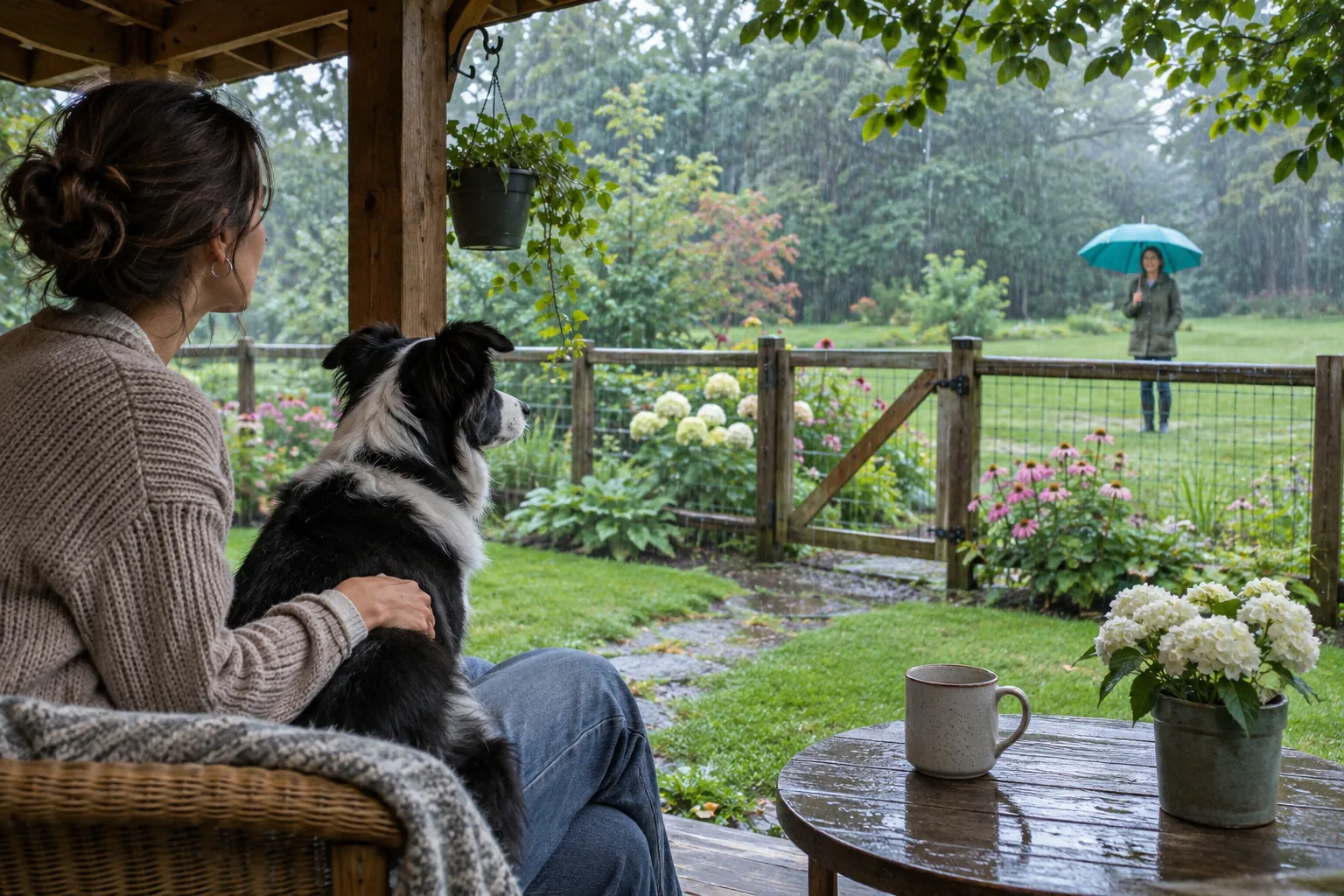
Living with a dog scared of umbrellas? A useful first change is to open yours away from the dog before you collect the lead. A closed umbrella, a sudden snap and an open canopy moving above a person can each be a different problem for the same dog. Work out which part matters from a safe distance, then practise with one easy version in dry weather. On wet days, make room to walk away rather than relying on practice to get you past every umbrella.
Dog scared of umbrellas? Separate the different surprises
Think of the last encounter from your dog's position. Were you standing in a narrow doorway? Was there a click before the canopy appeared? Did the umbrella tilt toward the dog as a stranger squeezed past? A dog may be comfortable near a folded umbrella on a bench and uncomfortable when its outline suddenly doubles in size. What happened before the retreat gives you a better starting point than the fact that the umbrella was present.
Write down where the dog was, where the umbrella was and what each person was doing. Include weather and the space available. Fabric flapping in gusts, rain drumming overhead and a slippery surface can make a wet outing harder. A quiet practice session on dry ground helps you notice what the dog does when those extra demands are absent.
There is no need to recreate a difficult encounter to make your notes more precise. Use what you already saw. The Dogs Trust guide to fear and frustration explains how situations with limited escape options can be harder for dogs. If an umbrella appeared at the only exit from your building, one useful change is to move your own umbrella away from that doorway.
Choose a place where the dog can leave
Pick a quiet place with dry, grippy ground, room to move sideways and a clear way back. For some dogs this is a large room with a familiar bed at the far end. For others it is a secure garden with a person they know. Keep the umbrella still and secure so it cannot slide, roll or blow toward the dog. Children and other pets can stay elsewhere while you practise.
Start with the umbrella in the least challenging form you know, often folded and resting away from the dog's route. If your dog already avoids the folded umbrella, keep it out of sight while you settle and consider working with a qualified professional on an easier first step. An umbrella does not need to be placed on the floor for the dog to investigate, and you do not need to carry it while asking the dog to walk past.
Check what the dog normally does before you introduce the object. Notice whether they look around, sniff, take a familiar food comfortably and move with an easy stride. That comparison is more helpful than expecting a particular tail position from every dog. A dog can be quiet because they feel comfortable or because they are standing very still. Look at the whole pattern before deciding to continue.
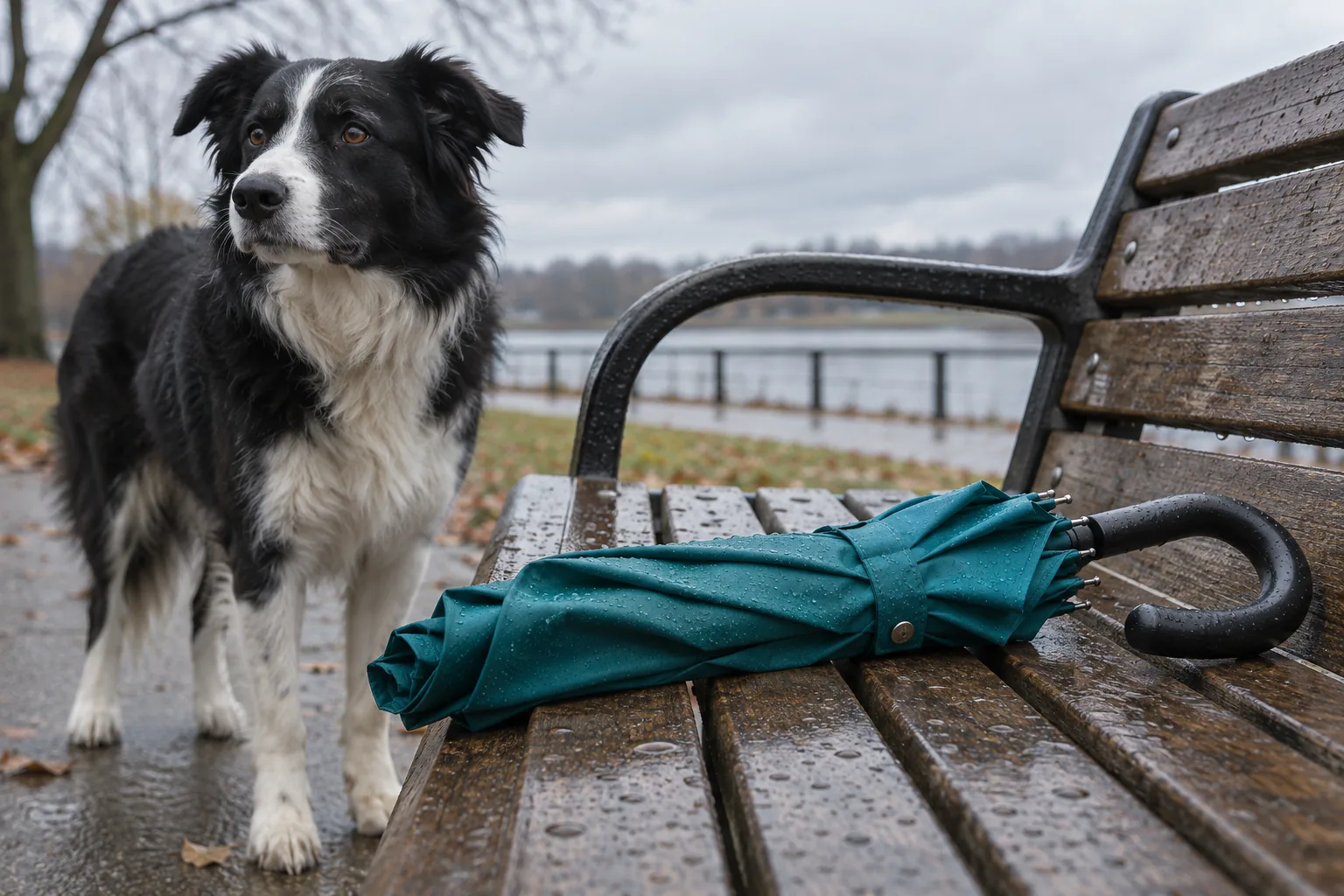
Let the umbrella predict something pleasant
At a distance where the dog can notice the umbrella and remain comfortable, let them look and then offer a small, familiar reward near where they already are. You can place it on the ground on the side away from the umbrella. The reward should let your dog keep their distance. A line of treats leading toward the umbrella can draw a dog closer than they would choose to go.
Give the dog time to look away, sniff or leave. If they move away, go with them or let them return to their familiar resting area. A single easy look and a reward can be enough. If they freeze, lean away, tuck their tail, stop eating normally or become unusually quick and grabby, make more space and end the exercise. Compare these changes with what you saw before the umbrella appeared.
Keep early sessions short. Our guide to short training sessions can help you plan a stopping point before you begin. When a dog stays comfortable around a closed umbrella, you can use the same arrangement again on another day. There is no need to make every session harder. The aim is to observe an easy response you can repeat, with an exit that stays open the whole time.
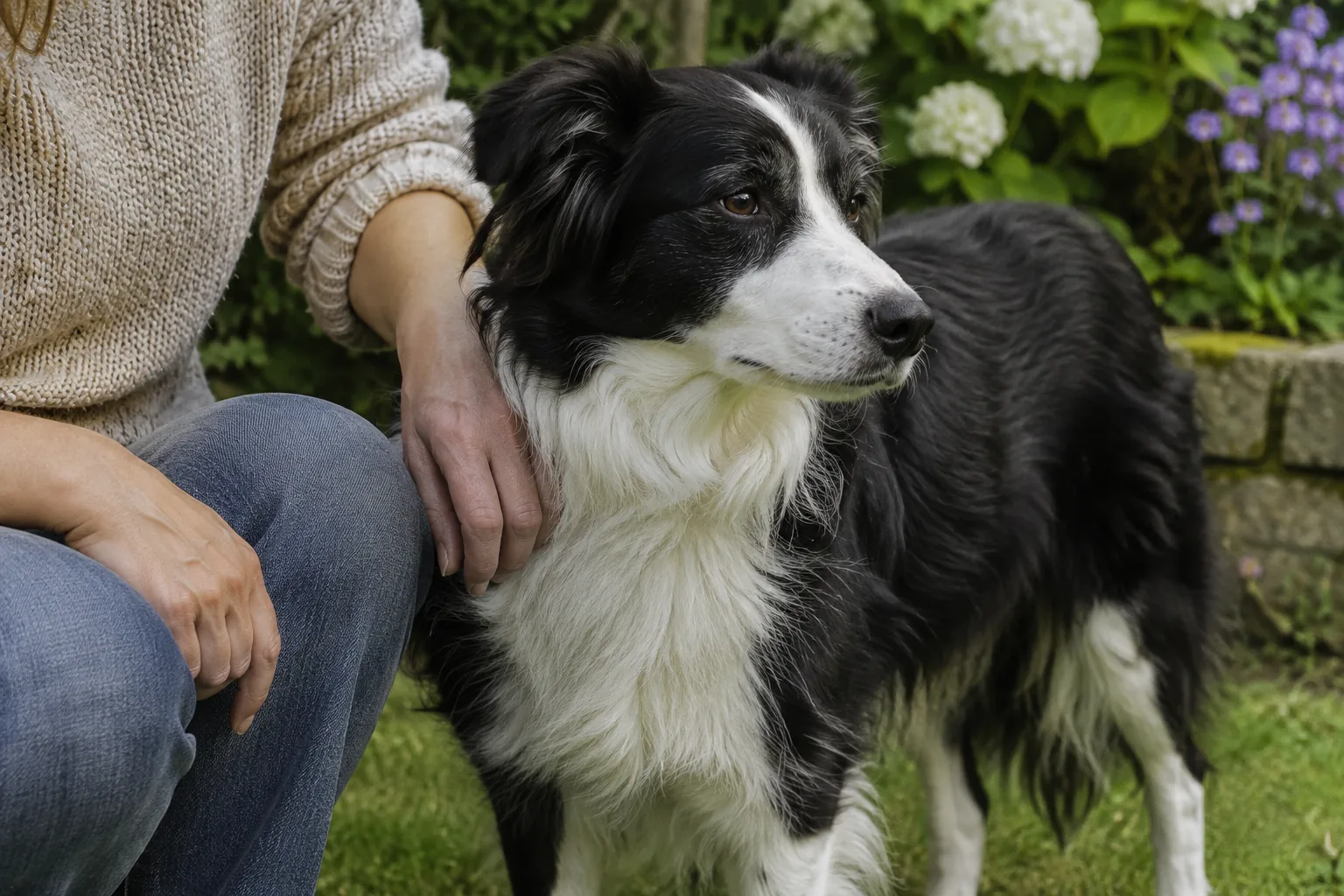
Change one feature at a time
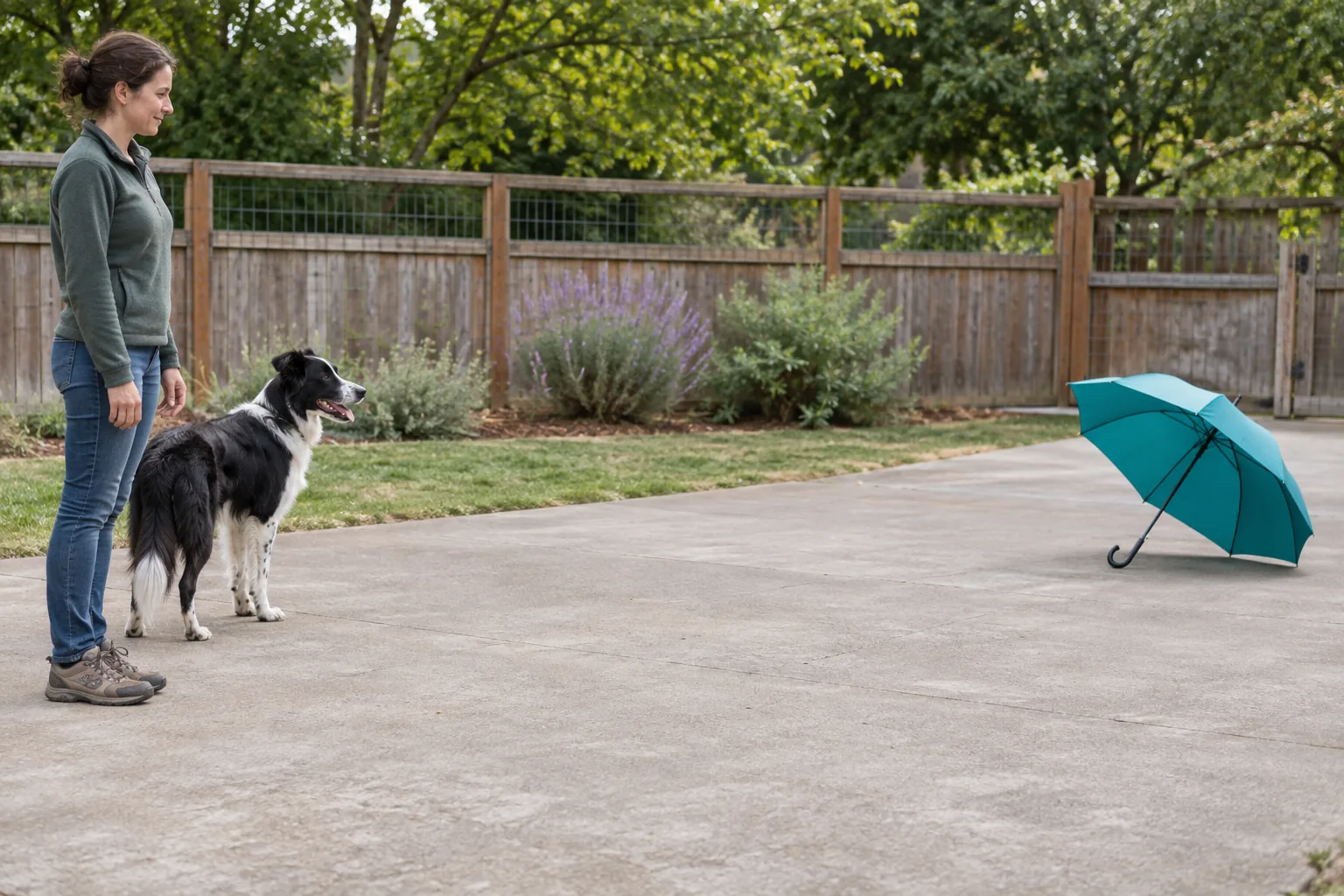
A useful next step can be seeing a different outline rather than seeing the umbrella open. Ask a helper to put an already open umbrella in a stable position while the dog is elsewhere. Begin farther away than you did with the closed one. Keep the scene quiet and leave the umbrella untouched. If it is windy, skip that setup. A stationary canopy should stay stationary throughout the exercise.
When the dog is comfortable with the open shape, choose which other feature to work on first. A helper might take one slow step sideways while holding the umbrella at a distance. Practise the opening motion separately, with the helper well away and the dog able to turn or move off. Avoid automatic opening mechanisms and sudden clicks while you are establishing a comfortable response. Never open the umbrella over the dog or point its ribs toward them.
One step back is often enough to make an exercise simpler. Suppose your dog looked briefly and went back to sniffing when the umbrella was still, but stopped sniffing when the helper moved. Resume with the helper standing still and increase the distance before trying motion again. Wait for ordinary movement and attention to return. If the dog keeps watching or struggles to disengage, put the umbrella away and finish.
Make room on real walks
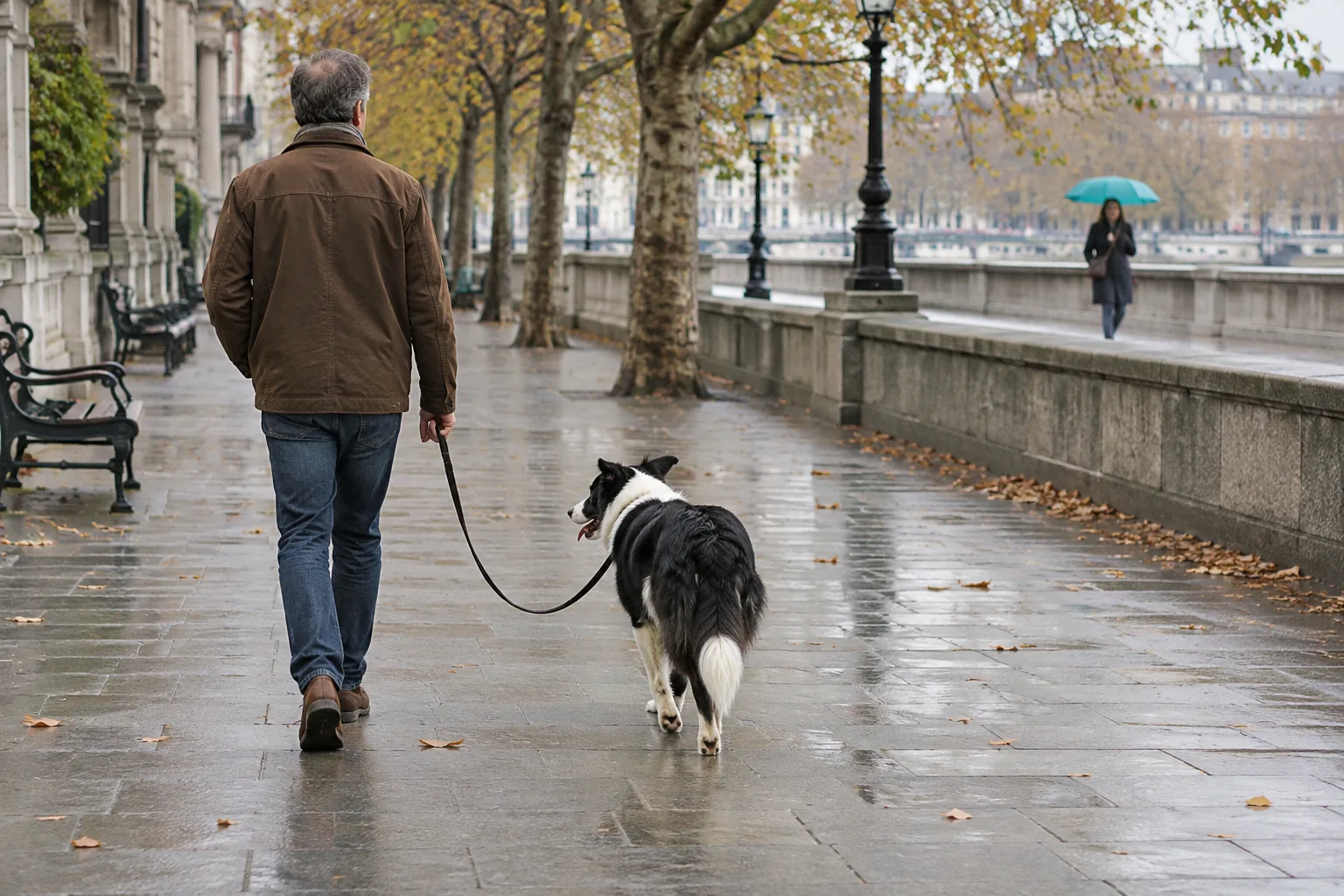
You cannot ask every pedestrian to stay still, and a narrow pavement may offer very little warning. Look ahead at entrances and blind corners. If you see an umbrella, turn into a quieter direction early or wait in a spacious spot that gives your dog room. Choose a route with space to retreat, away from traffic. A known loose-lead walking routine can make the turn familiar when you have practised it in easy settings.
If an umbrella opens nearby, focus on getting to a safe space. Give your dog time to move with you and let the person continue past. Avoid keeping your dog in a sit while the person closes the gap. When there is enough space, pause and see whether the dog can resume an ordinary activity such as sniffing. Heading home or shortening the outing can be a reasonable choice after a difficult surprise.
At home, ask household members to open umbrellas where the dog cannot be startled at close range. Keep a folded umbrella out of narrow corridors and make room to enter before you shake water off a wet canopy. If you need an alternative for an essential short outing, choose a dry place to prepare and a route with more room, or use clothing that keeps your hands free when it suits the weather. Real life can become easier while formal practice stays simple.
Use your notes to decide what comes next
A useful entry describes the scene and what the dog chose. Try “folded umbrella on bench, dog looked then sniffed, took two rewards gently, chose to walk away.” A second entry might say “open umbrella across garden, stopped taking food, went back indoors.” The entries tell you which conditions to repeat and which need more distance. They do not establish a distance every dog should tolerate or a deadline to reach.
If you share walks, agree on a simple phrase such as “let's give them space” and the direction you normally turn when the pavement is busy. Keep practice separate from hurried departures, when you may be carrying bags or trying to catch a bus. The plan should still work on a day when you have time only for a short walk and no time for training.
Ask your veterinarian about sudden changes, apparent pain or new fears that appear in several everyday situations. If your dog cannot recover after encounters, tries to bolt, or growls or snaps when someone approaches, keep a safe distance and arrange in-person help from a qualified reward-based behaviour professional. If there is a bite risk, prevent close contact while you get advice. Bring your notes so the professional can help you plan around what actually happens in your home and on your walks.
Common questions
Can I practise with the umbrella I use every day?
Yes, if you can keep it still and the dog can choose their distance. Start with the easiest arrangement you can repeat. An umbrella that opens with a loud spring may be a poor choice for practising the opening motion.
Do I need to get my dog close enough to touch it?
A dog can learn to walk comfortably at a useful distance without ever touching the umbrella. Let the dog decide where to stop. For many households, being able to turn away from an umbrella on a walk is already a worthwhile goal.
What if my dog takes a treat and then barks?
Eating is only one observation. Notice the dog's pace, posture and ability to look elsewhere. If the dog barks, ends up staring at the umbrella or eats unusually fast, make space and stop the session.