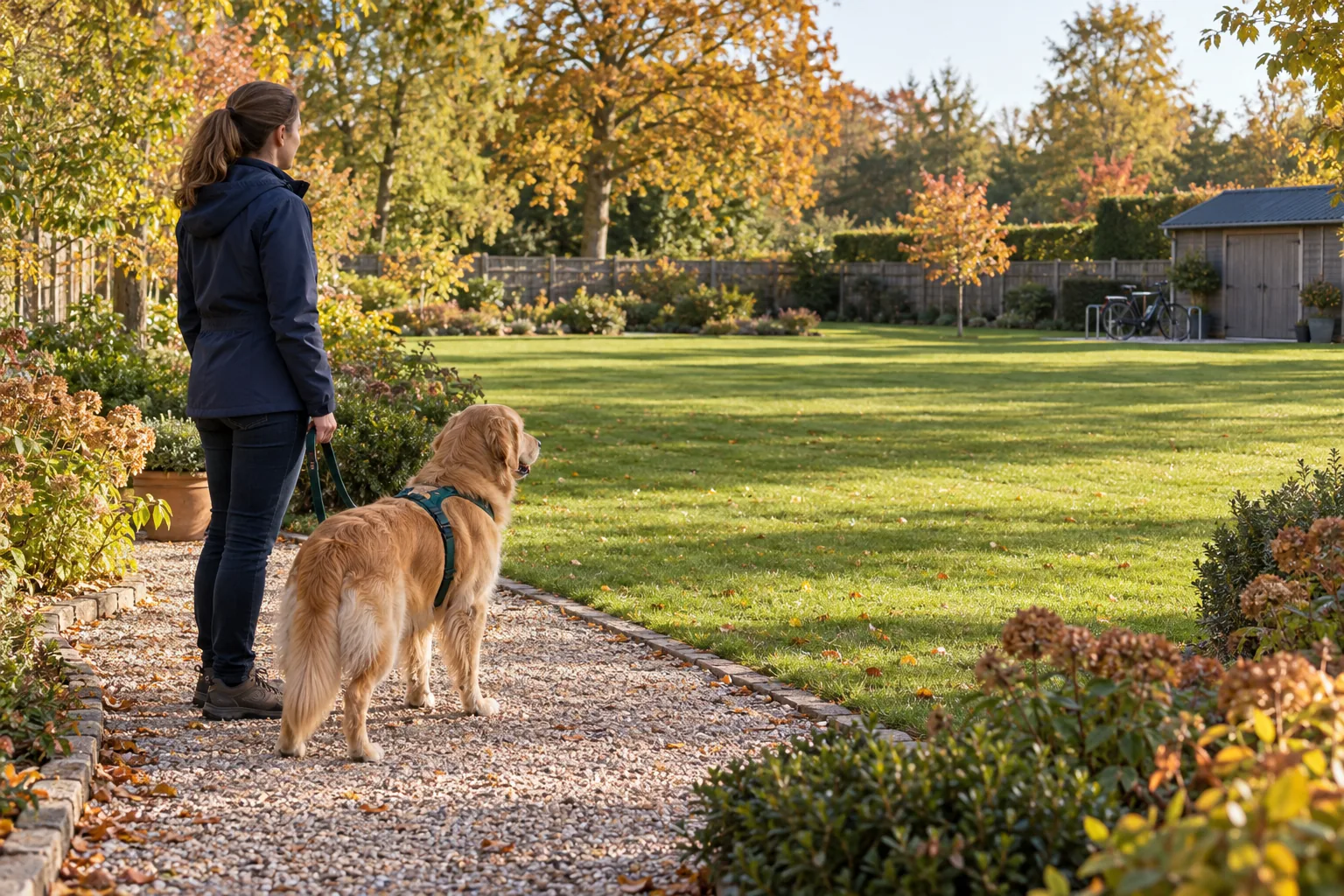
A dog scared of bikes can find an ordinary shared path difficult long before you have time to ask for attention. A bicycle may appear around a corner, pass close behind or make an unfamiliar sound. Begin with the route and the room available to leave. You do not need a diagnosis or a perfect obedience response to choose more space.
This guide helps you organise an easier necessary walk and decide whether any optional practice is suitable. A parked bicycle in a controlled setting is different from a moving rider on a public path. The ideas work without an app, do not promise to remove fear and never require a dog to approach a bicycle, remain beside traffic or endure a frightening encounter.
Dog scared of bikes: describe the encounter
Write down what happened during an ordinary encounter without arranging another one to test the dog. Was the bicycle parked or moving? Did it come from behind, emerge beside a hedge or pass through a narrow gap? Describe the dog’s movement and your own response: stopping, stepping towards the path or shortening the lead. These details can help you choose a safer arrangement next time.
Keep observation separate from an explanation. Barking, standing still or moving towards a bicycle does not by itself establish fear, excitement or a wish to chase. You can increase distance and protect other people without deciding the cause. Note the surroundings and whether you had a clear way out. Do not move closer merely to discover the point at which the dog reacts.
For sudden changes, possible pain, severe distress, attempts to bite or any risk to riders or handlers, seek personal veterinary and qualified behaviour support. If you cannot manage the dog safely, do not stage practice alone. A general article cannot assess the risk. Avoid reaching into a distressed dog’s space, grabbing equipment near the mouth or asking another person to provoke a reaction.
Choose a route that leaves you options
Before leaving, picture where you could turn away without entering traffic, blocking a rider or becoming trapped against a fence. A wide quiet route with good sightlines may be easier to manage than a narrow shared path beside a blind corner. Check the actual surroundings on arrival; a familiar quiet place can be busy today, and an attractive grass verge may not be safe to use.
The Dogs Trust guidance on chasing recommends distance and room to move away around bikes and other moving triggers. Apply that limited principle to route choice. Do not interpret it as permission to practise beside a busy cycle lane. If the route offers no safe margin, choose another way or another suitable time while still meeting the dog’s necessary needs.
Keep public access in mind. A refuge is useful only when you can reach it safely and leave a clear passage for others. Do not stop across the path or use a stranger’s bicycle as your planned training equipment. If a route is unsuitable, an ordinary shorter outing elsewhere can be the better decision. Longer exposure is not a requirement for a worthwhile walk.

Prepare comfortable equipment before the walk
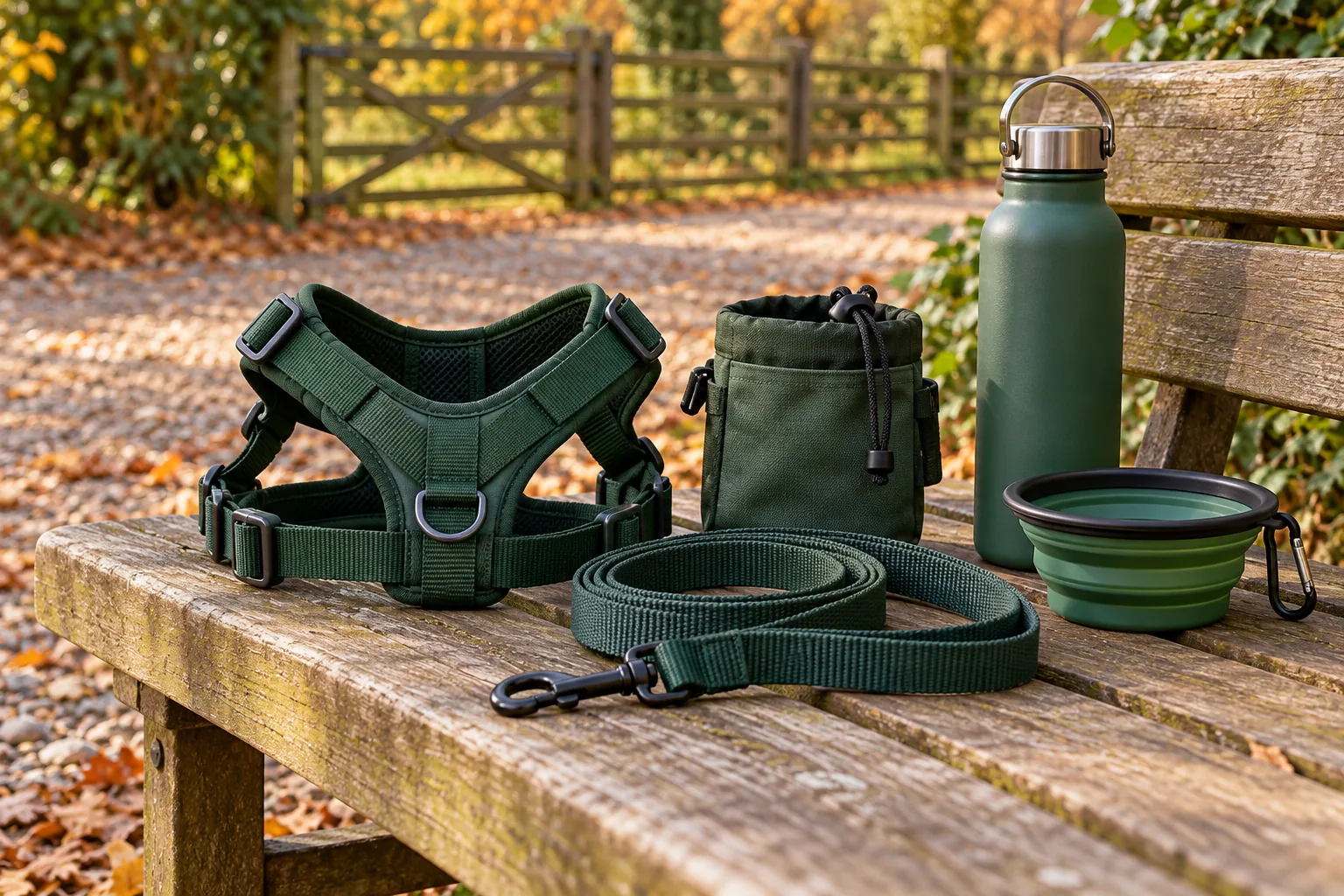
Use appropriate walking equipment that already fits the dog comfortably and is in sound condition. Check clips, stitching and your own ability to hold the lead securely. A fitted harness and suitable lead support management, but they do not make an unsafe route suitable or guarantee that you can hold a powerful reaction. Ask for individual equipment advice if secure handling is uncertain.
Prepare suitable rewards, water and anything needed for ordinary care before asking the dog to wait by the door. Put items where you can reach them without winding the lead around your hands or leaving the dog uncontrolled. Do not attach the dog to a bicycle, ride while holding the lead or use this concern as a reason to introduce unfamiliar restrictive equipment during an urgent outing.
Check your own footing and the space the lead occupies. Avoid allowing a line to trail across a cycle route or form a hazard for other users. You should be able to move together without deliberate tension; do not jerk the dog away as a training method. If the equipment or environment prevents safe movement, change the plan instead of adding more instructions.
Practise moving away somewhere with no bicycle
At a quiet secure place, rehearse your own simple change of direction during ordinary walking. Choose a comfortable route, invite movement in the way the dog already knows and reward willing steps. The aim is to make your handling less hurried. There is no need to introduce a new elaborate turn, demand a fixed position or keep the dog looking at your face.
Our loose-lead walking guide can help with the separate basics of comfortable shared movement. Practise those away from bicycles before relying on them during an unexpected encounter. An easy indoor or garden turn is useful preparation, but it does not certify a response beside a moving rider. Keep the route choices and safety management even when the rehearsal feels straightforward.
Agree with another adult how you will leave an unsuitable path, where you will meet if necessary and who is responsible for the dog. Children should not test a dog’s response to bikes or act as practice riders. A clear human plan reduces improvisation. If moving away itself is difficult or the dog becomes distressed, pause and obtain qualified support rather than adding a bicycle to the exercise.
Keep optional observation stationary and distant
Only consider a controlled opportunity if it can be organised safely and the dog is comfortable. Use a secure private area with permission, plenty of space and a clear way to leave. A bicycle should be parked securely before the dog arrives, without a rider, wobbling wheels or somebody suddenly ringing a bell. Another informed adult can look after the bicycle while you remain responsible for the dog.
Start at a distance that does not require coaxing the dog towards the object. There is no universal number of metres, and silence alone does not prove comfort. Look at the whole dog and the setting. If the dog hesitates, fixes on the bike, tries to escape or otherwise appears uncomfortable, create more space or end the opportunity. Do not remain there waiting for the dog to give in.
Seeing the parked bicycle briefly can be enough. The dog does not need to sniff the tyres, touch the frame or stand beside it for a photograph. Do not turn a comfortable moment into a series of closer approaches. Movement, a rider and wheel sounds are separate changes; a general home exercise cannot tell you when introducing them is appropriate. Seek individual guidance rather than following an automatic progression.

Keep rewards near the dog’s current comfortable space
The RSPCA recommends reward-based learning. In a suitable easy setup, have an appropriate reward available where the dog already feels comfortable. You can reward ordinary voluntary attention or a willing step away. Do not hold food beside the wheel to entice the dog into a distance they would otherwise avoid, and do not make approaching the bicycle the price of receiving food.
If you already use a clear reward signal, keep its meaning familiar. Our reward marker guide explains that separate foundation. This is not the moment to add several new signals or require a prolonged sit while the bicycle remains in view. The dog can look away, move with you and leave the optional opportunity. Food is support for learning, not proof that every part of the situation is safe.
If a dog will not take food they normally enjoy, or their behaviour changes, do not respond by pushing the reward closer, withholding meals or choosing a more difficult setup. Stop and consider the whole situation, including wellbeing and whether professional advice is needed. Eating alone also cannot certify comfort. Your decisions should not depend on a single snack, posture or moment of quiet.
Handle a surprise as a management moment
When a rider appears unexpectedly, prioritise safe separation rather than trying to complete a lesson. Use a clear safe route away if available, keeping the dog under control and the lead out of the rider’s path. Do not step into a road, run across somebody’s line or take a blind shortcut to create distance. Sometimes the safest available action will depend on details this article cannot see.
You may calmly ask for space when communication is possible, but do not assume a rider can stop instantly or hear you. Keep responsibility for your own management plan. Do not ask strangers to repeat a pass, circle the dog or ring a bell so you can test progress. An unplanned encounter provides enough information to reconsider the route without becoming a training demonstration.
Afterwards, choose an easier continuation or end the outing appropriately, while meeting necessary care needs. Give yourself time to organise the next step rather than returning immediately for another attempt. Severe reactions, near misses or difficulty controlling the dog deserve individual professional help. Avoid filming at the expense of handling safely; a short factual note afterwards is often more useful than trying to capture the event.
Review what made the outing manageable
Note concrete details after a naturally occurring opportunity: visibility, space, whether the bike moved and how you left. “Used the wider garden path and returned before the shared lane” tells you something practical. “Bikes cured” is not supported by one quiet moment. Compare settings cautiously because the dog’s health, the day’s activity and the people nearby can also change.
Keep optional practice modest; our short training sessions guide can help you organise a separate easy opportunity. There is no need to schedule repeated bicycle encounters to make up for an avoided route. Normal exploration, rest, suitable movement and necessary care still belong in the day. A dog’s quality of life does not depend on tolerating every busy path in your area.
Share the practical route plan with other adults who walk the dog. Explain where there is room to leave and which settings you are avoiding, rather than promising that the dog will now behave differently. Keep equipment checks and appropriate supervision in place. If the concern remains difficult, bring those observations to a veterinarian and qualified reward-based behaviour professional for a plan tailored to the individual dog.

Common questions
Should I let my dog inspect a bicycle up close?
There is no requirement to approach or touch it. A brief view of a securely parked bike from a comfortable distance may be enough for an optional opportunity. If the dog appears uneasy, leave and reassess rather than using food to draw them closer.
Does barking at bikes always mean fear?
No. Similar outward behaviour can have different explanations. Describe the encounter without assigning a cause, and prioritise safe distance. Sudden change, possible pain, severe distress, chasing with risk or bite concerns need individual veterinary and qualified behaviour advice.
Can I practise beside a busy cycle path?
Do not choose unpredictable close passes as the exercise. Pick a route with safe space and a clear way to leave. If you cannot organise a controlled opportunity safely, keep management in place and seek personal professional guidance.
When should I add movement or a rider?
Comfort around a stationary object does not certify readiness for a moving bicycle. Do not follow a fixed timetable or keep increasing difficulty after one quiet attempt. Individual guidance can help decide whether and how further practice is suitable.