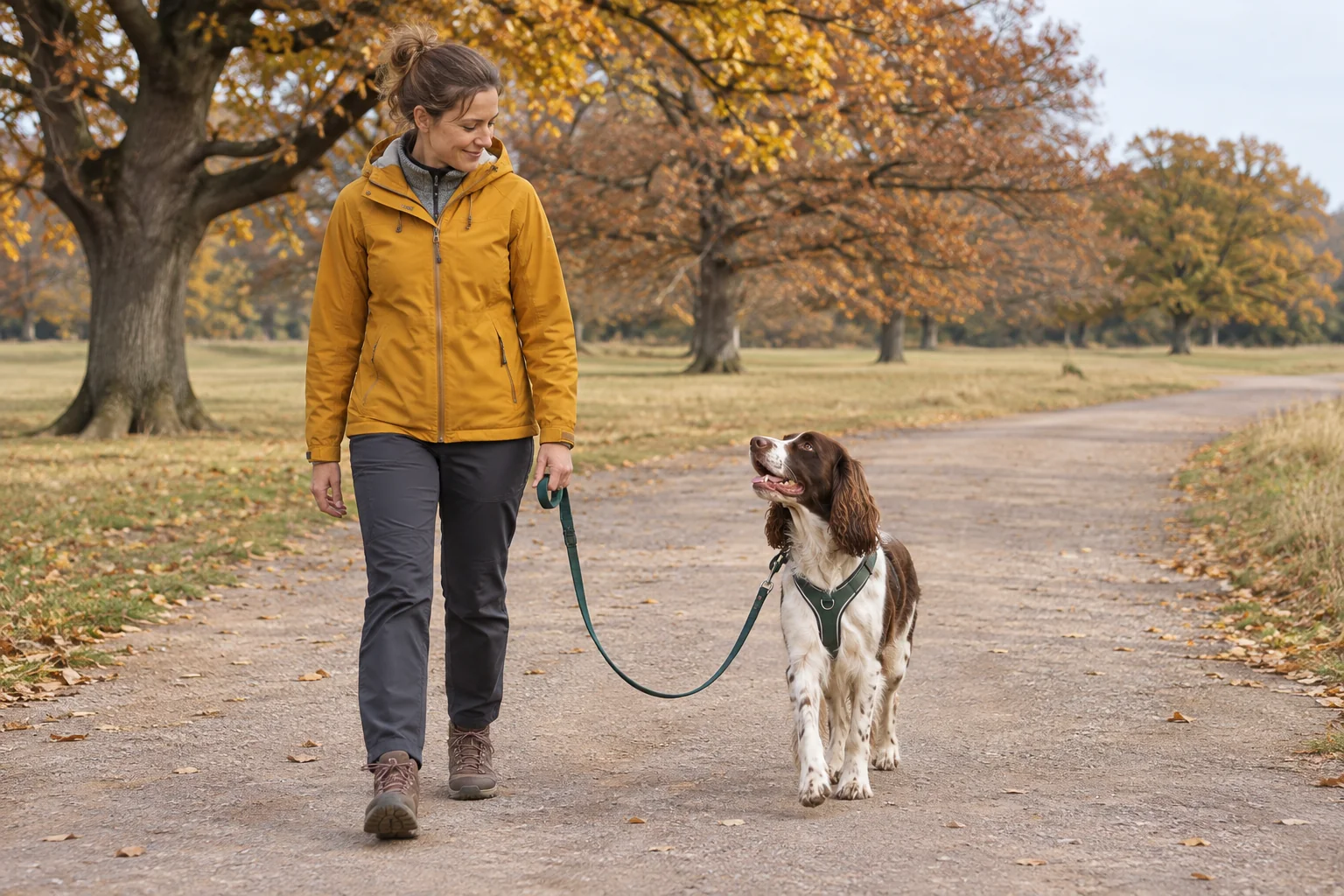
A dog rolling in poo can turn the last few minutes of a walk into an awkward journey home. You notice the shoulder drop, reach for the lead and realise the interesting smell has already become a full-body activity. For prevention, move your attention earlier: the approach to the patch, the space available to turn and the ordinary response your dog already knows away from it.
This independent guide needs no application or special device. It combines sensible access management with reward-based practice in clean places, then a practical plan for necessary care. It is not an emergency retrieval or decontamination protocol. Suspected ingestion, unknown chemical contamination, eye exposure, illness, pain or a sudden change needs veterinary advice. Bite risk or difficulty handling safely needs qualified individual support. Never stage contact with waste, restrain a frightened dog for a demonstration or let children manage a contaminated coat.
Dog rolling in poo: start with the approach
Describe what happened before the roll. Was the patch beside a narrow gate, hidden in long grass or on the corner where you checked your phone? “Moved into the verge while I adjusted my bag” gives you a part of the outing to organise. “Wanted to annoy me after a bath” assumes a motive and leaves the same opportunity available tomorrow. You can change the approach without settling an argument about what the smell means to the dog.
Keep rolling, eating something and ordinary sniffing separate in your notes. They can occur near the same spot but require different decisions. A dog lowering the head is not proof that a roll is coming; equally, you need not wait for certainty when the ground ahead looks unsuitable. Give yourself room to choose a cleaner line before the dog reaches it, rather than relying on a last-second shout.
Choose one manageable aim for the next outing: pass a known problem area using a clear alternative route. Do not revisit the contaminated patch to check whether the dog has learned a lesson. A walk with no opportunity to roll is useful prevention even when it contains no dramatic training moment. Keep normal exercise, toileting and safe exploration available; the goal is a better organised walk, not constant correction.
Prepare the walk before opening the door
Select a familiar route with room to move away from unsuitable ground. Think about narrow entrances, popular stopping places and the point where you normally become occupied with equipment. A shorter clear route may be more manageable than a longer circuit through several known dirty corners. Conditions can change, so a route that was clear yesterday still needs ordinary attention today. Avoid letting a remembered map replace looking at the actual path.
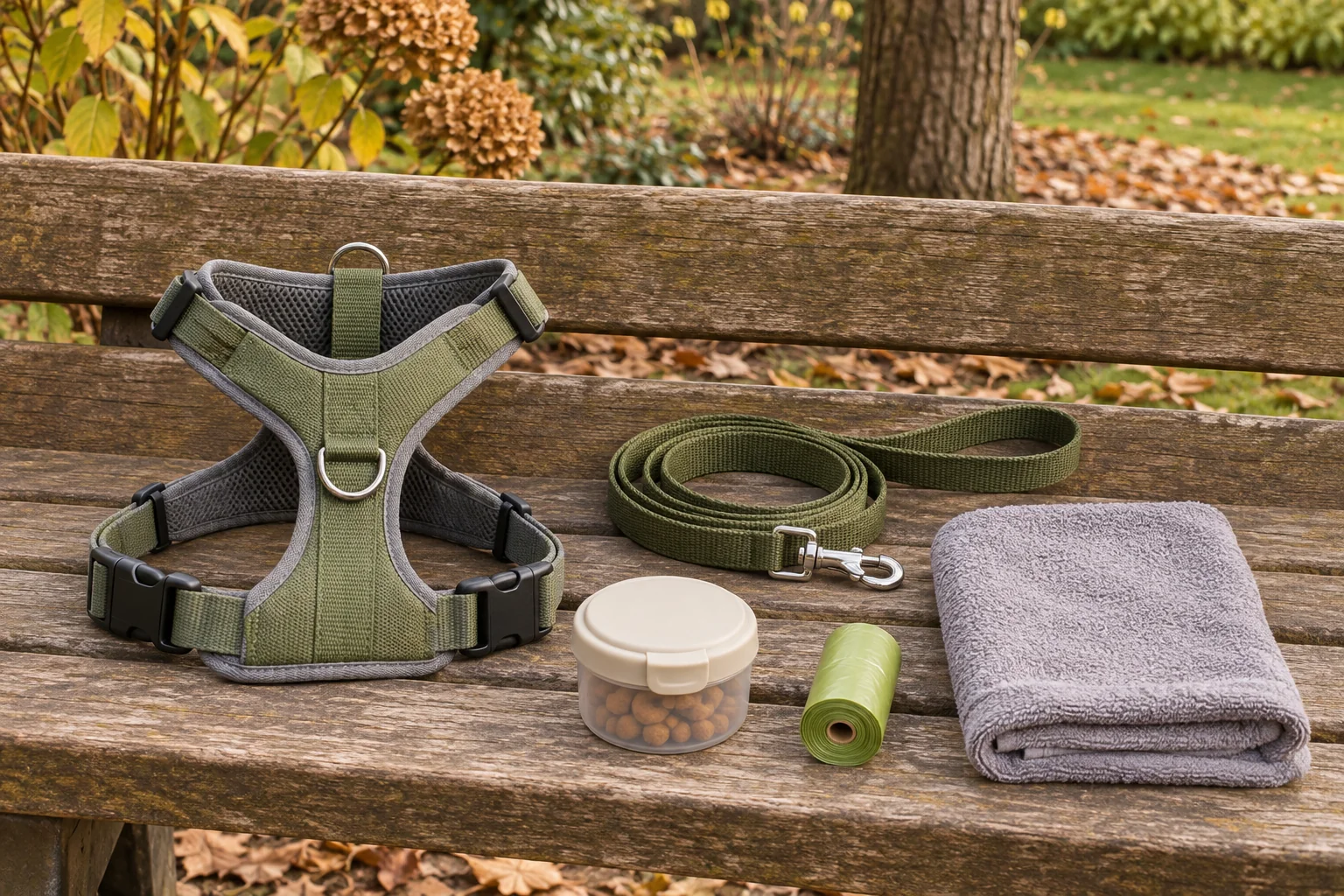
Use familiar comfortable walking equipment appropriate to your dog and the location. A lead can limit access when managed without jerks, neck pressure or dragging. Keep enough space to turn together and avoid tangled lines, roads, steep banks and other people. If you cannot manage the dog safely with the equipment you already use, get personal help rather than experimenting beside a hazard. Do not introduce restrictive equipment as a quick fix for an unpleasant smell.
Prepare suitable rewards, waste bags and the return-home arrangement before leaving. Place the phone away so you can watch the route. Our loose lead walking guide covers the wider foundation; this article concerns preventing contact with a specific unsuitable patch. It does not require the dog to walk at your knee throughout the outing or give up all safe sniffing.
Teach the easy turn somewhere clean
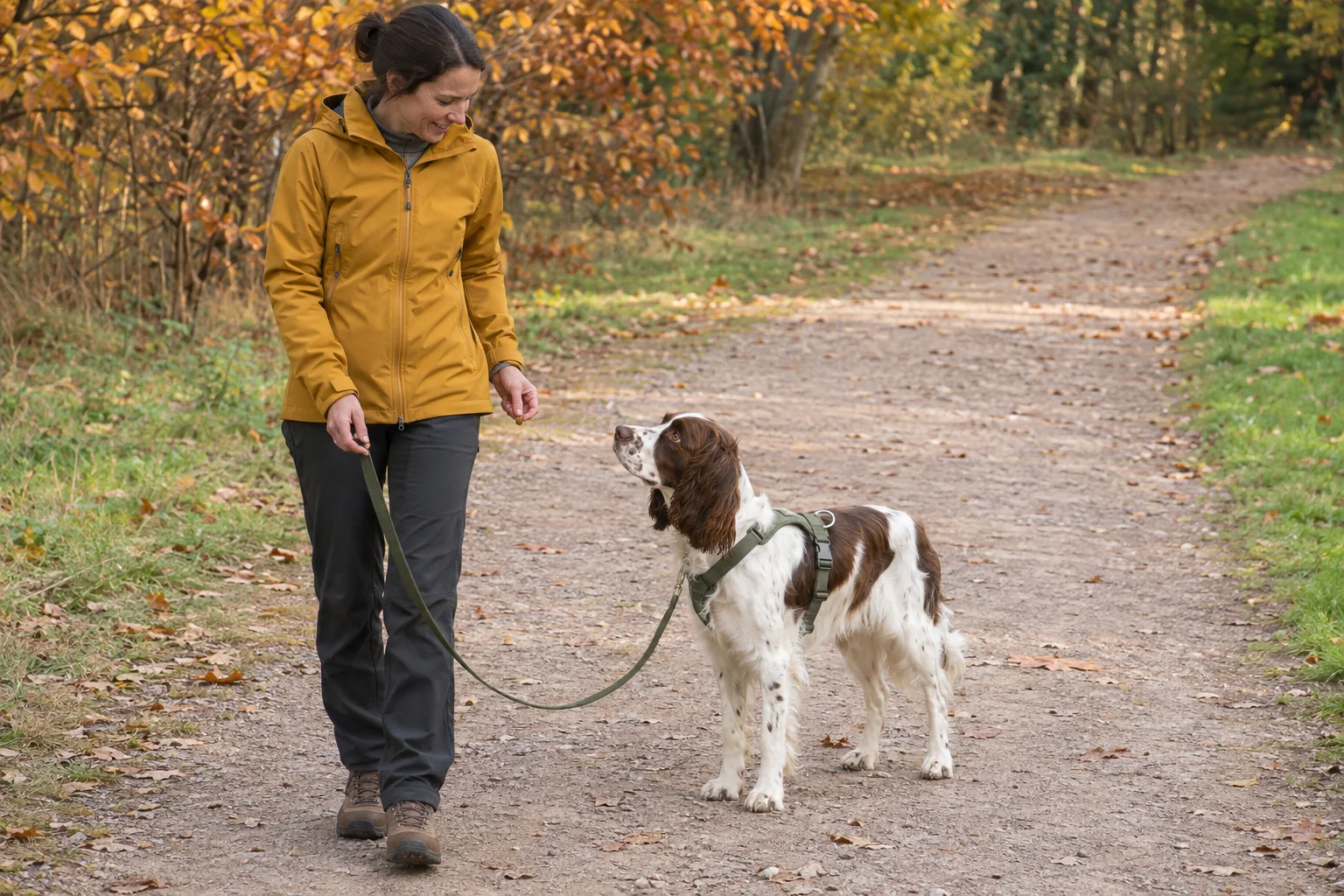
Practise a simple familiar change of direction in a quiet clean place, away from waste and difficult distractions. Begin with enough space for both of you to move comfortably. Invite the already known response, turn your own body clearly and reward the dog for coming with you. Keep the lead slack where safe; do not use it to spin the dog around or pull them off balance. If the response is not yet available, work on that foundation with appropriate guidance first.
Our reward marker guide explains clear feedback when you need that starting point. Prepare the reward before inviting the response and deliver it at a suitable clean point away from the verge. Do not drop food into unknown grass or throw it across a path shared with others. A turn should lead to an accessible reward and a manageable pause, not a confusing search among possible hazards.
Keep the rehearsal small and finish while the arrangement is comfortable. You are building an ordinary response to use early, not proving that it will interrupt every situation outdoors. One easy turn in a quiet space does not establish reliability beside waste, traffic or another dog. Avoid increasing several demands together just because the first attempt looked neat. Return to familiar conditions whenever the human movements become awkward.
Use the response before contact becomes likely
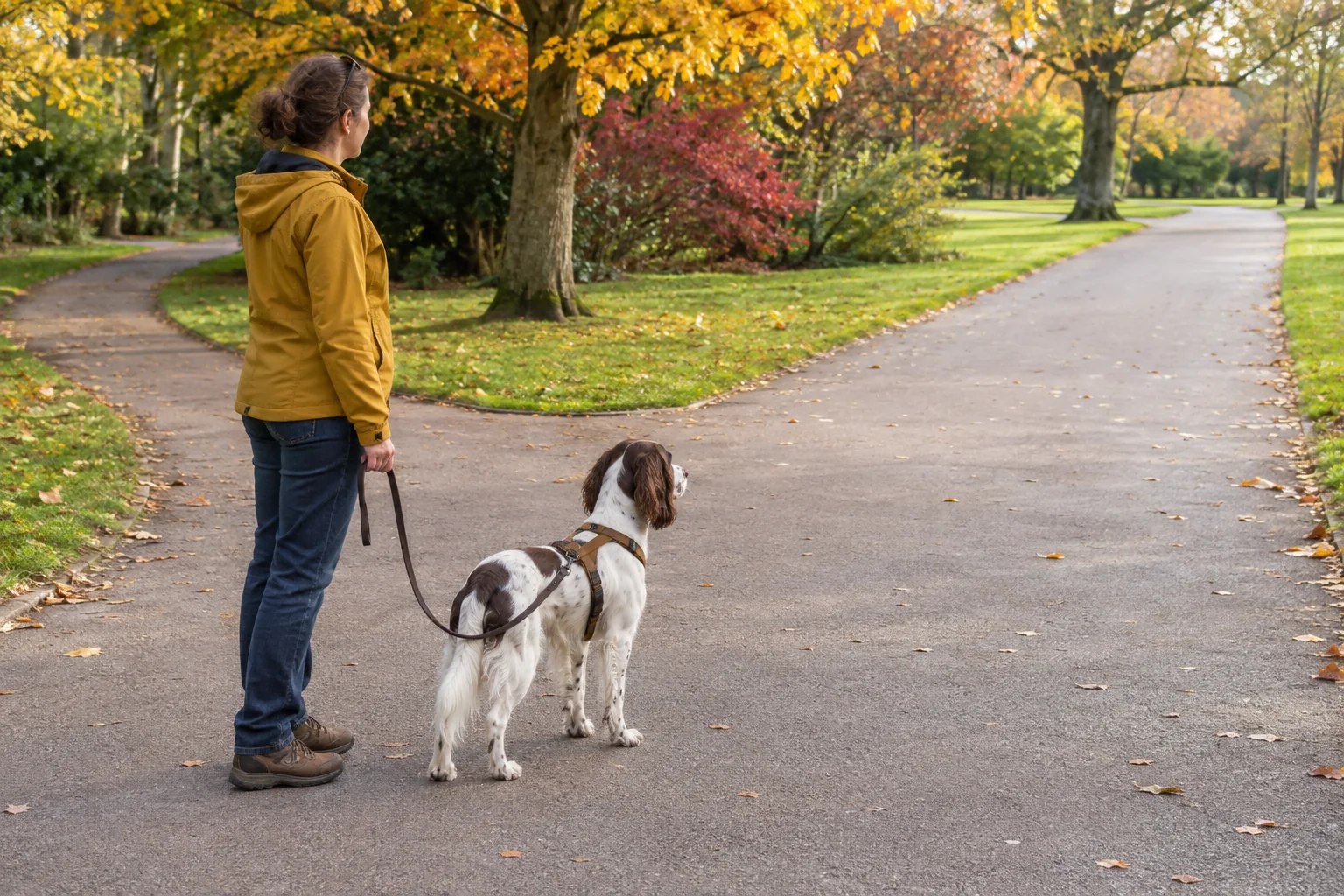
On the walk, look ahead for a cleaner line before approaching a known difficult corner. If there is suitable room, invite the familiar turn early and move away together, rewarding the response at the clean point. Waiting until the shoulder is already touching the ground leaves less choice and can make your handling hurried. If the route is too narrow to pass safely, choose another way rather than squeezing through as a test.
The PDSA discussion of unusual dog behaviours includes scent rolling. You do not need a precise explanation of your individual dog's motivation to organise access more carefully. Avoid treating the behaviour as spite or demanding that the dog understand why a smell is unpleasant to you. Your practical decisions concern the ground, distance and available response, not a moral judgement.
If you miss the moment, avoid shouting, chasing, jerking or forcing the head towards the patch. Move away calmly if you can do so safely and deal with the actual care needs. Do not repeat the route to obtain a cleaner-looking attempt for a record. A missed opportunity is information about timing or route choice; it is not a reason to escalate pressure on the next outing.
Leave room for safe exploration
Preventing access to one contaminated place need not remove all sniffing from the walk. Choose other suitable areas where you can allow comfortable exploration while supervising. Keep normal toileting opportunities available and collect your own dog's waste promptly and responsibly. Do not handle unfamiliar waste unnecessarily or leave bags where wildlife or other dogs can reach them. Follow the local arrangement for disposal rather than moving a problem onto another path.
Avoid turning every pause or head movement into a warning. Look at the environment and the whole visible sequence. If the path is clear and the dog is simply investigating a safe area, allow time for that activity. If the place is unsuitable or uncertain, choose another line early. This keeps your handling more predictable than alternating unrestricted access with sudden corrections at the last possible second.
Our short practice guide helps separate a brief rehearsal from an entire walk. Practise the turn as a small activity, then return to ordinary movement and exploration. If you are tired, distracted or carrying too much to supervise comfortably, simplify the route. Management should fit the actual person doing the walk, not depend on uninterrupted concentration through a crowded or complicated outing.
Organise necessary care without a struggle
If the coat is contaminated, keep children away and avoid spreading it across shared seating or bedding while you arrange suitable care. Keep the dog comfortable and supervised. Do not punish afterwards, use perfume to cover the smell or improvise with household cleaners, solvents, disinfectants or other unsuitable products. If the substance is unknown, there may be ingestion or eye contact, or the dog seems unwell, contact your veterinary team for instructions rather than following a general washing recipe.
The PDSA grooming guidance recommends dog-specific washing products and individual advice for coat care. Use a familiar safe care arrangement appropriate to your dog, with secure footing and no force. If necessary cleaning cannot be managed comfortably or safely, ask your vet or a reputable professional groomer how to proceed. This article does not prescribe a product, bathing frequency or treatment for irritated skin.
Prepare the human side before beginning: suitable equipment, clean towels and a place to put used items. Keep phones and unnecessary interruptions out of the task. Do not hold the dog down while another person fetches supplies. Once appropriate care is complete, allow rest and clean the affected equipment safely. A quieter return-home arrangement helps prevent an unpleasant incident becoming a repeated conflict around handling.
Review the route with whoever walks next
Write a short practical note afterwards: where the approach began, what you were doing, whether a clean turn was available and where you rewarded it. “Turned before narrow gate; rewarded on clear path” gives another adult an arrangement to copy. “No rolling today” is pleasant but does not explain whether the route changed, access was managed or the patch simply was not there. Record the difference without inventing certainty.
Agree on one manageable change for the next walk, such as preparing rewards earlier or using the wider entrance. A different adult should rehearse the familiar turn in a clean place before relying on it near a problem corner. Avoid several people calling or moving the lead at once. If the same difficulty keeps recurring, qualified individual guidance can help review the setup and the dog's needs.
Keep the successful management after a clean week instead of immediately returning to unrestricted access at the old patch. There is no deadline by which a dog should stop finding a smell interesting. A useful result is a clearer route, earlier decisions and necessary care handled safely. Sudden changes, persistent rubbing, discomfort or other health concerns belong with your veterinary team rather than being explained away as another training problem.
Common questions
Should I let my dog roll once to teach a lesson?
No. Do not stage contact with waste or use contamination as training equipment. Rehearse a familiar turn in a clean place and manage access early on real walks.
Does every sniff mean a roll is coming?
No. Use the visible sequence and ground conditions rather than assuming every lowered head is a warning. Keep suitable safe exploration available and choose another line when the area is uncertain.
What if my dog has already rolled?
Move away safely and arrange appropriate necessary care without punishment. Unknown substances, possible ingestion or eye exposure, illness or unsafe handling need individual veterinary or qualified professional advice.
Will this stop rolling permanently?
No method here promises that. Route planning and an early familiar rewarded response can make management clearer, but readiness and circumstances differ. Keep reviewing what actually happened.