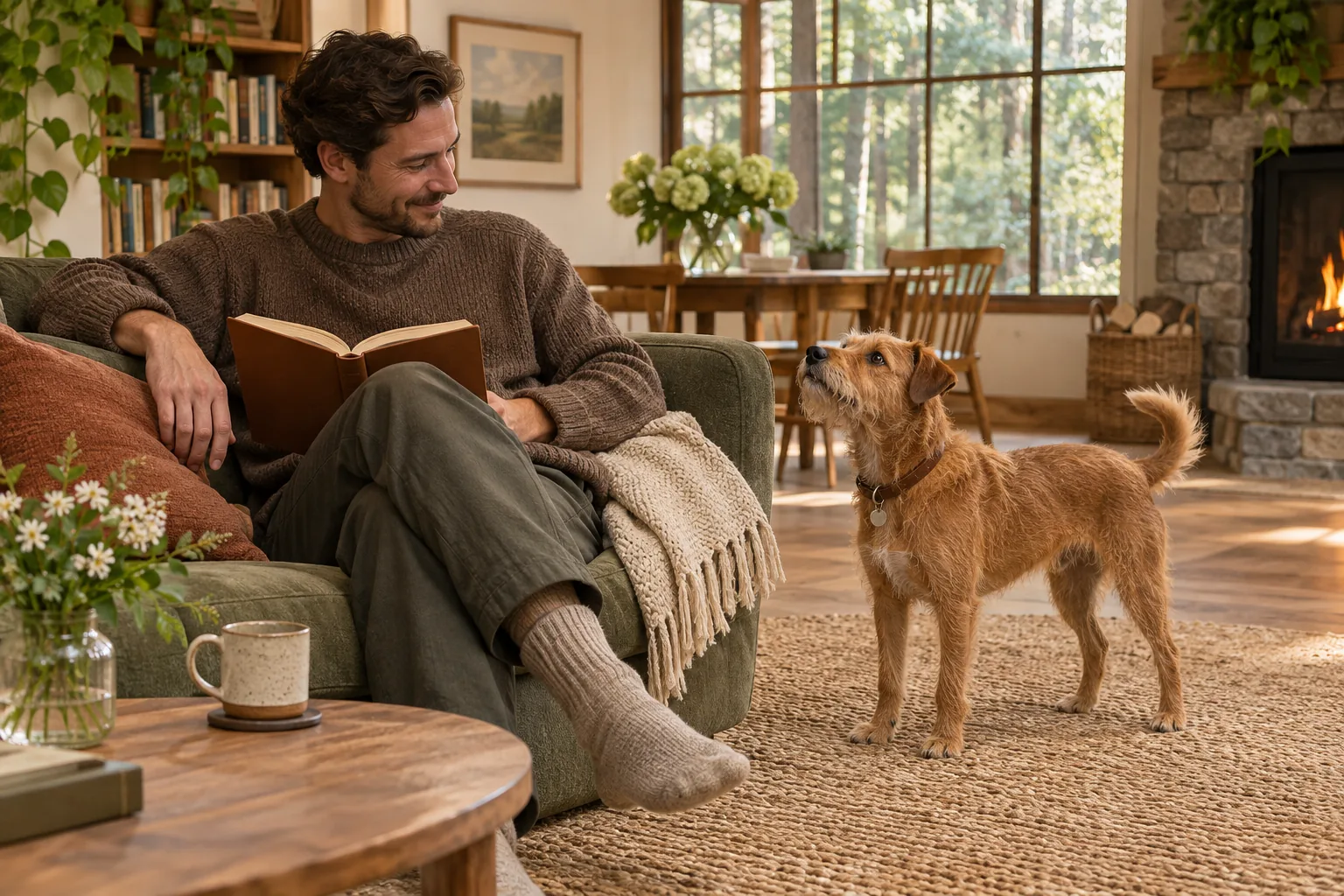
When your dog paws at you, a small tap can become uncomfortable during a call, a meal or a quiet evening on the sofa. Begin by checking what your dog may need, then make some easy contact available before the tapping starts. In a separate short session, practise a way to approach with four feet on the floor. You can use DogPath to prepare a familiar foundation lesson and reserve a manageable practice slot in your week.
Dog paws at you? Look at the whole situation
Notice what happened before the paw touched your leg. Perhaps you had just stopped stroking the dog, sat down after a long morning or picked up a bowl. Describe the sequence without guessing a motive. “I stopped stroking, the dog leaned closer and put one paw on my arm” gives you a particular moment to work on. Compare it with a time when the dog came over and stood beside you comfortably.
Check ordinary needs first. A dog who has been resting for hours may need a toilet opportunity, some movement or time with you. Water, a comfortable place to rest and normal meals should remain available as usual. If the dog approaches while you are rushing, pause long enough to see whether there is a practical reason. Meeting a need does not have to become a training exercise.
Look for changes that deserve professional attention. Pawing that starts suddenly, appears alongside restlessness or follows difficulty moving can have several explanations. Contact your veterinarian if you notice pain, unusual movement or a change in normal behaviour. If the dog scratches hard, mouths, growls or makes contact near someone's face, create space and arrange individual help before practising close contact.
Give contact a place in the day
Choose a few ordinary opportunities to spend time together. A short sniffing outing, a quiet play break and sitting together after a meal can make contact easier to offer. Think about the stretch of the day when tapping is most common. If that is your afternoon meeting, plan a suitable activity beforehand and a realistic break afterwards. Include the dog's normal toilet and rest needs in the plan.
The San Francisco SPCA attention-seeking resource suggests scheduling interaction and noticing desirable behaviour at other times. In your own routine, this might mean greeting the dog when they approach on the floor before you start a call. You can also notice a dog resting comfortably nearby. Keep those moments brief and ordinary so the dog can return to what they were doing.
Make the arrangement practical for everyone. If one adult strokes the dog whenever a paw appears and another reacts sharply, the same approach has very different outcomes. Agree on the response you want to make easy, such as standing beside a chair, and on how you will provide breaks. Children should have their own protected space with adult supervision. Practise with a capable adult who can move away comfortably.
Practise the approach before you need it
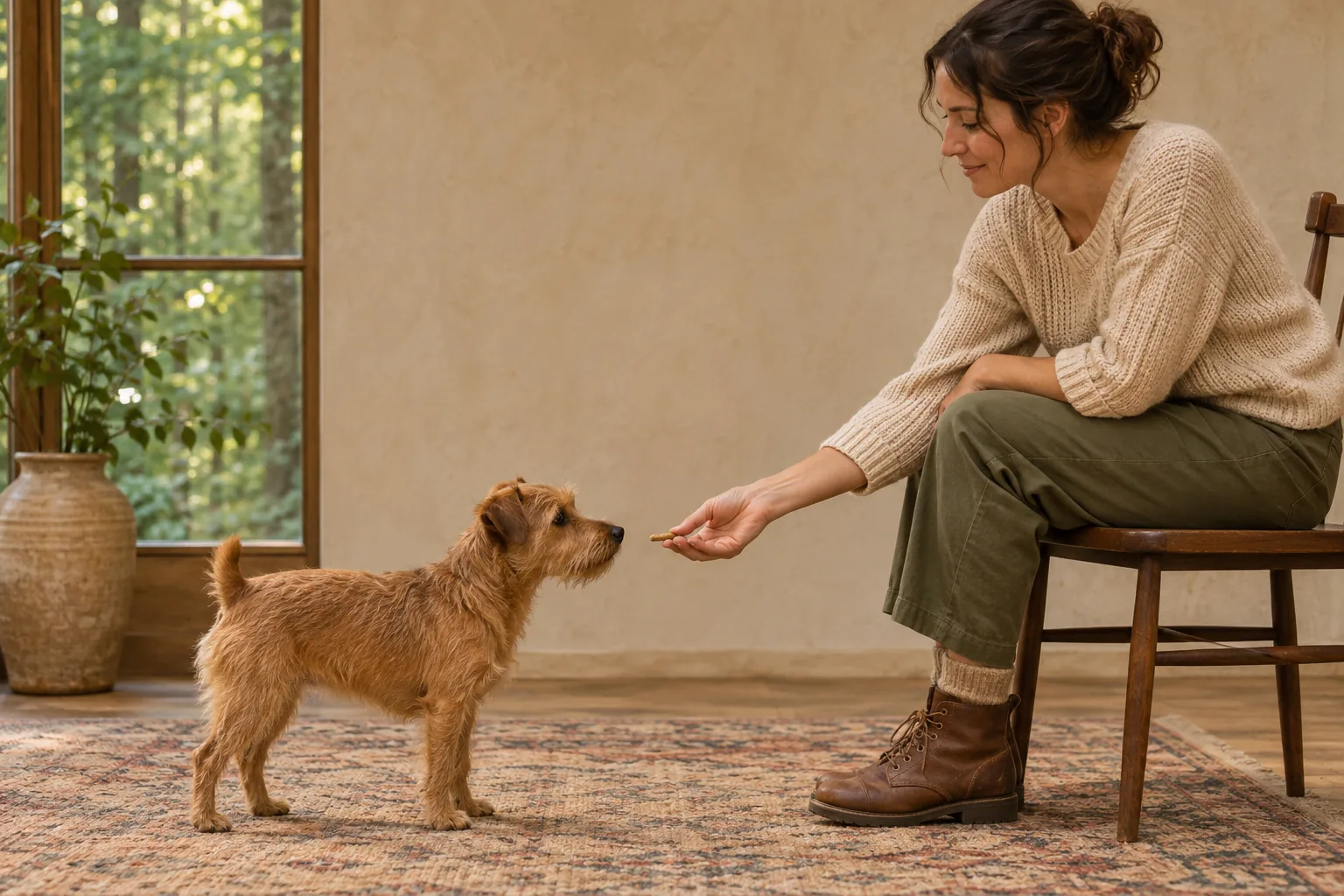
Use a quiet room and a chair that lets you keep your balance. Start when the dog has had their usual opportunities to move, drink and toilet. Let them approach with room to turn away. If all four feet are on the floor, offer a small appropriate reward low beside you. You can use a familiar marker just before delivering it. Avoid holding the reward high over your lap, where the dog may reach up.
Step away or let the dog wander off, then try another easy approach. There is no need to ask for an extended sit. A comfortable stand gives you a clear moment to recognise. If the dog already knows a simple sit and offers it easily, that can be another option, provided the posture is comfortable. Our reward marker guide can help you make your timing clear.
If a paw comes up, make the next repetition easier. You may have waited too long or kept your hand too close to the dog's chest. Stop moving your hand and give the dog space. When both of you are ready, begin again from a position where four feet were easy to maintain. Avoid holding the paw down, grabbing it or repeatedly moving the dog back into position. A few comfortable approaches are enough to finish.
Try a short touch and a pause
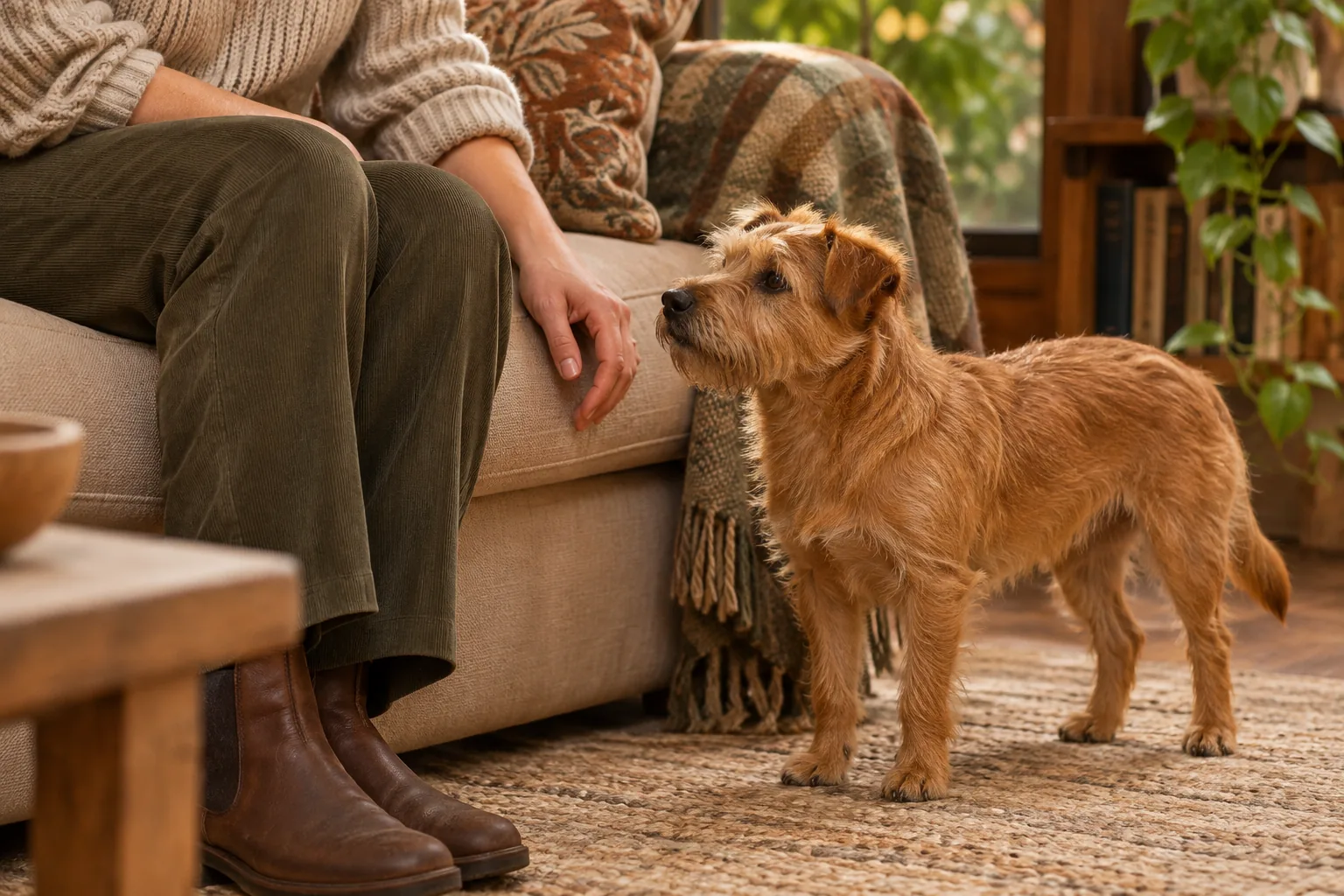
Some pawing happens just after stroking ends. In a separate quiet moment, let the dog approach and offer a brief gentle stroke where they usually enjoy it, then pause. See whether they remain with four feet on the floor, move closer without lifting a paw or choose to walk away. If they appear comfortable and stay nearby, you can offer another brief stroke before tapping begins.
Let the dog leave. Turning their head away, shifting their body or walking off gives you information about whether they want that contact now. If the dog leans into your hand with a loose body, that is a different observation from standing stiffly. Keep the touch short enough that you can pause and watch rather than assuming every approach calls for stroking.
If the sequence becomes “paw, pause, stroke” every time, return to an easier moment and offer contact earlier in a fresh interaction. You want opportunities that begin with the dog already comfortable on the floor. If the dog becomes restless or keeps trying to climb onto you, finish and arrange the space for a break. Our guide to short sessions gives ways to keep that decision simple.
Prepare one familiar lesson in DogPath
Choose a foundation you already understand, such as reward timing or an easy sit that is comfortable for your dog. Open the relevant DogPath lesson and read the instructions before you take out rewards. Check its prerequisites and prepare a quiet space. A lesson can help you organise the mechanics of a session. Your observations of your dog determine whether this is a suitable time to practise.
Use the weekly plan to reserve a short slot when you can put down your phone and pay attention. Write a small goal on paper, such as “three approaches beside the chair with feet on the rug”. Keep your note separate from the app's lesson completion. After the session, mark the lesson practice you actually did, then describe the setting and what happened in your own notes.
A useful note might say “standing beside the chair was easy, paw lifted when I raised my hand”. Next time, keep your hand lower and stop earlier. DogPath does not assess why your dog is pawing or whether close contact is safe. Dog Train Club and DogPath share a publisher. If you need help interpreting the interaction, take your notes to a qualified reward-based professional who can observe you together.
Make busy moments easier to manage
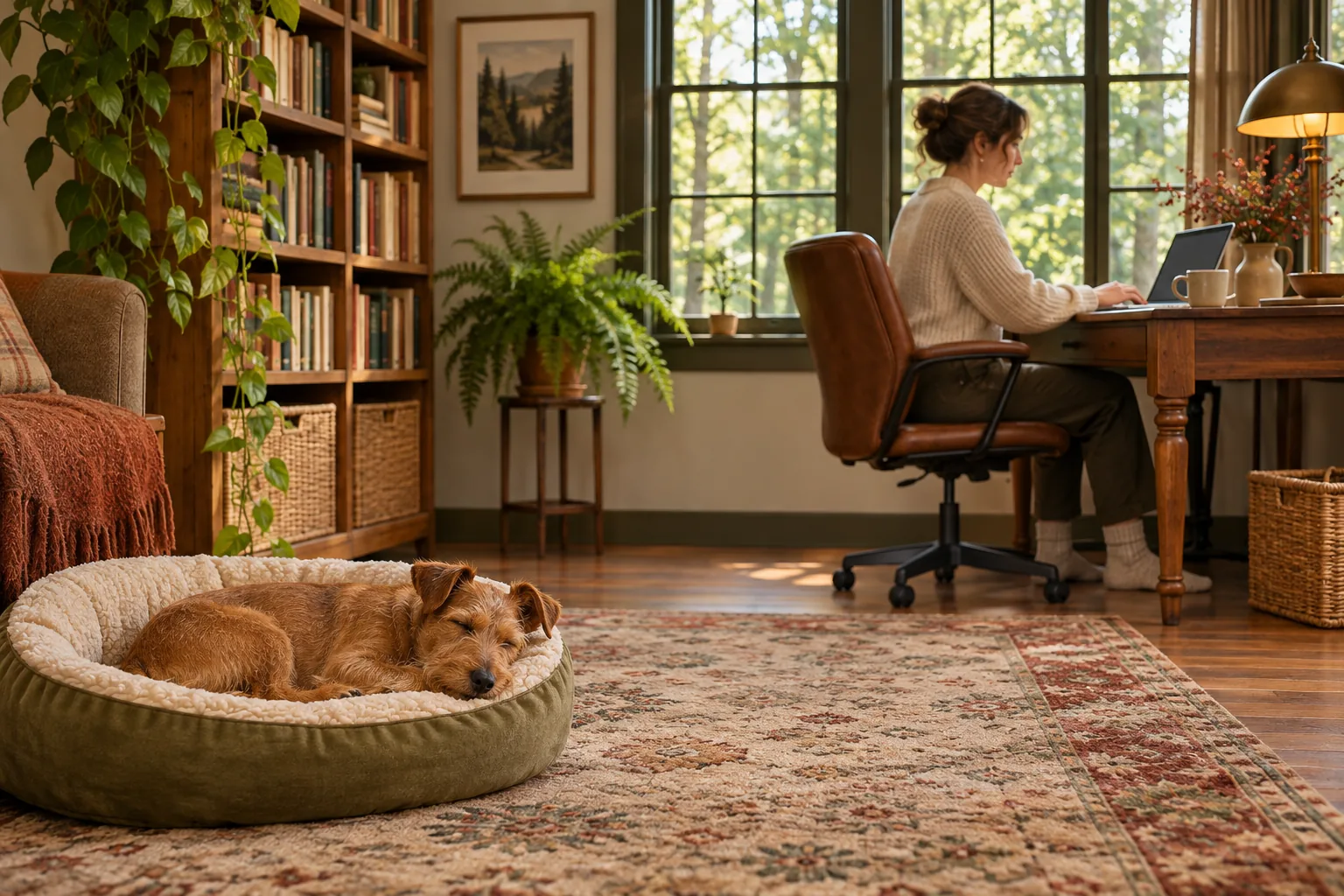
Before you sit down for a task, set up a comfortable place for the dog nearby and leave a clear route to water. If you offer a familiar activity, choose one suitable for that dog and supervise as needed. A gate can help keep the dog out of reach during a meal or video call if they are already comfortable with the arrangement. Check that the dog can rest and move normally on their side.
If tapping starts during a task, put down hot drinks or delicate objects first. Move your chair or stand up calmly if that gives you safe space, without pushing the dog away with your hands. Reassess what the dog needs and whether your planned break is realistic. If the dog is becoming distressed behind a barrier, arrange another familiar setup or ask someone to spend time with them. Prolonged barking, pacing or repeated jumping suggests the current arrangement needs to change.
Keep actual practice for a moment when you can be consistent and watch the dog. A real meeting that runs late is a reason to adjust the break plan. It is not a good occasion to keep extending how long the dog waits. At the next quiet opportunity, return to the easy chair approach or a short shared activity before the usual difficult period.
Review a few ordinary days
After several opportunities, compare similar situations. A quiet approach after a walk and tapping after a long afternoon apart are different contexts. Note the activity beforehand, the person's position and how the dog moved. Keep the response that was comfortable and change one part that was hard. You might move the resting bed, shorten the session or make the planned social break earlier.
If the contact becomes more forceful, causes injury or accompanies guarding or growling, use space and seek in-person advice. If the change is sudden or you notice possible pain, contact your veterinarian. Your notes can help describe whether the dog paws during contact, during stillness or around a particular object. That gives a professional something concrete to assess.
Common questions
Should I ask for a paw trick instead?
During this practice, choose a response that keeps the dog's feet on the floor. If you enjoy a paw trick, give it a clear cue and practise it separately from moments when you need space.
Does every approach need food?
Use small rewards while you teach the approach. Friendly attention can also suit a dog who enjoys it. Watch whether the dog stays comfortable and whether you can offer the attention before pawing starts.
What if my dog scratches a child?
Separate them safely and supervise future contact. Have any injury assessed as needed and seek individual professional help before practising close interactions.