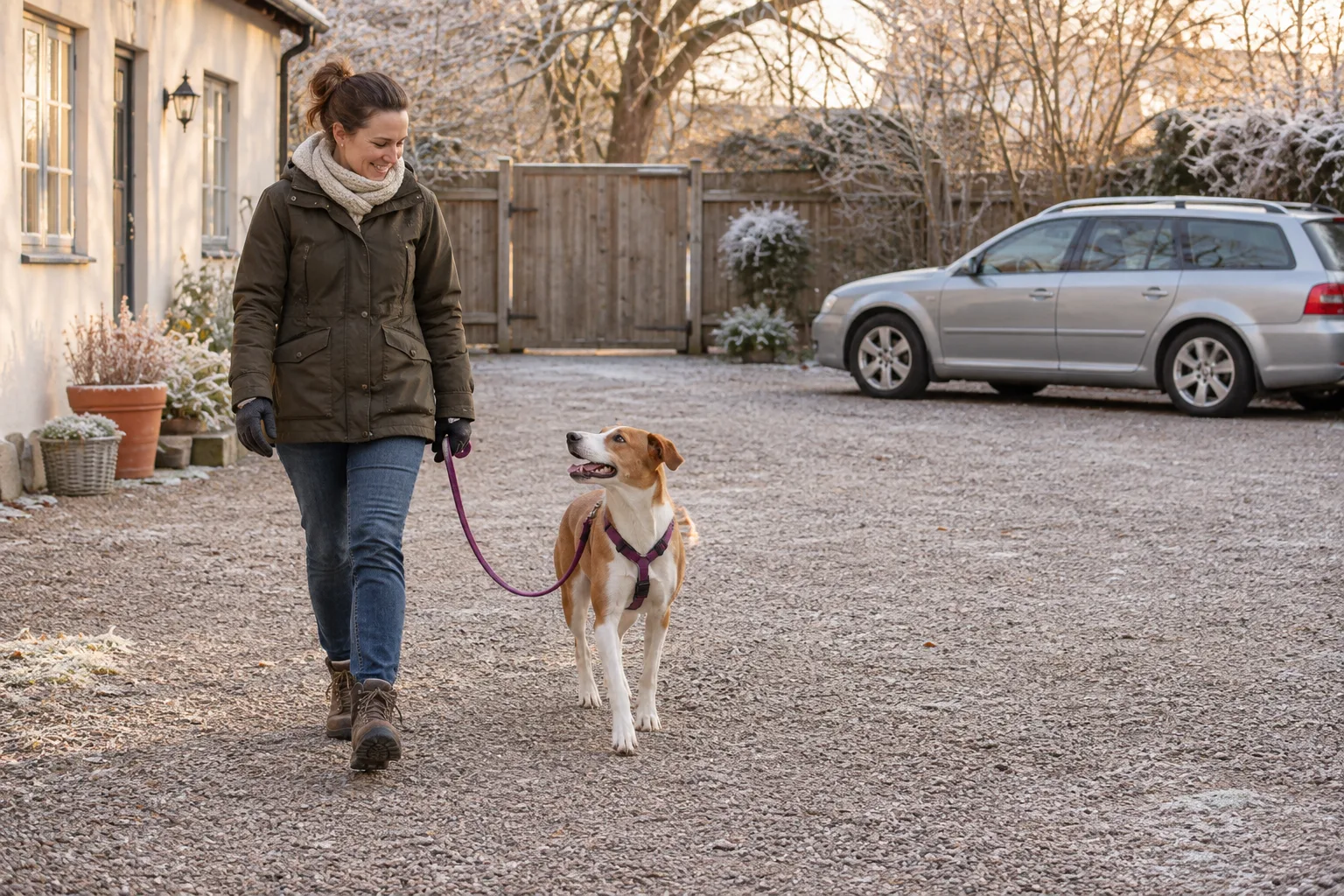
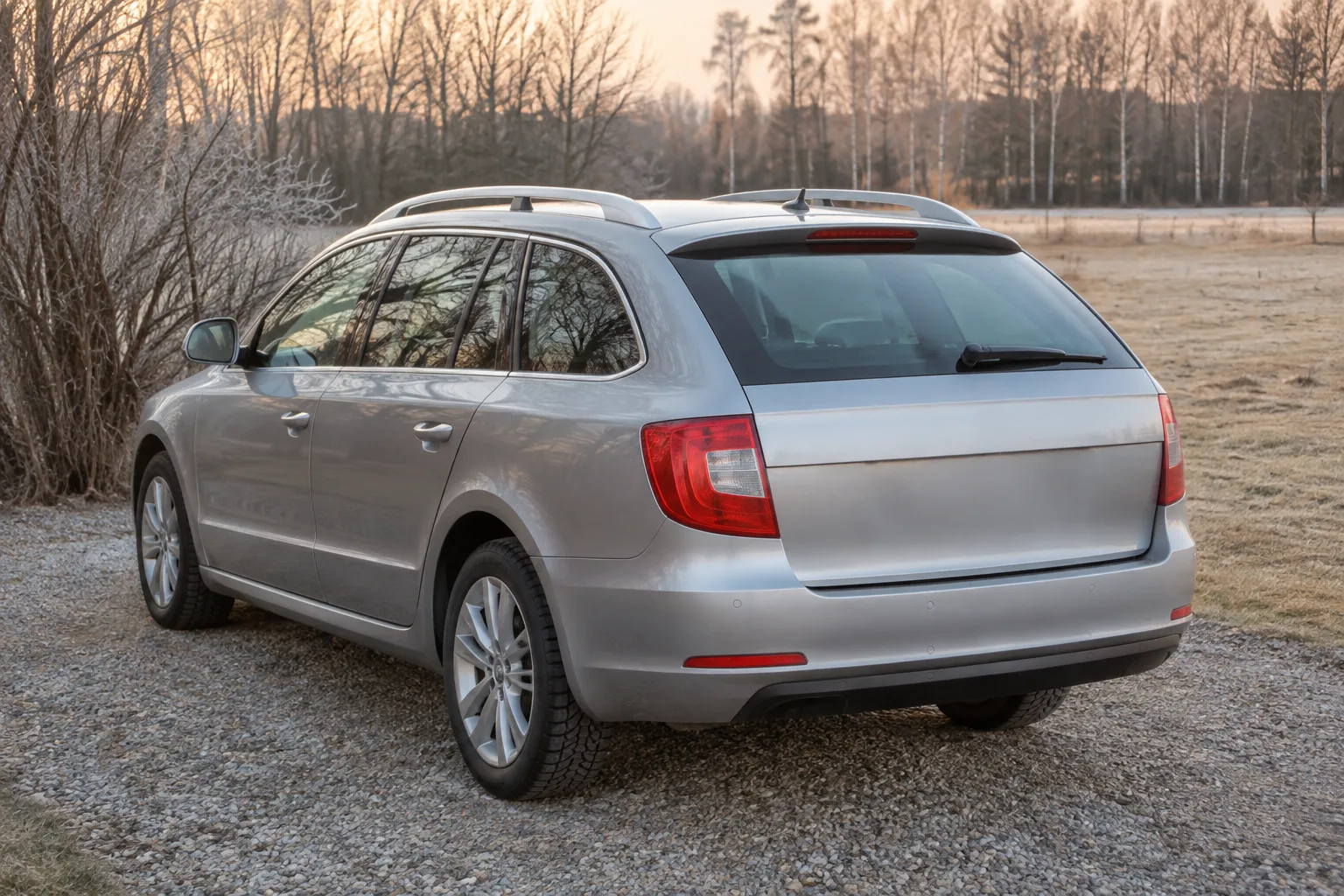
If your dog jumps out of the car before you are ready, the first change belongs in your arrival routine. A dog who is quiet during the drive may be on their feet as soon as the engine stops. The sound of keys, the release of a seat belt or a familiar destination can all come before the latch moves. Decide how to manage those seconds while your dog remains secured, especially when you cannot see what is passing beside the car.
This guide starts with a safe handover and takes the training away from the vehicle. You can practise a brief pause on the ground and use DogPath to organise an existing foundation exercise. During real arrivals, your dog still needs physical security and a suitable way down. Even a dog who pauses well in a quiet room can move quickly when the car stops somewhere exciting.
Your dog jumps out of the car? Keep the exit controlled
Before a trip, decide where the walking lead will be and how you can reach it while your dog remains securely contained. Use a suitable car restraint or a correctly installed carrier according to its instructions. At your destination, keep the vehicle parked with the engine off. Choose an exit away from traffic, bicycles and people where possible. If you cannot safely access your dog there, choose another place to park. Do not open an exit where a loose dog would be able to reach the road.
If someone is helping, agree who handles the dog and who handles doors, bags and children. One adult should be clearly responsible for keeping the dog secured throughout. Have that conversation while you are stationary, before anyone starts opening doors. If you are alone, leave the bags until the dog is safely out with you. Never leave your dog unattended in the vehicle. If conditions inside become unsafe while you wait, seek help and change the unloading plan. Never rely on your body to block an open hatch or on a cue to hold a dog in place while you search for a lead.
Check the destination before you open anything
Look out from inside the parked car. Can someone pass between the car and a wall? Is there room to take a few steps on level ground once you get out? A familiar spot can change if people are unloading, a gate is open or there is ice next to the vehicle. Move to another safe, permitted spot before unloading if you need to. Talk to your travelling companion about what to do if the chosen exit becomes unavailable.
Keep the dog secured while you make the transition from travel to walking. Exactly how you do that depends on the installed restraint, the access the car gives you and your dog's size and needs. Follow the equipment instructions and plan with an in-person professional if you cannot reach or attach a lead without creating an escape route. Avoid an improvised attachment to a collar, a long line trailing across openings or leaving a dog attached to an object outside the car.
Dogs Trust's car travel guidance describes preparation for calm entry and exit. For this plan, keep all formal practice on safe ground away from the car. The vehicle is for travel and unloading safely. You do not need to open and close a hatch repeatedly with the dog inside to teach a pause.
Before a first trip with a new arrangement, check the setup with the vehicle empty. See what is reachable from each door and where you could stand without blocking other people. Make sure the walking lead will stay where you expect it during the journey. Tell anyone who travels with you what you need them to do. An orderly sequence should be possible even when the dog is simply standing and looking around.
Practise a pause at floor level
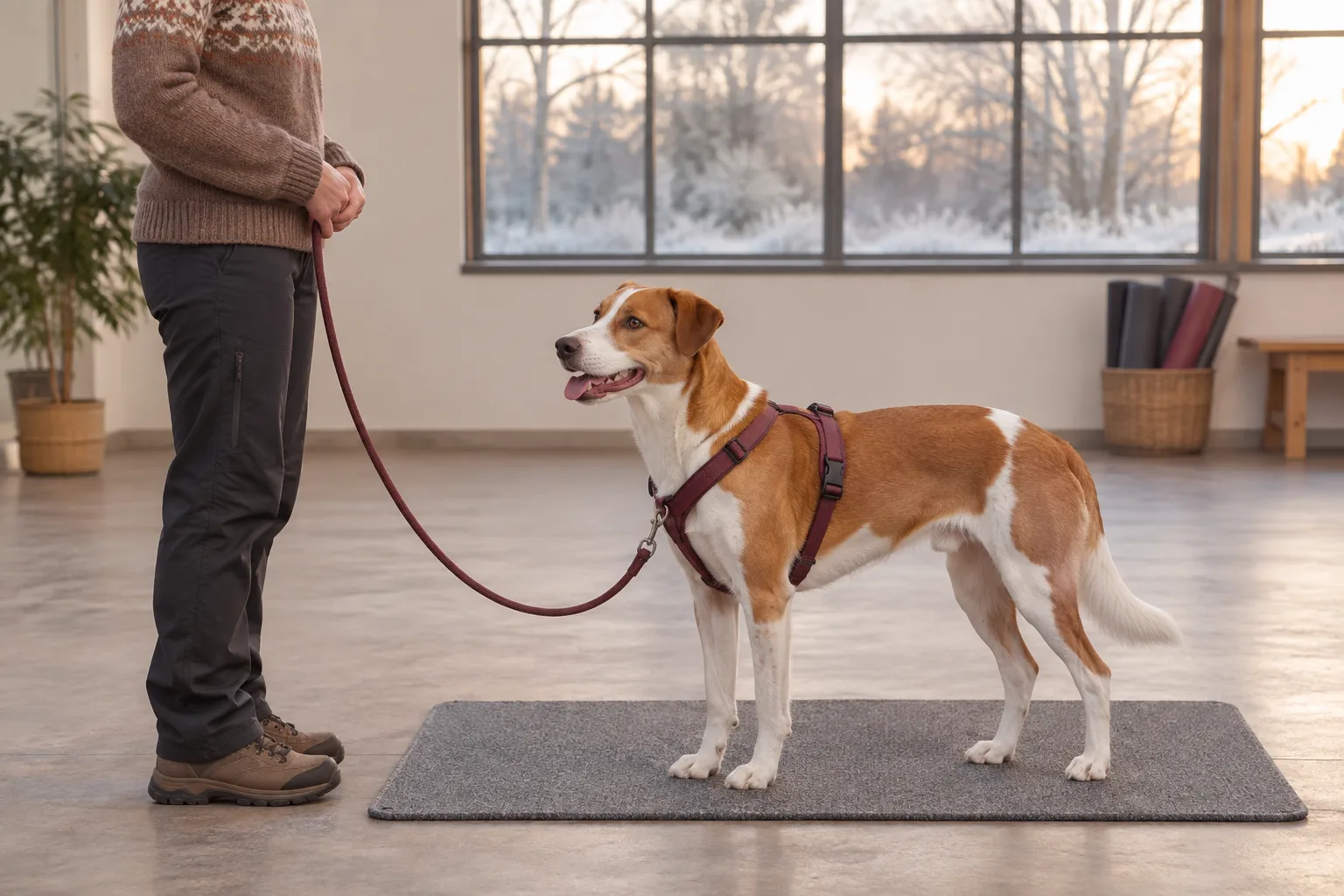
Start in a familiar room with good footing and a way for the dog to walk away. Walk a step together and come to a comfortable stop. When your dog pauses or glances toward you, mark that moment with a familiar word if you use one, then place a suitable reward near your side. The reward marker guide explains the timing. Finish by walking together again. At first, the pause can be about as short as a normal breath.
If your dog walks on when you stop, try moving more slowly before the next pause. Stay on level ground and keep the space easy to read. There is no need to insist on sitting. A standing pause can be easier for some dogs and is enough for this practice. Avoid leaning over them, repeating words or withholding a chance to leave. If they seem stiff or reluctant to move during an ordinary walk, stop and ask a veterinarian about the change.
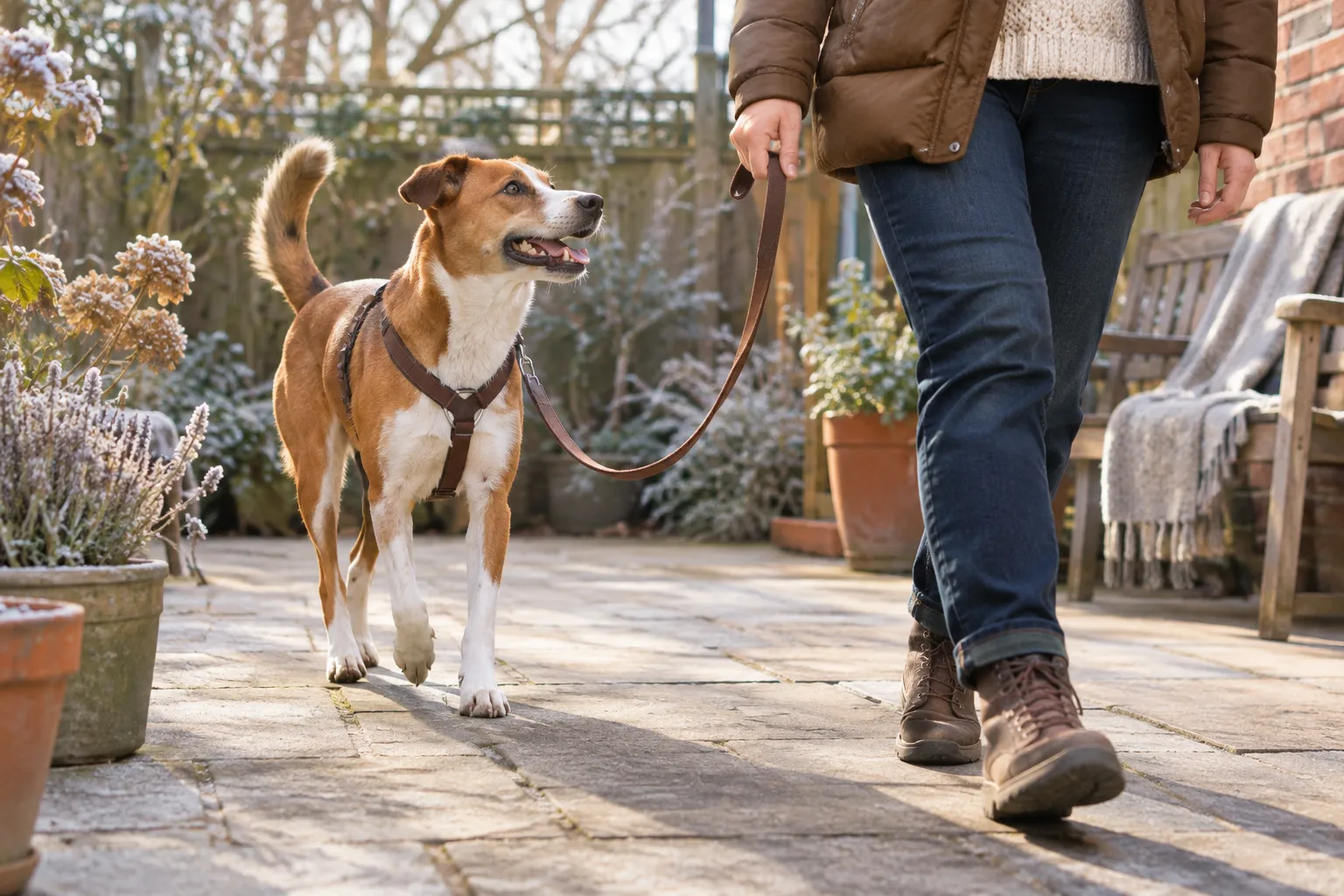
Once this is easy somewhere quiet, you might use the same short sequence on a level enclosed patio with the walking lead in hand. Keep the lead slack and give enough room to continue. The guide to short training sessions offers ways to choose an easy stopping point. After one or two good repetitions, go on with an ordinary activity. If the lead tightens or the dog is scanning the surroundings, return to the easier setup.
Plan the first steps after unloading
A good arrival includes somewhere to go after both of you are safely on the ground. Choose a dry, unobstructed direction that takes you away from doors and parking lanes. If another person is waiting to greet the dog, ask them to wait there until the unloading is over. Let your dog look around and walk with you first. You can make the first part of the walk predictable even when there is a lot to explore farther away.
Work out whether your usual exit is physically suitable for your dog. A high step down, a slick surface or a sudden reluctance to move deserves attention. Do not ask the dog to jump repeatedly for practice. Ask your veterinarian or a qualified in-person professional how to arrange an appropriate exit if there is pain, reduced mobility or a need for assistance. If the dog has growled, snapped or may bite when approached or secured, stay out of reach and get a personal plan before attempting further practice.
Talk through a familiar trip as a specific example. You might park in an empty enclosed spot, check that the path beside the car is clear, and go to a quiet area once your dog is safely out and on lead. Another day, someone may be unloading beside you. If your setup cannot be managed safely there, change the stopping point or the plan before you open the dog's exit. A rehearsal on the ground helps with movement. It does not make a busy place suitable.
Use DogPath to plan the floor-level work
Dog Train Club and DogPath share a publisher. In the app, choose a foundation lesson appropriate for your dog, such as nearby attention or walking together, and read its preparation and prerequisites. Practise that lesson where your dog can move comfortably on the ground. Use the weekly plan to make room for a few short sessions, and record the ones you actually do. The app does not check car equipment or certify an exit as safe.
Keep your notes about real trips separately. For example: Saturday, parked on level ground, dog stood up when the engine stopped, lead was already to hand and first steps were toward an open space. That note can remind you which part of the routine worked for the people as well as for the dog. There is no need to run another trip just to obtain a comparison.
At the end of the week, decide what to keep. The floor exercise may stay as short as it was on day one, while your arrival changes because you choose a better parking spot or give bags to another adult. If the dog remains highly distressed, if their behaviour suddenly changes or if there is any chance of a bite, seek qualified in-person support and veterinary advice. Keep using physical security on every journey even as your handling becomes more predictable.
Common questions
Should my dog sit before every exit?
A pause can be useful if the dog can offer it comfortably. You can use a standing pause in floor practice. If sitting, standing or changing position looks difficult, talk to your veterinarian instead of asking the dog to repeat the movement.
Can I practise with the car door slightly open?
The exercise described here takes place away from the vehicle, with an easy route off the practice area. For a real unloading, keep the dog physically secured until you can manage the transition safely under the equipment instructions. Do not make a door gap your safety measure.
What if we only have a busy parking area?
Look for a more suitable permitted stopping point or change the trip plan. If you cannot see who is passing or you cannot reach the dog safely, keep the car parked and the dog secured while you work out an alternative. A trained pause cannot protect a dog from traffic.